Transactions of the Unitarian Historical Society April 2025

The latest issue – Volume 28 Number 4 – is on its way to members of the Society, new members are always welcome and details of how to join can be found below.

As ever there is a great wealth of material in the journal, including:

Essex Street Chapel in the later eighteenth century: members, adherents and sympathisers

G. M. Ditchfield
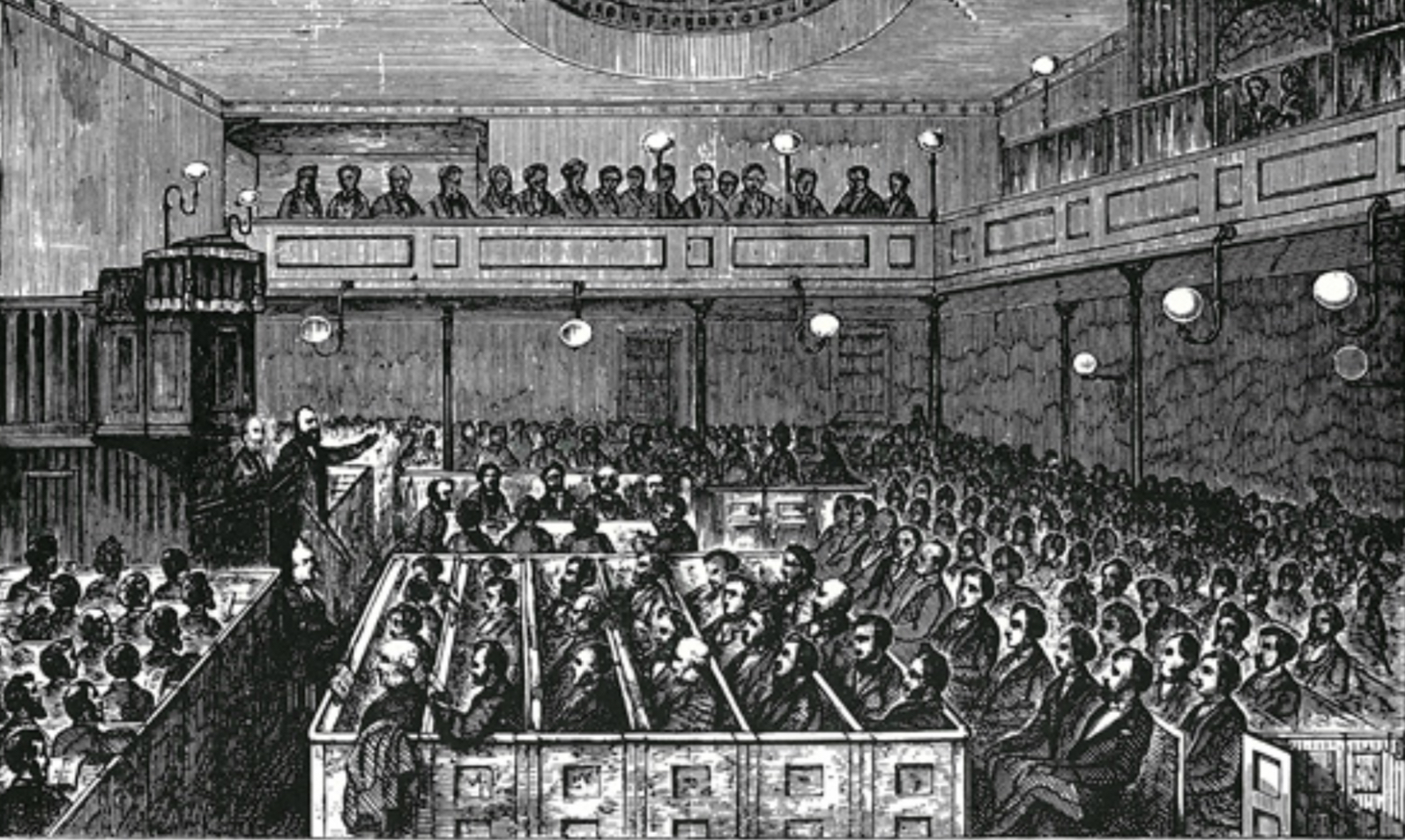
Centenary Service at Essex Church 1874

In this article Professor Grayson Ditchfield provides an analysis of the ‘associates, friends, visitors and even some critics of a congregation which has been, and remains, widely and deservedly regarded as a foundational pillar of the Unitarian movement in this country’.  In his paper Professor Ditchfield goes a long way to uncover the stories of the people who sat in the pews at Essex Street Chapel and looks especially at the role of women there. The Chapel was situated in a very impoverished area and Hannah Lindsey, the wife of the minister, organised poor relief for the local inhabitants. The congregation could not have survived without its female supporters in the early years in particular, and one member, Elizabeth Rayner, made an annual donation of £2,000. Essex Street Chapel included a number of MPs, including one described as `my fidgeting pew neighbour’ by another member. Some of the MPs made the free franking of letters in the House of Commons available to members! Was it a Dissenting Chapel or a reformed Church of England? Was it a congregation or an audience? All this and much more is examined in this fascinating article which breaks so much new ground.

After 1825 – celebrating the foundation of organised Unitarianism in Britain and America

Alan Ruston
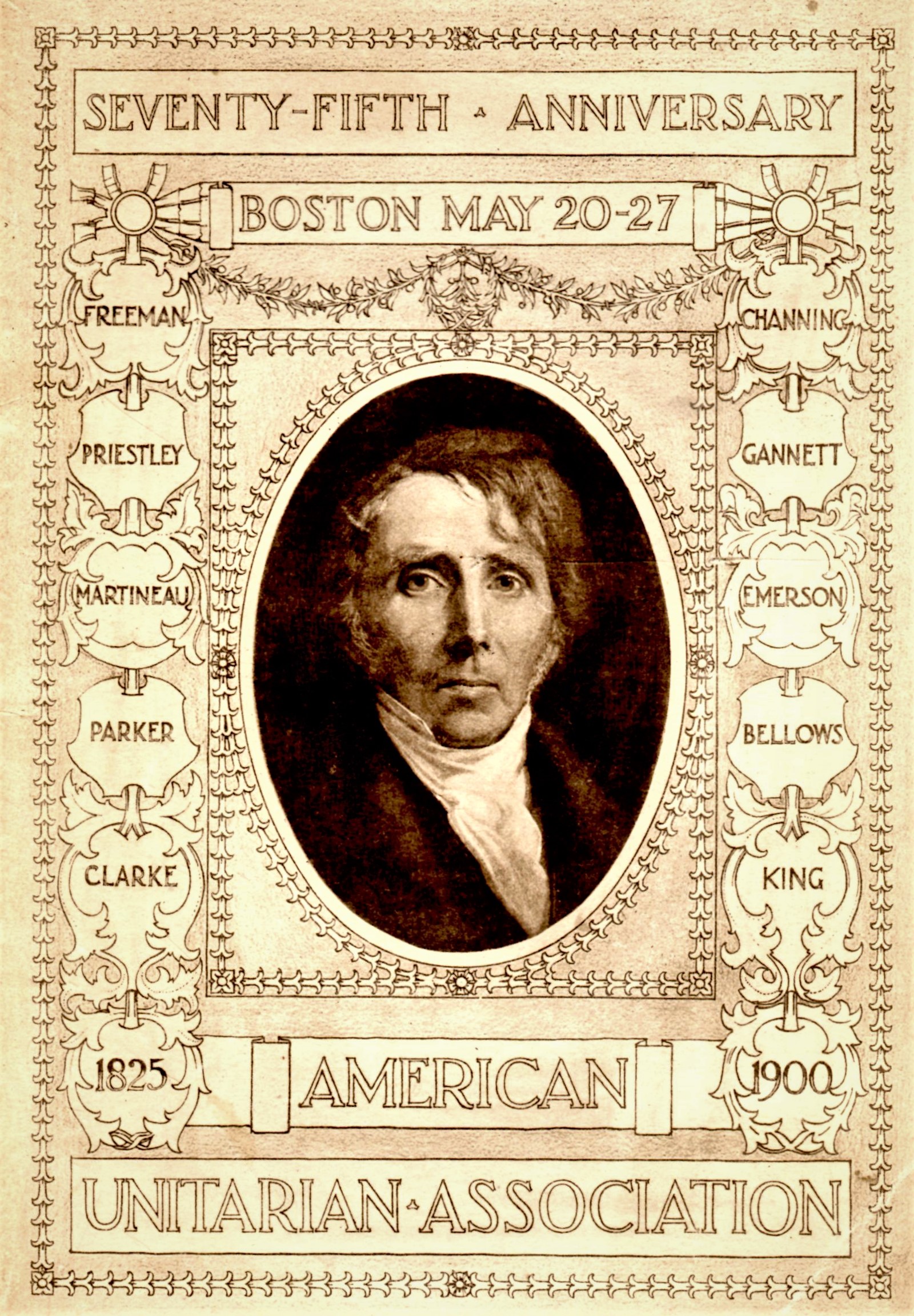
AUA 75th anniversary brochure cover

This year marks the 200th anniversary of the foundation of both the British and Foreign Unitarian Association (B&FUA) and the American Unitarian Association (AUA), both founded within a day of each other in May 1825. Alan Ruston investigates the way each anniversary has been celebrated in Britain and the USA. Both the B&FUA and the AUA have evolved over this time, the B&FUA really being superseded by the General Assembly in 1928 and the AUA being absorbed into the Unitarian Universalist Association in 1961 but the development of both bodies over two centuries tells us a lot about the development of Unitarianism in both countries and the interaction between British and American Unitarianism.

Notes

Alexander Gordon on James Martineau: An Evaluation

Alan Ruston

Very Rev William McMillan Library

David Steers

Very Rev William McMillan Library, Dunmurry

Dr Williams’s Trust.Announcing a New Partnership 

The University of Manchester Library and The Dr Williams’s Library 

REVIEWS

Daisy Hay,Dinner with Joseph Johnson: Books and Friendship in a Revolutionary Age, (Chatto & Windus, London, 2023) ISBN 9781784740184. 528 pages. Price £20.

Reviewed by Derek McAuley

Ben Stables, From Pigeon Flying to Intellectual Liberty. The History of Pepper Hill Unitarian Chapel in Shelf, West Yorkshire. With an Introduction by Rev John Midgley. Published by Pepper Hill Unitarian Chapel, 2024. 100 pages. Price £6. Copies are available directly from the author (benstables@hotmail.co.uk).

Reviewed by David Steers

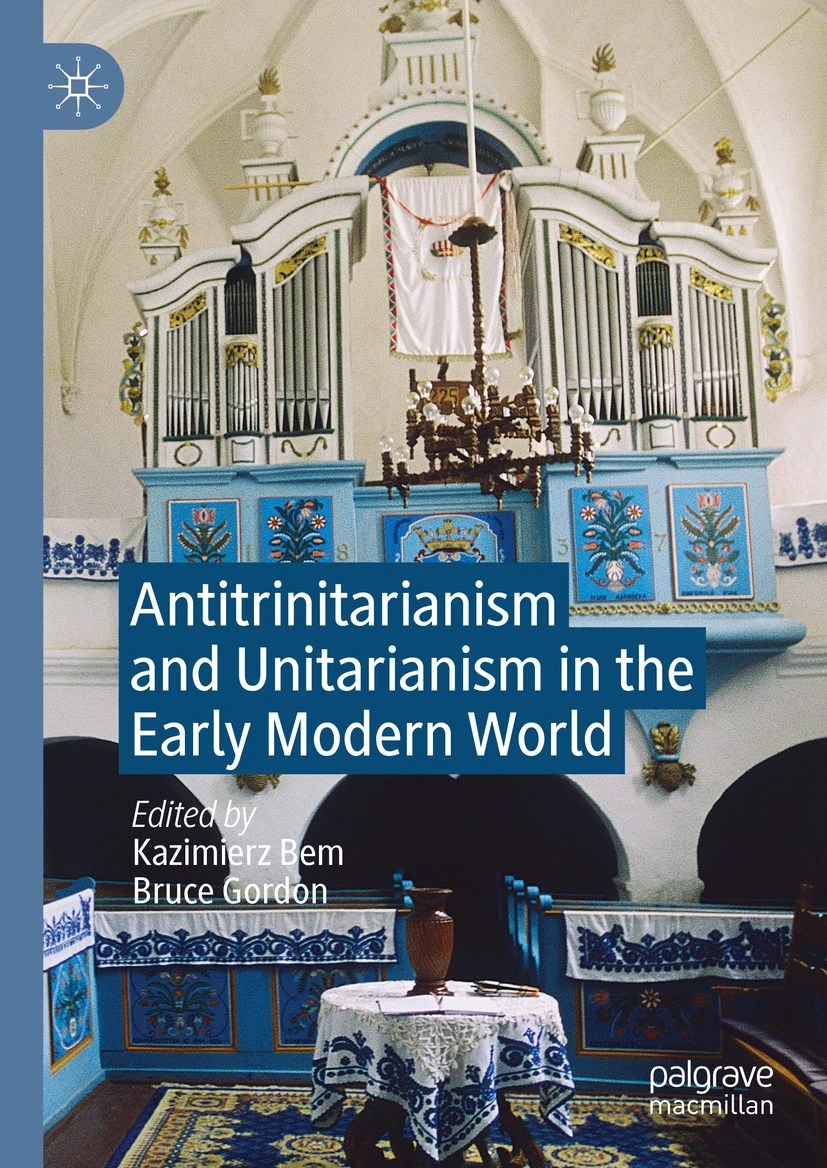
Kazimierz Bem and Bruce Gordon (eds), Antitrinitarianism and Unitarianism in the Early Modern World, Palgrave Macmillan, 2024, 397 pages. ISBN 9783031696572, price £119.99; eBook ISBN 9783031696589, price £99.99.

Reviewed by Alan Ruston
Back to Life, The People on the Plaques in Brighton Unitarian Church, 2023, 95 pages. Price £8 including postage; copies can be obtained from Christine Clark-Lowes (cjclarklowes@yahoo.co.uk).

Reviewed by Alan Ruston

OBITUARY

John Jeremy Goring, MA, PhD (1930-2023)

by David L. Wykes

An individual annual subscription costs just £10.

Visit the Unitarian Historical Society website to join: https://unitarianhistory.org.uk/

Remembrance

On Sunday, 10th November we held a well-attended Remembrance Service at Dunmurry and the video can be seen below. Special thanks go to John Neill for delivering Binyon’s Lines, to Jack Steers for playing the Last Post and Reveille, and to Allen Yarr for playing the organ.

Click above to see the Remembrance Service from First Dunmurry 10 November 2024

In the service I make full use of the booklet For Remembrance mentioned in the previous post. Indeed this little book, particularly the contribution by the Rev R. Nicol Cross, as it is mentioned in the previous video, has already sparked a lot of responses. Along with some of the other pieces it is a poignant and very honest reflection on the situation in 1919 for those returning from the front after the Armistice.

At the time he wrote his contribution Nicol Cross was minister of Mill Hill Chapel, Leeds, later he was minister of First Church, Belfast and later still Principal of Manchester College, Oxford. But from 1915 to 1919 he served as a private with the Royal Army Medical Corps. His perspective on the war was quite different from what you might otherwise have guessed.

Title page of the booklet

It is a very rare book, very few copies have survived. In the 2019 issue of the Transactions of the Unitarian Historical Society Alan Ruston contributed an article entitled ‘1919 – a re-evaluation of the part played by Unitarians in the First World War’. In his article he reveals that he had not previously come across the book, the copy he was sent while writing the article was the only one known to him. It certainly has not made its way into library collections. So this copy, in the Very Rev William McMIllan Library, is one of only two known copies.

One feature of For Remembrance that I didn’t mention in the first video or in the service above is that there is also a short note from the American Unitarian Association (AUA) included in the booklet. It seems to have come from a message sent out by the AUA to reurning troops and reads:

OUR GREETING AND PLEDGE

You have successfully met the challenge of the most powerful armies the world ever saw. You have shared in the most significant victory in all history. By a devotion that has won the affectionate admiration of the civilized world, you have helped to make possible a new and nobler life for humanity, and a truer brotherhood of man.

We welcome you again to our homes and our homeland. We pledge ourselves anew to the ideals for which you went forth to suffer; and because of your example we will rise to meet the duties of the new day with unwavering faith. Through our church we will unite our powers with yours in defence of the principles for which so great a price has been paid.

Your courage, cheerfulness, and fortitude will strengthen the church of your fathers.

From the Message of the American Unitarian Association

It would be interesting to know if this was the whole message of the AUA or whether they produced a book similar to For Remembrance.

Ministerial Old Students’ Association Harris Manchester College, Oxford

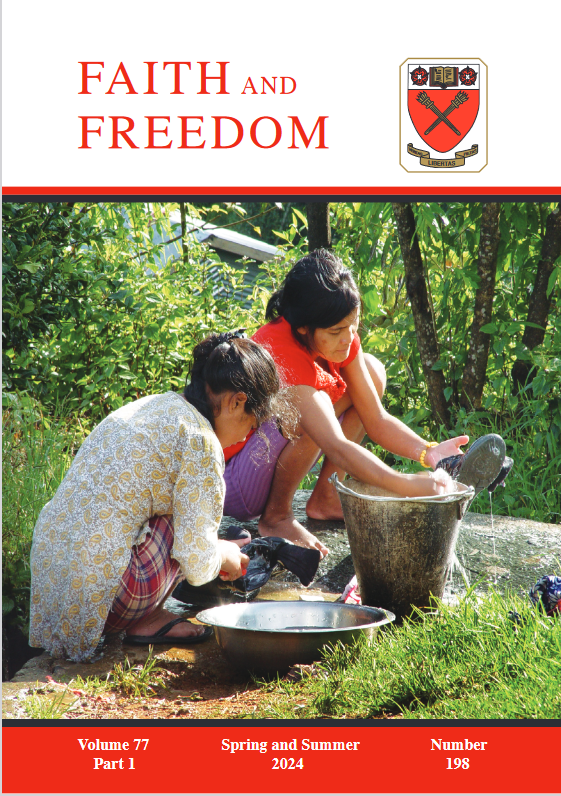
Faith and Freedom was founded by the Ministerial Old Students’ Assocation of Manchester (now Harris Manchester) College, Oxford in 1947. It is always good to attend the annual meetings along with the meeting of the Friends and Honorary Governors of the College.

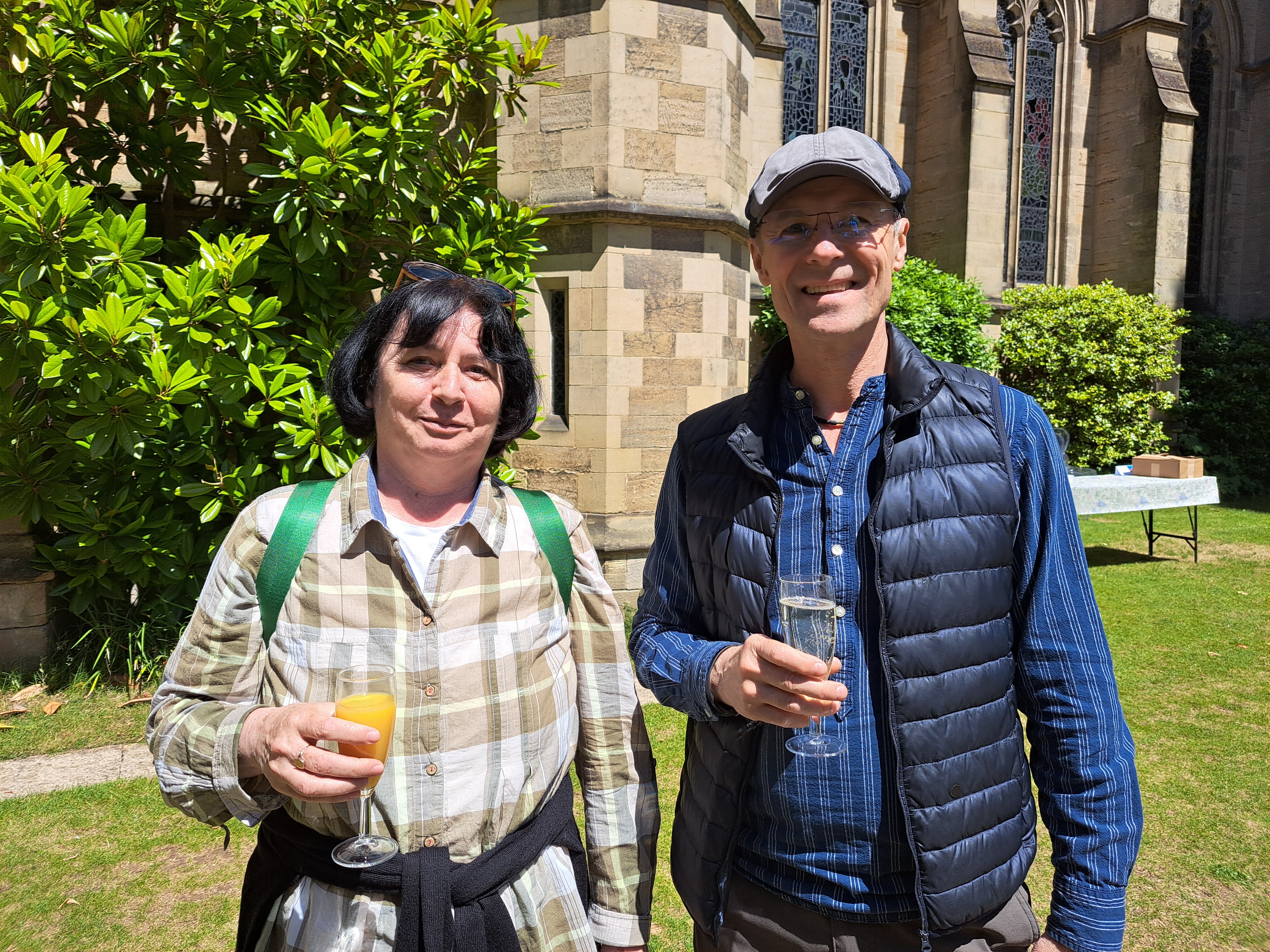
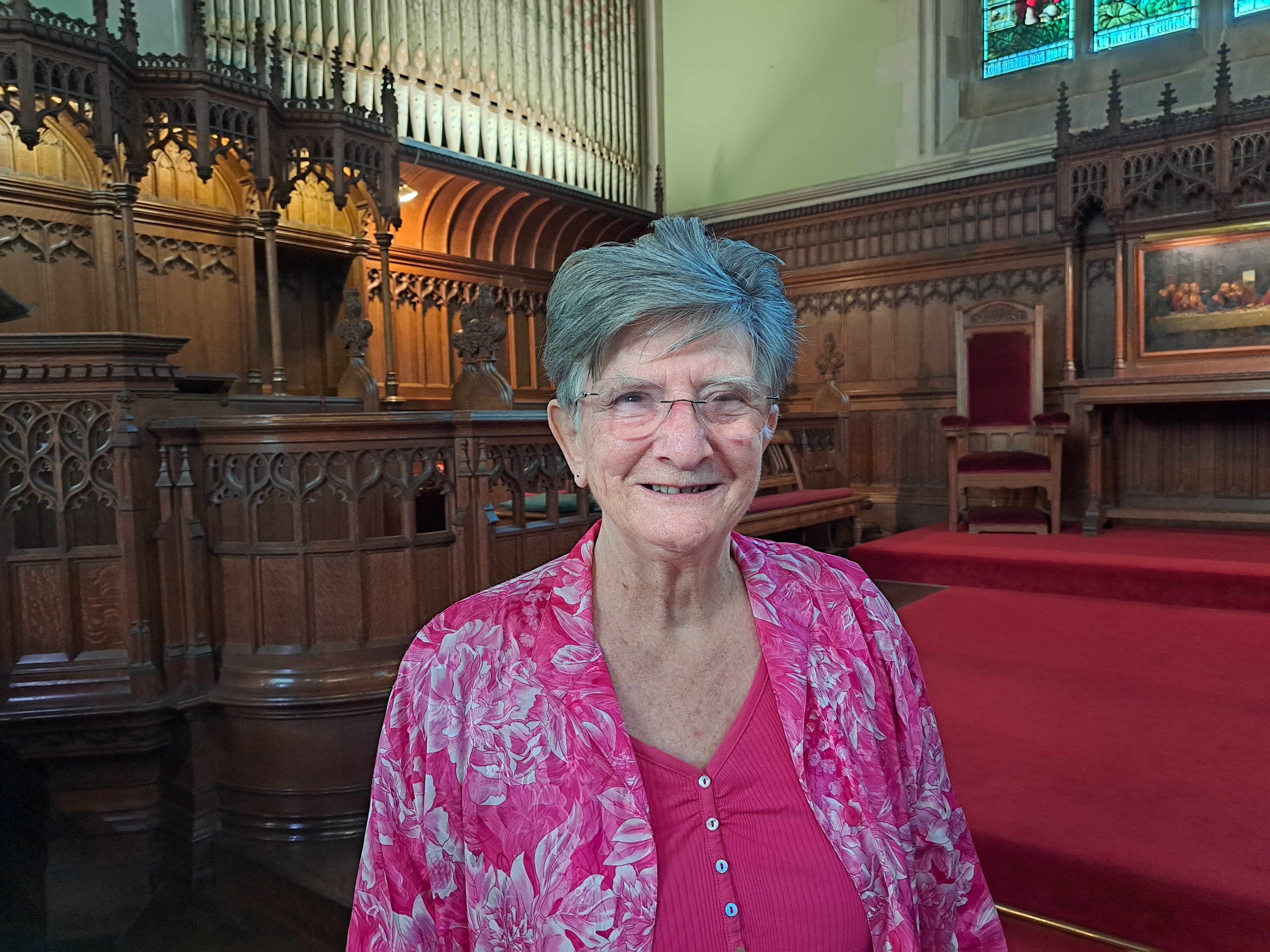
Attending both meetings gives the chance to see many contributors and supporters of Faith and Freedom. Amongst the attenders were three contributors to the latest issue (Ann Peart, Mária Pap and Lehel Molnár) as well as some whose writings will appear in the next issue.

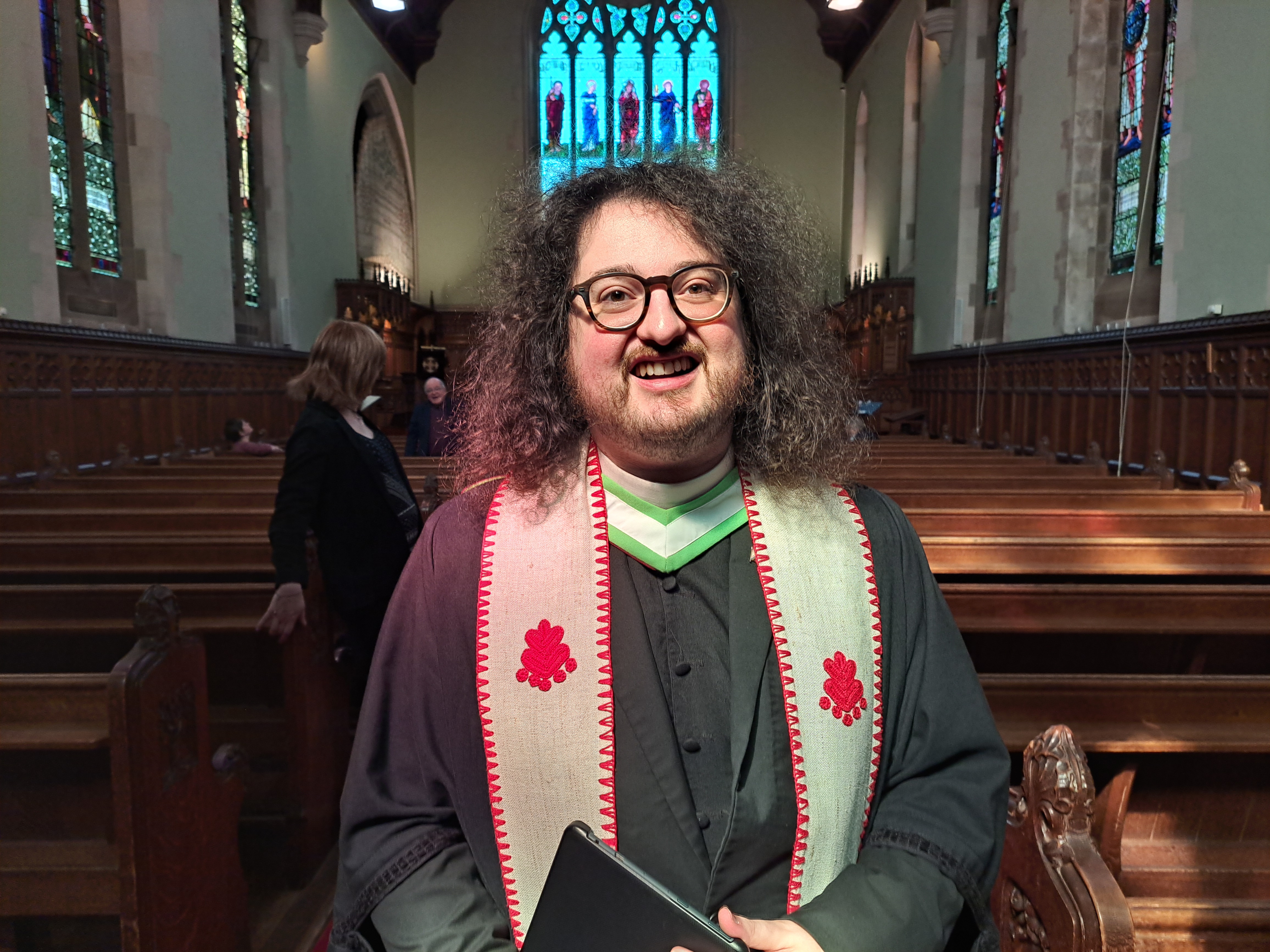
Rev Mária Pap and Rev Dr Lehel Molnár
Rev Dr Ann Peart

Amongst the attenders there was also some cross-over with those associated with the Unitarian Historical Society and the concluding Old Students’ Association annual service on Friday, 21st June conducted by Rev Robin Hanford included an address, ‘Keep alive a dream in the heart’ by Rev Peter Hewis, which will appear in the next issue of the journal.

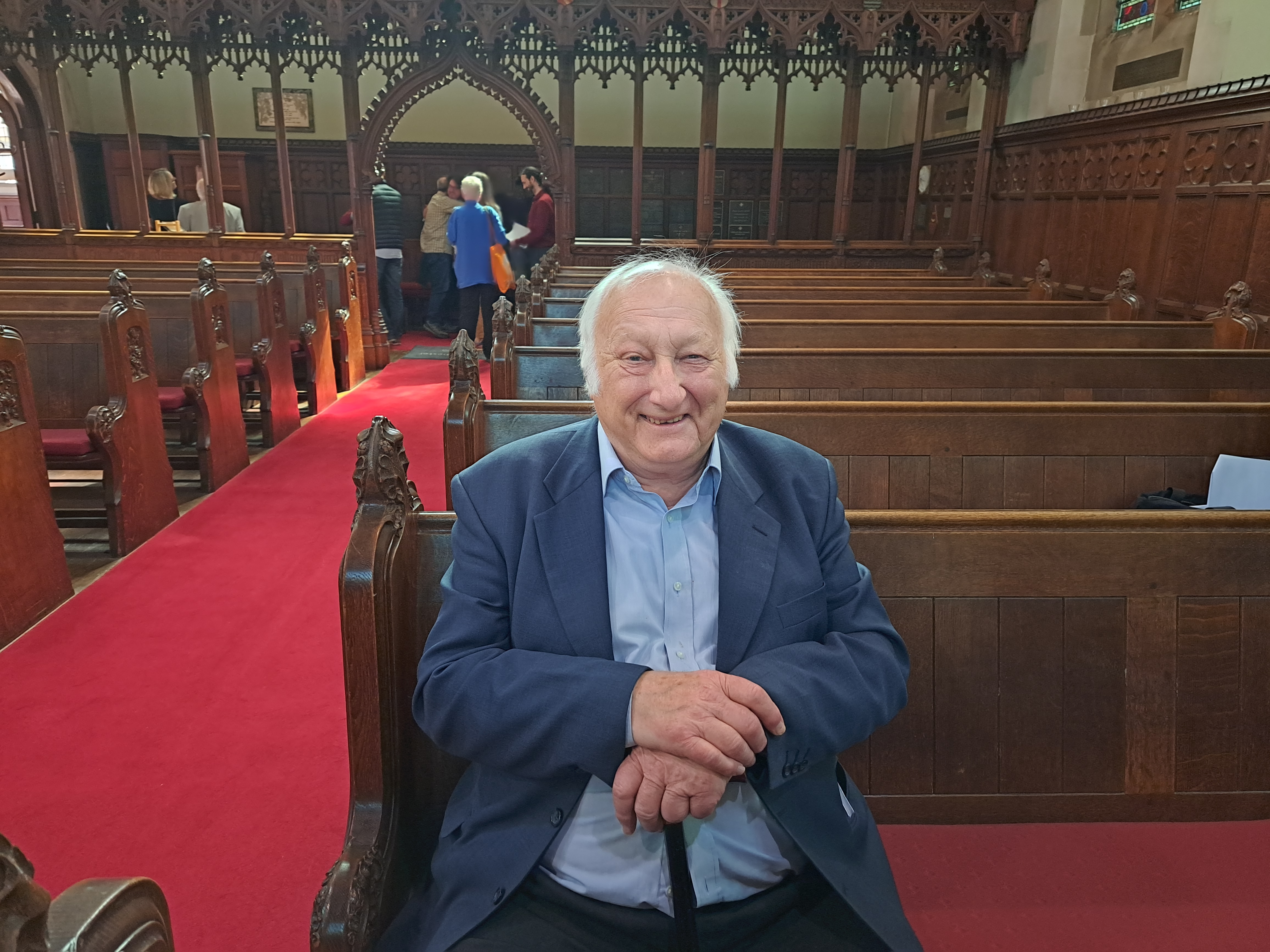
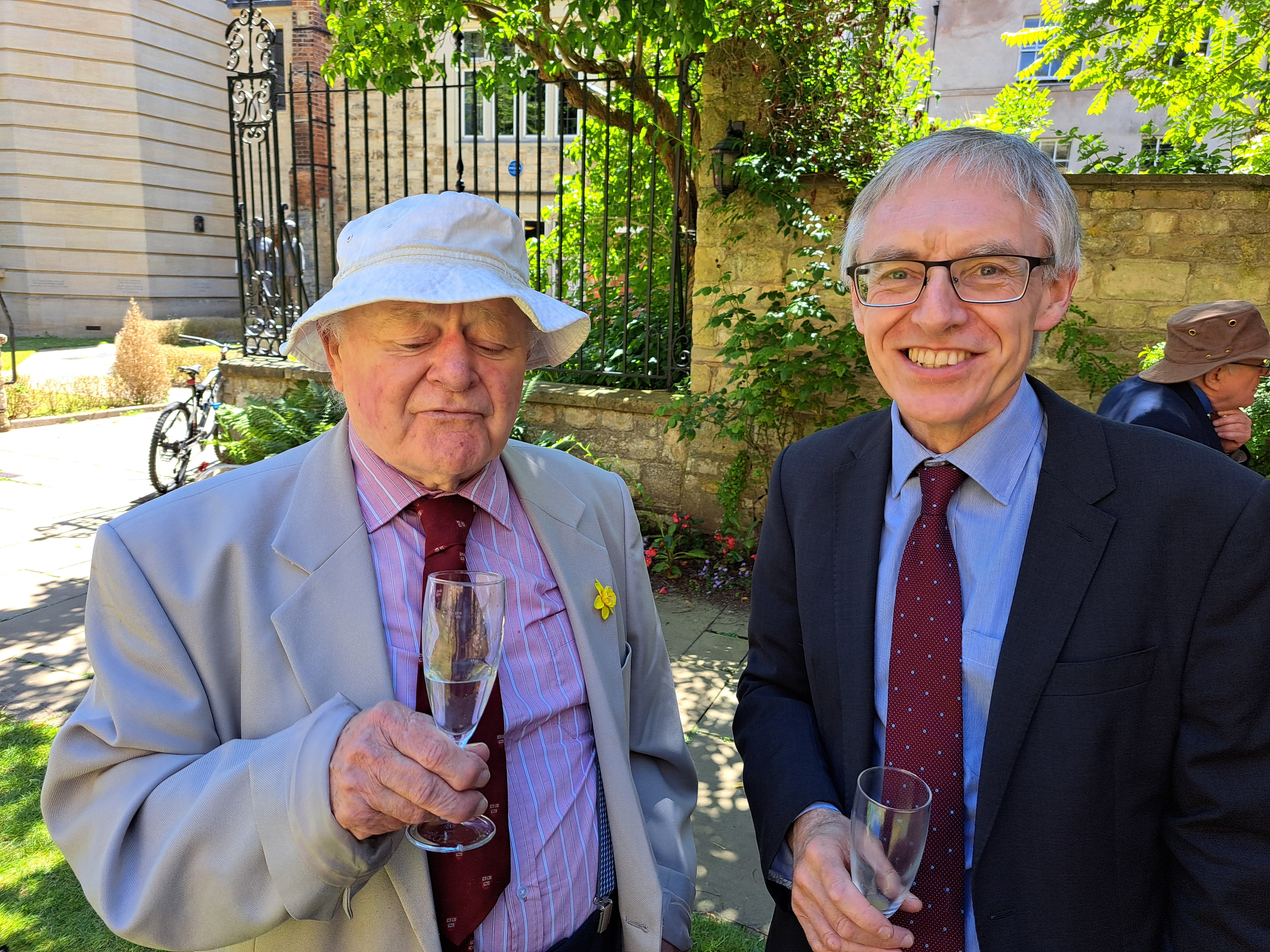
Rev Jim Corrigall and Dr David Wykes
Alan Ruston in the College Chapel

Having been founded by MOSA, Faith and Freedom gives an annual report to the Association and it is also a good opportunity to keep that connection active.

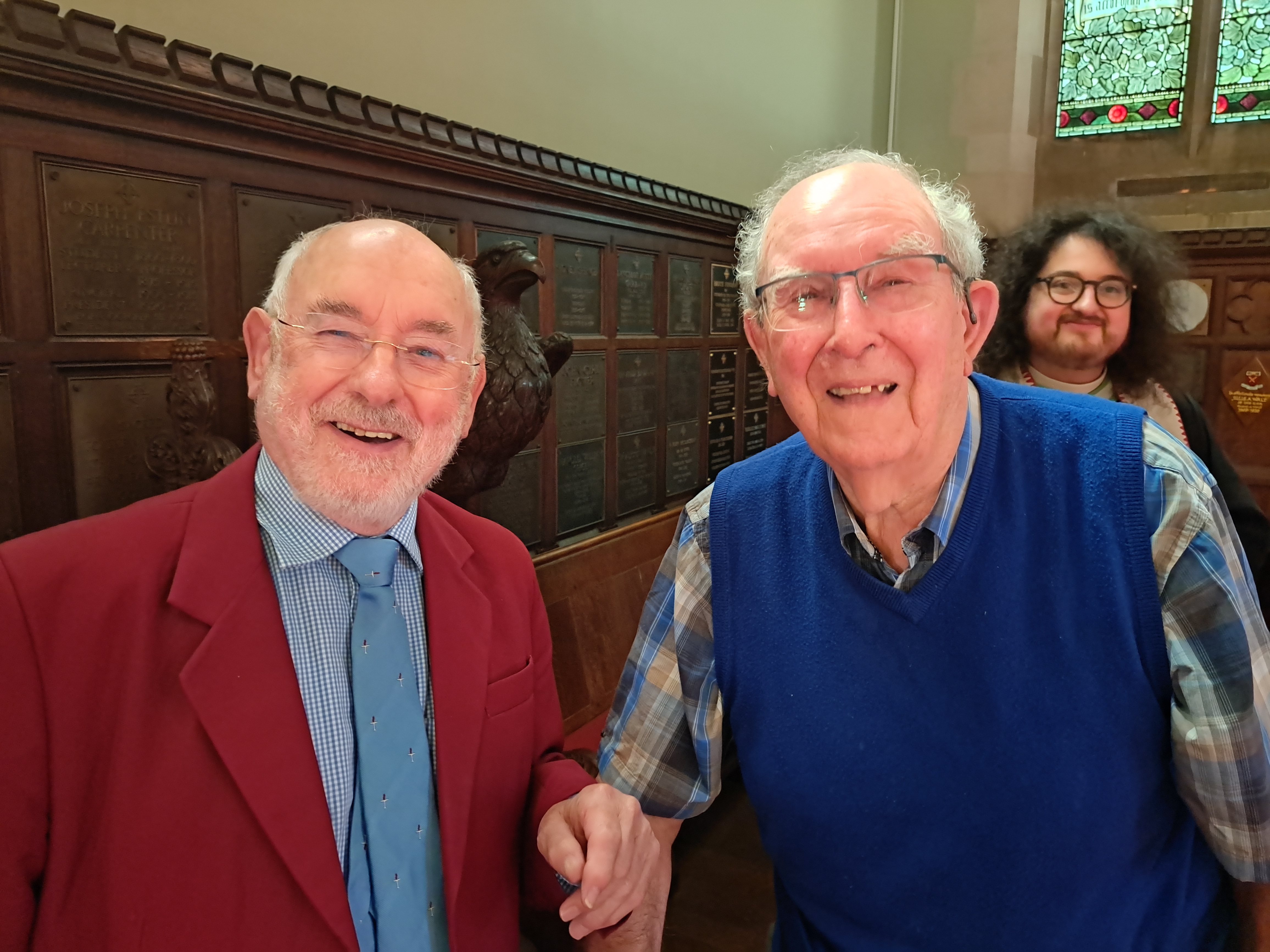
Rev Frank Walker (a contributor to the forthcoming issue) with NIgel Clarke (‘Faith and Freedom’ Business Manager)
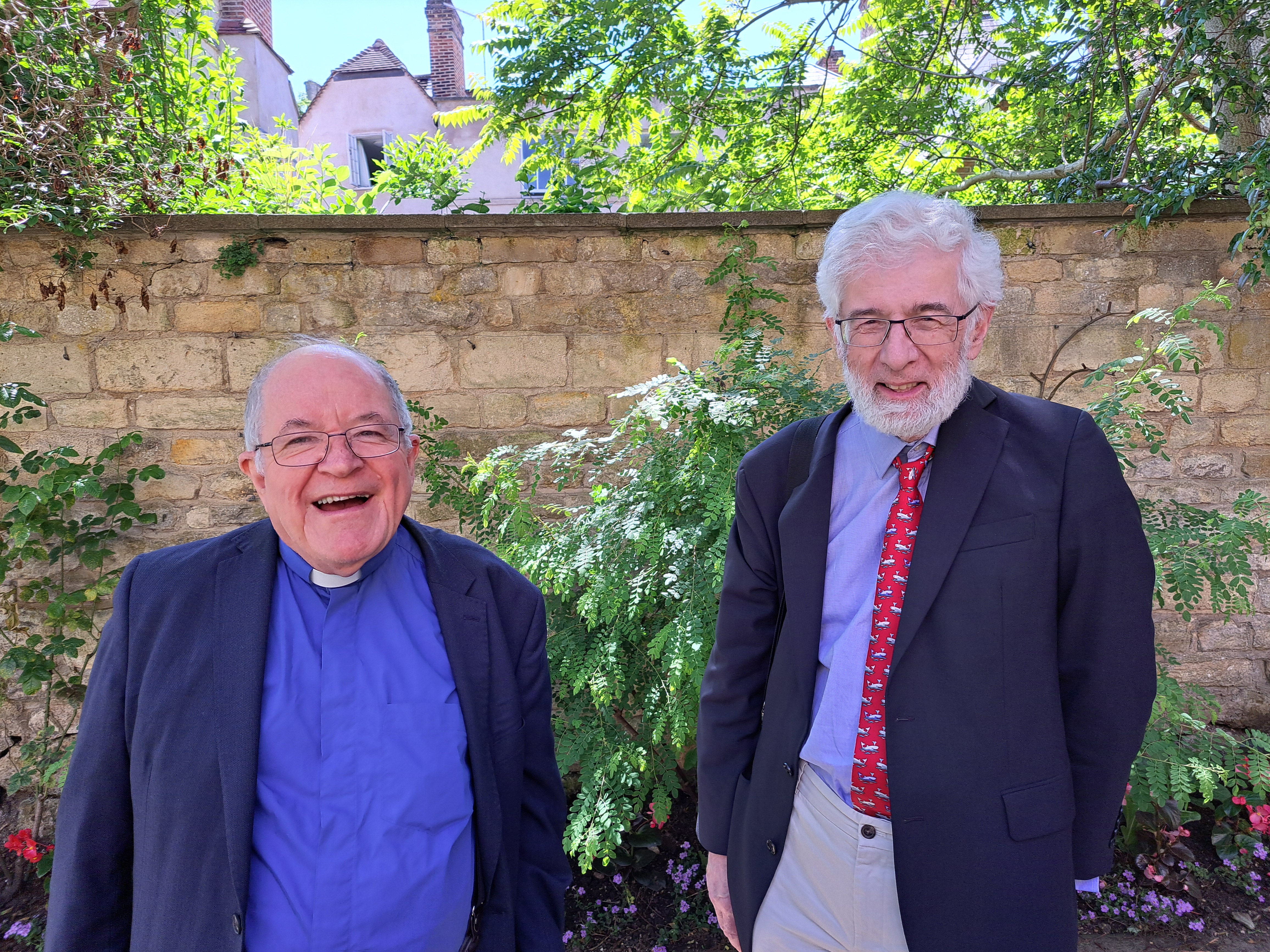
The Two Peters. Rev Peter Hewis and Rev Dr Peter Godfrey (Editor Emeritus)
Rev Robin Hanford of Hinckley who conducted the annual service in the College Chapel

To read more about the latest issue click here.

Transactions of the Unitarian Historical Society April 2024

The latest issue of the Transactions (Volume 28 Number 3) will soon be on its way to members. Details of how to join the Society can be found below.

As ever the journal is full of interesting articles and contains:

The National Conference 1882-1928 – a Unitarian Talking Shop

by Alan Ruston

James Martineau’s carte de visite

One year before the bi-centenary of the British & Foreign Unitarian Association Alan Ruston looks at the other less well-known institution which came together with the B&FUA to form the General Assembly of Unitarian and Free Christian Churches in 1928. Although not founded by James Martineau, The National Conference of Unitarian, Liberal Christian, Free Christian. Presbyterian, and Other Non-Subscribing or Kindred Congregations, to give it its full title, was always under the influence of the great man. Even if the body was essentially ‘a Unitarian Talking Shop’ it was nevertheless an institution that made an important contribution to the development of national Unitarian organization in the late nineteenth and early twentieth centuries.

‘Holding Space Sacred’: Struggles for Land and Home in Great Britain and Ireland, and Beyond

by Derek McAuley

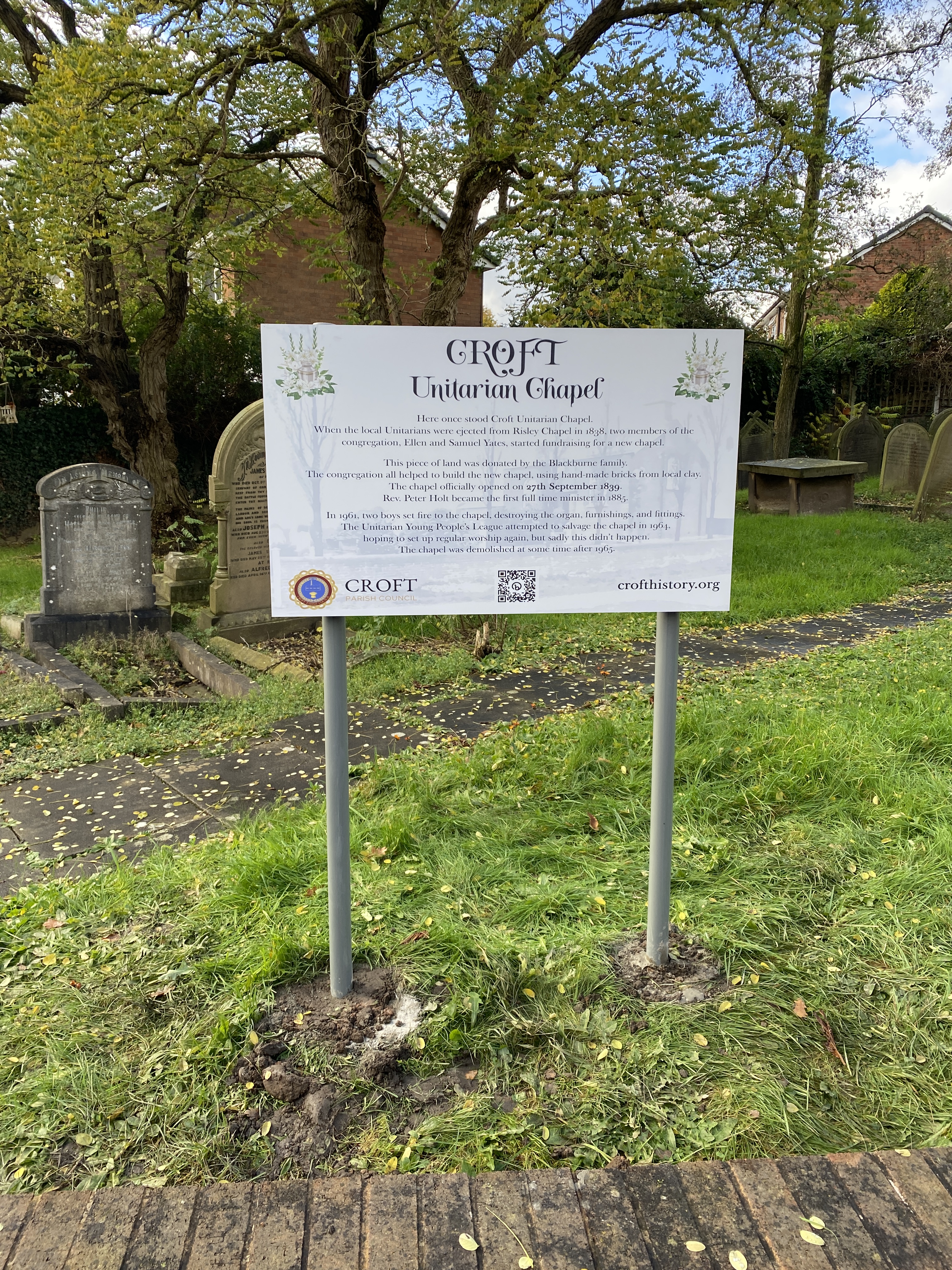
The site of Croft Unitarian Chapel today featuring the new signage erected through the efforts of Cheyvonne Bower who has done so much to restore and protect the site.

Based on a talk delivered as part of a webinar presented by the Reckoning International Unitarian/Universalist Histories Project on 15 November 2022 on ‘Global Struggles for Land and Home in Unitarian/Universalist Communities’, this paper explores the themes of ‘land and home’ within nineteenth-century Unitarianism. It looks particularly at events in Wales, Ireland, the British overseas Dominions plus the legal challenges that led to the Dissenters’ Chapels Act of 1844, and the role of women. One woman who is particularly highlighted is Ellen Yates who helped to establish the Unitarian cause at Croft after they were dispossessed of their chapel at Risley.

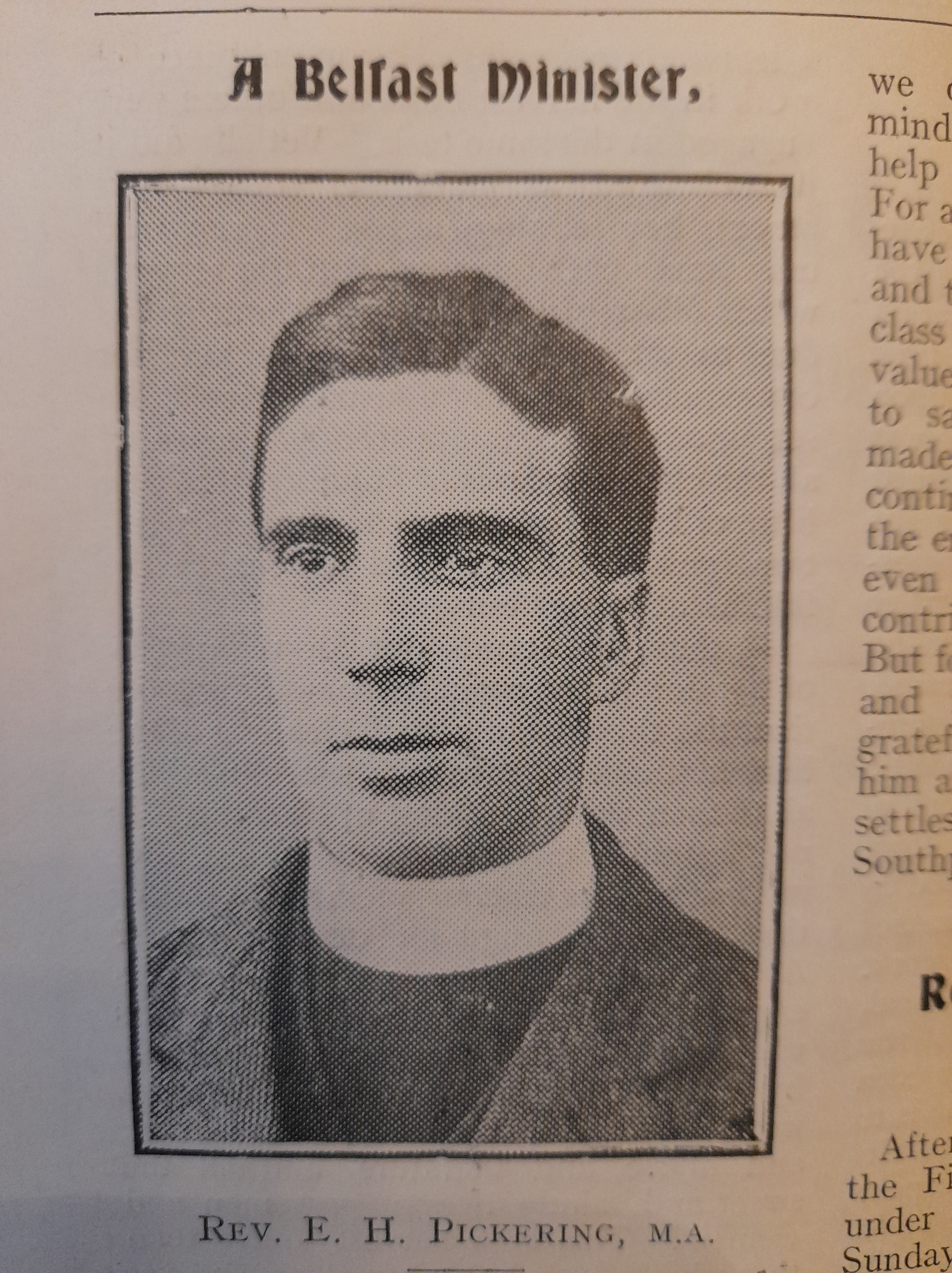
Training for the ministry, 1903-1910: Ernest Pickering at Manchester College Oxford

by Oliver Pickering

From ‘The Non-Subscribing Presbyterian’ 1921

Oliver Pickering examines the rich training for the ministry received by his grandfather at Manchester College, Oxford between the years 1907 and 1910 which were preceded by four years as an external exhibitioner at the College while also studying Classics at Exeter College. This seems to have been something of a golden age for ministerial training at Oxford, and his seven years at Manchester College were the prelude to a remarkable career as a minister (at Hyde; All Souls’ Church, Belfast; Southport and Oldham), a Member of Parliament and a professor of English Literature in Tokyo.

This issue also includes Reviews and a Supplement: Obituaries of Ministers of Unitarian
and Free Christian Congregations. Index and synopsis of references including new entries, additions and corrections from 1st February 2021
compiled by Alan Ruston.

An annual subscription costs just £10.

Visit the Unitarian Historical Society website to join: https://unitarianhistory.org.uk/

Click here to find out more about the work Cheyvonne Bower is doing at Croft.

A rare view of Croft Chapel from the field at the rear of the building. With thanks to Cheyvonne Bower for providing the image.

Transactions of the Unitarian Historical Society April 2023

Volume 28 Number 2 (April 2023) of the Transactions of the Unitarian Historical Society is now ready and, as ever, it is full of interest. It contains:

To give ‘occasional contributions’ and ‘annual subscriptions’ to
promote ‘those great principles of religious truth’:
Unitarian Fellowship Funds in the early nineteenth century

by David L. Wykes

Dr David Wykes

Our first article is by Society Vice-President David Wykes who has researched in great detail the story of the Unitarian Fellowship Funds. Although these were not long-lasting they deserve attention as an early national initiative which expressed a Unitarian identity and which found outlets all over the country. The Funds have long been neglected by historians but they are a very important indication of lay involvement in Unitarianism. They embraced both the poorer strata of society for a denomination that was often seen as appealing only to the rich, as well as gave an opportunity for women to be more actively involved in church life. The article includes a check list of Fellowship Funds and richly illustrates a movement that was one of the earliest expressions of a Unitarian denominational identity.

Emily Ronalds (1795–1889) and her social reform work
by Beverley F. Ronalds

Emily Ronalds. Photograph by Edmund Wheeler, Brighton, 1880. Courtesy: Auckland Library, New Zealand, Sir George Grey Special Collections, NZMS 1235

Beverley Ronalds, a Fellow of the Australian Academy of Technology and Engineering, uncovers the life and contribution of Emily Ronalds, a much-neglected Unitarian figure who played an important part in the extension of infant schooling. In her youth she was, by nature, a retiring figure, she was later described by the American social activist Frances Wright as ‘clever’ with ‘energy of character’, while Henry Crabb Robinson spoke of her ‘vivacity & good spirits’. She had close links with many of the most advanced thinkers of her day and contributed to experiments in socialist co-operative communities, the abolition of slavery and the development of feminism.

William Sunderland Smith (1833 – 1912) and his family
by Ian Wood

William Sunderland Smith photographed by his son William Ivan Smith in 1902. Courtesy: the family of W.I. Smith

William Sunderland Smith was the twelfth student to enrol in the Unitarian Home Missionary Board (later College) and went on to have a succession of ministries in England, Scotland and Ireland. Ministering, in turn, at Aberdeen, Rawtenstall, Doncaster, Tavistock and Crediton, his final and longest ministry was at Antrim. Ian Wood, his great great grandson, traces his life and that of his family, along with his theological and political ideas. A writer and journalist he developed extensive scientific interests, contributing ‘Nature Notes’ to the Northern Whig newspaper, and made numerous contributions on natural history and Irish history to the Ulster Journal of Archaeology.

Review Article.
The Oxford History of Protestant Dissenting Traditions
by Alan Ruston

Alan Ruston contributes a Review Article on The Oxford History of Protestant Dissenting Traditions, a five volume investigation of the place of Protestant Dissent not only in England and Ireland but also the Empire and Commonwealth, the USA and ultimately all over the world. Alan reviews all five volumes but pays especial attention to volumes two and three which contain a great deal concerning Unitarianism.

In addition we have our review section.

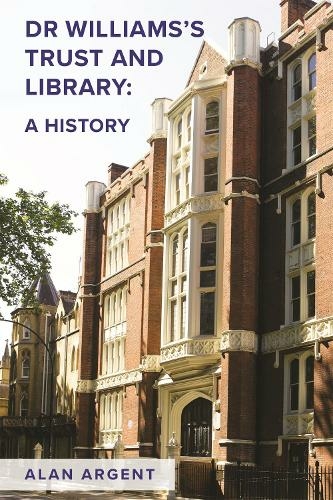
Dr Williams’s Trust and Library: A History
by Alan Argent

A Short History of the
Non-Subscribing Presbyterian Church of Ireland.
Including Sketches of Individual Congregations
and a Fasti of Ministers who served in them

by J.W. Nelson

These Eighty Years. A Recollection
by Alan Ruston

All reviewed by David Steers,
Editor of the Transactions

plus

OBITUARY
Professor Sir Tony Wrigley, FBA (1931-2022):
a Unitarian appreciation
by David L. Wykes

An annual subscription costs £10

Visit the new Unitarian Historical Society website to join: https://unitarianhistory.org.uk/
Transactions of the Unitarian Historical Society April 2022

The issue for 2022 (vol 28 No.1) will be with subscribers shortly and once again this is a very full and very special issue because members will receive two journals for their subscription. Part One contains three important articles plus reviews and more, Part Two is produced in collaboration with the Reckoning International Unitarian and Unitarian Universalist Histories Project.

Part One

The cloisters, Ullet Road Church Liverpool

In Part One our main articles look at Unitarianism, slavery and philanthropy. A number of Unitarians were actively involved in the abolition of slavery. One very prominent example of this was William Roscoe whose memorial is located in the cloisters in Ullet Road Church, a set of buildings constructed at the end of the nineteenth and start of the twentieth centuries which perfectly illustrate the enormous philanthropic contributions of wealthy Unitarians at this time.

‘Jewel Case’ – The Man and his Money Derek McAuley

Very Rev George Case, MA, DD (used with permission of Clifton Diocesan Archives)

Derek McAuley traces the story of the Very Rev George Case whose journey from the Anglican to Catholic priesthood was followed by a very generous bequest to the Unitarian movement. His father was a contemporary of William Roscoe in Liverpool but unlike Roscoe he was deeply implicated in the slave trade. Using modern tools and databases Derek examines the source of Dr Case’s wealth.

Reflections on a Window Rory Delany

The Wilson Memorial Window, Dublin Unitarian Church (Photo: Rory Delany)

The most prominent and striking window within Dublin Unitarian Church, St Stephen’s Green is the Wilson Memorial Window which memorializes Thomas Wilson, long standing member of the congregation and generous benefactor. In this article Rory Delany looks at the source of Thomas Wilson’s wealth, again using the databases and records which have become available and which highlight those families involved in the slave trade. He contrasts Thomas Wilson’s attitudes and business interests with his contemporary and fellow church member James Haughton who was a noted anti-slavery campaigner.

Unitarians and Philanthropy 1860-1914 Alan Ruston

Looking towards the library at Harris Manchester College

Alan Ruston gives a substantial survey of Unitarian philanthropy between 1860 and 1914. Many wealthy Unitarians gave vast sums to build churches, establish charities and develop educational institutions such as Manchester College (see above) which was founded in 1786 in Manchester but moved to Oxford in 1893 following a number of very generous donations.

Books Reviewed

Reviewed by David Wykes, Alan Ruston and David Steers

Part Two

The ethnographic composition of Hungary in 1910 (Map: Lehel Molnár)

Part Two of this issue develops the successful initial event of the Reckoning International U/UU Histories Project which was entitled ‘Transylvanian Unitarians Resisting and Surviving in Authoritarian Times’ and which took place on Thursday, 4 November 2021. This can be viewed online at the Starr King School for the Ministry YouTube channel (https://youtu.be/ozH1fnDkSHk).

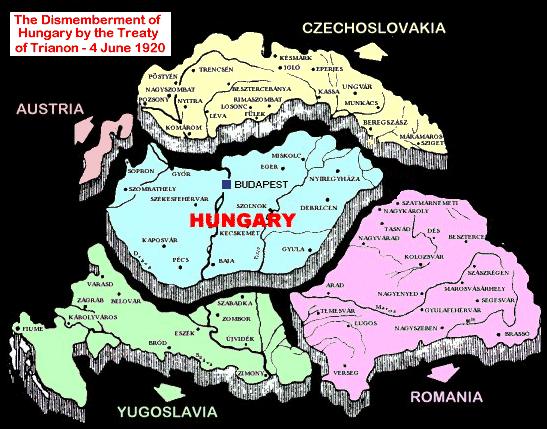
The dismemberment of Hungary by the Treaty of Trianon (Map: Lehel Molnár)

We are very pleased to be able to carry in this issue an introduction and summary of the whole Reckoning project compiled by its co-ordinators Claudia Elferdink and Lehel Molnár This is followed by two articles which are not transcripts of the original webinar but which give additional insight and information on the experience of Hungarian Unitarians over the last one hundred years, particularly following the Communist takeover in Romania after the Second World War. The first of these is ‘The Hungarian Unitarian Church in the Twentieth Century’ by Sándor Kovács and Lehel Molnár, an explanation of the struggles of the church from the Treaty of Trianon – when Hungary lost two thirds of its historic territory – to the present century. This is followed by ‘Resistance or/and Compromise. The Struggles and Service of Unitarian Bishop Elek Kiss (1888–1971) in Communist Romania’ by Sándor Kovács which gives a very detailed view of the problems and stresses experienced by the church in the Communist era.

The ethnographic compostion of Hungary in 1880

New subscribers are very welcome, annual membership costs only £10. If you haven’t yet taken out a subscription or would like to renew your subscription that can be done through the Society’s treasurer who can be contacted via the Unitarian Historical Society website here.

Transactions of the Unitarian Historical Society June 2021

The latest issue of the Transactions, including a special Supplement, is now ready. New subscribers are very welcome, annual membership costs only £10. If you haven’t yet taken out a subscription or would like to renew your subscription that can be done through the Society’s treasurer who can be contacted via the Unitarian Historical Society website here.

The new issue contains the following articles:

The History of the Kolozsvár English Conversation Club

Sándor Kovács

The Unitarian College Kolozsvár/Cluj Napoca shortly after its opening in 1901


Sándor Kovács relates the hitherto unresearched story of the Kolozsvár English Conversation Club. A major source for illuminating the relationship between Unitarians in Transylvania and Hungary and in the UK and USA. The Club was founded in 1876 by János Kovács and gave local people the opportunity to learn English. It became the main point of contact for visiting Unitarians throughout the rest of the century, over the period of the celebration of the Hungarian Millennium in 1896 and on into the twentieth century.

Received with Thanks. Unitarian Hymns sung by Mainstream Churches

Nigel Lemon

Nigel Lemon investigates hymns penned by Unitarian writers which have found favour in mainstream hymnbooks. He looks at around 50 Unitarian hymns which are found in a selection of mainstream books published in the twentieth and twenty-first centuries and focusses on thirteen Unitarian authors.

Thomas Aikenhead: An Historiographical Introduction

Rob Whiteman

Old Tolbooth, Edinburgh (Wikimedia Commons)

Thomas Aikenhead was an Edinburgh student who stood trial for blasphemy in December 1696, and was put to death in the following January. Said to be the last person to be executed for blasphemy in Britain he is often also claimed as a Unitarian martyr. Rob Whiteman examines the way his trial and execution has been understood across the centuries.

Tercentenary of a Unique Donation: Glasgow University and Chowbent Chapel

David Steers

Chowbent Chapel, Atherton

Universities are not known for their generosity to outside bodies but in 1721 the University of Glasgow (see image at the top of this page which shows Glasgow College at the end of the seventeenth century) made a donation to Chowbent Chapel whilst it was being built. The congregation had just been dispossessed from their old chapel by a new landlord. This short article explains how and why Glasgow University supported the building of the new chapel (pictured above).

Books Reviewed

Protestant Dissent and Philanthropy 1660-1914,
edited by Clyde Binfield, G.M. Ditchfield and David L. Wykes,
The Boydell Press, 2020,
hardback, 264 pages, ISBN 978-1-78327-451-2. Studies in Modern British History Vol 39. Price £65.
Reviewed by Alan Ruston
Subscribers to the Transactions will be pleased to know that they are able to purchase this book with a  special 35% discount using the code given in the issue.

A Radical Religious Heritage, by John Maindonald,
second edition, 2020,
paperback, 68 pages ISBN 978-0-473-52784-6. Price $NZ 25.00
Reviewed by Graham Murphy

Supplement

Obituaries of Ministers of Unitarian Congregations
Index and synopsis of references
New entries, and Additions and Corrections
extended from 1 February 2014 to 31 January 2021
Compiled by ALAN RUSTON

This issue comes with Alan’s latest Supplement which brings over twenty years of research by Alan on Unitarian obituaries right up to date. It also makes use of the late Professor R.K. Webb’s index cards based on a wide variety of sources for biographical details of Unitarian ministers from circa 1780 to the early 1990s.

Transactions of the Unitarian Historical Society December 2020

An additional special issue of the Transactions is now on its way to subscribers (new subscribers are also very welcome, if you would like to join go to the Unitarian Historical Society website here).

This issue features:

WILLIAM HAZLITT, JOSEPH PRIESTLEY AND THE ORIGINS OF UNITARIANISM
IN AMERICA
by STEPHEN BURLEY

The “dark, cracked, dusty and unframed” portrait of the Rev William Hazlitt (1737-1820) painted by his son in 1805. (Image and quote from ‘The Day-Star of Liberty William Hazlitt’s Radical Style’ by Tom Paulin)
Rev Joseph Priestley (1733-1804). Portrait by Ellen Sharples (Source: Wikipedia)

Dr Stephen Burley’s paper is a radical reassessment of the role of William Hazlitt in the development of Unitarianism in the United States. A difficult man, Hazlitt was a fervent propagandist for Unitarianism whose contribution has frequently been overlooked or downplayed. This article adds a great deal to our understanding of him.

Rev William Hazlitt, from a miniature portrait by his son John (Source: Wikipedia)

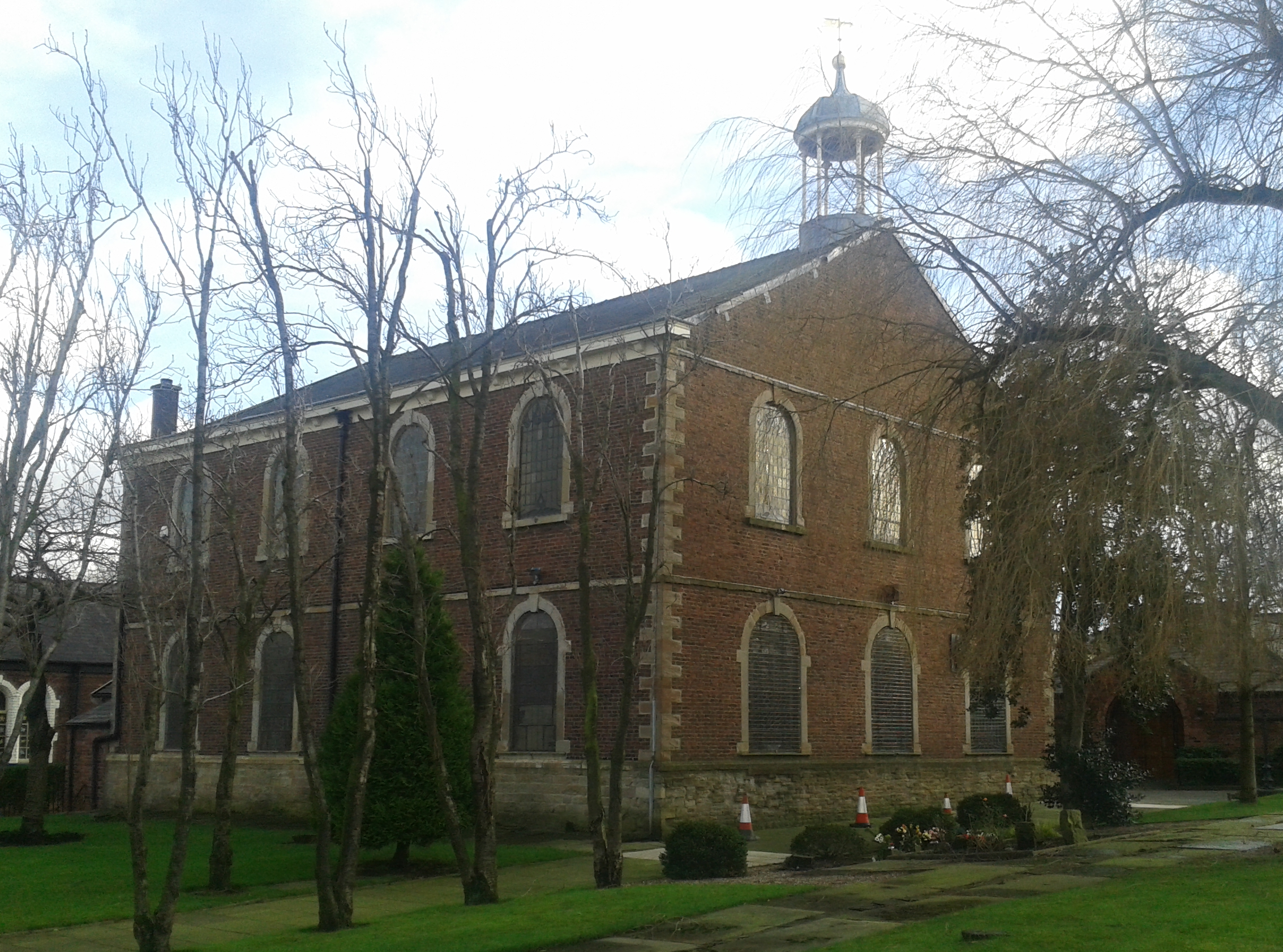
‘STEADFAST THROUGH TROUBLES’: MOUNTPOTTINGER AND THE LAWRENCES
by SANDRA GILPIN

Ellen Mary Lawrence, from a portrait in Mountpottinger Church. (Photo: Adrian Moir)
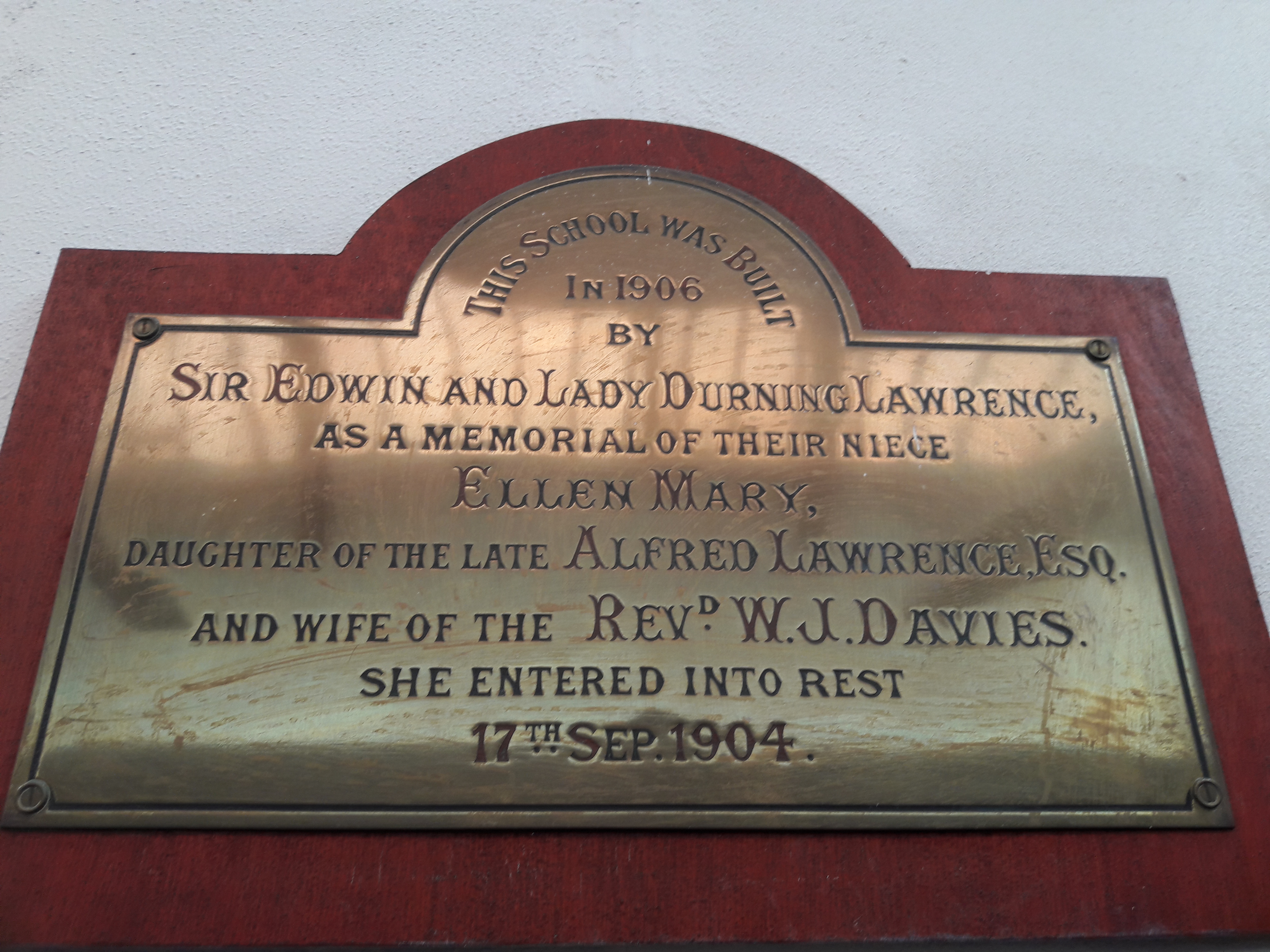
Plaque in the schoolroom in Mountpottinger Church in memory of Ellen Mary Lawrence (Photo: Adrian Moir)

Sandra Gilpin tells a story that weaves together Unitarian life in London, Wales and Belfast in the late nineteenth and early twentieth centuries through the lens of the Lawrence family. Its main focus is Ellen Mary Lawrence who was born in London and who married the Rev William Jenkin Davies. She died at a tragically young age and her memorial forms part of Mountpottinger NSP Church in east Belfast.

Mountpottinger Church before the extension was added in memory of Ellen Mary Lawrence and probably featuring Rev William Jenkin Davies standing in the centre. To read more about the building of Mountpottinger click on the above image.

HELEN K. WATTS – A UNITARIAN SUFFRAGETTE
by ALAN RUSTON

The daughter of an Anglican vicar, Helen K. Watts became a Unitarian in Nottingham (Picture: Alan Ruston. From a booklet by Rowena Edlin-White, Nottingham Women’s History Group, Piecemeal Pamphlets, £2)
Plaque unveiled in Nottingham on 14 December 2018 in memory of Helen K. Watts (Picture: Alan Ruston. From a booklet by Rowena Edlin-White, Nottingham Women’s History Group, Piecemeal Pamphlets)

Alan Ruston brings together two sides of the life of Helen K. Watts. A ‘stalwart’ Unitarian, well-known in London and Sussex up until her death in 1972. She was also an active suffragette between 1907 to 1911 who was arrested for her campaigning and threatened with force feeding. This remarkable aspect of her life seems to have been forgotten in Unitarian circles and Alan paints a full picture of her life and achievements.

(Picture: Alan Ruston. From a booklet by Rowena Edlin-White, Nottingham Women’s History Group, Piecemeal Pamphlets)

In our Record Section Derek McAuley has used the Freedom of Information Act to uncover hitherto unknown aspects of the life of the Rev Gábor Kereki (1914-1995) who fled Hungary for Britain at the start of the Cold War in 1947. Throughout the rest of his life he made a great contribution to the Unitarian ministry in Britain and this will continue thanks to a substantial legacy left by his wife in 2016. She has established the ‘Gábor Kereki Trust’ to benefit ministers and students of the Hungarian Unitarian Church and enable them to study in the UK.

In our Reviews Derek McAuley begins what must be a long-overdue examination of the role Unitarians played in slavery prior to its abolition in 1833 with his review of Kate Donnington’s brand new book on the Hibbert family. Alan Ruston reviews the important Lindsey Press book Unitarian Women A Legacy of Dissent, edited by Ann Peart, and Andrew Hill reviews a new publication of the diaries of James Losh, a Newcastle Unitarian who observed and recorded detailed changes in nature, the environment and weather in his local area between 1803 and 1833.

Transactions of the Unitarian Historical Society

Volume 27 Number 3 December 2020
Edited by David Steers

is now available. An annual subscription costs £10. Contact the treasurer via our website to join: https://www.unitarianhistory.org.uk/hsmembership4.html

Transactions of the Unitarian Historical Society April 2020

The next issue of the Transactions of the Unitarian Historical Society (Volume 27, Number 2, April 2020) will soon be on its way to all subscribers. This is the first of two issues that will appear in 2020.

Volume 27, Number 2 has a special focus on three prominent twentieth-century Unitarians who have each been overlooked in recent years:

James Chuter Ede

James Ramsay MacDonald

Nathaniel Bishop Harman

800px-James_Chuter_Ede_

James Chuter Ede (Photo: Wikimedia Commons)

Despite being the longest-serving Home Secretary of the twentieth century James Chuter Ede is the only senior member of Clement Attlee’s Cabinet of 1945 to have so far attracted no complete biography. Dr Stephen Hart has been researching the life of James Chuter Ede and will see his new biography published later this year. In the Transactions he provides a detailed and information account of Ede’s life including his dedicated service to the Unitarian movement which culminated in his election as President of the General Assembly.

JRM Picture

James Ramsay MacDonald in 1895 (Photo: Tom McCready. Also photo at the top of the page showing sermons in the J.R. MacDonald Archive: Tom McCready)

James Ramsay MacDonald’s commitment to Unitarianism for a considerable portion of his life has often been overlooked, yet he preached in Unitarian churches many times and served as ‘temporary minister’ in Ramsgate and Margate for a short period. Rev Tom McCready has unearthed a hitherto neglected Unitarian archive detailing the future Prime Minister’s religious commitment and shows how his anti-militarism and pacifism were rooted in his youthful Unitarianism.

BesselsGreenKent

Bessels Green Old Meeting House, Sevenoaks (Photo: Unitarian Historical Society)

Nathaniel Bishop Harman was another leading twentieth-century Unitarian layperson who became President of the General Assembly. Alan Ruston shows how he became a Unitarian following his marriage and despite achieving considerable eminence as an ophthalmologist also devoted a great deal of his life to Unitarian affairs as writer, organiser and lay preacher, being particularly active in the congregation of Bessels Green in Kent.

To make space for these three ground-breaking articles all pieces for our Reviews, Notes and Record Section have been held over until the autumn when we will publish an extra issue. Volume 27 Number 3 will have as its lead article Dr Stephen Burley’s paper ‘William Hazlitt (1737-1820), Joseph Priestley and the Origins of Unitarianism in America’. There is no extra cost for Volume 27, Number 3 and this will be sent out to all members who renew their subscription in April.

Details of membership and how to subscribe can be found on the website of the Unitarian Historical Society


Unitarian Historical Society 2019

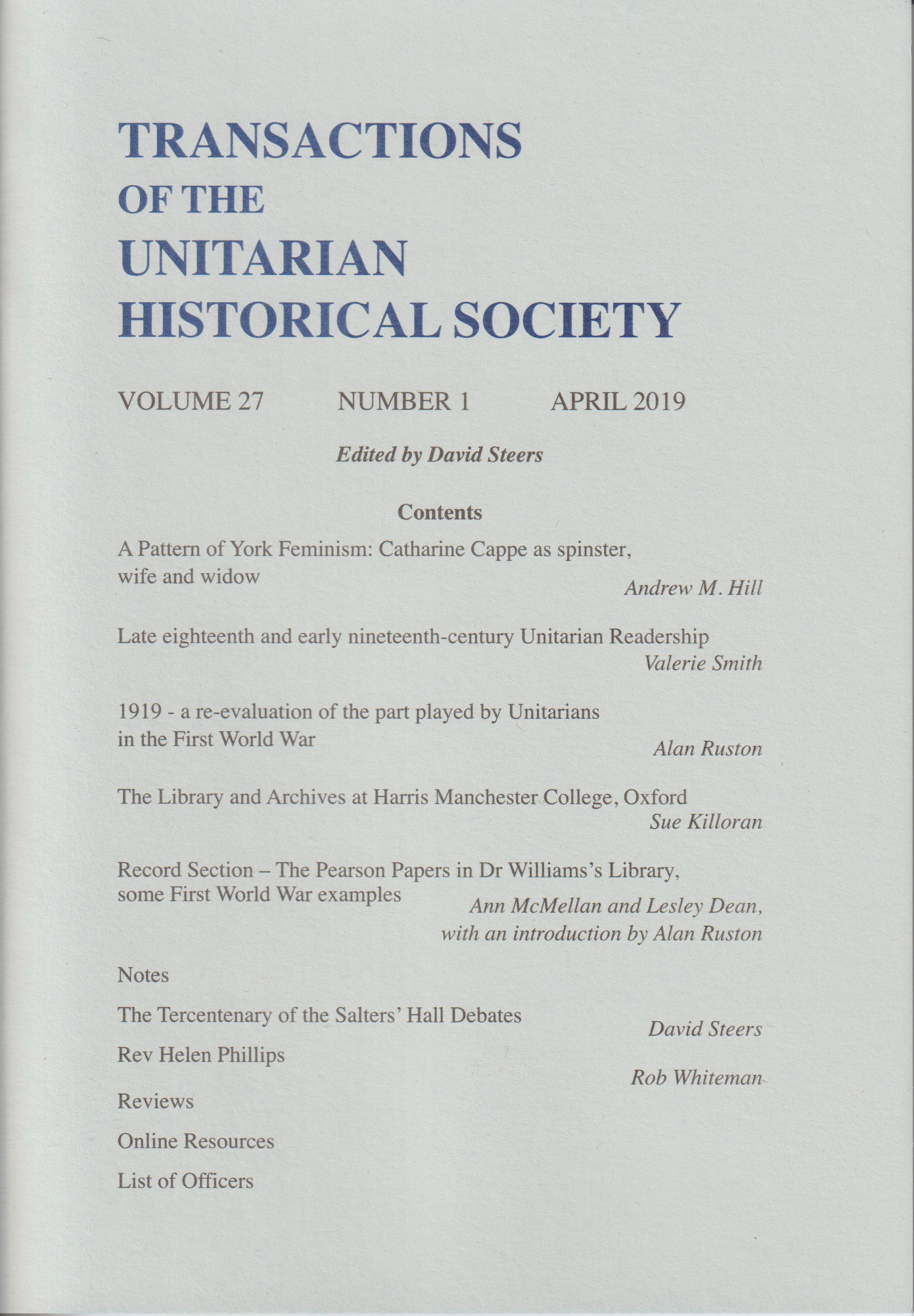
The cover of our latest issue of the Transactions which is on its way to all subscribers and which is available to order by new subscribers now:

Cover 2019

You can read more about the contents HERE

The Tercentenary of the Salters’ Hall Debates can be read HERE

The Annual General Meeting of the Society for 2019 will take place at 14.55 on Wednesday 17 April at the Birmingham Hilton Metropole Hotel during the meetings of the General Assembly. This will be followed by a lecture by Dr Rachel Eckersley on ‘Benefactions in the form of books: the development of the Northern Dissenting Academies and their libraries during the 18th and 19th centuries’.