Postcards by A.D. Coon

In this post we are looking at some more examples of the work of Allen Daniel Coon. The total output of postcards he produced between 1902 and his death in 1938 must have been enormous and they covered a very wide geographical area. I hadn’t noticed that one card I picked up a few years ago was by him:
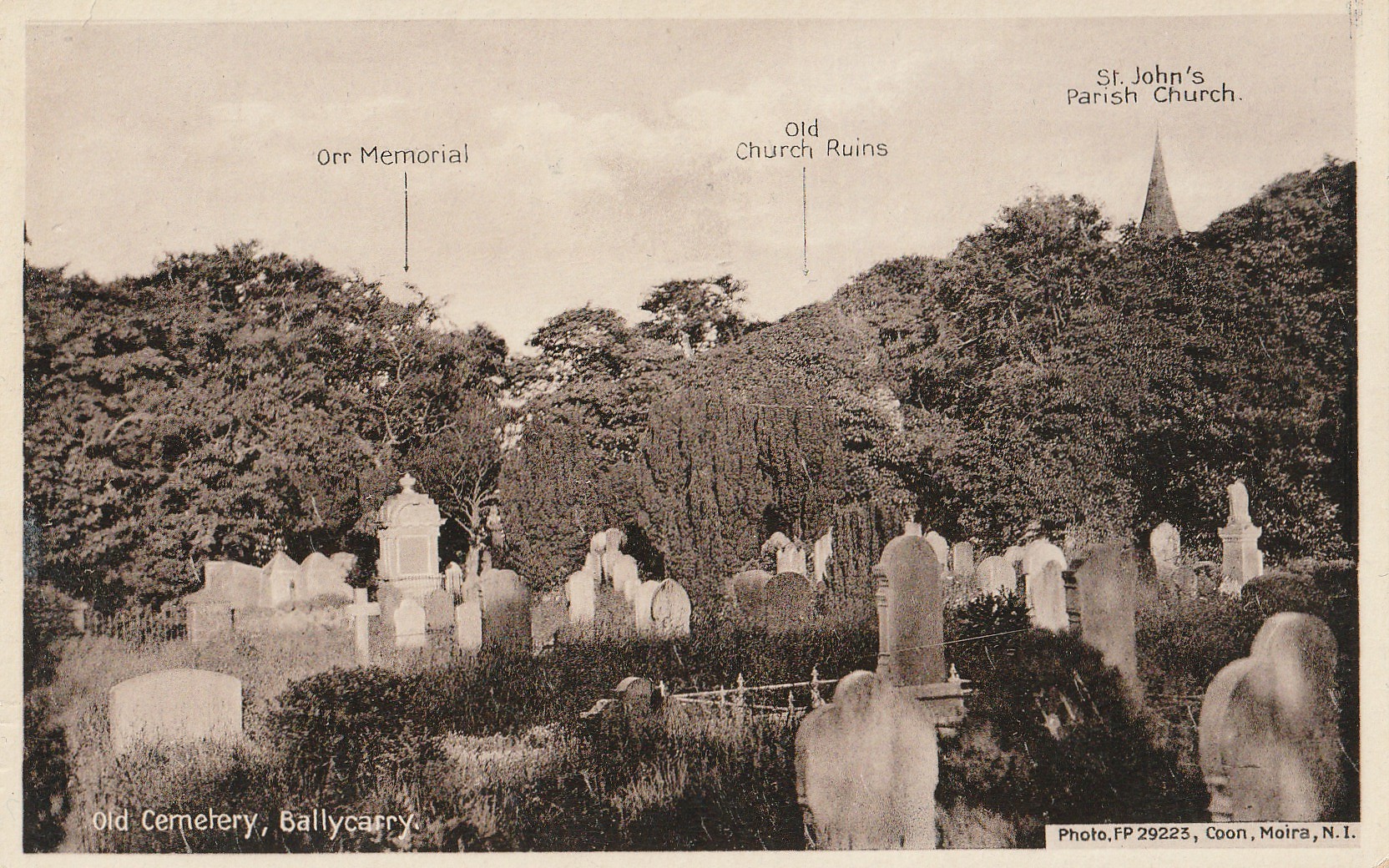
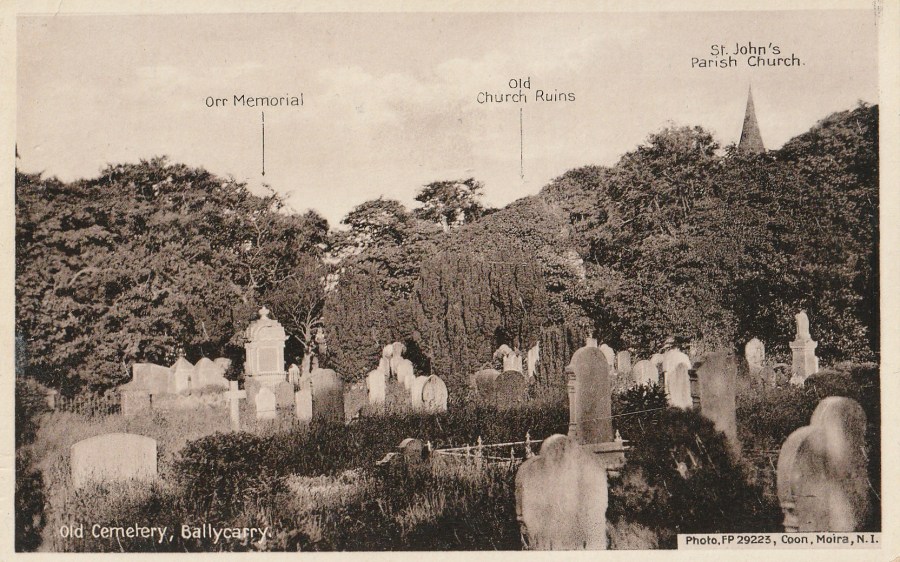
Old Cemetery, Ballycarry, 1929

This was produced for John McKee News Agent and Confectioner, Ballycarry, and is interesting because he has labelled different features of the graveyard, although you can only see the tip of the spire of St John’s Parish Church and can’t see the ruins of the old church at all as they are obscured by trees.

This is what the ruins look like today:
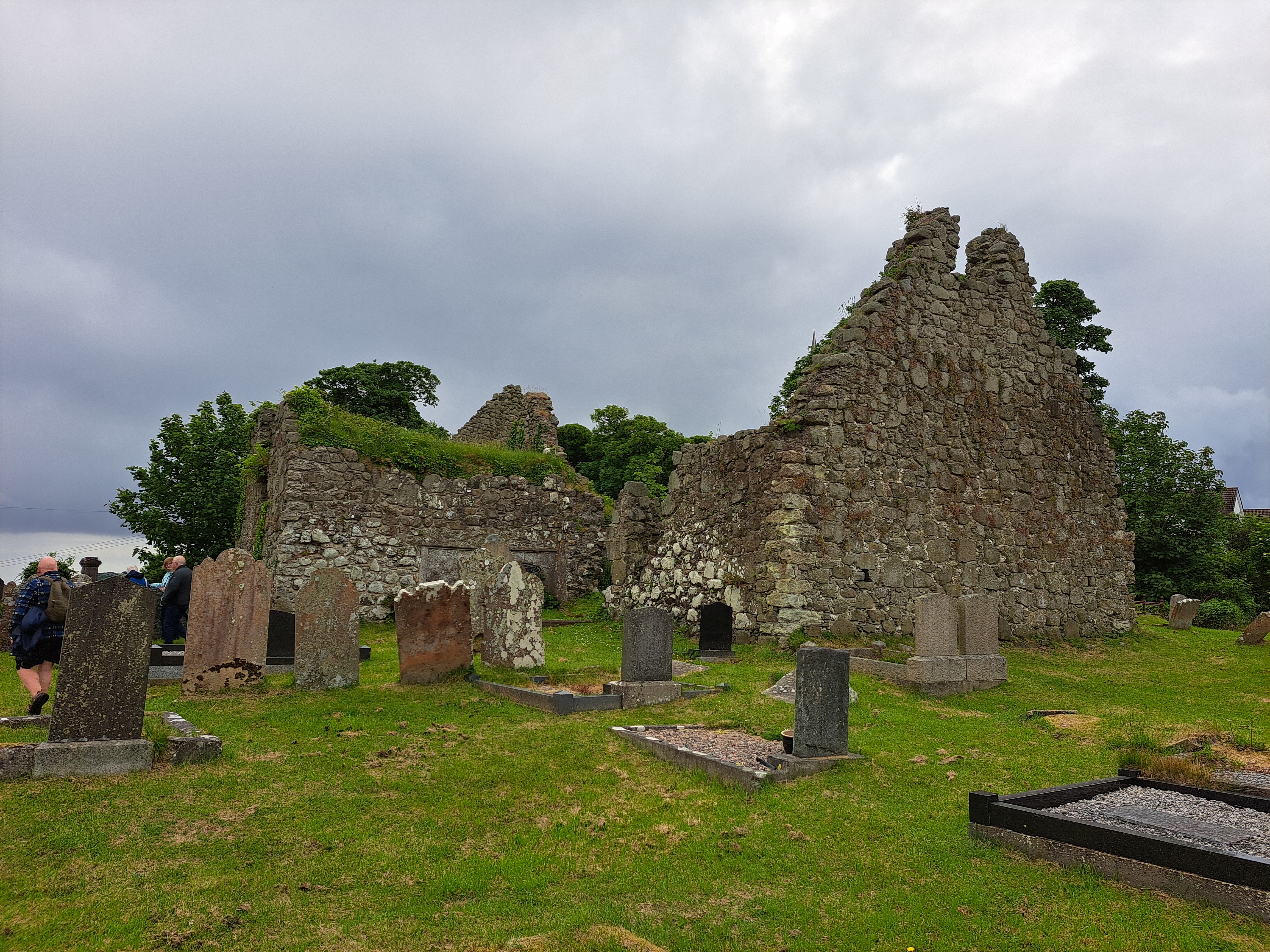
Ruins of Templecorran Church, Ballycarry

You can read about our recent visit to this graveyard here.

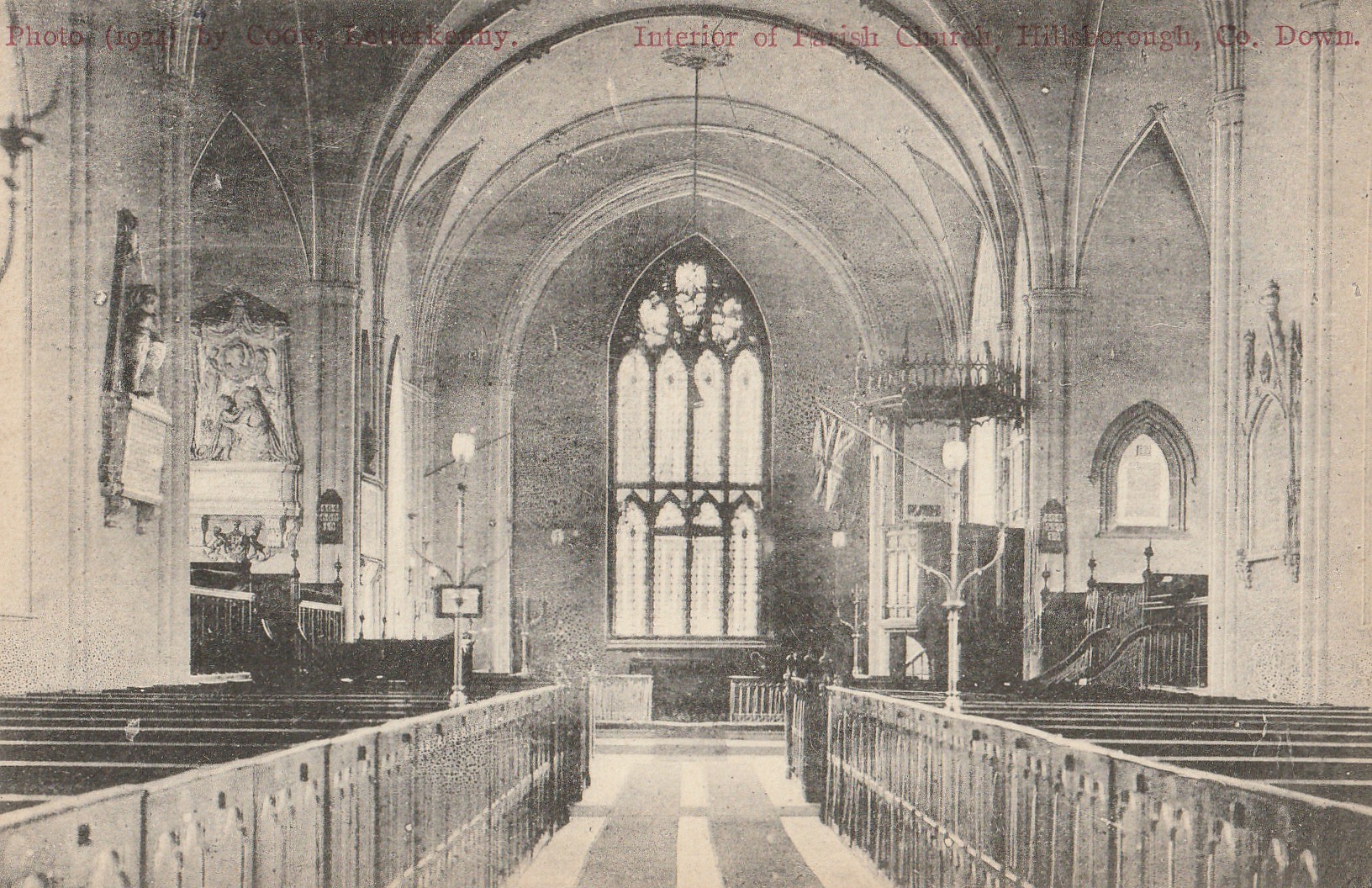
Allen Coon produced a lot of postcards for this part of County Antrim in the later 1920s, in this case giving his location as Moira, NI. Five years earlier his postcards produced for Mrs Johnston, Draper & Boot Merchant, Hillsborough still give his location as Letterkenny:
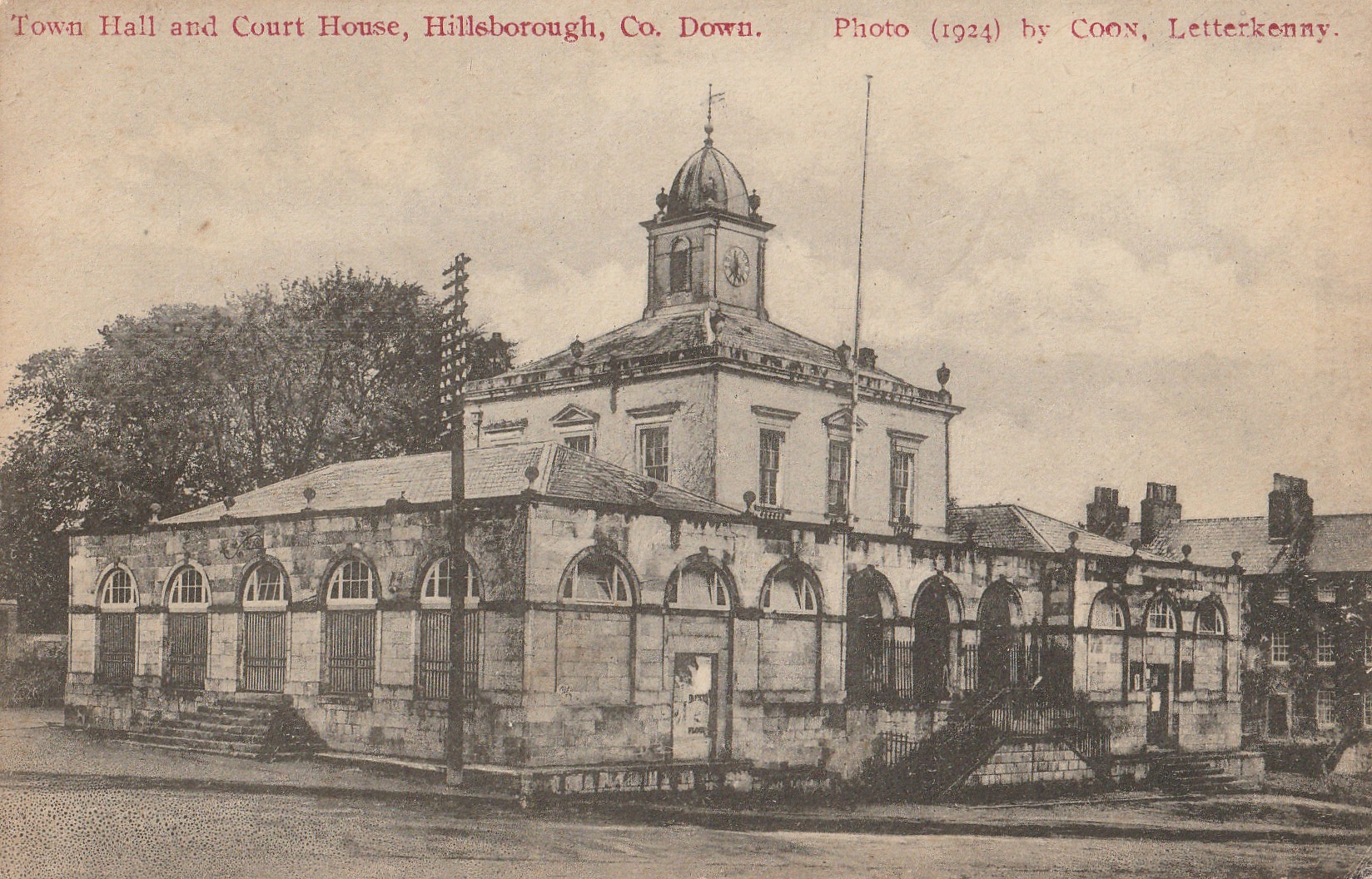
Town Hall and Court House, Hillsborough, 1924

Interior of Parish Church, Hillsborough, 1924

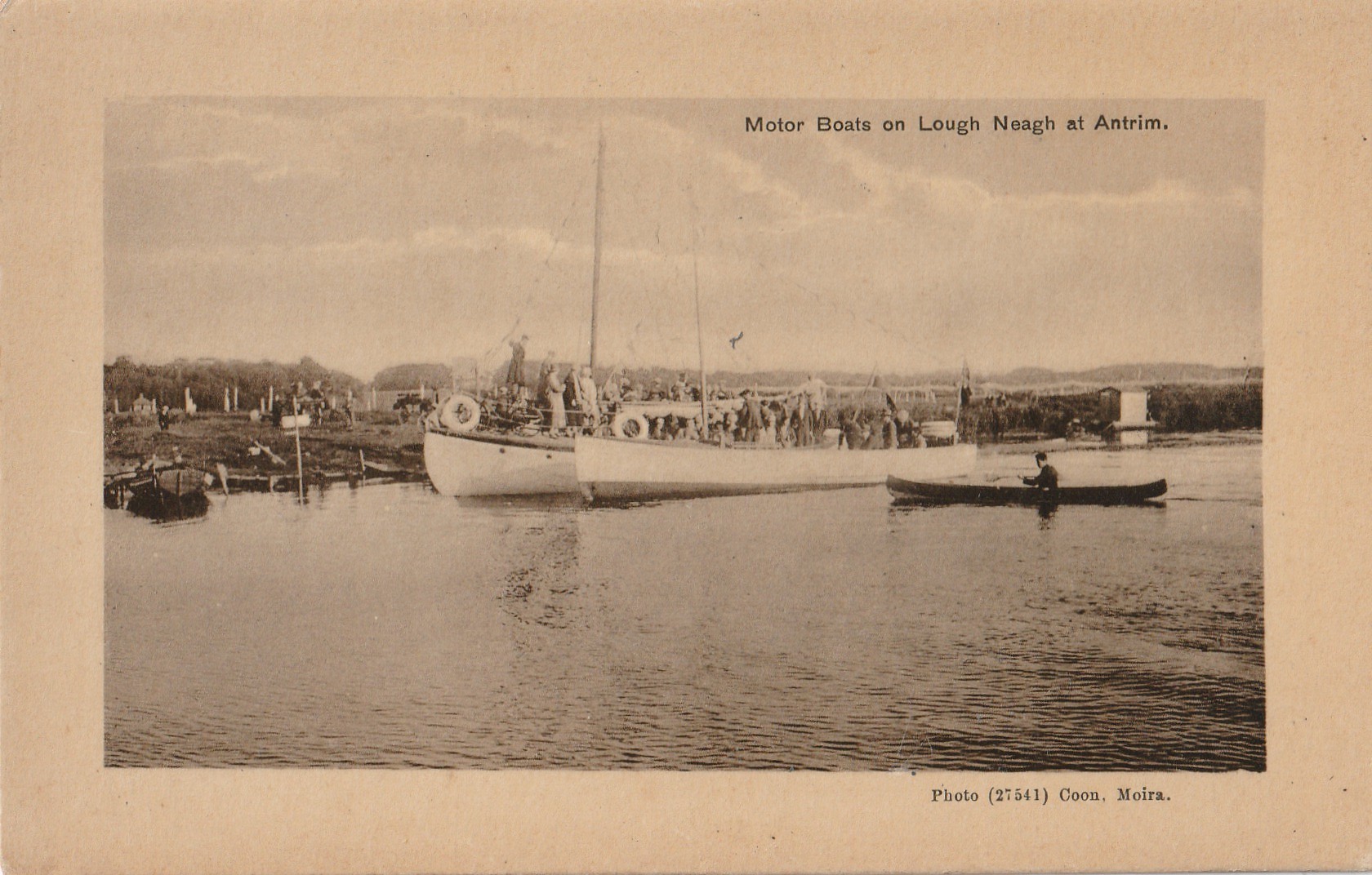
The cards produced in Antrim in 1927 stand out from the others having a large border and a glossy finish. This time they are published for Mrs Simpson, Newsagent and Stationer, Antrim, who must have wanted something different in terms of design. By this time he is well settled in Moira:
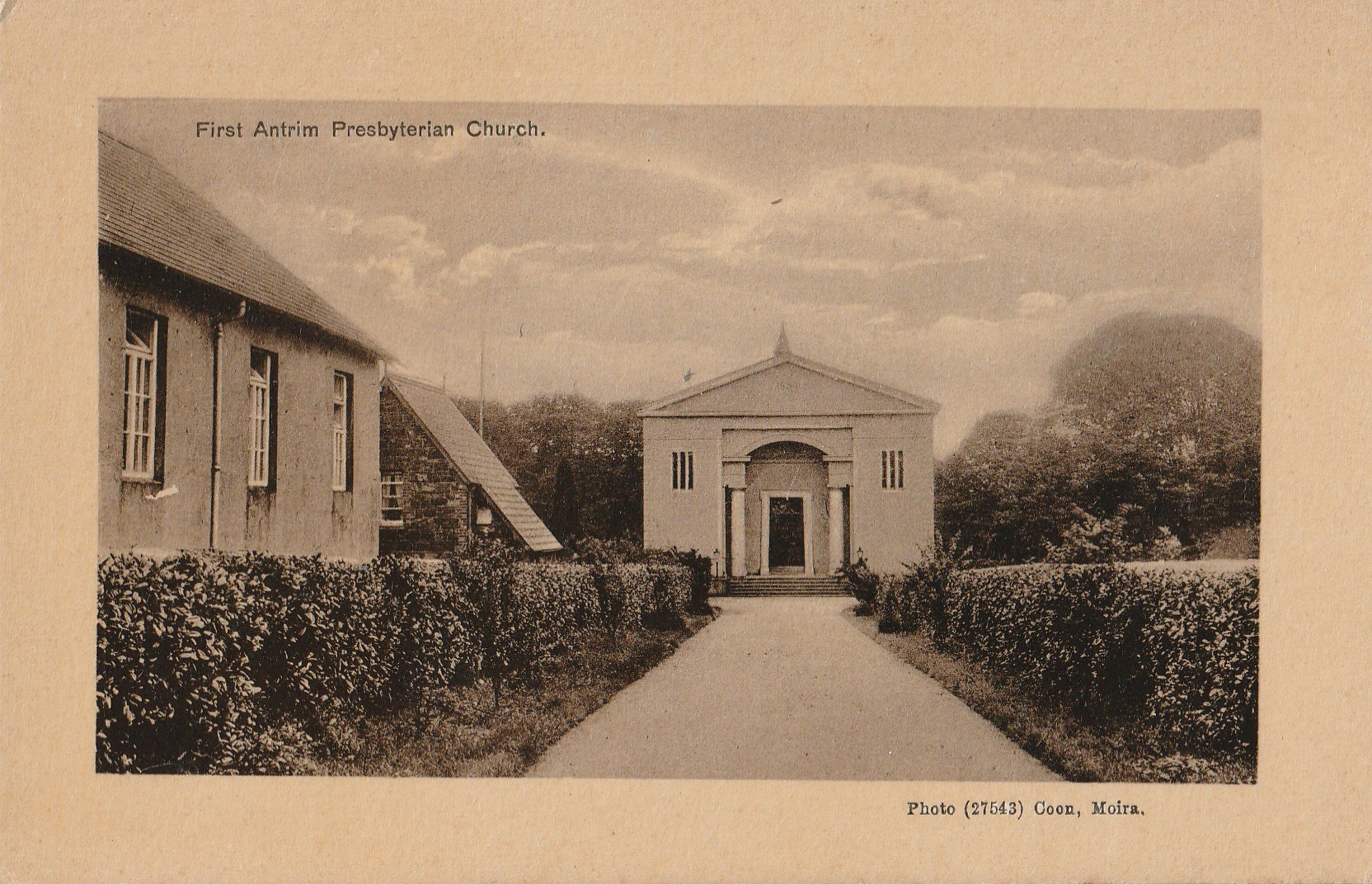
First Antrim Presbyterian Church, 1927

Motor Boats on Lough Neagh at Antrim, 1927

Presumably the motor boats were used as pleasure craft taking people on tours of the Lough.

In Whiteabbey in 1929 he produced about 18 postcards for H. Quiery, Newsagent & Tobacconist. He must have exhausted all the possible views of the surroundings.
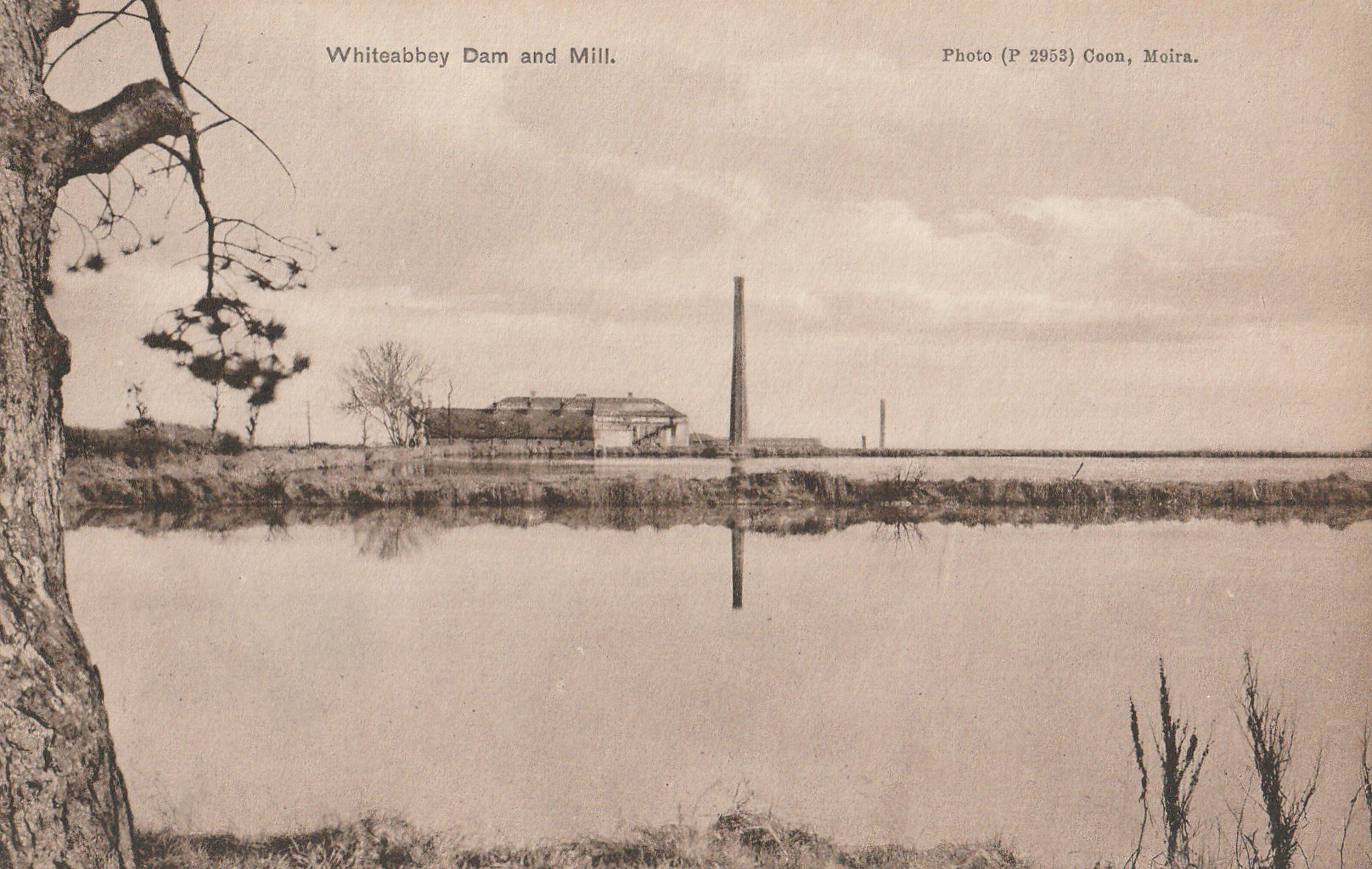
Whiteabbey Dam and Mill, 1929
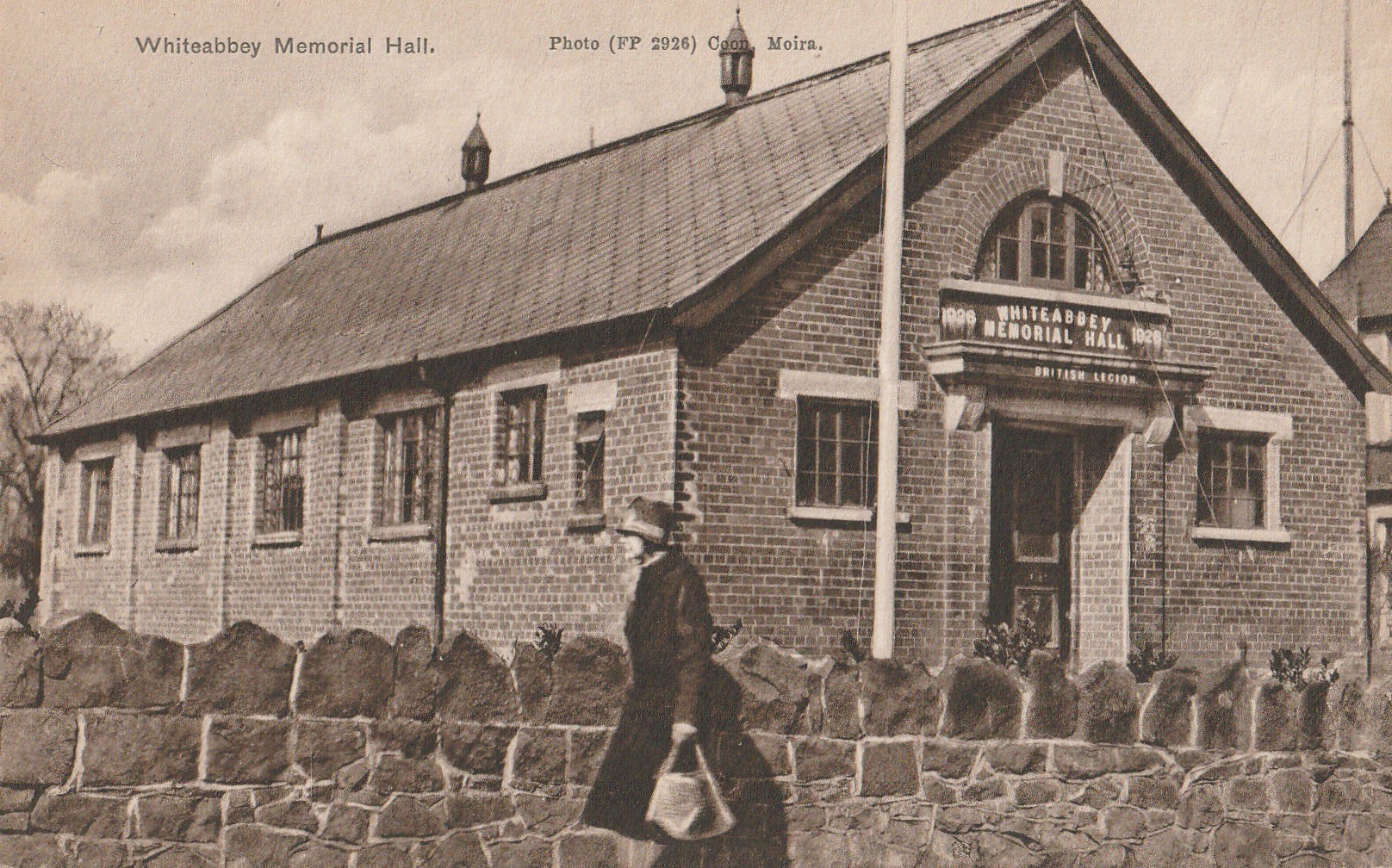
Whiteabbey Memorial Hall, 1929

A lot of Allen Coon’s pictures are straightforward architectural treatments of churches or halls. But this one is slightly different in that a passer-by boldly walks into shot in front of the Whiteabbey Memorial Hall (opened just two years earlier in 1927). Was this pre-arranged to add a bit of extra detail? Or did the lady accidently cross into the frame while he was standing there with his camera? If this was an unforeseen intrusion into his picture he must have liked the look of the finished article since he could easily have taken another one. But there she remains for posterity, out on her messages, captured on film.

William Sunderland Smith and Antrim

The 2023 issue of the Transactions of the Unitarian Historical Society includes Ian Wood’s article on his great great grandfather William Sunderland Smith, minister at Antrim from 1872 to 1912 and a figure of some note in the town at the time because of his writings on history, including the 1798 Rebellion, natural history, geology and theology.

W.S. Smith’s son William Ivan Smith was an enthusiastic amateur photographer and he took a number of pictures in Antrim in 1902 which are a main feature of this video which introduces the 2023 Transactions:

Click on the video above to find out about the Transactions and W.S. Smith

Prior to coming to Antrim in 1872 and after leaving the Unitarian Home Missionary Board in 1859 W.S.Smith had ministered successively at Aberdeen, Rawtenstall, Doncaster, Tavistock and Crediton. So he had a series of short ministries all over the country before crossing the Irish Sea and finding, one assumes, a deep sense of fulfilment in his last charge at Antrim. W.I. Smith’s visit to Antrim in 1902 produced a number of photographs which give us a splendid picture of his ministry and I am grateful to Ian Wood and his family for digitising them and for making them available.

So here is W.I. Smith’s portrait of his father:

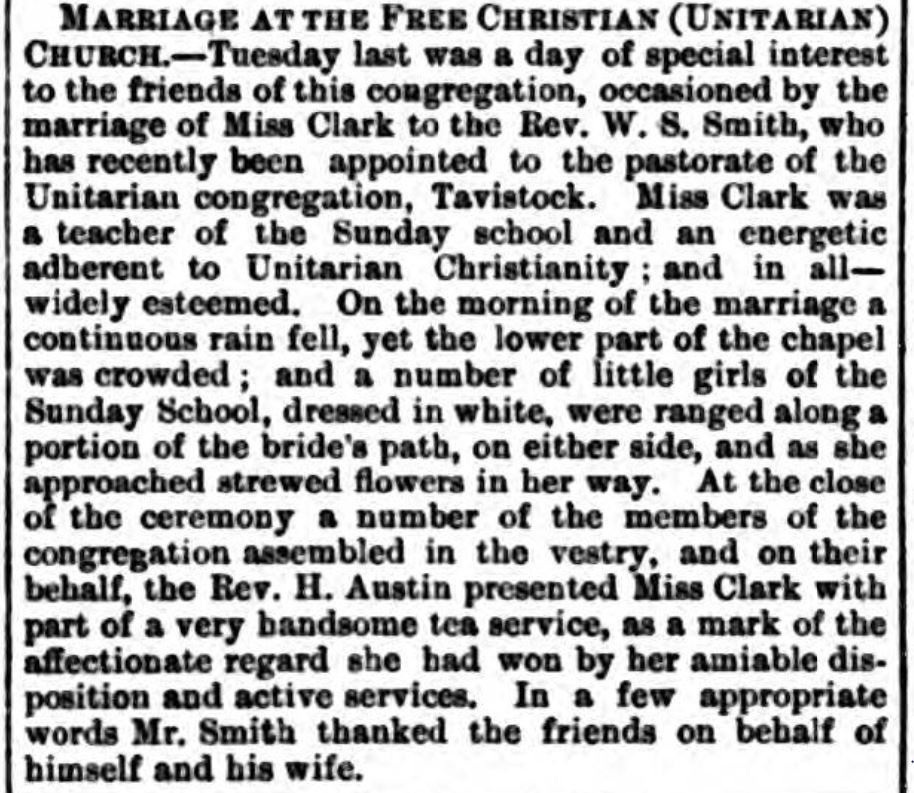
W.S. Smith’s first wife died in 1868 but the following year, having moved from Doncaster to Tavistock , he met and married Clara Ann Clark. Ian Wood has found this cutting from the Wilts and Gloucestershire Standard which gives an engaging account of the wedding between the Cirencester Sunday School teacher and the Tavistock Unitarian minister on 9th November 1869:

In 1902 when William Ivan Smith visited Antrim he took this picture of his step-mother:

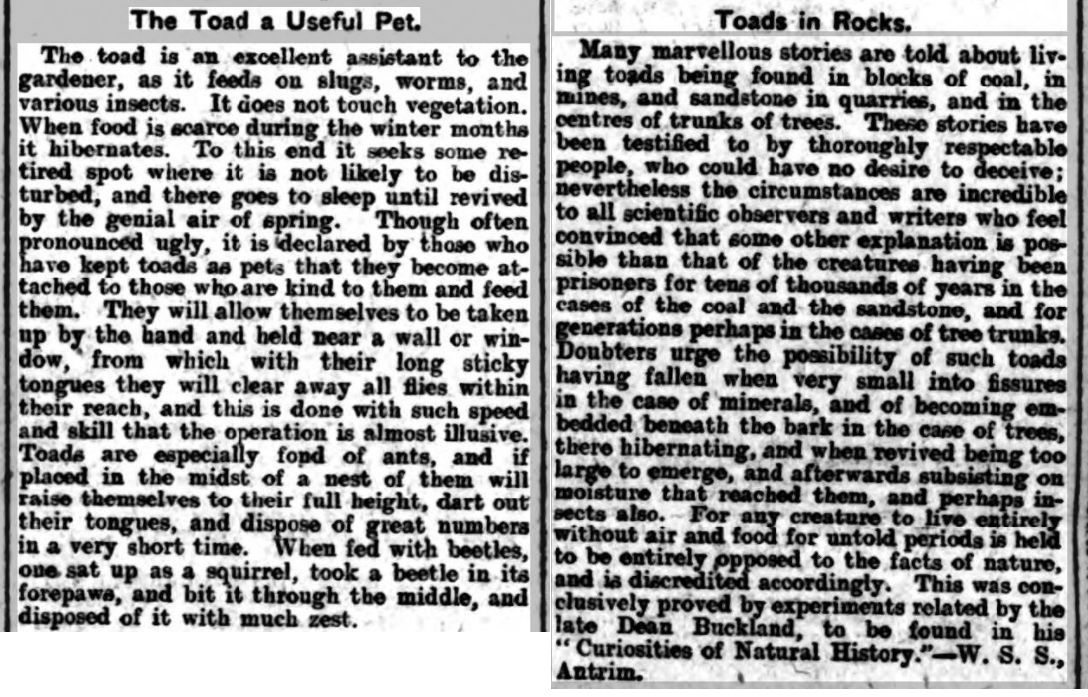
William Sunderland Smith arrived in Antrim, after a short ministry in Crediton, Devon, in 1872. He must have established a prominent name for himself in the town with publications such as Historical Gleanings in Antrim and Neighbourhood and Memories of ’98 as well as regular contributions to the Ulster Journal of Archaeology and the provision of ‘Nature Notes’ to the Northern Whig, including this account of toads in 1906:

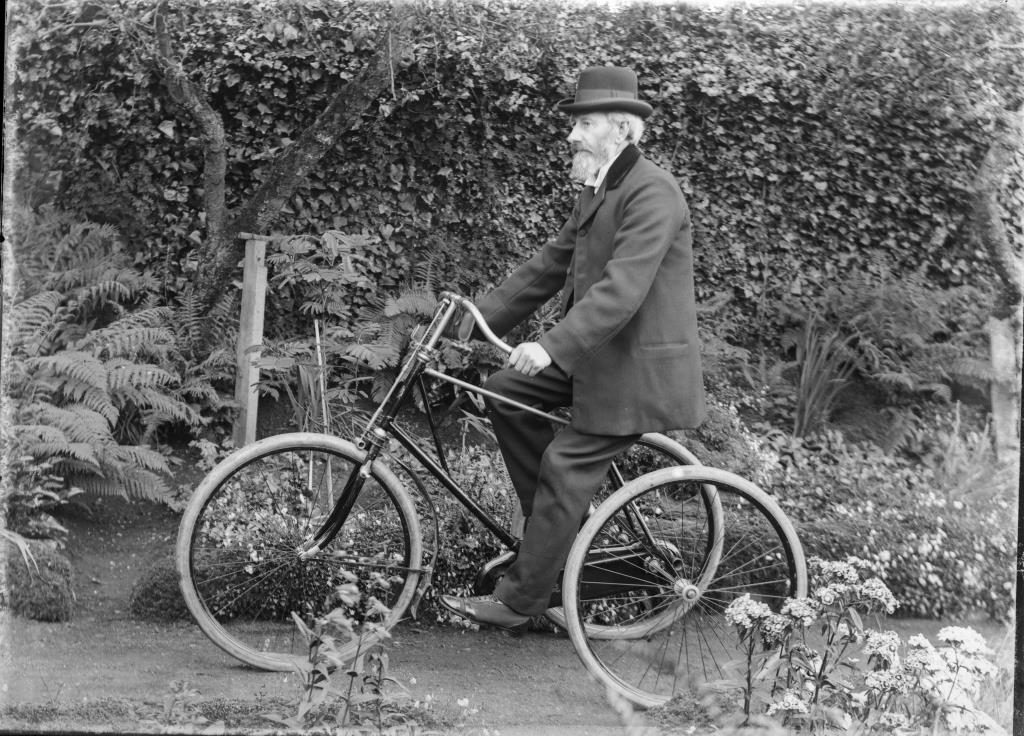
W.I. Smith’s photograph of his father astride his preferred method of transport in Antrim suggests that he must have been a very familiar figure on the local roads at the time:

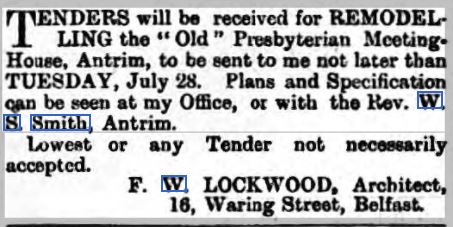
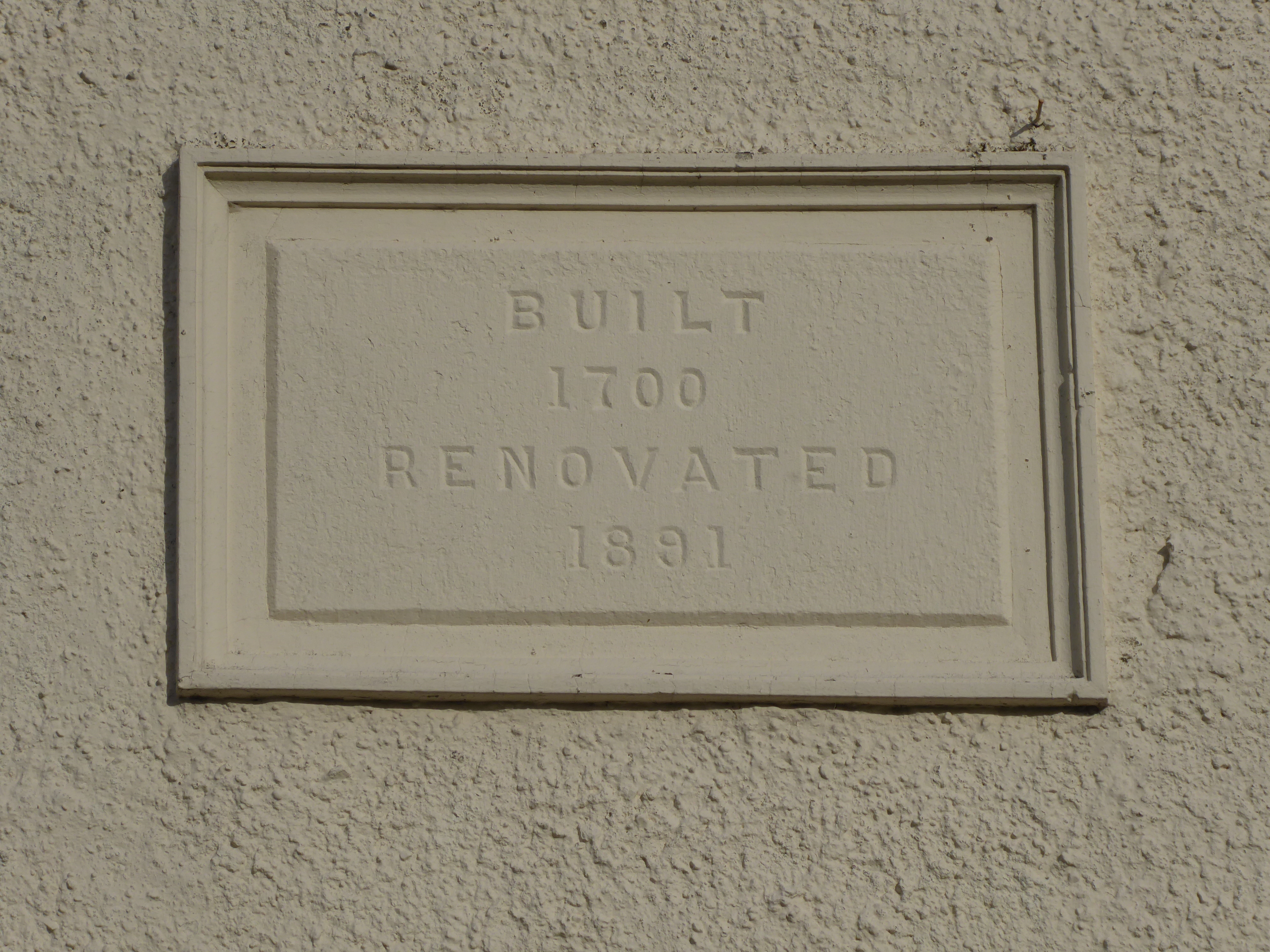
The Antrim meeting-house had been built in 1700 but under his ministry the interior was completetly refurbished in 1891. Ian Wood has found the following cutting from the Northern Whig seeking tenders to undertake this work:

This was a major undertaking which seems to have been successfully completed but images of the interior, either in its original form or in the remodelled layout created by W.S. Smith, are hard to come by. If you would like to see the interior as it looks today – denuded of its ecclesiastical furniture – click here. One postcard which I have acquired features the interior of the Antrim meeting-house as it originally looked. It is a strange picture that has been very amateurishly doctored with Rev John Abernethy’s portrait cut out from somewhere and stuck over the pulpit:

But when he came to Antrim in 1902 William Ivan Smith also took a picture of the interior of the church as it looked by this time. This is it:

Now, at first glance, this may not look like such an interesting image, but as the only surviving picture of the inside of Antrim complete with its pews it is not without importance. However, on top of that W.I. Smith was quite a skilled photographer and there is more detail in this high resolution image of a 1902 print than you might initially notice. If you click on the video above you can discover some more of what this picture contains.

Thank you to Ian Wood for researching his ancestor and for discovering these fascinating pictures and making them available.

You can find out more about the Unitarian Historical Society and the Transactions by visiting its website here.

You can see a bit more about the manse in Antrim on this website via this link.

No pictures or text may be reproduced from this site without the express permission of the author.

Transactions of the Unitarian Historical Society April 2023

Volume 28 Number 2 (April 2023) of the Transactions of the Unitarian Historical Society is now ready and, as ever, it is full of interest. It contains:

To give ‘occasional contributions’ and ‘annual subscriptions’ to
promote ‘those great principles of religious truth’:
Unitarian Fellowship Funds in the early nineteenth century

by David L. Wykes

Dr David Wykes

Our first article is by Society Vice-President David Wykes who has researched in great detail the story of the Unitarian Fellowship Funds. Although these were not long-lasting they deserve attention as an early national initiative which expressed a Unitarian identity and which found outlets all over the country. The Funds have long been neglected by historians but they are a very important indication of lay involvement in Unitarianism. They embraced both the poorer strata of society for a denomination that was often seen as appealing only to the rich, as well as gave an opportunity for women to be more actively involved in church life. The article includes a check list of Fellowship Funds and richly illustrates a movement that was one of the earliest expressions of a Unitarian denominational identity.

Emily Ronalds (1795–1889) and her social reform work
by Beverley F. Ronalds

Emily Ronalds. Photograph by Edmund Wheeler, Brighton, 1880. Courtesy: Auckland Library, New Zealand, Sir George Grey Special Collections, NZMS 1235

Beverley Ronalds, a Fellow of the Australian Academy of Technology and Engineering, uncovers the life and contribution of Emily Ronalds, a much-neglected Unitarian figure who played an important part in the extension of infant schooling. In her youth she was, by nature, a retiring figure, she was later described by the American social activist Frances Wright as ‘clever’ with ‘energy of character’, while Henry Crabb Robinson spoke of her ‘vivacity & good spirits’. She had close links with many of the most advanced thinkers of her day and contributed to experiments in socialist co-operative communities, the abolition of slavery and the development of feminism.

William Sunderland Smith (1833 – 1912) and his family
by Ian Wood

William Sunderland Smith photographed by his son William Ivan Smith in 1902. Courtesy: the family of W.I. Smith

William Sunderland Smith was the twelfth student to enrol in the Unitarian Home Missionary Board (later College) and went on to have a succession of ministries in England, Scotland and Ireland. Ministering, in turn, at Aberdeen, Rawtenstall, Doncaster, Tavistock and Crediton, his final and longest ministry was at Antrim. Ian Wood, his great great grandson, traces his life and that of his family, along with his theological and political ideas. A writer and journalist he developed extensive scientific interests, contributing ‘Nature Notes’ to the Northern Whig newspaper, and made numerous contributions on natural history and Irish history to the Ulster Journal of Archaeology.

Review Article.
The Oxford History of Protestant Dissenting Traditions
by Alan Ruston

Alan Ruston contributes a Review Article on The Oxford History of Protestant Dissenting Traditions, a five volume investigation of the place of Protestant Dissent not only in England and Ireland but also the Empire and Commonwealth, the USA and ultimately all over the world. Alan reviews all five volumes but pays especial attention to volumes two and three which contain a great deal concerning Unitarianism.

In addition we have our review section.

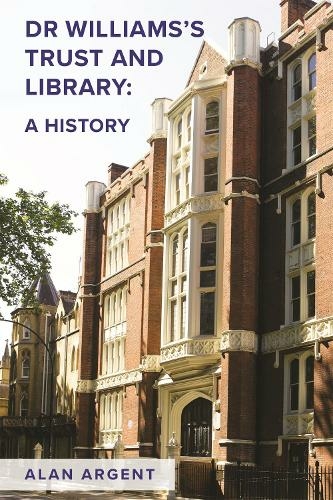
Dr Williams’s Trust and Library: A History
by Alan Argent

A Short History of the
Non-Subscribing Presbyterian Church of Ireland.
Including Sketches of Individual Congregations
and a Fasti of Ministers who served in them

by J.W. Nelson

These Eighty Years. A Recollection
by Alan Ruston

All reviewed by David Steers,
Editor of the Transactions

plus

OBITUARY
Professor Sir Tony Wrigley, FBA (1931-2022):
a Unitarian appreciation
by David L. Wykes

An annual subscription costs £10

Visit the new Unitarian Historical Society website to join: https://unitarianhistory.org.uk/

A Vestige of Protestant Dissent – in Antrim town

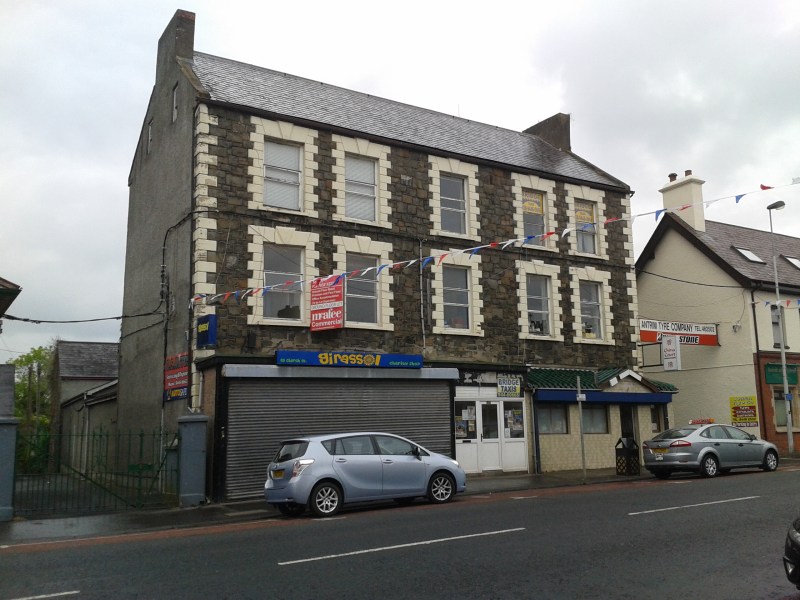
Lots of towns now have heritage trails and in many places in Northern Ireland Non-Subscribing Presbyterian churches feature on the itinerary. Not so long ago I was interested to pick up a copy of the Antrim Town Heritage Trail published by Antrim Borough Council. Here I found a reference to the original Antrim congregation. Although the building closed for worship in the 1970s it dates back to the year 1700 and so it was no surprise to see it featuring as part of the town’s heritage. What was surprising though was the building that featured next to it on the list. You could be forgiven for overlooking this because it is known locally, and named in the text, as ‘Castle Puff’. Yet this was apparently, at one time at least, the manse for the NSP church. The blurb went on:


This is an imposing three-storey building which was built as the manse for the nearby Non-Subscribing Presbyterian Church. Guests who were not quite elegant enough to stay at Antrim Castle were lodged at the manse. In the opinion of the townsfolk, they were sufficiently puffed-up to lodge at the ostentatious Castle Puff.


Castle Puff Antrim 01

There was no picture in the printed trail and so I went to have a look at the building. It certainly is one of the most imposing buildings in the whole area. But despite being the only three storey building in the locality it is still quite easy to miss because of the horrendous modern frontages that occupy street level. It is also unusual because it is not often that you see a manse that is actually bigger than the church but this building towers over the low rise meeting house. What one is to make of the claim that surplus guests at Antrim Castle were housed in the manse is anyone’s guess. It is not obvious why Lord Masserene should need to use the manse, even for the most pretentious of his potential house guests, nor why the unfortunate minister should be saddled with them! But it is fascinating to think of such a place being home to the minister and his family.


I don’t know when it was built or when it ceased to be used as the manse. A bit of searching on the internet reveals an undated but probably late nineteenth-century picture of the house being used for commercial purposes. The main entrance was situated under a porch supported by two substantial columns. These seem to have gone now but if you peer through the door of the taxi office you can see through to a light and airy hall and a substantial staircase.


The building has fallen on hard times now. The glory has long since departed. But here, once upon a time, erudite sermons were penned by the thoughtful minister in his well-stocked study; the staircase clattered with the sounds of the children of the manse; respectful servants moved about the building doing the bidding of the minister and his lady and – apparently – pretentious but insufficiently elegant surplus guests from Antrim Castle turned up for the weekend from time to time. If you are so minded you can still hear echoes of a Non-Subscribing past when you go in search of them.

Castle Puff Antrim 02