Sunday Worship Banbridge, 26th July

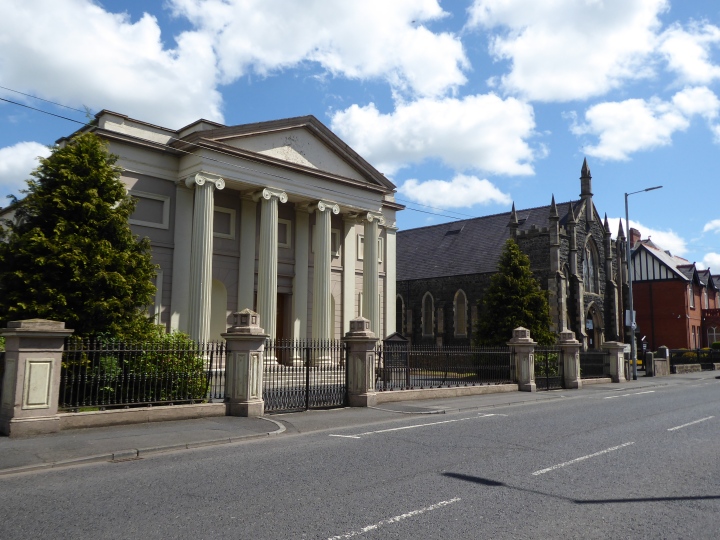
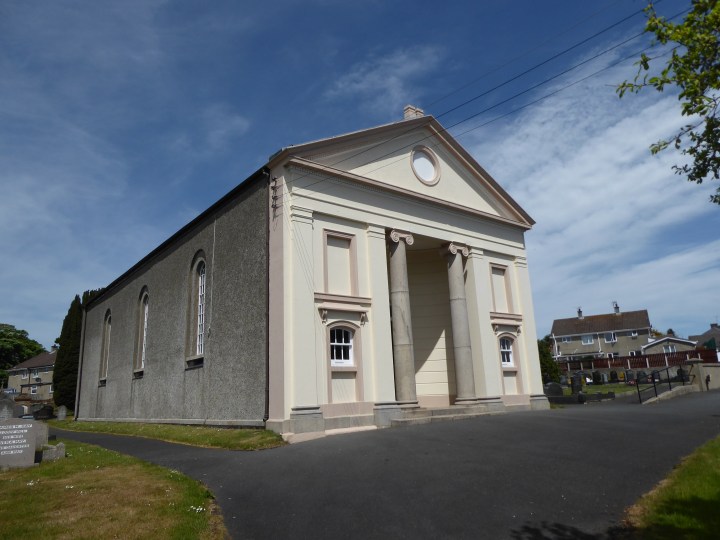
Banbridge with Methodist church second

Our service today comes from First Presbyterian (NS) Church, Banbridge. The reading is given by Sam Agnew (Mark ch. 4 v.21-34) and John Strain is the organist, playing the organ at Ballee Non-Subscribing Presbyterian Church. The hymns are O worship the King, all glorious above (Hymns of Faith and Freedom 21) and God speaks to us in bird and song (Hymns of Faith and Freedom 66).


I see an angel waiting to be released

P1040536

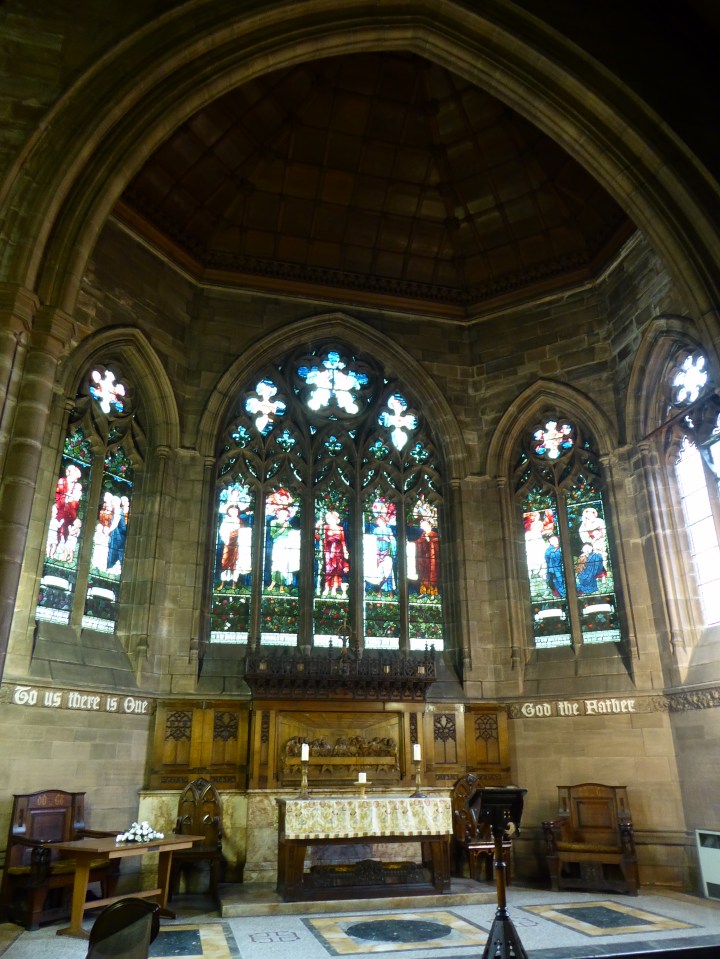
Michelangelo, the famous Renaissance sculptor, was once encountered chipping away at a large, shapeless block of marble. “What do you see?” someone asked him. Michelangelo replied simply “I see an angel waiting to be released”. (Picture: Ullet Road Church, Liverpool).


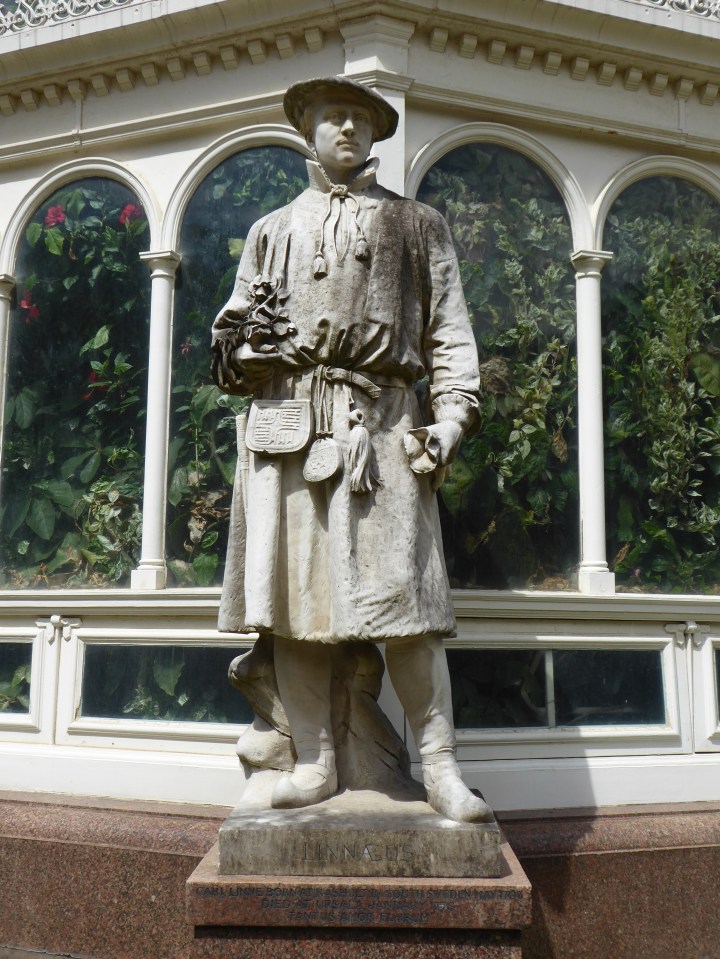
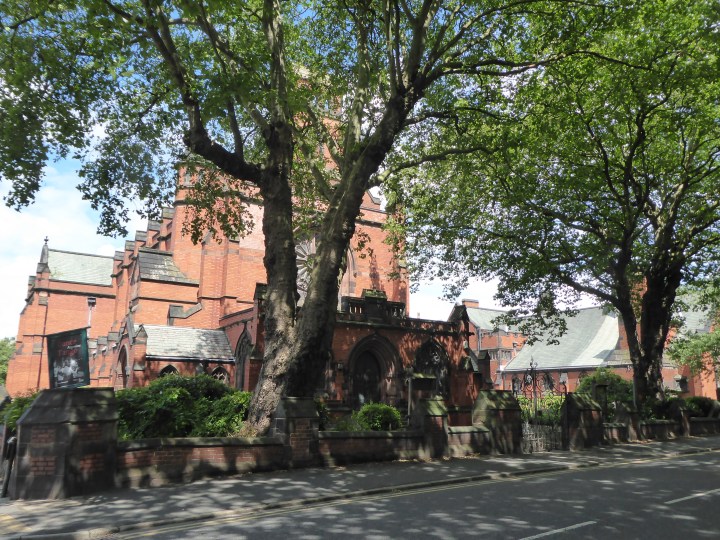
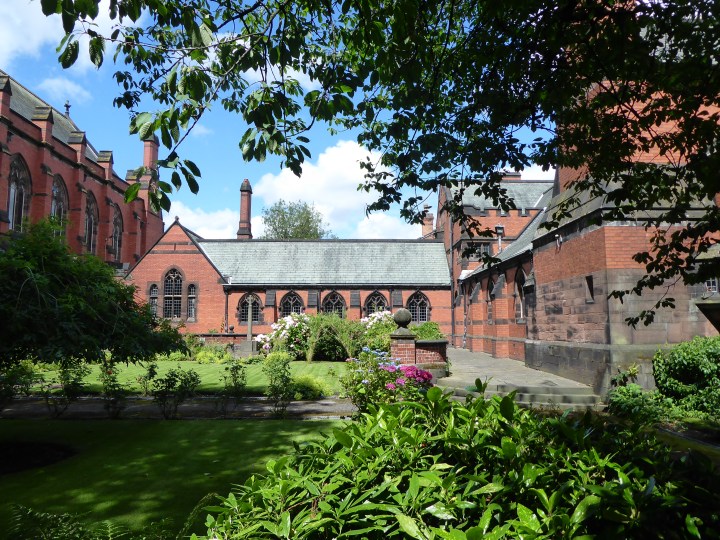
Click on the above video to see Time for a Story: Neverland which tells the story of a famous statue in Liverpool’s Sefton Park which stands alongside the Palm House there. The video is filmed nearby in the outstanding building of Ullet Road Unitarian Church designed by Thomas and Percy Worthington at the end of the nineteenth and start of the twentieth centuries. The video also features some of the wildlife in the park as well as animation by InkLightning.

Below are some of images taken at the time in the church and in the park that relate to the video.

Sefton Park:

P1040481

P1040466

P1040498

Ullet Road Church:

P1040526

P1040534

P1040557


Sunday Worship from Clough, 5th July

P1040425

This Sunday our service comes from Clough. The theme is inspired by Thomas Carlyle’s remark that ‘Wonder is the basis of worship’. In this light we explore the place of singing in our worship (‘O Lord my God, when I in awesome wonder, consider all the worlds thy hands hath made’). Dr Anna Ferguson reads Psalm 96 and Alfie McClelland plays the hymns: City of God, how broad and far and Love divine, all loves excelling.

This week’s Time for a Story has the theme of Diligence and tells the story, from India, of Janaka. It can be viewed here:


Children’s Service Sunday, 21st June

The Sunday School at Clough have this week put together a very special service. At this time of year we would usually be holding our Children’s Day Service where the children of the Sunday School would lead our worship and also receive their prizes for attendance and for work submitted to the denominational Sunday School Exhibition. Since none of that can happen this year the Sunday School at Clough decided to put together their own act of worship, all filmed at home under the current restrictions and together it forms a wonderful service which can be viewed through this link:

Very special thanks go to Leanne Straney whose Idea the service was and who did so much to make the service happen.

Taking part in the service are;

David Rooney – Welcome

Ethan Straney reads Mark 10: 13 – 16

Sophie Ramsey and William Rooney sing ‘My Lighthouse’

Olivia Rooney – Prayer

Ethan Perkins – Prayer of Thanks to God

Poppy Rooney reads 1 John ch.4 v.9.

Zak Straney reads the poem ‘Hold my hand, Lord’

Lexie Rooney – Prayer

Eva Rooney & Anna Rooney – Lord’s Prayer

Abi Straney sings ‘Who is the king of the Jungle?’

Sophie Ramsey sings ‘I believe, I believe’

Hannah Rooney reads John 3: 16 – 17

Sarah Rooney sings ‘For God so loved the world’

Abi Straney – Prayer, ‘Hold my Hand God’

Sunday, 21st June is also Fathers’ Day and in this week’s Time for a Story video Sue Steers gives an account of the history of Fathers’ day:

Worshipping Together, Sunday, 7th June


“There is nothing in all the world so like God as stillness”

Meister Eckhart

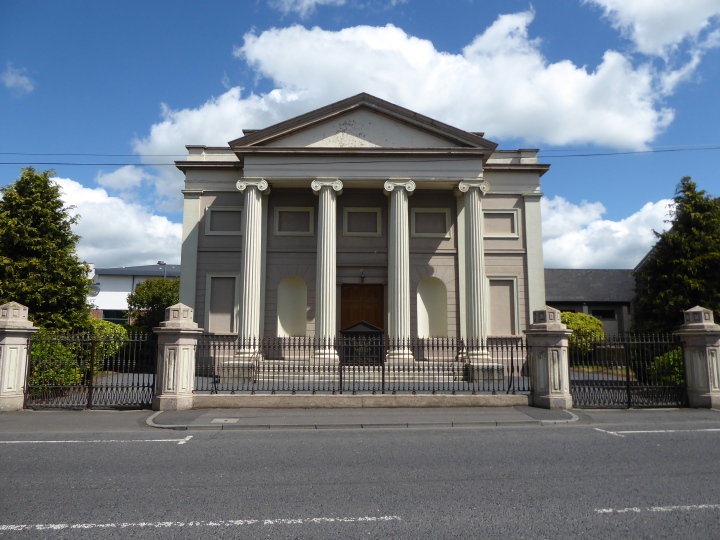
Banbridge front

This Sunday’s service comes from Banbridge and a big thank you goes to Ruby Bushby of Banbridge, who did the reading (1 Kings ch.19 v.4-13), John Strain, who played the organ (at Ballee), and Robert and Laura Neill who played the duet ‘Work for the Night is Coming’ on the bagpipes, being filmed overlooking the dramatic coastline of Lecale.

The theme of the service is silence and includes the following quotation from James Martineau:

Silence is in truth the attribute of God; and those who seek him from that side invariably learn that meditation is not the dream but the reality of life; not its illusion but its truth; not its weakness but its strength. .. All great things are born of silence. .. all beneficent and creative power gathers itself together in silence, ere it issues out in might. .. Silence came before creation, and the heavens were spread without a word. Christ was born at dead of night; and though there has been no power like his, ‘He did not strive nor cry, neither was his voice heard in the streets.’ Nowhere can you find any beautiful work, any noble design, any durable endeavour, that was not matured in long and patient silence, ere it spake out in its accomplishment.

And in the Psalms we read:

For God alone my soul waits in silence,
for my hope is from him.
He only is my rock and my salvation,
my fortress; I shall not be shaken.
On God rests my deliverance and my honour;
my mighty rock, my refuge is God.
Trust in him at all times, O people;
pour out your heart before him;
God is a refuge for us.

(Psalm 62 v.5-8.)

We uploaded two additional videos in the last week both of which deal with animals and the animal kingdom. The first one will definitely appeal to cat-lovers:

This is the story of Faith the Cat, a stray cat that found its way into a church in London during the Second World War. Faith survived a bomb that destroyed the church and rescued her kitten, later being awarded a silver medal. The story also includes two cat poems.

The second video, was uploaded on World Environment Day and features a prayer for the animal kingdom alongside a reading from Matthew ch.6 v.25-33 which accompany some of the marvellous wildlife photographs taken by Graham Bonham. Graham is a keen amateur photographer, some of his pictures have been used in Faith and Freedom Calendars, and these depict a wide variety of animals including a Great Crested Grebe (above), a red panda and a mouse in his conservatory.

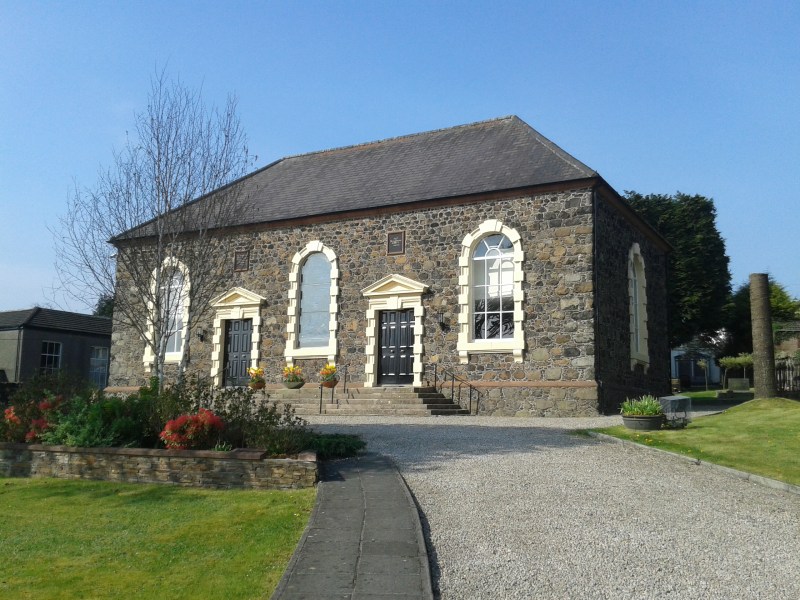
Banbridge with Methodist church second

First Presbyterian (NS) Church, Banbridge. Next door is the Methodist Church.

Worship for Pentecost Sunday 2020


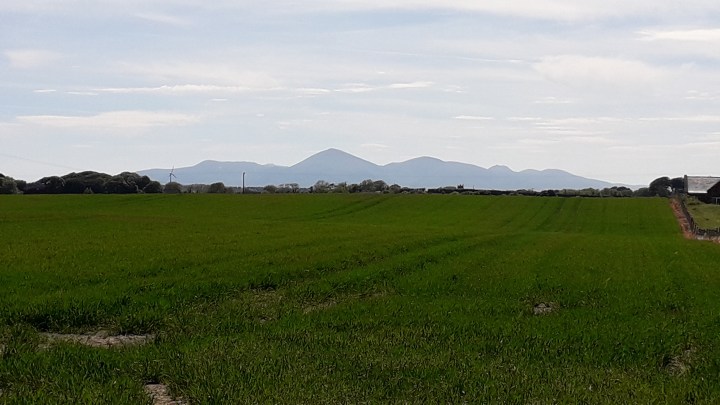
Mountains of Mourne from near Ballee

The mountains of Mourne from near Ballee

“What does this mean?”

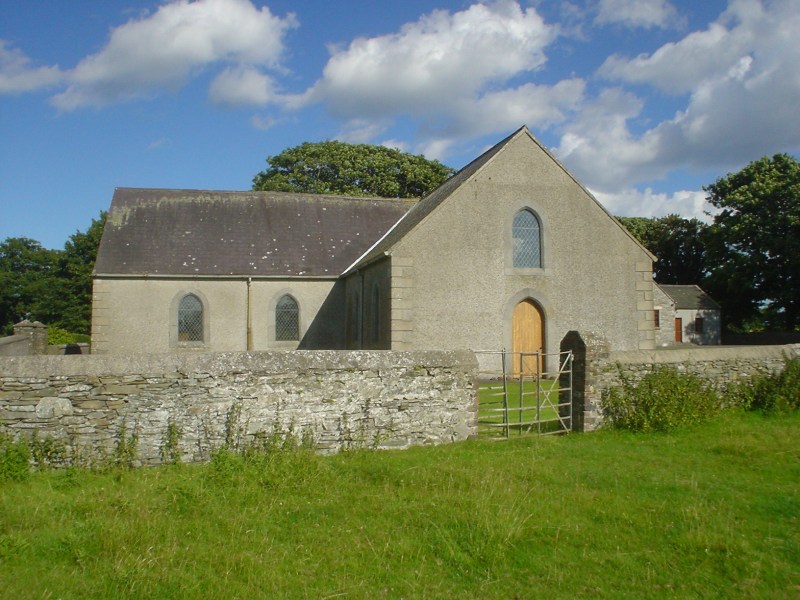
Our service today comes from Clough Non-Subscribing Presbyterian Church and features music played by Laura Patterson and Alfie McClelland on the organ, a duet on bagpipes by Laura and Robert Neill and a reading by Adele Johnston (Acts ch. 2 v.1-21).

P1040425

Clough Non-Subscribing Presbyterian Church

Taking our cue from the onlookers at the first Pentecost, in the service today we ask what does Pentecost mean to us today? Can we reclaim Pentecost as part of our liberation? Can we find meaning for us today?

The hymns played are:

I, the Lord of sea and sky (Mission Praise 857)

and

Thy kingdom come – on bended knee (Hymns of Faith and Freedom 210)

Friday, 29th May saw the 67th anniversary of the climbing of Everest and in our Time for a Story this week Sue Steers reflects on the meaning of this famous event achieved by Sir Edmund Hillary and Tenzing Norgay in terms of co-operation and team work.


Communion Sunday, 3rd May 2020

This week’s service is a Communion Service recorded at Ballee Non-Subscribing Presbyterian Church

Sunday, 3rd May 2020

Service conducted by the minister the Rev Dr David Steers

Organist: John Strain

Reading: Matthew ch.14 v.13-21

The hymns played are:

‘Hymns of Faith and Freedom’ No. 326

Guide me, O thou great Jehovah

‘Hymns of Faith and Freedom’ No. 61

Now thank we all our God

The full words of the hymns can be found in the description under the video on YouTube.

For most congregations in the Non-Subscribing Presbyterian Church of Ireland May is the month in which one of the two communion services of the year are held.

We also uploaded to YouTube, earlier in the week, another video which set out to explain something of the background to the celebration of Communion within the Non-Subscribing Presbyterian Church of Ireland. Recorded at Downpatrick it can be seen here:

Sunday Worship

Our service on Sunday, 19th April comes from Clough Non-Subscribing Presbyterian Church and encompasses, among other things, in different ways: the Mountains of Mourne; the Church’s cherry blossom tree; a bagpipe duet; a nineteenth-century Unitarian minister in Wandsworth, London and sometime editor of the Inquirer; George Herbert, Anglican clergyman and poet; the book of Proverbs, and much more.

At times we cannot be at the thing we would; yet there’s a good thing to do.

W.G. Tarrant

Recorded Service at Clough Non-Subscribing Presbyterian Church, county Down, Northern Ireland

Sunday, 19th April 2020

Minister: Rev Dr David Steers

Organist: Alfie McClelland

Bagpipes: Robert Neill & Laura Neill

Reading: Proverbs ch.13  v.14-21.

The hymns played are:

‘Immortal, invisible, God only wise’

Hymns of Faith and Freedom No. 30

‘Fight the good fight with all thy might’

Hymns of Faith and Freedom No. 198

‘Amazing Grace’ (bagpipes)

When every day is pretty much like any other it is important to remember which day is Sunday. We need to keep one day special, to punctuate our week with prayer and meditation.

God is spirit, and those who worship him must worship in spirit and truth.

John ch.4 v.24 NRSV

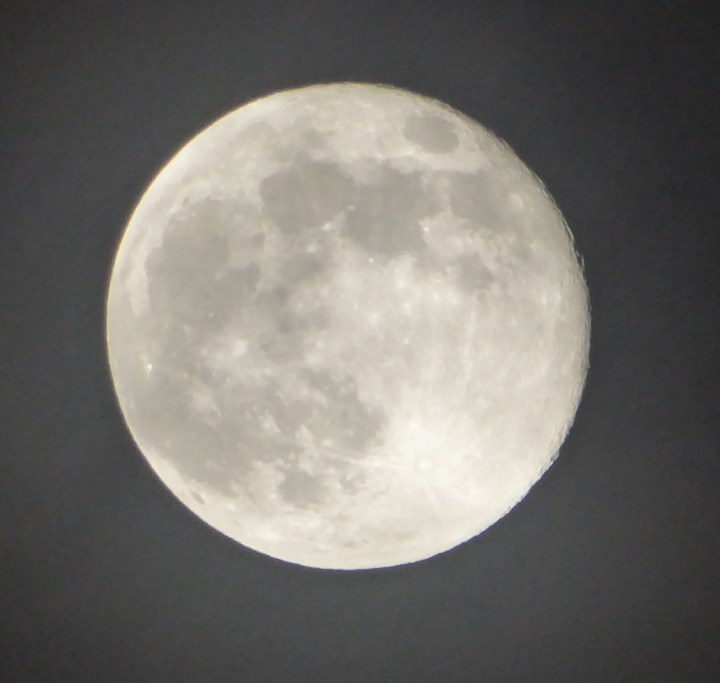
Pink Moon crop

Pink Moon on 8th April 2020.


Recorded Sunday Services


ONLINE SUNDAY WORSHIP

Today I have uploaded the first of what will be a weekly act of worship which I will record in one of our churches, complete with music. On this occasion I was very pleased to have Alfie McClelland with me to provide some musical accompaniment in a short service at Clough Church.

We now have our own dedicated YouTube Channel entitled ‘Downpatrick, Ballee & Clough NSP Churches’, although it will include services recorded at Dunmurry and Banbridge as well.

Sunday Worship, 22nd March 2020

Clough Non-Subscribing Presbyterian Church

22nd March 2020

Conducted by Rev Dr David Steers

Edited by Jack Steers

Organist: Alfie McClelland

Reading: Psalm 137 v.1-6.

Hymns:

All people that on earth do dwell

Hymns of Faith and Freedom: 1

(Tune: Old 100th)

The King of love my shepherd is

Hymns of Faith and Freedom: 87

(Tune: Dominus Regit Me)


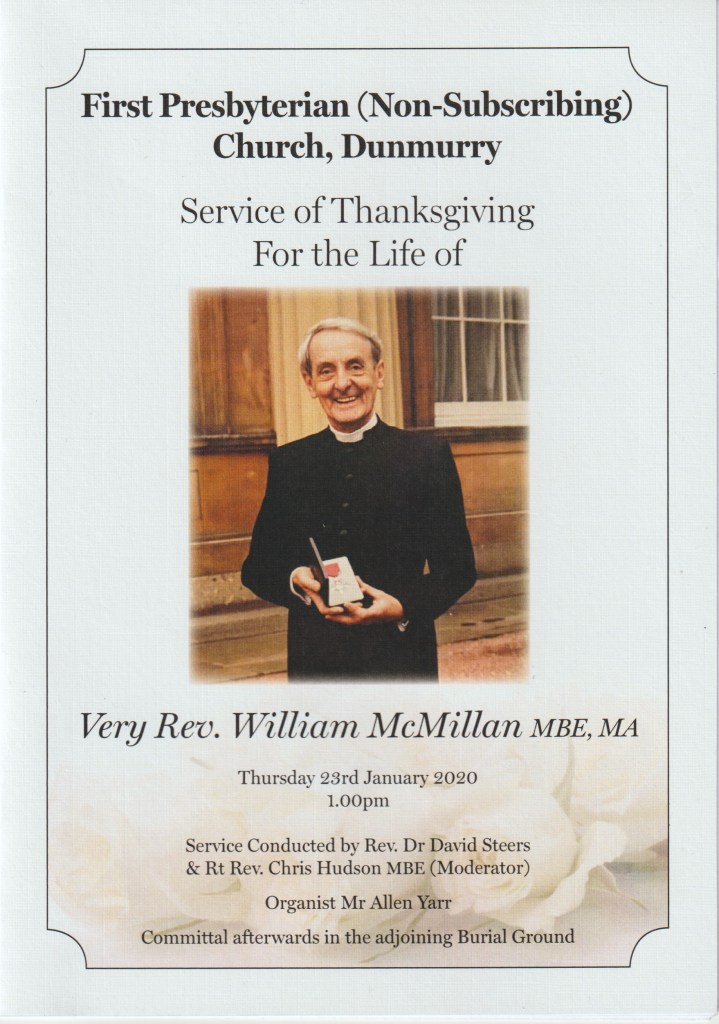
Very Rev William McMillan MBE, MA

I was honoured to be asked to take part in the service of thanksgiving for the life of the Very Rev William McMillan at First Presbyterian (Non-Subscribing) Church, Dunmurry on Thursday, 23rd January 2020. I am posting here the short address I gave as a tribute to a truly inspirational minister.


How do we do justice to a person as vivid, as lively, as remarkable as the Rev Mac? There were so many facets to his character, so many ways in which he touched such a wide variety of people, so many ways in which he came to our attention and was such a force for good.

In 2004 the Oxford Dictionary of National Biography was published in 60 volumes and launch ceremonies were held across the British Isles including one at Queen’s University. Mac was a contributor to this important publication that lists tens of thousands of biographies and I was there at the publication’s launch with Mac. But one of the features of this set of books when it was first produced was that there was a handful of people whose eminence in different, not necessarily connected, disciplines meant that more than one person had to write their biography. Well Mac is such a person today. It is hard for one person to do justice for the range of achievements, interests and accomplishments which Mac displayed in his life.

First and foremost we should say that Mac was a minister, someone who preached the gospel in our liberal Christian tradition and who was not afraid to stand up for what was right often in difficult circumstances, especially through the period of the Troubles. But I think that everything else he did – and he did such a lot – was rooted in his call to ministry, in his sense of vocation.

So, widely and affectionately known as the Rev Mac, the hosta that was named after him was also called just that and whether it was working in the church or working with flowers in the horticultural world or in many of the other spheres he operated in he brought the values of a reflective, thoughtful, tolerant faith that inspired him all his life through.

When I was minister of All Souls’ Church in the 1990s Mac came to do a floral display to celebrate the centenary of the church building. He flew in through the door like a force of nature bringing friends and collaborators in his wake and creating – what he did in so many places  – a wonderful display that drew on the history, theology, and the architecture of the building using flowers and blooms and plant material which spoke of God’s love and God’s creation, a true expression of faith using natural materials.

This was something that Mac did all around the world, his fame in this area was literally spread across the globe. I remember once asking some ladies in St Giles Cathedral in Edinburgh if they knew the Rev Mac, “O yes”, they told me and began to reel off when he had been in Scotland what he had done when he was next coming. Indeed I often think you could play a game to find the most remote place where someone has come into contact with someone else who knew the Rev Mac. For starters I would offer the members of my church at Ballee who were on honeymoon in Barbados who met a local person on a beach who somehow found out they were Non-Subscribers. “Do you know the Rev Mac?” was the inevitable next question.

I remember being at the Synod one year when news reached us that Mac had become the leading floral artist in the world. In those pre-internet days news did not travel rapidly but we heard of this great achievement and everyone was truly impressed. It was something to learn that one of our number had achieved this accolade, someone who was also a scholarly minister, a great preacher, a devoted and hard-working pastor, someone who through his work was, like Gamaliel, held in honour by all the people.

Mac was a distinguished minister of this denomination, born into the Dromore church and who went into training after beginning work as a journalist, working for the Dromore Leader. Mac had so many anecdotes about people and places but his account of being taken on as a student, having to preach on trial before the whole presbytery and the severe attitudes of some of the clergy in those days was frightening. Mac went to train at the Unitarian College in Manchester and at Manchester University. There was no financial scholarship to train for the ministry and very little income to do that but was supported anonymously by members of his church.

I don’t think it was easy for Mac in the early days of his training and at one point he had to re-sit the entirety of his exams becoming in the process the only person who had ever done this in one go. He also apparently had – for reasons I don’t understand – to learn a bit of the Icelandic language. I have to confess that I very much doubt that Icelandic ever came to be in any way useful in the work of the ministry.

Mac’s training included a stint doing a pastorate in our church in Cork, quite a different world then in so many ways but the culmination of all his work was to be called to be minister of Newry and Warrenpoint where he also took on a role teaching. Mac was minister to those two churches from 1959 to 1970 and was held in high regard and great affection by all the congregations. His ministry there coincided with the start of the Troubles and Mac was at the forefront of those who tried to calm down the growing tension, at one point being hit on the head by a breeze block when he was attempting to stop a riot. This was a serious enough injury and the situation was so dangerous that he and some other clergy had to take shelter overnight in the convent, but it did also end the painful migraines he had been experiencing. Not a conventional cure or one you could expect on the NHS but effective nevertheless.

In 1970 Mac accepted a call to Dunmurry in succession to his father in law, the Rev John McCleery, and remained as minister here until 2016 when he retired and became the senior minister. The congregation flourished under his leadership and I know that everyone is devastated by the loss of their senior minister. From 1976 to 1980 he also had charge of the Moira congregation.

Mac’s service to this denomination on different committees, funds and organisations was enormous. But among other things he was moderator of the General Synod from 1969 to 1971 and again from 1985 to 1987.

But his ministry was multi-faceted, it reached into so many places and manifested itself in different ways.

In one way it was truly international. Mac represented this denomination on the International Association for Religious Freedom, the world’s oldest international inter-faith organisation for twenty years from 1961. He was held in very high regard by all his colleagues there. Partly through that organisation Mac travelled to many places as a preacher and lecturer. He preached at the famous King’s Chapel in Boston in the 1960s and told me that he received more for that one service than he was paid for a whole year at the time! In Europe he had a close link with many church people of a similar mind, particularly with liberal and free Christian groups in Switzerland, France and Germany where the affection in which he was held by the professors and church leaders of those groups was always palpable when you met them. He also travelled to Romania during the Communist era to visit the Unitarian Church in Transylvania, enduring the challenge of the arduous and lengthy night time rail journey across the border from Budapest to Kolozsvár which was then the only way in to that city. Here he was one of the first Westerners allowed to preach at that time but always under the watchful scrutiny of the Securitate, the secret police.

Mac’s work in Northern Ireland throughout the Troubles, particularly in regard to the establishment of cross-community nursery schools, at a time when such things were regarded as dangerously novel was recognised and supported by the IARF and resulted in him being awarded the Albert Schweitzer Award at the 1978 Congress in Oxford, a signal honour for his work in breaking down barriers.

But another aspect of his ministry was his tremendous achievement as an historian. This grew out of his training for the ministry in Manchester where he went on to be awarded a Master’s degree on ‘The Subscription Controversy in Irish Presbyterianism from the Plantation of Ulster to the Present Day’ by Manchester University in 1959. Mac’s knowledge and understanding of the history of this denomination was unparalleled. It was sustained by his interest in antiquarian books which led him to build up a tremendous library, originally by careful scrutiny of what was available in Smithfield Market until he built up an astonishing collection of books, periodicals, prints and sermons. Mac’s knowledge was formidable, often I would ring him with random questions about obscure figures and Mac would tell me who I was looking for and all there was to know about him. Mac had developed a wonderful fasti or biographical resource of everyone who had entered the ministry in our tradition and with these he had amassed a great collection of images and illustrations. From this he was able to produce many excellent books, articles and pamphlets often drawn out of lectures or talks that he had given. There is not time to list them all here but his writings displayed both a depth and breadth of knowledge presented in a style that was eloquent, accurate and instructive. He was always so willing to help any inquirer with information.

At the end of his biography of Henry Montgomery, A Profile in Courage, Mac quotes the Rev C.J. McAlester preaching at his memorial service in this church in 1865 and I will close my words with that quote which is equally applicable to Mac:

More acceptable to our venerated friend than ‘storied urn or animated bust’ would be the earnest efforts of those who honour him to cultivate with diligence, and guard with jealous care, those principles of Christian freedom, truth and love, which it was the noblest labour of his lengthened life to vindicate and extend.
Rev Mac

From the Archives

Clough Flower Service 1954

Clough 1956 01

James Robinson lent me this Calendar from Clough dating to 1956. As the caption says it shows the Sunday School before the Flower Service in July 1954. I think the Rev George Buckley made a Calendar for each year he was minister of Ballee and Clough and I will search out any more of them that we can post online. But this one is particularly interesting because it shows the members of the Sunday School. The Flower Service was an important annual service in Clough in those days and many members remember it. Mr Buckley took the picture one year and used it in the Calendar eighteen months later. I am sure everyone in the photo can be identified and a great many of them are regular attenders in the church to this day. It would be nice to put a name to each of the children so that we can post those online too.

Clough 1956 02


Downpatrick: Then and Now

I am grateful to Mary Stewart and Thelma Lowry for the next image which is of the interior of Downpatrick in 1967 immediately following its previous renovation and redecoration in the 1960s. This picture was taken on the day of Thelma’s wedding in the church:

Church renovations 1967

As can be seen the colour scheme is quite different to what we are used to today as this picture taken by Down County Museum in 2014 shows:

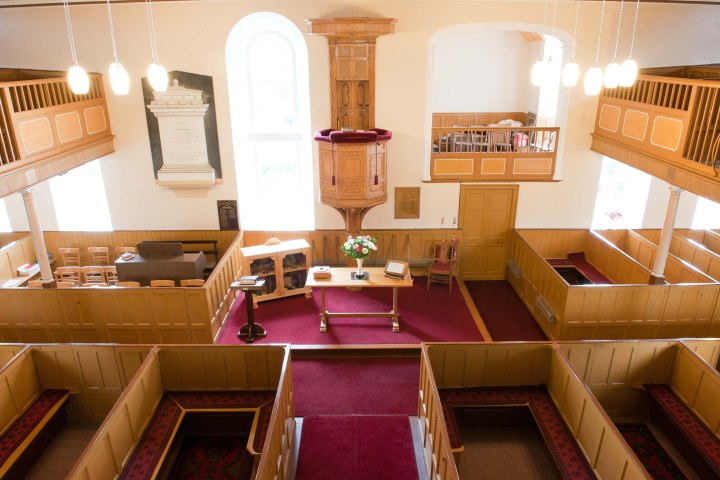
NonSubscribingChurch--36

In the five years since this picture was taken a number of features have changed, including the addition of furniture and wall plaques. The ‘Squire’s Gallery’ is tidier too! But there is a different feel entirely to the interior, which is believed to be one much closer to the original interior of 1711.