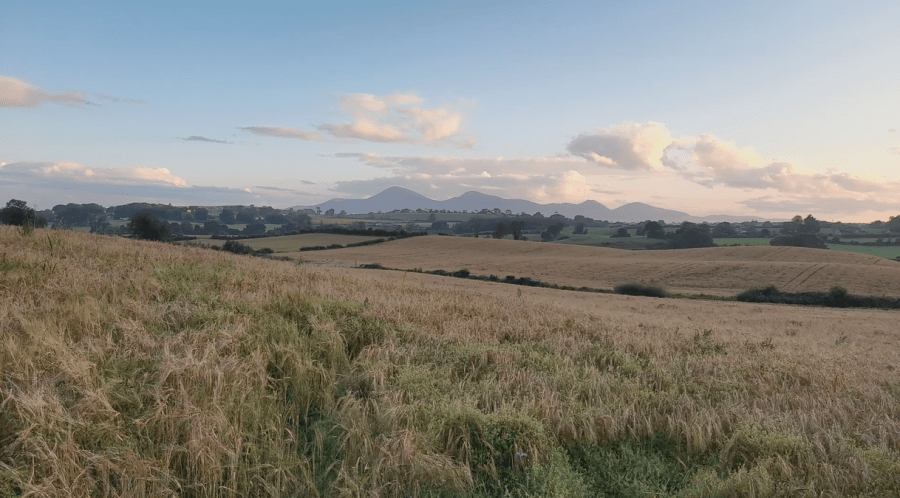
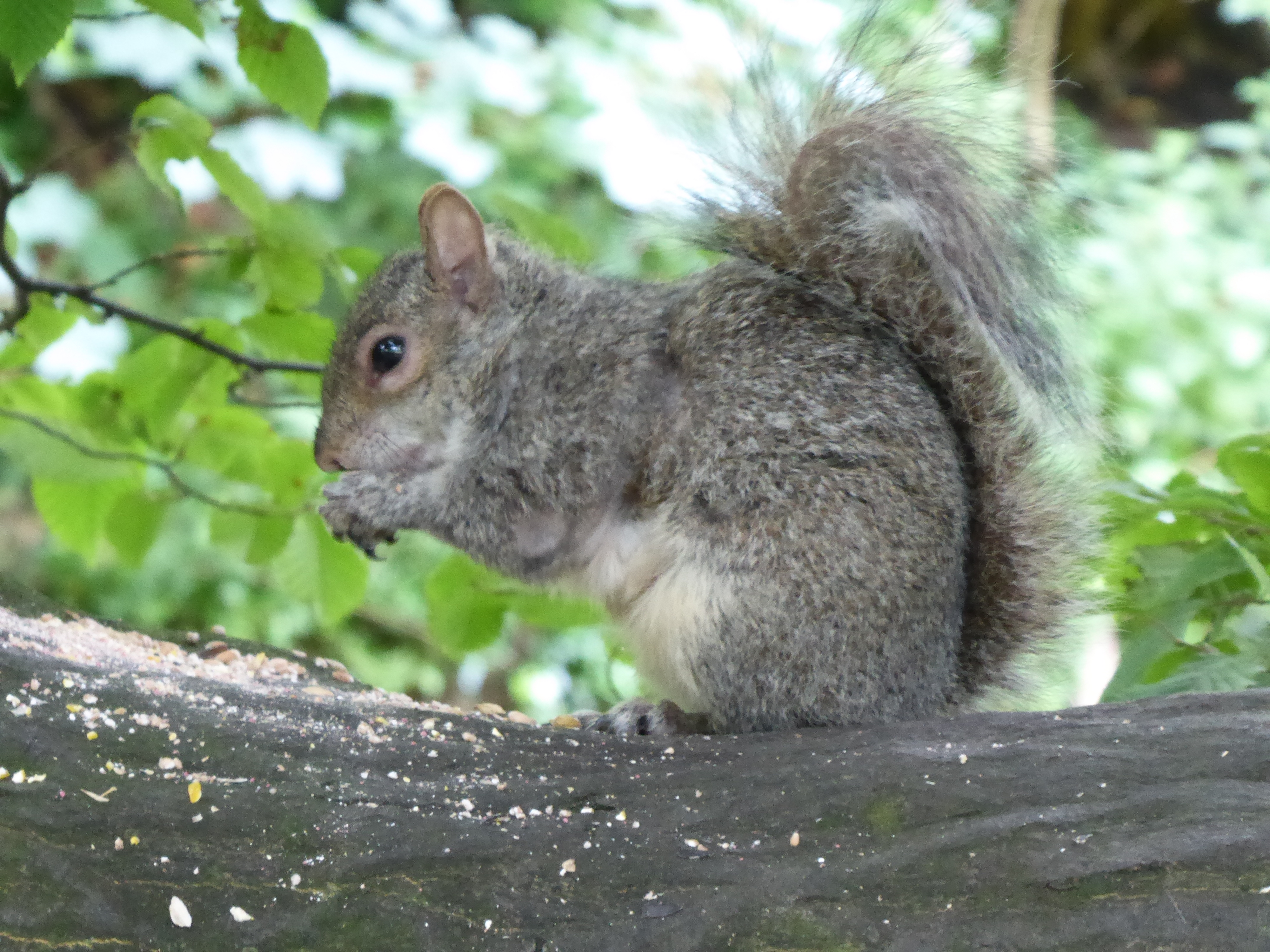
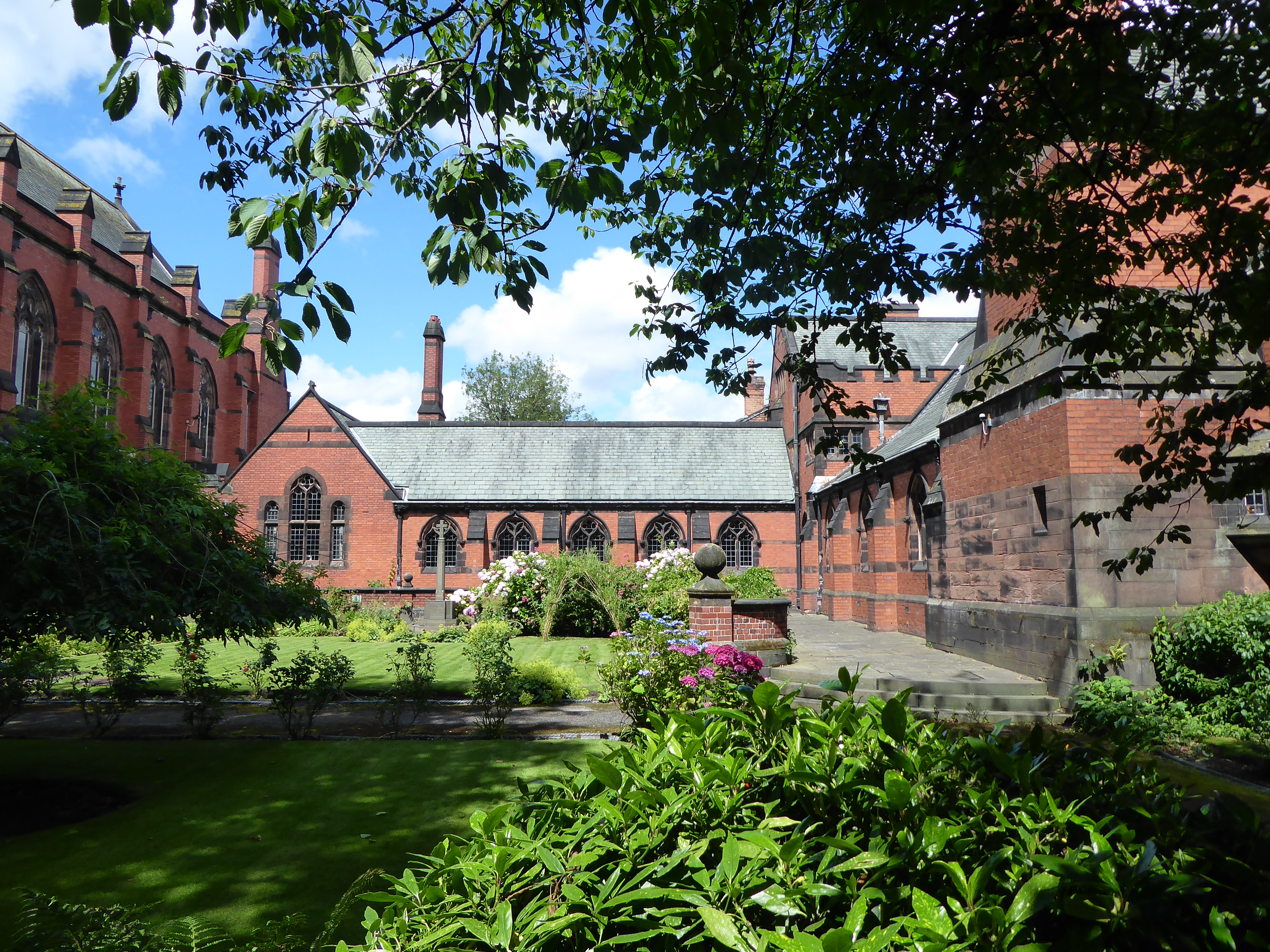
….And I have felt A presence that disturbs me with the joy Of elevated thoughts; a sense sublime Of something far more deeply interfused, Whose dwelling is the light of setting suns, And the round ocean and the living air…
The service for today considers our experience of the holy, especially in relation to the natural world. The Biblical reading comes from Job ch.12 v.7-10 and is given by Doreen Chambers. Alfie McClelland plays the organ at Clough – the hymns ‘When morning gilds the skies’ (Hymns of Faith and Freedom 26) and ‘City of God, how broad and far’ (Hymns of Faith and Freedom 202). The service is conducted by Rev Dr David Steers. Click on the following video (after 9.45 am on Sunday, 13th September) to join in the act of worship.
But ask the beasts, and they will teach you; the birds of the air, and they will tell you; or the plants of the earth, and they will teach you; and the fish of the sea will declare to you
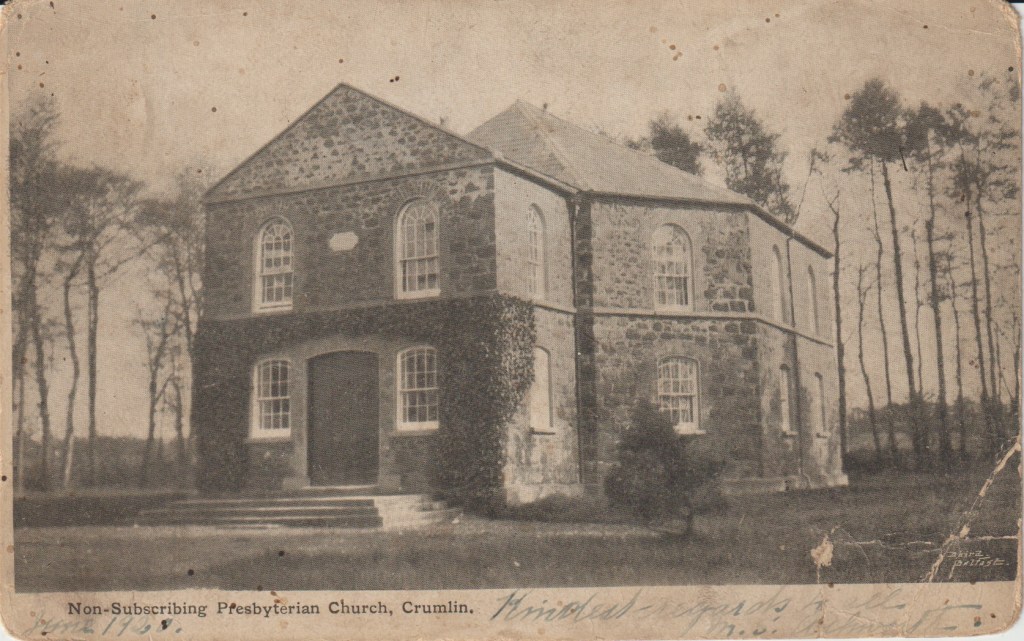
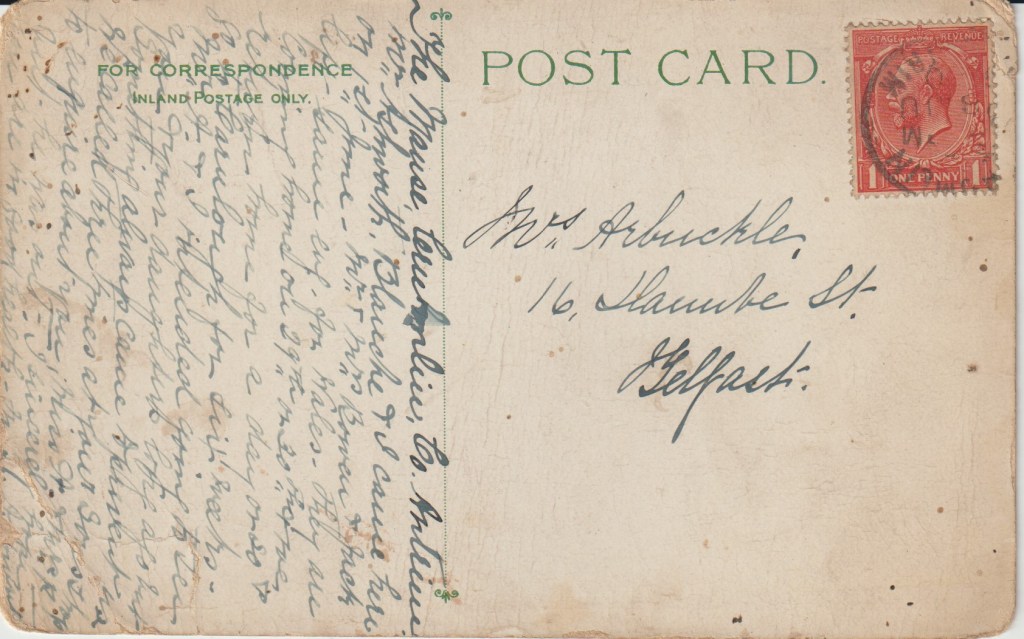
I purchased this postcard on eBay recently. It is not in great condition but it is a fairly rare example of a Baird of Belfast postcard of the Non-Subscribing Presbyterian Church at Crumlin. It came with added interest because it was sent by Mrs Ashworth to her friend Mrs Arbuckle of 16 Danube Street, Belfast in June 1908. The message gives us a little glimpse into Non-Subscribing Presbyterian church life in 1908.
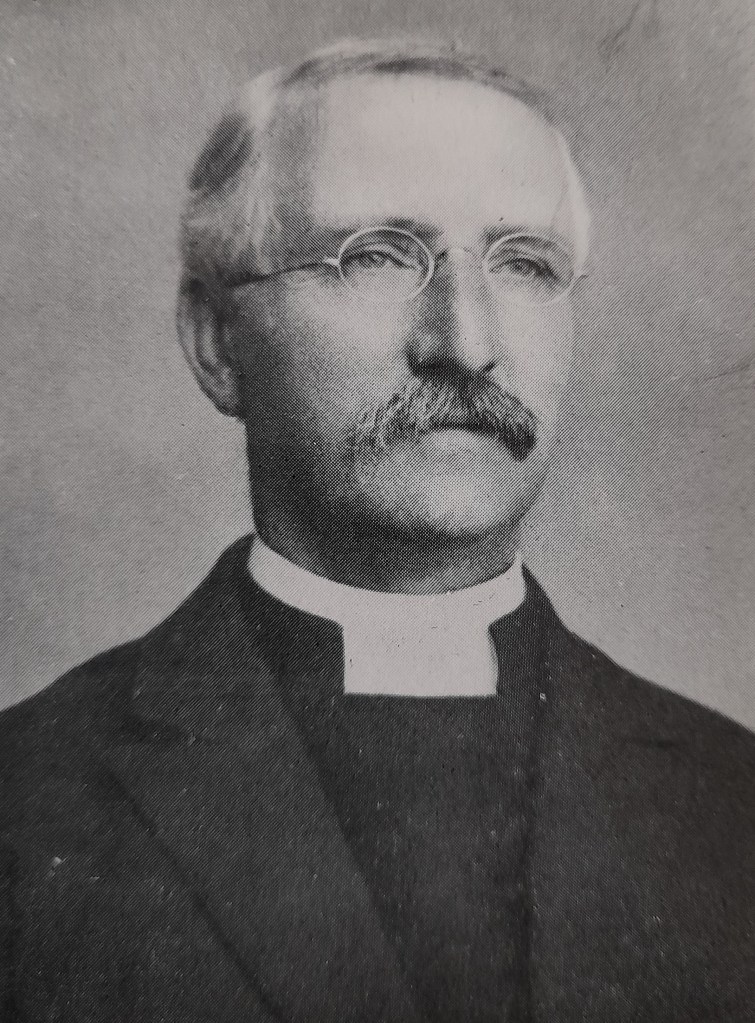
Mrs Ashworth, the author, writes in friendly, yet also fairly formal tones to Mrs Arbuckle. Mrs Ashworth (as she describes herself) was the wife of the Rev Alexander Osborne Ashworth minister of York Street Non-Subscribing Presbyterian Church at the time. She refers to her husband only as Mr Ashworth in her short note although also mentions a person called Blanche who appears to be their daughter. They are also staying in the manse at Crumlin. ‘Mr Ashworth, Blanche and I’ came to the manse on 1st June, ‘Mr & Mrs Bowen & Jack’ left the same evening for Wales where they would remain for most of the month before returning for a six week stay at Carnlough. Prior to sending the card the Ashworths had made some unsuccessful attempts to meet up with Mrs Arbuckle and her family.
It’s not possible to identify the Mrs Arbuckle, but there is a good chance that she was a member of York Street Church, indeed there was a Mary Arbuckle living on York Street itself in the 1901 census and Danube Street is certainly within the catchment area of York Street Church.
Most of the contents reveal mundane domestic arrangements involving three Belfast families over 110 years ago. But knowing that two of those families were the families of NSP ministers and the fact that it was all written on a postcard depicting Crumlin Church enables us to put some flesh on the bones of this brief correspondence.
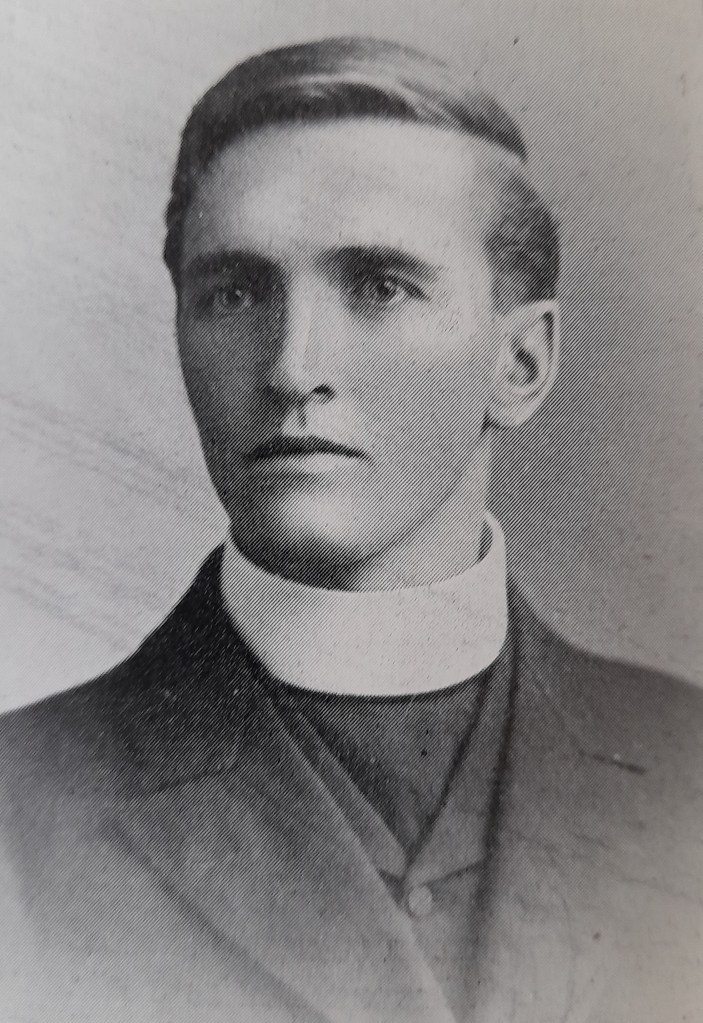
Mr and Mrs Bowen were the Rev Samuel Evans Bowen and his wife. S. E. Bowen was called to be minister of Crumlin in 1908, he was ordained later in the year on 3rd September by the Presbytery of Templepatrick. It may be that Alexander Ashworth and his wife were preparing the manse for their arrival, although he was clerk of the Presbytery of Antrim at that time and was still minister of York Street until 1909 when he retired, although he continued as a very active senior minister until 1913 and remained active in his denomination for many years afterwards until his death in 1935. Ashworth was born in the Rossendale valley in Lancashire in 1846 and trained at the Unitarian Home Missionary College. He came to York Street in 1893 after previous ministries in Chatham, Stalybridge, Doncaster and South Shields. For many years he was also the Sunday School Convenor for the Non-Subscribers. This job was no sinecure, in 1909, for instance, he organised the Annual Sunday School Conference at Downpatrick, an event which attracted 450 participants.
Rev A. O. Ashworth in 1909
The Rev Alexander Ashworth is probably hardly remembered today, for one thing the church where he had his longest and most significant ministry was destroyed in the blitz of 1941, but he gave devoted service in many different ways for decades.
Rev S. E. Bowen in 1908
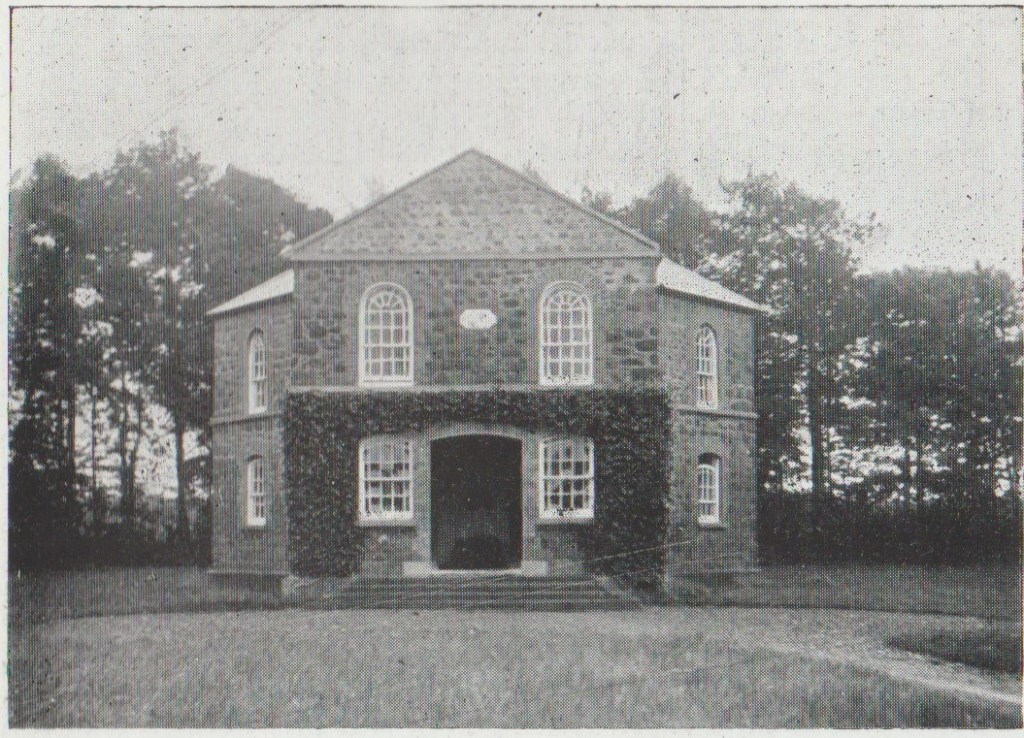
The same was true of S.E. Bowen. Another former student of the Unitarian College in Manchester he was minister in Crumlin for over twenty years (to 1929) before returning to his native Wales to minister at Allt-y-placa, Capel-y-bryn and Cwm Sychbant for 27 years. But with this postcard we get a view of the Crumlin meeting-house. Judging by the trees it is of a similar, although not identical, vintage to the photograph that appeared in the Non-Subscribing Presbyterian magazine in October 1908 to accompany the account of his ordination. In both pictures the ivy seems to be contained in identical positions but the postcard shows a small tree or bush to the right of the church which is not there in the magazine image. The postcard could be quite a few years older than the other photograph.
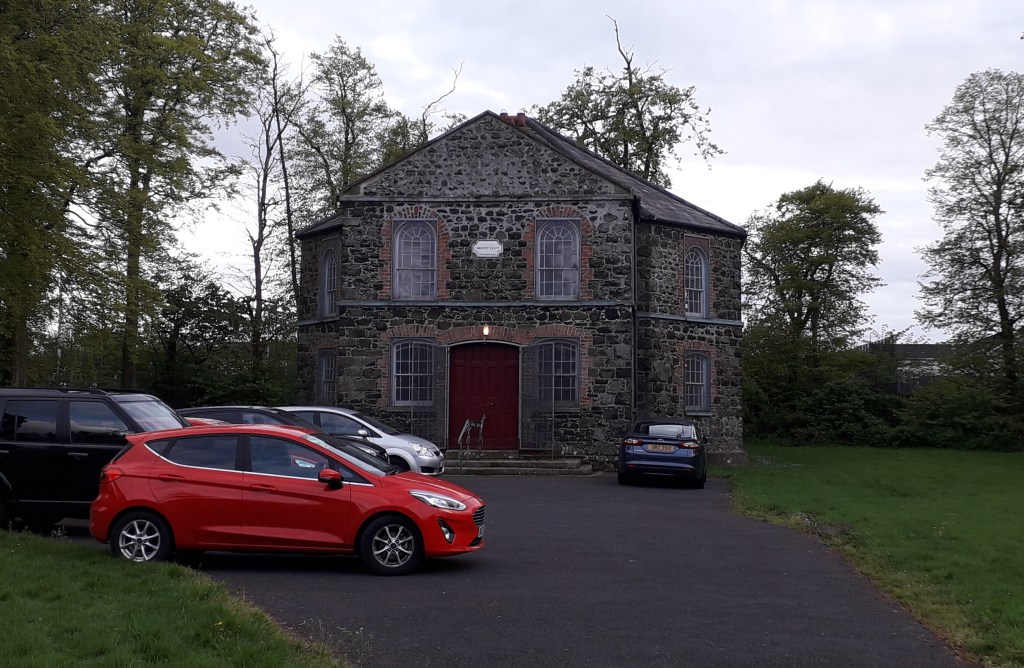
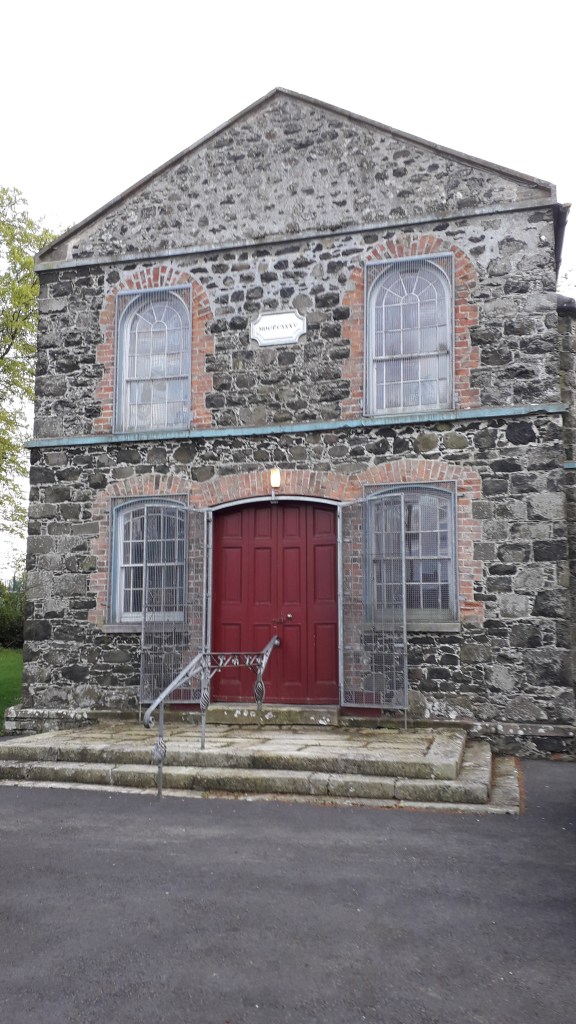
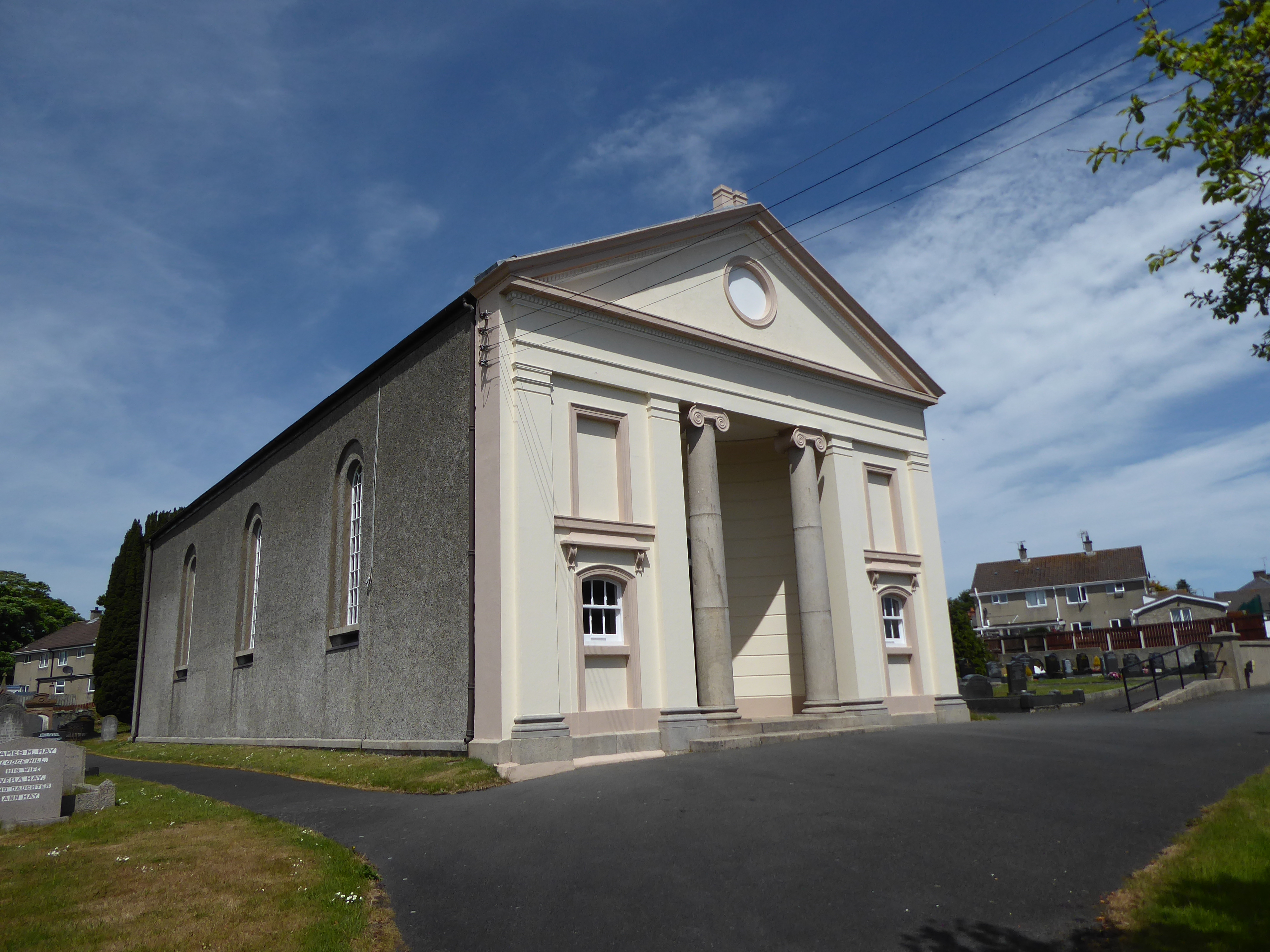
The Crumlin meeting-house is fairly secluded and can’t be seen from the main road. Built in 1835 it replaced an earlier church of 1715. It is a miniature replica of Belfast’s First Presbyterian Church designed by Roger Mulholland. It is interesting that the congregation of Crumlin took that building as a template for their new church over 60 years later.
Crumlin in 1908 (NSP Magazine)
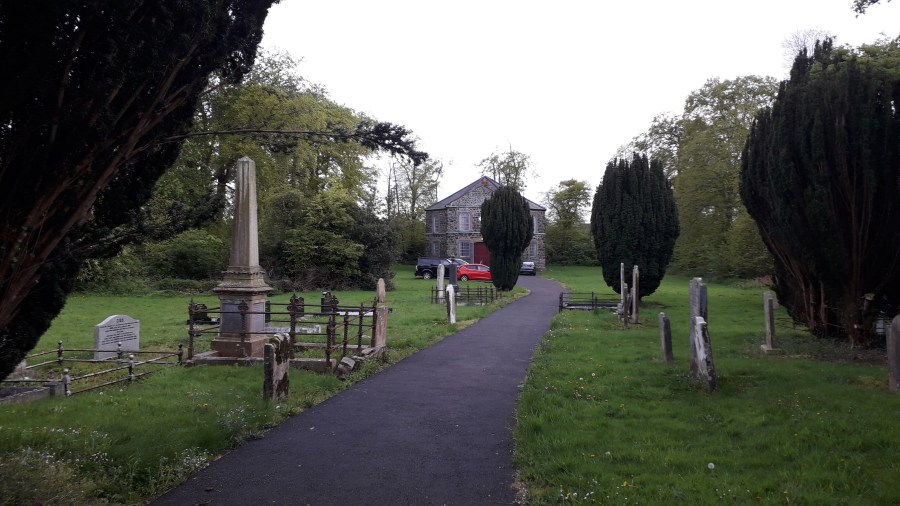
Crumlin in 2019
Whenever I try to take an architectural photograph I always aim to get a shot of the building without the distractions of either people or vehicles. I wasn’t able to do this with this picture of Crumlin taken in the autumn of 2019. The foreground is crowded with cars. But in the long term a photograph of something like a church which includes other details that date it actually makes it more interesting to the viewer. But if I was going to compose the cars for a photograph I wouldn’t park them like that!
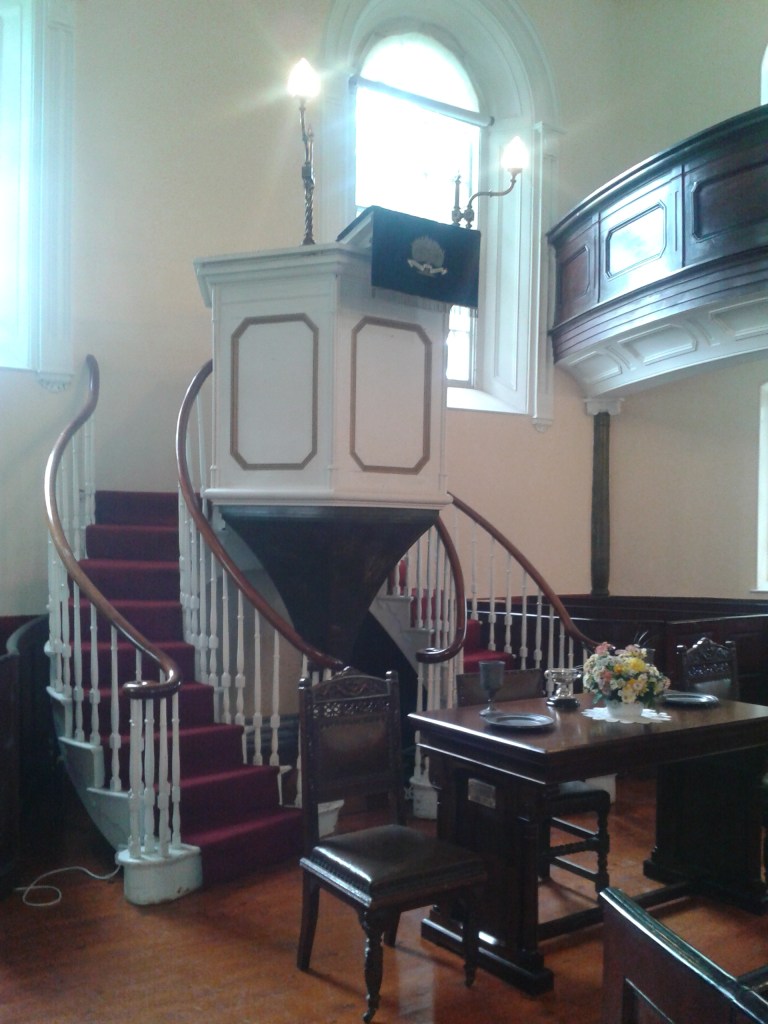
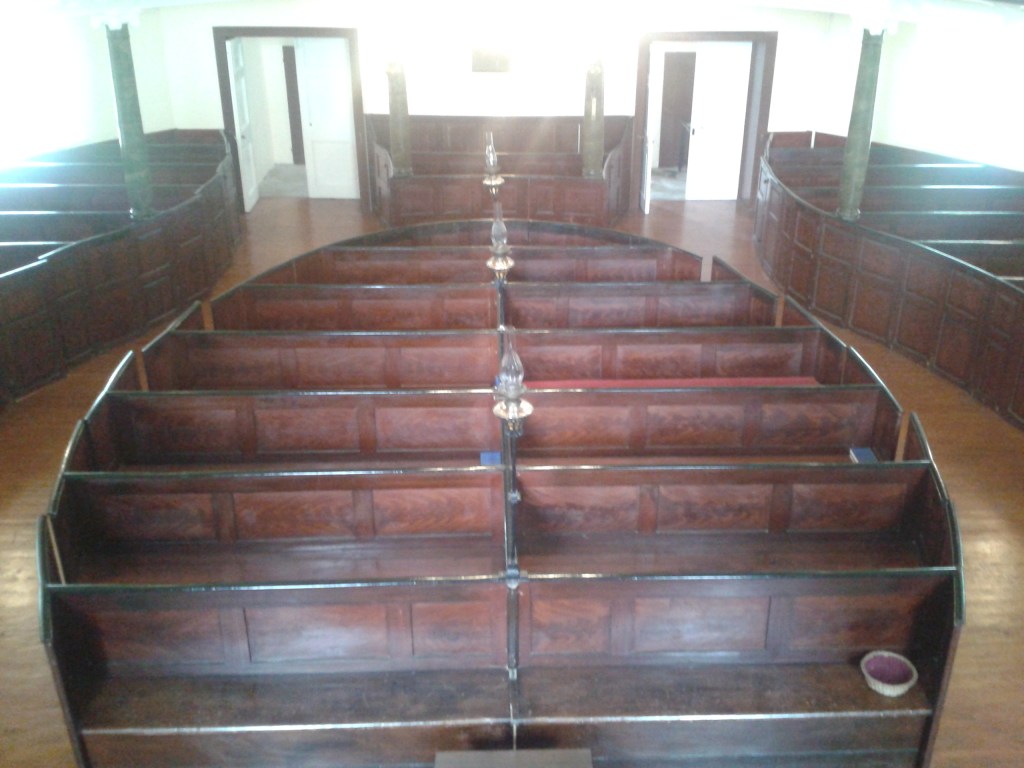
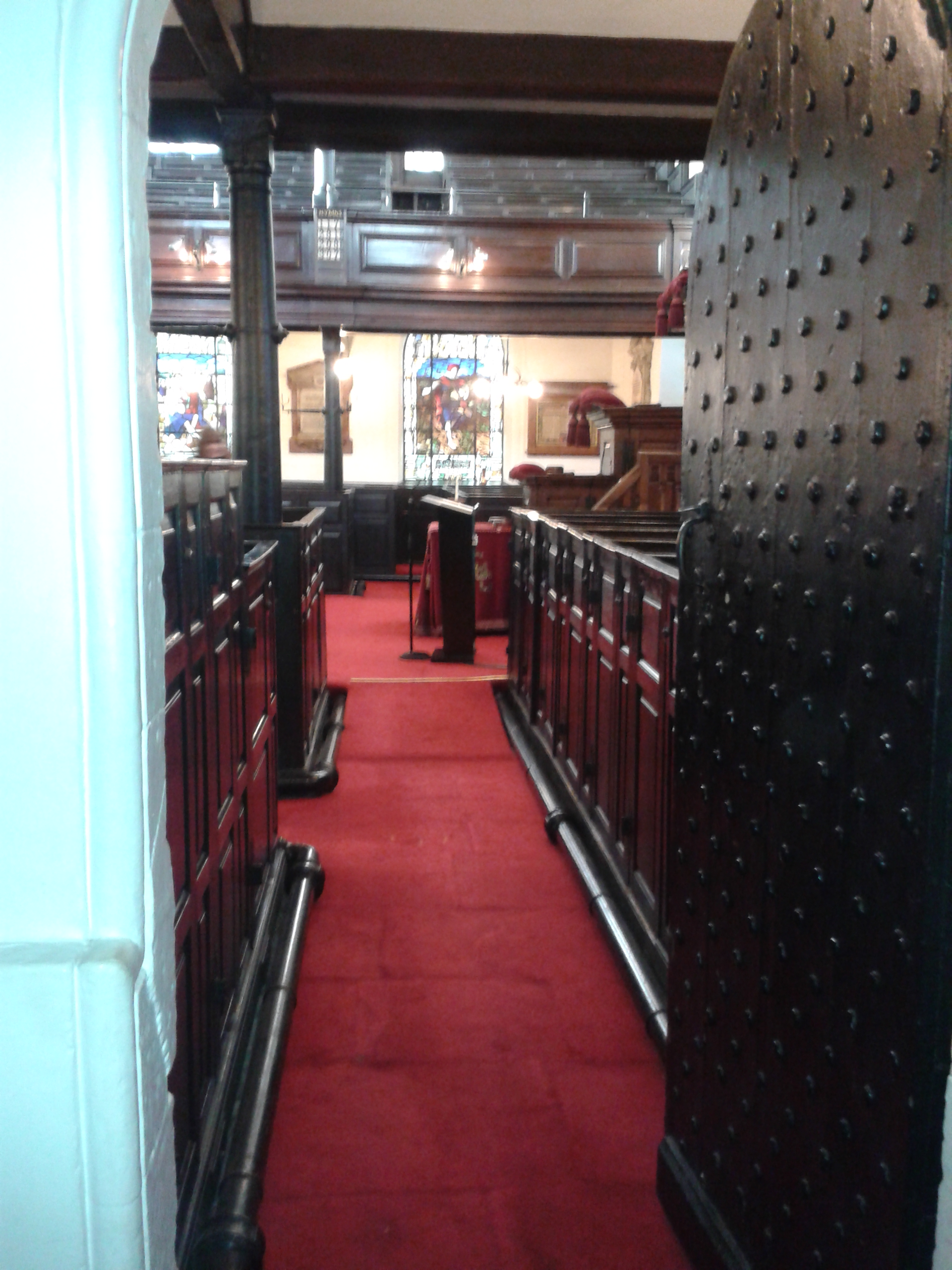
The interior of Crumlin has an elegant charm.
Pulpit
Pews
The account of S.E. Bowen’s ordination published in the Non-Subscribing Presbyterian magazine is quite full and interesting. In the service the Rev S.E. Bowen said that ‘Unitarians were a people who believed not so much in attempting a definition of religion as in working for truth and liberty, being bound together by a profound belief in the Fatherhood of God and the brotherhood of man.’ Later, over the welcome dinner there were a number of speeches given. Representing the Presbytery of Antrim the Rev W.S. Smith told the whole congregation to pick a day in October and arrive at the manse with a spade ready for three hours of work, leading the author of the report to note that the manse garden must ‘to say the least, be inferior in condition to the Garden of Eden when it was given to the father of all living to dress it and keep it’. The Rev Alexander Gordon was also there speaking highly of S.E. Bowen as a former student of his. He also related how he had recently been in the south of France and attended worship in a Protestant congregation there where the service was conducted by a young man in a congregation that only numbered sixteen, ‘yet he had been favourably impressed with the manifest consciousness of the congregation that they had come to worship, and with the energy and the earnestness of the preacher.’ It made me wonder what else Alexander Gordon did in the south of France in the summer of 1908, I can’t imagine that he just went there to sunbathe.
Thou, whose almighty word Chaos and darkness heard, And took their flight; Hear us, we humbly pray; And, where the gospel’s day Sheds not its glorious ray, Let there be light!
Sunday, 6th September marks the day we have started our return to worshipping together in church but our online services continue and today this one comes from Ballee Non-Subscribing Presbyterian Church.
Mountains and hills play a key part in the Old Testament and as we reflect on them we contemplate the whole of Creation and our part in it:
Great is the LORD and greatly to be praised in the city of our God! His holy mountain, beautiful in elevation, is the joy of all the earth, (Psalm 48)
The service is conducted by the Rev Dr David Steers, the reading (Psalm 121) is given by Carol Nixon at Downpatrick, and John Strain plays the organ at Ballee Non-Subscribing Presbyterian Church. Click on the above link to join in this short act of worship.
Time for a Story: The Riverbank
This week Time for a Story looks at Kenneth Grahame’s famous book The Wind in the Willows. Told by Sue Steers is also features special animation. Click on the above link to see the video.
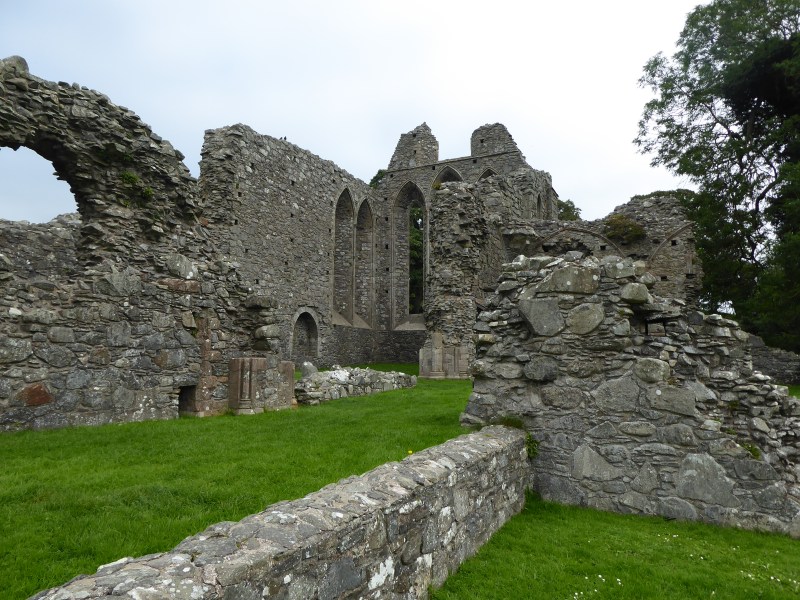
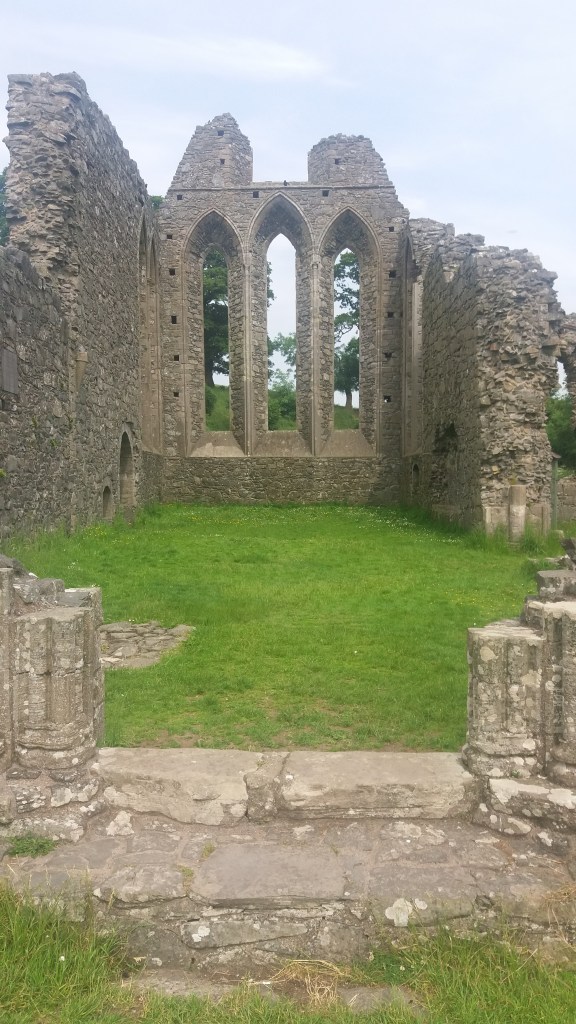
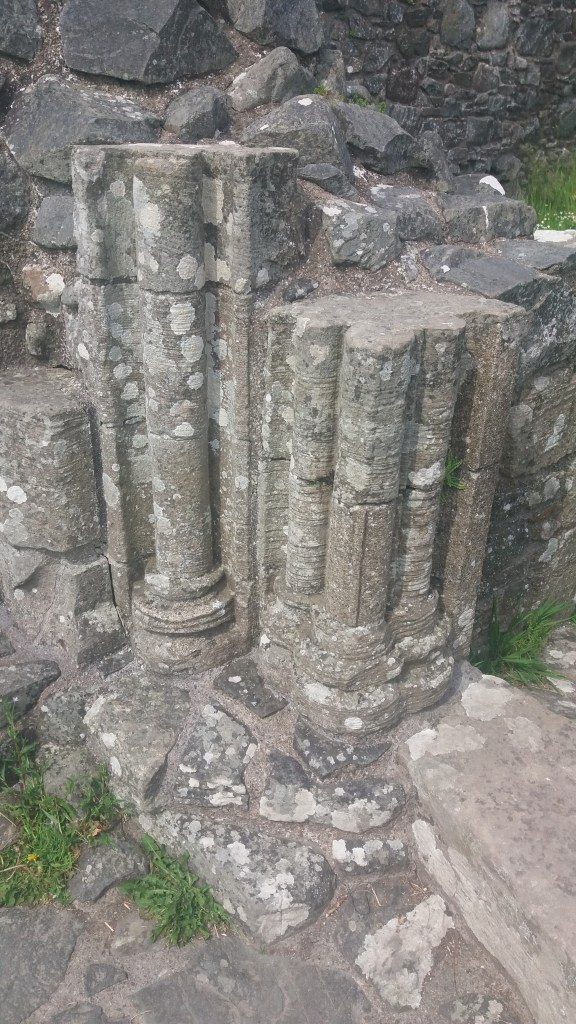
Today’s service comes from Inch Abbey in county Down. Service led by Rev Dr David Steers. Also taking part in the service are the Rev Rosalind Taggart and the Rev Norman Hutton.
Readings: Psalm 148 and Matthew ch.5 v.1-12
Organists:
Alfie McClelland, Clough Non-Subscribing Presbyterian Church
John Strain, Ballee Non-Subscribing Presbyterian Church
Hymns:
Glorious things of thee are spoken (‘Hymns of Faith and Freedom’ 233)
Seek ye first the kingdom of God (‘Hymns of Faith and Freedom’ 272)
Mine eyes have seen the glory of the coming of the Lord (‘Hymns of Faith and Freedom’ 221)
Sent forth by God’s blessing (‘Hymns of Faith and Freedom’ 409)
Click on the above video for today’s service
Time for a Story: Stargazing
This week’s story, told by Sue Steers FRSA, with special animation by InkLightning, features the life of Galileo. It can be seen here:
Water is what connects us to life. It is also – clearly when we look at the book of Genesis – something that connects us to God.
Today’s service comes from Ballee Non-Subscribing Presbyterian Church. It is also a collaborative act of worship because taking part in the service is the Rev Brenda Catherall, minister of Chowbent Unitarian Chapel, Atherton, Lancashire. Brenda reads from Genesis ch.1 v.1-5 and the poem Wild Geese by Mary Oliver.
Whoever you are, no matter how lonely,
The world offers itself to your imagination
Brenda is reading at Pennington Flash, near Leigh, an area reclaimed from industrial decay and now a Country Park and home to over 250 species of bird. Wild Geese also feature in the video.
John Strain, Ballee organist, plays the hymns All people that on earth do dwell (‘Hymns of Faith and Freedom’ 1) and Bright the Vision that delighted (‘Hymns of Faith and Freedom’ 35).
Time for a Story: Wisdom
This week’s story tells the story of Archimedes, famous as an astronomer, inventor and scientist, whose Eureka moment has passed into the English language. Click on the above video which features special music, images from the British Museum and animation created by InkLightning. This image is of Syracuse, the birthplace of Archimedes.
Here is some more information on Chowbent Chapel. Click on the image below to read about Chowbent Chapel and the Rev Brenda Catherall:
Today’s service comes from Dunmurry with a reading given by church member Emma McCrudden (Ezekiel ch.17 v.1-8) and the hymns played by church organist Allen Yarr.
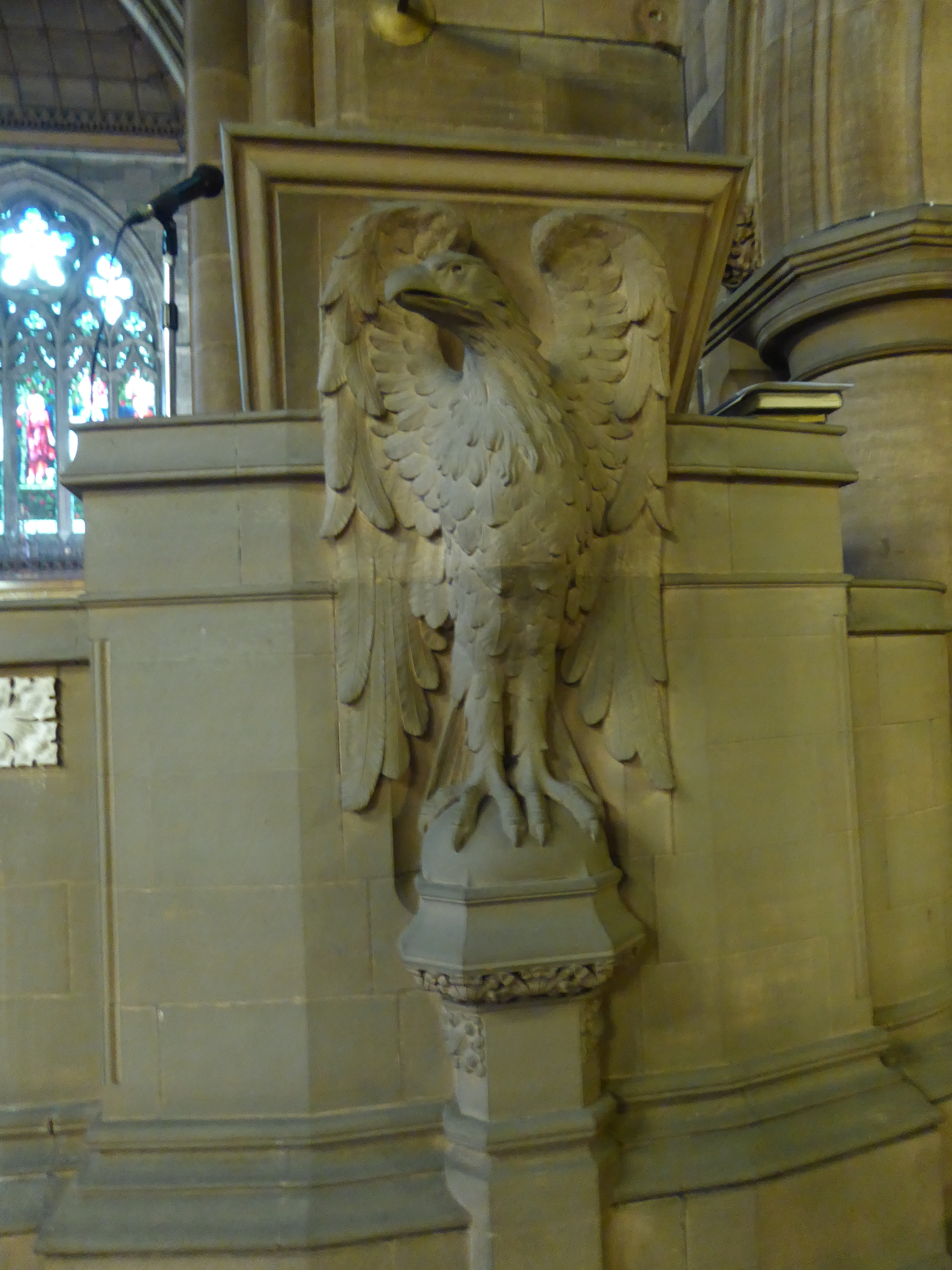
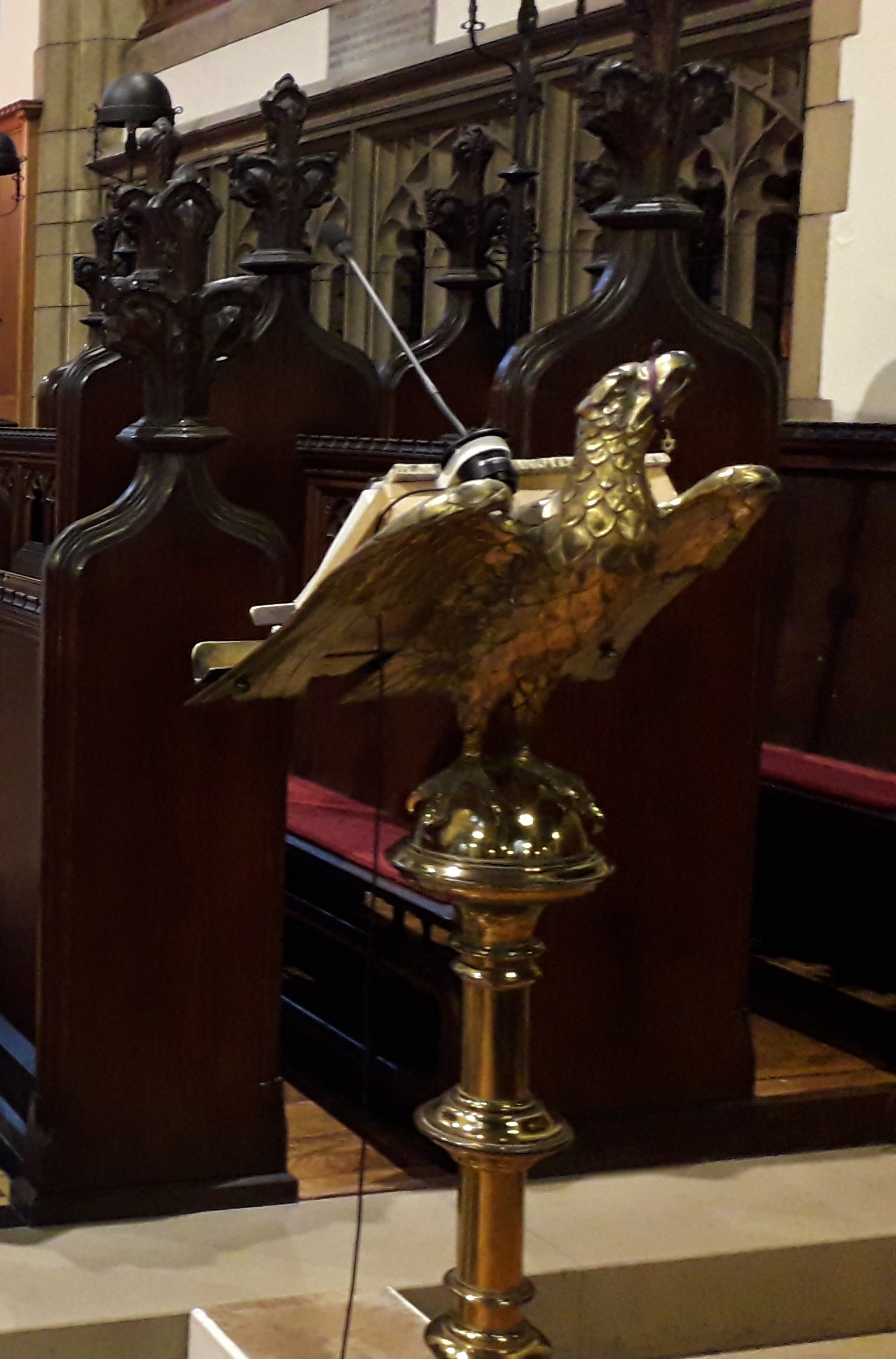
Eagles are frequently found in the Bible and in Christian iconography. They are often found in churches:
Lectern Ullet Road Church, Liverpool
Lectern All Souls’ Church, Belfast
Click on the video to see today’s service from Dunmurry
Time for a Story: Navigation
This week’s Time for a Story is filmed in First Presbyterian (NS) Church, Banbridge and deals with the question of finding True North. With illustrations of the North Pole from the British Museum and some special music. How do we find our own internal compass to return home to the place where we wish to be?
Our service today comes from First Presbyterian (NS) Church, Banbridge. The reading is given by Sam Agnew (Mark ch. 4 v.21-34) and John Strain is the organist, playing the organ at Ballee Non-Subscribing Presbyterian Church. The hymns are O worship the King, all glorious above (Hymns of Faith and Freedom 21) and God speaks to us in bird and song (Hymns of Faith and Freedom 66).
I see an angel waiting to be released
Michelangelo, the famous Renaissance sculptor, was once encountered chipping away at a large, shapeless block of marble. “What do you see?” someone asked him. Michelangelo replied simply “I see an angel waiting to be released”. (Picture: Ullet Road Church, Liverpool).
Click on the above video to see Time for a Story: Neverland which tells the story of a famous statue in Liverpool’s Sefton Park which stands alongside the Palm House there. The video is filmed nearby in the outstanding building of Ullet Road Unitarian Church designed by Thomas and Percy Worthington at the end of the nineteenth and start of the twentieth centuries. The video also features some of the wildlife in the park as well as animation by InkLightning.
Below are some of images taken at the time in the church and in the park that relate to the video.
Today’s service is from Downpatrick and deals with the gospel story of Jesus – and Peter – walking on water. What is the meaning of this for faith in our day and age? After the feeding of the five thousand Jesus goes up a mountain to pray while the disciples go out on the lake in a boat. Threatened by a sudden storm Jesus comes out to save them, although at first they are more alarmed by this than anything else. We look at the way God interacted with humanity through water in the Old Testament. The hymns are played by Downpatrick organist Laura Patterson.
Time for a Story: Imagination deals with one of the most famous literary figures of the nineteenth century. Born in Cheshire in 1832 he spent his working life as a Mathematics don in Oxford. Generally known by his pseudonym his creations have a enjoyed a place in the popular imagination ever since.
This Sunday our service comes from Clough. The theme is inspired by Thomas Carlyle’s remark that ‘Wonder is the basis of worship’. In this light we explore the place of singing in our worship (‘O Lord my God, when I in awesome wonder, consider all the worlds thy hands hath made’). Dr Anna Ferguson reads Psalm 96 and Alfie McClelland plays the hymns: City of God, how broad and far and Love divine, all loves excelling.
This week’s Time for a Story has the theme of Diligence and tells the story, from India, of Janaka. It can be viewed here:
Today’s service comes from Ballee and features a reading sent in by Jonathan Chambers, now of Somerset, which reminds him of Ballee. It is by George Eliot from Daniel Deronda (1876):
A human life, I think, should be well rooted in some spot of a native land, where it may get the love of tender kinship for the face of the earth, for the labours men go forth to, for the sounds and accents that haunt it, for whatever will give that early home a familiar unmistakable difference amidst the future widening of knowledge: a spot where the definiteness of early memories may be inwrought with affection, and kindly acquaintance with all neighbours, even to the dogs and donkeys, may spread not by sentimental effort and reflection, but as a sweet habit of the blood. At five years old, mortals are not prepared to be citizens of the world, to be stimulated by abstract nouns, to soar above preference into impartiality; and that prejudice in favour of milk with which we blindly begin, is a type of the way body and soul must get nourished at least for a time. The best introduction to astronomy is to think of the nightly heavens as a little lot of stars belonging to one’s own homestead.
This links in with Psalm 8 (read for us by Rachel Neill):
When I consider your heavens, the work of your fingers, the moon and the stars, which you have set in place, what is humankind that you are mindful of them, human beings that you care for them?
You have made them a little lower than the angels and crowned them with glory and honour.
and with our hymns played by John Strain which include:
He formed the stars, those heavenly flames,
He counts their numbers, calls their names;
His wisdom’s vast, and knows no bound,
A deep where all our thoughts are drowned.
But all this helps us reflect on our roots, where we come from, what we have achieved in the course of our lives, and our place in the vastness of the universe.
Also this week we uploaded Time for a Story: Saying Please, which has its own Somerset connection:
and my own thoughts on churches coming out of lockdown in Northern Ireland: