In this post we are looking at some more examples of the work of Allen Daniel Coon. The total output of postcards he produced between 1902 and his death in 1938 must have been enormous and they covered a very wide geographical area. I hadn’t noticed that one card I picked up a few years ago was by him:
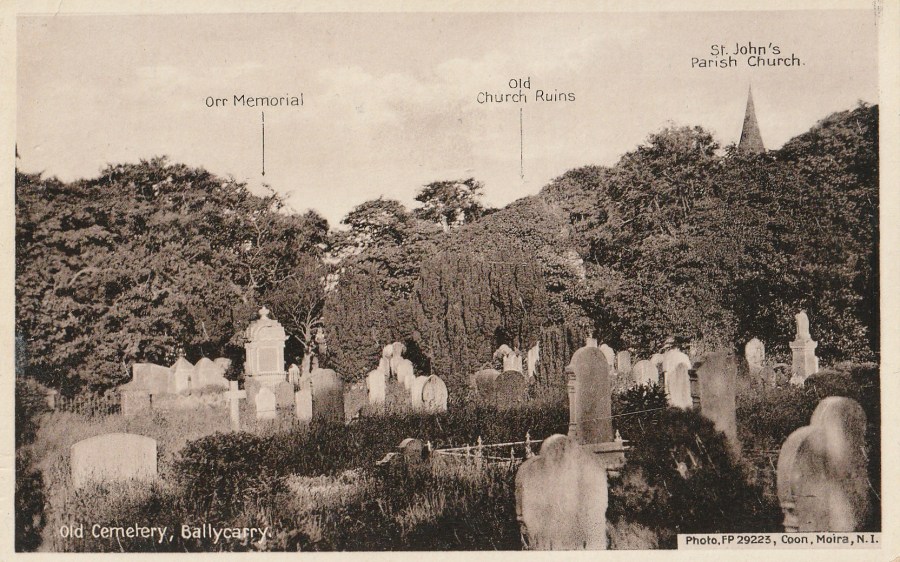
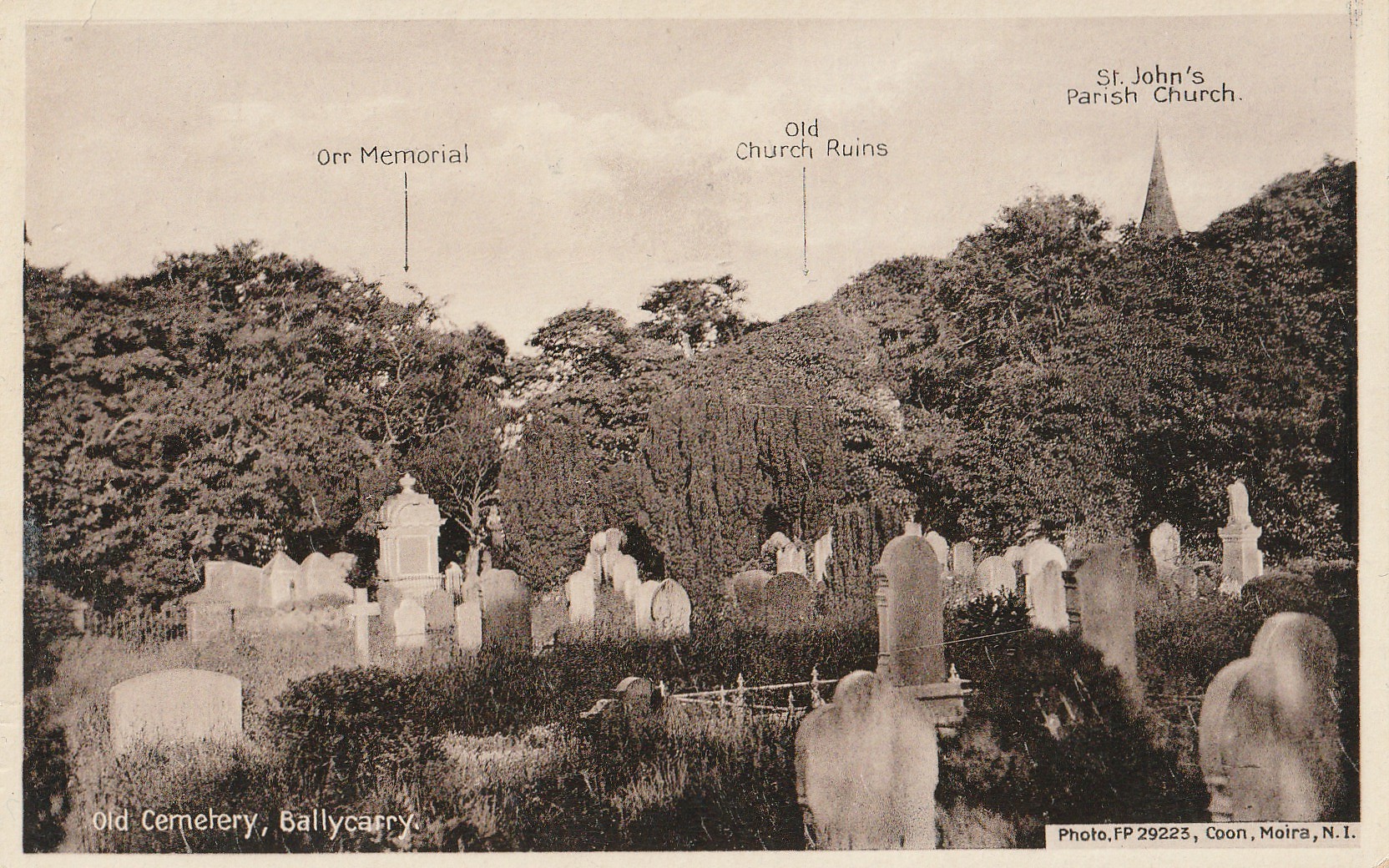
Old Cemetery, Ballycarry, 1929
This was produced for John McKee News Agent and Confectioner, Ballycarry, and is interesting because he has labelled different features of the graveyard, although you can only see the tip of the spire of St John’s Parish Church and can’t see the ruins of the old church at all as they are obscured by trees.
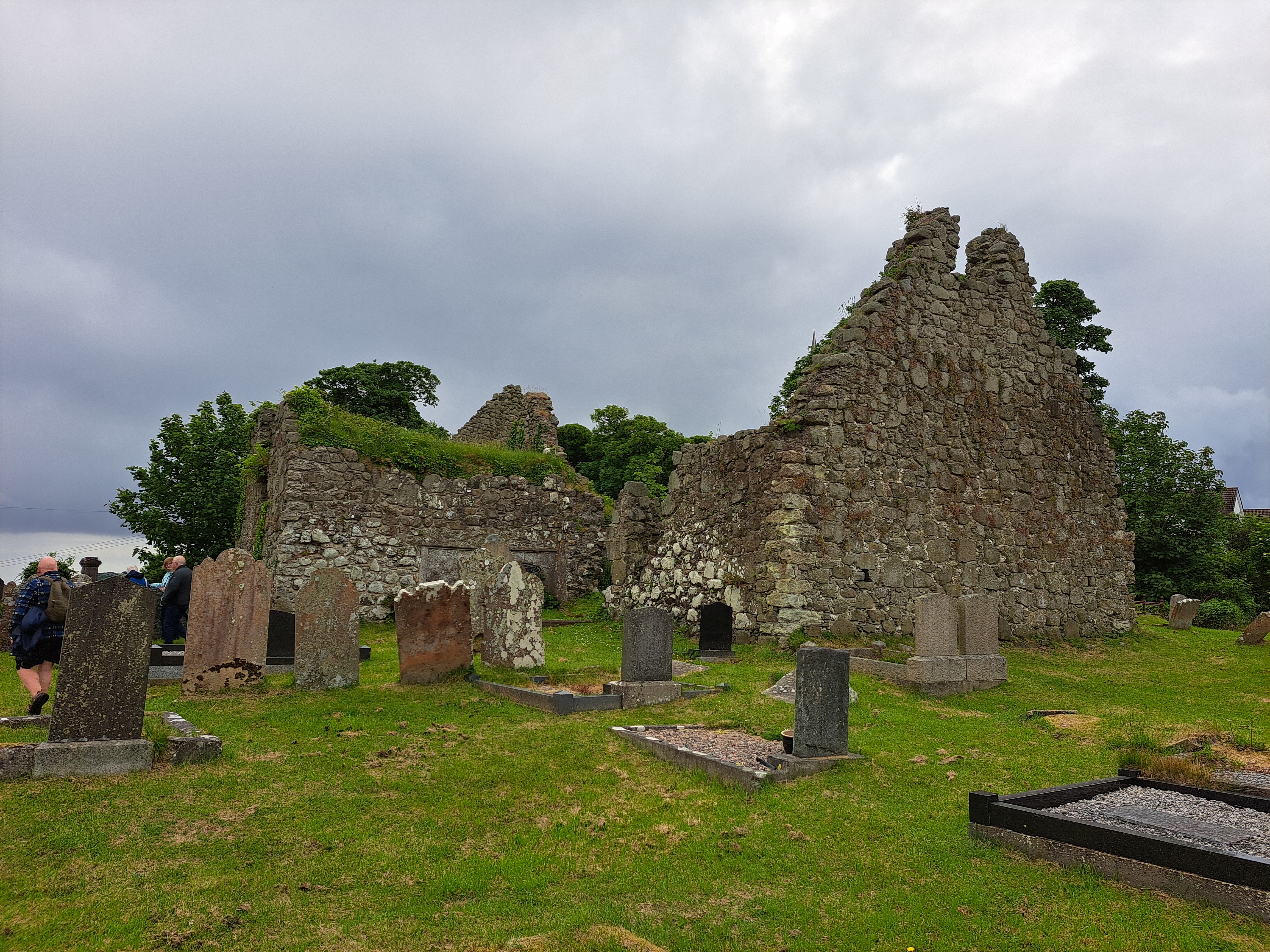
This is what the ruins look like today:
Ruins of Templecorran Church, Ballycarry
You can read about our recent visit to this graveyard here.
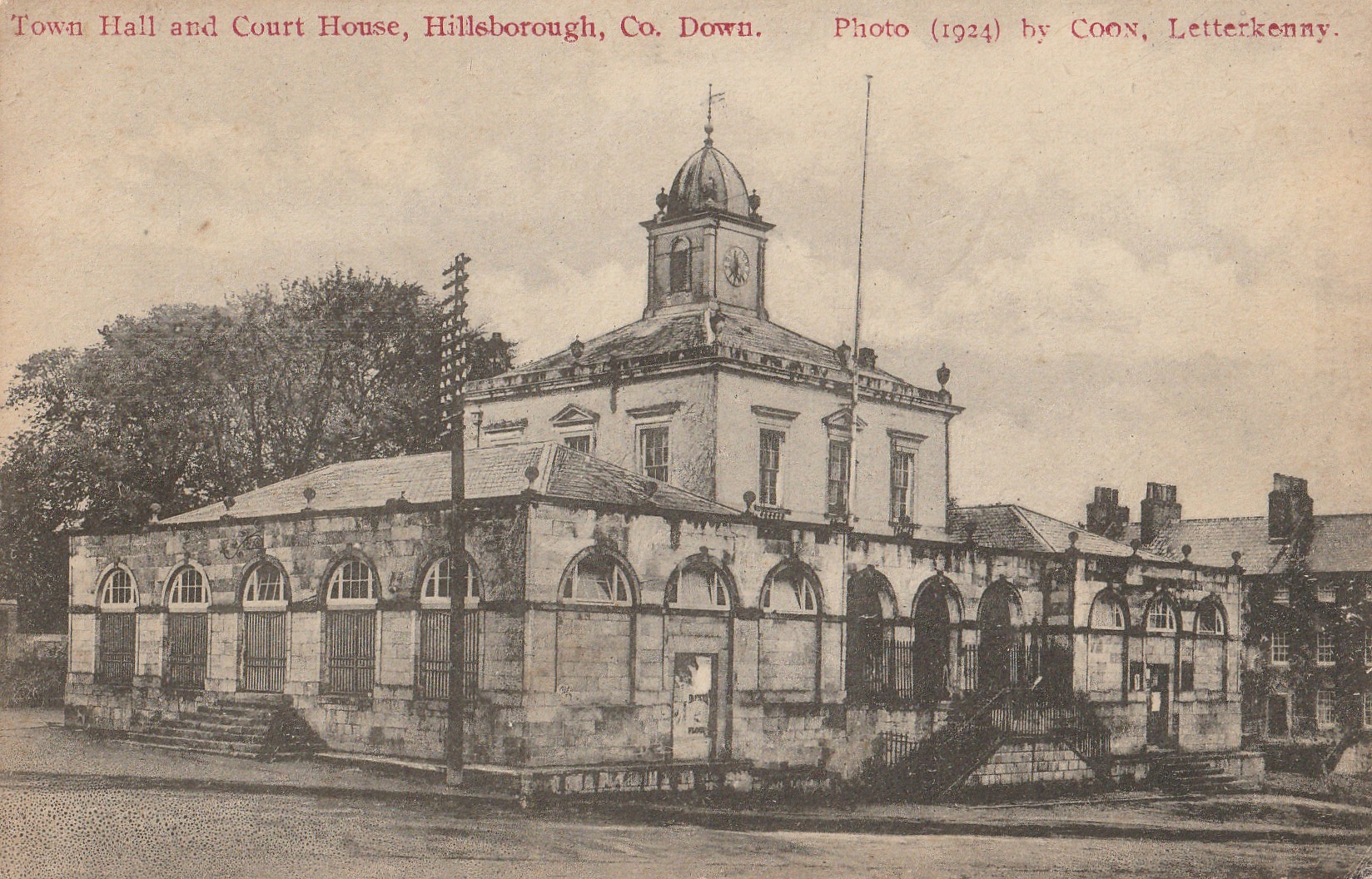
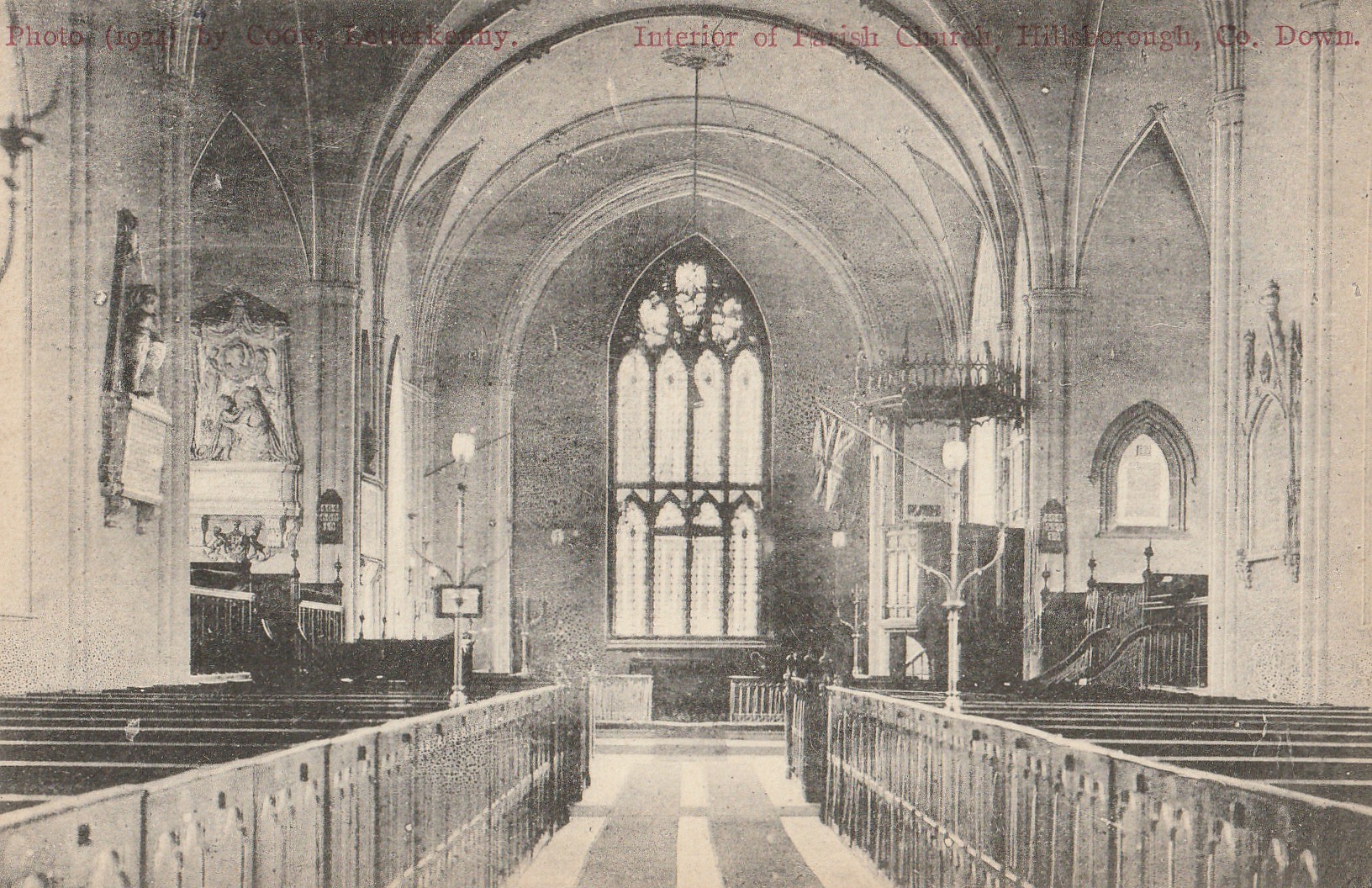
Allen Coon produced a lot of postcards for this part of County Antrim in the later 1920s, in this case giving his location as Moira, NI. Five years earlier his postcards produced for Mrs Johnston, Draper & Boot Merchant, Hillsborough still give his location as Letterkenny:
Town Hall and Court House, Hillsborough, 1924
Interior of Parish Church, Hillsborough, 1924
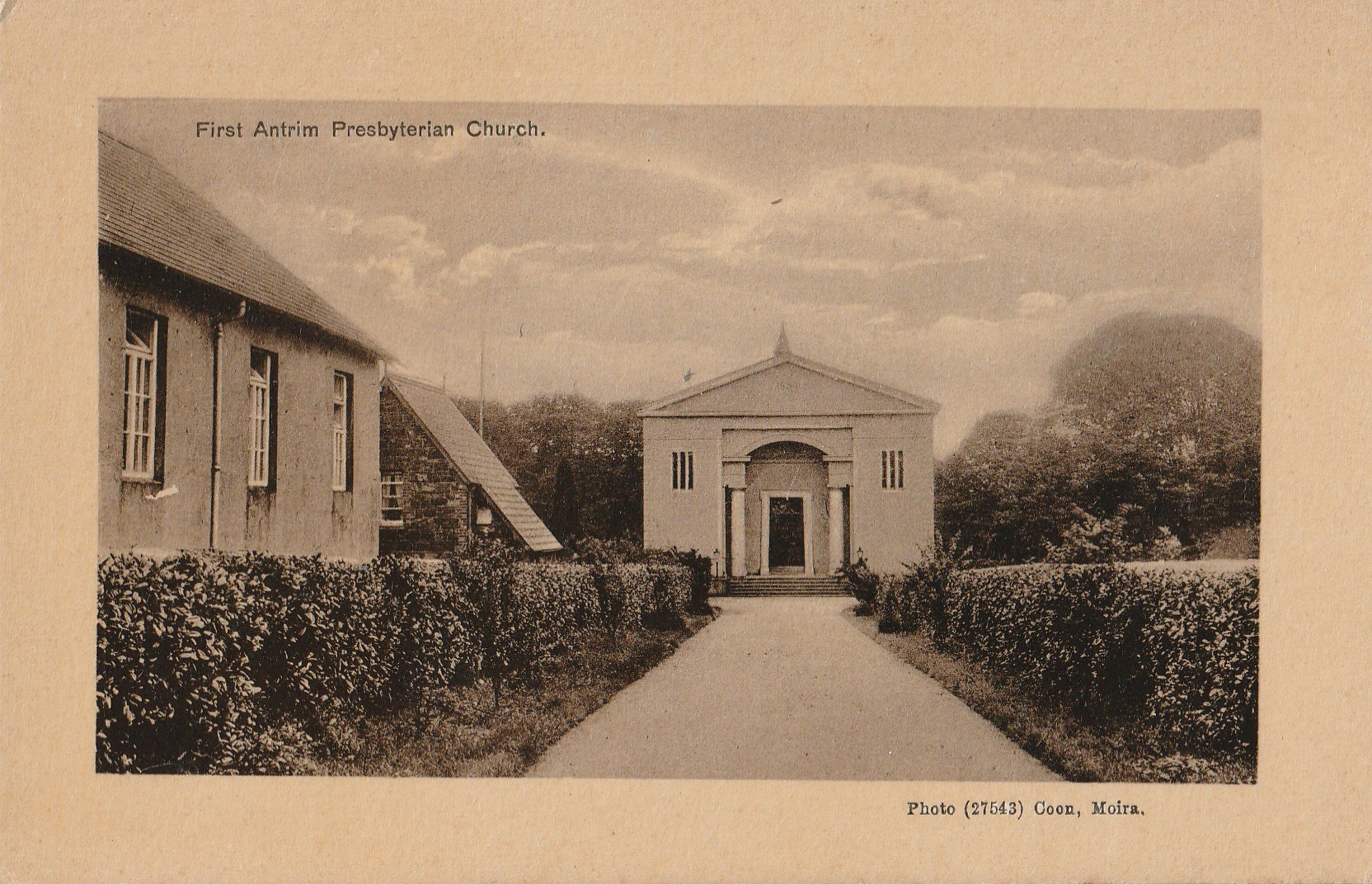
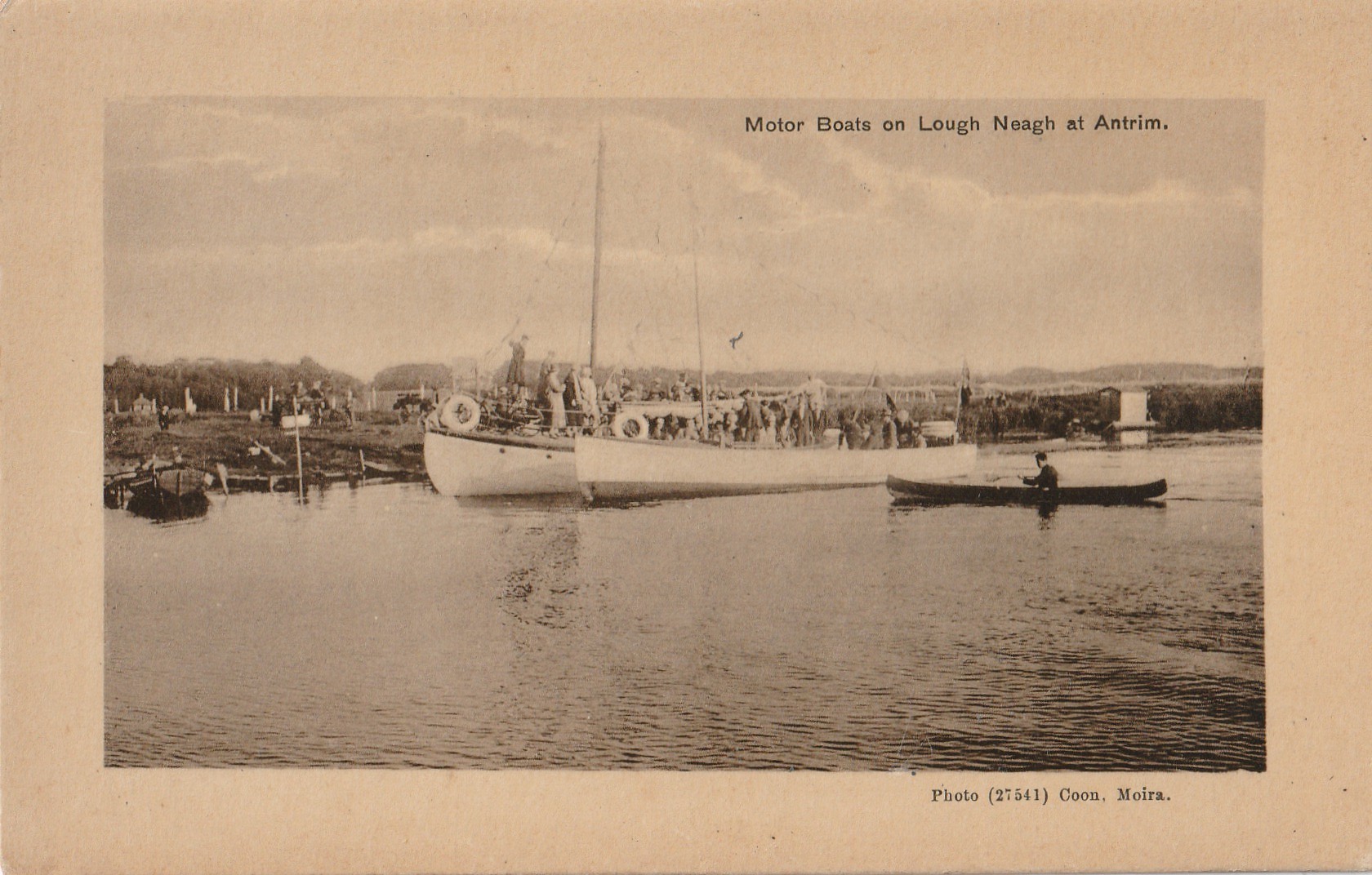
The cards produced in Antrim in 1927 stand out from the others having a large border and a glossy finish. This time they are published for Mrs Simpson, Newsagent and Stationer, Antrim, who must have wanted something different in terms of design. By this time he is well settled in Moira:
First Antrim Presbyterian Church, 1927
Motor Boats on Lough Neagh at Antrim, 1927
Presumably the motor boats were used as pleasure craft taking people on tours of the Lough.
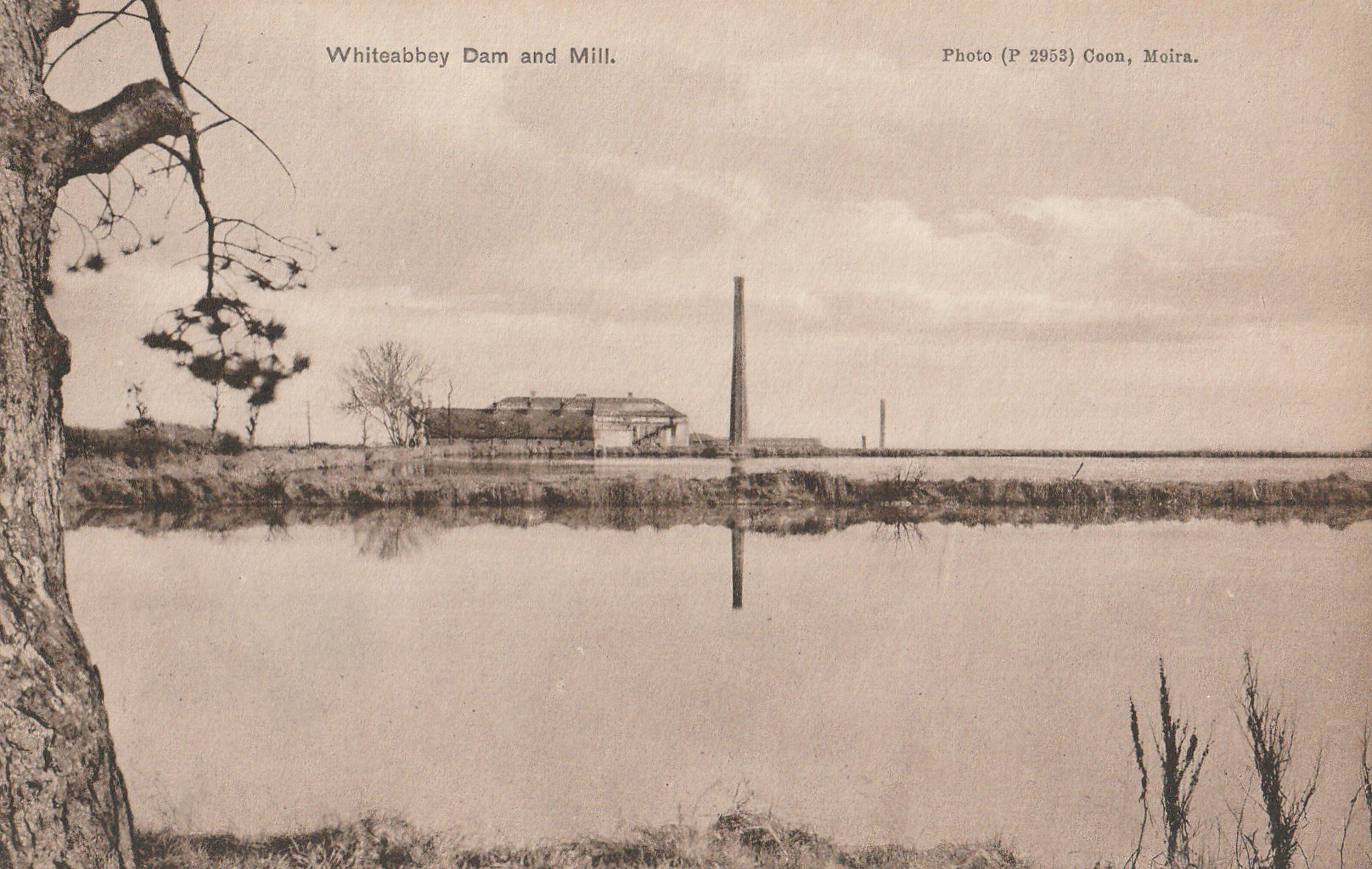
In Whiteabbey in 1929 he produced about 18 postcards for H. Quiery, Newsagent & Tobacconist. He must have exhausted all the possible views of the surroundings.
Whiteabbey Dam and Mill, 1929
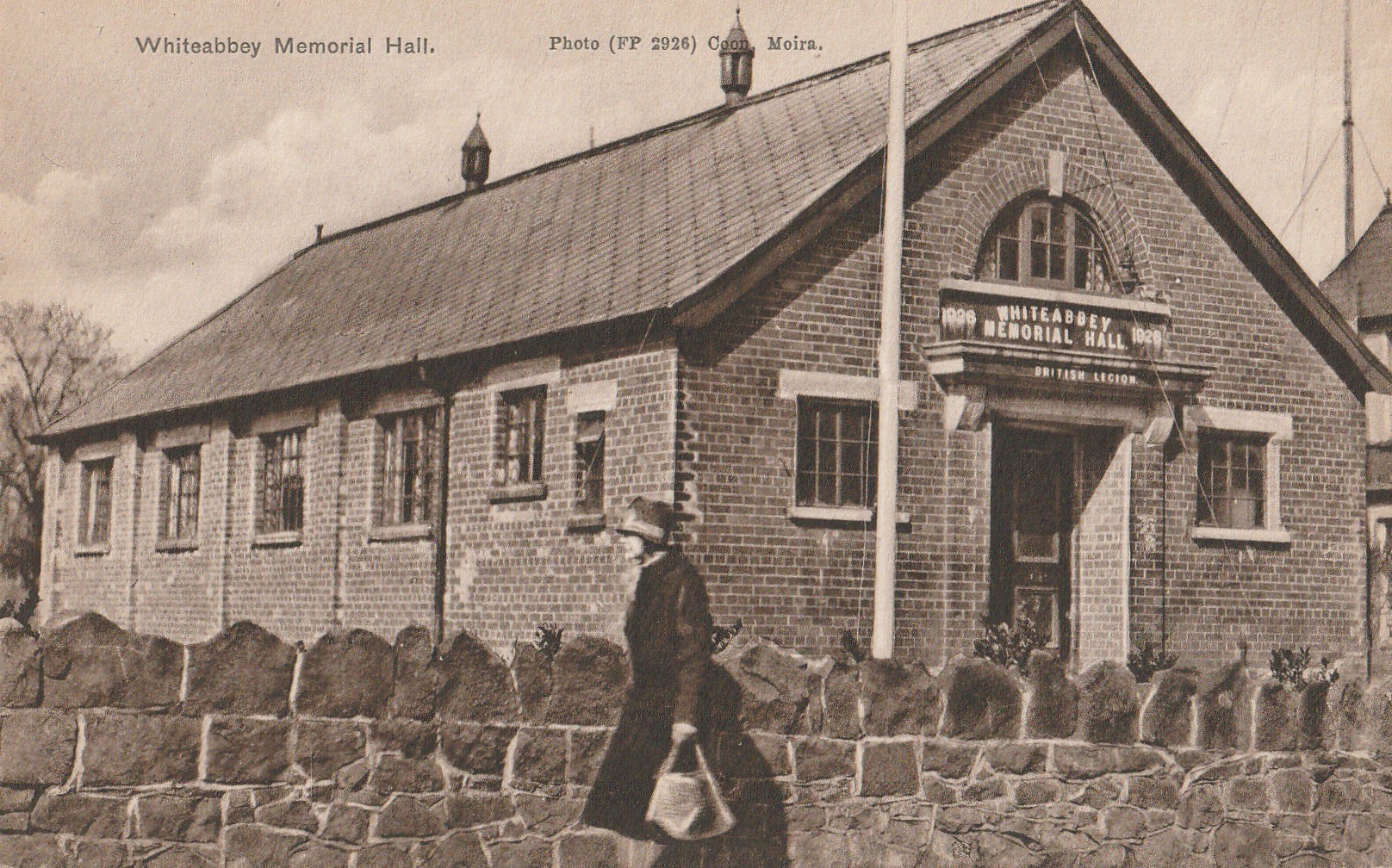
Whiteabbey Memorial Hall, 1929
A lot of Allen Coon’s pictures are straightforward architectural treatments of churches or halls. But this one is slightly different in that a passer-by boldly walks into shot in front of the Whiteabbey Memorial Hall (opened just two years earlier in 1927). Was this pre-arranged to add a bit of extra detail? Or did the lady accidently cross into the frame while he was standing there with his camera? If this was an unforeseen intrusion into his picture he must have liked the look of the finished article since he could easily have taken another one. But there she remains for posterity, out on her messages, captured on film.
The solid and imposing structure of Canning Street Presbyterian Church was a feature of that corner of Canning Street and Bedford Street for about 120 years.
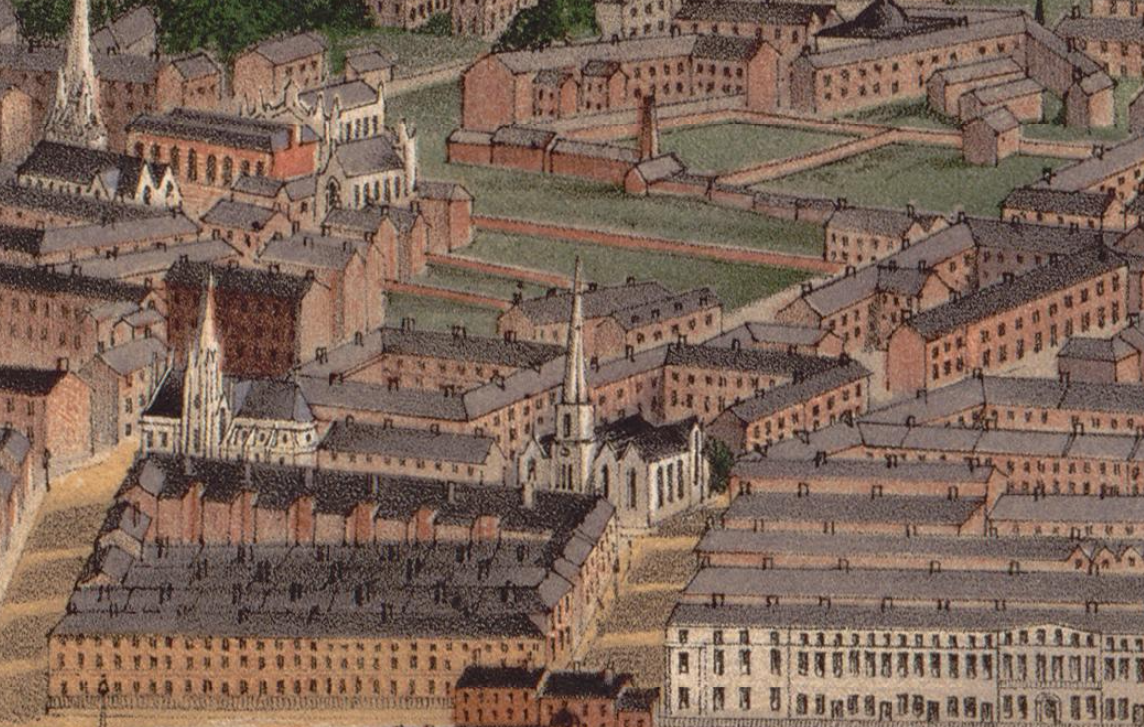
I’ve mentioned this church before and used its image as it appears in an aerial view of Liverpool painted from a hot air balloon by John R. Isaac in 1859 and published in New York. (This can be viewed on the Library of Congress site. You can also read the original post by clicking on this link – Seven Churches in Liverpool in 1859 viewed from the air). Below Canning Street Presbyterian Church can be seen in the centre of this section of the picture:
Detail from Liverpool, 1859, part of Birkenhead, the docks, and Cheshire coast Library of Congress
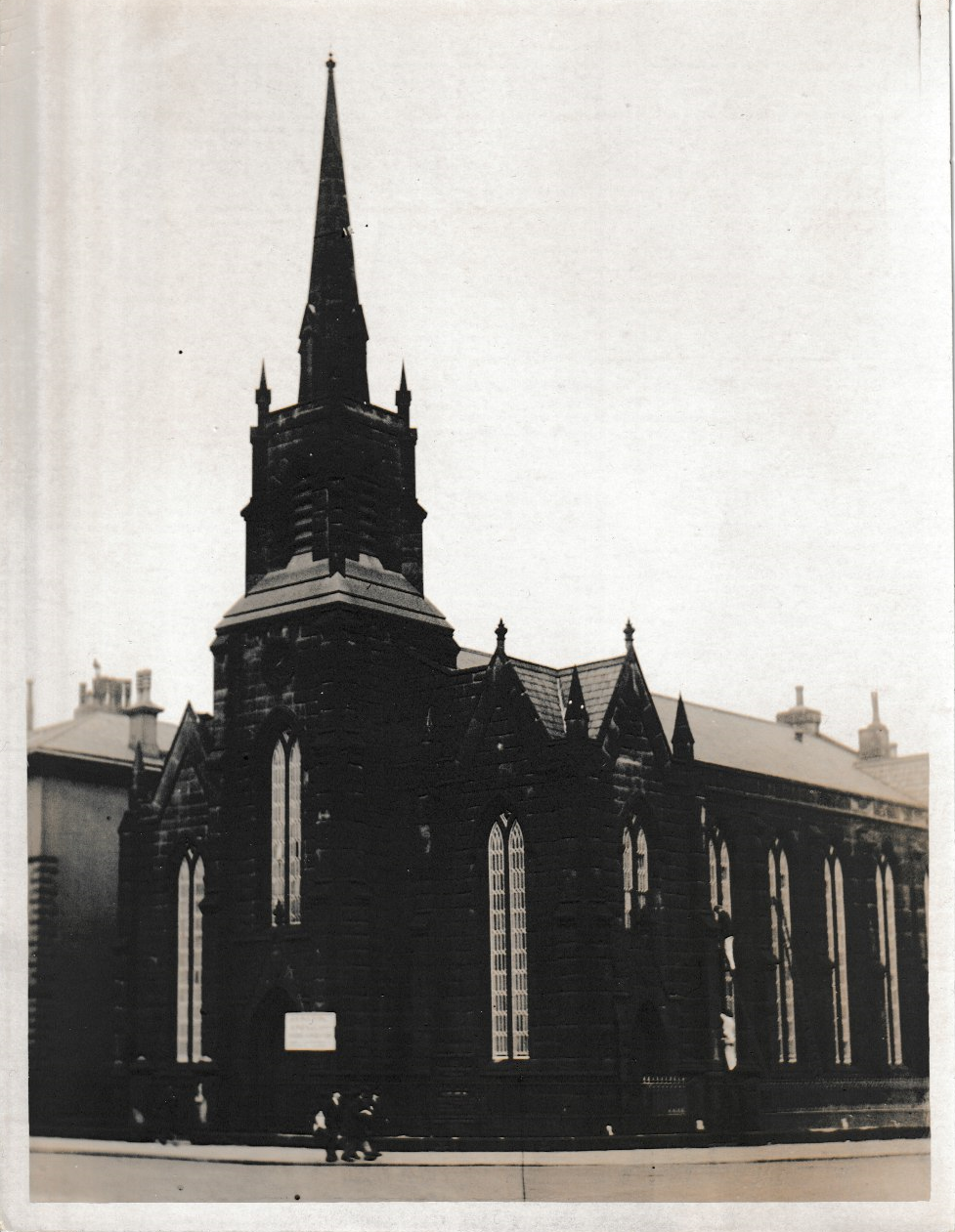
In fact of the seven churches mentioned in that post I have blogged about most of them at one time or another (Hope Street Unitarian Church, the Catholic Apostolic Church and Myrtle Street Baptist Church can all also be seen in this image) but recently I acquired a press photograph of Canning Street Presbyterian Church taken in 1931:
The picture is a bit dark but it shows the edifice built in 1846 and finally demolished in the 1960s. It was built by a denomination of exiled Scots, members of the Free Church of Scotland, which became the Presbyterian Church in England. Later this body united with the United Presbyterian Church (at a ceremony in Liverpool in 1876) to form the Presbyterian Church of England. In 1896 the minister, the Rev Simeon Ross Macphail observed that fifty years previously increasing numbers of Scottish emigrants to Liverpool were not inclined to join the local churches which called themselves Presbyterian but were by then Unitarian in theology. This would be true by the 1840s, although it was not the case a couple of generations before when Scots newly arrived in the city, perhaps influenced by the theological moderatism of the Church of Scotland, were often happy to make common cause with the dissenters.
Canning Street, in its prime location in the wealthiest part of the city flourished for decades until it followed the trend to move out of the by then less fashionable Georgian area of the city to the suburbs. In 1931 they sold up and built a new church in Allerton (now Allerton United Reformed Church). It was at this point that this photo was taken as it was sold to the German Church in Liverpool who moved their location from the very centre of town to Canning Street.
A German-speaking Lutheran congregation had existed in Liverpool since at least 1846. Meeting in various places over the years they had sufficient capital in 1871 to purchase what had been known as Newington Chapel. This had been founded originally as a break away from the Ancient Chapel of Toxteth. Unhappy with the appointment of an Arian (or Unitarian) minister in 1775, a group of Congregationalists built their own chapel on Renshaw Street. From 1811, with the appointment of Rev Thomas Spencer, this congregation grew rapidly and built Great George Street Chapel as a suitable base for his oratorical powers. Unfortunately, Thomas Spencer never took up his place in Great George Street Chapel, when he drowned in a swimming accident in the Mersey, but the congregation moved nevertheless and continued to flourish under the leadership of Rev Dr Thomas Raffles. In the best tradition of non-conformist awkwardness a small minority of the congregation refused to move and stayed in Newington Chapel, stayed, in fact, until 1871 when the German Evangelical/Lutheran Church was able to buy the meeting-house from them.
This congregation remained here until 1931 when the Cheshire Lines Railway Company purchased the site from them for £14,000. That was a good price and more than enough to buy Canning Street Church for just £4,000 in that year, the building being formally opened for Lutheran worship on 25th October 1931.
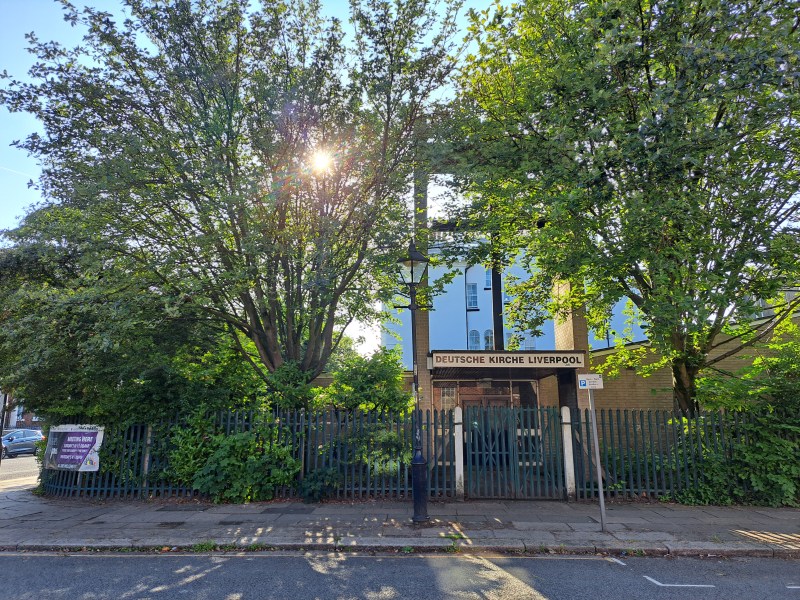
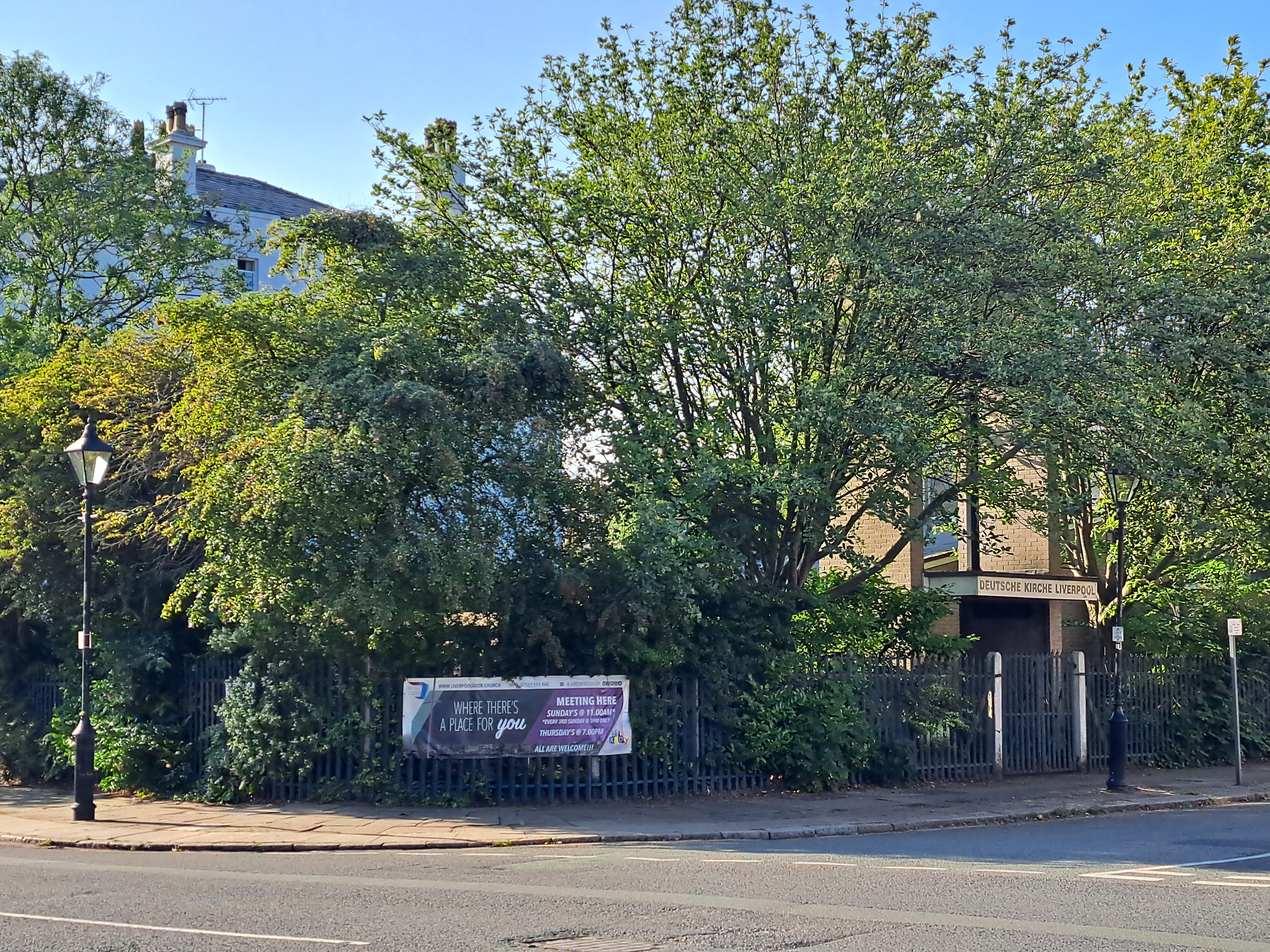
The site of the church today
Canning Street Church– Deutsche Kirche Liverpool
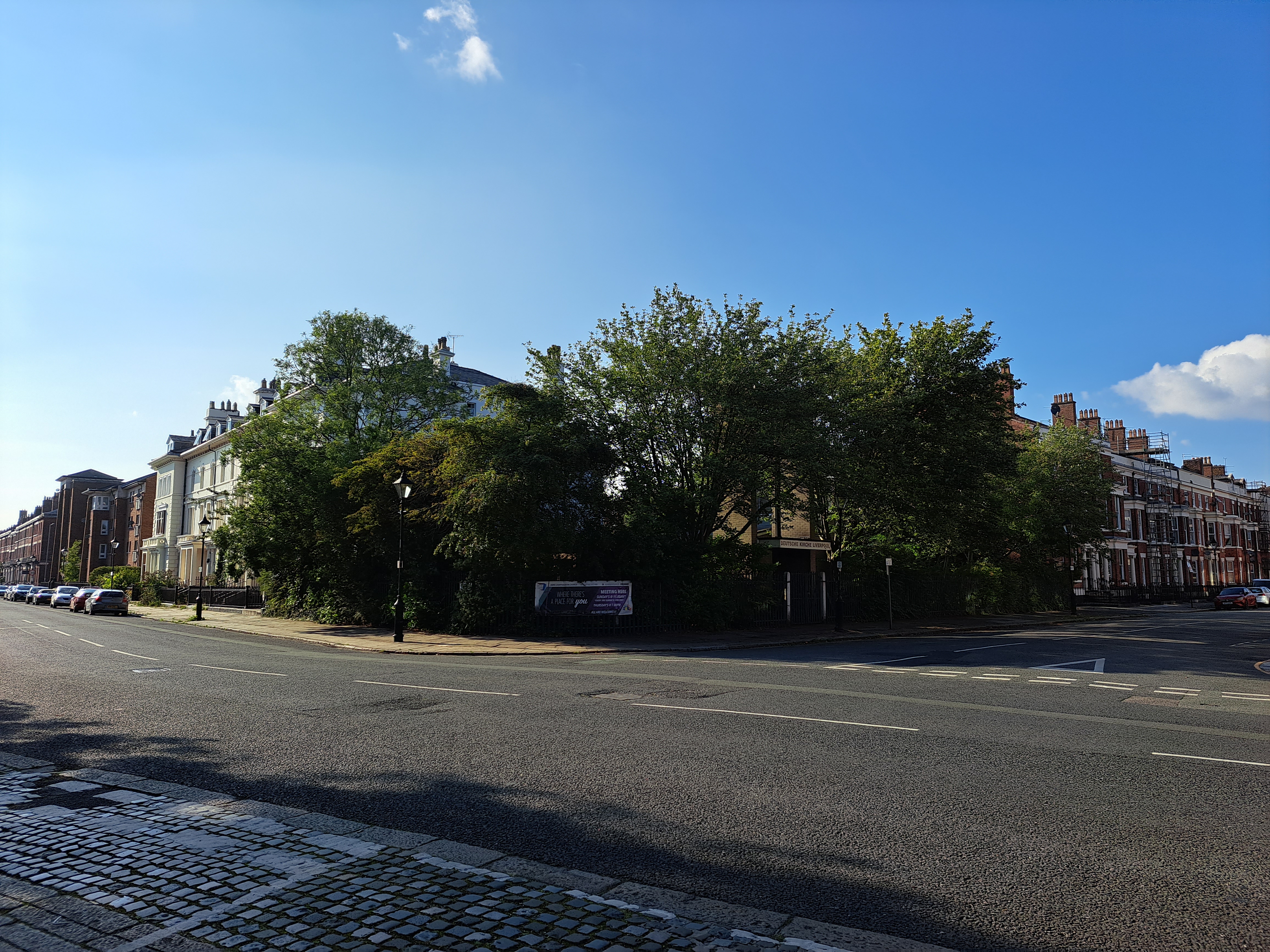
The German congregation has worshipped on that site ever since but in the 1960s they demolished the old church and replaced it with a rather plain building which doesn’t really catch the eye.
A view of the corner of Canning Street and Bedford Street today. The German Church is opposite the viewer, the site of the one-time Catholic Apostolic Church can be seen on the far left.
No pictures or text may be reproduced from this site without the express permission of the author.
 velvethummingbee