Hale is a pretty little place close to Liverpool and now in Cheshire, although traditionally located in Lancashire. Without doubt though, its most famous son is John Middleton, the ‘Childe of Hale’.
Click on the video above to discover the story of the Childe of Hale
Visiting the village recently I made this video to record the story of John Middleton who was said to have been 9 feet 3 inches tall, so tall that at night his feet were said to protrude out of the windows of his house.
John Middleton’s house
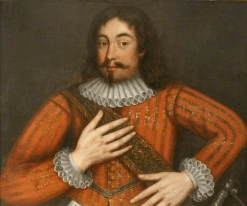
His life story is bound up with that of Sir Gilbert Ireland, whose body guard he was, and through whose connections he visited Brasenose College, Oxford and was presented to King James I in London.
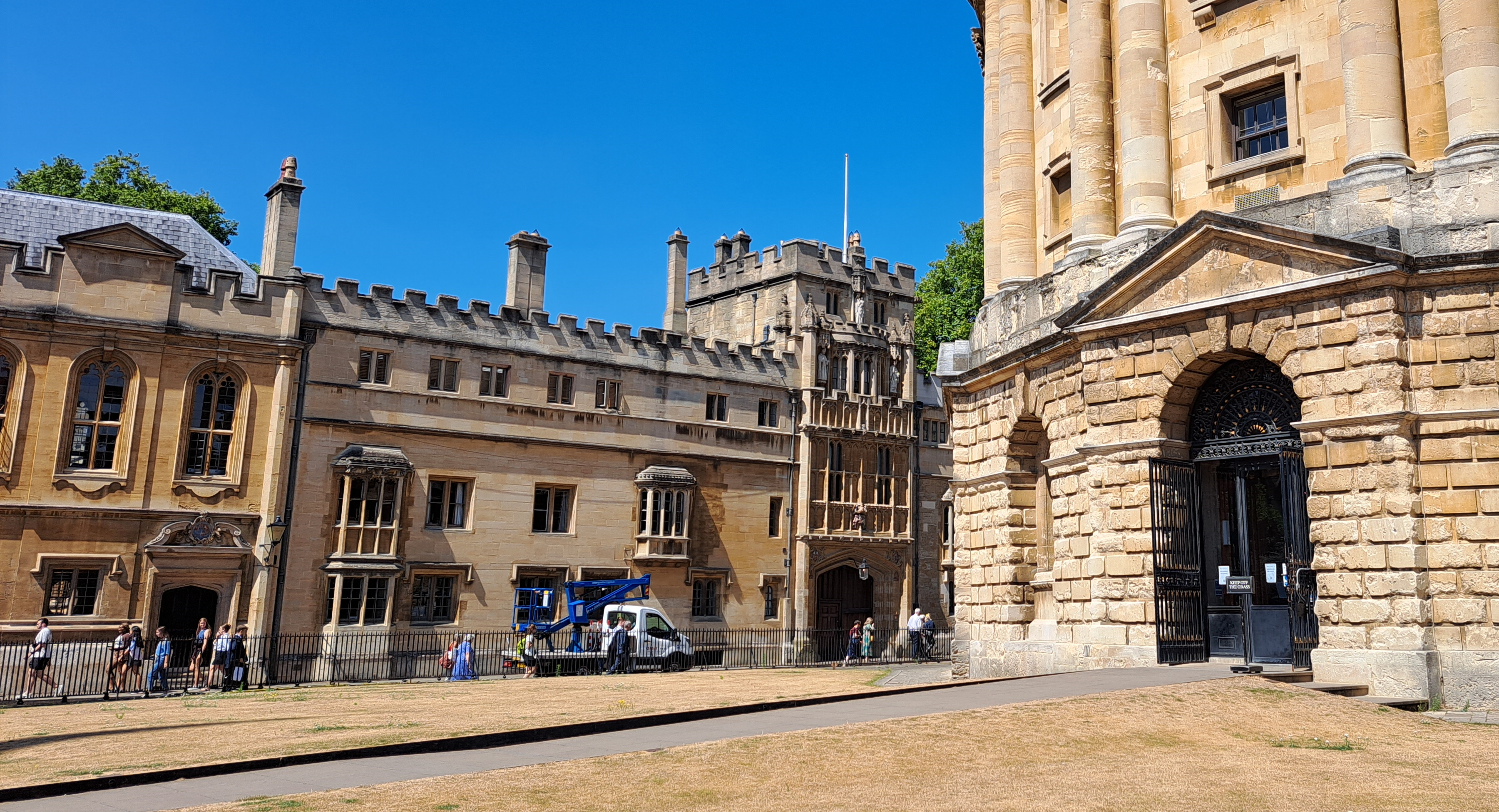
Brasenose College, Oxford which has a number of portraits of John Middleton and still names the eights boat of the rowing club ‘The Childe of Hale’.
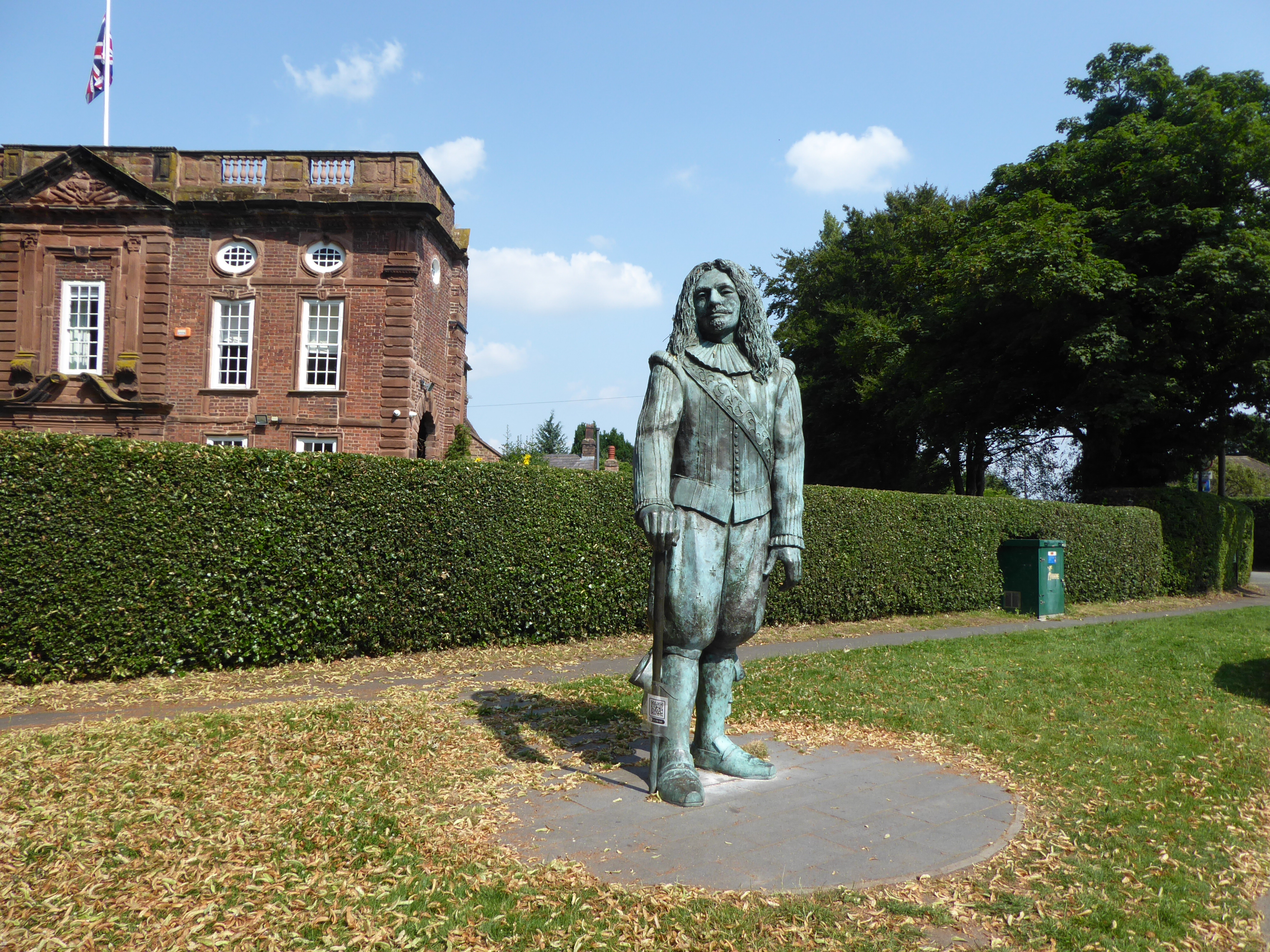
Modern statue of the Childe of Hale by Diane Gorvin
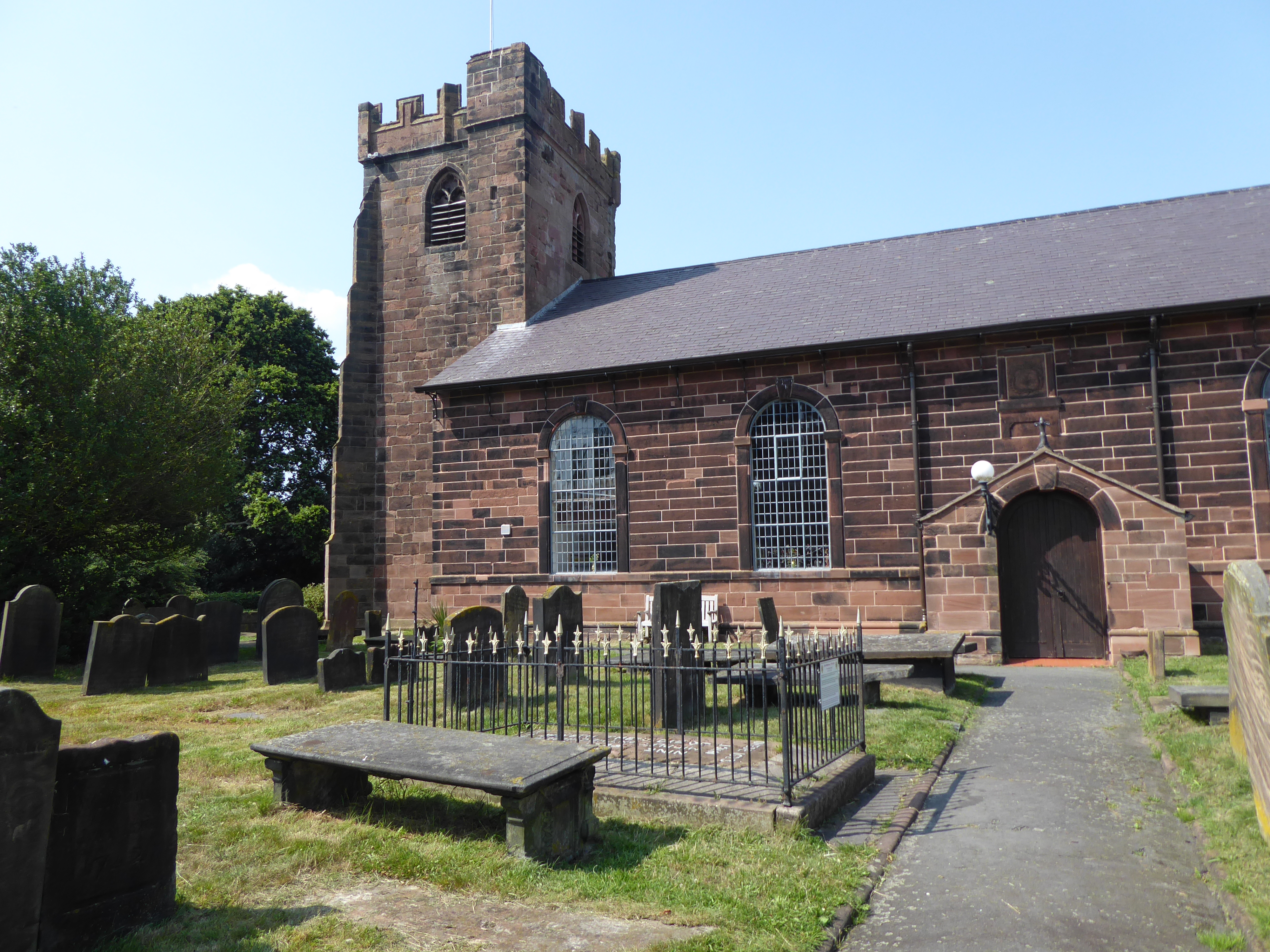
Although the village pub is named after him it used to be that there was a lot less visibly connected to him there, apart from his grave. Nowadays there is a plentiful supply of plaques and notices and a more than life size statue. But his grave is still the object of everyone’s visit to Hale. Strangely lettered the inscription reads, once you have worked it out, ‘Borne 1578 Dyede 1623 Here Lyeth the Bodie of John Middleton the Childe Nine Feet Three.’ Locally, in recent decades, he was always more associated with Speke Hall because his most famous portrait was long displayed there, but he had no direct connection with Speke Hall. The Ireland family, the local landowners whom he served, lived at the long demolished Hale Hall.
The grave of the Childe of Hale
Hale Hall, now demolished
Hale still has its Manor House, which once inspired John Betjeman to verse, and the local church is well worth seeing but you can hear the full story of the Childe of Hale by clicking on the video at the tope of this page.
The Manor House, Hale
St Mary’s Church, Hale with John Middleton’s grave in the foreground
Until 1867 there were two Unitarian churches in Dublin. Both could trace their history back to at least the mid-seventeenth century and both had a succession of distinguished ministers and comprised congregations that had a significant role in Dublin life. After the restoration of 1660 the English Independent and Presbyterian clergy who had occupied the prime positions in religious life in Dublin during the Cromwellian interregnum were removed from their posts. This really was the start of the congregations of Wood Street, which later moved to Strand Street and ultimately to St Stephen’s Green, and New Row, which later built a new church on Eustace Street in 1728. In 1867 the congregations of Eustace Street and St Stephen’s Green amalgamated at St Stephen’s Green and have been a single congregation ever since. But the building on Eustace Street remained, for most of its history being used by Brindley’s the printers, and it is still there today, although today it is really little more than the façade.
The history of this building deserves to be better known and properly understood. I first went to see it in the early 1990s when it was empty but looked intact and was still recognisable as an old meeting-house. I took this picture which was published in the Inquirer at the time.
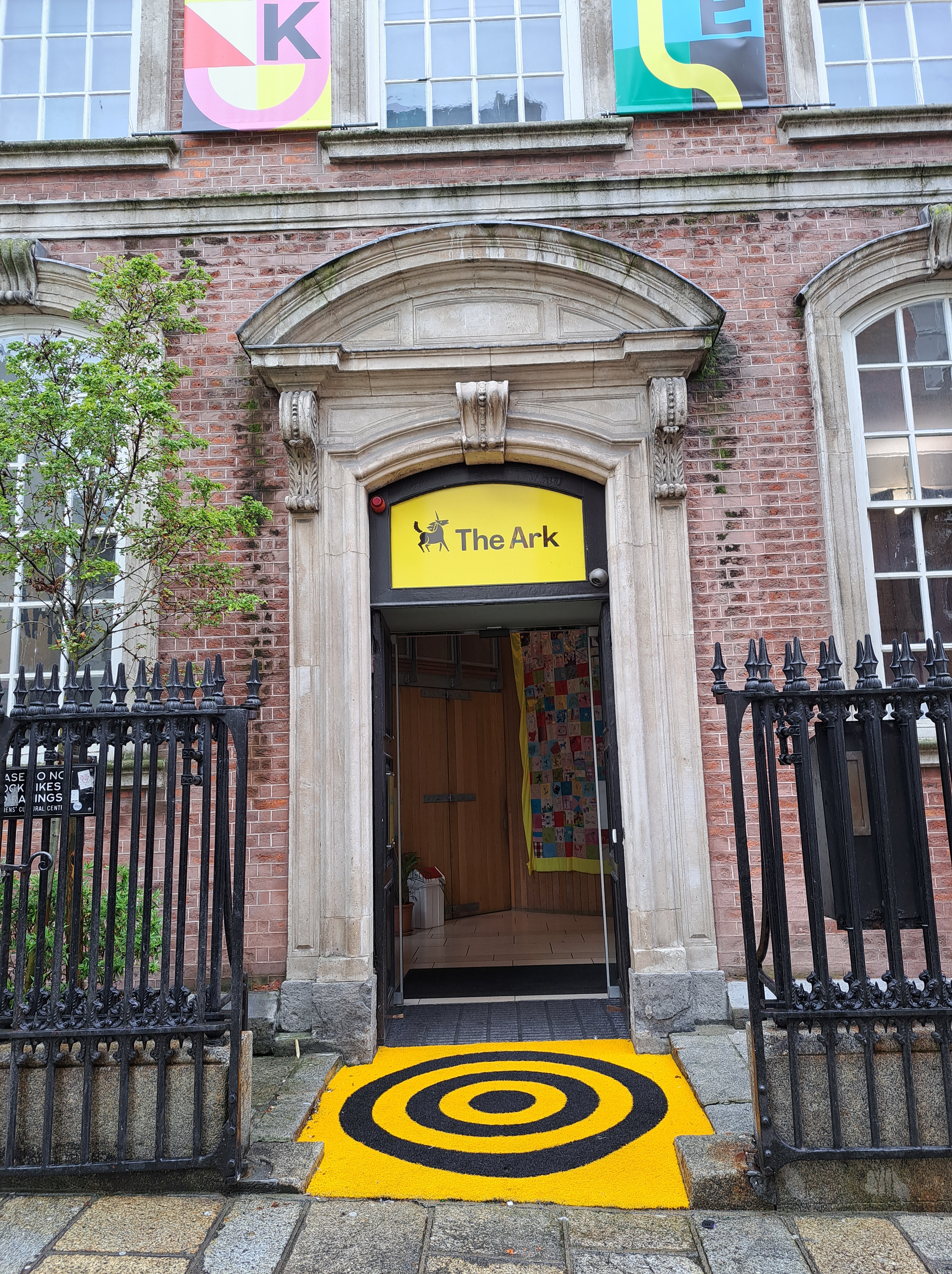
Within a few years, however, the whole area around it in Temple Bar underwent massive refurbishment and changed from a run down backwater to a busy cultural quarter. In about 1995 the building was turned into the Ark, a children’s theatre space.
The meeting-house today
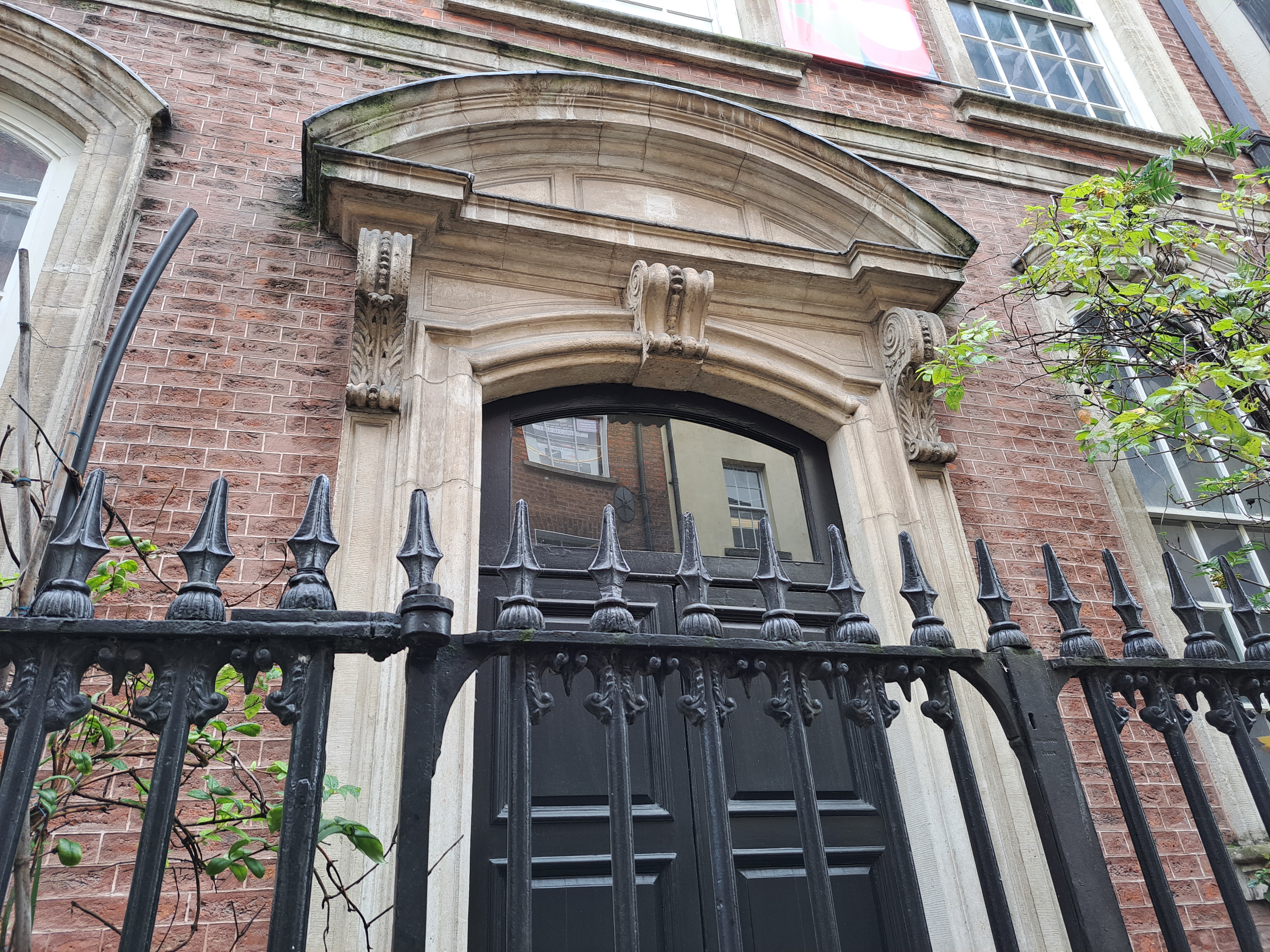
Undoubtedly this is a good use for the building although it is a shame to think that so much of the original building had to be demolished to allow it to happen. Only the façade and the two side walls remain from the building of 1728. All the rendering from the old building has been removed to expose the brickwork both inside and out. But it is still a very impressive building.
One of the two entrances to the building
Christine Casey, in her book Dublin in the Buildings of Ireland series, says of the building: ‘The C18 facade is a handsome essay in retardataire Carolean classicism…A red-brick two-storey six-bay front with entrances in bays two and five and large segment-headed sash windows.’ It’s always good to see a bit of retardataire Carolean classicism. But it is a very fine frontage and even if the rest of the building is gone, it remains as an impressive testimony to the people who built the church.
Not everyone approved of it when it was built. According to Thomas Witherow a Quaker remarked (there was also a Quaker meeting-house on the same street) that ‘When there is so much vanity without, there cannot be much religion within’.
Visiting Eustace Street over the summer I took some pictures of the interior. We can see the bare brickwork which once echoed to the sound of the sermons of such luminaries as John Leland and James Martineau.
Upstairs window brickwork
Looking through one of the downstairs windows
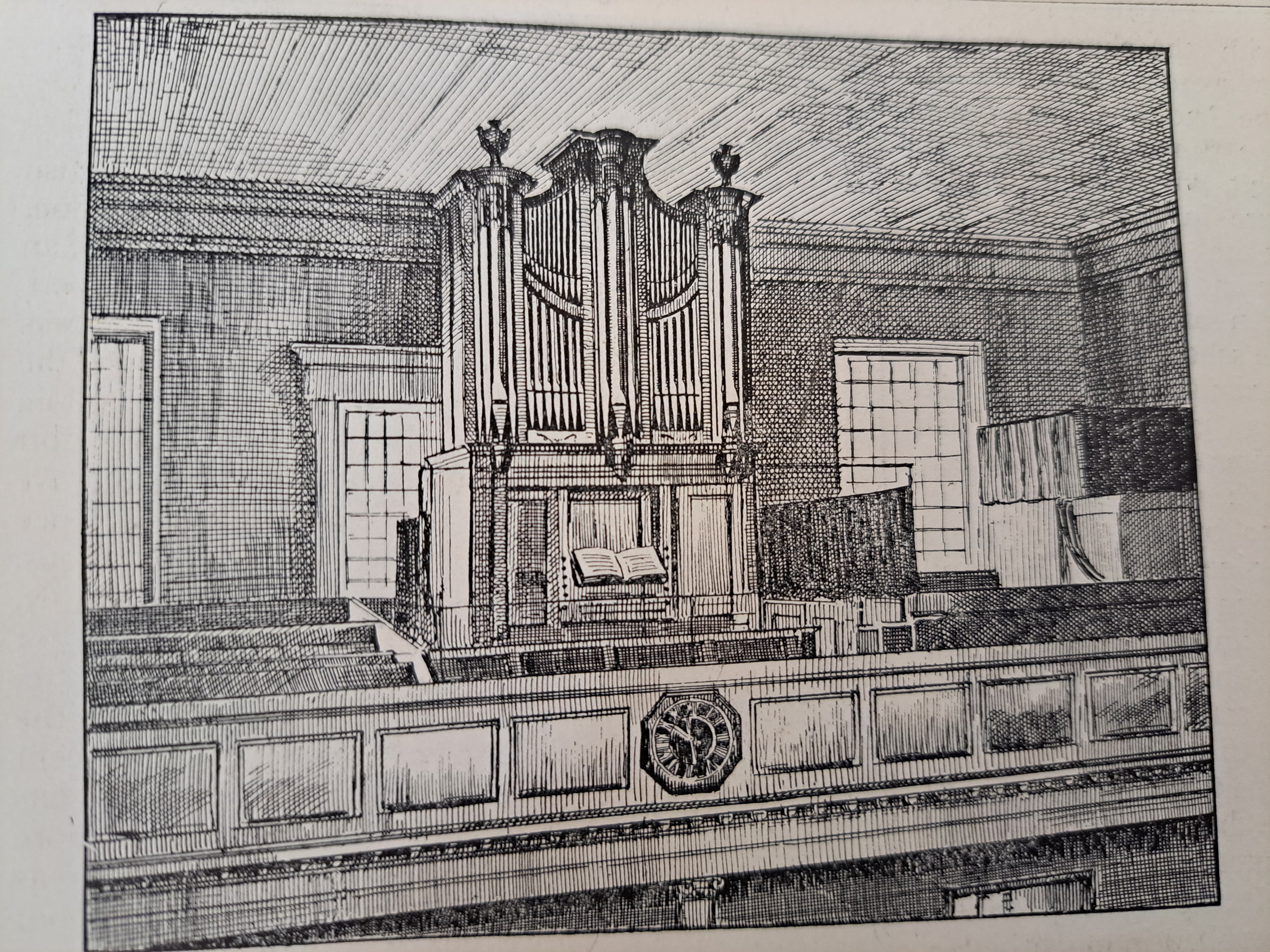
Apart from the windows there is nothing remaining that tells us how the interior of Eustace Street looked. However, about 110 years ago the Non-Subscribing Presbyterian magazine published two engravings of the interior without giving any source for these interesting views. The first showed the position of the pulpit.
The Eustace Street pulpit as it may have looked
The foyer of the building today
The windows that look on to Eustace Street are topped by a gentle arch but according to the Non-Subscribing Presbyterian images the now demolished windows at the back of the building were flat topped. At the back of the church there was a gallery which housed a clock and the organ.
The organ and gallery of Eustace Street as they looked before 1863
When Eustace Street was built times were difficult for Dissenters, they could frequently be the target of violent attacks, and from the earliest days there was a wall in front of the meeting-house. At some point before 1835 this was changed to the low wall and attractive railings which still stand there to this day. But neither the walls nor the railings were of much use when James Martineau added his name to a declaration in favour of Catholic emancipation which resulted in the windows being smashed by a mob.
The wall and railings today
It is good that this much has survived and that the space is obviously put to such good use. However, there has not always been such a clear understanding of the historical place of the meeting-house. Not long after the Ark was opened in 1995 members of Abbey Presbyterian Church were invited to hold a special service on the premises complete with baptisms of children as a way of connecting with the original history. This was a nice thing to do but rather misunderstood the nature of the history of the premises.
Inside the foyer today
James Martineau was ordained in this meeting-house on 26 October 1828. Back in 1992 I contributed an article to the Inquirer entitled ‘Martineau’s First Ministry’. If you would like to read it click on this link: Martineau’s First Ministry
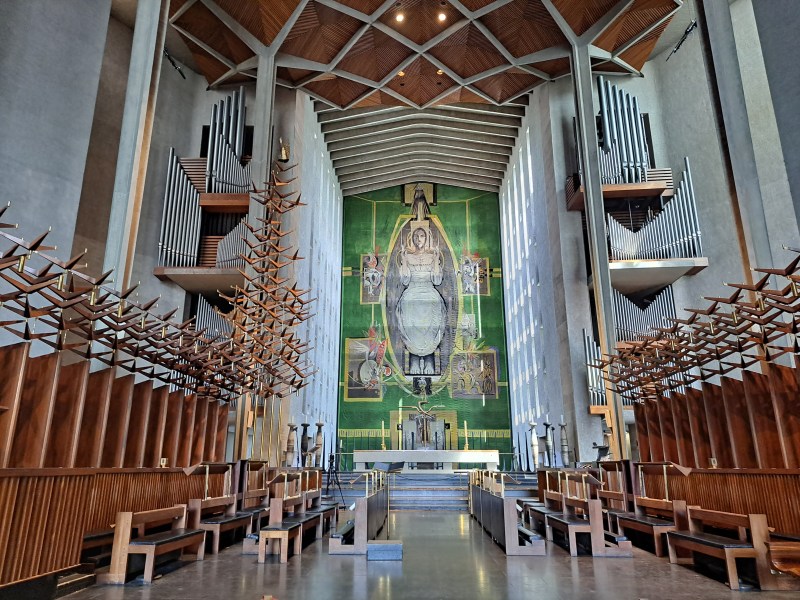
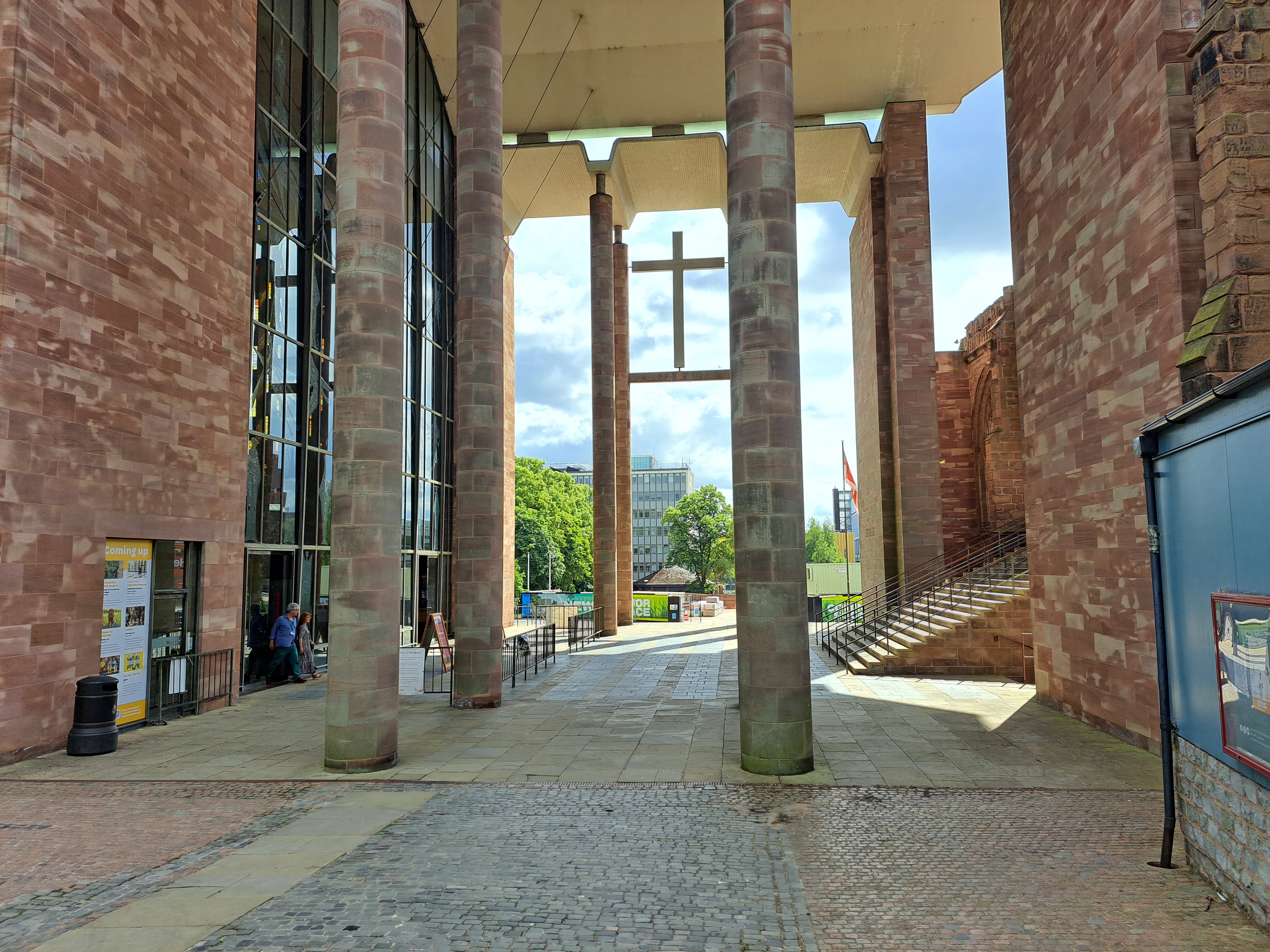
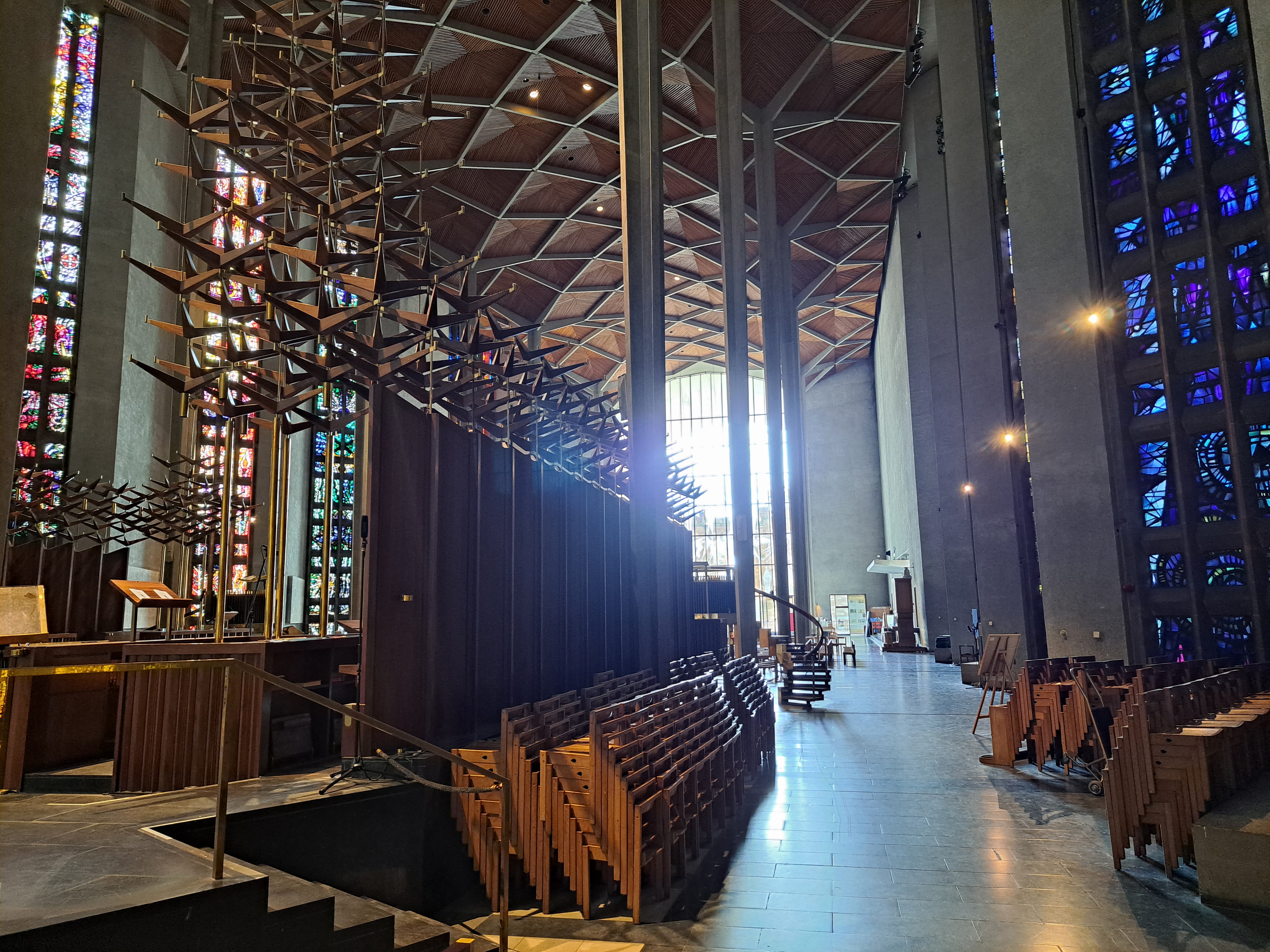
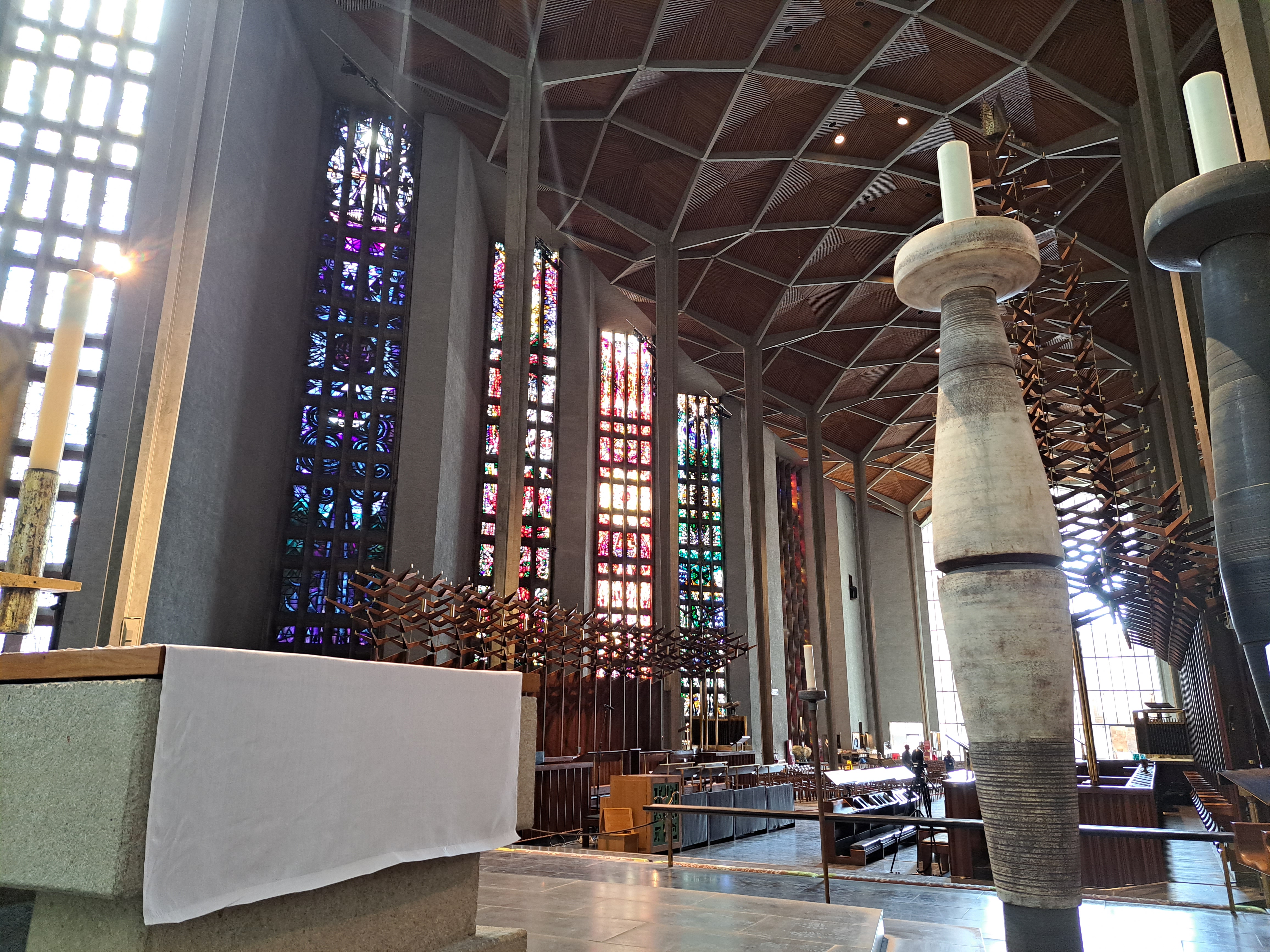
You can’t help but be impressed by Coventry Cathedral, impressed because everything is given such height. The entrance area that connects with the old cathedral; the glass entrance screen featuring angels and saints; the baptistry window; the Chapel of Unity; Graham Sutherland’s tapestry of Christ in Glory; the walls themselves – everything is so high. And it is all so redolent of the cutting edge of art in the mid-1950s. Of course, absolutely every building can only reflect the times it was built in but I think for a building as important as a cathedral some attempt at transcending the contraints of the present day are necessary. Now I may be very naive to imagine that a medieval Gothic cathedral ever did this, or any other type of cathedral for that matter, but if you want to be pointed to some deeper experience of the divine through the medium of a building you need something that says more than ‘This is 1954’ writ large. Even Liverpool’s Metropolitan Cathedral, which speaks volumes for the 1960s and the heavy constraints placed by money and circumstances on building a cathedral by that date, still communicates very well a more profound encounter with the truly spiritual.
Coventry Cathedral has developed a living and active ministry of reconciliation which has reached out to the whole world. Its response to the horrors of the blitz and the destruction of the old cathedral has been an inspiration to many. But as a visitor to the building, a very occasional one, I am never really sure how to respond.
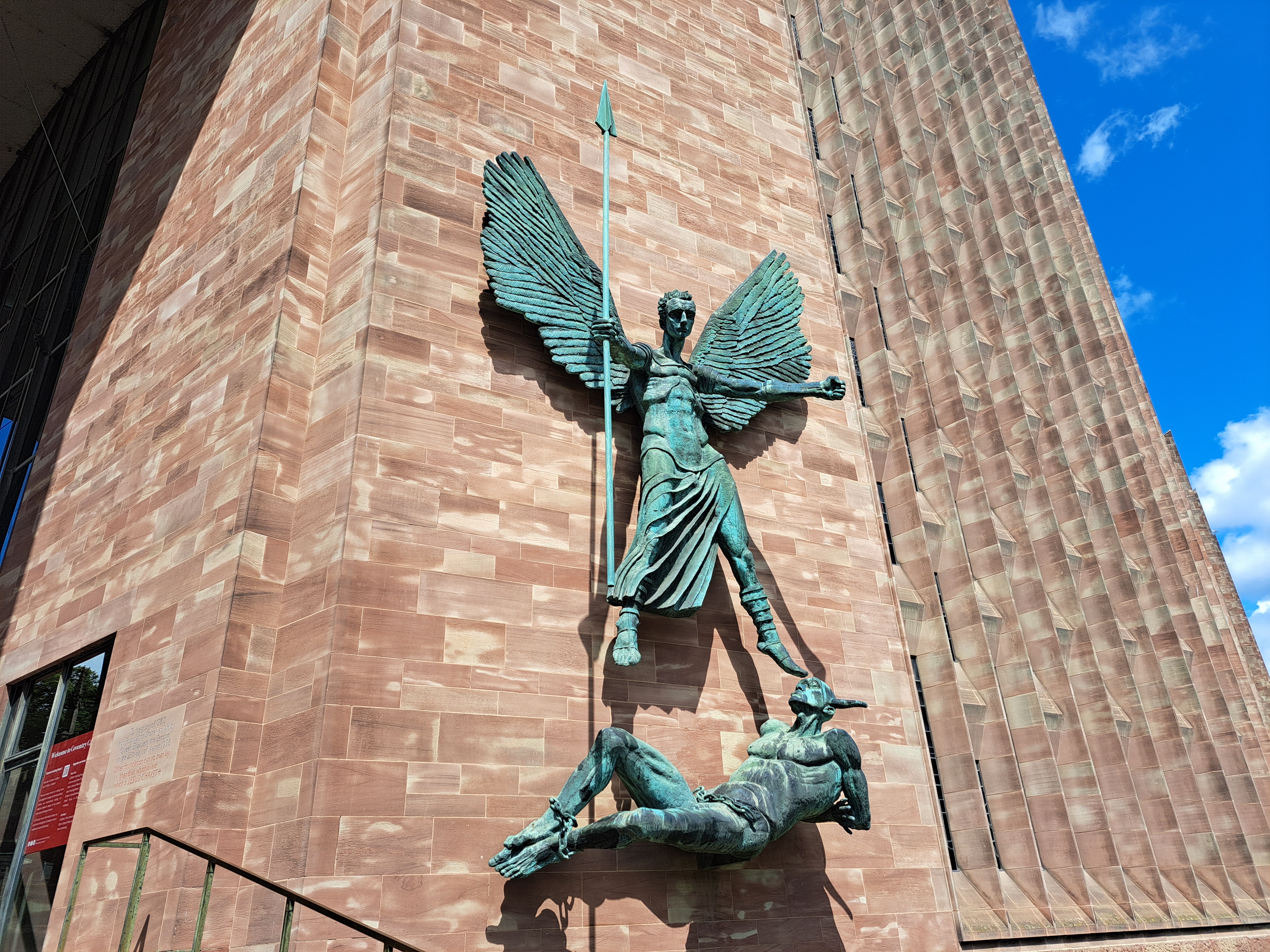
The thing I remember most about visiting as a child is Jacob Epstein’s figure of St Michael conquering the devil. I think I found it a bit unsettling as a kid and I am not sure I feel any better about it now. What is it meant to communicate? Of course, I know literally what it is meant to mean, but what did it say to the world in 1962 when it was unveiled? And what does it say now? Outside the cathedral there is a slightly cloying poster which stresses the extent of the welcome given to visitors but what the ‘keep-fit mums, football dads, starving artists, tree-huggers, latte-sippers, vegans, junk food eaters…those who think the earth is flat, work too hard, don’t work, can’t spell, or are here because granny is visiting and wanted to look round’ will make of Epstein’s work is a difficult question. Cutting edge art of the 1950s has now become the imagery of horror, fantasy, comic books, movies, cartoons and anime. Does anyone feel liberated by seeing St Michael with swan’s wings getting one over the character from Hellboy? One thing we know for sure today is that evil in the world does not take that form.
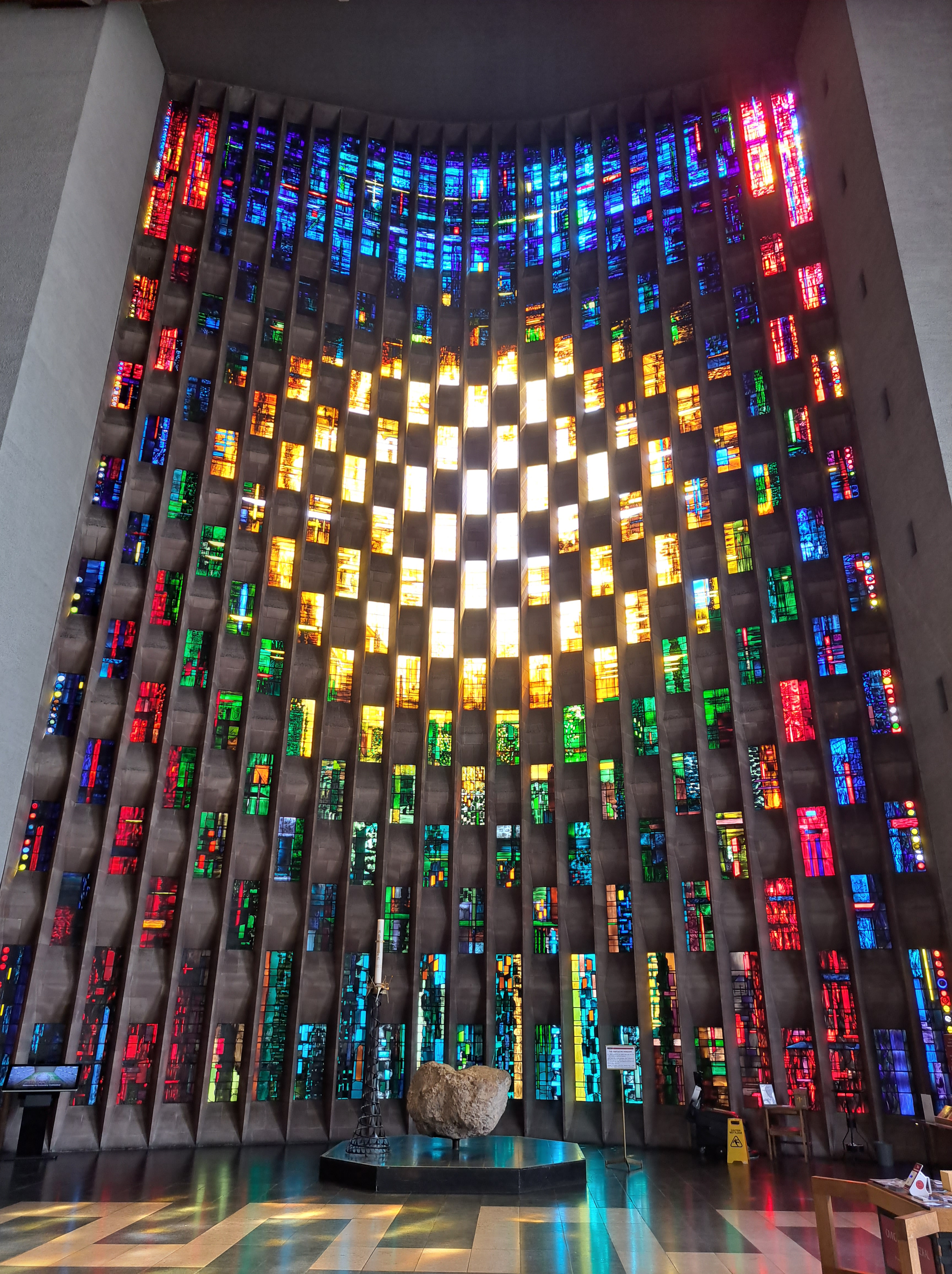
But some parts of the cathedral are breathtaking. The baptistry window, designed by John Piper, floods that part of the building with an explosion of light and colour. Again its immensity hits you full on.
The same is true when you look back at the entrance screen with its dozens of ascending figures flying up in front of the old cathedral.
Again part of this is the scale, and the combination of massive candlesticks, the very high choir stalls and the stained glass that is only visible when you look back from the altar all contribute to this impressive immensity.
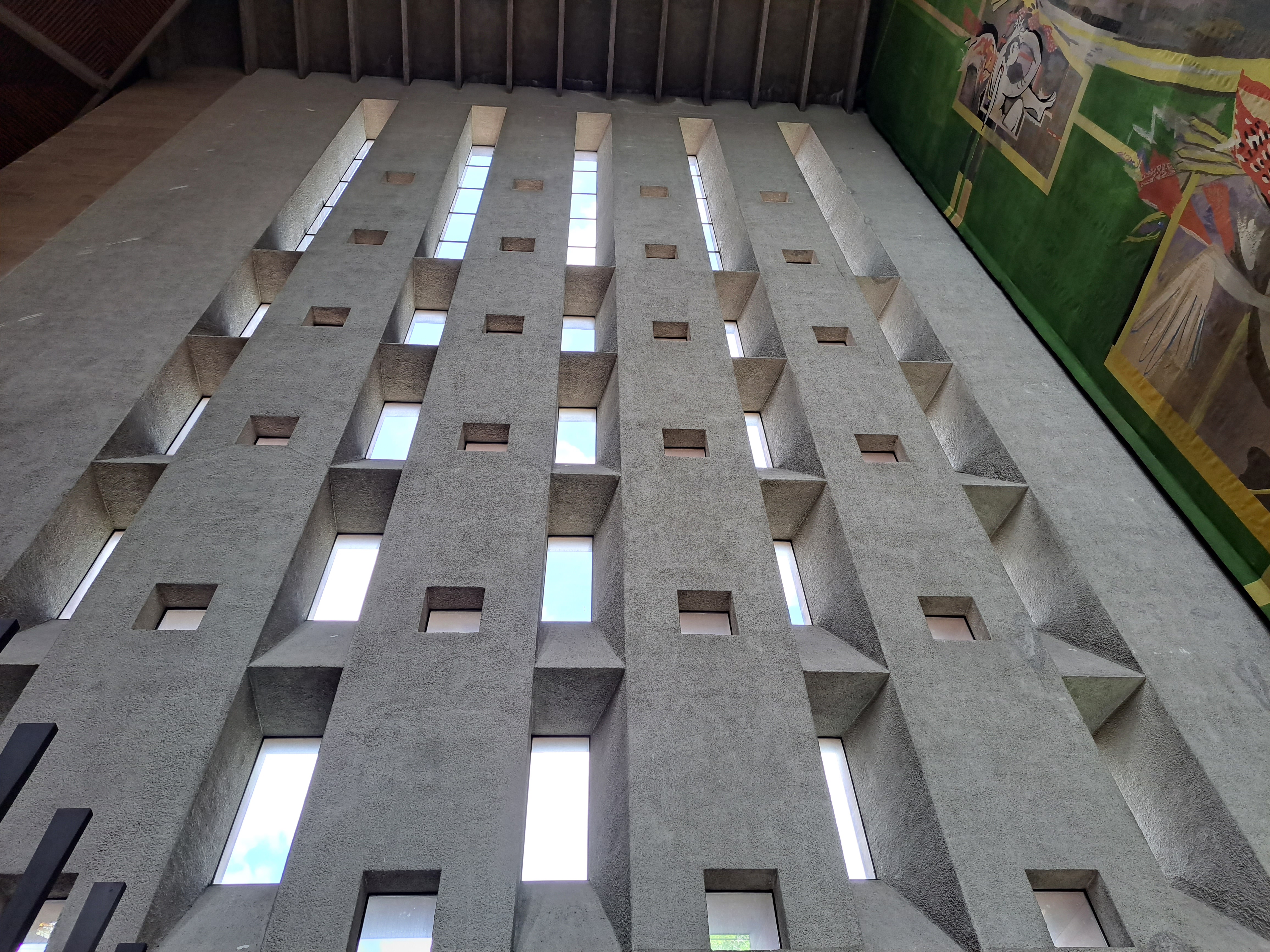
Even what might be termed the brutalist elements of the structure continue to impress. The wall that lets light on to the chancel and the tapestry has a grandeur and a solidity still, but if it had been placed out of doors in a housing estate or in a car park or shopping centre it would have had to have been demolished years ago:
The focus of the cathedral is Graham Sutherland’s tapestry of Christ in Glory. Once again this is so impressive because of its size; a massive tapestry, woven by hand in a single piece, weighing around a ton, it’s a remarkable piece of work. Standing between Christ’s feet is the figure of a man, emphasising humanity’s smallness before the grandeur of God.
The great height is continued in the Chapel of Unity
but not so much in the Chapel of Christ the Servant which is lined by walls of plain glass, giving a brightness and an openness to the chapel. When I was there a very moving exhibition of quotations from letters home from Indian soldiers serving in the First World War was on display, one on each window.
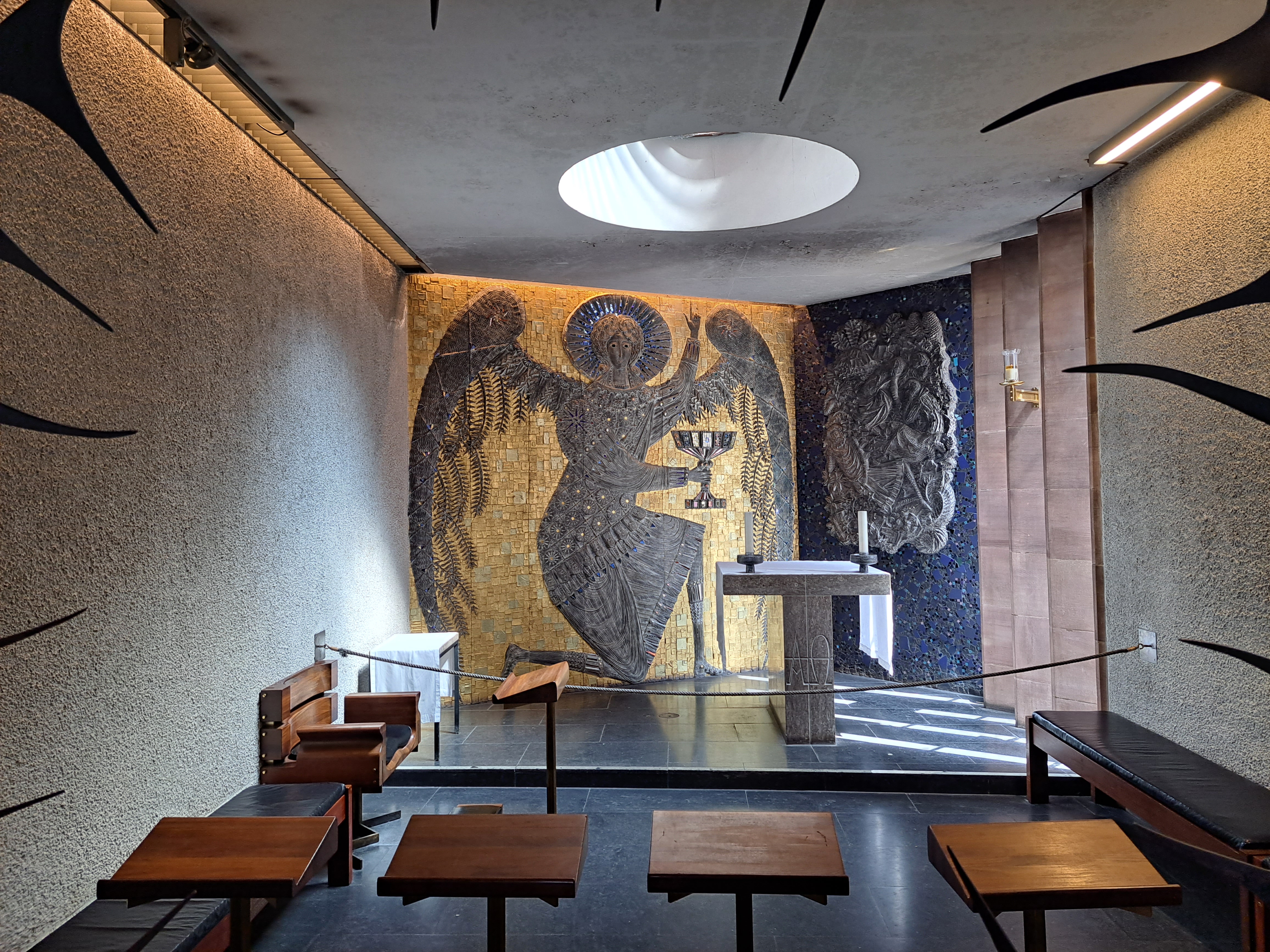
The Chapel of Christ in Gethsemane is also different, it resembles a cave and the sculpture on the wall by Steven Sykes shows Jesus being ministered to by an angel. It is viewed through a crown of thorns.
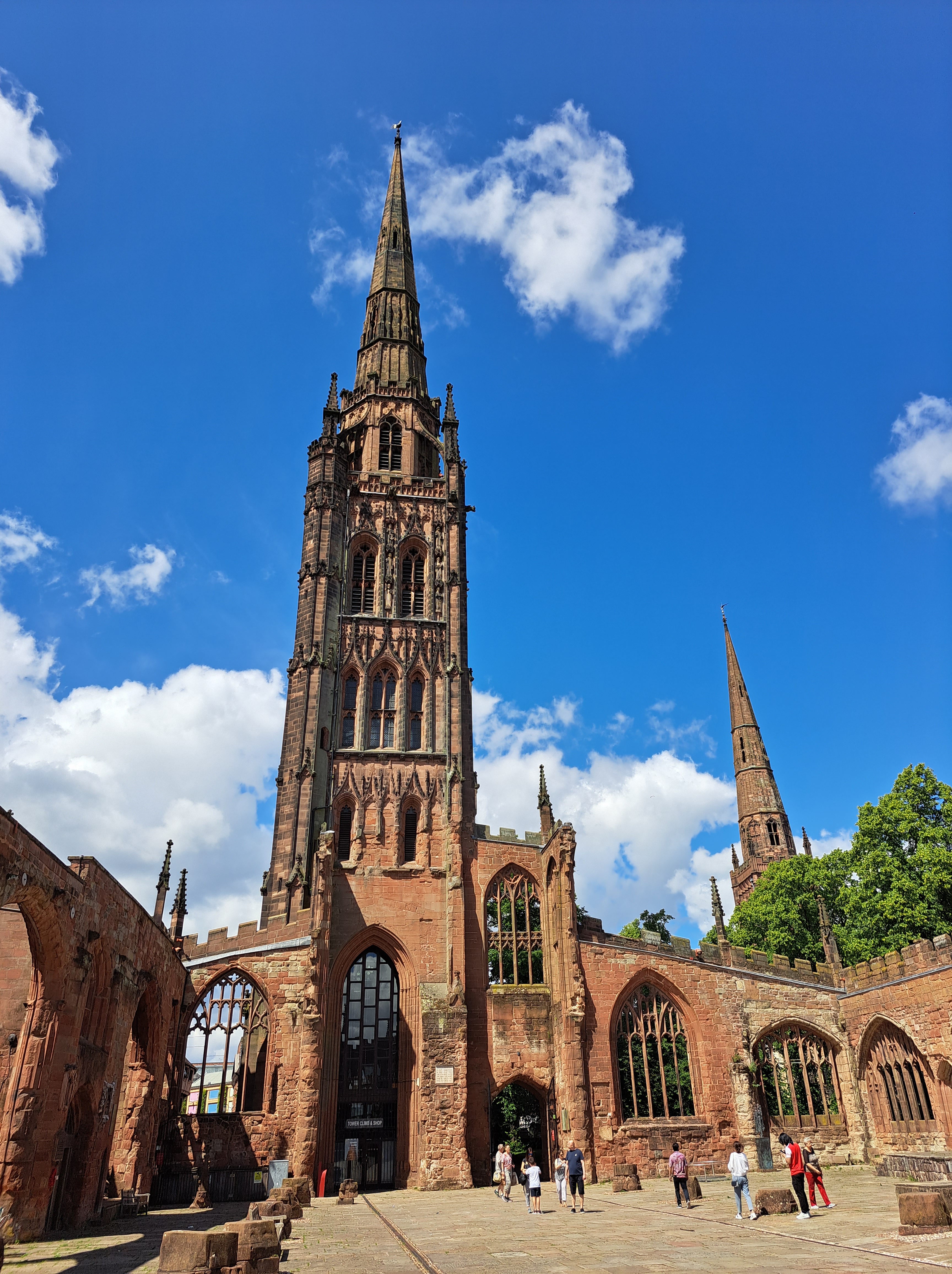
The ruins of the old cathedral emphasise the horrors of the blitz
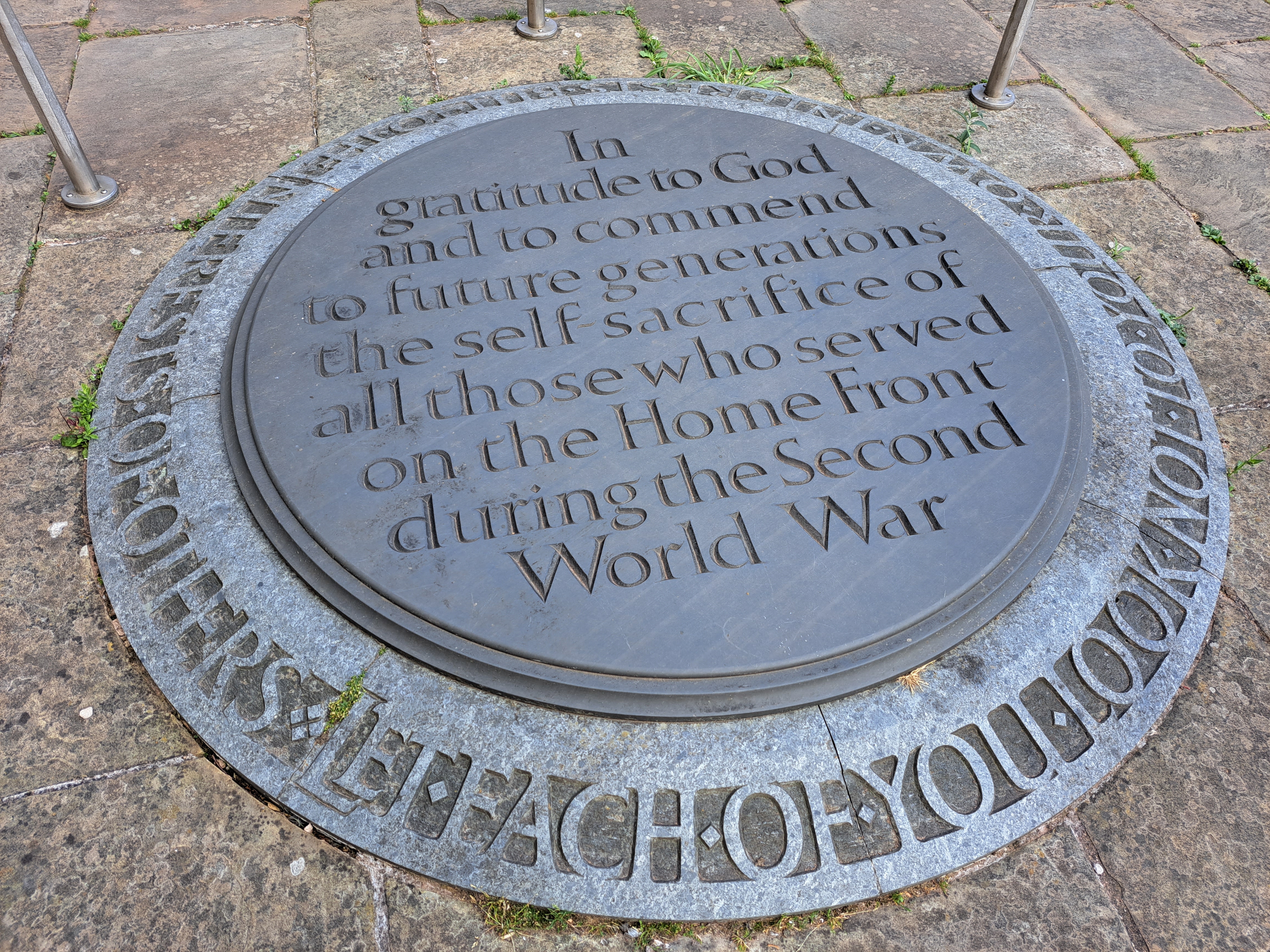
and fittingly a memorial records the sacrifices of those who served on the home front in the Second World War.
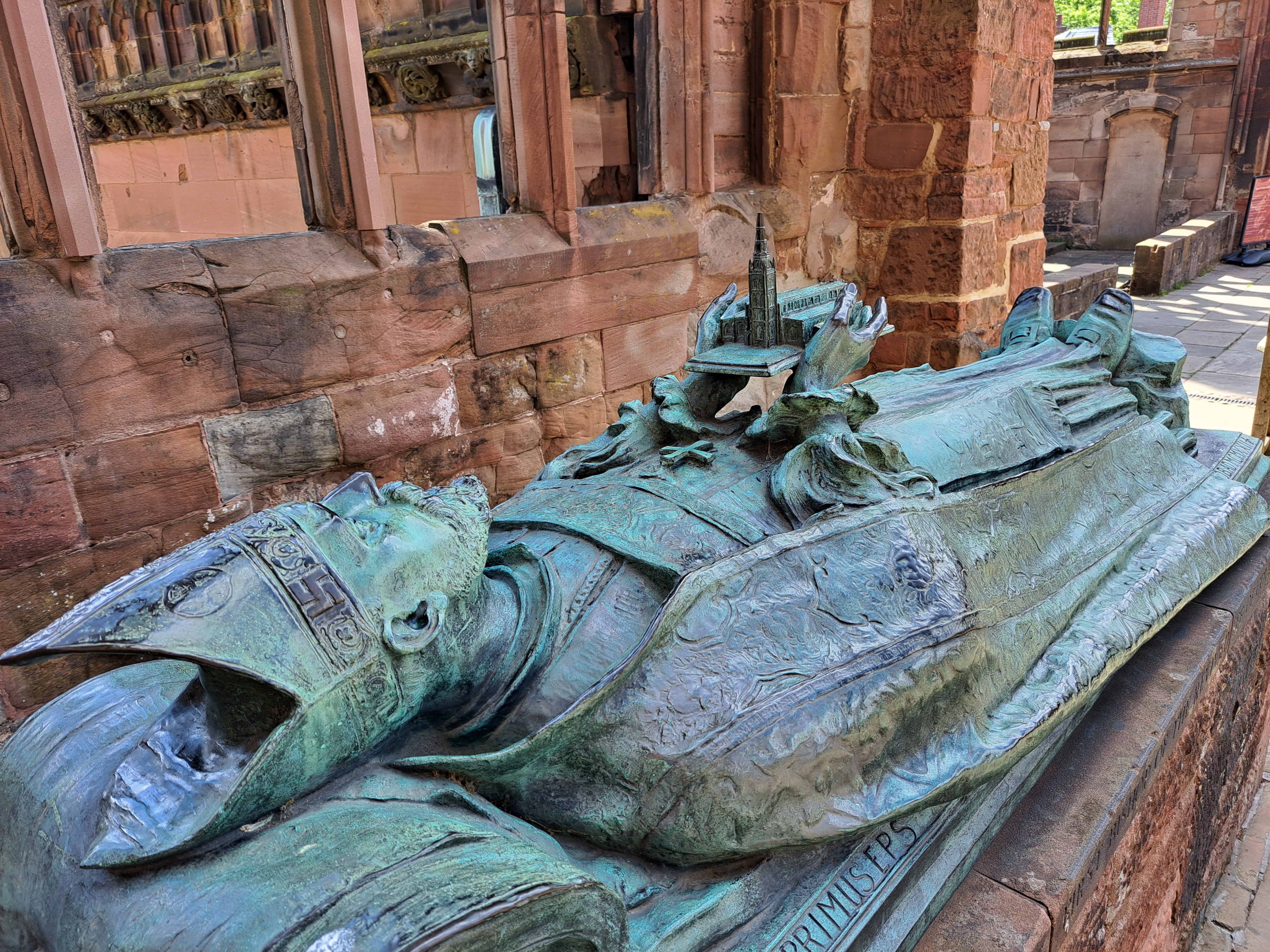
One of the few things to survive the blitz in the old cathedral is the tomb of Bishop Yeatman-Biggs, the first Bishop of Coventry. He holds a model of the cathedral and, curiously, his mitre includes a swastika in its decoration. The guide book doesn’t call it a swastika but names it as a fyflot. But as the guide book also says this was an ancient religious symbol, used in different cultures before it was adopted by Nazi Germany. But it does look strange on his mitre and it has gradually become shiny as generations of visitors have pointed to it in shock or surprise.
As a building it is somewhere that I find impressive and intriguing. It does represent a positive response to the horrors of war and an affirmation that faith can overcome suffering and reach out where there has been hatred, and this is all for the good. Parts of it are wonderfully impressive and uplifting but I can’t say that, as a building, it really speaks to me in the way other cathedrals do. But it will always communicate a certain kind of optimism and fortitude that came out of the immediate post-war period.
The latest issue of Faith and Freedom (Spring and Summer 2023, Number 196) is now available and will be with subscribers. New subscribers are very welcome, details of how to subscribe can be found below.
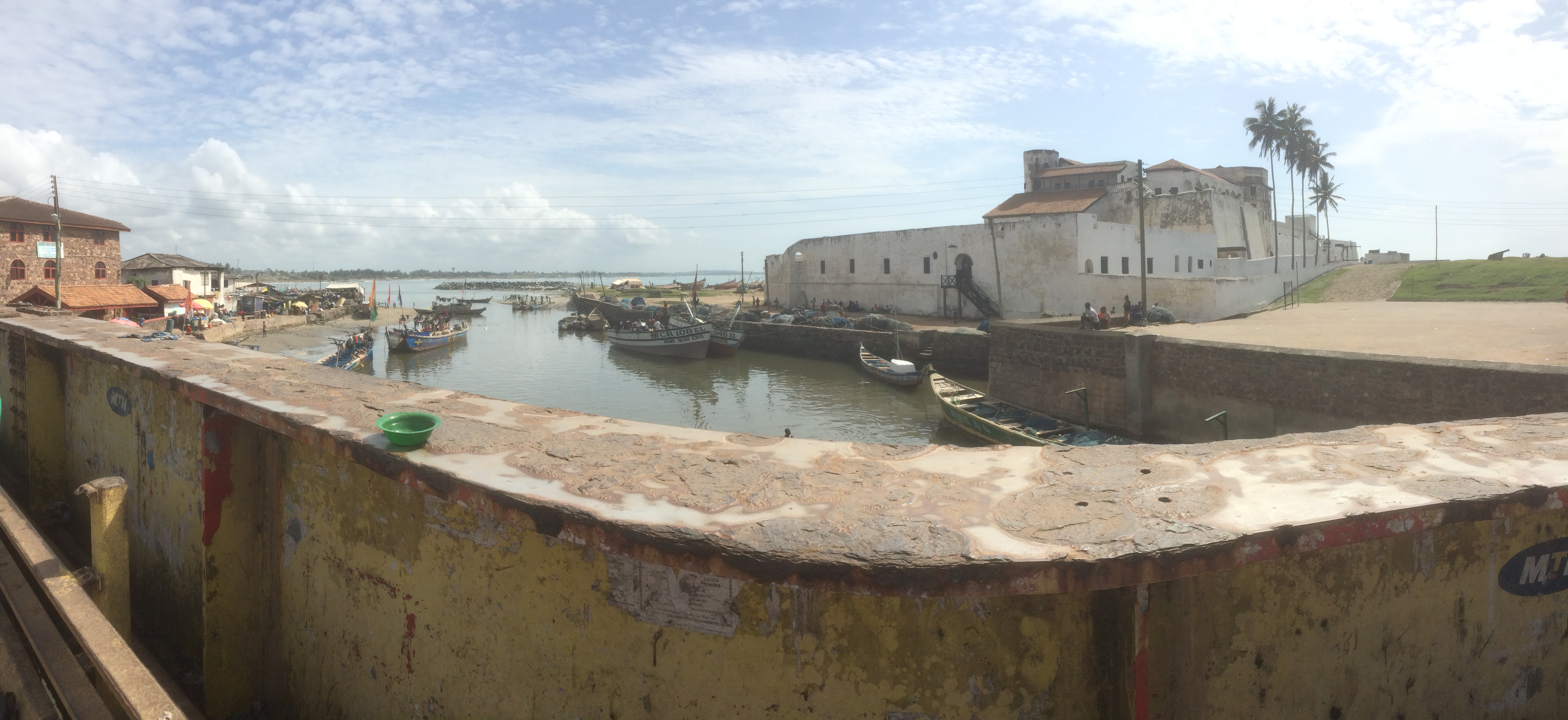
Elmina Castle, Ghana (Photo: Aidan McQuade)
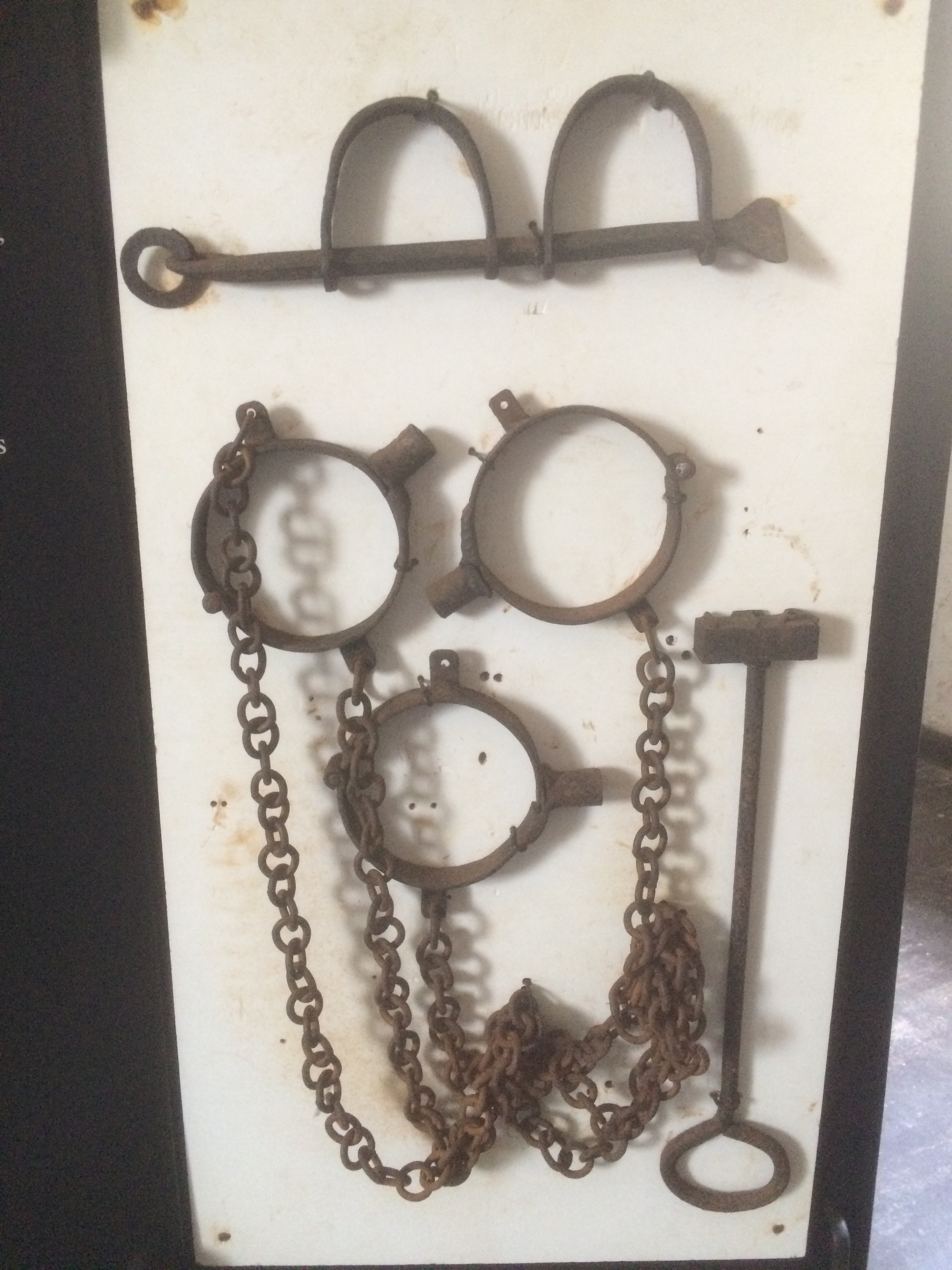
The cover picture features a collection of shackles used on slaves in Elmina Castle, Ghana, a photograph taken by Aidan McQuade who contributes our first article – Ireland – slavery and anti-slavery.
Cover picture – Photo Aidan McQuade
Aidan McQuade is a former director of Anti-Slavery International and has worked extensively in development and humanitarian operations, including leading Oxfam GB’s emergency responses to the civil war in Angola from 1996 to 2001. He writes of the horrors of the slave trade looking through the lens of Irish involvement and noting also those individuals who contributed to anti-slavery activism in the eighteenth century.
He writes:
“Over hundreds of years slavery devastated the African interior as wars and raids, encouraged by the European powers, kidnapped millions of people, many of them children, to feed the demand from the Americas for human beings who could and would be worked to death to produce cash crops, mostly for European markets.
As with today, it is easy to ignore the exploitation that occurs within the political economy – the systems that govern business, trade and employment – when the are concealed far away from us.
So, when it was first brought to public attention by Thomas Clarkson, the image of the Brookes ship shocked the world. It presented in stark detail a visceral reality of the slave trade: how slaves would be packed like sardines into the holds of the slave ships. Clarkson’s friend and comrade in the anti-slavery struggle Olaudah Equiano had direct personal experience of being treated as this sort of cargo and he described it in his auto-biography”:
…we were all put under deck …The stench of the hold while we were on the coast was so intolerably loathsome, … but now that the whole ship’s cargo were confined together, it became absolutely pestilential. The closeness of the place, and the heat of the climate, … almost suffocated us. … many died, …. This wretched situation was again aggravated by the galling of the chains, now become insupportable; and the filth of the [latrine buckets], into which the children often fell, and were almost suffocated. The shrieks of the women, and the groans of the dying, rendered the whole a scene of horror almost inconceivable… Every circumstance I met with served only to render my state more painful, and heighten my apprehensions, and my opinion of the cruelty of the whites.
The door of no return, through which slaves would leave Elmina Castle for the slave ships. (Photo: Aidan McQuade)
John Maxwell Kerr, is a founder member of the Society of Ordained Scientists. His paper, originally given at Harris Manchester College, examines The Search for Meaning in Nature. It is a wide-ranging and deep study using the author’s knowledge of science and religion, incorporating all the riches of literature and poetry, and reaching a surprising conclusion.
Rev John Maxwell Kerr
Barrie Needham’s article on ‘De-churching’ or To the church no more looks at patterns of belief and church attendance in the twenty-first century. What can churches do to overcome these tendencies, what do they need to offer?
Rev Frank Walker
We have an inspiring sermon by Frank Walker, Outlooks on life that still challenge and encourage us, and Graham Murphy provides a review article and essay on Matthew Teller’s valuable book Nine Quarters of Jerusalem, A new Biography of the Old City, which gives such insight to this troubled city, Graham writes:
“In his book about the Old City he describes a place we can visualise, though we may never have been there. We see in our minds eye a golden Dome set within castellated walls as if true to the plans in history books and illustrated bibles. How we imagine Jerusalem is freighted with biblical notions which Teller’s book tends to undermine with doses of reality. He draws our attention to lesser-known aspects of the city’s past and finds himself fascinated by the religious rituals. He interviews the people who live and work beside the pilgrim routes and sacred sites. He shows us how they regard their city, how they cope with its recurrent crises and the lack of rights for the majority who live there.”
And as ever we are blessed by some wonderful reviews. In this issue we feature:
Facing up to Climate Change
Mike Berners-Lee, There Is No Planet B – A Handbook for the Make or Break Years. Cambridge University Press, 2021 (updated edition) pp 316. ISBN 9781108821575, £9.99 pbk. Gaia Vince, Nomad Century – How to Survive the Climate Upheaval. Allen Lane, 2022, pp 260. ISBN 9780241522318, £20.00 hbk. Greta Thunberg, The Climate Book. Allen Lane, 2022, pp 446. ISBN 9780241547472, £25.00 hbk. Reviewed by Professor David A. Williams
A ‘warts and all’ attention to church history
John W. Nelson, A Short History of the Non-Subscribing Church of Ireland including sketches of individual congregations and a Fasti of ministers who served in them, published by The Rev Dr J.W. Nelson, 2022, pp 420, ISBN 9781739978501, £15 hbk. Reviewed by Philip Blair
Praying to an ‘unknowable God’
Bert Hoedemaker, Never-Ending Prayer – A Case for the Christian Tradition. The Lutterworth Press, 2022, pp 136. ISBN: 978 07188 96027, pbk £20. Reviewed by Jim Corrigall
Rev Jim Corrigall
and
Eavesdropping on fascinating conversations
Philip Allott, The Music of Time: Twenty-Four Fables for Today, Matador, 2022, pp 408. ISBN 9781803132228, £7.99 pbk. Reviewed by Frank Walker
Subscription Details
An annual subscription for each volume (two issues) costs £16.00 (postage included) in the United Kingdom. Single copies can be ordered at a cost of £8.00 each (postage included). Cheques should be made out to Faith and Freedom and sent to the business manager:
Nigel Clarke, Business Manager, Faith and Freedom, 16 Fairfields, Kirton in Lindsey, Gainsborough, Lincolnshire. DN21 4GA.
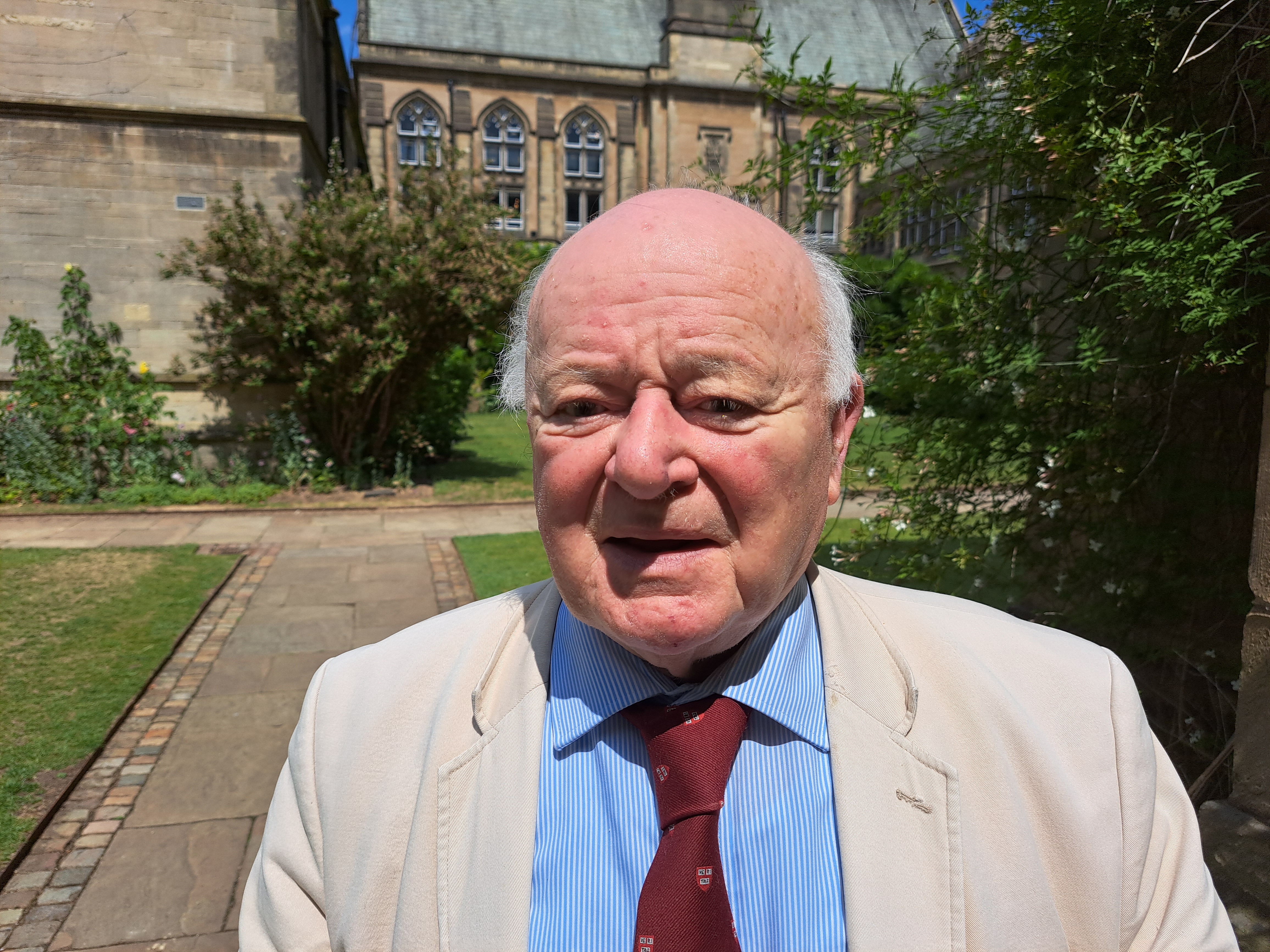
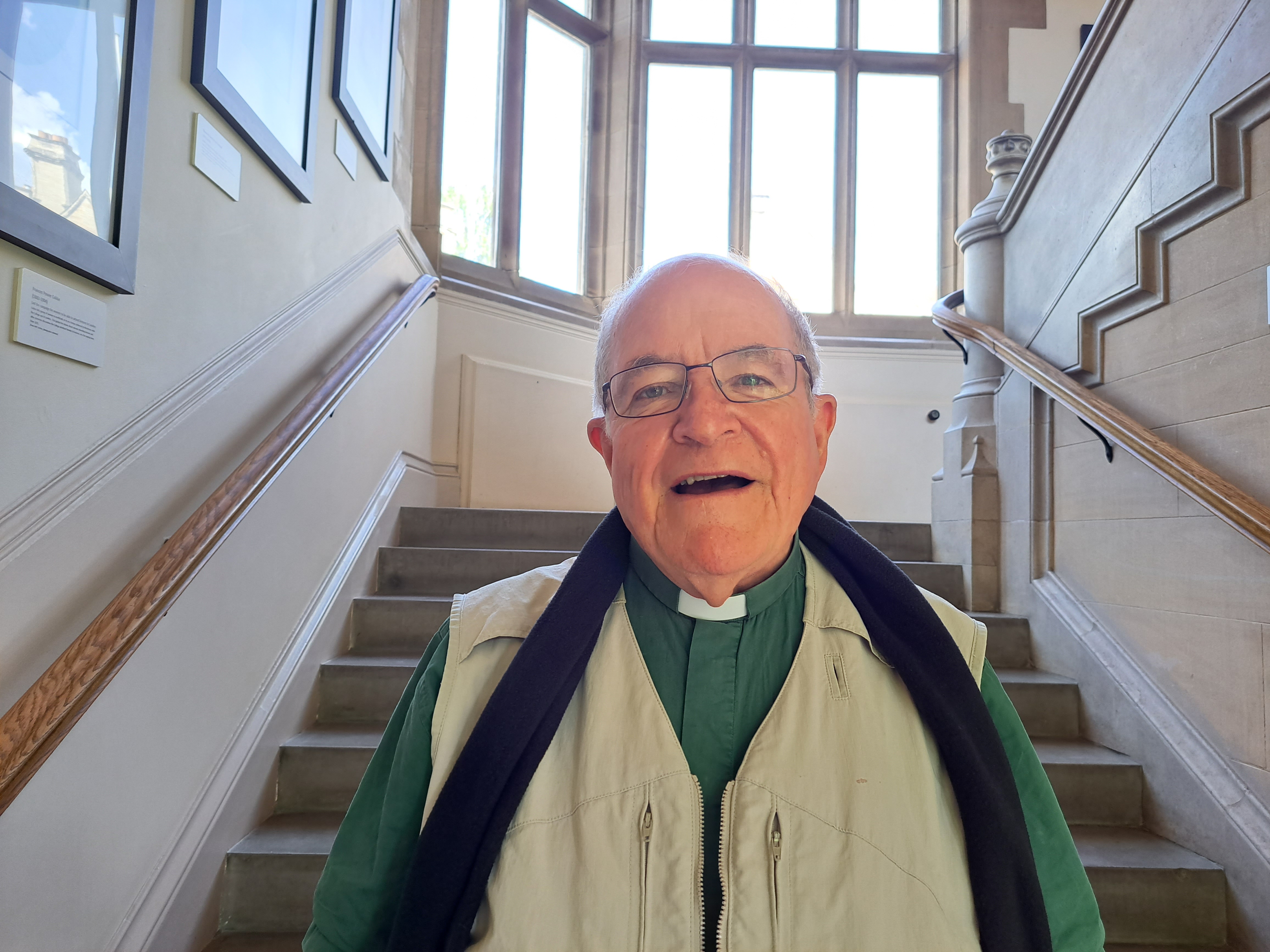
It was good to be at the Old Students Association meeting at Harris Manchester College, where some of the images of contributors seen above were taken. And good to see Rev Dr Peter Godfrey, Editor Emeritus of Faith and Freedom.
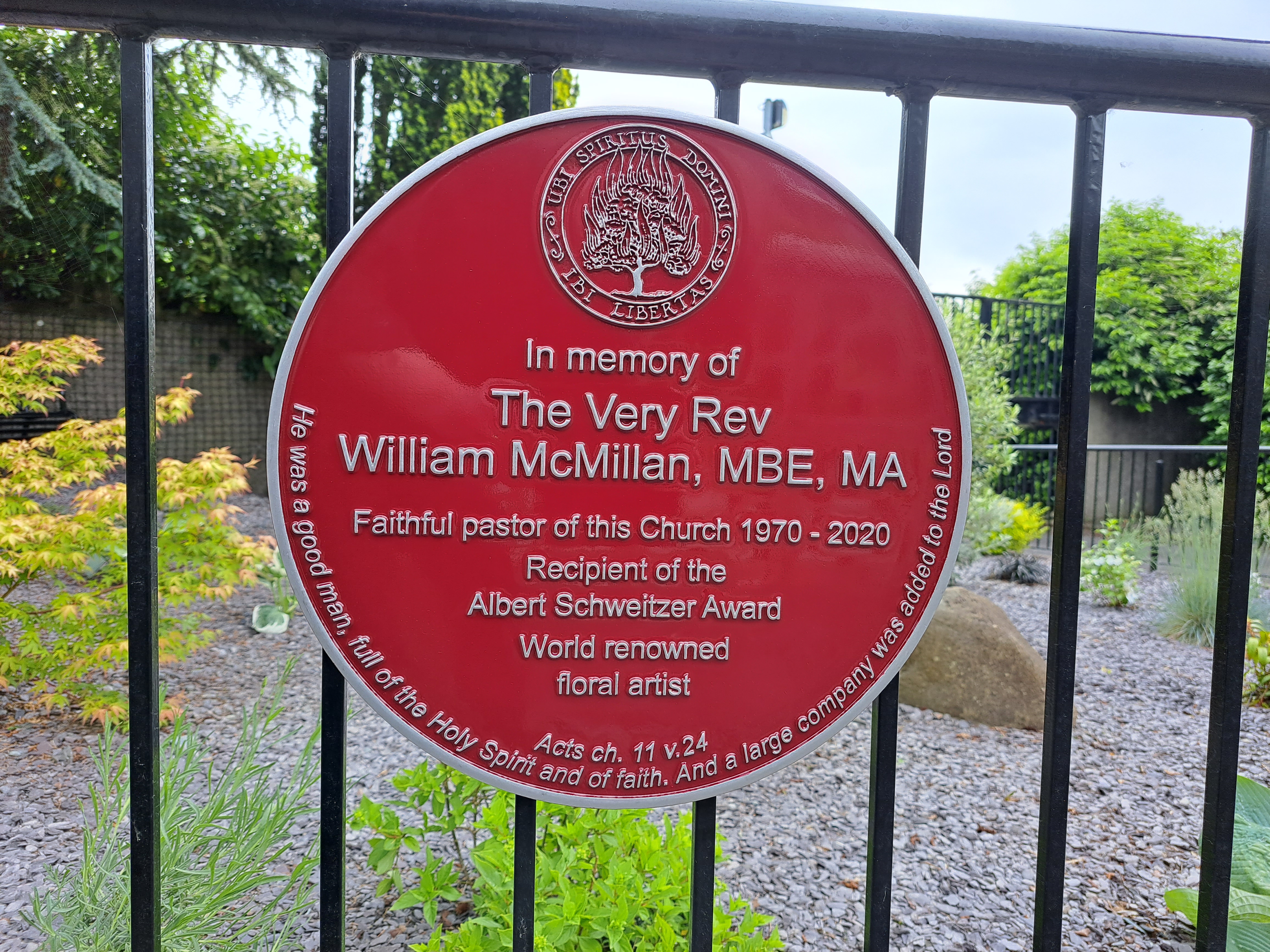
On Saturday afternoon, 10th June 2023 a very large congregation assembled at Dunmurry to dedicate the special memorial to their late former minister the Very Rev William McMillan, MBE, MA.
The Rev Mac was minister at Dunmurry from 1970 to 2016 and continued as minister emeritus until his death in 2020. He was also a leading figure in the world of floral arrangements and horticulture and the congregation wished to create a lasting memorial that reflected this achievements.
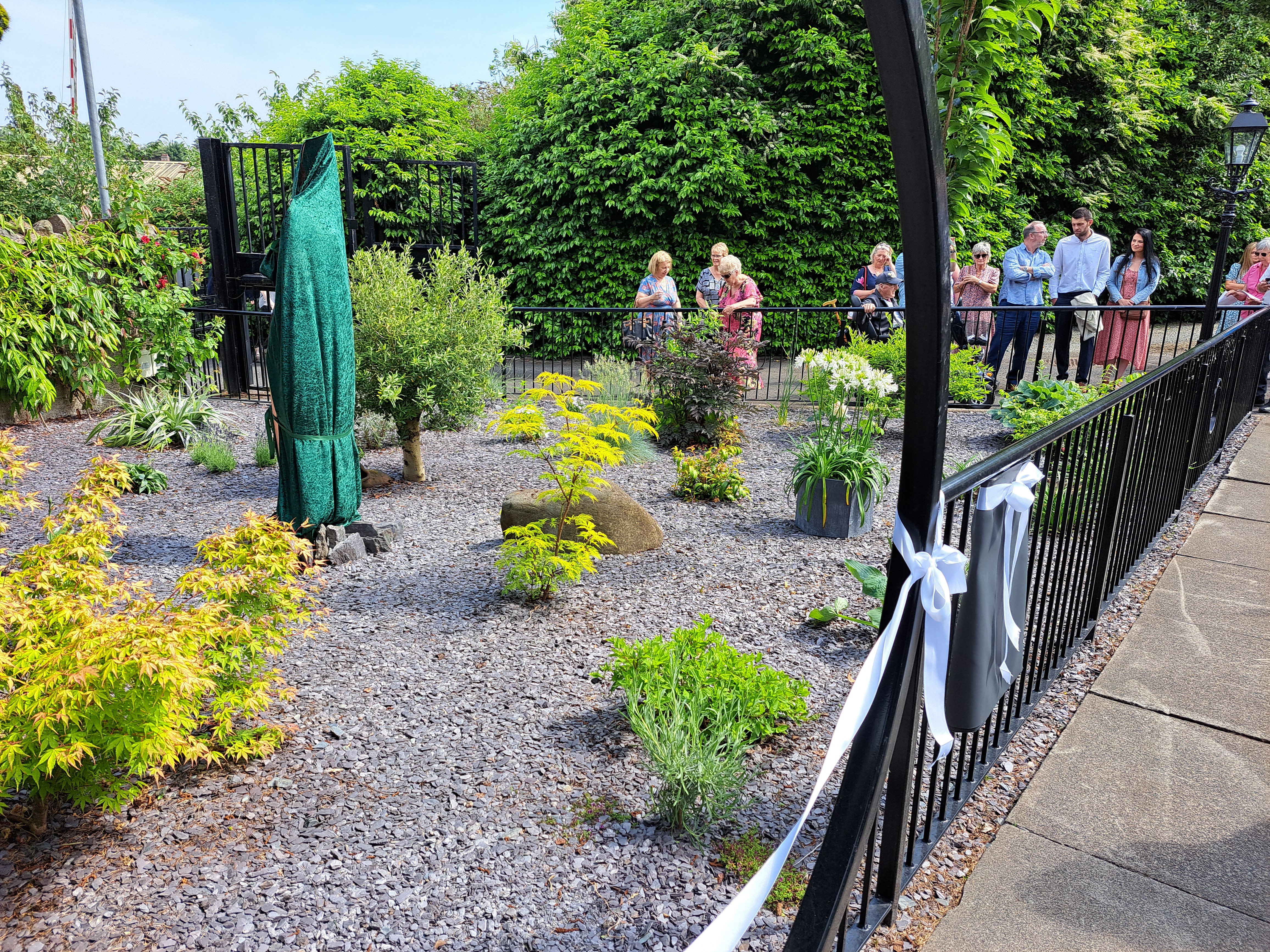
The Garden was created and designed by Frances Gibson (centre left)
At its centre is a beautiful piece of art made for the Garden by Cork sculpture Tim Mulchinock
Members of the McMillan family unveiled the plaque at the entrance to the Garden, cut the ribbon to the entrance and unveiled the sculpture.
Click on the video below to see the short service in the Church followed by the opening of the Garden.
With thanks to Emma for filming and uploading the video
Below is the text of the address given in the Church by the Rev Dr David Steers:
We are to here to celebrate and commemorate a much-loved minister of this church whose work had such a positive and joyful impact not only here in his church – where he ministered for 50 years -, but in his denomination, and in churches of every conceivable denomination, and not only here in Northern Ireland, but across Ireland, across the British Isles and across the world. He was a minister, a pastor, a preacher, a writer, an expert on church history, all of which made for a most full, multi-faceted ministry that touched so many people.
That in itself would make a day like today such an important and right thing to do but beyond that he had another level of creative achievement that extended his ministry far and wide to so many people, so many groups, so many organisations in so many different countries.
Famously John Wesley, the great founder of the Methodist church, is said to have declared that ‘The World is my Parish’ by which he meant that wherever he was he felt compelled to promote the gospel. But the same thing could be said of the Rev Mac, I think the work which he did in the floral and horticultural worlds was an extension of his ministry, all his work was based on an appreciation of the glory of God’s creation and a desire to describe and explain it to everyone. His unique creativity was borne out of a deep recognition of the beauty of creation, as we heard from the reading before from the book of Genesis where at God’s command The earth brought forth grass, the herb yielding seed, and the fruit tree yielding fruit after his kind. Or as the RSV has it The earth brought forthvegetation, plants yielding seed according to their own kinds, and trees bearing fruit. It was this raw material of grass, plants, flowers, leaves, trees and all the wonders of the natural world which Mac took to express God’s love.
Something which he did with such sensitivity and understanding and, with a preacher’s skill, he was able to turn into such eloquent sermons of truth which went ‘beyond mere words’.
So when his church wanted to build some kind of memorial to the Rev Mac there were lots of ideas, lots of suggestions and lots of possibilities. But in the end the decision was taken to create a memorial that was living and vibrant, something natural and also lasting. So we will today dedicate to the glory of God the Very Rev William McMillan Memorial Garden. Created just yards from here and I want to thank all those many people who have had a hand in shaping it but say thank you particularly to Frances Gibson who has designed it. And thank you to Tim Mulchinock the sculptor who has created from beaten copper the centrepiece which is also entitled, like one of Mac’s books, ‘Beyond Mere Words’.
The garden, in the grounds of his church, rich in plant life, living as part of the natural environment with a wonderful piece of art at its centre, is truly a fitting memorial to the Rev William McMillan. Someone whose whole lifetime was devoted to communicating God’s word in all that he did. Someone who, as we heard before from the reading from Acts given to us by Jane: For he was a good man, full of the Holy Spirit and of faith. And a large company was added to the Lord.
The Garden before the unveiling
Sheila and Tim just before the unveiling
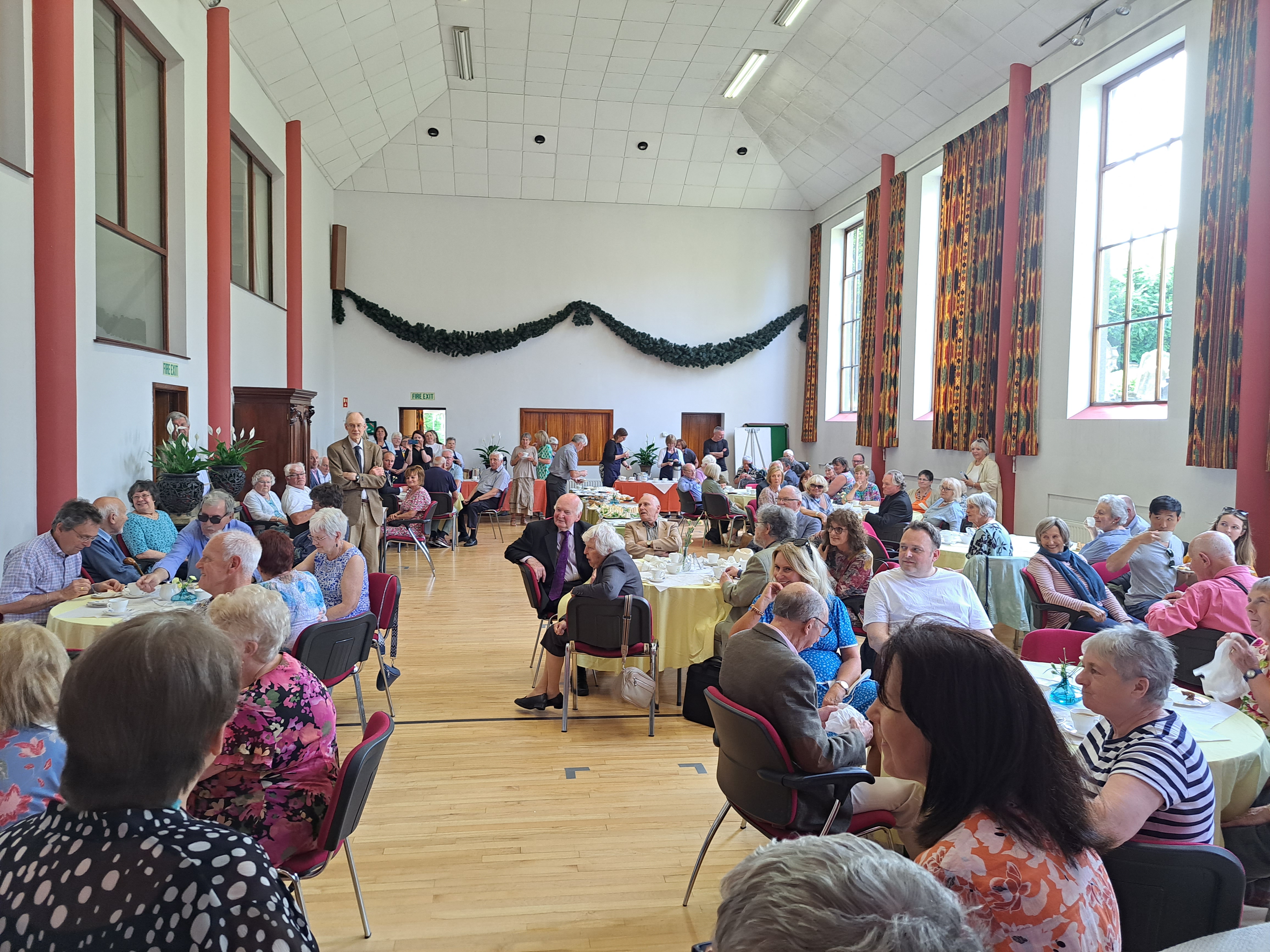
Refreshments in the McCleery Hall afterwards
Memorial plaque
Some of the floral decoration in the Hall created by Elma McDowell
As we prepare to mark the Coronation of King Charles III on Saturday, 6th May 2023 I thought I would have a look at some of the ways Non-Subscribing Presbyterians have celebrated previous Coronations over the last 120 years.
Looking through the Non-Subscribing Presbyterian magazine for 1911 (the journal began publication in 1907) I could find little direct reference to congregational celebration. There was plenty going on in the churches in June 1911 but in terms of special services or special events there is not much record of specific events.
However, there certainly was a lot of interest and this video explains some of it:
Coronation celebrations by Non-Subscribers in 1902 and 1911
Filmed at First Dunmurry (NS) Church the video includes music played on the piano by Allen Yarr, the church organist, including Handel’s Water Music and Music for the Royal Fireworks.
In 1911 the magazine gives a hopeful editorial about the new reign as well as an account of the meaning of the Crown. It also describes the Royal visit to Ireland just a few weeks after the Coronation in July 1911. This was to be the last visit to Dublin by a reigning monarch until the visit of Queen Elizabeth II in 2011. While he was in Dublin a loyal address was presented to the King on behalf of the Non-Subscribing Presbyterian Church of Ireland.
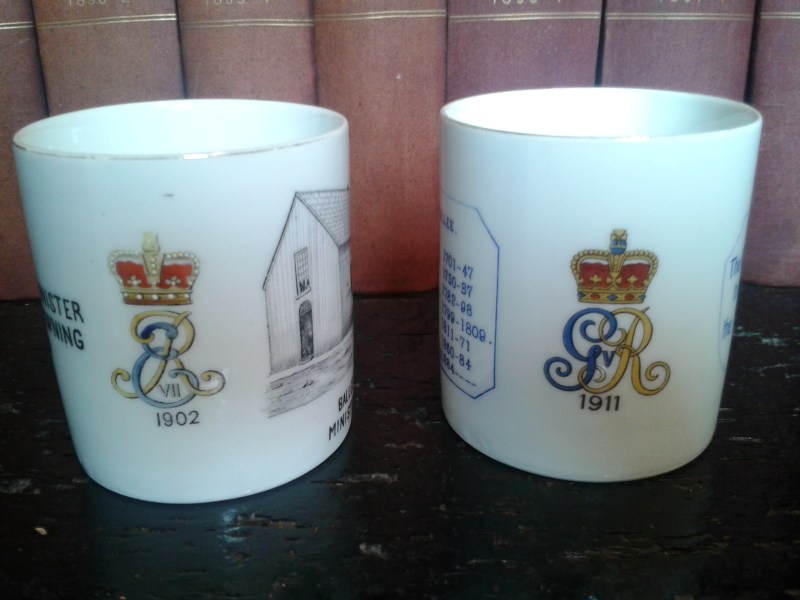
The main focus of the video though is the contribution of the Rev J.H. Bibby, minister at Ballee from 1884 to 1935. Originally from Warrington he was a member of a family connected to the ceramics business which no doubt helped in his gifting to the Sunday School and members of his church of commemorative mugs:
Ballee Commemorative Mugs
The Rev Joseph Henry Bibby was educated at the Unitarian Home Missionary College from 1880 to 1884 and spent the whole of his long ministry in Ballee, where he was closely involved in local life. He was a generous benefactor to the church and on his death left many of his books to the Unitarian College as well as his collection of ceramics and glass to Warrington Museum. Some of what he donated to the Museum can be seen in the video above.
Rev J.H. Bibby
What makes his gifts of the Coronation mugs stand out is that they are lithophanes, that is they contain an image impressed in the porcelain which can only be see when held to the light. Here’s the image of Edward VII as seen in the 1902 mug:
Edward VII as he appears on the Ballee mug
Many subsequent students at the Unitarian College, Manchester also had reason to thank J.H. Bibby because he bequeathed a sum of money to establish a prize for New Testament Greek. For those who could master the intricacies of Greek there was at least the reward of a small prize at the end of the course if you could prove your proficiency, and we have Joseph Henry Bibby to thank for that.
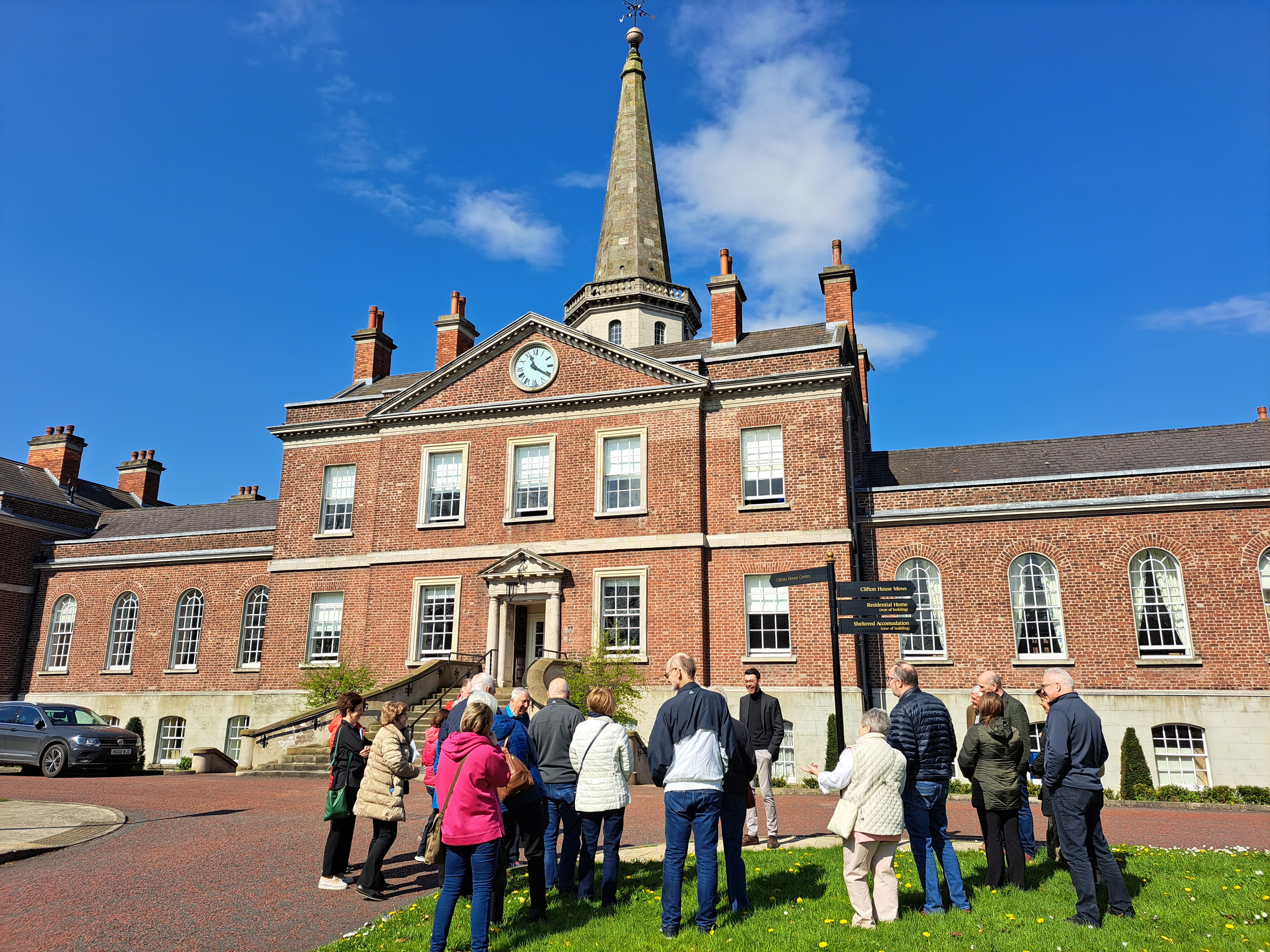
Assembling outside Clifton House at the start of the tour
On Friday, 21st April we had a wonderful congregational visit to Clifton House. Reputedly one of the oldest buildings in Belfast, having been built in 1774, it is actually only five years older than our own church in Dunmurry. But it is a very impressive building featuring its unusual spire which must have towered over Belfast when it was first built and certainly angered the Earl of Donegall who gave the land not expecting a building that would dominate the skyline and overshadow St Anne’s parish church.
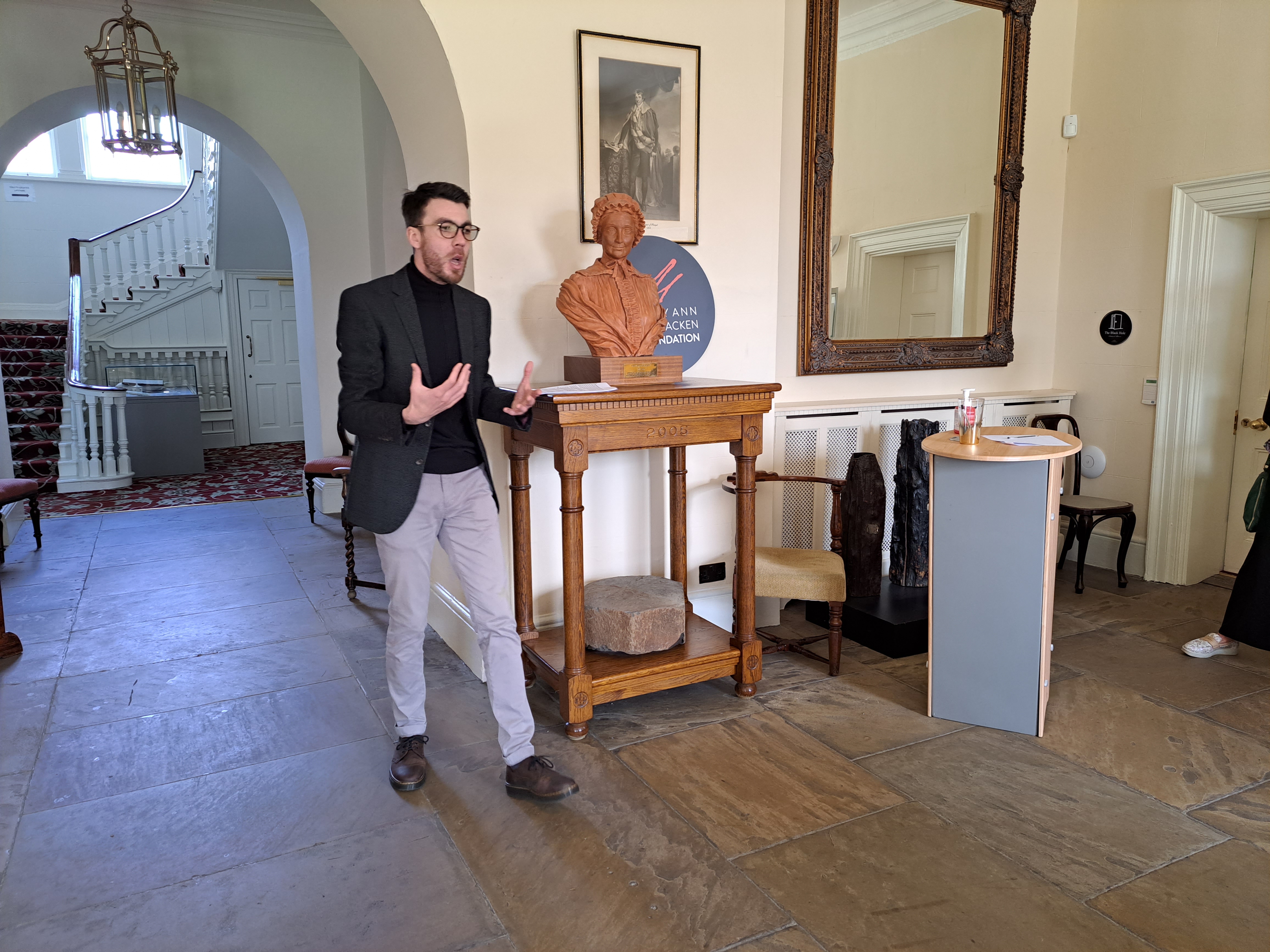
Jason Burke, one of our guides, in front of a bust of Mary Ann McCracken
Right from the start it was a much more enlightened institution than its usual name of ‘Poor House’ would indicate. Even the ‘punishment room’ was equipped with a bed, something ordinary inmates of institutions such as the workhouse might not expect in the nineteenth century. Curiously the mostly Presbyterian founders had no hesitation in employing a lottery to set up Clifton House but through that scheme were able to build a Poor House and an infirmary.
I hadn’t realised either that the Belfast Charitable Society (to give it its full name) was set up by Act of Parliament and also had responsibility for the provision of water in Belfast as well as street lighting.
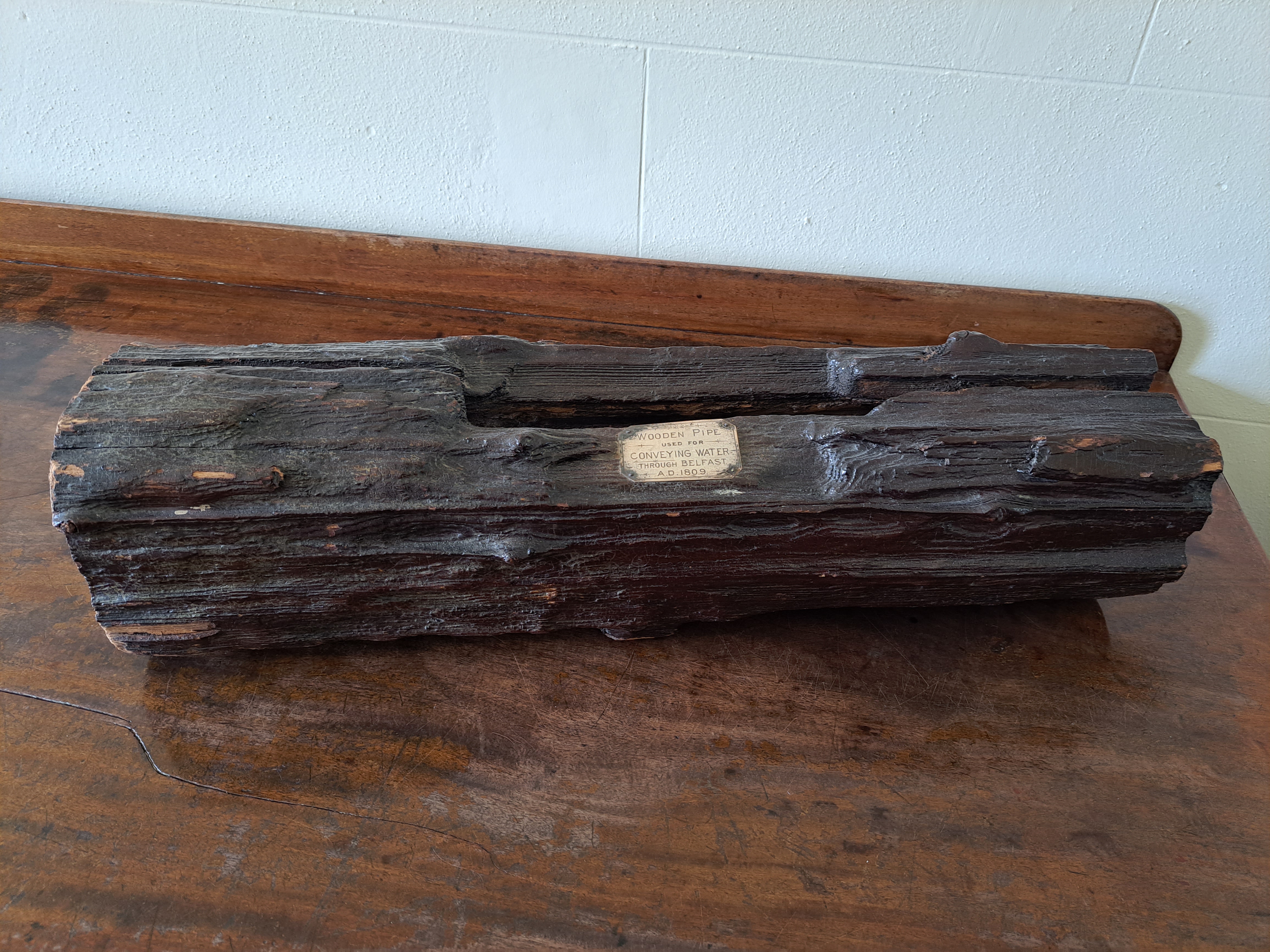
Water pipe made from elm dating from 1809
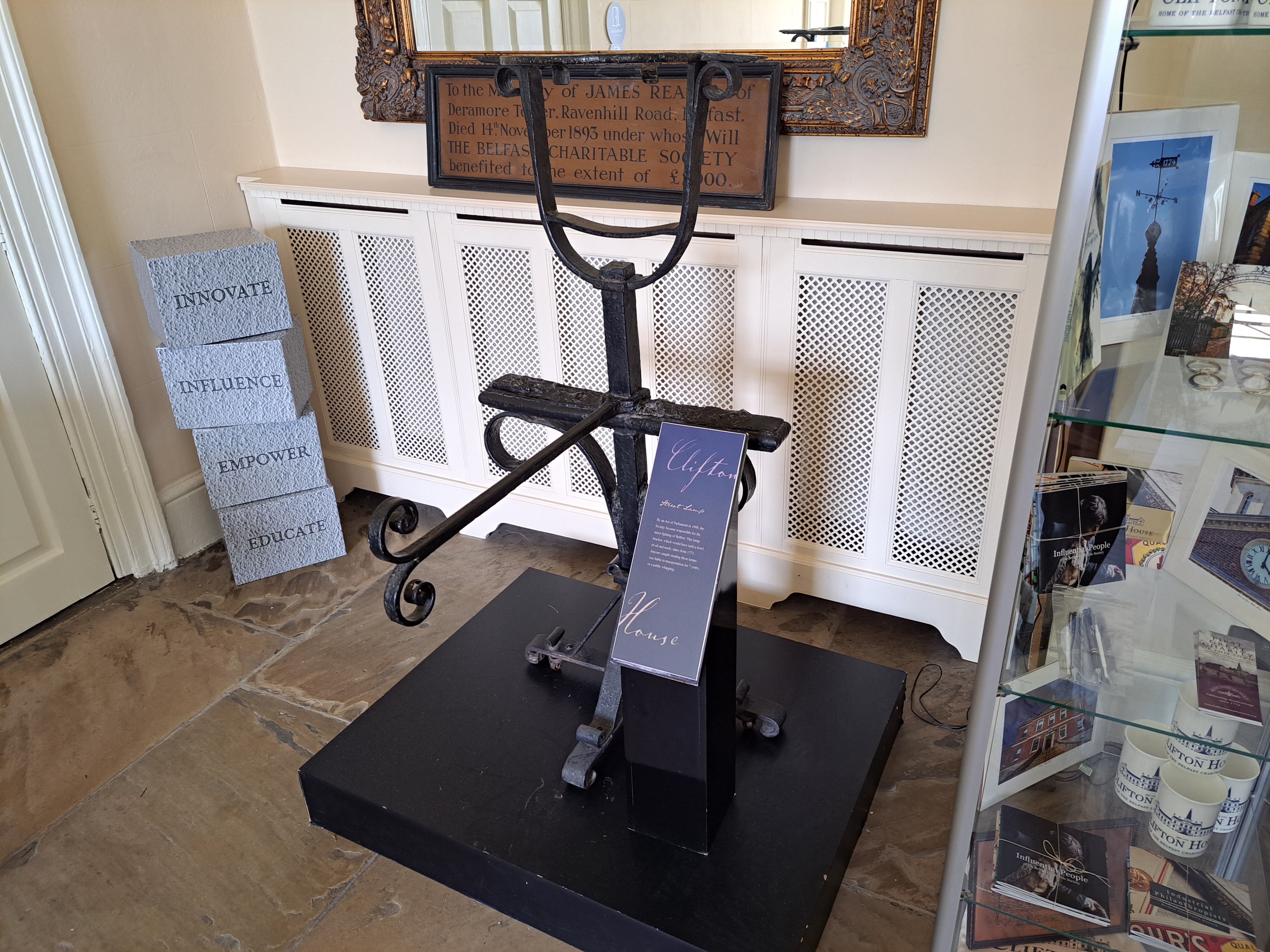
Early lamp bracket in use in Belfast in the 1770s
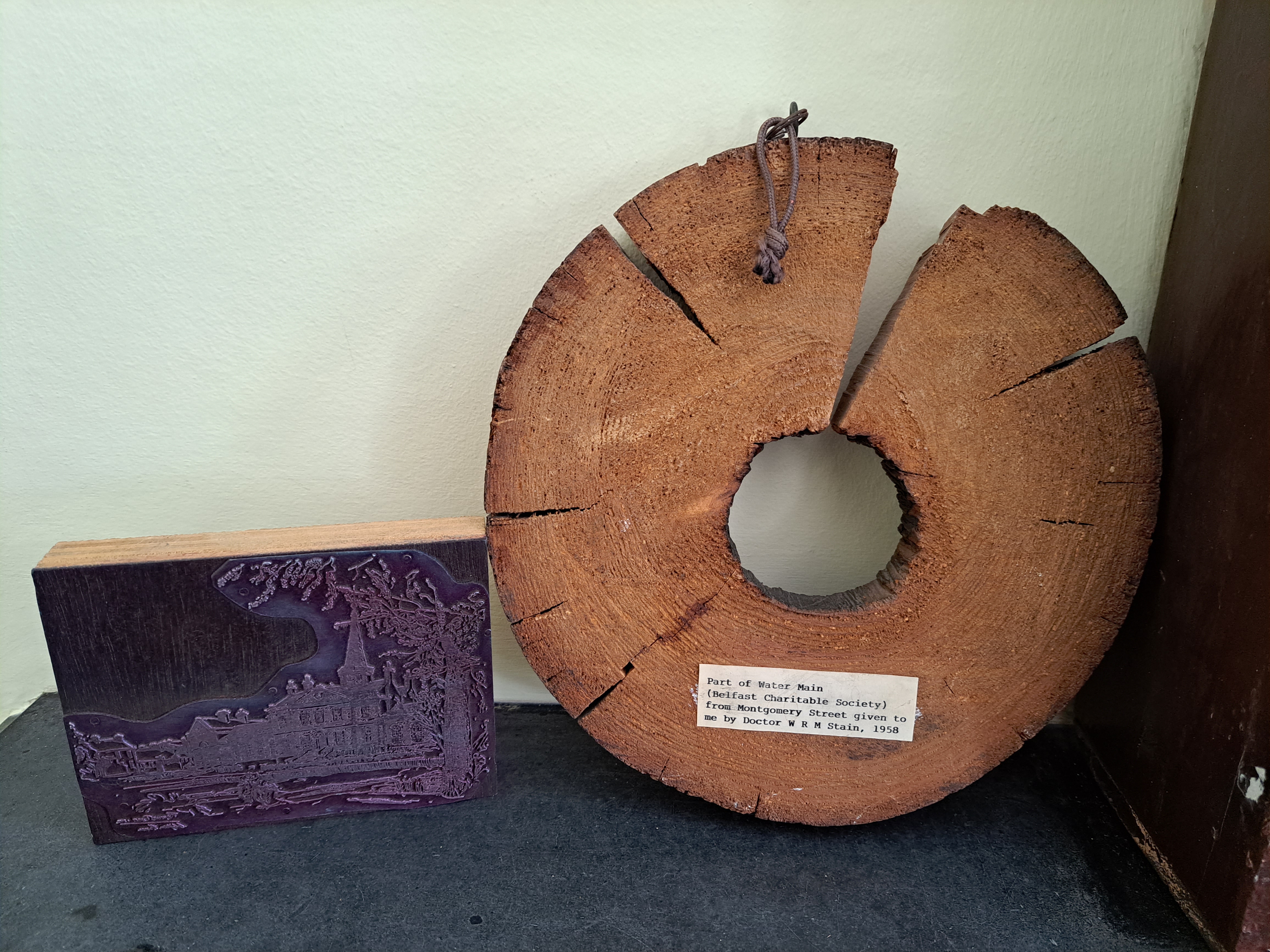
Examples of the English Elm which were used as water pipes were on show and such was the importance of this function the Water Commissioners had to make an annual payment of £800 in perpetuity to the Belfast Charitable Society. This still continues to this day with NI Water having taken the place of the Water Commissioners and still being obliged to pay £800 per annum to the Charitable Society.
Cross-section of water pipe
The Society played its part in the development of cotton spinning and weaving in Belfast when machinery was established in the basement of the building for children to work on.
It is an impressive and dignified building, beautifully restored in recent decades and still fulfilling its original function of caring for those in need.
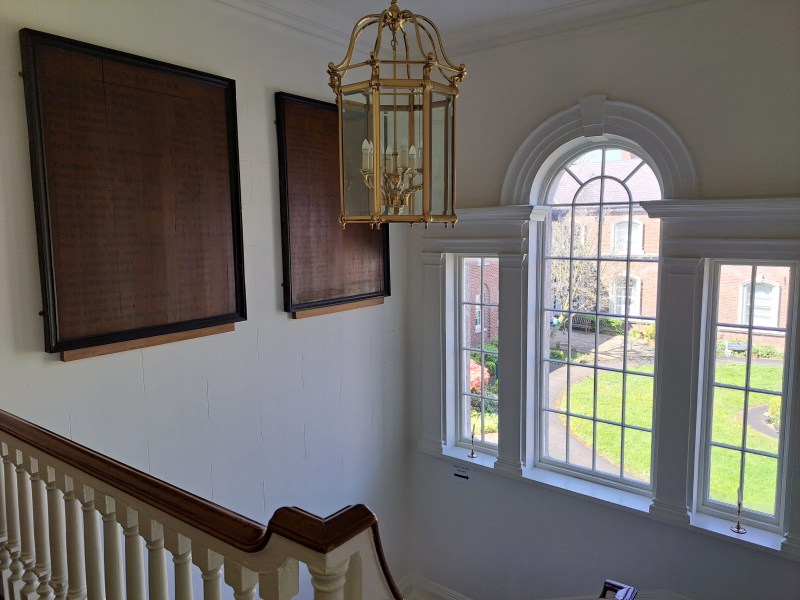
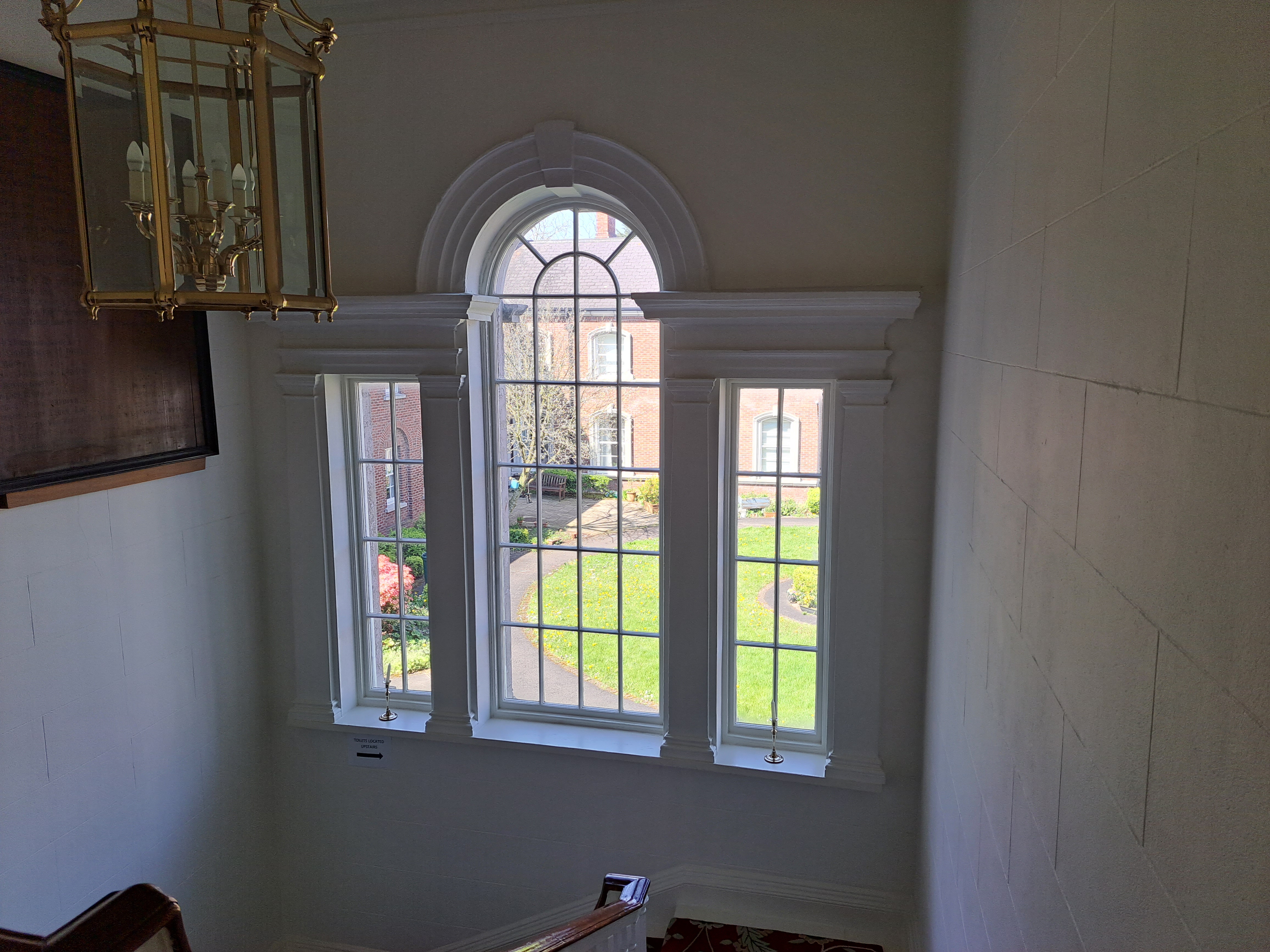
View from the staircase
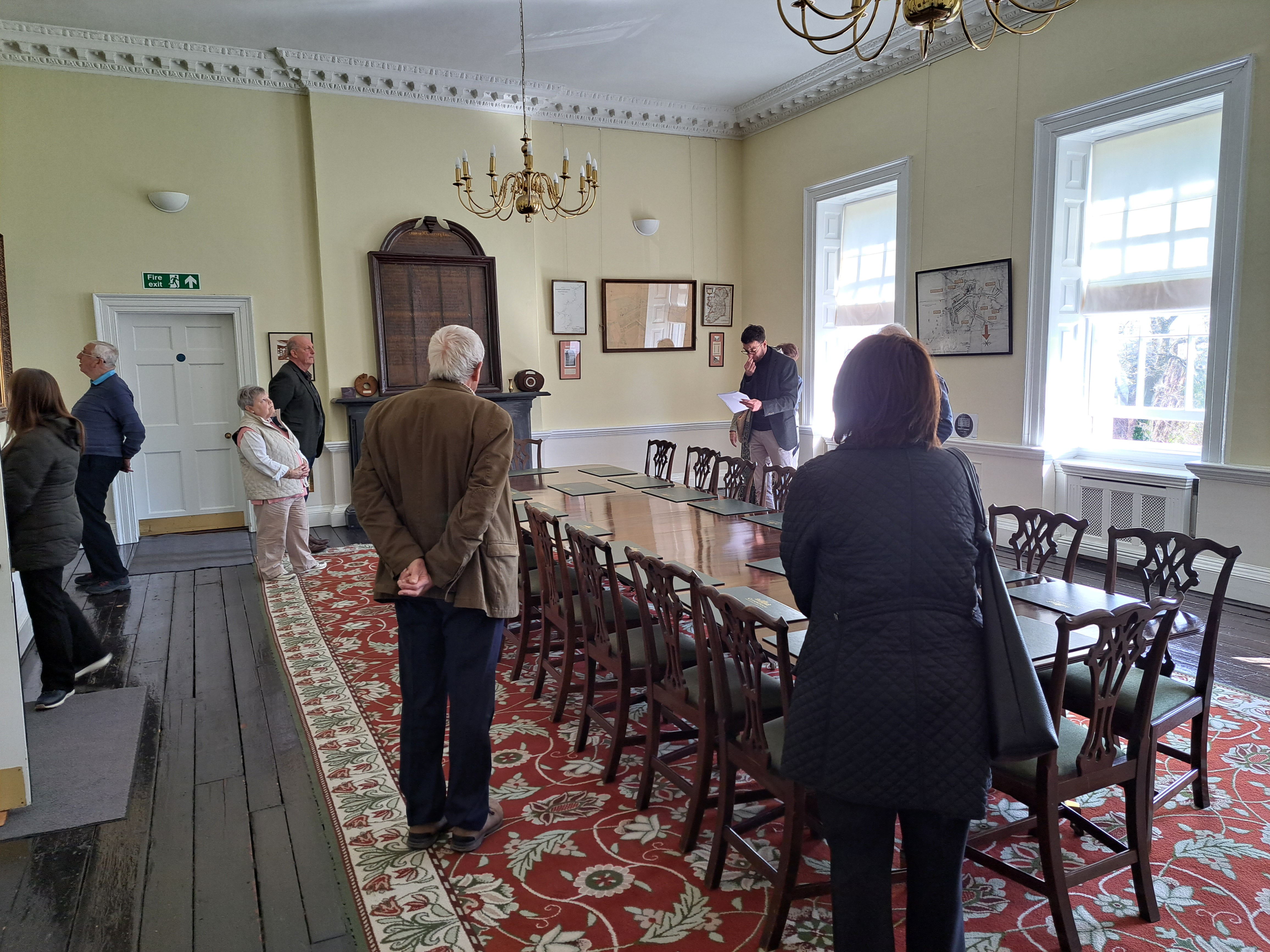
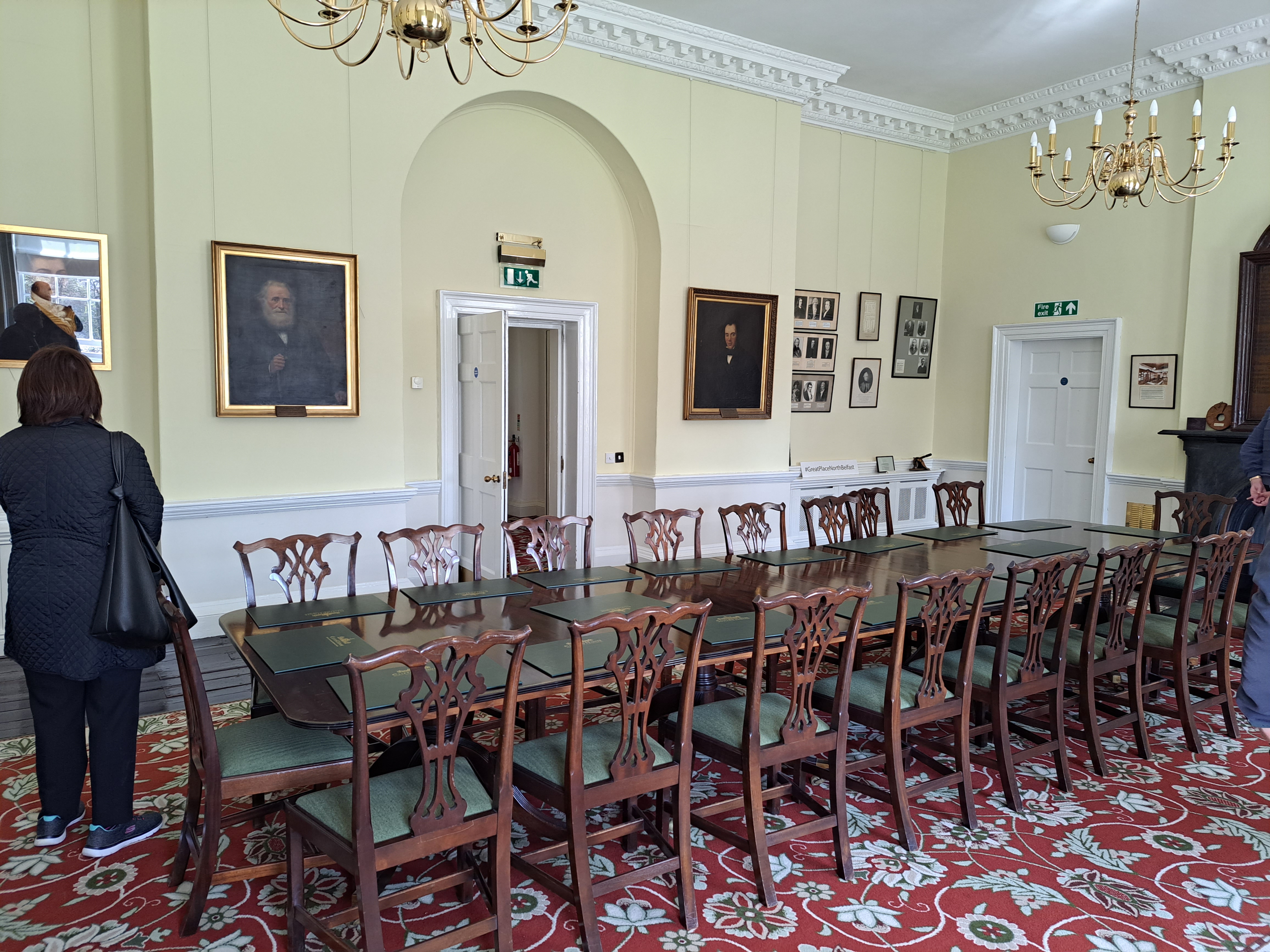
At the heart of the building is the boardroom, a room which also has a key place in so many aspects of the history of Belfast:
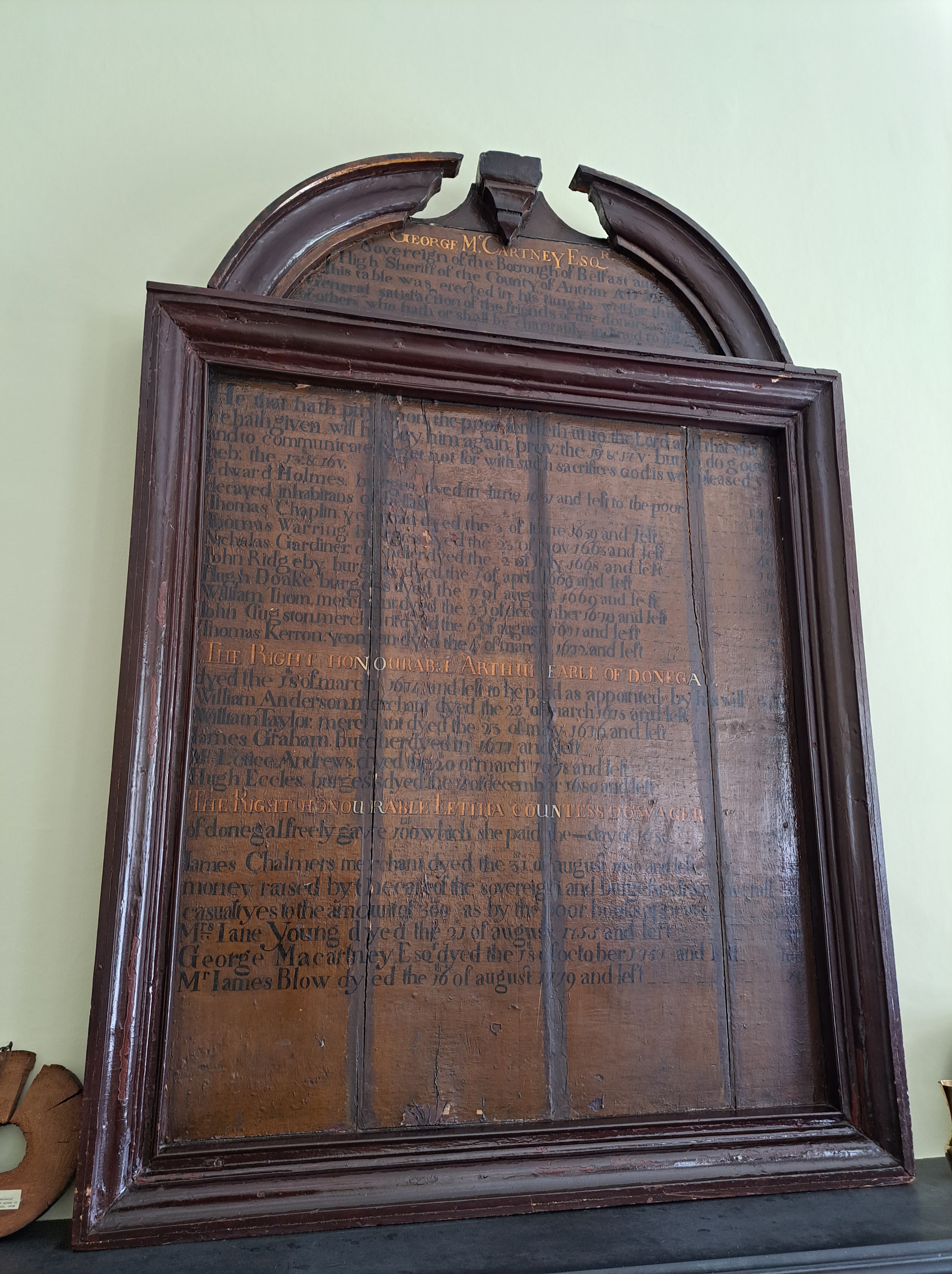
Charity board in the Boardroom
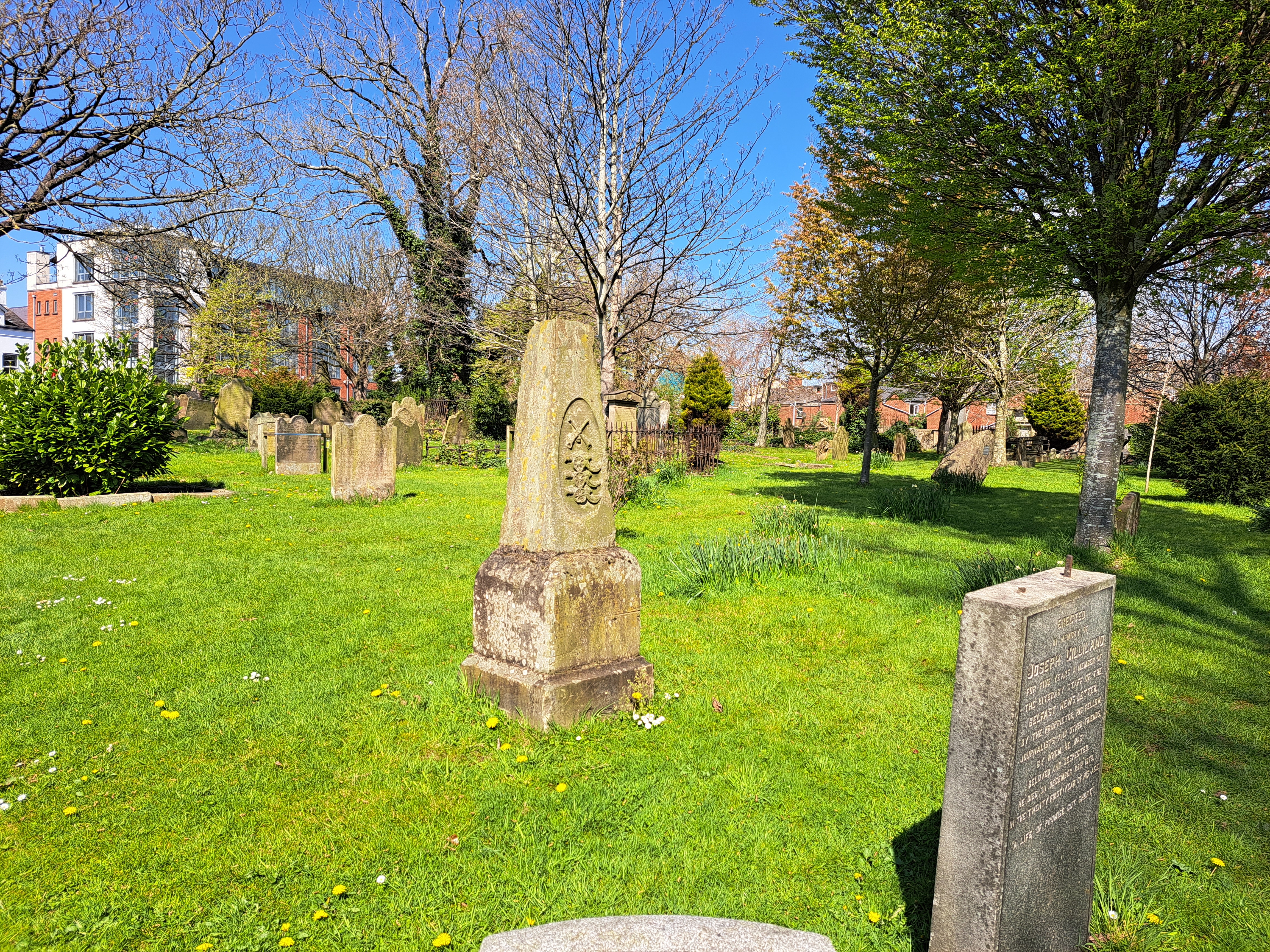
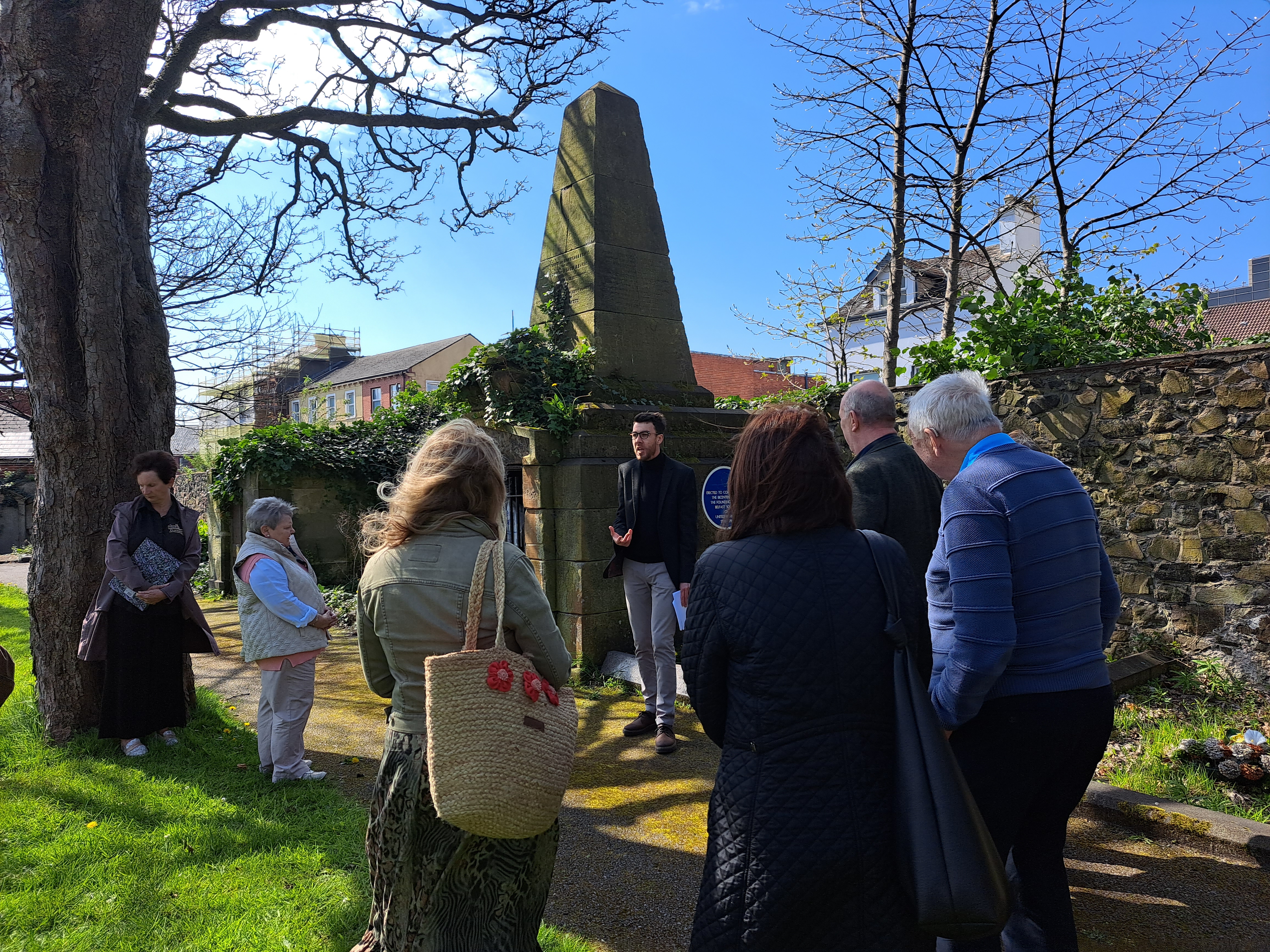
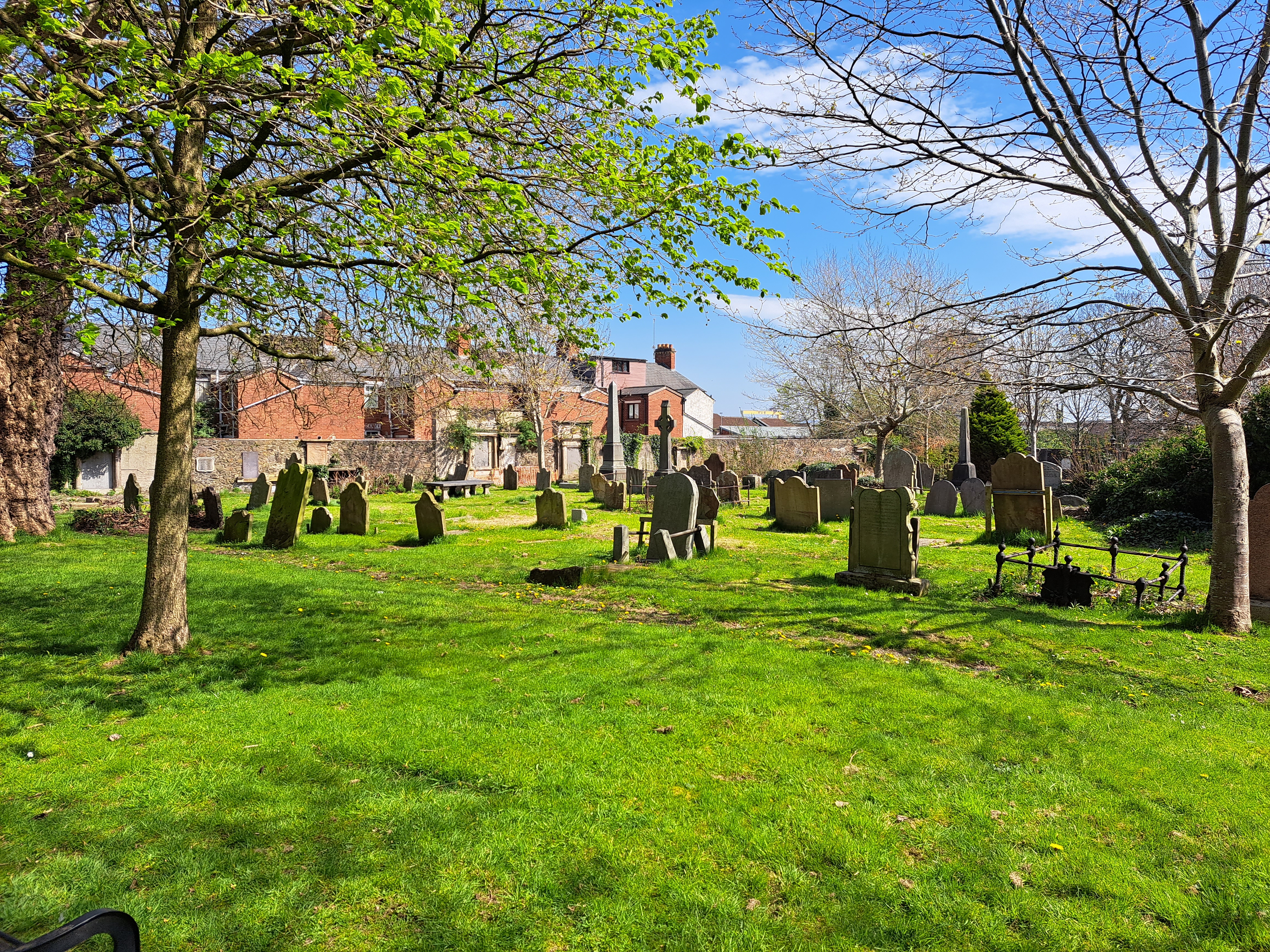
The extensive tour also took us round the Clifton Street graveyard. Another repository of Belfast history.
Sadly the graveyard suffered greatly from vandalism at the start of the Troubles, although its existence was threatened fairly dramatically in its early days when it was frequently targeted by grave robbers and we were told many tales of their nefarious activities over the years.
Vandalised grave of Robert Haliday
But there is still a great deal there that connects us with Belfast’s past, many of the people buried there being Non-Subscribers. Indeed throughout the tour many of the names we heard who had been associated with Clifton House were members of our denomination.
Grave of Mary Ann McCracken and possible resting place of Henry Joy McCracken
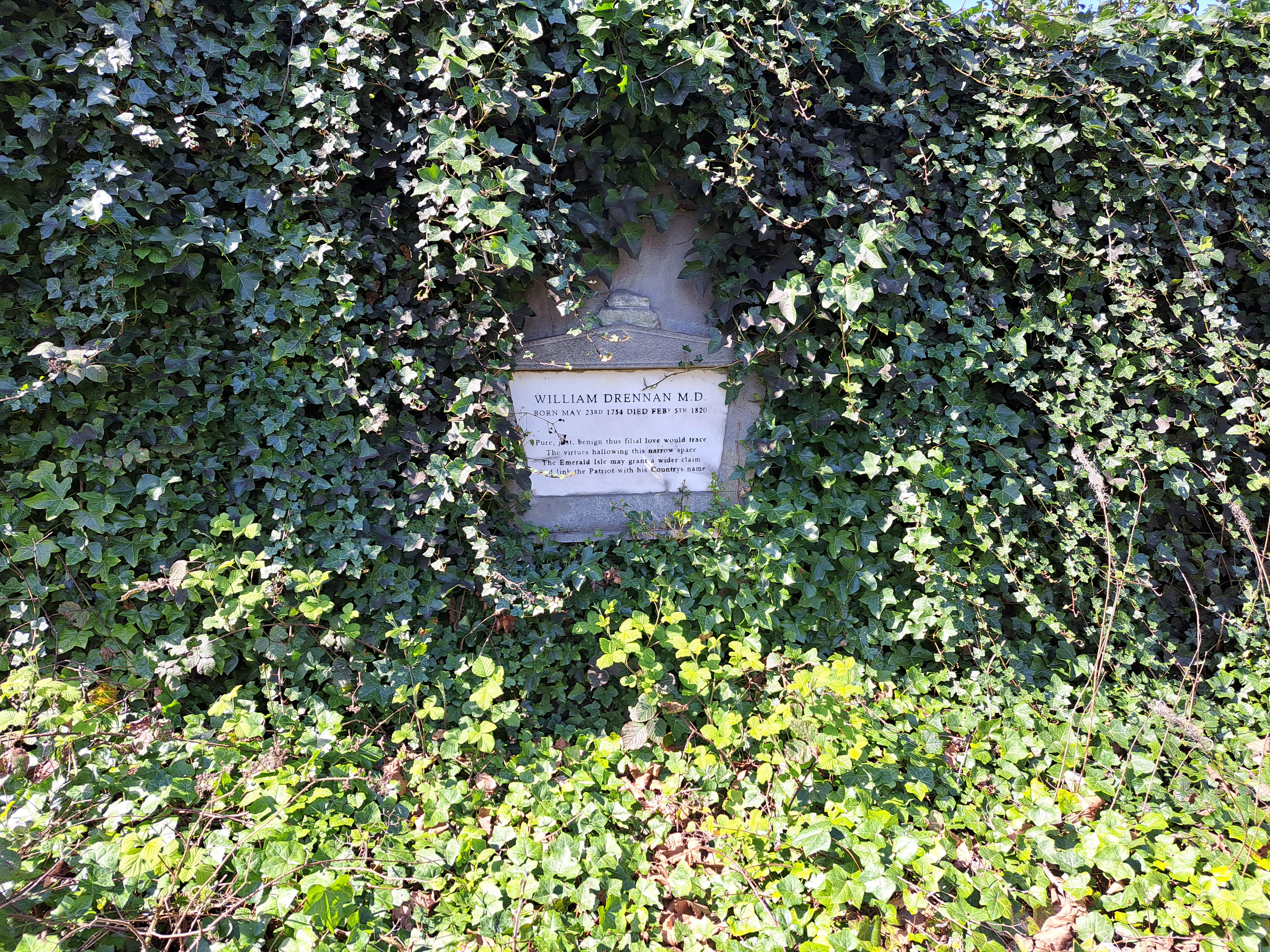
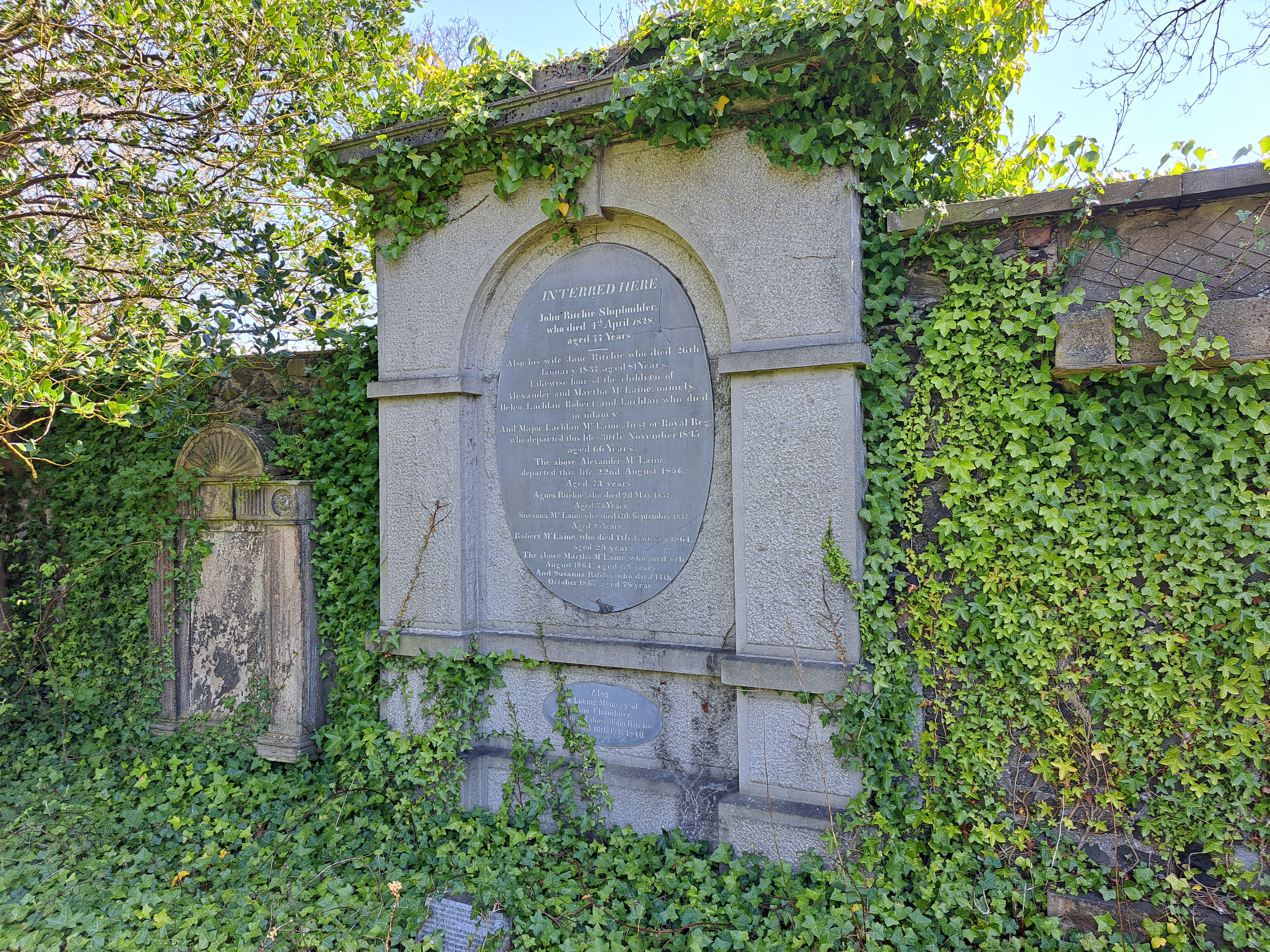
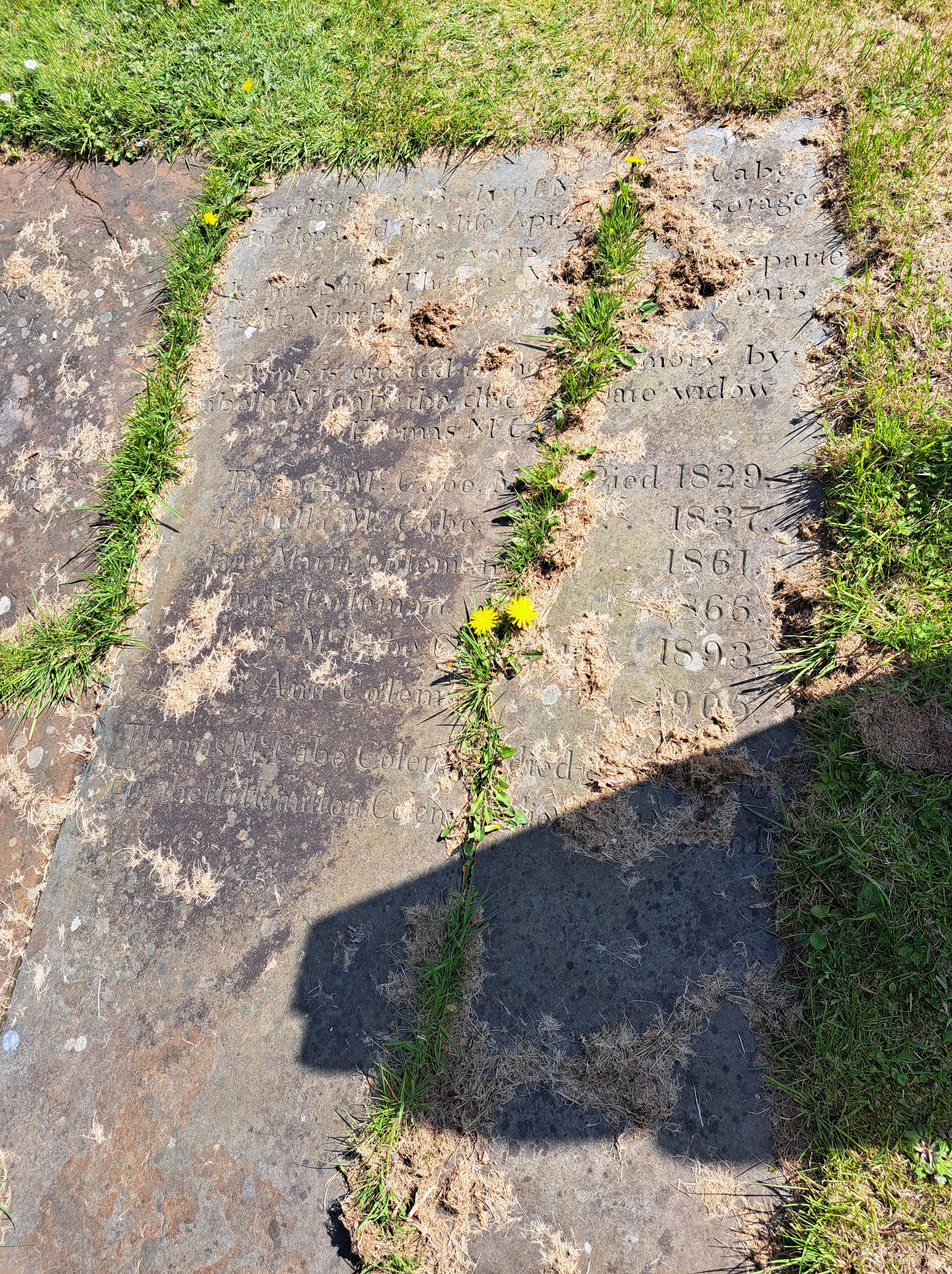
But in the graveyard we saw the graves of such notables as Dr William Drennan (poet, doctor, educationalist, United Irishman), John Ritchie (who established ship building in Belfast), and Thomas McCabe (who successfully opposed the establishment of a Belfast slave ship company) who were all Non-Subscribers, as indeed was Waddell Cunningham who it was who proposed establishing a slave ship company in Belfast (but who isn’t buried in Clifton Street).
Grave of William Drennan
Grave of John Ritchie
Grave of Thomas McCabe
It was a fascinating tour and we are grateful to our guides for such an interesting and illuminating morning.
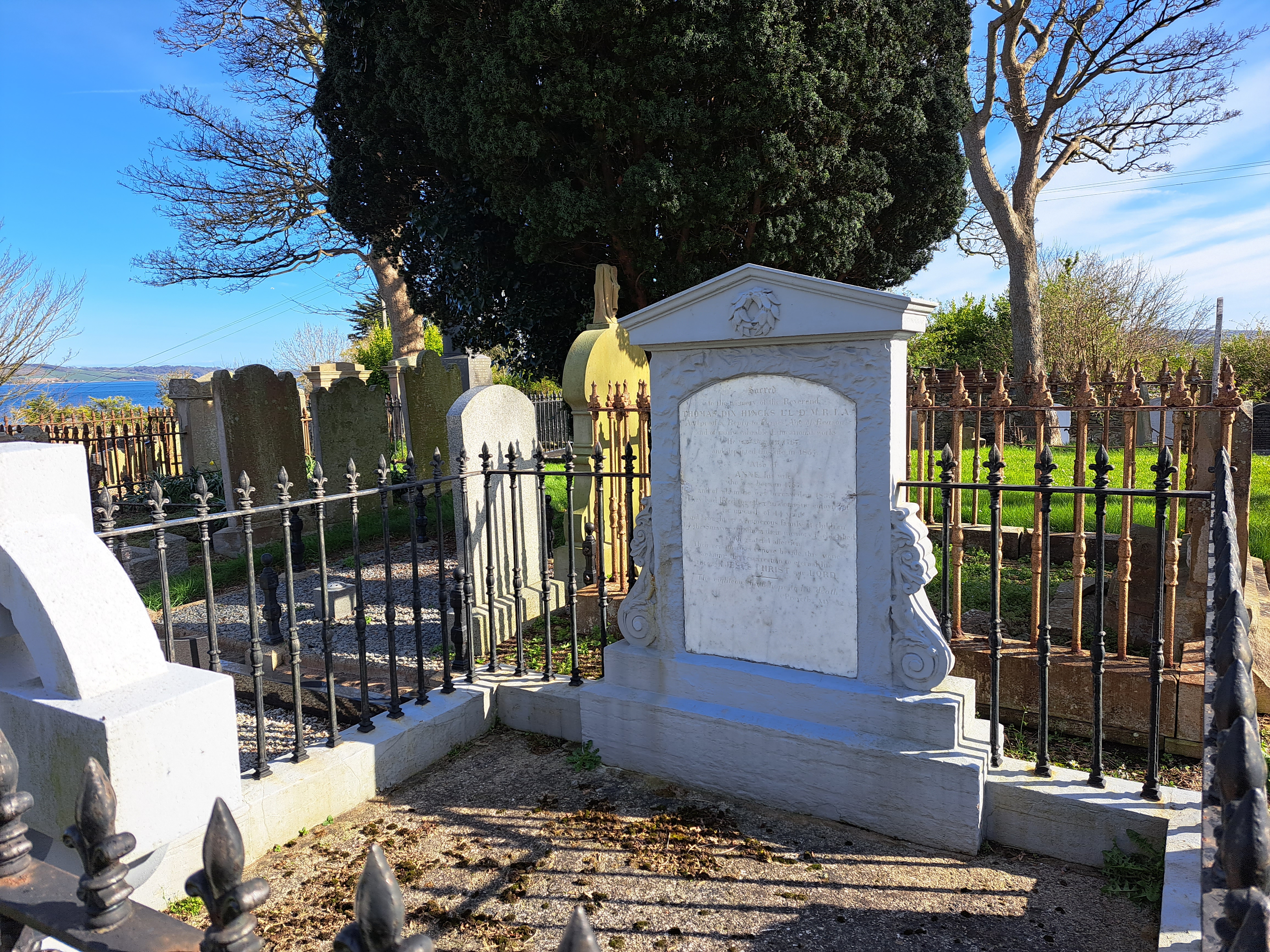
Killyleagh, county Down is a town remarkable for its history, much of this related to the Non-Subscribing tradition in Irish Presbyterianism. In this video we look at some of this history, including Sir Hans Sloane and local rector Rev Edward Hincks, Egyptologist and son of Rev Thomas Dix Hincks who is buried in the parsh graveyard.
Thomas Dix Hincks was born in Dublin and educated at Trinity College, Dublin and the dissenting academy of Hackney New College, London. He became minister of the Old Presbyterian Church, Princes Street, Cork in 1790 and the following year married Anne Boult. In Cork he kept a school and helped to establish the Royal Cork Institution. He later moved to Fermoy where he ran the Fermoy Academy before coming to Belfast as Professor of Oriental Languages at the Royal Belfast Academical Institution which was then also a training college for ministers as well as a school. A pioneering educationalist and teacher he published widely over the years, he was awarded the degree of LLD in 1834 by Glasgow University and was a Member of the Royal Irish Academy.
He and his wife are buried in Killyleagh alongside their eldest son but together they established a significant Unitarian/Non-Subscribing dynasty which was influential in England, Ireland and Canada.
The grave of Thomas Dix Hincks and Anne Hincks in Killyleagh
They had seven children, two girls and five boys:
Hannah Hincks (d.c1873)
Anne Hincks (d.1877)
Rev Edward Hincks (1792-1866)
Rev William Hincks c.1793-1871
Rev Thomas Hincks (1796-1882)
Rev John Hincks (1804-1831)
Sir Francis Hincks (1807-1885)
Two of the brothers became ministers of Renshaw Street Chapel in Liverpool, amongst other things.
To hear the full story and hear more about Killyleagh click on the video at the top of the page.
Memorial window to Thomas Dix Hincks, Anne Hincks and Hannah Hincks in the First Presbyterian Church, Rosemary Street, Belfast.
A previous video explores something of the life of Rev Thoms Hincks (1818-1899) the son of Rev William Hincks (c.1793-1871). It can be seen here:
The 2023 issue of the Transactions of the Unitarian Historical Society includes Ian Wood’s article on his great great grandfather William Sunderland Smith, minister at Antrim from 1872 to 1912 and a figure of some note in the town at the time because of his writings on history, including the 1798 Rebellion, natural history, geology and theology.
W.S. Smith’s son William Ivan Smith was an enthusiastic amateur photographer and he took a number of pictures in Antrim in 1902 which are a main feature of this video which introduces the 2023 Transactions:
Click on the video above to find out about the Transactions and W.S. Smith
Prior to coming to Antrim in 1872 and after leaving the Unitarian Home Missionary Board in 1859 W.S.Smith had ministered successively at Aberdeen, Rawtenstall, Doncaster, Tavistock and Crediton. So he had a series of short ministries all over the country before crossing the Irish Sea and finding, one assumes, a deep sense of fulfilment in his last charge at Antrim. W.I. Smith’s visit to Antrim in 1902 produced a number of photographs which give us a splendid picture of his ministry and I am grateful to Ian Wood and his family for digitising them and for making them available.
So here is W.I. Smith’s portrait of his father:
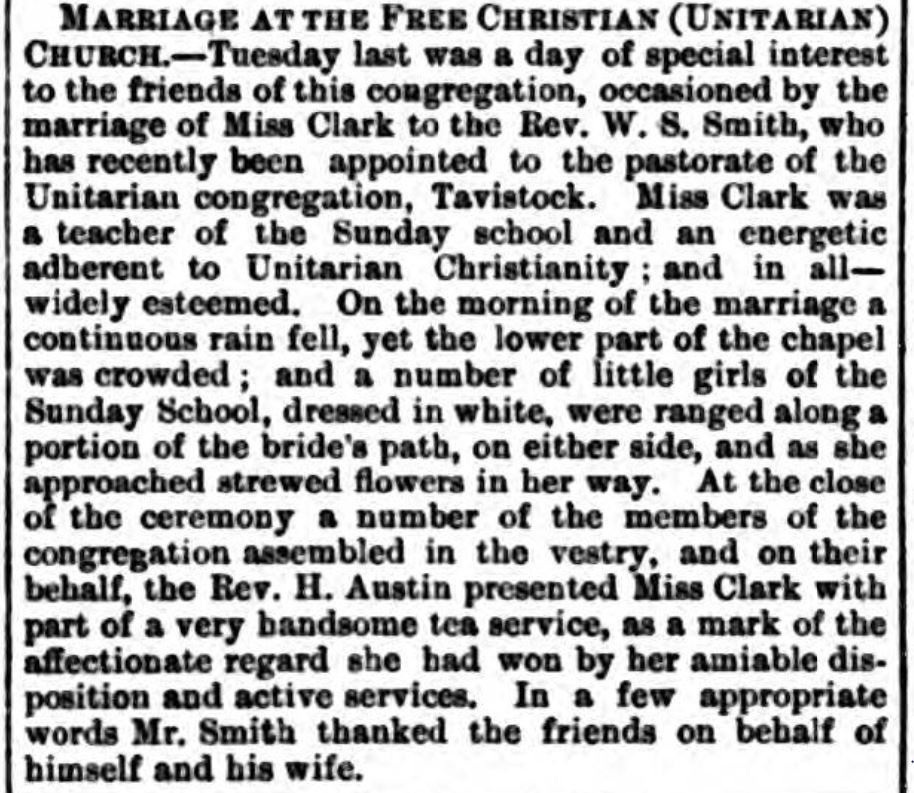
W.S. Smith’s first wife died in 1868 but the following year, having moved from Doncaster to Tavistock , he met and married Clara Ann Clark. Ian Wood has found this cutting from the Wilts and Gloucestershire Standard which gives an engaging account of the wedding between the Cirencester Sunday School teacher and the Tavistock Unitarian minister on 9th November 1869:
In 1902 when William Ivan Smith visited Antrim he took this picture of his step-mother:
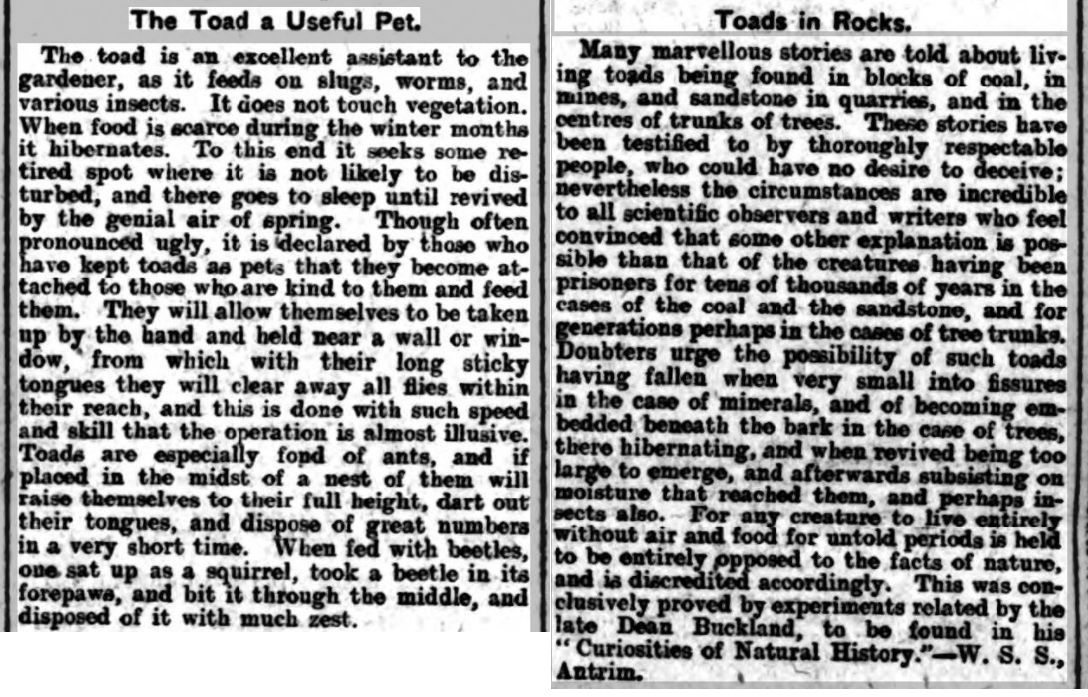
William Sunderland Smith arrived in Antrim, after a short ministry in Crediton, Devon, in 1872. He must have established a prominent name for himself in the town with publications such as Historical Gleanings in Antrim and Neighbourhood and Memories of ’98 as well as regular contributions to the Ulster Journal of Archaeology and the provision of ‘Nature Notes’ to the Northern Whig, including this account of toads in 1906:
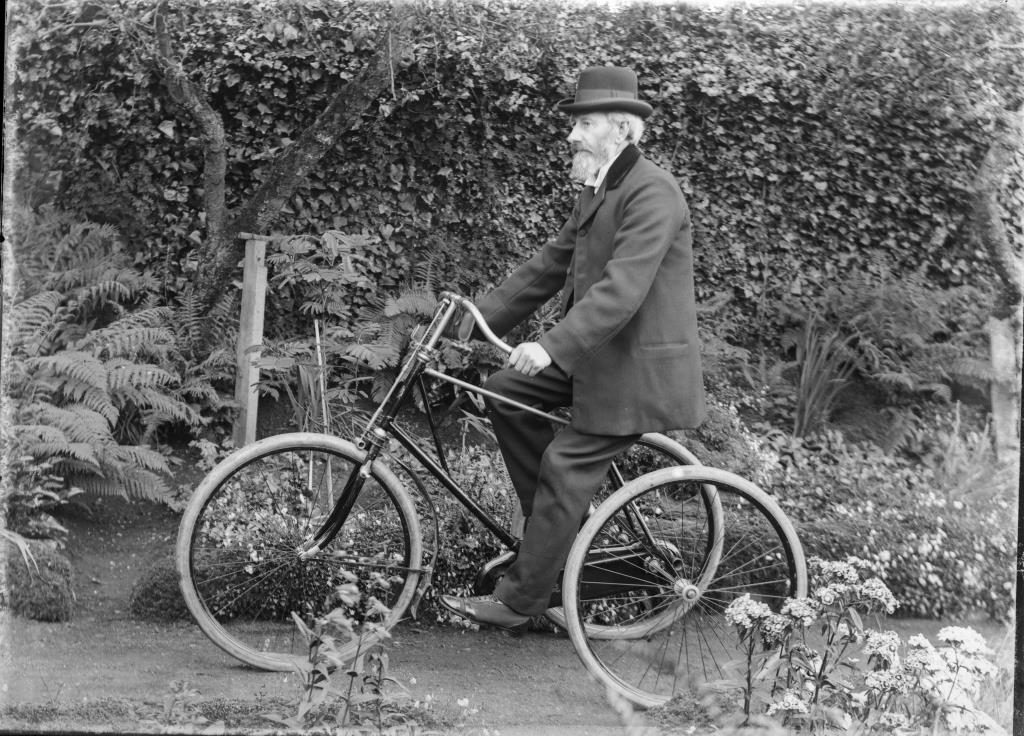
W.I. Smith’s photograph of his father astride his preferred method of transport in Antrim suggests that he must have been a very familiar figure on the local roads at the time:
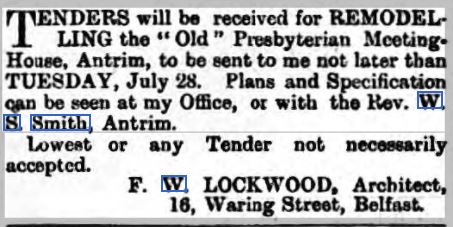
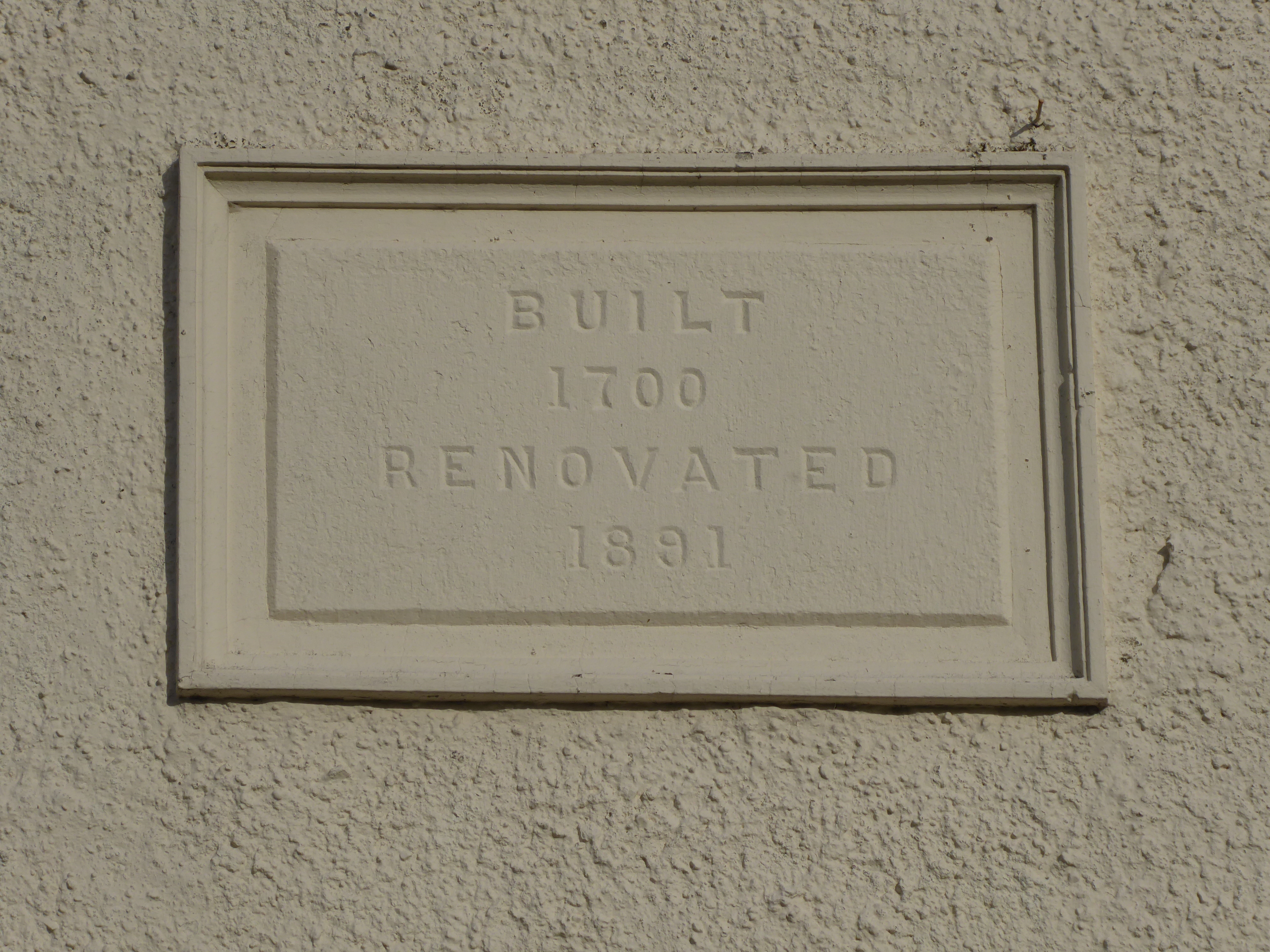
The Antrim meeting-house had been built in 1700 but under his ministry the interior was completetly refurbished in 1891. Ian Wood has found the following cutting from the Northern Whig seeking tenders to undertake this work:
This was a major undertaking which seems to have been successfully completed but images of the interior, either in its original form or in the remodelled layout created by W.S. Smith, are hard to come by. If you would like to see the interior as it looks today – denuded of its ecclesiastical furniture – click here. One postcard which I have acquired features the interior of the Antrim meeting-house as it originally looked. It is a strange picture that has been very amateurishly doctored with Rev John Abernethy’s portrait cut out from somewhere and stuck over the pulpit:
But when he came to Antrim in 1902 William Ivan Smith also took a picture of the interior of the church as it looked by this time. This is it:
Now, at first glance, this may not look like such an interesting image, but as the only surviving picture of the inside of Antrim complete with its pews it is not without importance. However, on top of that W.I. Smith was quite a skilled photographer and there is more detail in this high resolution image of a 1902 print than you might initially notice. If you click on the video above you can discover some more of what this picture contains.
Thank you to Ian Wood for researching his ancestor and for discovering these fascinating pictures and making them available.
You can find out more about the Unitarian Historical Society and the Transactions by visiting its website here.
You can see a bit more about the manse in Antrim on this website via this link.
No pictures or text may be reproduced from this site without the express permission of the author.
Over the period of Advent in the run up to Christmas at Dunmurry we have uploaded three videos generally reflecting on Advent and Christmas carols, their origin and use, as well as the Christmas story itself. You can see them all by clicking on the videos below.
Christmas Reflections: The Christmas Story
Christmas Reflections The Christmas Story
First Dunmurry (NS) Presbyterian Church
Told by Sue Steers FRSA Organ: Allen Yarr Trumpet: Jack Steers
Carols: Hark! the herald angels sing O Little town of Bethlehem O Come, all ye faithful It came upon the midnight clear
Click on the video above to see the Christmas Reflections
Two Christmas Carols: Deck the hall (1784) & Ding, dong merrily on high (1924)
Two Christmas Carols
Click on the link above to see this short exploration of two well-known carols: Deck the hall with boughs of holly (first published 1784) Ding, dong merrily on high (first published in 1924)
Filmed at First Dunmurry (NS) Presbyterian Church and at the Continental Market, Belfast
Trumpet played by Jack Steers
Advent Reflections: ‘Hark the glad sound!’ by Rev Philip Doddridge 1702-1751
A Short Reflection for Advent
Hark the glad sound! the Saviour comes writtten by Rev Philip Doddridge DD (1702-1751)






























 velvethummingbee