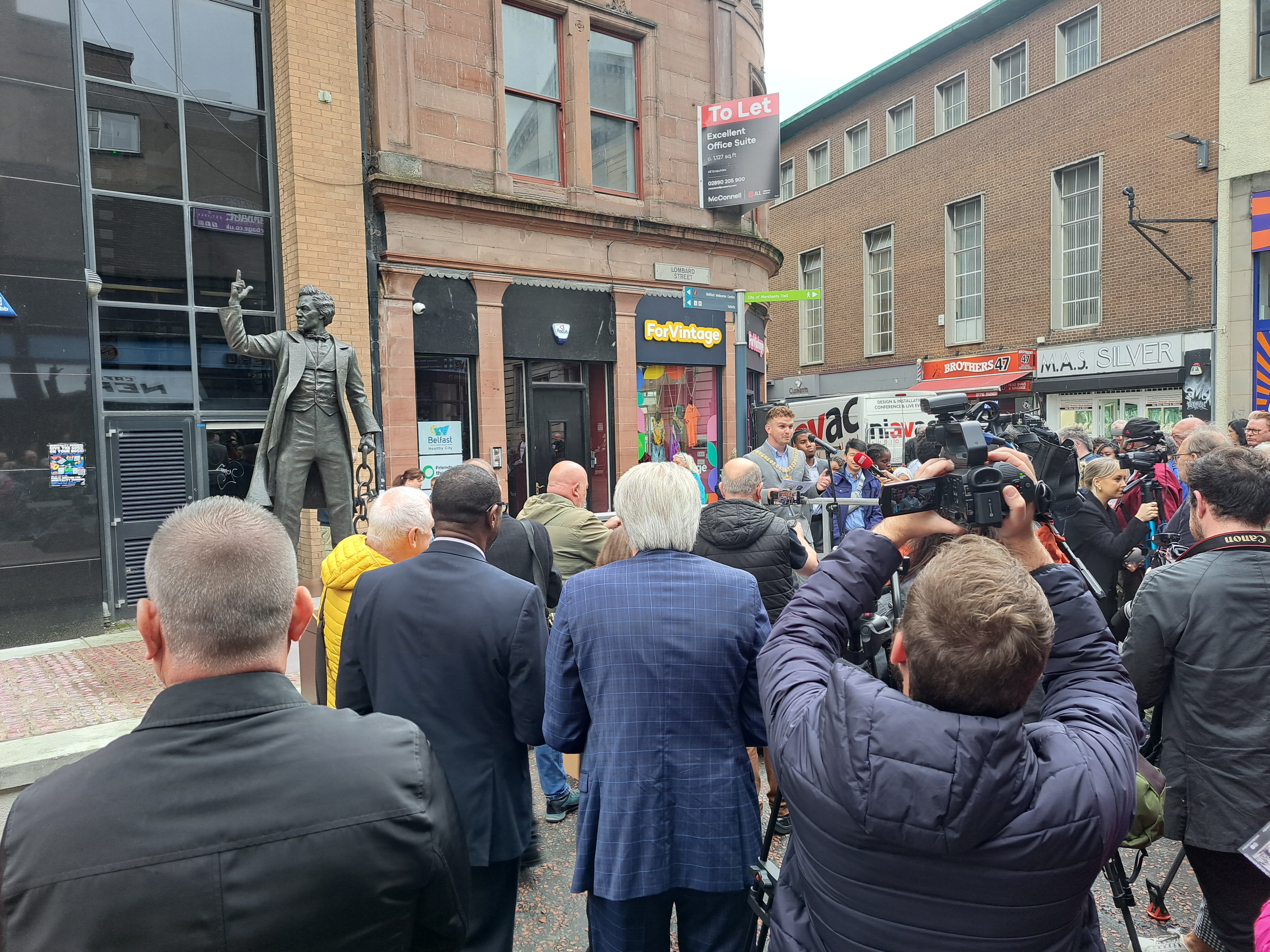
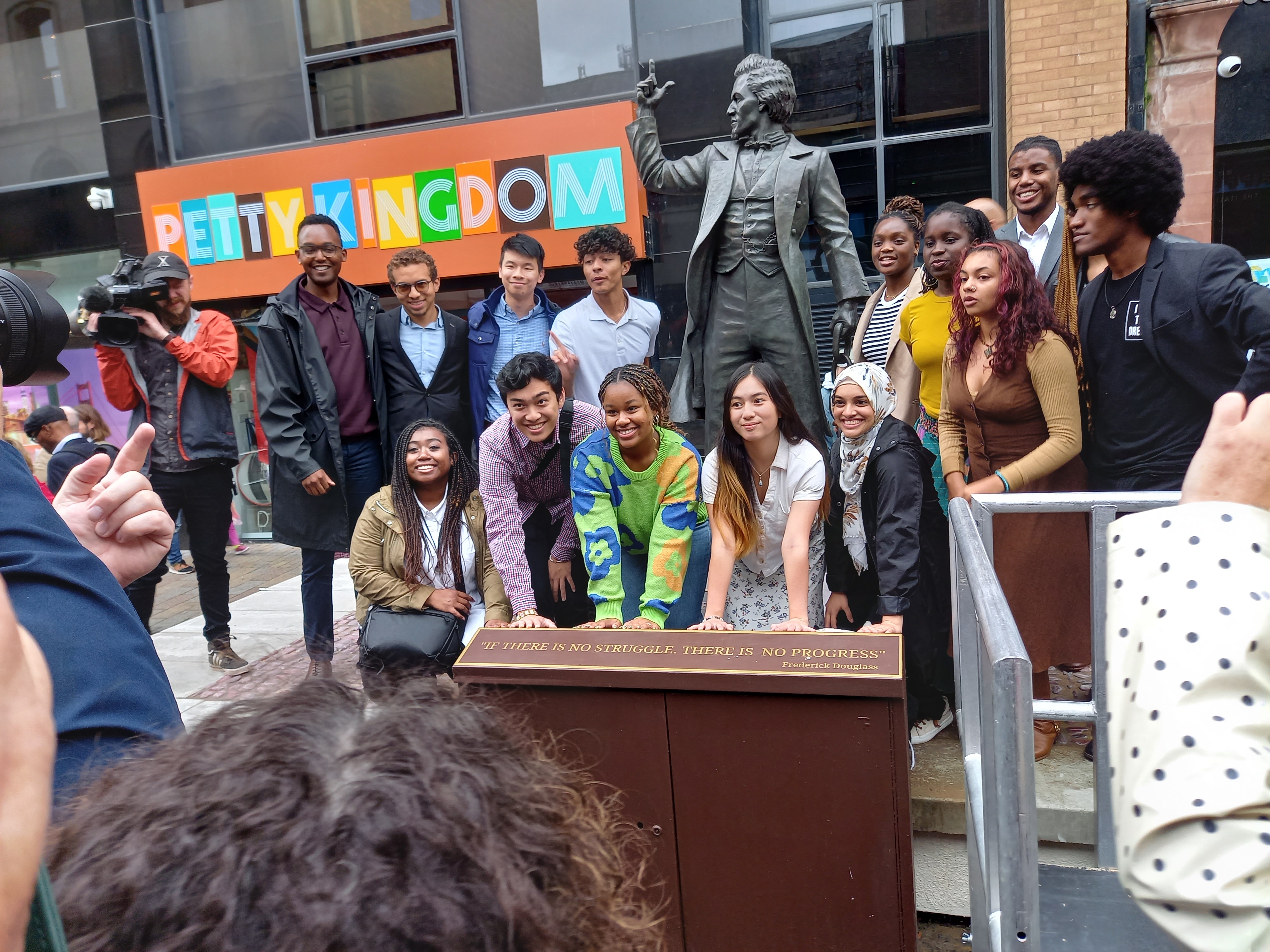
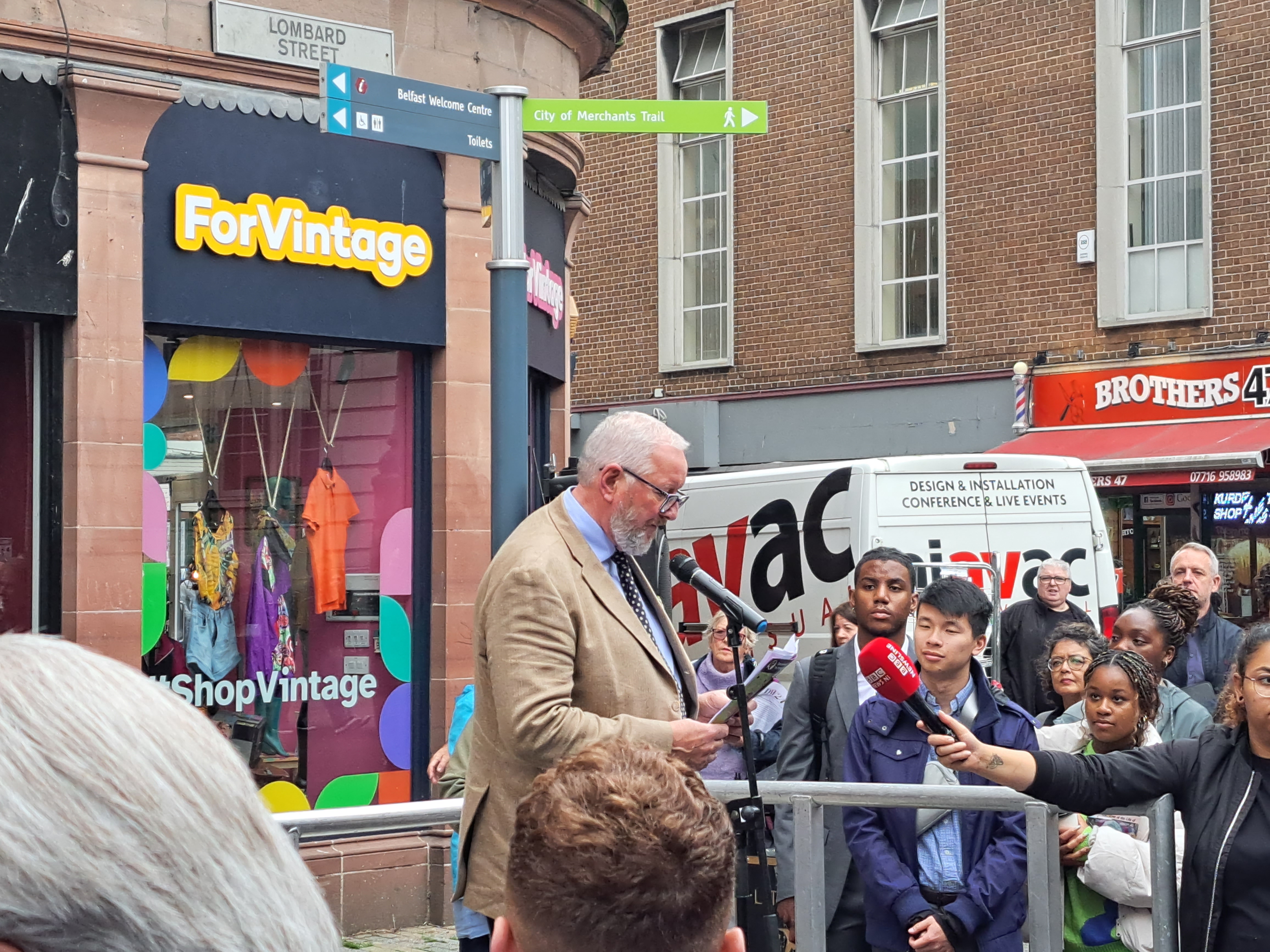
I was pleased to be present for the inauguration of the new statue of Frederick Douglass on Monday, 31st July 2023. I only found out about it by chance but it was good to be there for the formal recognition of Frederick Douglass as part of Belfast’s history.
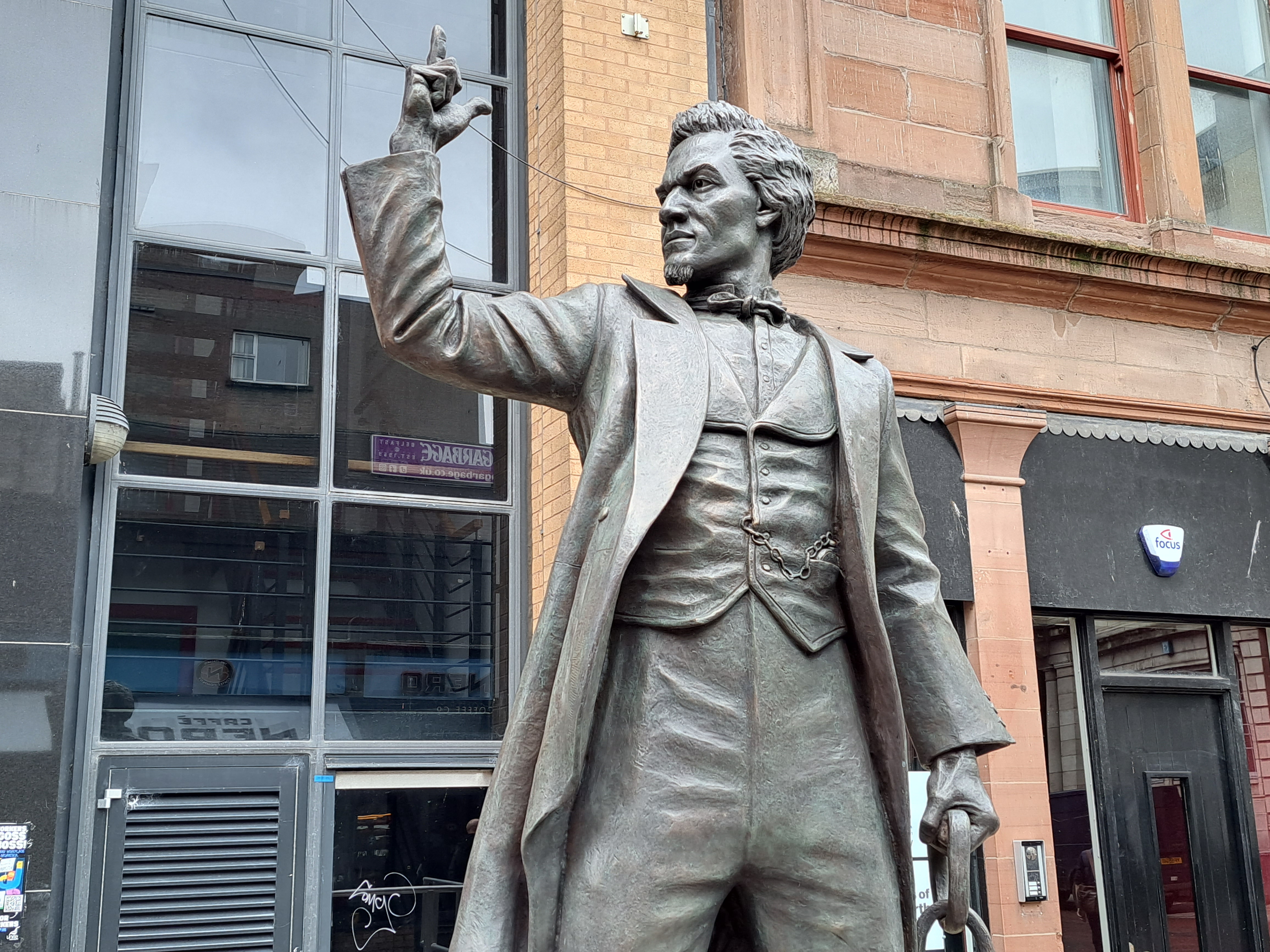
Frederick Douglass was born a slave in February 1818, on Holme Hill Farm, near Easton, Talbot County, Maryland. Although slaves were not supposed to be taught to read he was taught the alphabet, taught himself to read and developed a life-long reading habit.
In 1838, at his third attempt, he successfully escaped from slavery and managed to get to New York where he married Anna Murray (1813–1882) of Baltimore. He became a preacher in the African Methodist Episcopal Zion Church and an associate of William Lloyd Garrison and an activist in the anti-slavery movement.
In 1845 he published the Narrative of the Life of Frederick Douglass, an American Slave, the first of three volumes of autobiography, and became so prominent in the anti-slavery movement that threats were made against him which led to him travelling to Britain and Ireland on a speaking tour. He spent two years speaking all over England, Scotland and Ireland. In Dublin he shared a platform with Daniel O’Connell and British supporters raised $700 to buy his freedom in the United States. This in itself was controversial as many thought it wrong to give any recognition to the idea that a human being could be bought or sold as someone’s property.
In the words of the Oxford Dictionary of National Biography, during his speaking tour:
He filled public halls, private homes, chapels, and churches, his audiences sometimes numbering thousands, and he often spoke on different subjects at more than one meeting a day. As well as making the abolitionist case, he spoke on women’s rights (he felt that he could not accept the vote as a black man if it was denied to women), temperance, land reform, education, and capital punishment, issues on which he never ceased to agitate.
Of his time in Belfast he wrote:
I shall always remember the people of Belfast, and the kind friends I now see around me, and wherever else I feel myself to be a stranger, I will remember I have a home in Belfast.
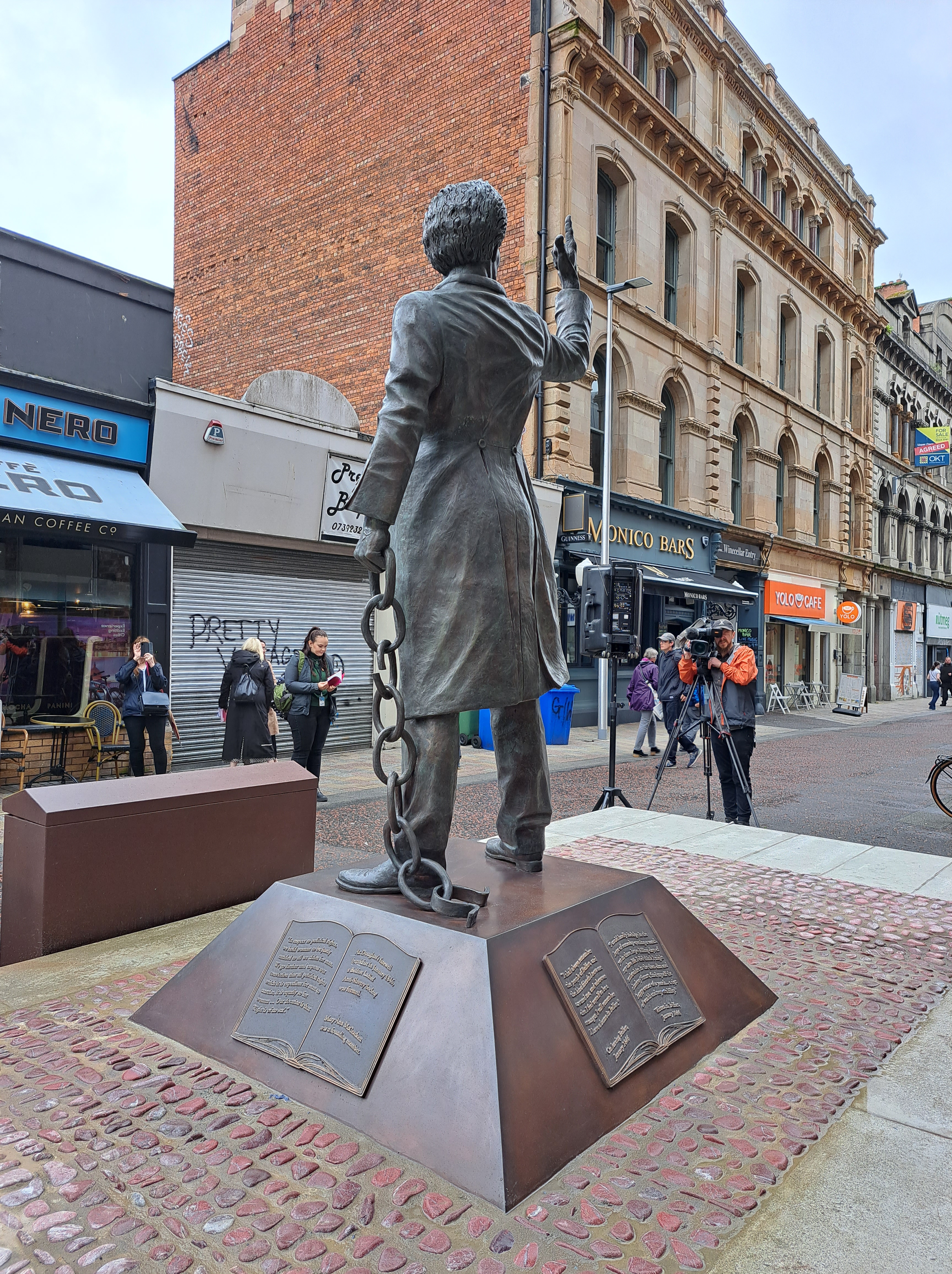
Words which are among those inscribed on the plinth of his statue.
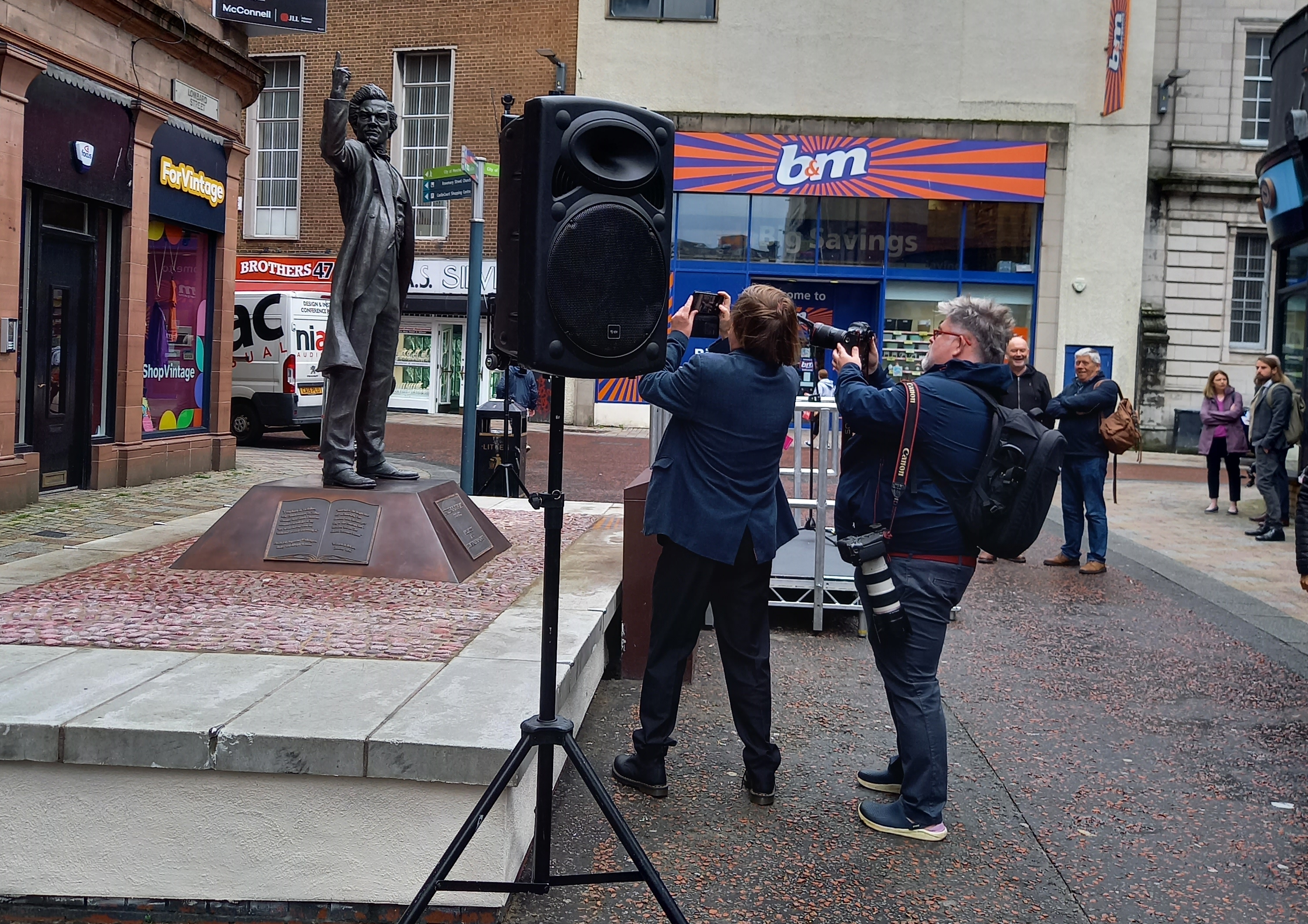
At the opening of the statue Professor Christine Kinealy said that in Belfast he spoke in Rosemary Street Presbyterian Church. But this is ambiguous because there were then three churches on Rosemary Street, two non-subscribing and one orthodox. The booklet available at the opening also suggested that he spoke in First Church on Rosemary Street. In fact he spoke at the meeting-house of the Second (Non-Subscribing) Congregation which stood behind First Church and was finally demolished in the early 1960s. He was granted the use of the meeting-house of the Second Congregation on 7th December 1845 ‘to lecture on behalf of the Anti-Slavery Society’. But it is very fitting that he should have such a fine statue erected in his memory so close to Rosemary Street.
 velvethummingbee
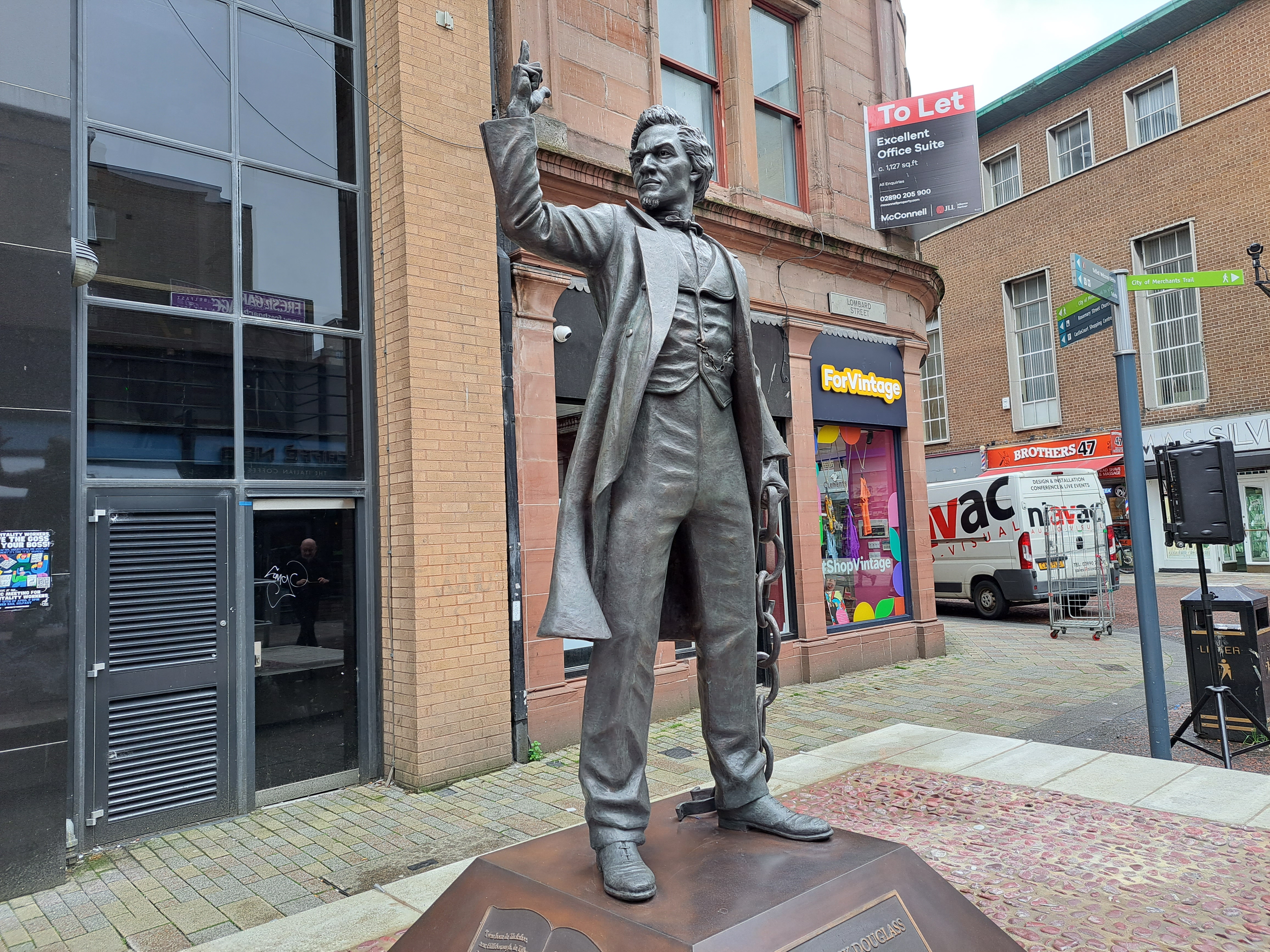
Hello David I very much enjoyed reading your report about the public presentation of the Frederick Douglas statue. I hadn’t been aware he visited Ireland during his UK trip but it makes sense as Ireland was then united with the UK. Do you know if Douglas talked about the independence issue, or was it an issue then. I’m not sure about the Irish history of that time. The statue looks very life like from the photos I’ve seen of Douglas and the chains he holds in his left hand a perfect touch of the symbol of slavery. I wish I’d been there to see it all. I take it Mr Herriot is a local sculptor, he’s done a fine job. Arohanui and best wishes Wayne
LikeLiked by 1 person
Hi Wayne. He certainly shared a platform with Daniel O’Connell, the leading Irish nationalist of the time, in Dublin. Alan Beattie Herriot, who spoke at the event, is a leading Scottish figurative sculptor, from Edinburgh I think. It is a very powerful statue. As you say the broken chain in his hand is a strong symbol.
LikeLike