Until 1867 there were two Unitarian churches in Dublin. Both could trace their history back to at least the mid-seventeenth century and both had a succession of distinguished ministers and comprised congregations that had a significant role in Dublin life. After the restoration of 1660 the English Independent and Presbyterian clergy who had occupied the prime positions in religious life in Dublin during the Cromwellian interregnum were removed from their posts. This really was the start of the congregations of Wood Street, which later moved to Strand Street and ultimately to St Stephen’s Green, and New Row, which later built a new church on Eustace Street in 1728. In 1867 the congregations of Eustace Street and St Stephen’s Green amalgamated at St Stephen’s Green and have been a single congregation ever since. But the building on Eustace Street remained, for most of its history being used by Brindley’s the printers, and it is still there today, although today it is really little more than the façade.
The history of this building deserves to be better known and properly understood. I first went to see it in the early 1990s when it was empty but looked intact and was still recognisable as an old meeting-house. I took this picture which was published in the Inquirer at the time.

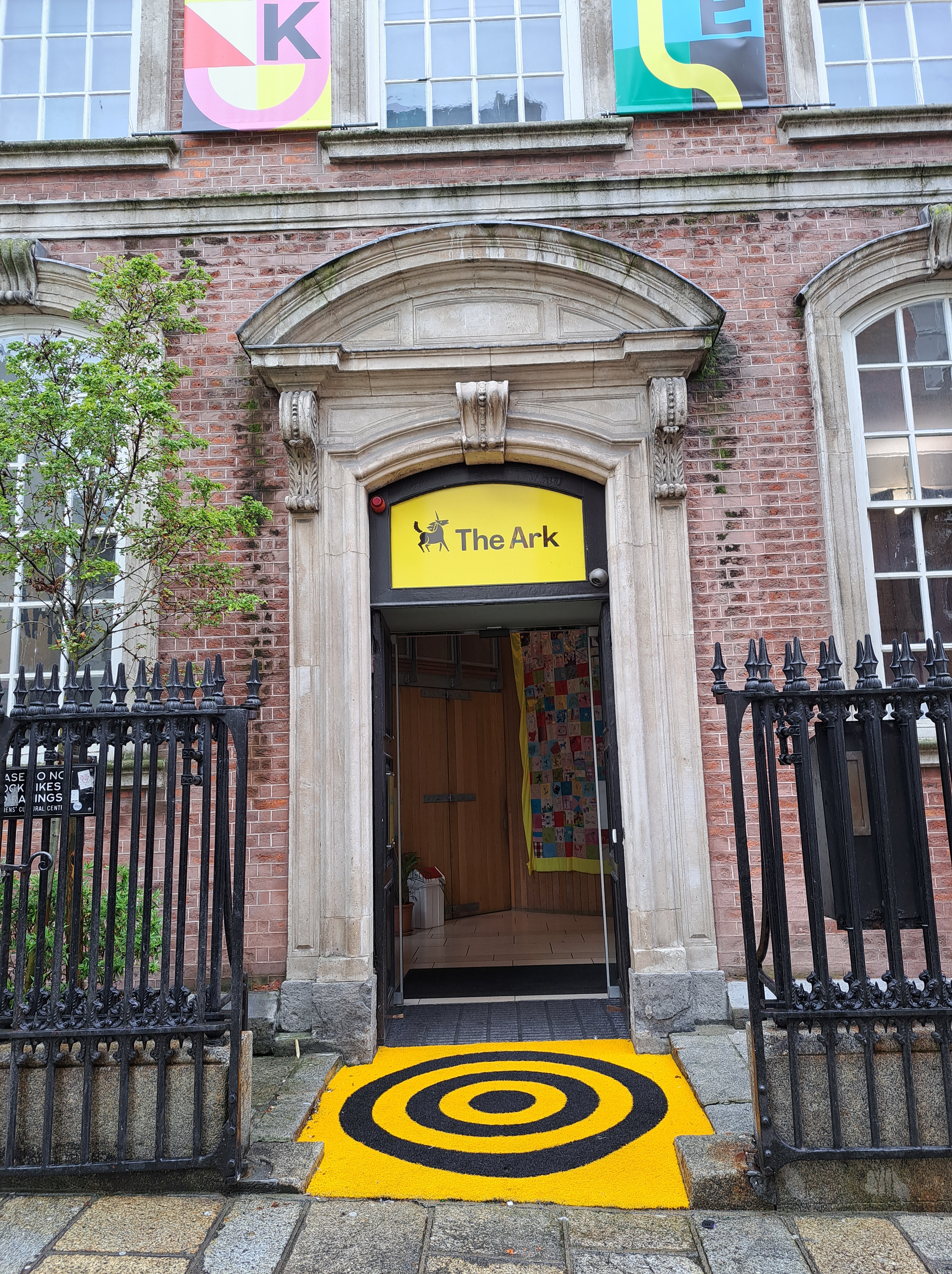
Within a few years, however, the whole area around it in Temple Bar underwent massive refurbishment and changed from a run down backwater to a busy cultural quarter. In about 1995 the building was turned into the Ark, a children’s theatre space.

Undoubtedly this is a good use for the building although it is a shame to think that so much of the original building had to be demolished to allow it to happen. Only the façade and the two side walls remain from the building of 1728. All the rendering from the old building has been removed to expose the brickwork both inside and out. But it is still a very impressive building.
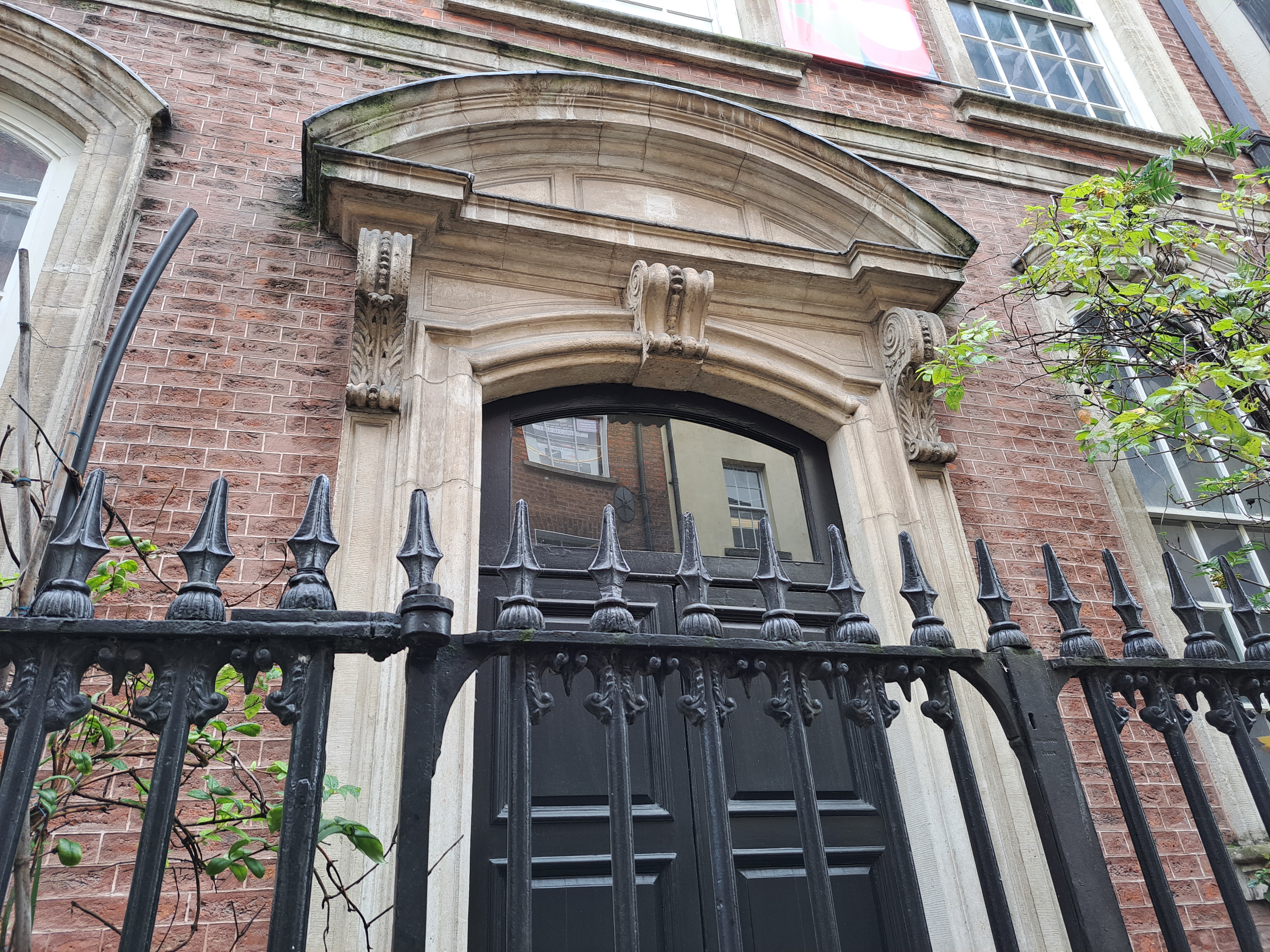
Christine Casey, in her book Dublin in the Buildings of Ireland series, says of the building: ‘The C18 facade is a handsome essay in retardataire Carolean classicism…A red-brick two-storey six-bay front with entrances in bays two and five and large segment-headed sash windows.’ It’s always good to see a bit of retardataire Carolean classicism. But it is a very fine frontage and even if the rest of the building is gone, it remains as an impressive testimony to the people who built the church.
Not everyone approved of it when it was built. According to Thomas Witherow a Quaker remarked (there was also a Quaker meeting-house on the same street) that ‘When there is so much vanity without, there cannot be much religion within’.
Visiting Eustace Street over the summer I took some pictures of the interior. We can see the bare brickwork which once echoed to the sound of the sermons of such luminaries as John Leland and James Martineau.


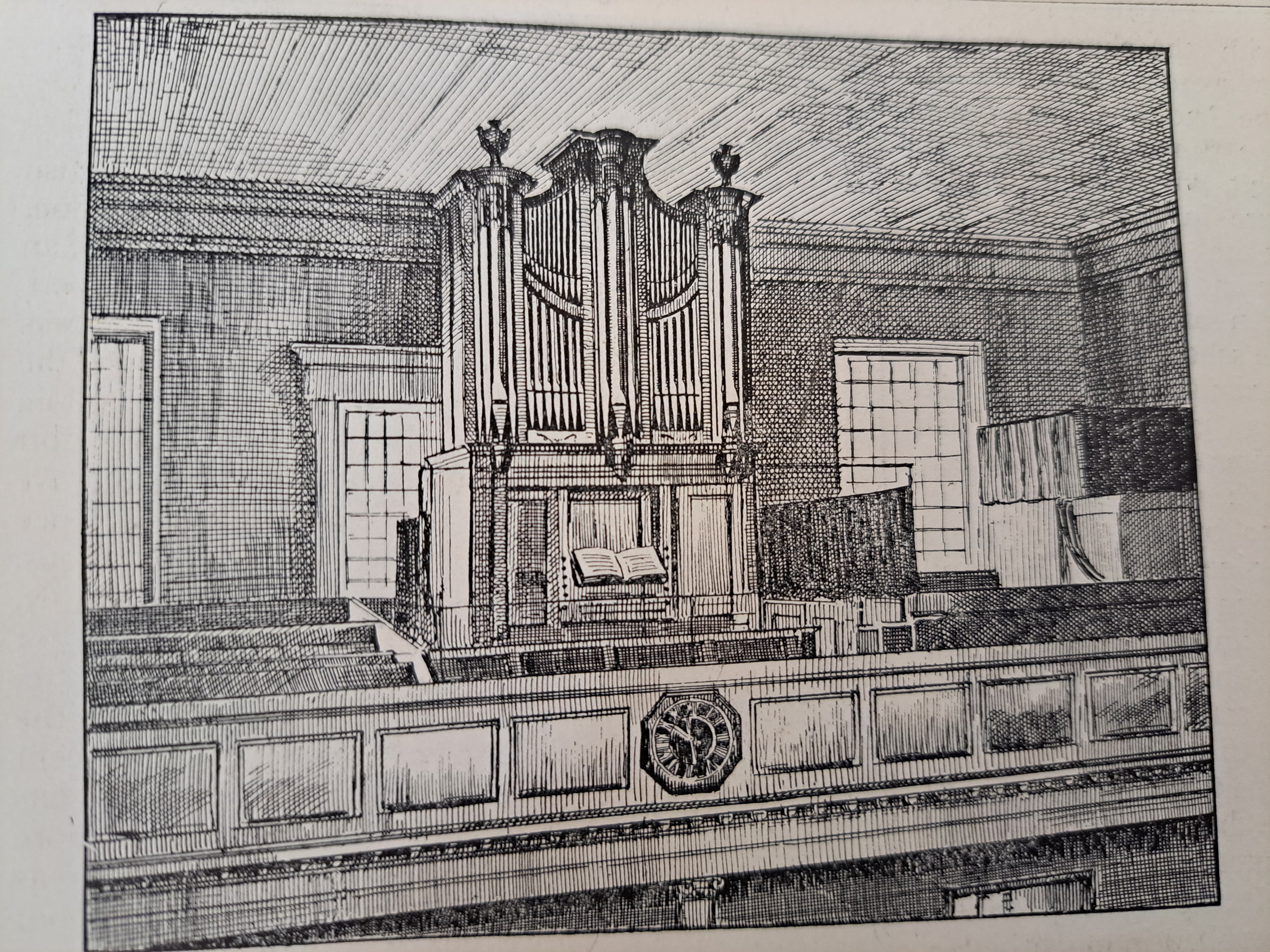
Apart from the windows there is nothing remaining that tells us how the interior of Eustace Street looked. However, about 110 years ago the Non-Subscribing Presbyterian magazine published two engravings of the interior without giving any source for these interesting views. The first showed the position of the pulpit.


The windows that look on to Eustace Street are topped by a gentle arch but according to the Non-Subscribing Presbyterian images the now demolished windows at the back of the building were flat topped. At the back of the church there was a gallery which housed a clock and the organ.
When Eustace Street was built times were difficult for Dissenters, they could frequently be the target of violent attacks, and from the earliest days there was a wall in front of the meeting-house. At some point before 1835 this was changed to the low wall and attractive railings which still stand there to this day. But neither the walls nor the railings were of much use when James Martineau added his name to a declaration in favour of Catholic emancipation which resulted in the windows being smashed by a mob.

It is good that this much has survived and that the space is obviously put to such good use. However, there has not always been such a clear understanding of the historical place of the meeting-house. Not long after the Ark was opened in 1995 members of Abbey Presbyterian Church were invited to hold a special service on the premises complete with baptisms of children as a way of connecting with the original history. This was a nice thing to do but rather misunderstood the nature of the history of the premises.

James Martineau was ordained in this meeting-house on 26 October 1828. Back in 1992 I contributed an article to the Inquirer entitled ‘Martineau’s First Ministry’. If you would like to read it click on this link: Martineau’s First Ministry
 velvethummingbee
Sent from Gmail Mobile on my iPad
LikeLike