Willaston School Nantwich

Willaston School Nantwich. Later St Joseph’s and Elim Bible College, Andrew Lamberton (ed.), Willaston and District History Group, Chester, 2015. ISBN 978-0-949001-56-6. £11.95.
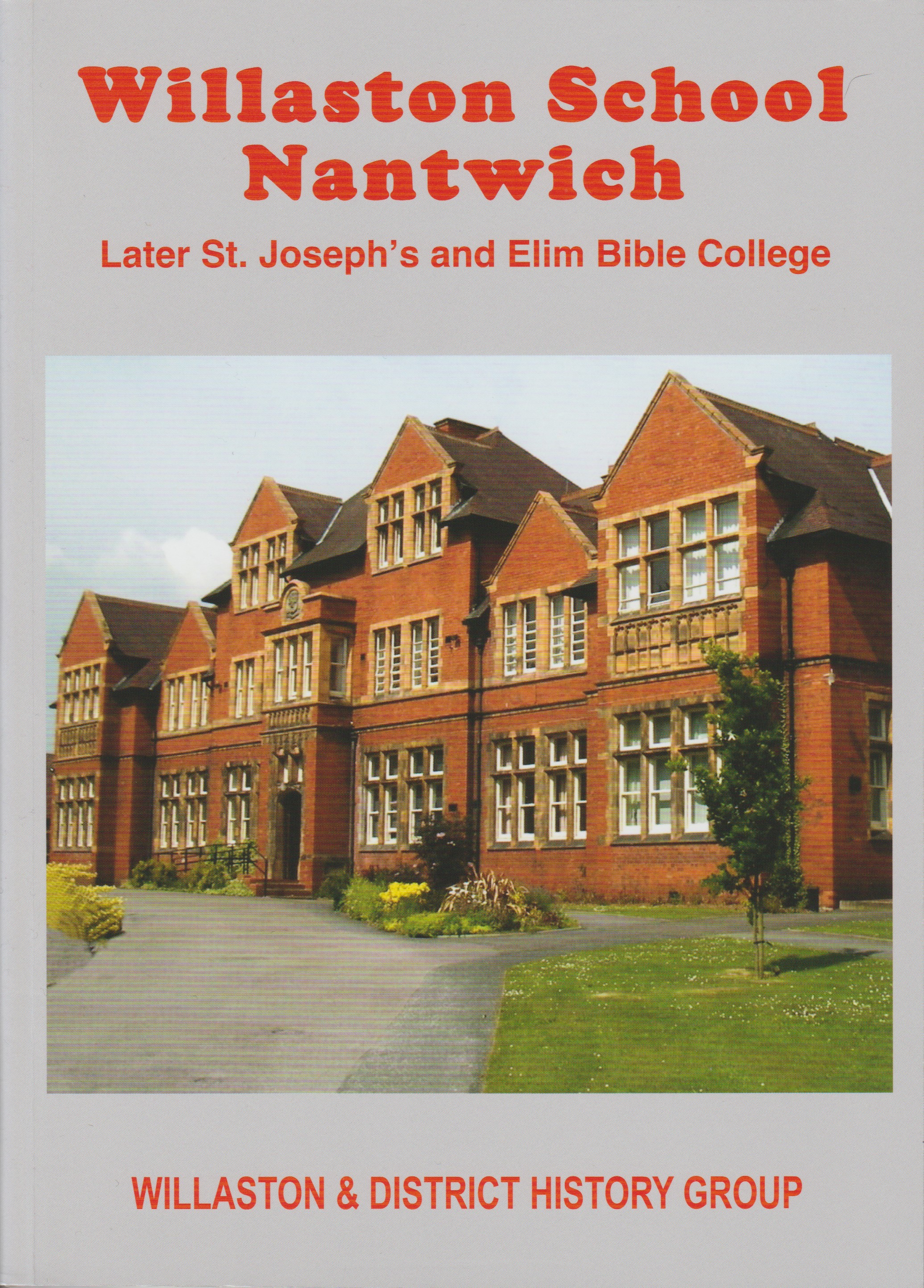
 

The cover of the book


The Willaston District History Group are to be congratulated on publishing this fascinating, well-illustrated book.


Willaston School was a relatively short-lived minor public school established under the provisions of the will of Philip Barker, a prominent member of the Unitarian Chapel in Nantwich. On his death in 1898, with no close living relatives, he left his house and estate to be turned into a school for boys of Unitarian families. He may also have intended to provide a service to the sons of Unitarian ministers and also hoped to create a feeder school for Manchester College, Oxford where pupils could go to train for the Unitarian ministry. In this last aim they don’t appear to have been successful, only three ex-pupils went into the Unitarian ministry.


Philip Barker, the founder of the school


Most of my knowledge of this school previously came from the writings of the late Rev John McLachlan and seeing the war memorial that he had moved to Harris Manchester College after the closure of the school. Founded right at the start of the twentieth century the school seemed to flourish in the decade before the First World War when so many ex-pupils joined up, many lost their lives and a large cohort of their number were decorated for gallantry – including a VC, three MCs, two Albert Medals, one DFC, a DSM and three further mentions in despatches. The VC was awarded posthumously to Philip Hirsch of Leeds. Later Sir Sydney Jones of Liverpool opened a memorial chapel in the school to those who had lost their lives in the war, and a new swimming pool was given in his memory by Philip Hirsch’s parents.
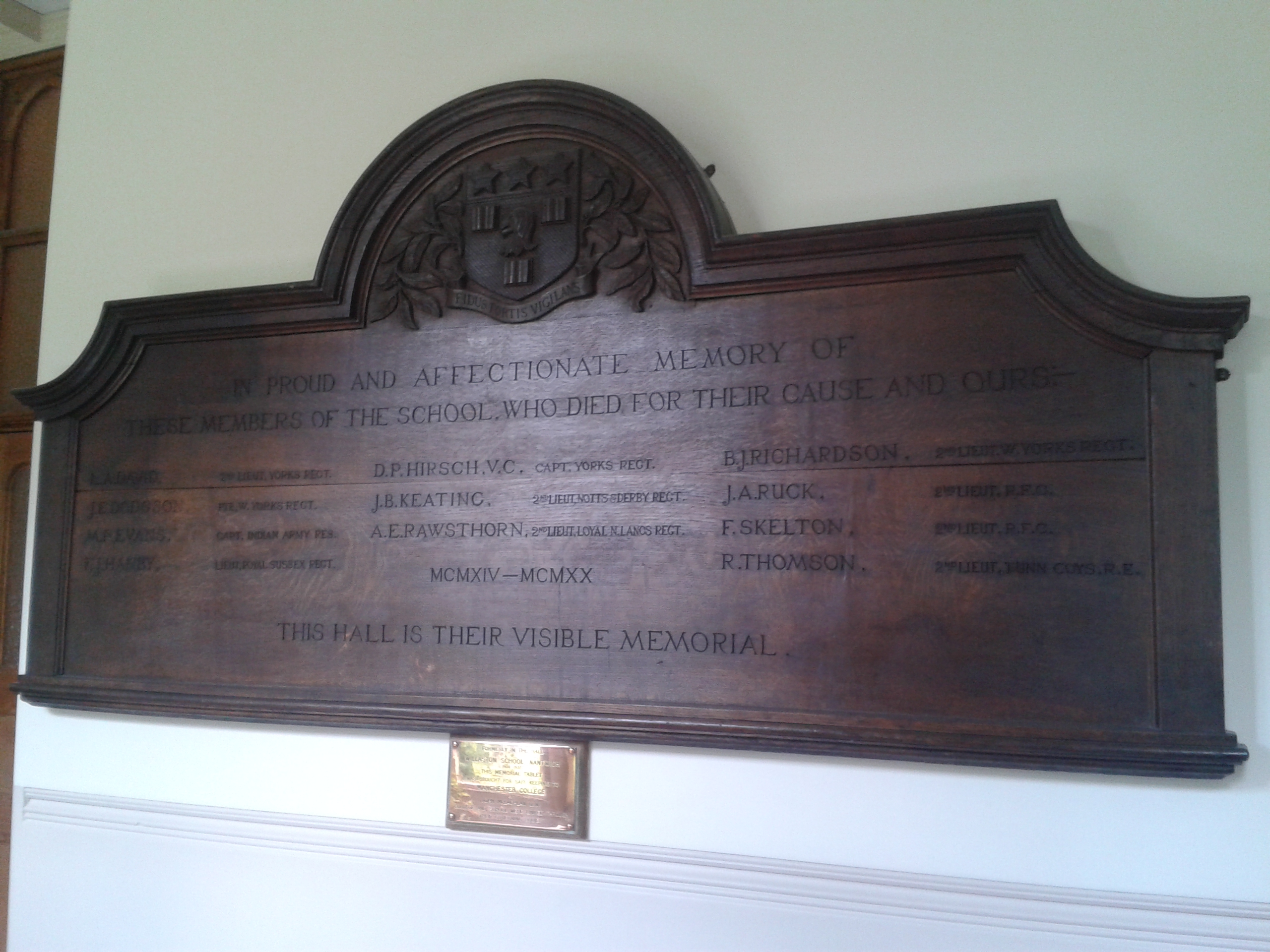
 

Willaston School Memorial - now situated in Harris Manchester College, Oxford
Willaston School Memorial – now situated in Harris Manchester College, Oxford


WIllaston School Nantwich is an impressive account of the life of a unique Unitarian educational institution from a vanished age. Based largely on the record of writings by four former pupils, including John McLachlan, the book gives a very full account of all aspects of school life including academic matters, sports, music, drama, excursions, clubs and societies and much more. The book includes a list of all the students and accounts of the lives of those who were killed in the First World War. What makes the book even more interesting is the tremendous selection of photographs taken from a collection of 230 glass lantern slides held at Harris Manchester College which really do give a very full picture of life in the school. The school was only operational from 1900 to 1937 but is clearly well remembered in the locality. After closure it became a Roman Catholic ‘Industrial School’ and later still became an Elim Bible College. But this book is mainly about its Unitarian era and is well worth reading.

It can be obtained from the Willaston District History Group via their website: http://www.willastonweb.co.uk/

 

Thy return posterity shall witness, years must roll away, but then at length the splendid sight again shall greet our distant children’s eyes

Back in August I wrote about the short but significant life of Jeremiah Horrocks (1618-1641) and his connection with the Ancient Chapel of Toxteth. You can read the post here:


https://velvethummingbee.wordpress.com/2015/08/09/jeremiah-horrocks-1618-1641/


Jeremiah Horrocks is interesting for a variety of reasons but it is a curious fact that as a scientist he has collected memorials in at least four churches around the country, including the Ancient Chapel of Toxteth in Liverpool and Westminster Abbey.


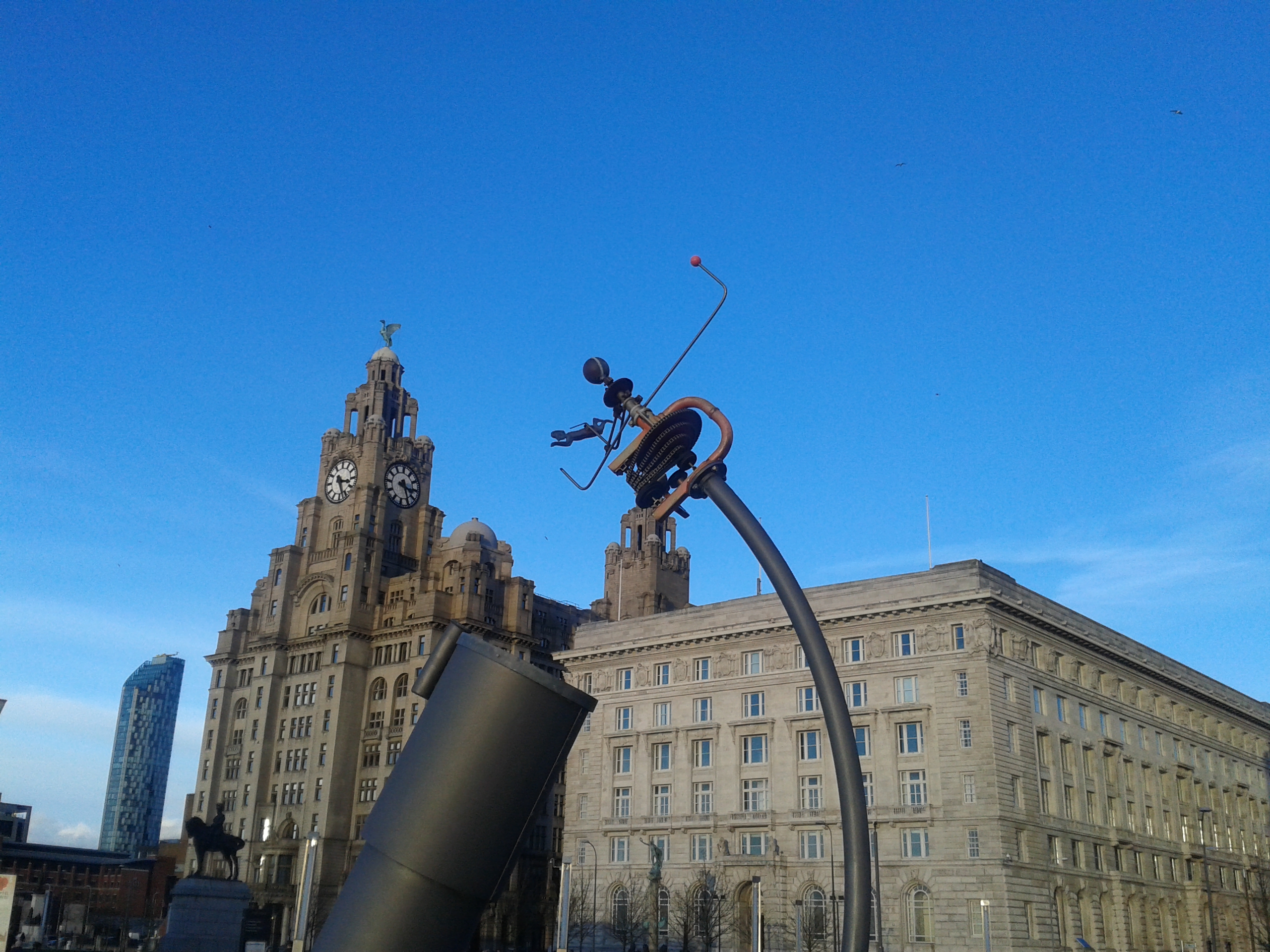
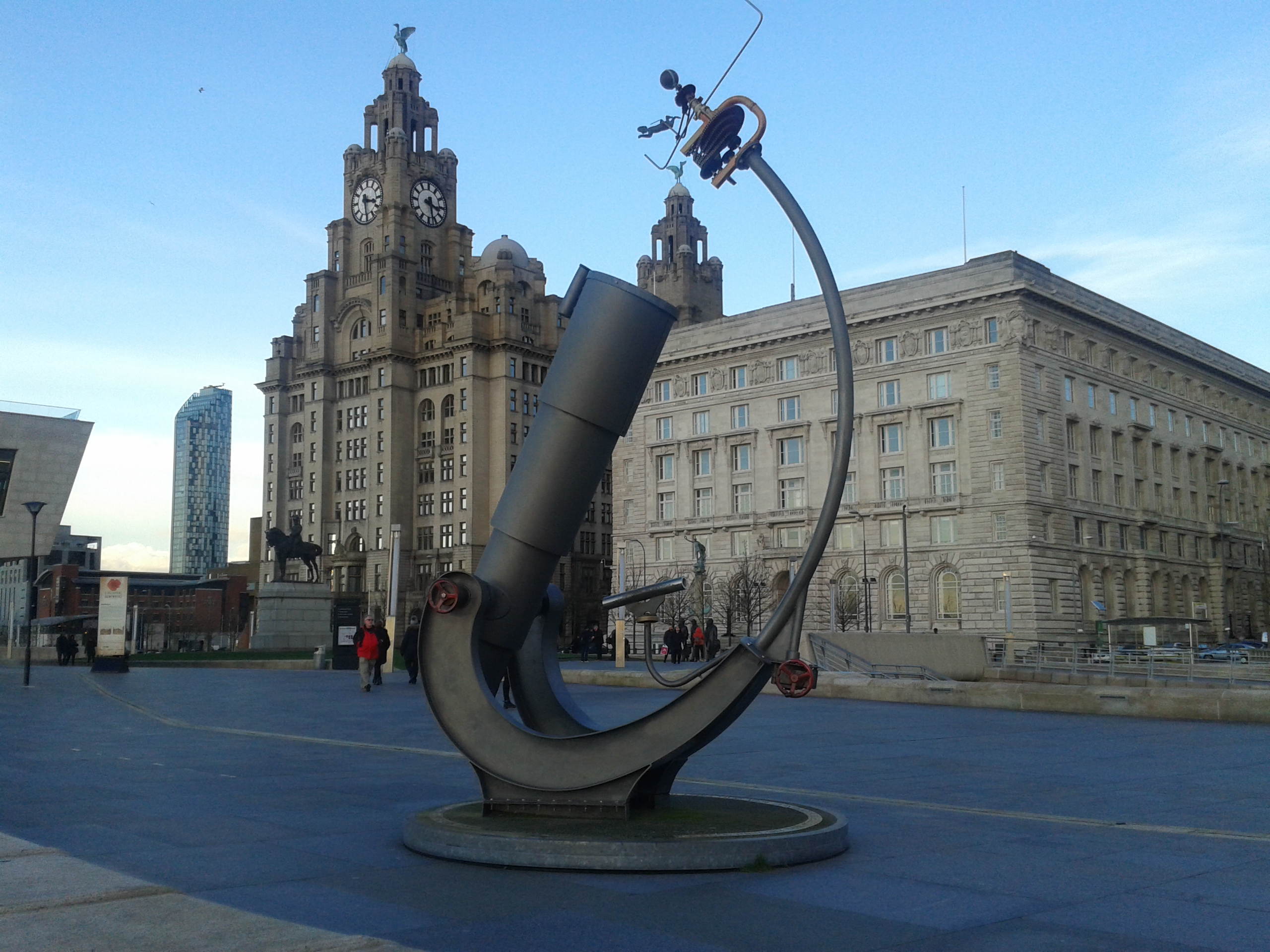
As I also mentioned in my last posting on this topic there are a number of other memorials and commemorations of him in different places, all of them dating from long after he lived. One of the most recent and impressive is near the Pier Head in Liverpool. This is an exciting installation, well-sited in front of the Liver Buildings amongst the ever-growing collection of statuary and memorials that is accumulating there.


Horrocks 04


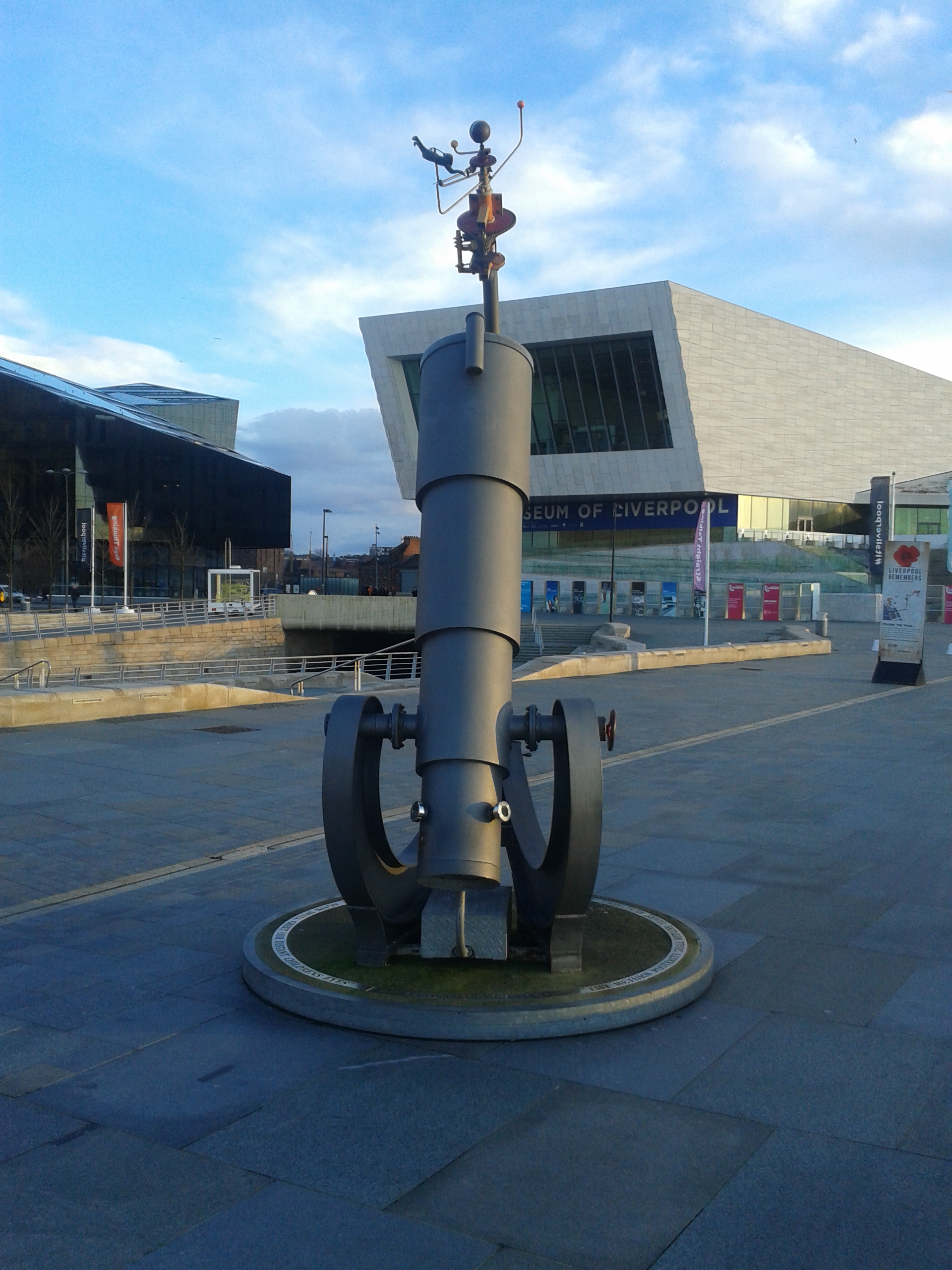
Entitled Heaven and Earth and created by Andy Plant the work was installed in 2011. The base is inscribed with the words:


Thy return posterity shall witness, years must roll away, but then at length the splendid sight again shall greet our distant children’s eyes

a quotation from Jeremiah Horrocks’ posthumously published book on the transit of Venus.


Horrocks 02


The work is both a sculpture and an orrery. Andy Plant (http://www.andyplant.co.uk/recent-work/) himself describes Heaven and Earth in these terms:

The sculpture has a working hand powered mechanical orrery, the position of Venus has been replaced by a copper angel version of Jeremiah and as his wings flap he orbits the other planets. Inside the large telescope there is a video animation of the life of Jeremiah by Tim Hunkin.


Horrocks 05


Unfortunately when I visited the sculpture on a crisp January afternoon this year none of these features were working. They may not have been intended to function beyond the time of the original exhibition of which the sculpture formed a part, I don’t know. But Tim Hunkin is something of a genius and it is great to think that some of his work is part of the installation. In fact you can read about how Tim Hunkin created A Short Life of Jeremiah Horrocks and see the animation on his own website here:


http://www.timhunkin.com/a151_sawmill%20animation.htm


Heaven and Earth is another exciting addition to the Liverpool waterfront, and another fitting memorial to a remarkable person.

Horrocks 01

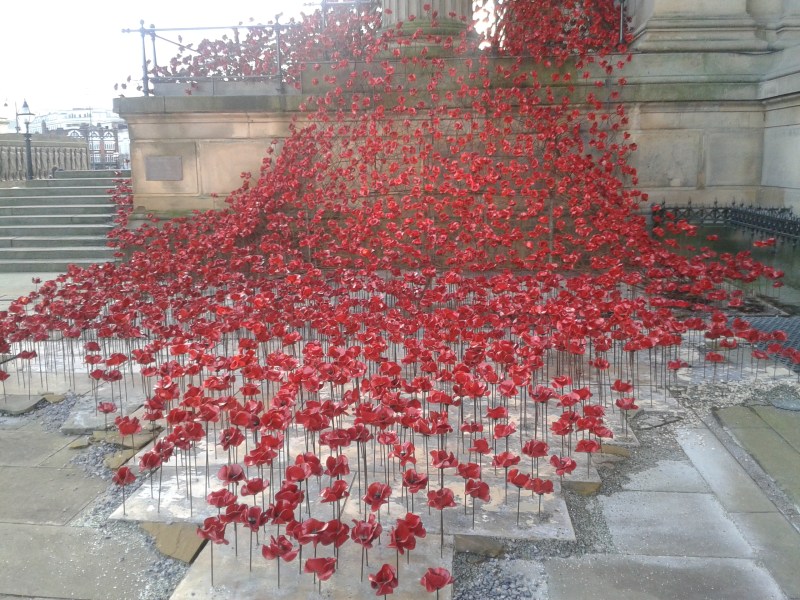
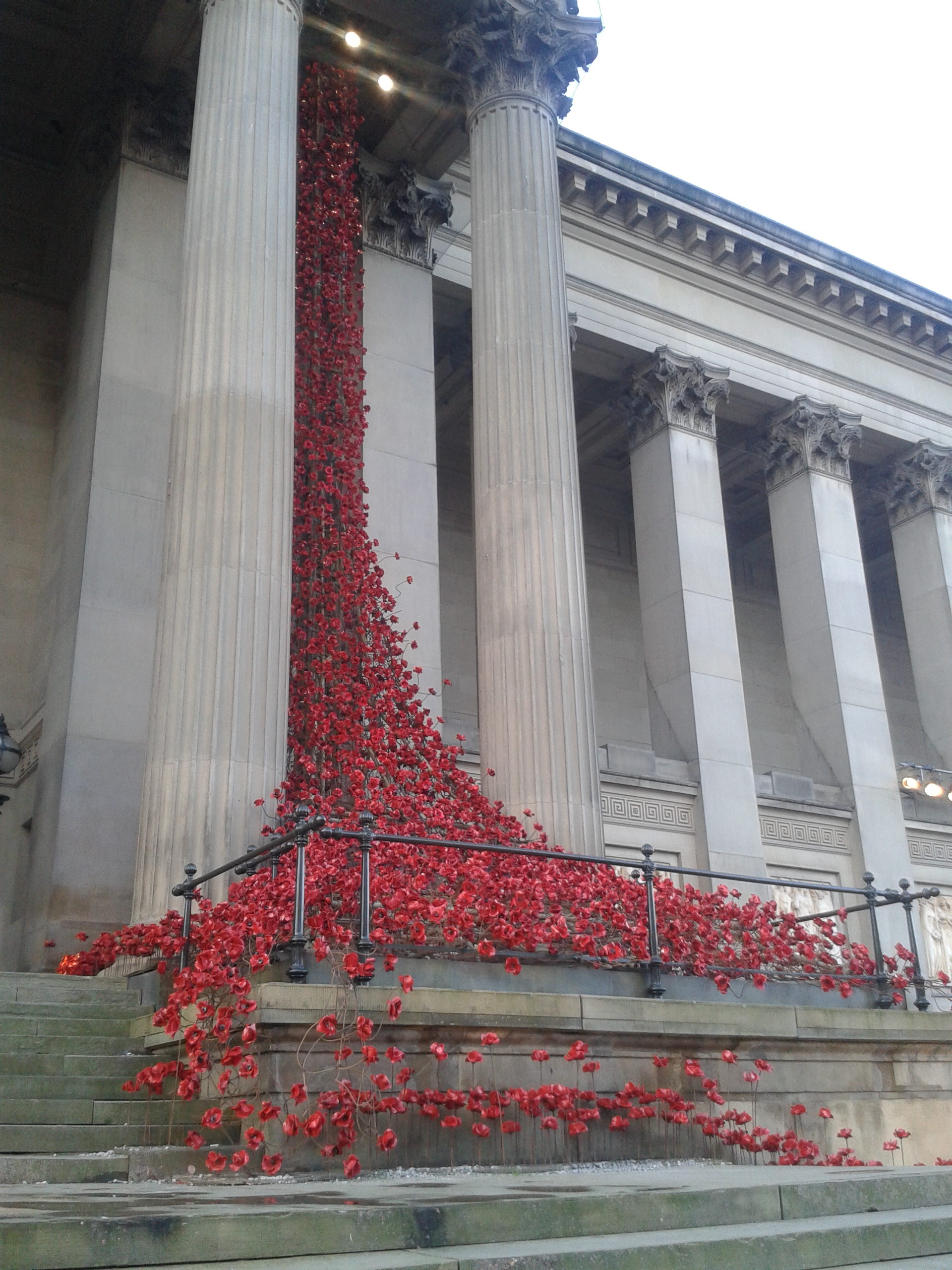
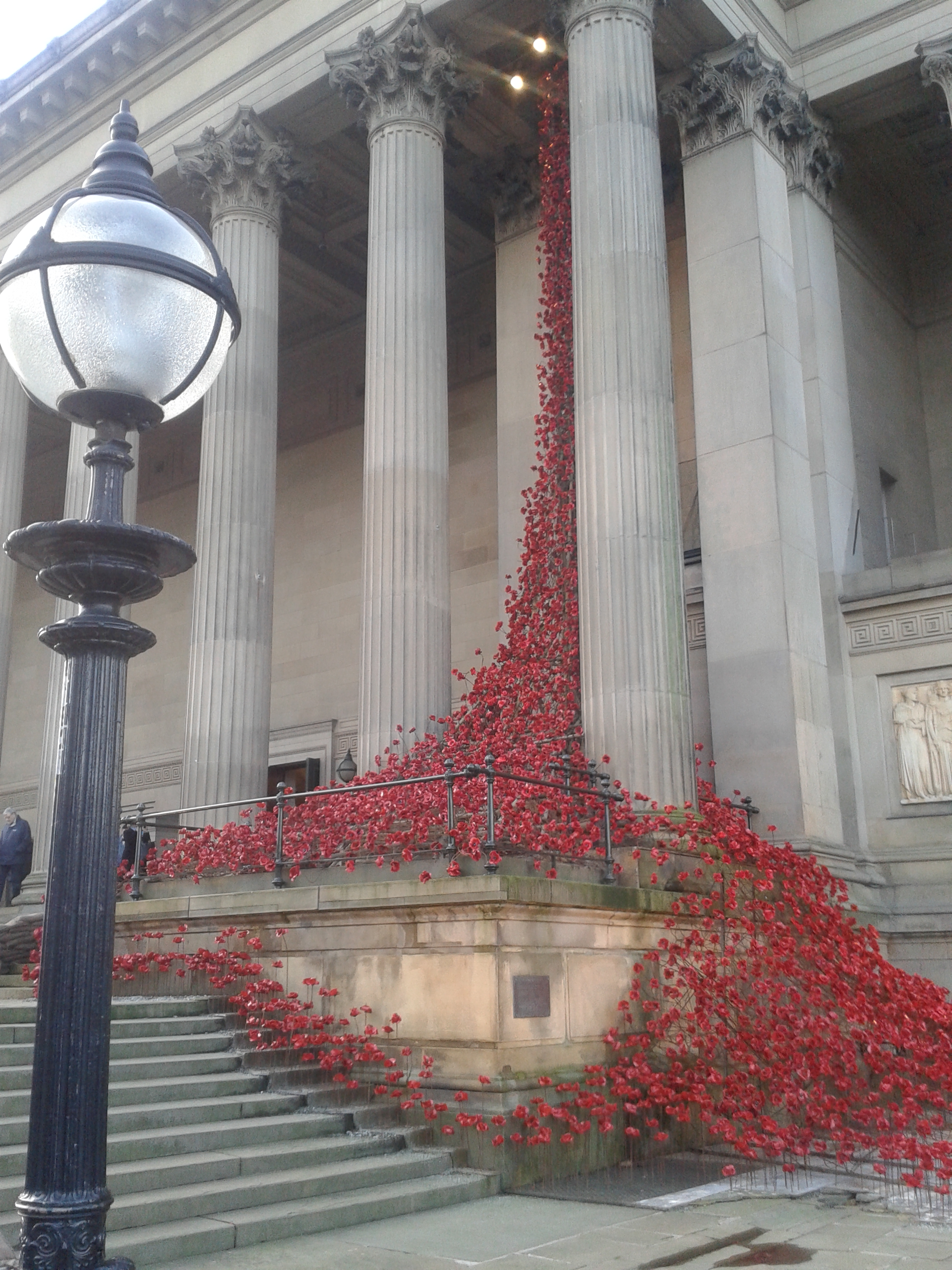
Poppies at St George’s Hall, Liverpool

In 2014 the installation ‘Blood Swept Lands and Seas of Red’ was in place at the Tower of London. It seemed to capture the popular imagination in a powerful way. Created by artist Paul Cummins and designed by Tom Piper 888,246 ceramic poppies cascaded out of the Tower of London to progressively fill the moat. Each poppy represented a British military fatality in the First World War.


The story of the poppies at the Tower of London can be seen here:

http://www.hrp.org.uk/tower-of-london/history-and-stories/tower-of-london-remembers/about-the-installation/


It is interesting how art and remembrance could combine so effectively in people’s minds and the poppies from the installation have continued to be used in different ways around the country since, part of the installation moving to St George’s Hall in Liverpool in November.


20160110_143926


I was fortunate to be able to see the ‘Weeping Windows’ installation in Liverpool shortly before it ended on 17th January 2016.


20160110_144022


Several thousand poppies poured from a high vantage point in the Hall on to the ground below. As such a significant building St George’s Hall made a magnificent backdrop for the poppies and over 300,000 visitors are estimated to have travelled to see it in place.


20160110_144046


As the notice at the installation made clear this was a particularly appropriate venue for such a display. The plateau outside St George’s Hall became the rallying point for the men who formed the Liverpool Pals under the direction of Lord Derby in the First World War. In March 1915 Lord Kitchener inspected nine battalions of Liverpool Pals formed up outside the Hall, local men who had volunteered to serve together. In the years after the First World War the memorial for the dead of the city was placed outside the Hall and near here the installation was placed.


20160110_144429


Altogether a moving and impressive display.

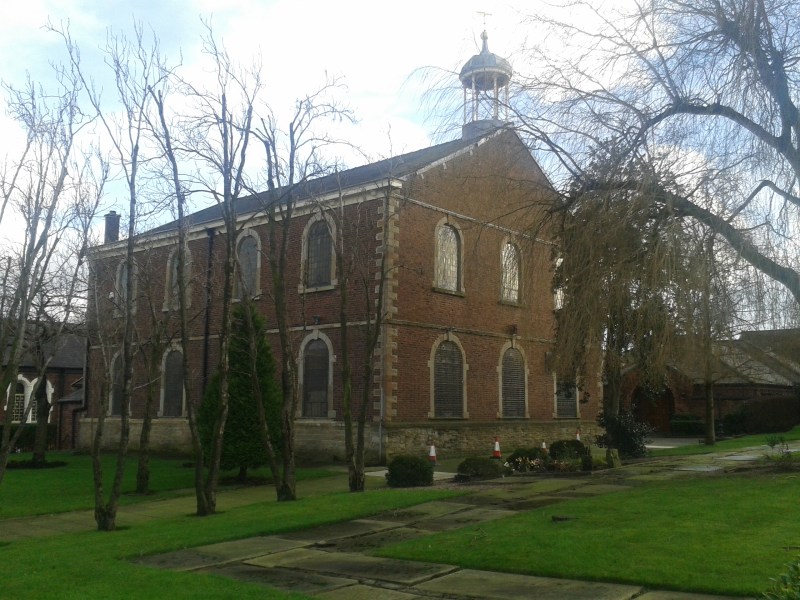
Chowbent Chapel

The building of Chowbent Chapel in 1722 speaks volumes for the determination of Lancastrian dissent in the early eighteenth century. Having retained possession of the chapel of ease after the ejections of 1662 it wasn’t until the 1720s that the local landlord managed to expel dissenters from the essentially Anglican chapel, allegedly because of the part played by the minister ‘General’ James Wood and his congregation in suppressing the Jacobite rebellion of 1715.

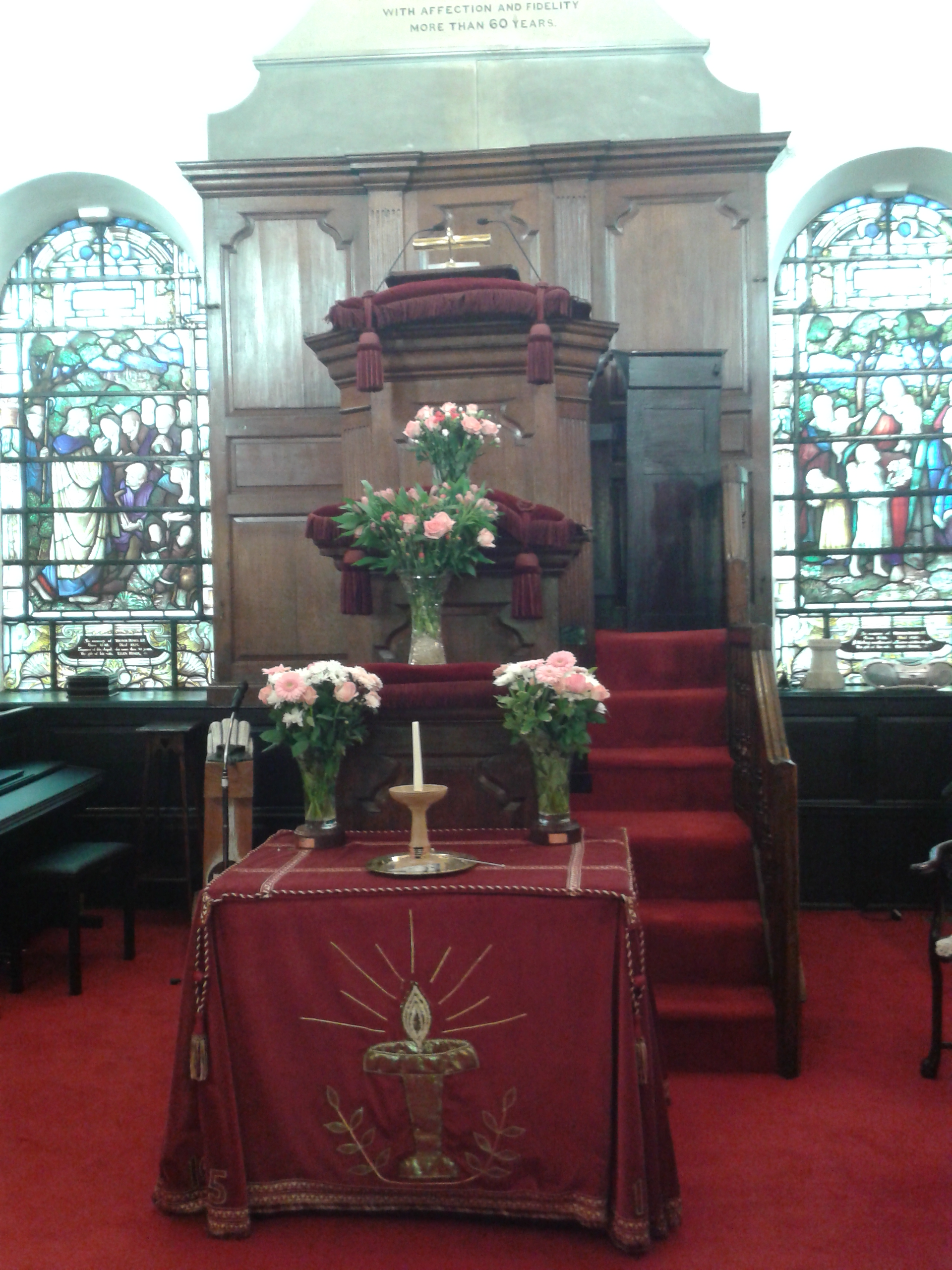
The eighteenth-century three decker pulpit


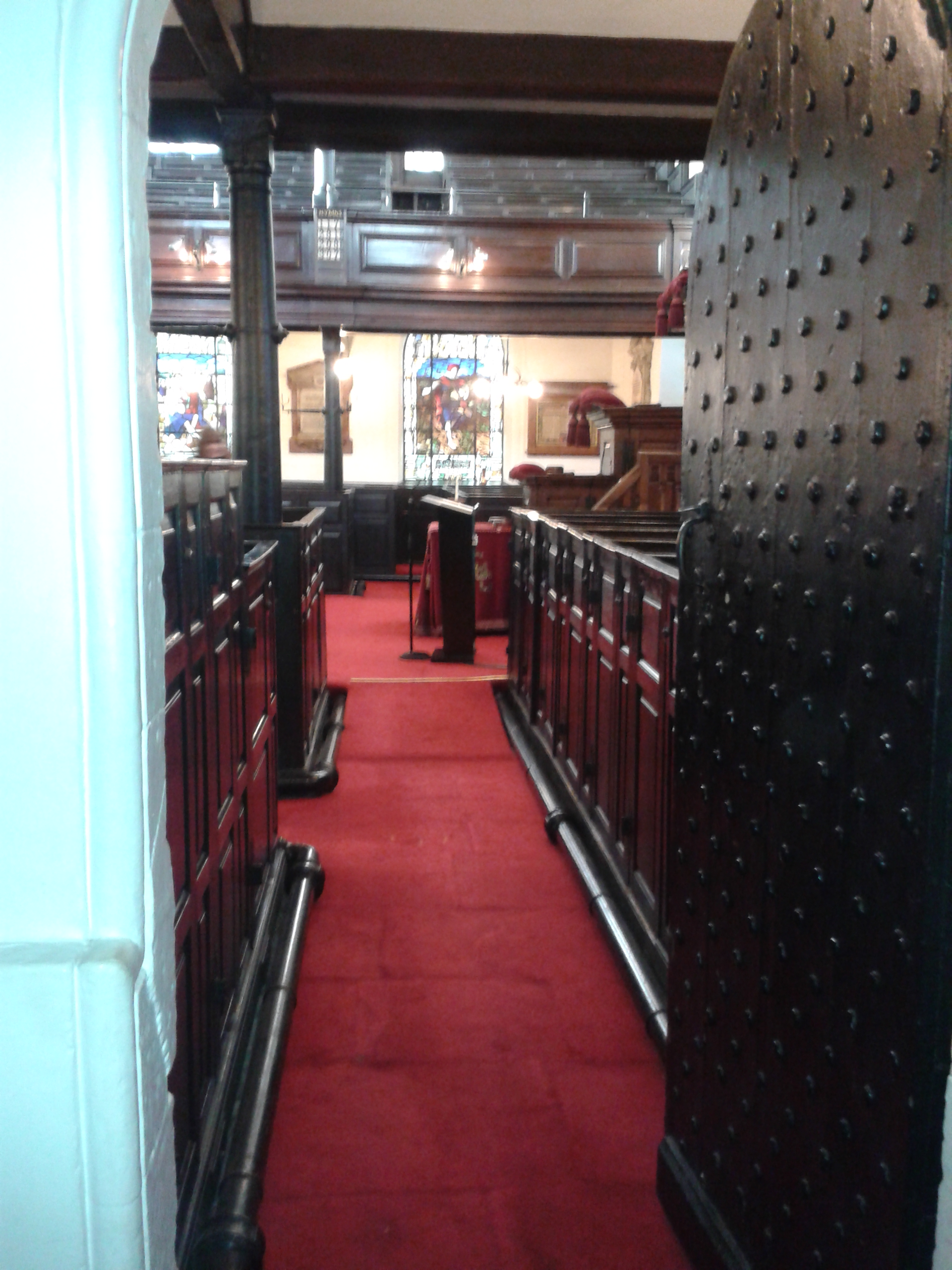
The new chapel was built on land owned by the Mort family who appear to have been generous supporters and benefactors and who had a great importance in Lancashire non-conformity in general. But the chapel, to me at least, always has something of the sense of a fortress about it – the solid, square walls, the ancient oak pillars, the studded door into the church, the large memorial to ‘General’ Wood above the pulpit.

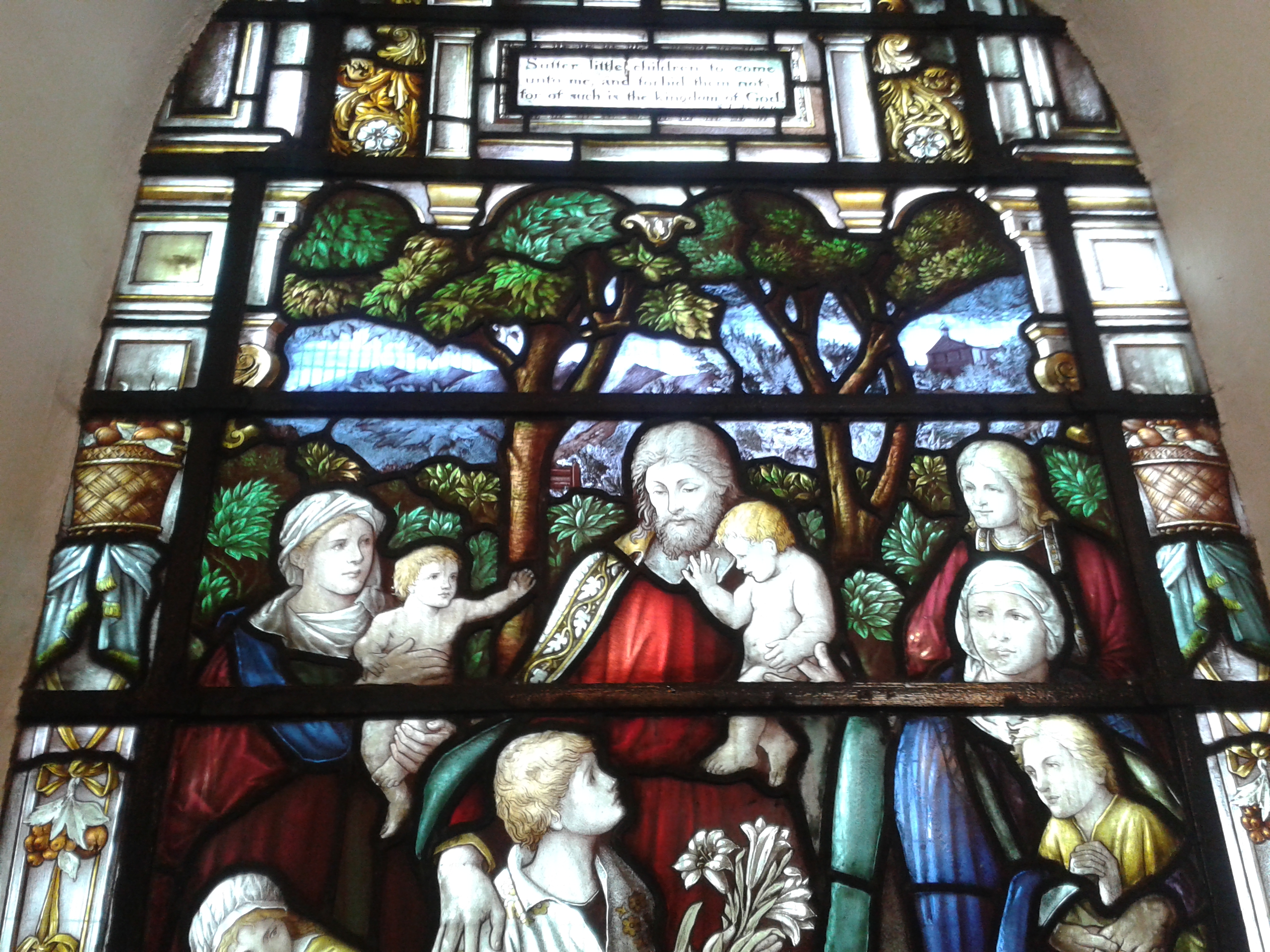
But it is also full of interesting details that would be easy to miss. There is a large amount of stained glass but I had forgotten about the appearance of an image of the chapel itself in the window depicting Jesus and the children. The three decker pulpit is incredibly impressive and with the traditional pulpit cushions very much looks the part still. You can’t miss the pulpits and reading desk but you might miss the small section of panel cut out from behind the top pulpit. Here it was said they had to make space for the door to open wider in order to admit the well-fed frame of the Rev Thomas Belsham when he visited in the nineteenth century!


The Victorian stained glass window featuring the picture of the chapel


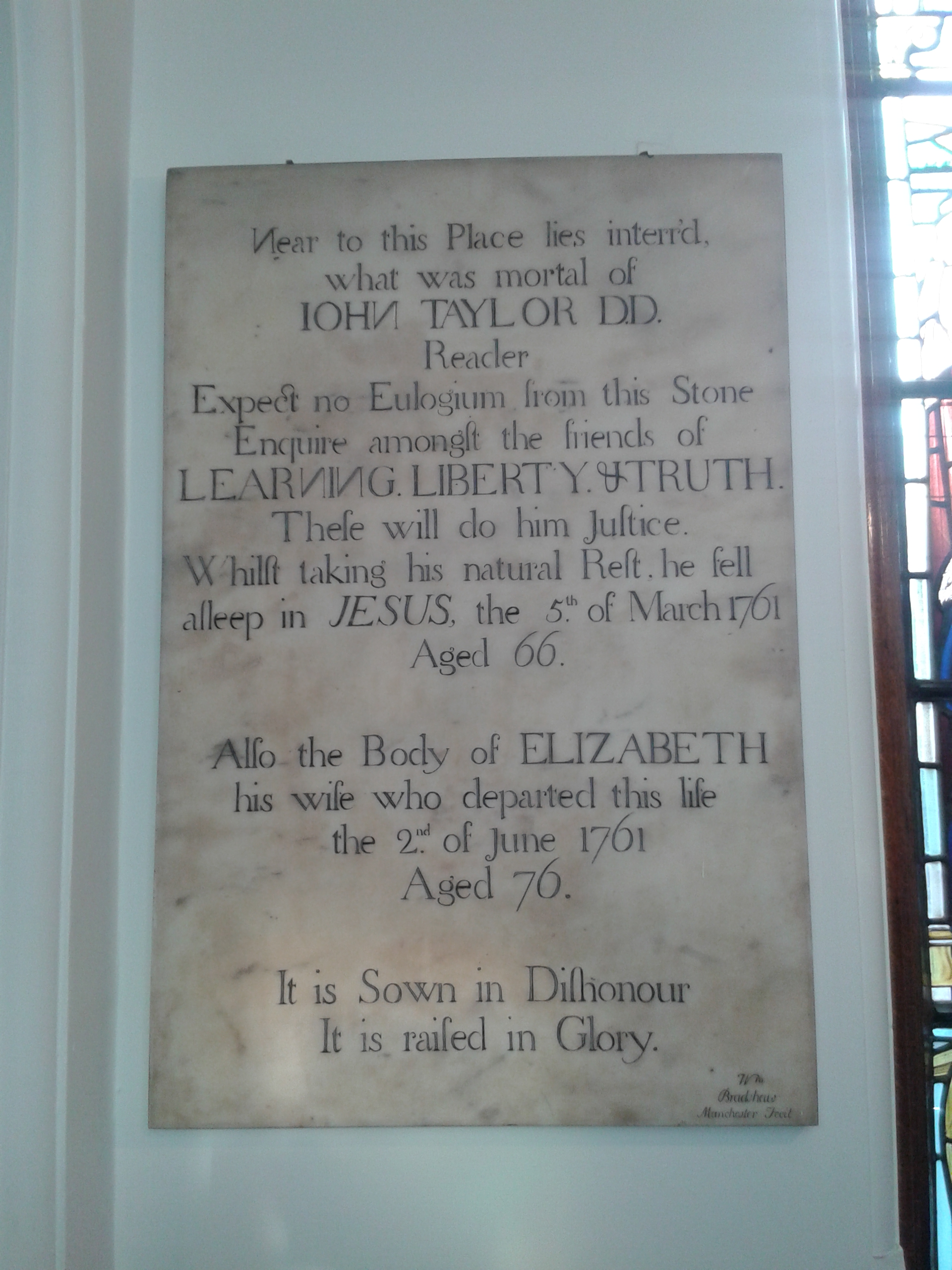
It has been some years since I was last at the chapel and I had a recollection of seeing the grave of the Rev John Taylor laid flat in the grounds of the chapel. John Taylor being the first Tutor in Divinity at the Warrington Academy. But this is not the case – John Taylor is certainly buried there but his gravestone was removed when the front of the church was extended to make way for the organ and vestibule in 1901. There is however, a touching memorial to him and his wife.


Memorial to John and Elizabeth Taylor


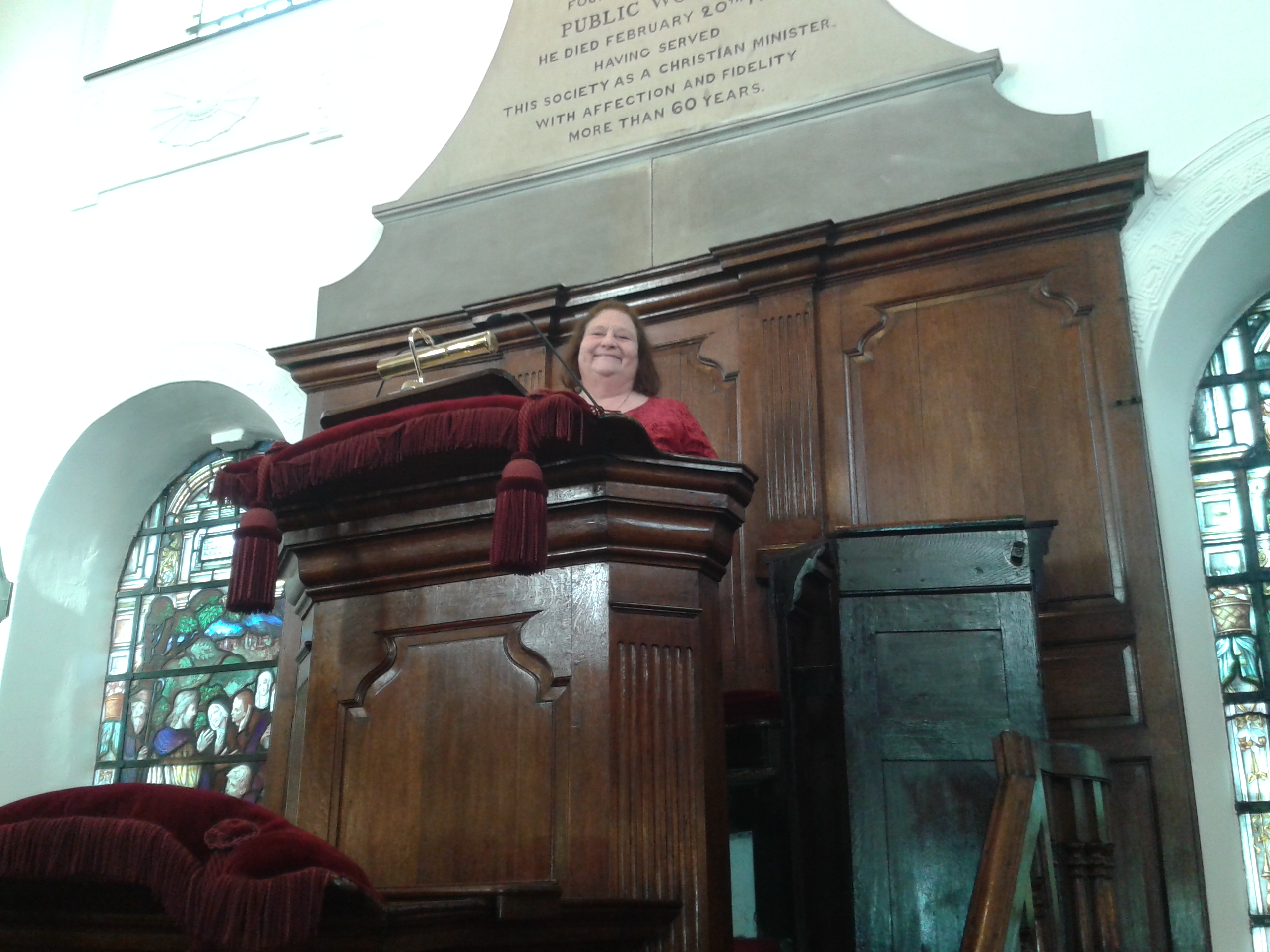
The reason for my visit in January was to be part of the congregation to celebrate 25 years of ministry by the Rev Brenda Catherall and I was delighted to play a small part in that special service. Brenda has been minister there since 2007 following ministries in Bank Street, Bolton and Monton and has given 25 years of devoted service to the Unitarian ministry and touched the lives of a great many people through her outstanding work. There is something so appropriate about her ministry in the congregation in which she grew up and which has always had a special place in her affections.


Rev Brenda Catherall in the pulpit


The chapel encapsulates the proud tradition of dissent and non-conformity in the town and it is so encouraging to see the congregation in such good heart and in such good hands.


The studded door from the vestry to the chapel

Ordination and Induction at Ullet Road

It was a tremendous privilege and pleasure to take part in the induction and ordination of the Rev Philip Waldron as minister of Ullet Road Church, Southport and Wirral Unitarians as part of the Merseyside Partnership at Ullet Road on Saturday, 9th January.


Rev Phil Waldron in the chancel


It was an impressive service that drew on the traditions and ethos of Unitarianism on Merseyside and which resonated effectively with the august building that is Ullet Road Church. It is testimony to the high regard in which Phil is held by his colleagues that so many ministers took part and that so many people were present. The music supplied by the organ and the singing by the choir Liverpool Voices were also of a very high standard and added greatly to the service.


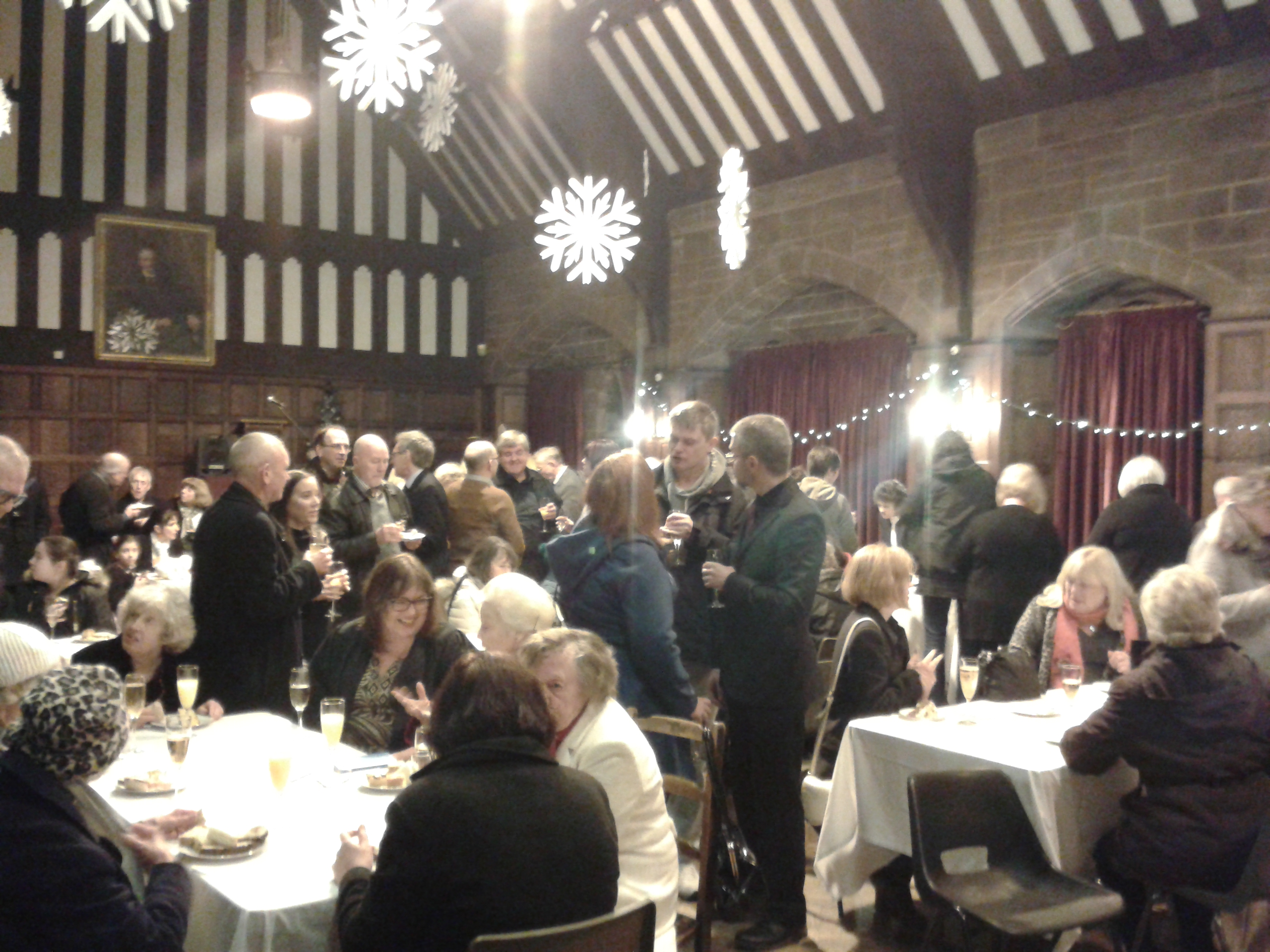
Refreshments after the service in the hall


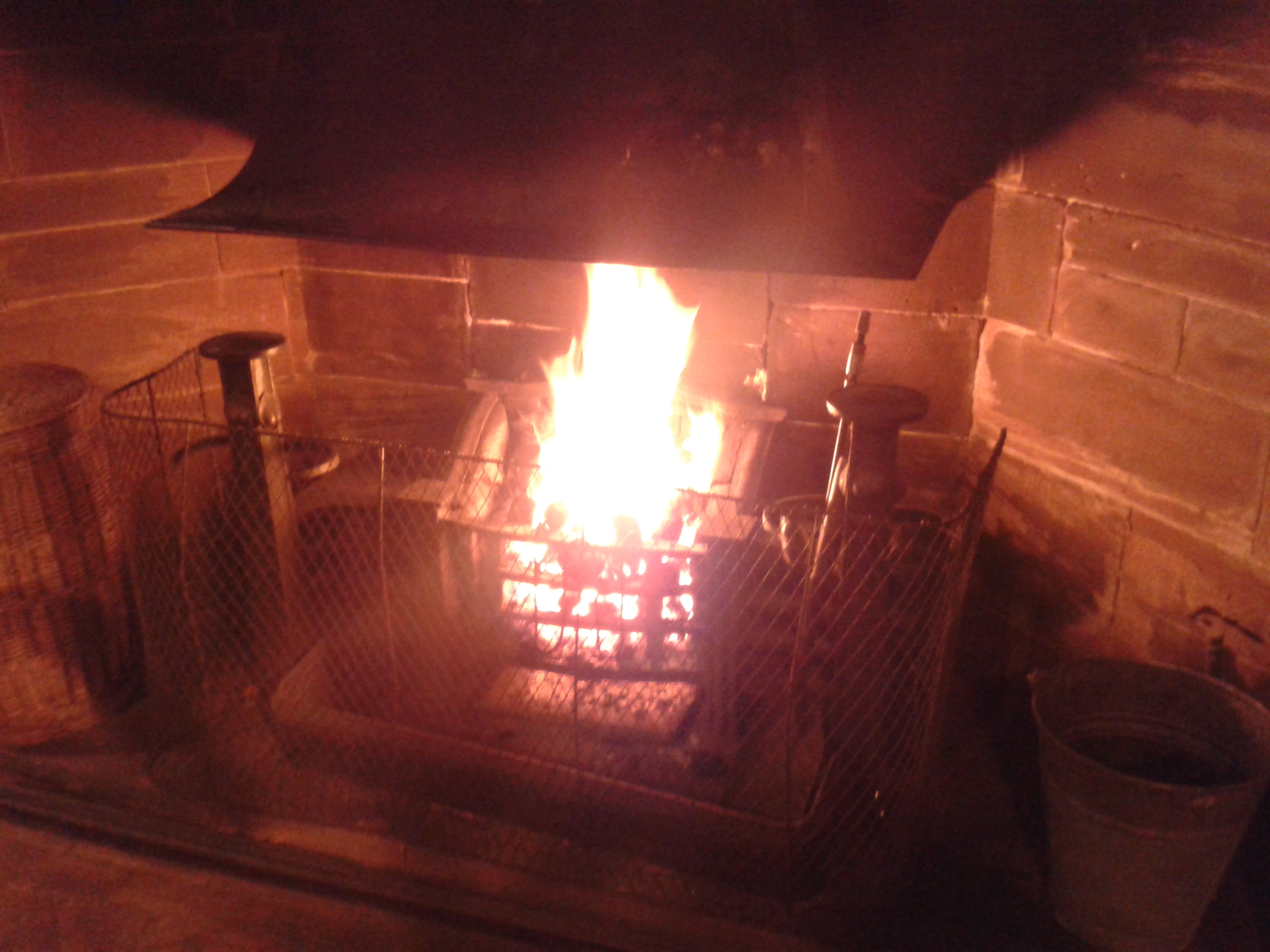
Ullet Road is certainly one of the most remarkable sets of buildings within the Unitarian tradition in England and ranks highly amongst all branches of dissent. The hall, designed by Percy Worthington and built slightly later than the Church at the start of the twentieth century, is a delight in itself. On occasions such as this (with appropriate winter decorations left over from a wedding) it really comes into its own with the feel of something like a medieval hall, not least because of the open fire that provides such a focus.


The fireplace in the hall which stands beneath the Arms of Sir John Brunner and Sir Henry Tate


In the course of his own statement Phil quoted the Rev Stanley Mellor, the highly successful minister of Hope Street Church in the first half of the twentieth century, which encapsulates some of his own aspirations for ministry:


“[the purpose] of the Christian religion, is the awakening of the soul to the discovery of its own eternal character, the conversation of the heart to knowledge of its other-worldly destiny and duty.


The congregation are much blessed to possess such a building that reflects this quest so effectively and Merseyside District can look with satisfaction upon such an auspicious start to a new ministry.

Some corner of a foreign field

The Faith and Freedom Great War project continues to expand and now contains around 75 separate items. One recent addition is the video made in 2014 by John Featherstone with input from Peter and Kath Faulkner, the then minister, the Rev Patrick Timperley, and members of the Old Meeting, Mansfield as a tribute to the memory of the war dead of their congregation in the First World War.


Some twenty-two chapel members are listed on the war memorial as having given their lives in the First World War. As other churches have done in this time of the centenary of the Great War the current congregation have researched the lives and circumstances of the men who were killed and tracked down the last resting place of each one of them. The Mansfield folk have also gone one step further and visited the grave of each soldier wherever that was possible. In 2014 a group of Mansfield members travelled to each grave or memorial of a chapel member and placed a poppy there while speaking the words:


We place this cross in thanks and in memory of….a brave son of Mansfield, whose name lives on, and is recorded on the wall of the chapel he attended.


The whole project was also recorded and can be seen on a beautifully put together video. As is so often the case with such research it is deeply poignant. Many of the soldiers were very young, their ages are given on the video along with their address and pre-war occupation – miners, colliery men, a pork butcher’s assistant, a hosiery hand, a farm labourer, and so on. Where there was no known grave the group from Mansfield visited the memorial – such as those at Thiepval and the Menin Gate – which bears the name of those killed in those battles and they placed their poppy there. They visited all the soldiers’ graves and memorials in France and Belgium. One soldier was killed in Iraq and his grave lies in the Baghdad North Gate War Cemetery, he was remembered by a poppy being placed on the Iraq Roll of Honour in the head office of the Commonwealth War Graves Commission in Maidenhead.


In carrying out this act of remembrance they followed in the footsteps of others from the chapel who had gone before. One mother whose young son was killed at Ypres visited the battle site with a party of bereaved mothers in 1920. She returned with a stone from the ruins of Ypres which was incorporated into the wall of the chapel as a memorial.


The circumstances of all the soldiers who were killed were traced, with the exception of one who proved elusive yet is still remembered, as the video says. The grave that is closest to home is in Nottingham Road Cemetery, Mansfield. Here was buried Ernest Davenport a private in the Notts and Derby regiment. Aged just 20 when he died, before the war he had worked in an iron foundry. He had been wounded in the Easter Rising in Dublin and had died of his wounds on 28th May 1916. It was at his grave, near the anniversary of the outbreak of the war one hundred years before, that the chapel members as a whole gathered for an act of remembrance of all those killed.


The video can be viewed here:


The Faith and Freedom Great War Project can be visited here:

http://www.faithandfreedom.org.uk/GWindex.htm


The detail at the top of this page is from the Cenotaph, Liverpool, designed by Lionel Budden and Herbert Tyson Smith.

Blue Plaque for the Rev Henry Montgomery

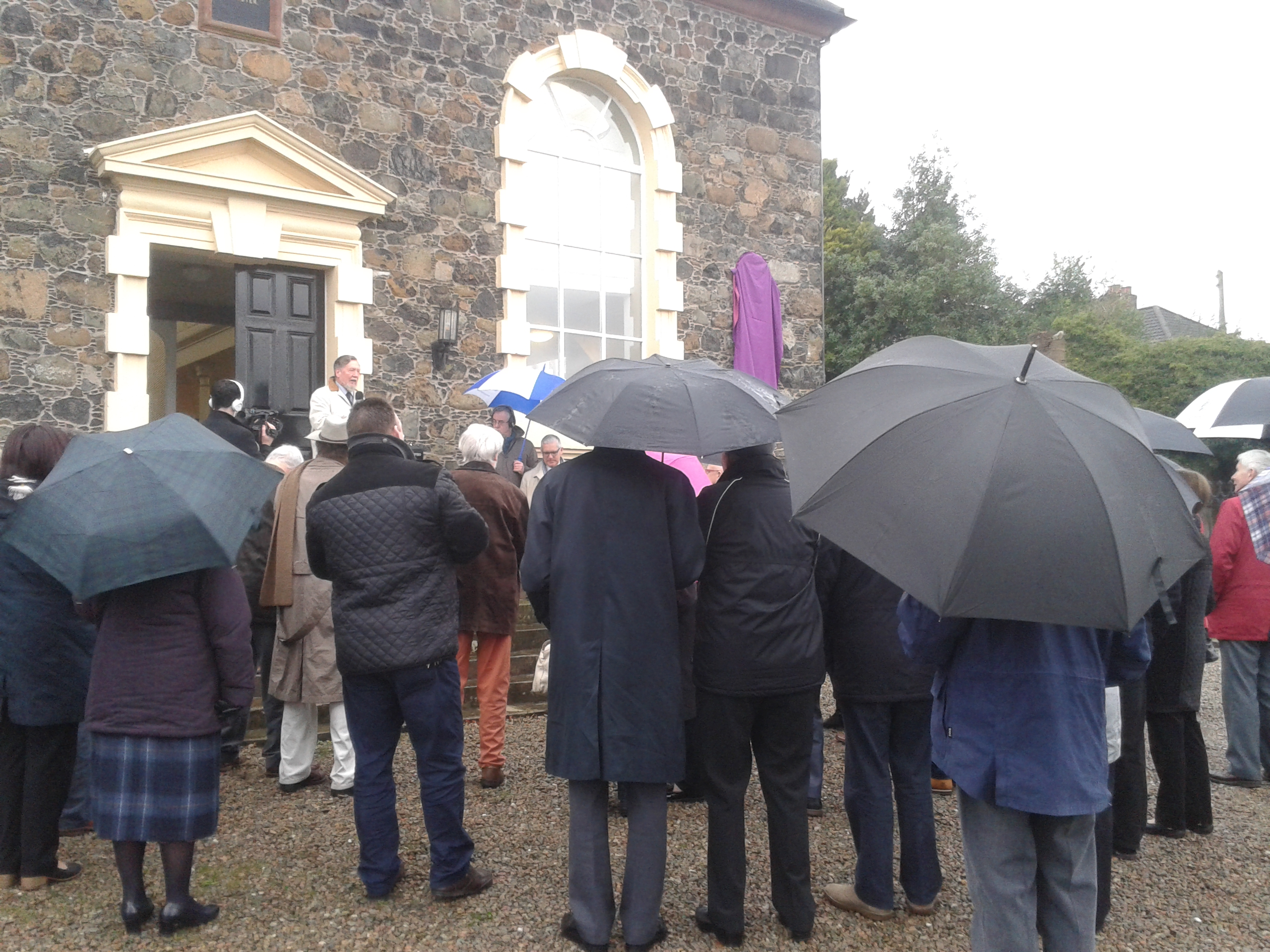
A good number of people braved winter weather, heavy traffic and seasonal busy-ness to attend the unveiling of the Ulster History Circle Blue Plaque commemorating the Rev Henry Montgomery (1788-1865) on the walls of his old meeting house in Dunmurry on 18th December 2015. Appropriately enough the unveiling was done by the Very Rev William McMillan, Henry Montgomery’s successor for 45 years and undoubtedly the person most knowledgeable about his life and career.


People gather outside the meeting house in anticipation of the unveiling of the blue plaque


The premises and grounds of Dunmurry have always been immaculately kept and the meeting house provided a very suitable space for the speeches immediately after the unveiling. This has been a year of commemoration marking the 150th anniversary of Henry Montgomery’s death and, as Ian Crozier observed in his speech, the Ulster Scots Agency had assisted in the republication of Bill McMillan’s booklet on Montgomery, A Profile in Courage, first published fifty years ago and still the most useful introduction to his life and work.


As was also pointed out in the speeches this is not the first blue plaque to a Rev Henry Montgomery (the other one being the founder of the Shankill Road Mission), and it is certainly not the first blue plaque for a Non-Subscribing Presbyterian, but I think it is the first blue plaque for a Non-Subscribing Presbyterian minister (although at least two sons of the manse have already made it onto a blue plaque).


Rev Mac unveils the plaque


In his speech the Rev Bill McMillan quoted comments made by the Banner of Ulster, a newspaper not sympathetic to Montgomery’s religious position. At the time of his death it said:


Never did his powers of eloquence shine out more conspicuously than when he was denouncing tyranny, in other lands or his own; or pleading for the rights of humanity. He contended that a man’s religion should never subject him to penalty or inconvenience and he claimed liberty alike for Protestant and Catholic, for Christian, Jew and Deist.


Very much a pioneer and champion of what today would be called human rights it seems fitting that he should be remembered. Henry Cooke, his old opponent, after all has a prominent statue, Henry Montgomery certainly deserves his plaque.


Rev Henry Montgomery (1788-1865) . Minister, teacher, reformer

Faith and Freedom, a journal of progressive religion

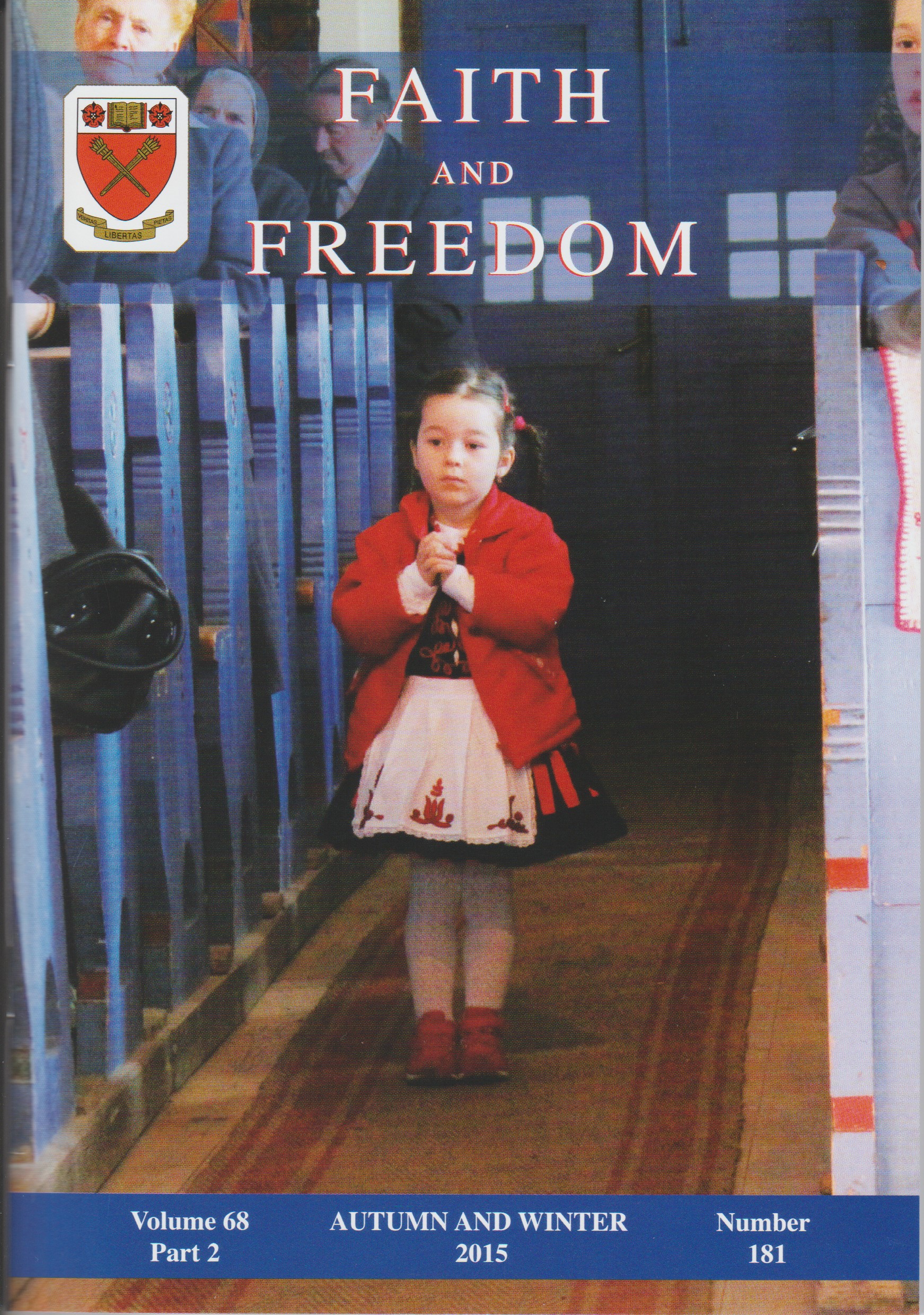
This latest issue of Faith and Freedom has a special cover. Taken from the above photograph by Márkó László it shows a scene from a Thanksgiving celebration at the Unitarian congregation in Oklánd, Hargita county, in Transylvania. This is a first for Faith and Freedom and ties in with a number of reviews in the Autumn and Winter 2015 issue which deal with the faith and practice of the Hungarian-speaking Unitarian churches in Romania. Márkó László’s photographs very effectively capture something of the cultural identity of the Unitarian folk there as well as their deeply held faith. There are more of his pictures in the 2016 Calendar.

The cover of the Autumn and Winter 2015 issue of 'Faith and Freedom', Vol. 68 Part 2, Number 181
The cover of the Autumn and Winter 2015 issue of ‘Faith and Freedom’, Vol. 68 Part 2, Number 181


Once again Faith and Freedom itself contains illustrations this time with a portrait of founding editor Eric Shirvell Price found inside and a photograph of the Rev Percival Godding, whose account of his time as a prisoner of war during the First World War also features.

An annual subscription costs £15 per annum (US $30 in the United States and Canada) and you can pay by post or online via PayPal. All details can be found on our website at:

http://www.faithandfreedom.org.uk/

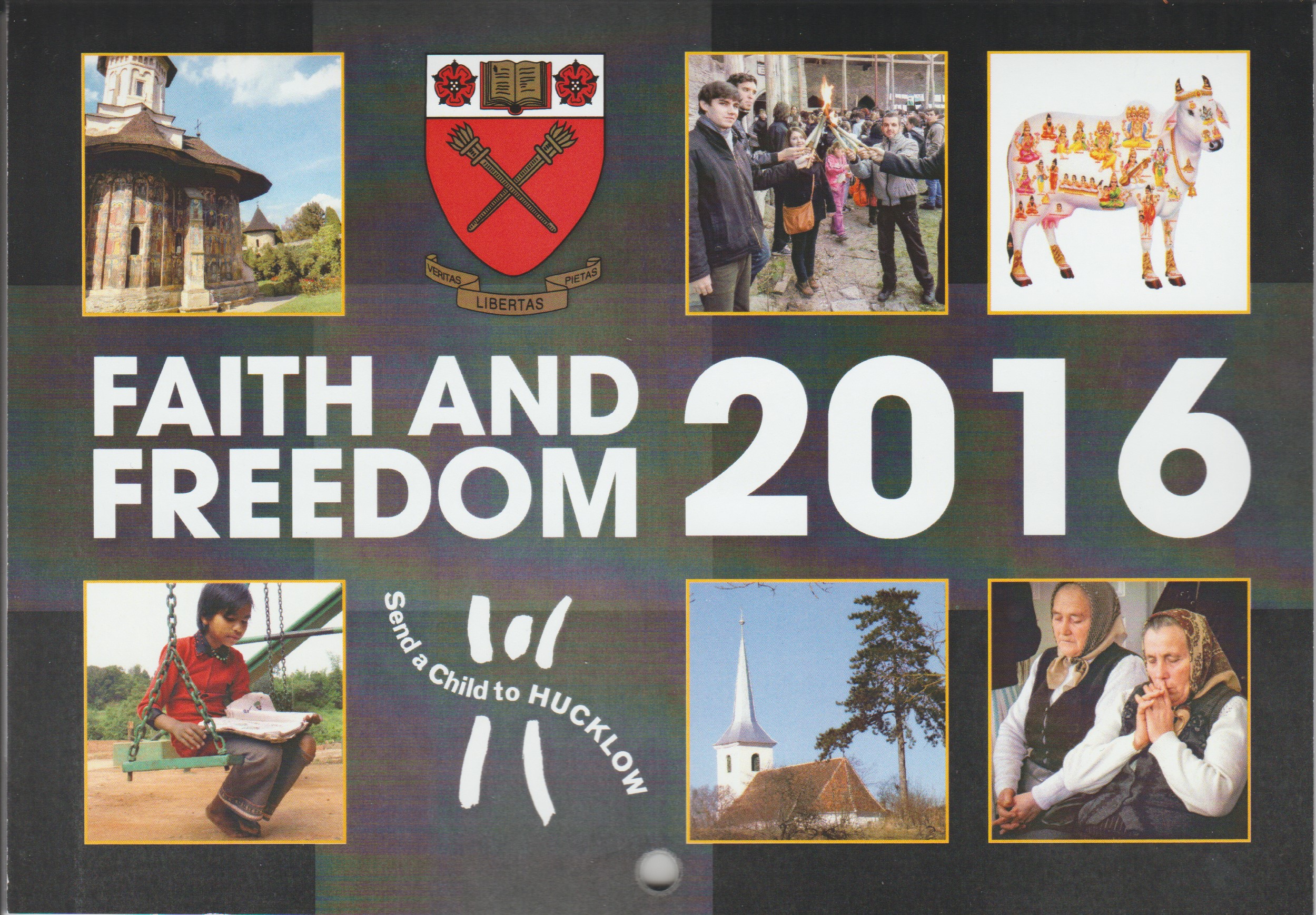
The cover of the 2016 'Faith and Freedom' Calendar - 'Faith in the World'
The cover of the 2016 ‘Faith and Freedom’ Calendar – ‘Faith in the World’


If you are an individual subscriber you will also receive a copy of our 2016 Calendar. These are also being sold in aid of the Send a Child to Hucklow Fund. A £5 donation will have one wing its way to you. Again information about the Calendar (and a preview) can be found on our website.


Service of Thanksgiving, Oklánd church, Transylvania (Photo: Márkó László)


Faith and Freedom latest issue and Calendar

FAITH AND FREEDOM, Autumn and Winter issue, (Volume 68, Part 2, Number 181) will be on its way to subscribers very soon. In it you will find:

Finding God in Strangers

John Navone

On Reading the Gospel of Mark with Two Eyes

George Kimmich Beach

Grace and Disgrace: a Social Pilgrimage

Yvonne Joan Craig

The Unitarians of the West and the Brahmo Samajees of the East

at Manchester College, Oxford 1896 –1948 Part II

Victor Lal

Six Months in a Prisoner of War Camp

David Steers

Manchester College, Oxford during the First World War

Evelyn Taylor

A Bible for Neo-Liberals

Barrie Needham

Bridging the Years in Marriage

Sue Norton

As well as reviews by Pat Frankish, Ernest Baker, Peter B. Godfrey, Lena Cockroft and the editor, and a review article by Graham Murphy on Sarah Shaw, The Spirit of Buddhist Meditation, The Sacred Literature Series, Yale University Press, New Haven & London, 2014.

Other books reviewed include

Charles Marsh, Strange Glory: a Life of Dietrich Bonhoeffer, SPCK, London, 2014.

Sam Harris, Waking Up: Searching for spirituality without religion, Bantam Press, London, 2014.

Mária Pap, Hungarian Unitarians in Transylvania, 2015.

Zoltán Fülöp, Emőd Farkas (eds.), Humble in Front of God, Words for Worship from Transylvanian Unitarians, International Council of Unitarians and Universalists/Hungarian Unitarian Ministers’ Association, Kolozsvár 2014

Emma Percy,”What Clergy Do”: especially when it looks like nothing, SPCK, London, 2014.

Marcus Braybrooke, Peace in Our Hearts Peace in Our World a meditation for everyday, Braybrooke Press, 2015.

John Pritchard, The Second Intercessions Handbook, SPCK, London, 2015.

Individual subscribers will also receive a copy of our Faith and Freedom 2016 Calendar. These are free to personal subscribers but extra copies can be ordered at a cost of £5 each, all of which goes to the charity the Send a Child to Hucklow Fund.

If you would like a sneak preview of the Calendar it can be downloaded on the Faith and Freedom website.

If you haven’t taken out a subscription and would like to do so you can also do that from the Faith and Freedom website:

http://www.faithandfreedom.org.uk/

The photograph at the top of this page is a picture by Transylvanian photographer Márkó László who has kindly contributed a number of pictures to the 2016 Calendar.


Fr John Navone’s ‘Theology of Failure’

In the Spring and Summer 2014 issue of Faith and Freedom we were very pleased to have something of a scoop with two articles by Fr John Navone SJ, the leading Italian American theologian whose theology has been acknowledged as a major influence on Pope Francis.


In that issue we were delighted to have John Navone write exclusively about the challenges and priorities of Francis’ papacy. In his first article on the subject for a British or European audience Professor Navone explained the Pope’s interest in his thinking and gave a resumé of his own ‘Theology of Failure’.


Professor John Navone SJ


Just prior to the Pope’s visit to the USA in September 2015 Fr Navone was interviewed by CNN and featured in a long and thoughtful online article on the CNN website by Daniel Burke, CNN Religion Editor. The author discusses Fr Navone’s theological influence on the Pope and carries part of the interview with him. In the piece he quotes Fr Navone as saying:

“There was a blessed juncture between my theology and his crisis…It was a kind of light in the darkness to him.”


And among other things himself says:

As it happened, Navone and I spoke on the day Francis made it easier for Catholics to annul their marriages, and about a week after he encouraged priests to forgive women who have had abortions.

Navone and I talked about mercy, and how it’s hard to forgive others if you aren’t intimately acquainted with your own failures. We talked about a Pope who travels to the peripheries because he himself was sent there. And we talked about Francis’ apparent internal freedom, his refusal to resign himself to others’ expectations.

The full article, ‘The Pope’s Dark Night of the Soul’, can be read here:

http://edition.cnn.com/interactive/2015/09/specials/pope-dark-night-of-the-soul/


Faith and Freedom is also delighted to announce that the Autumn and Winter 2015 issue, due out this week, also carries another timely article by John Navone entitled ‘Finding God in Strangers’.


Faith and Freedom is a print journal but it can be ordered online here:

http://www.faithandfreedom.org.uk/subs.htm