The Roots of Protestant Dissent in Dublin

On Saturday, 11th June members of Dunmurry along with members of First Belfast and All Souls’ Non-Subscribing Presbyterian churches enjoyed a great visit to to Dublin. We were made very welcome by the Unitarian congregation on St Stephen’s Green and treated to an excellent tour of sites connected with the roots of Protestant Dissent in Dublin by Rory Delany.
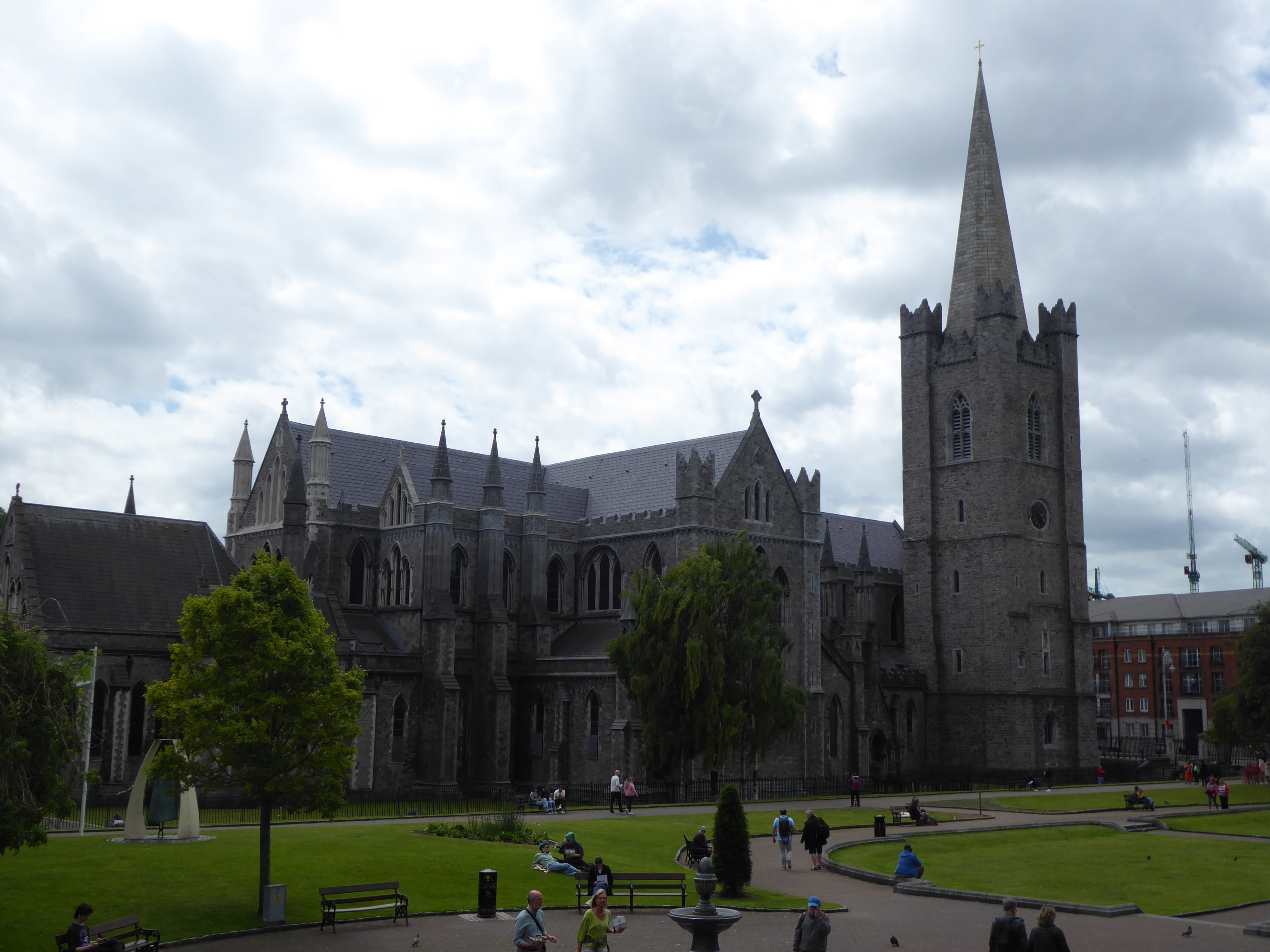
St Patrick’s Cathedral Dublin, where Cromwell is said to have stabled his horses in the 1650s

Rory has a fund of knowledge about the history of Dublin and of the different strands of Dissent in the city, which largely date back to the period of Oliver Cromwell. We were taken on a fascinating walk around some of both the familiar and not so familiar parts of Dublin and all of us gained a deep insight into the way Dissent – Independency – Presbyterianism – Unitarianism – developed in the city and the contribution made by members of the Dissenting churches to the history of the city.
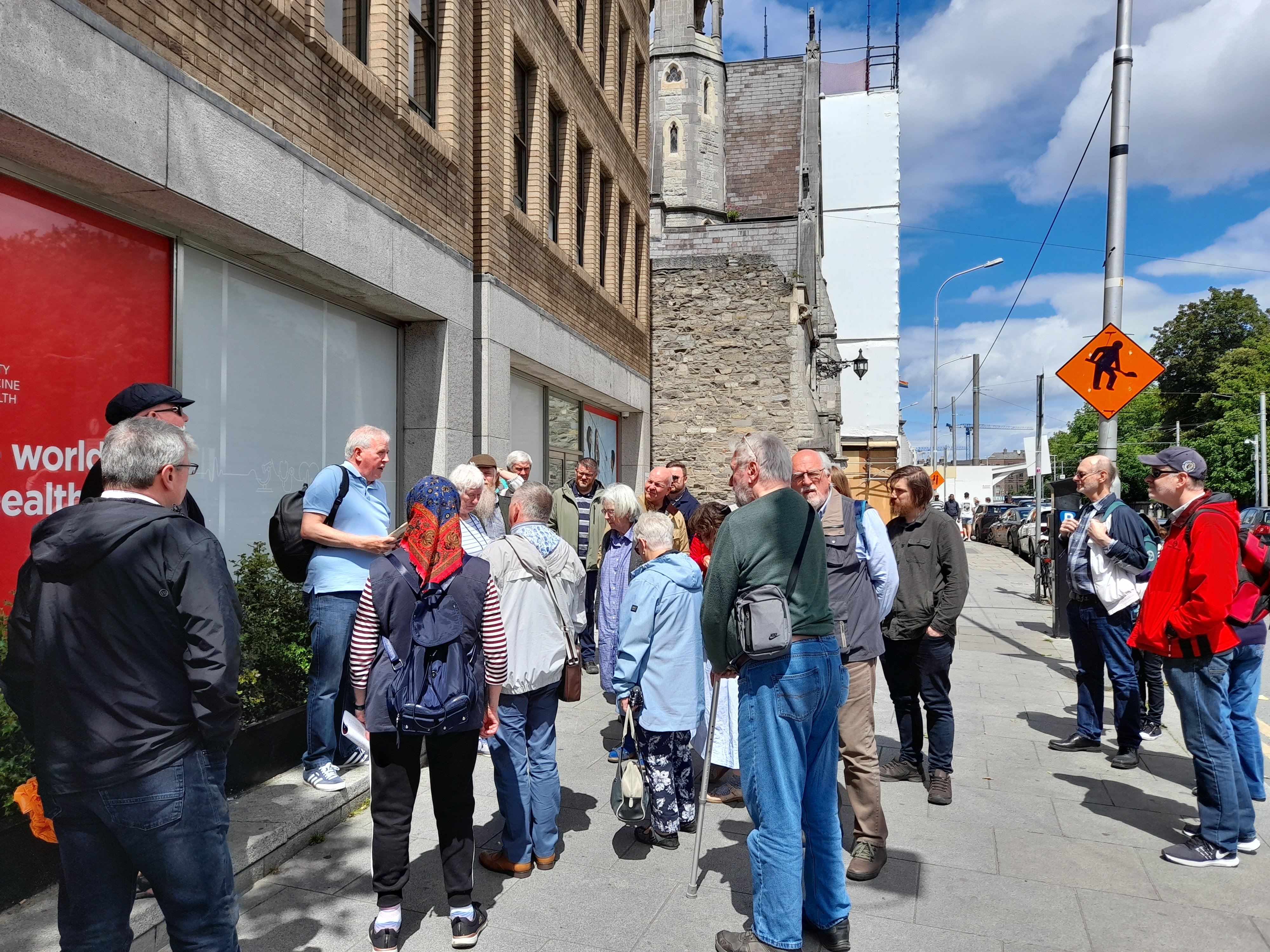
Starting the tour outside the church on St Stephen’s Green

Rory gave us an outline of the plan before we set off. The Unitarian Church was built in 1863 by the congregation of Strand Street and four years later it was joined by the congregation of Eustace Street. These two congregations contained many of the leading merchants in the city, families which had played an important part in civic life for decades, and were groups which were rooted in at least four churches which had maintained a continuity of existence from Cromwellian and Puritan times onwards.
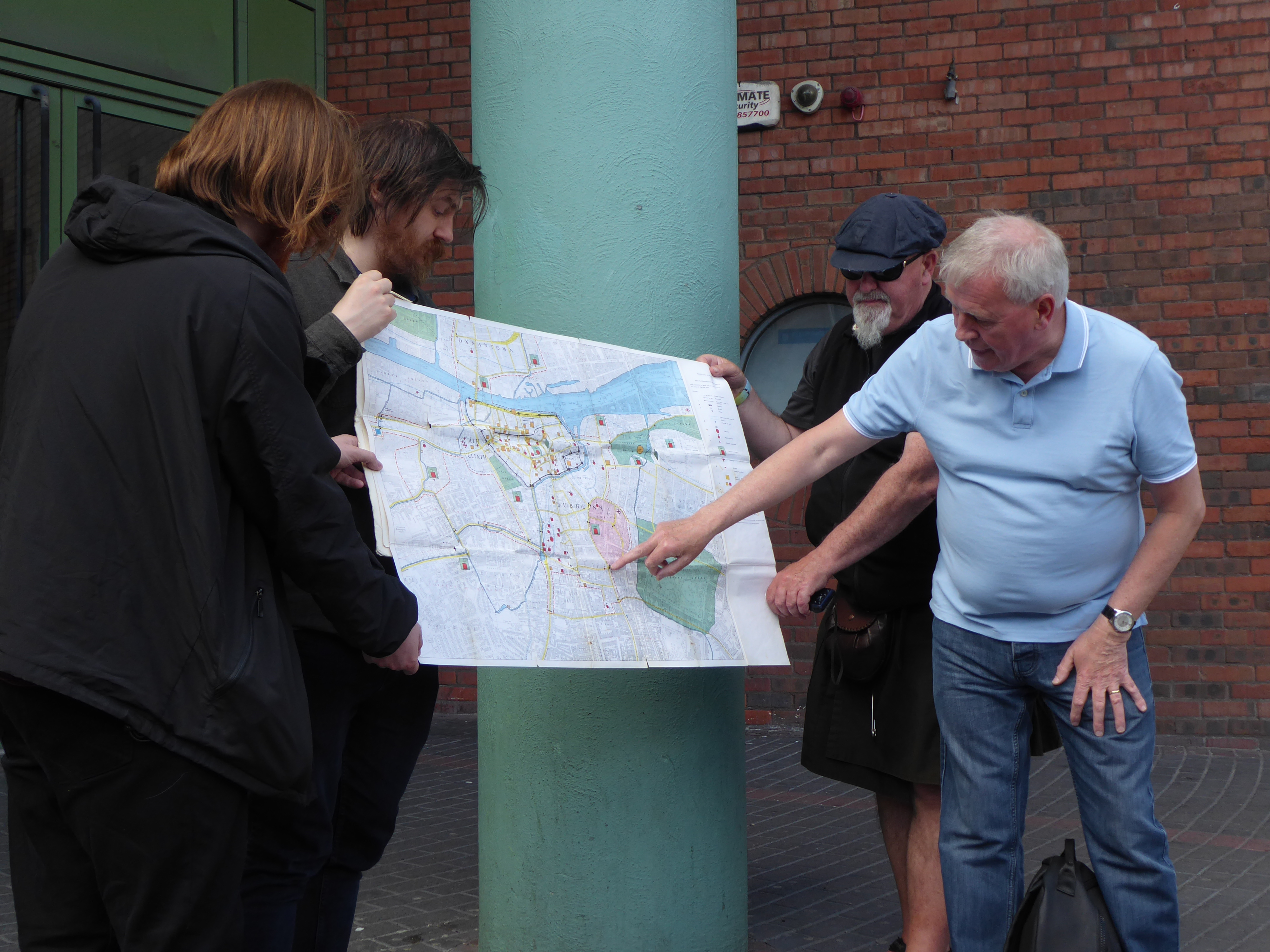
Rory explaining the location of the medieval city

Perhaps the most direct stream of religious life which fed in to the modern church on St Stephen’s Green was that of Wood Street. The first minister connected with this congregation is usually said to be John Owen, a leading Puritan divine who came to Dublin as chaplain to Oliver Cromwell and later became dean of Christ Church, Oxford during the Commonwealth. The congregation may date back to Elizabethan times but the first minister in Wood Street itself is thought to be Stephen Charnock who came to Dublin as chaplain to Henry Cromwell in 1655. A fellow of Trinity College, Dublin he was a ‘lecturer’ at St Werburgh’s and returned to England following the Restoration in 1660.
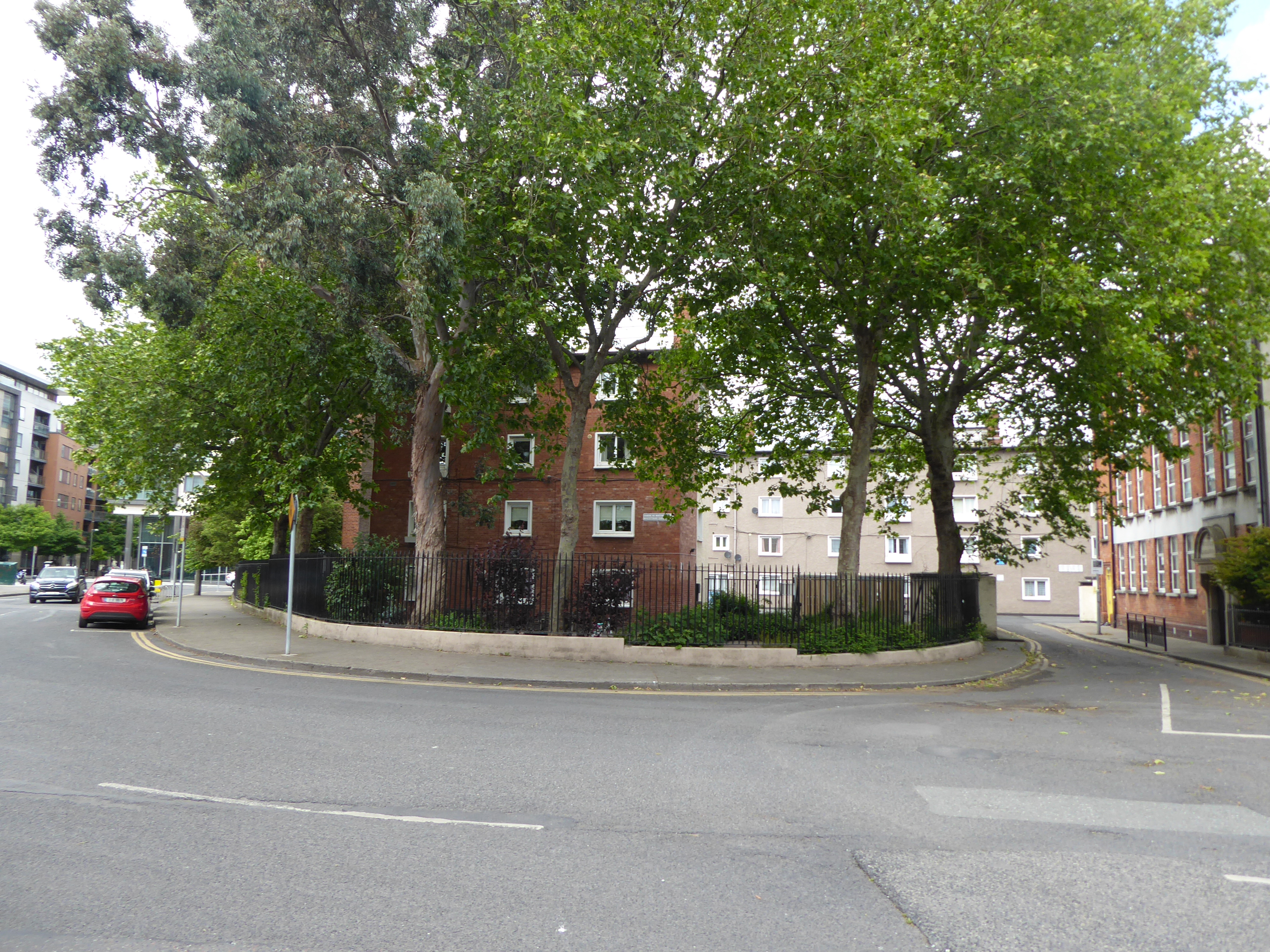
This unprepossessing view is actually the site of the Wood Street meeting-house

Wood Street was the scene of the ministry of Daniel Williams for approximately 20 years. Welsh-born he moved to London in 1687 and became the leading figure in English Dissent, establishing the library that bears his name to this day. Other distinguished and sometimes controversial ministers to serve this congregation include Joseph Boyse, Thomas Emlyn, John Abernethy and James Duchal (click on the links where shown for more information on this blog) . The congregation moved to Strand Street in 1764.
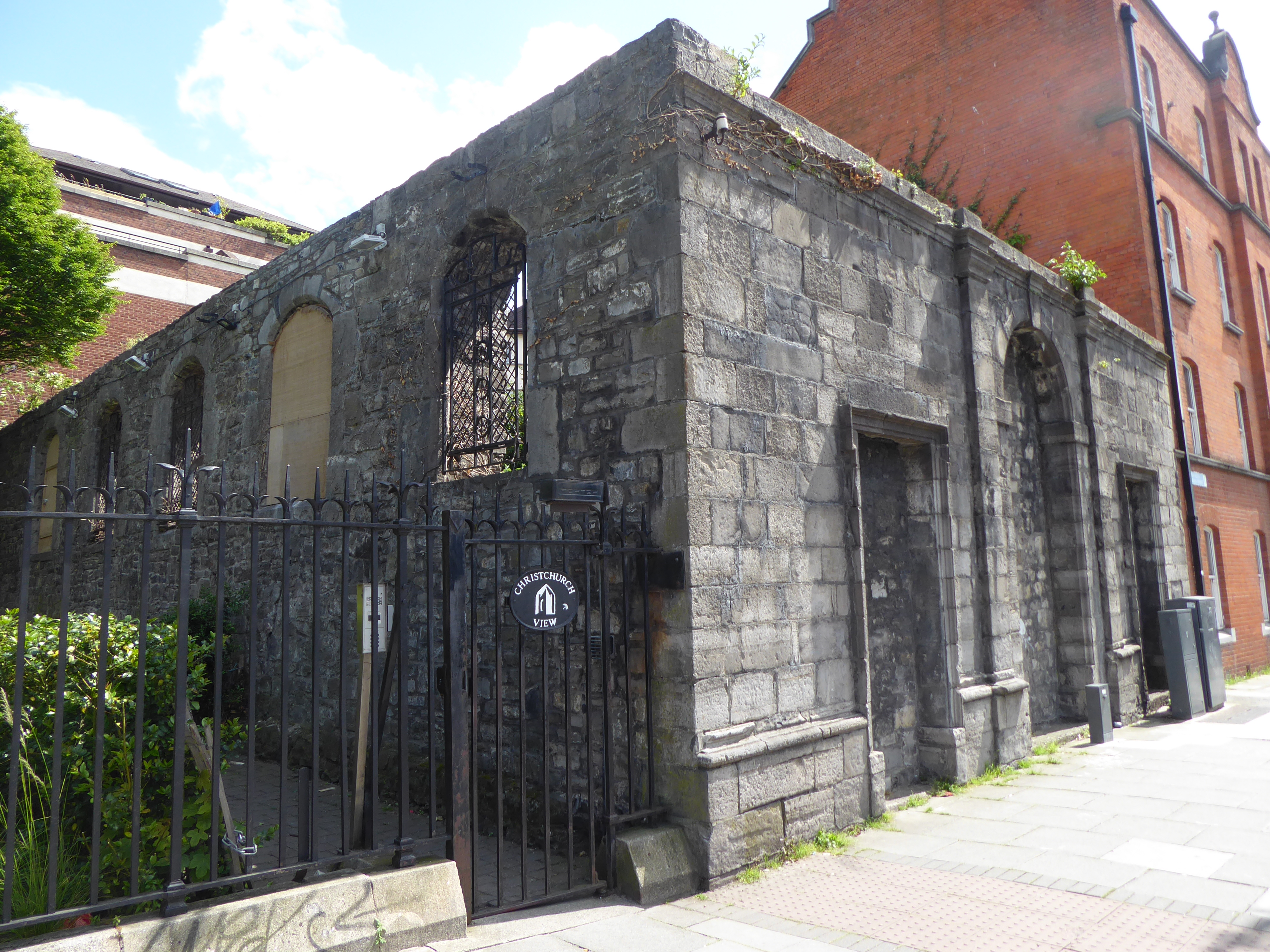
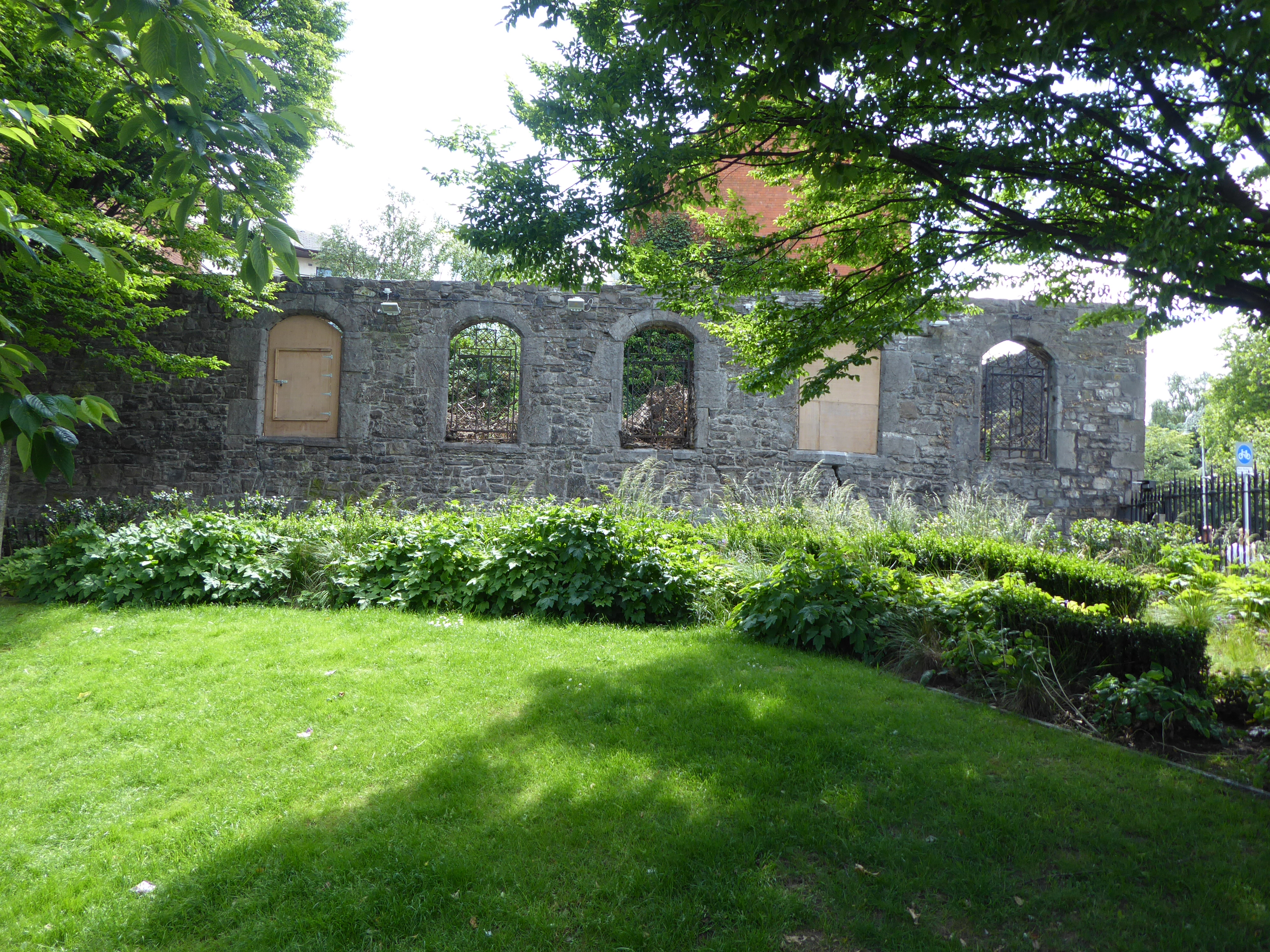
The ruins of St Nicholas’ Church just opposite Christ Church Cathedral
The burial ground of St Nicholas’ Church, now a Peace Garden

Samuel Winter, a key figure in Cromwellian Ireland and Provost of Trinity College, was also preacher at St Nicholas’ Church from 1650 and had as colleague from 1656 Samuel Mather, the son of Richard Mather (for more on his family and their connection with Toxteth click here) a leading Puritan in England, New England and Ireland. Samuel Mather was a lecturer at Christ Church and a Fellow of Trinity College. He died in 1671 and was buried in St Nicholas’ Church. He was later succeeded in the ministry by his brother Nathaniel, by which time the congregation had built their own meeting house on New Row.
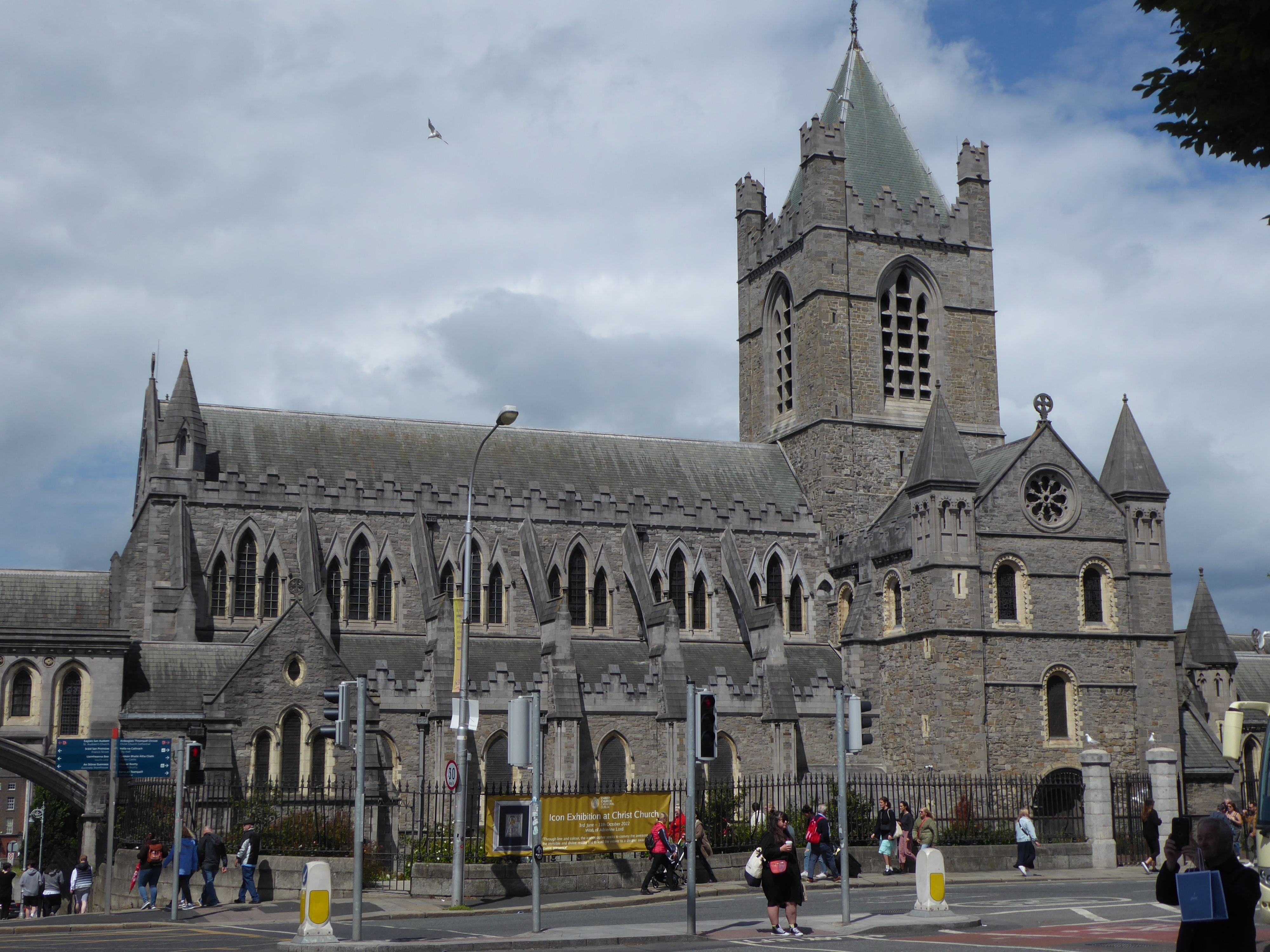
Christ Church Cathedral, Dublin

Eventually New Row moved to Eustace Street in 1728. Nearby was a Quaker meeting-house and Rory told us that one of the Quakers said of the Eustace Street meeting-house that ‘When there is so much vanity without, there won’t be much religion within’. But it is actually a very well-proportioned and elegant building, although eighteenth-century Quakers had their own view of such things. Having said that what survives of Eustace Street today is only the facade and that is not shown off to best effect by the banners hung outside by the Ark Theatre group that use the new building.
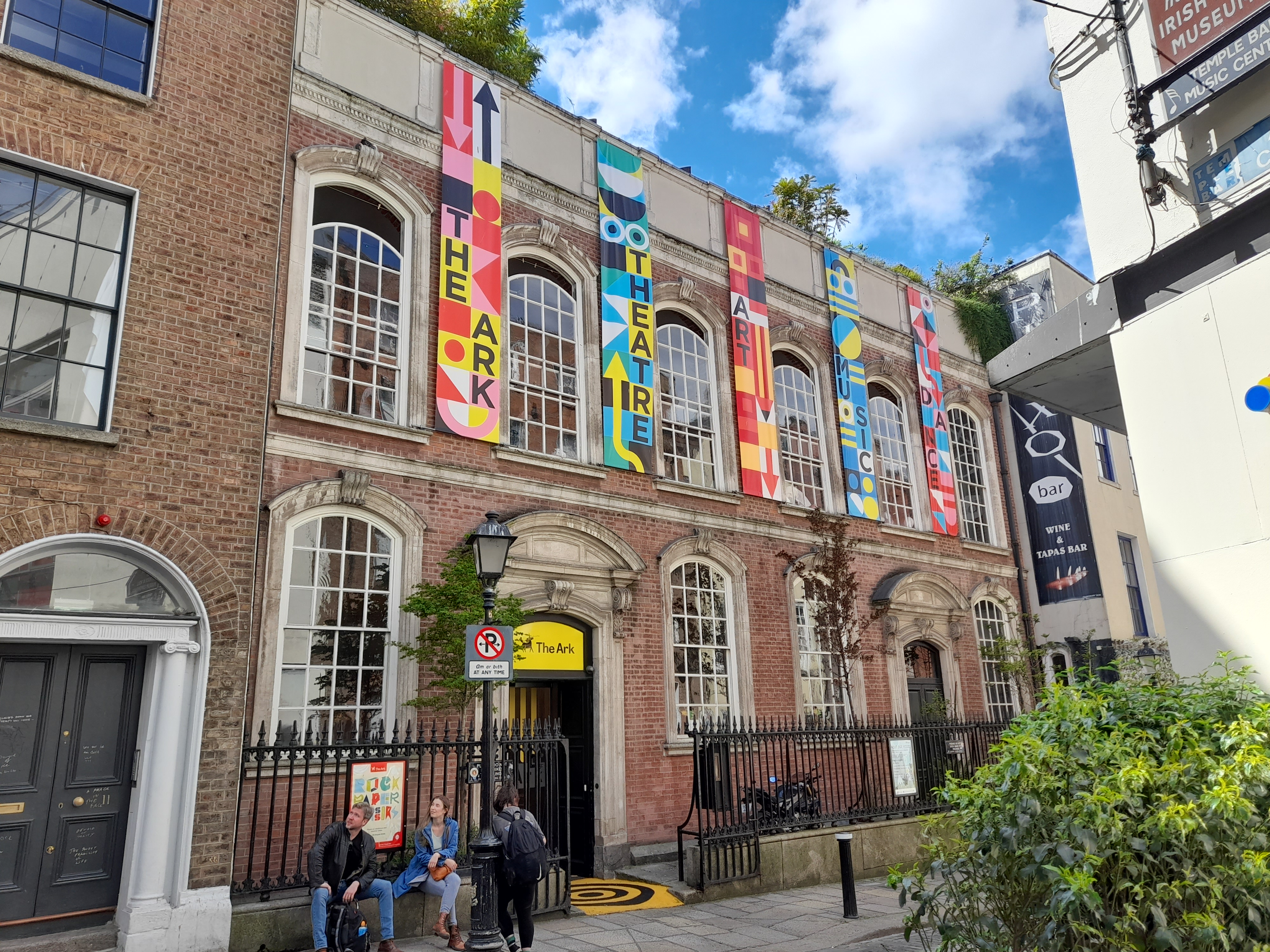
The surviving facade of Eustace Street meeting-house

Eustace Street was also the location of the first ministry of James Martineau (click here to read more about James Martineau on this blog).
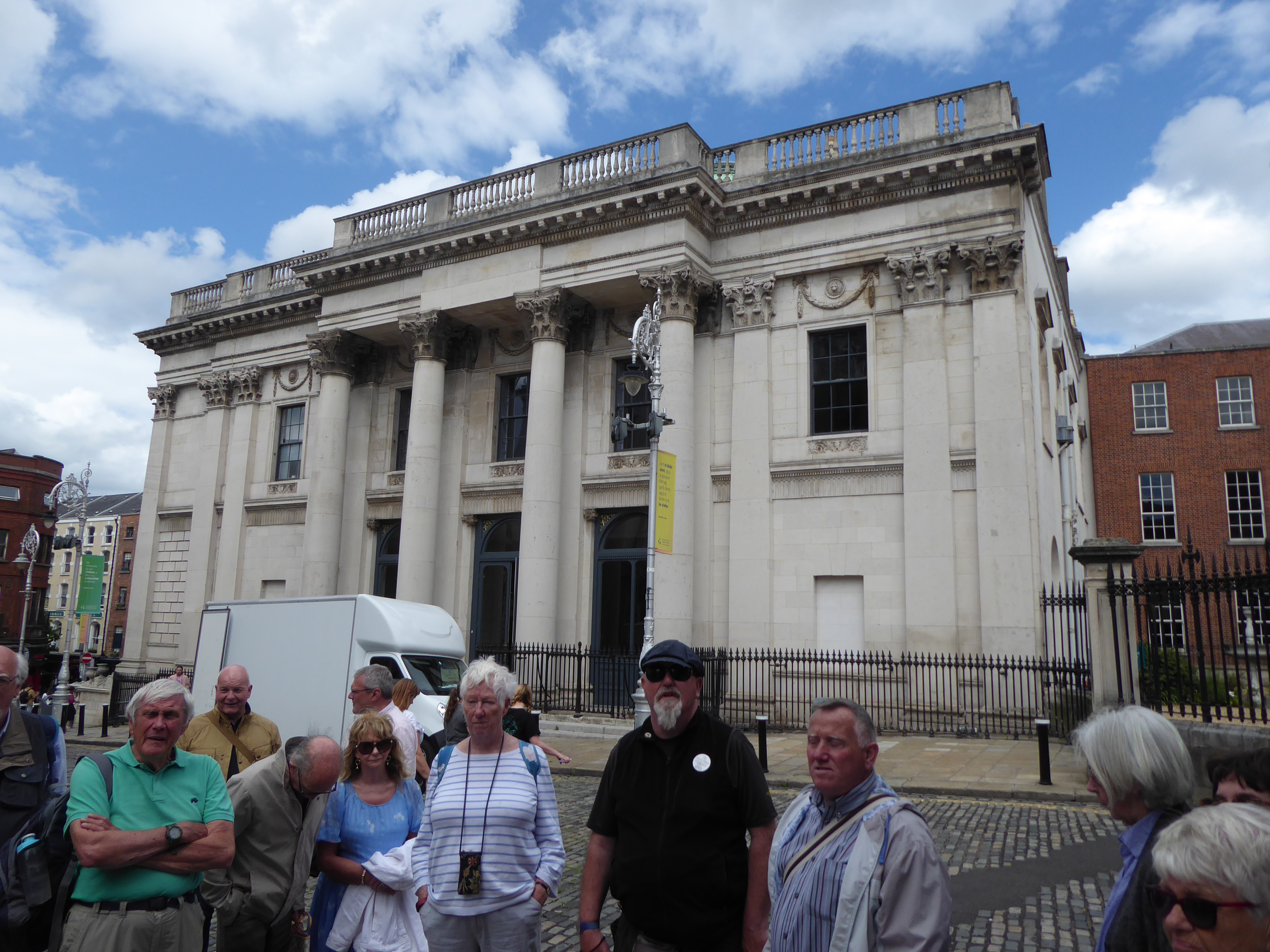
Side view of the City Hall, originally the Royal Exchange

We had a brief look at the City Hall, built originally as the Royal Exchange in 1779 by the precursor of the Chamber of Commerce. The merchants who made up the membership of the Chamber of Commerce included a disproportionate number of Protestant Dissenters, and of these a large proportion were members of one of the three Presbyterian (Unitarian) congregations in Dublin. Indeed, Rory told us, a majority of the Presidents of the Dublin Chamber of Commerce between 1785 and 1870 were trustees or members of the congregations which went on to form the St Stephens Green congregation.

It was a wonderful day full of interest and we are all indebted to Rory for sharing his considerable knowledge with us.
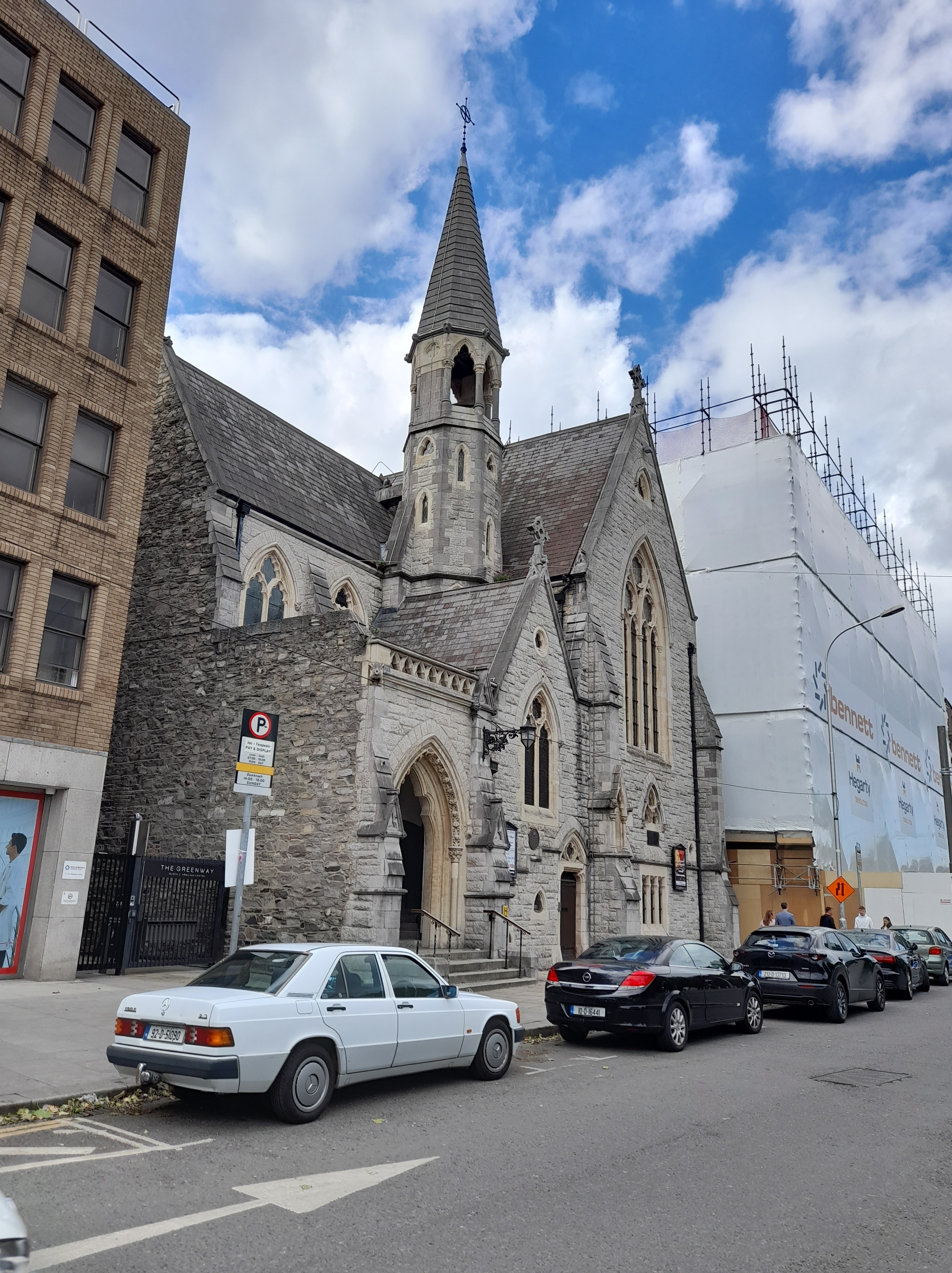
Dublin Unitarian Church, St Stephen’s Green

Completion of Murland Mausoleum Restoration

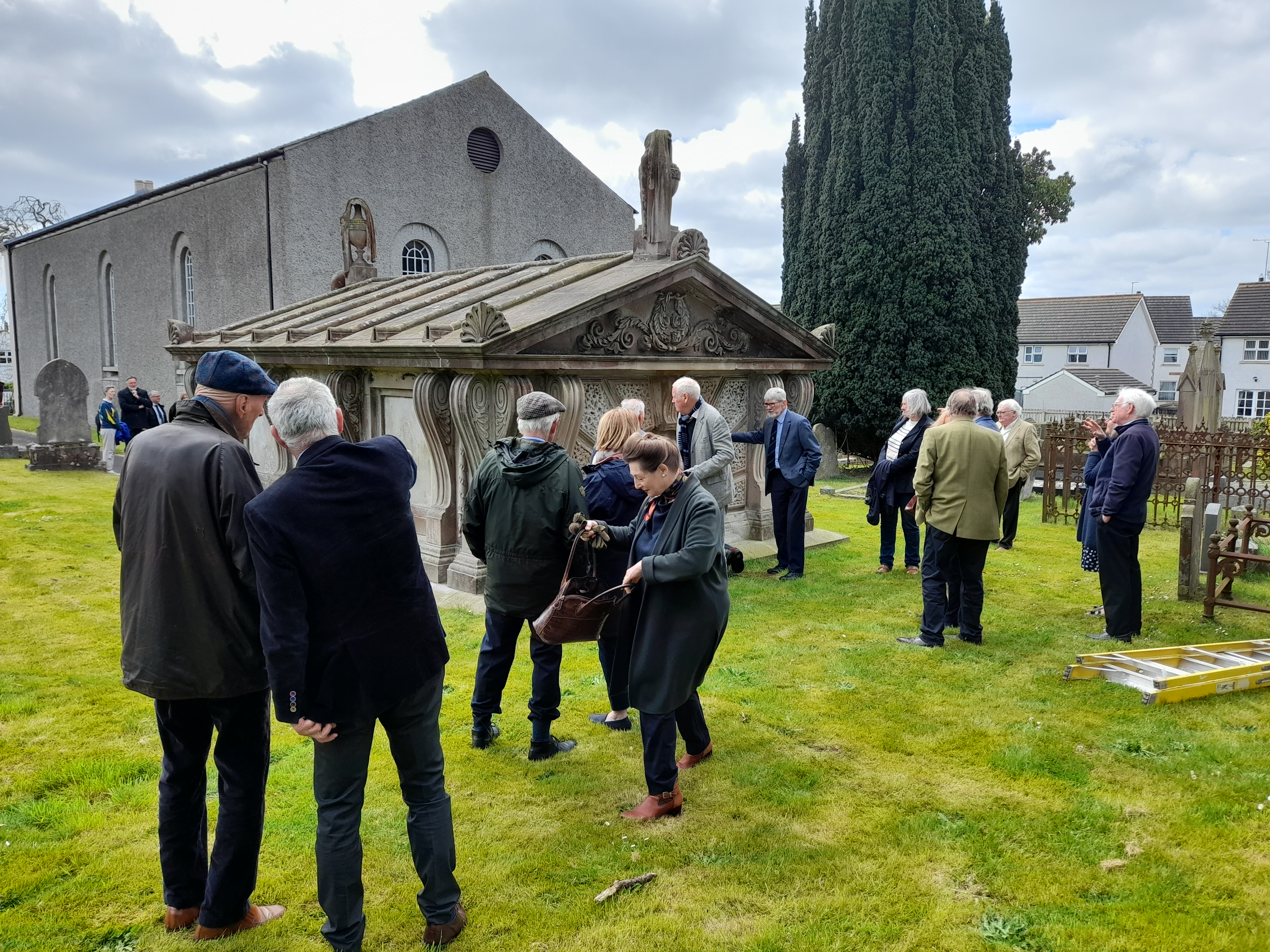
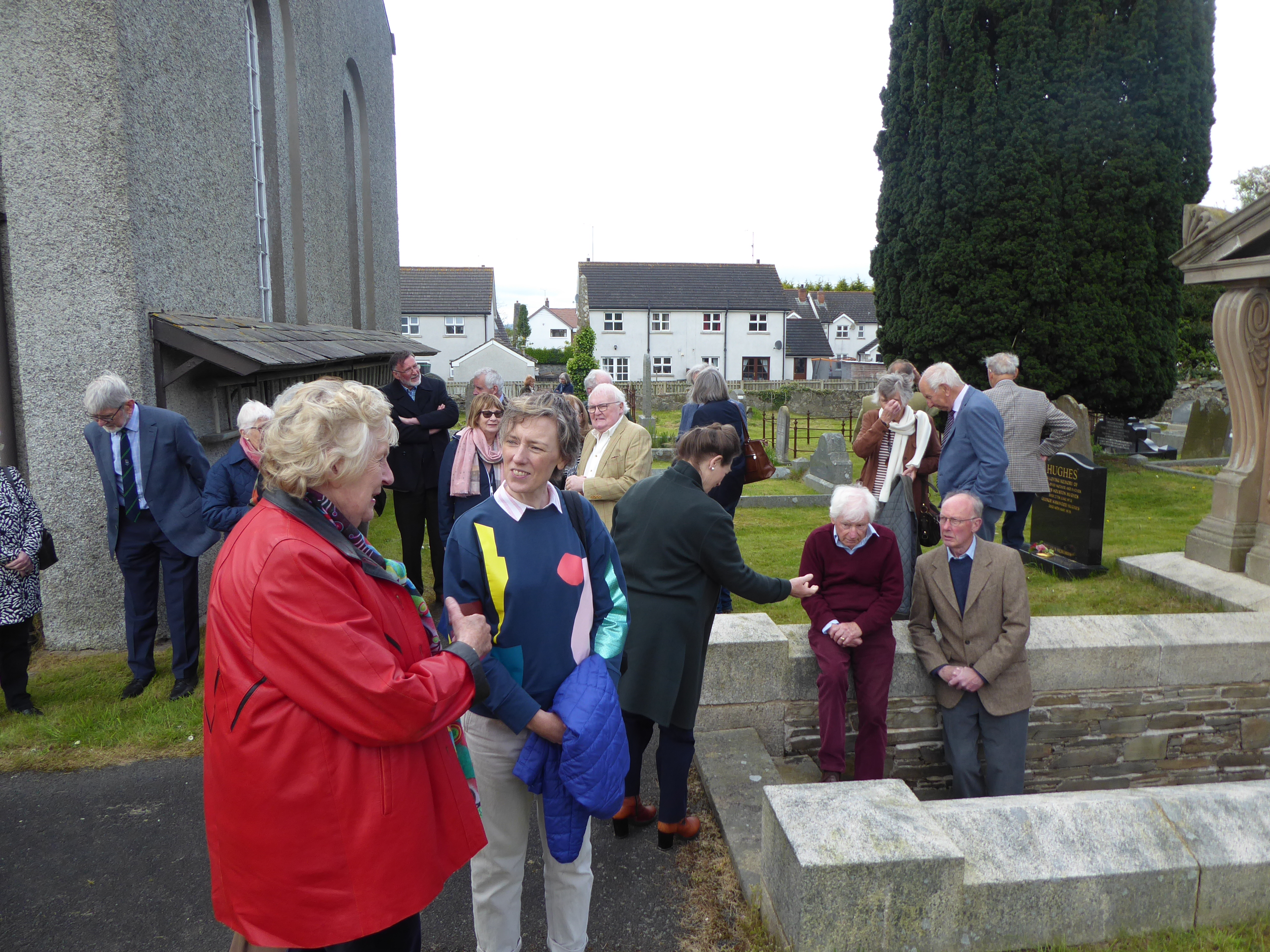
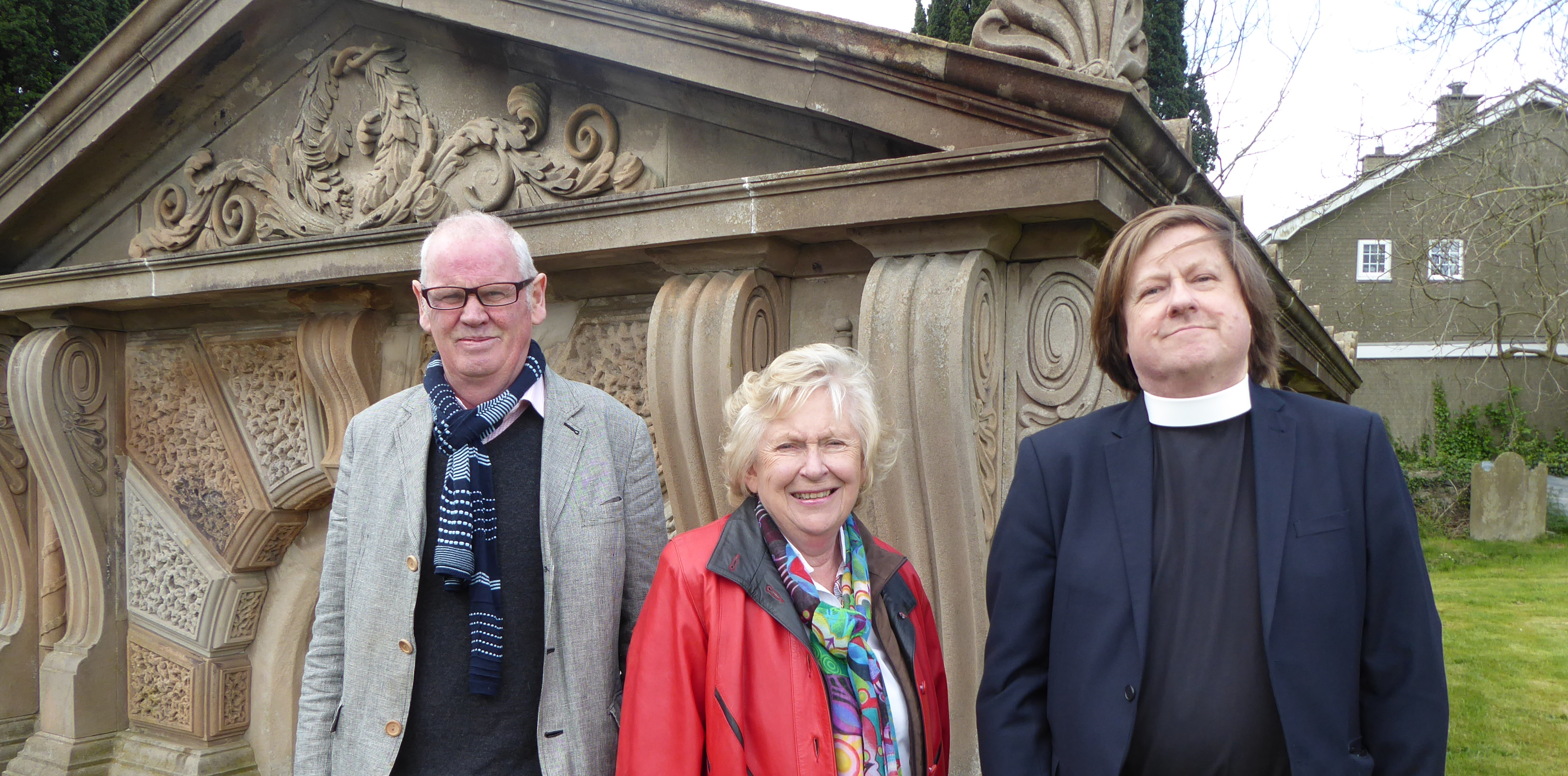
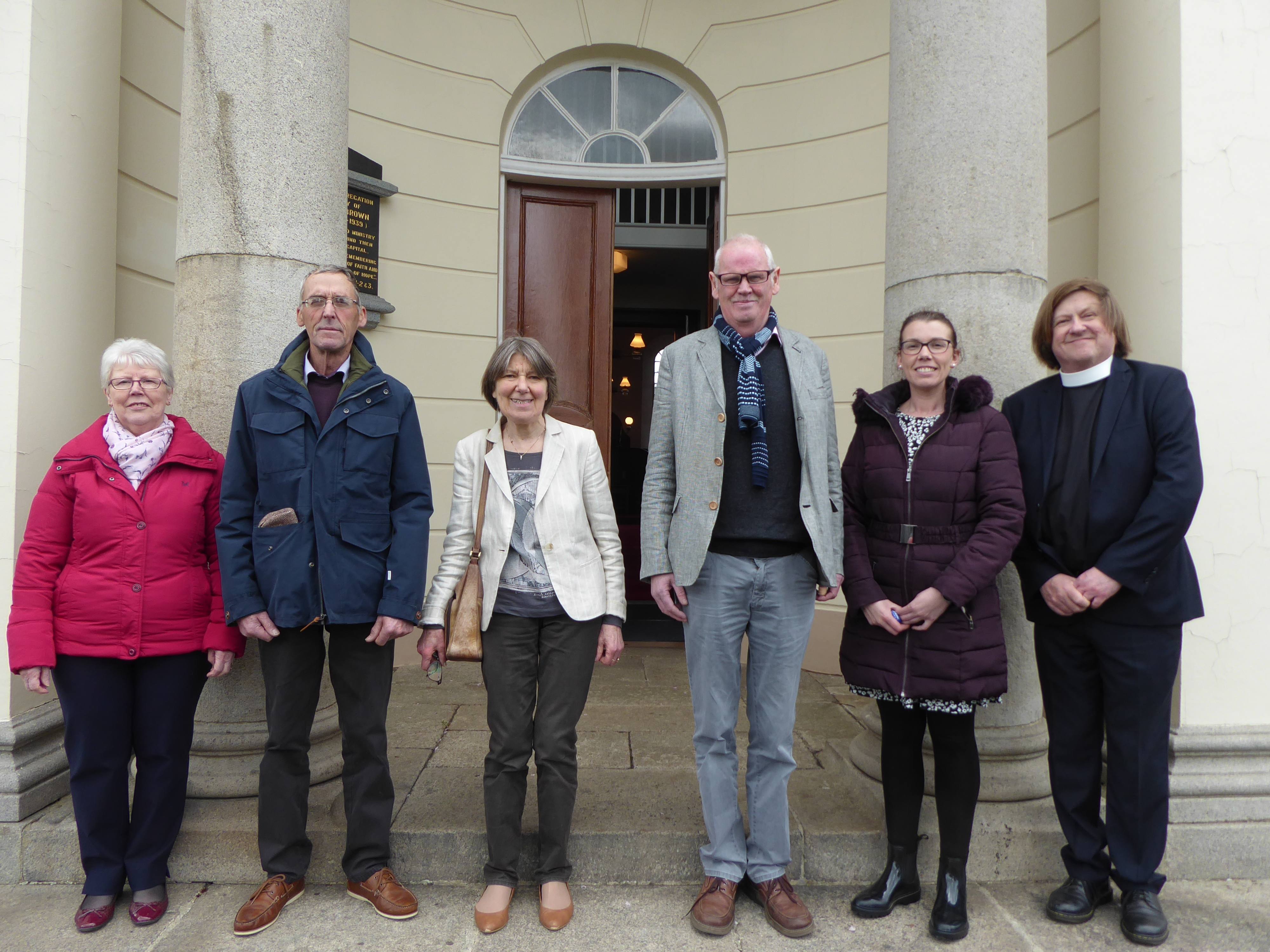
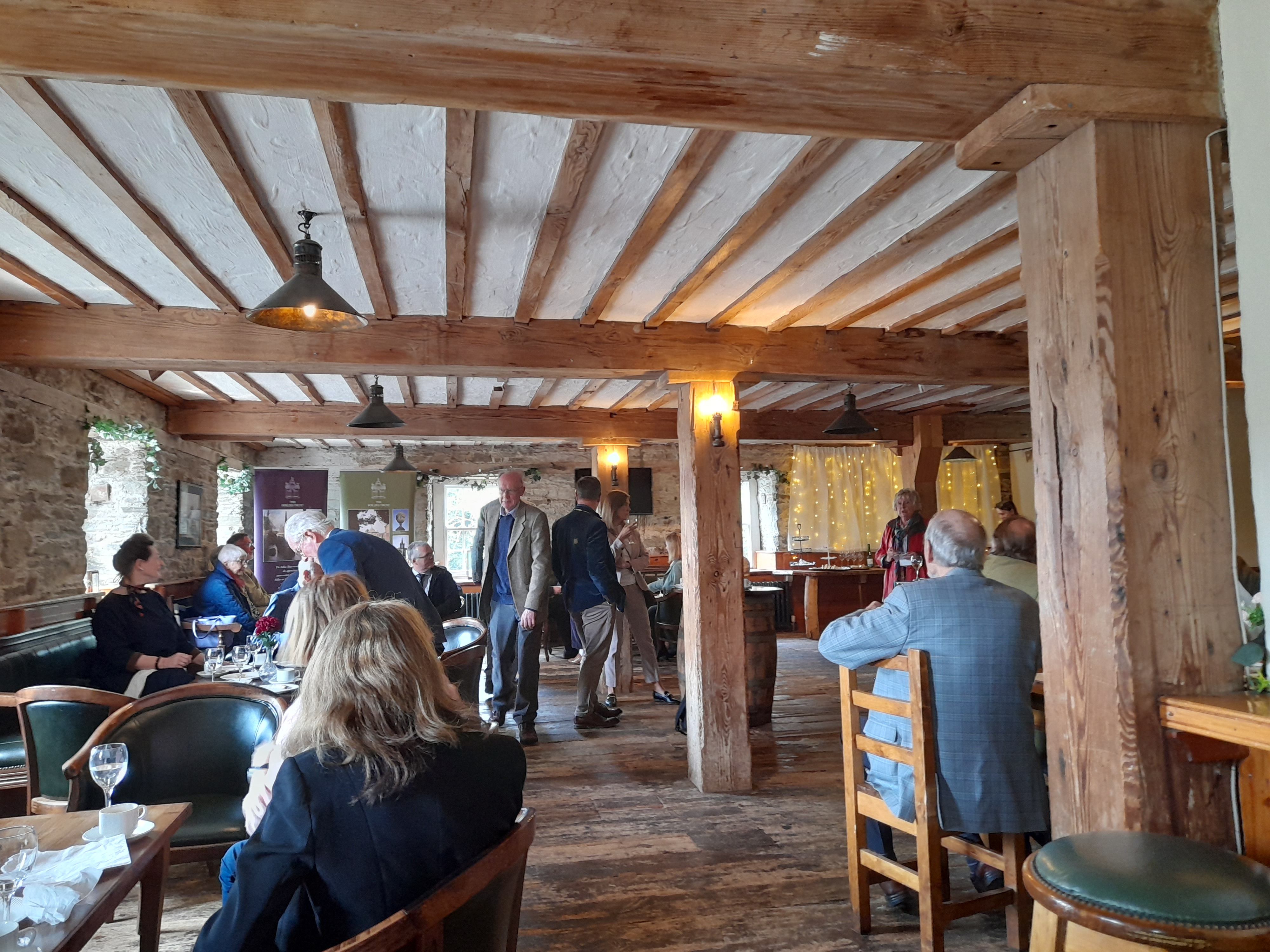
On Wednesday, 4th May 2022 the long delayed final stage of the restoration of the Murland Mausoleum by the Follies Trust at Clough Non-Subscribing Presbyterian Church took place. There was a good attendance of people gathered at the event, originally scheduled to take place in March 2020 but inevitably cancelled at the start of the lockdown. The meeting included a short service of thanksgiving for the work of the Follies Trust and the singing of the hymn Praise my soul the King of Heaven, accompanied by Melanie Campbell on the organ. Rev Dr David Steers welcomed everyone and spoke about the history of the Church, and introduced Dr Finbar McCormick who gave  a fascinating talk on the restoration of the Murland Vault and the history and place of mausolea as places of burial in Ireland. Primrose Wilson, chair of the Follies Trust, thanked everyone involved, especially Noel Killen who had carried out the restoration of the monument, and invited everyone to Ballydugan Mill where the launch of the Trust’s new book Fifteen Years of the Follies Trust took place.

Dr Finbar McCormick in the pulpit at Clough
After the service of thanksgiving in the Church

At the back of the mausoleum

Dr Finbar McCormick, Primrose Wilson, Rev Dr David Steers
Finbar McCormick with Clough members

Ballydugan Mill, itself restored from a ruin by Noel Killen

Book launch at the Mill

Noel Killen and David Rooney

With thanks to Sue Steers for the photos.

New book published in Downpatrick

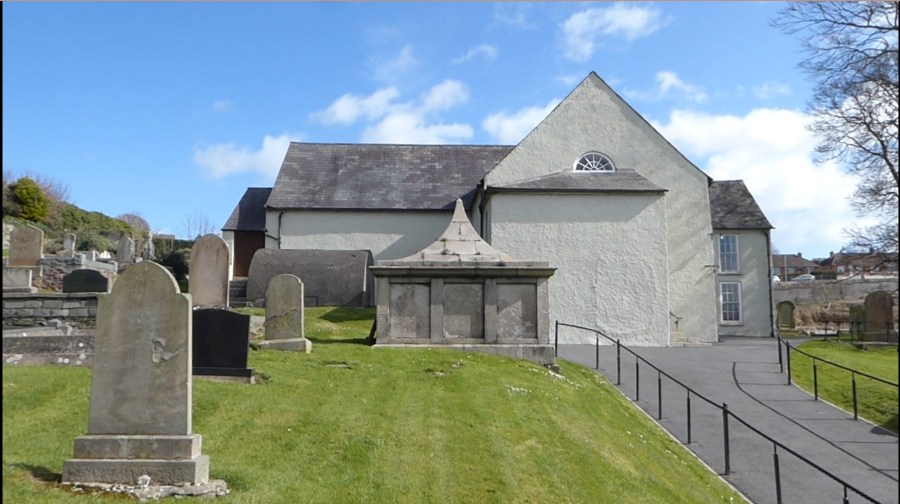
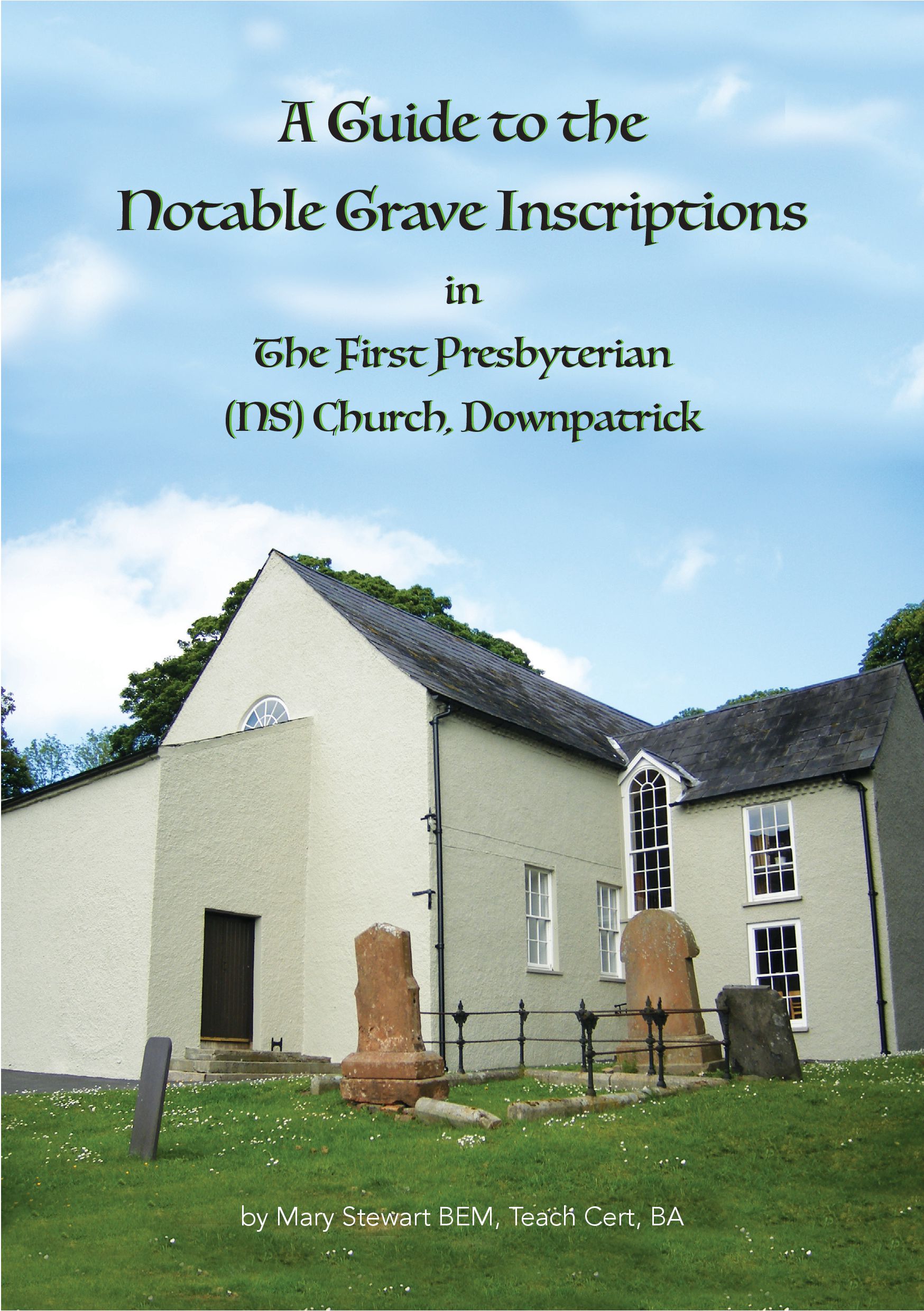
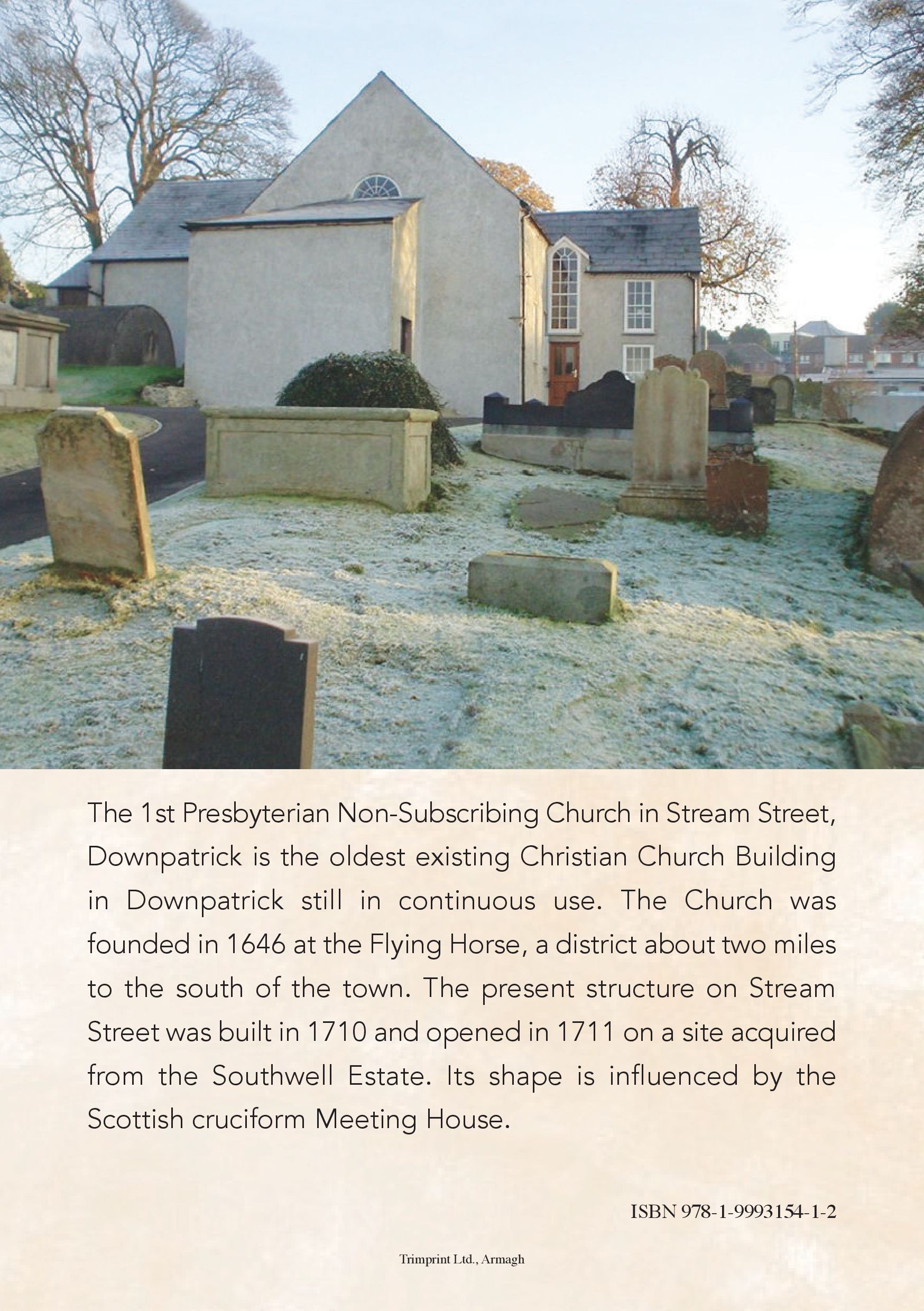
The First Presbyterian (Non-Subscribing) Church, Downpatrick will publish this new book in October 2021. Written by Mary Stewart, the Church secretary, it is a 36 page, illustrated guide to the notable graves and memorials in the churchyard.

A Guide to the Notable Grave Inscriptions in The First Presbyterian (NS) Church, Downpatrick

contains 39 black and white illustrations within a colour cover. It costs just £3 and will be available in the Church from October. They will also be available to order by post.

Front Cover
Back Cover

The A to Z of Non-Subscribing Presbyterianism: K to M

We have now reached the letters, K to M in our alphabetical survey of Non-Subscribing Presbyterianism. So our next three videos look, in turn, at Kedron, the Lord’s Supper and Henry Montgomery.

Kedron

When the Paschal evening fell
Deep on Kedron’s hallowed dell,
When around the festal board
Sat the Apostles with their Lord,
Then his parting word he said,
Blessed the cup and brake the bread –
“This whene’er ye do or see,
Evermore remember me.”

From a hymn by A.P. Stanley

James Martineau wrote another hymn which mentions Kedron, which is our subject for the letter K. To find out what links Jerusalem’s Kedron valley with the churchyard at Downpatrick watch this service. Filmed at the First Presbyterian Church (NS) Downpatrick, Mary Stewart gives the reading from John ch.18 v.1-9, and church organist, Laura Patterson, plays the hymns Christ, be our light and Great is thy faithfulness’.

The Lord’s Supper

The Lord’s Supper

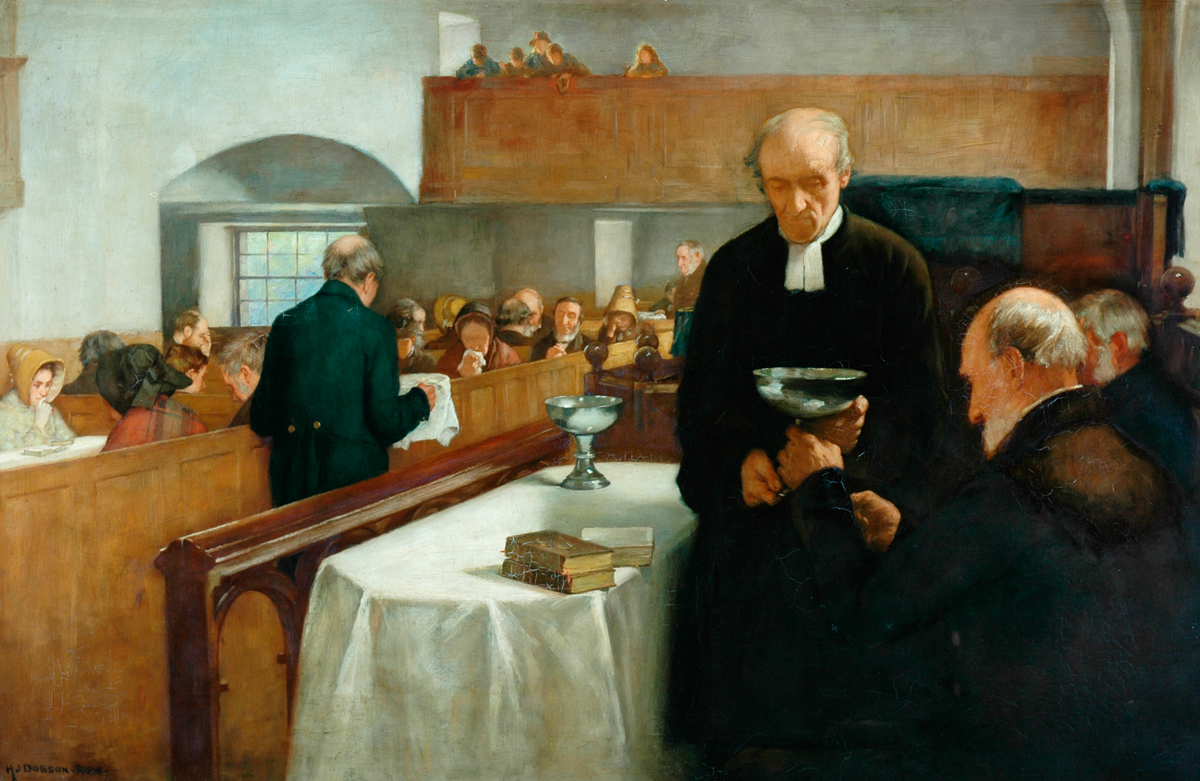
L stands for the Lord’s Supper and in this short film we look at how we understand this important service. Filmed at Ballee Non-Subscribing Presbyterian Church the reading comes from 1 Corinthians ch.11 v.23-25. Church organist, John Strain, plays Lord of all hopefulness, May the mind of Christ my Saviour and My faith looks up to Thee.

A Scottish Sacrament by Henry John Dobson. (Public Domain, Wikimedia Commons)

Henry Montgomery

Click on the video to join the service and hear about Rev Henry Montgomery (after 9.45 am on Sunday, 26th September).

The thirteenth instalment in the series is the letter M and features the Rev Dr Henry Montgomery. Filmed at Dunmurry, where Montgomery himself ministered from 1809 to his death in 1865, we look at his importance and his legacy. The reader is Bobby Graham who reads Matthew ch.23 v.1-12. Allen Yarr plays the hymns From all that dwell below the skies and Let saints on earth in concert sing.

Further reflections on Lime Street

I was back on Lime Street about ten or eleven days after the previous post (Digging up History on Lime Street). Lime Street is most notable for a number of things: the railway station that bears its name and, of course, St George’s Hall.

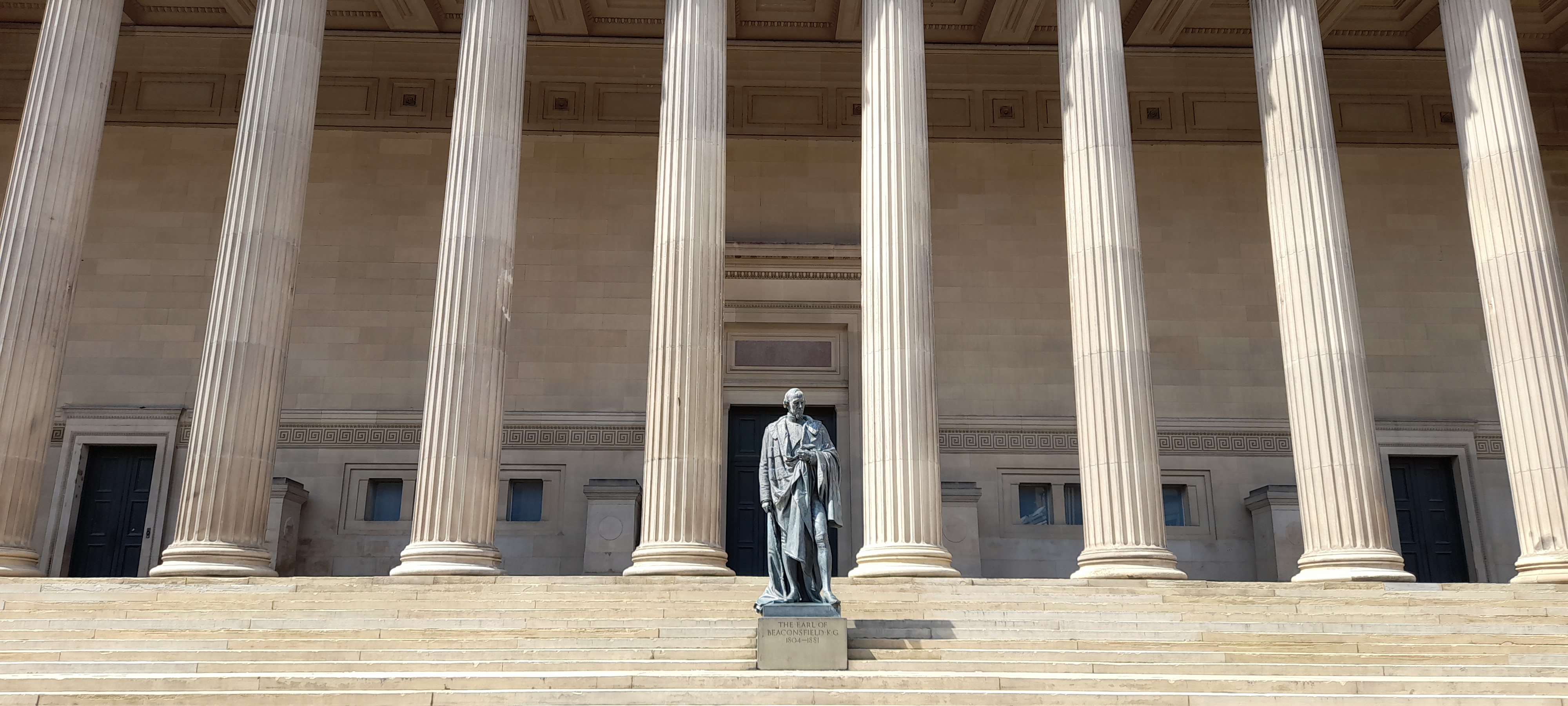
A pensive and solitary Benjamin Disraeli emerges from the classical splendour of St George’s Hall

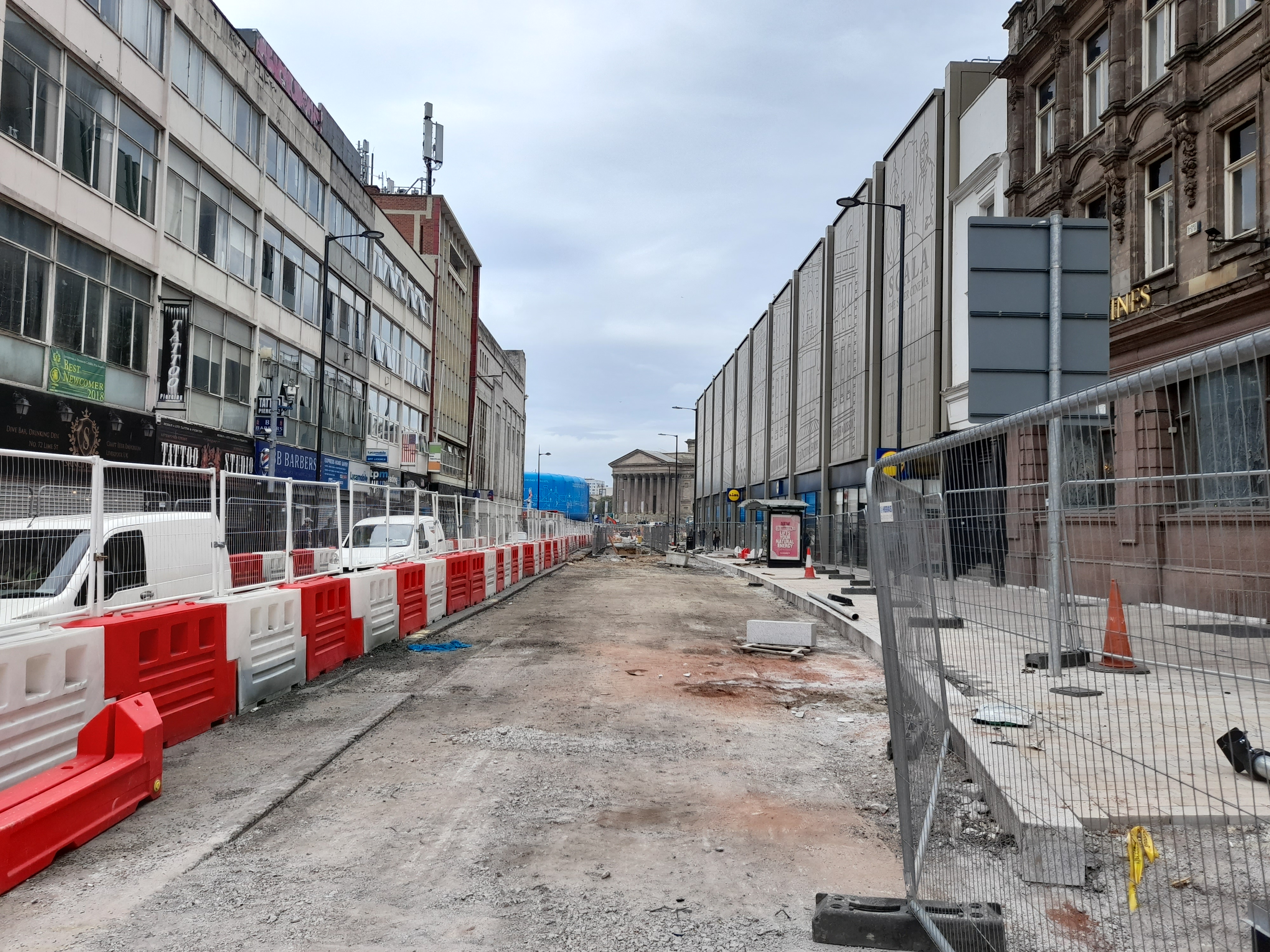
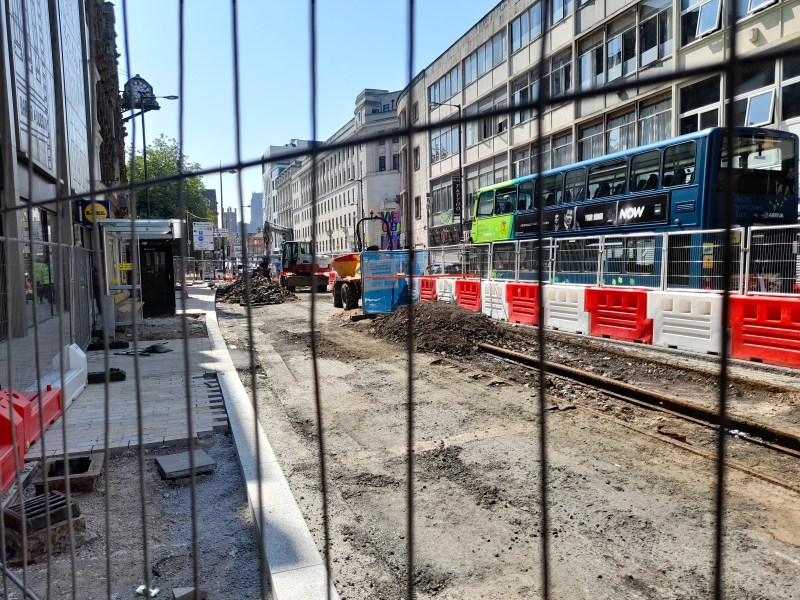
But as I went past the road works I noticed that all the setts/cobbles had been removed as well as the old tram lines. I also noticed that a very deep hole had been dug in the road.

Stopping to take a picture a voice from behind me asked ‘Are you in the habit of taking pictures of large holes in the road?’ It was one of the work men who seemed pleased that someone was photographing their handiwork. He and his colleague explained that all the setts had been taken away to be re-used by the Council and that the tramlines had been taken away for scrap. They were widening the pavement, adding a cycle lane and – inevitably – narrowing the road. The hole, apparently, was to allow the planting of trees which would form a barrier between the cycle lane and the road.

Further up the road, in front of Lime Street Station, they have already planted trees and I suppose these will be something similar:

There are a lot of road works going on and safer and well-landscaped roads can only be an improvement but I can’t help wondering what they expect to happen to the current volume of traffic. In the meantime the streets are busy with diggers, barriers and cordons:

St George’s Hall

Looking along Lime Street towards St George’s Hall
Detail of St George’s Hall, by Harvey Lonsdale Elmes

Sunday Service, from Oxford

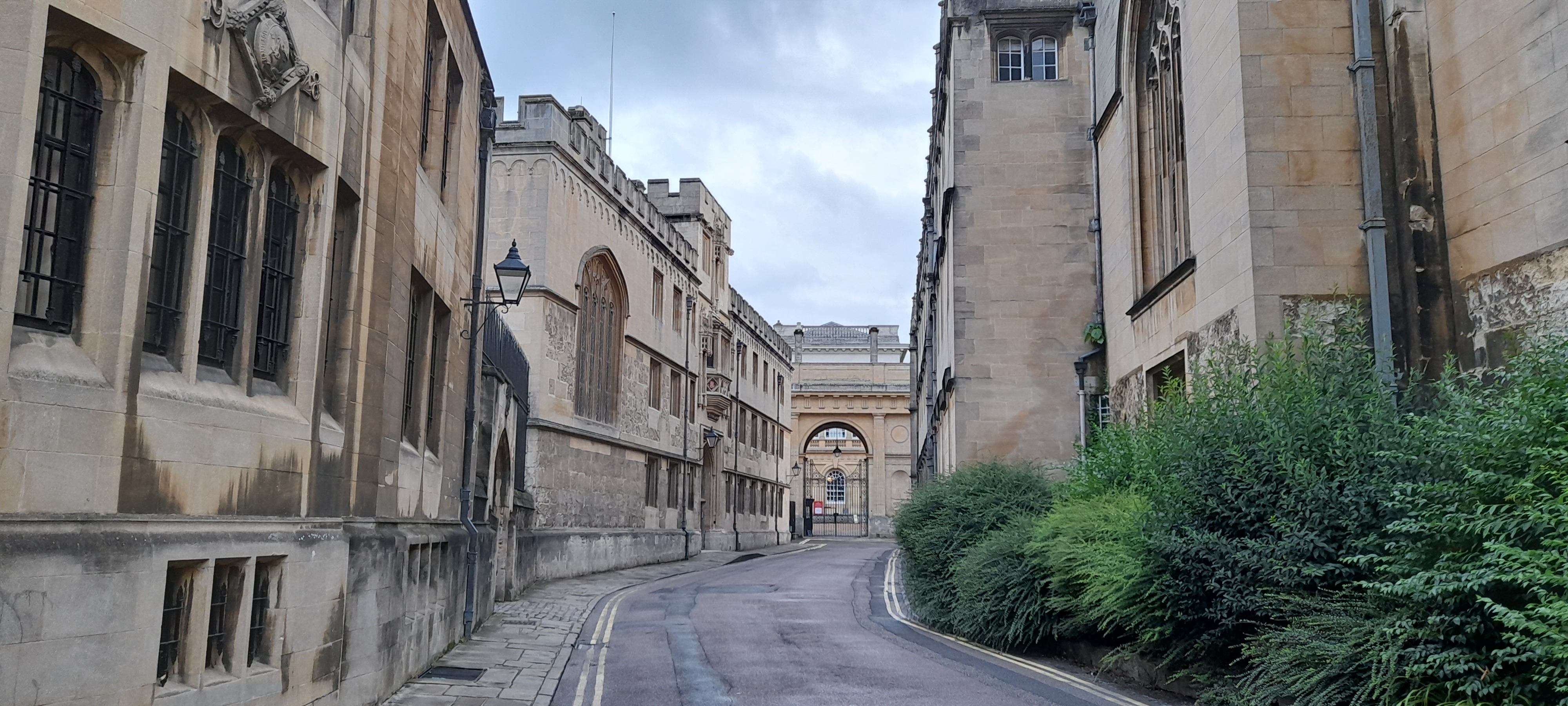
Merton Street, looking towards Canterbury Gate
Today’s online Sunday service comes from Oxford (click on the video above after 9.45 am on Sunday, 15th August 2021)

Our service is filmed in Oxford and features some of the well-known as well as some lesser-known sights of Oxford. Sue Steers reads Psalm 96 and Jenny Narramore shares an important part of College life in Christ Church. We also have a short reading from ex-slave and abolitionist’s autobiography The Interesting Narrative of the Life of Olaudah Equiano. Our organists play five hymns: Thine be the glory, John Strain, Ballee; Be still for the presence of the Lord, Laura Patterson Downpatrick; Praise to the Lord, the Almighty, Alfie McClelland, Clough; How deep the Father’s love, Allen Yarr, Dunmurry; Blest are the pure in heart, John Strain, Ballee.

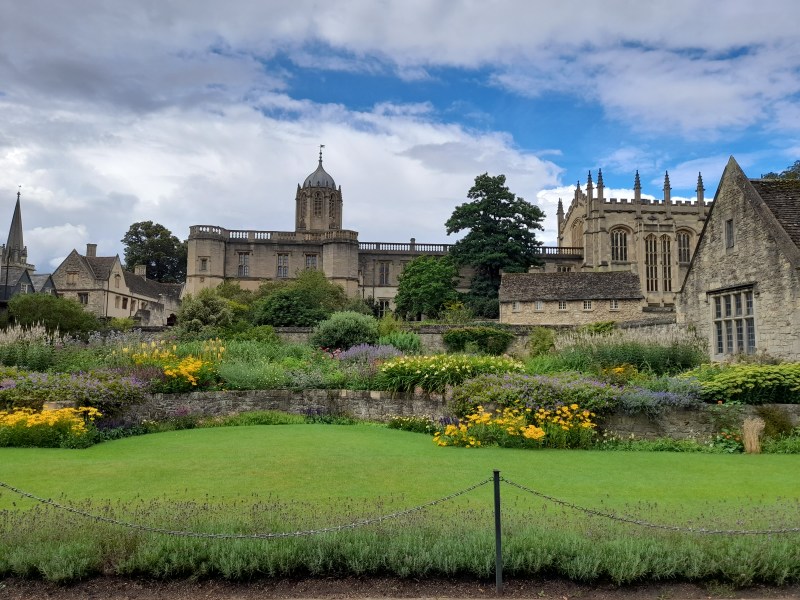
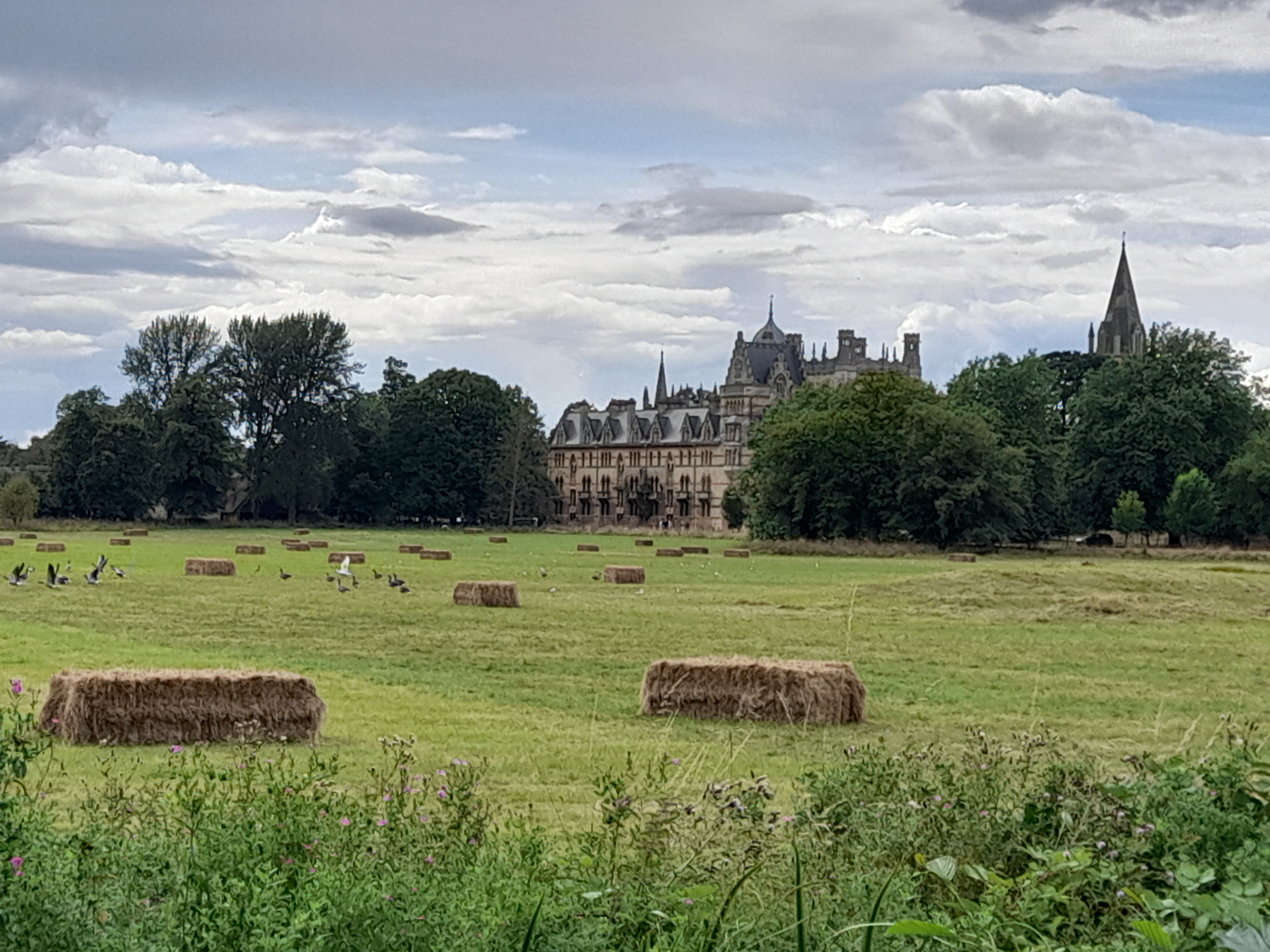
View across the Meadows to Christ Church
Mercury, Tom Quad

Oxford

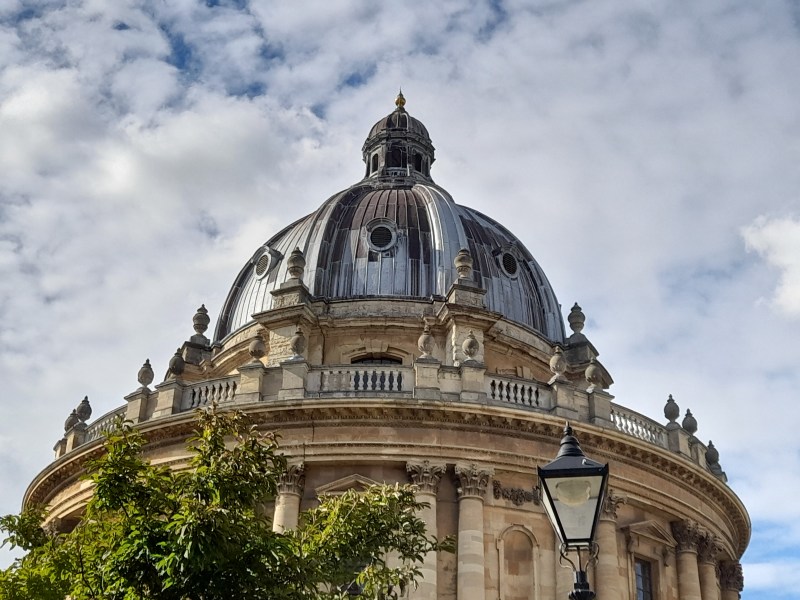
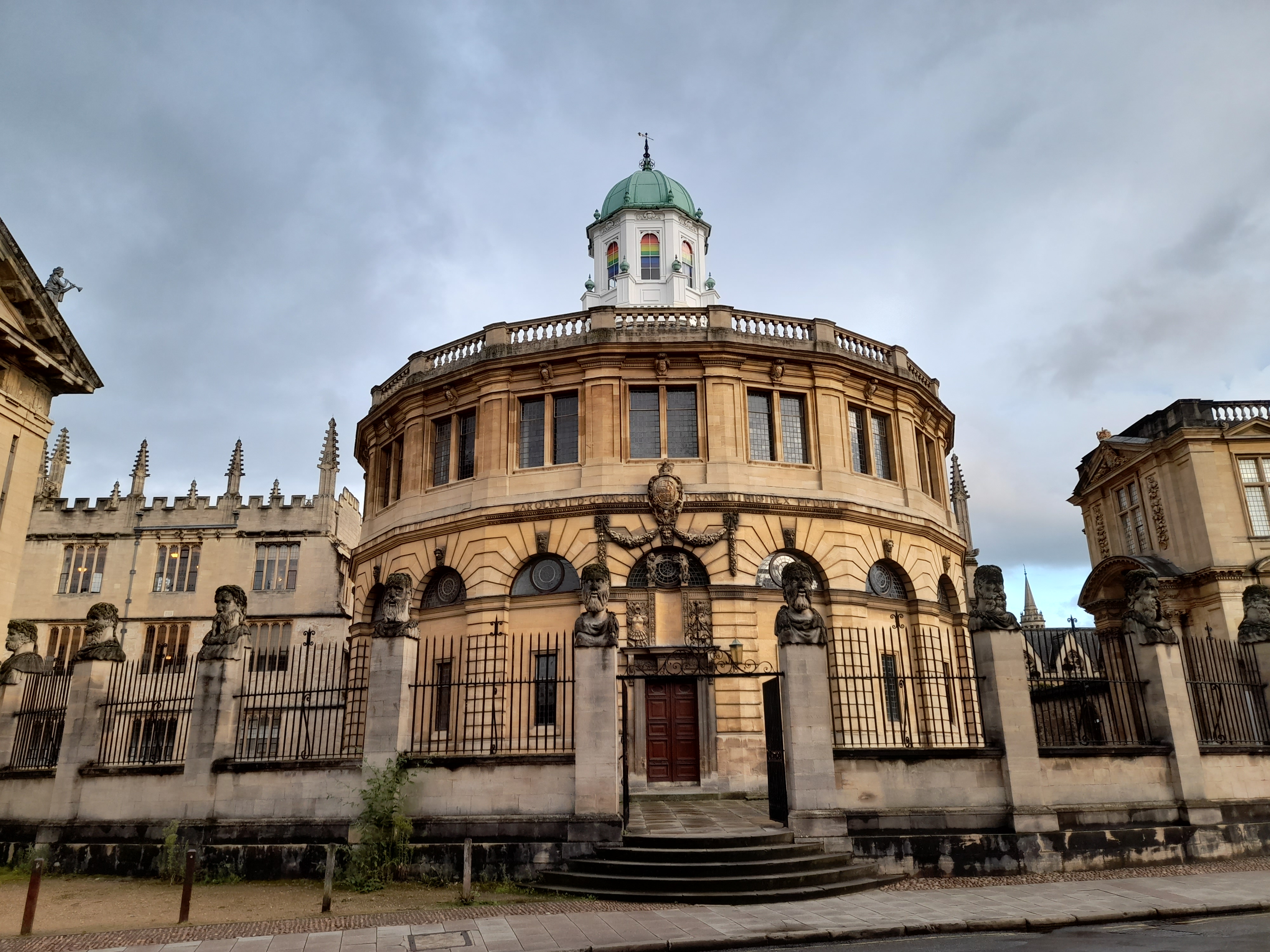
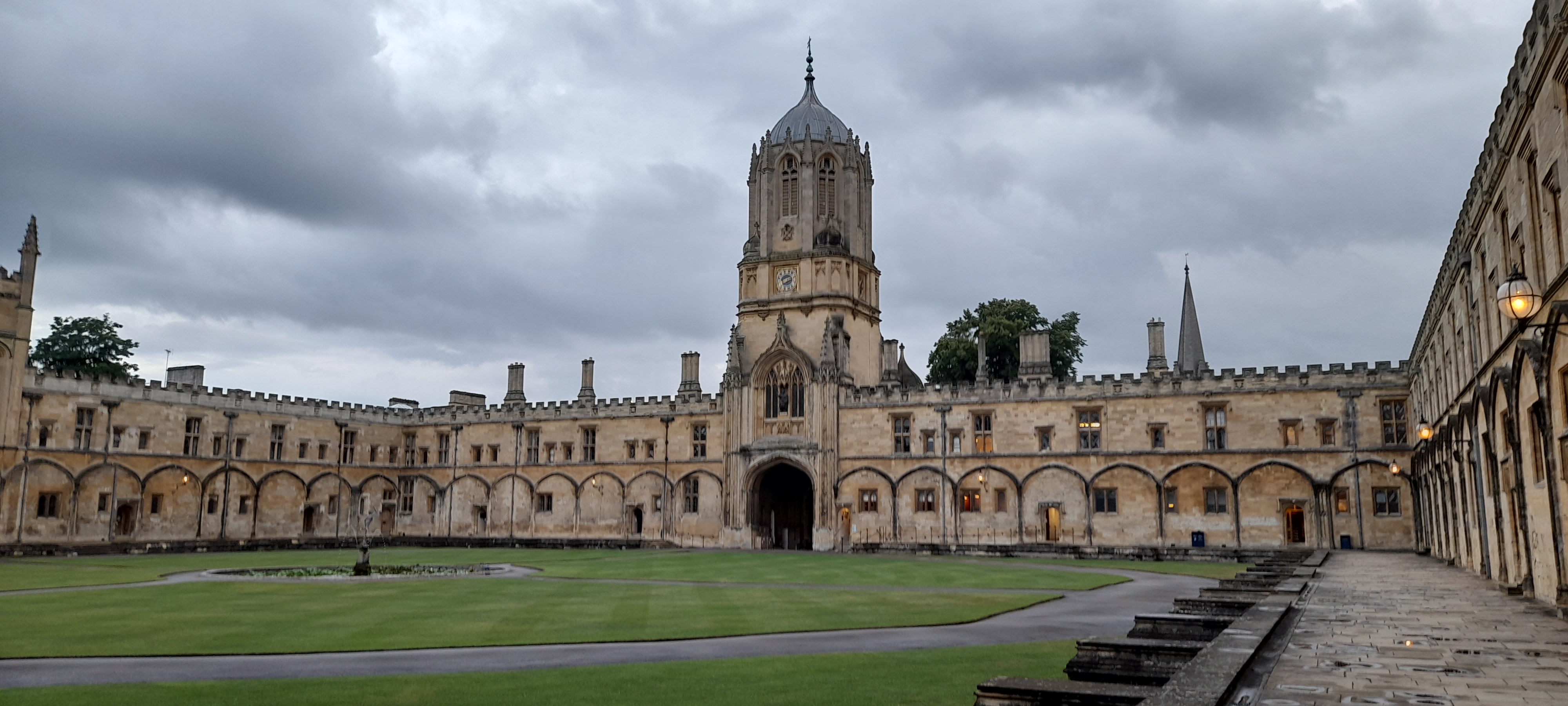
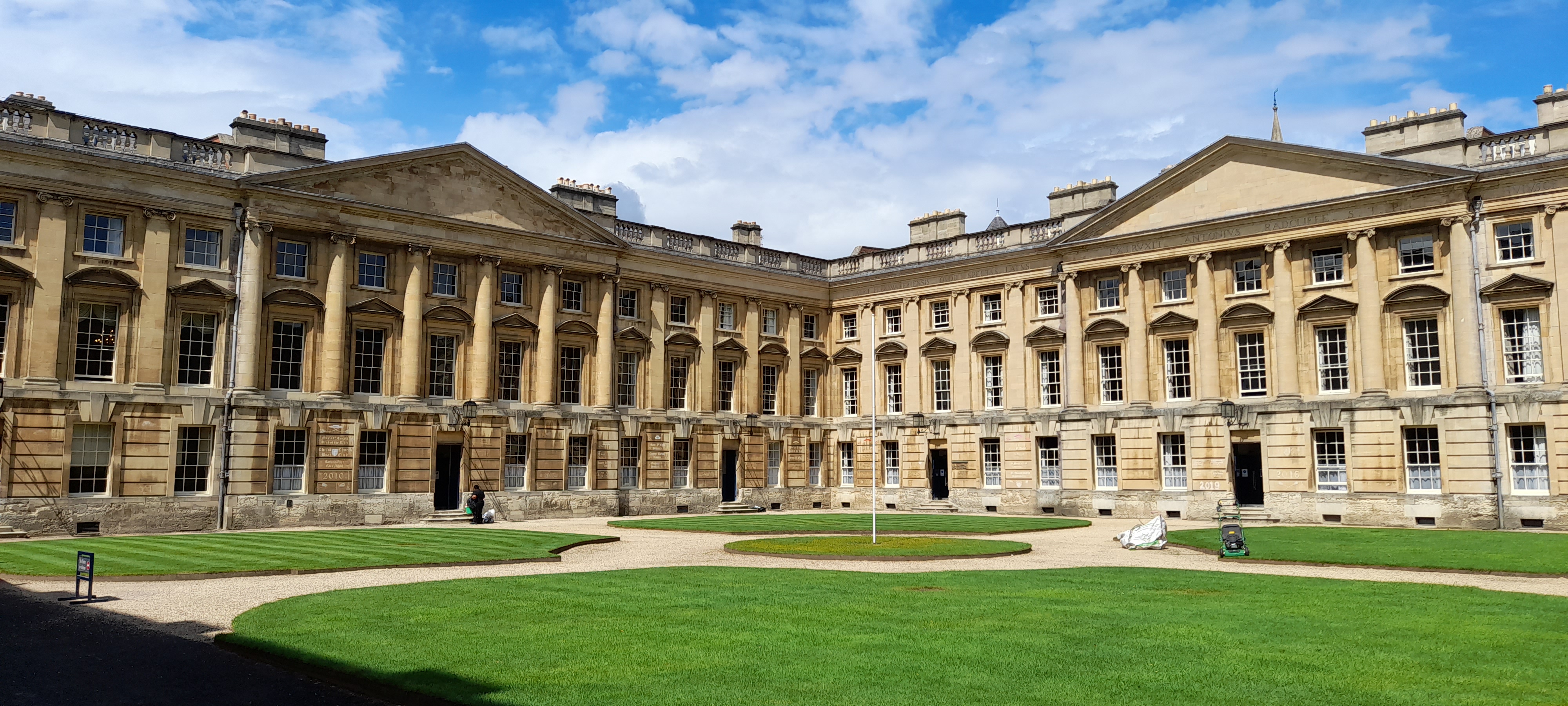
As a visual experience Oxford never disappoints. As the seasons change, as the weather or the light changes even in a single day, so the buildings repay careful scrutiny, with the colours of the stone reflecting the sun, the rain, a glowering sky or the bright blue backdrop of recent sunny days. There are less tourists now. Even the lure of Harry Potter and Inspector Morse are no longer sufficient to cram the streets with eager faces, although the city is busy enough despite the pandemic.

But here are a few images I took recently over a couple of days.

The Sheldonian Theatre, designed by Sir Christopher Wren
Tom Quad at Christ Church, with more work from Sir Christopher Wren in Tom Tower
Peckwater Quad, Christ Church
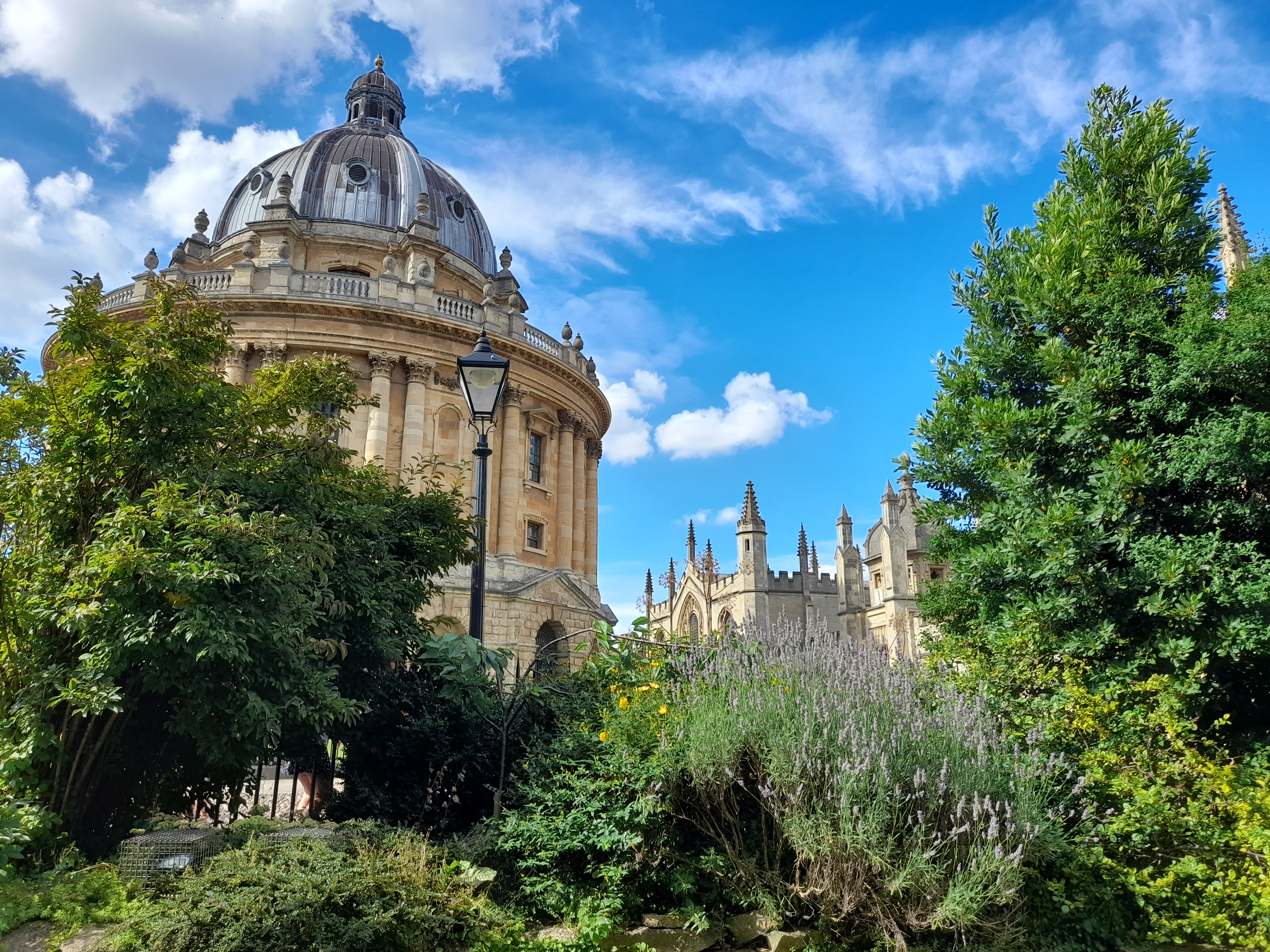
View of the Radcliffe Camera and All Souls College from the University Church
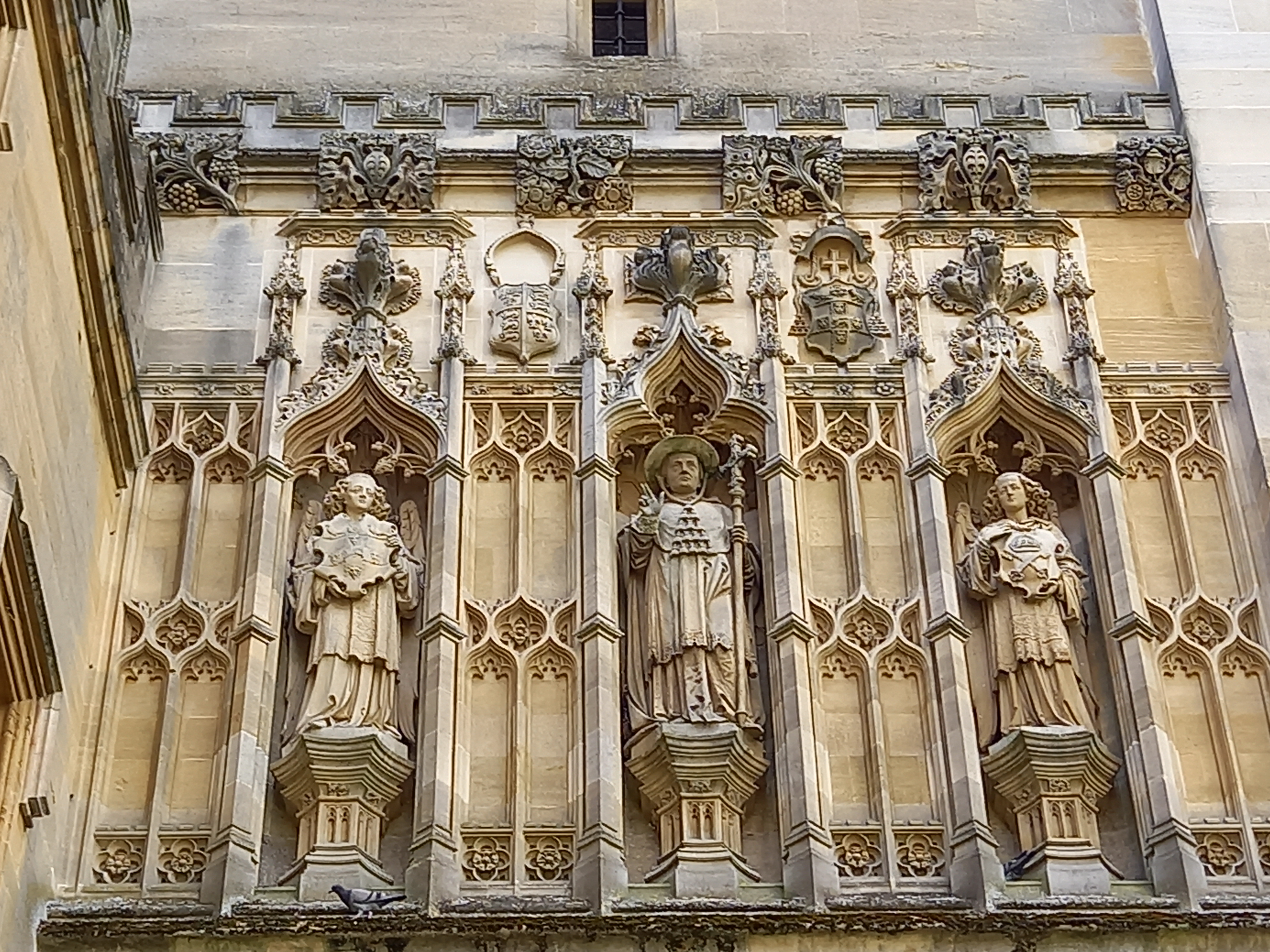
Statue of Cardinal Wolsey, Christ Church (Photo: Sue Steers)
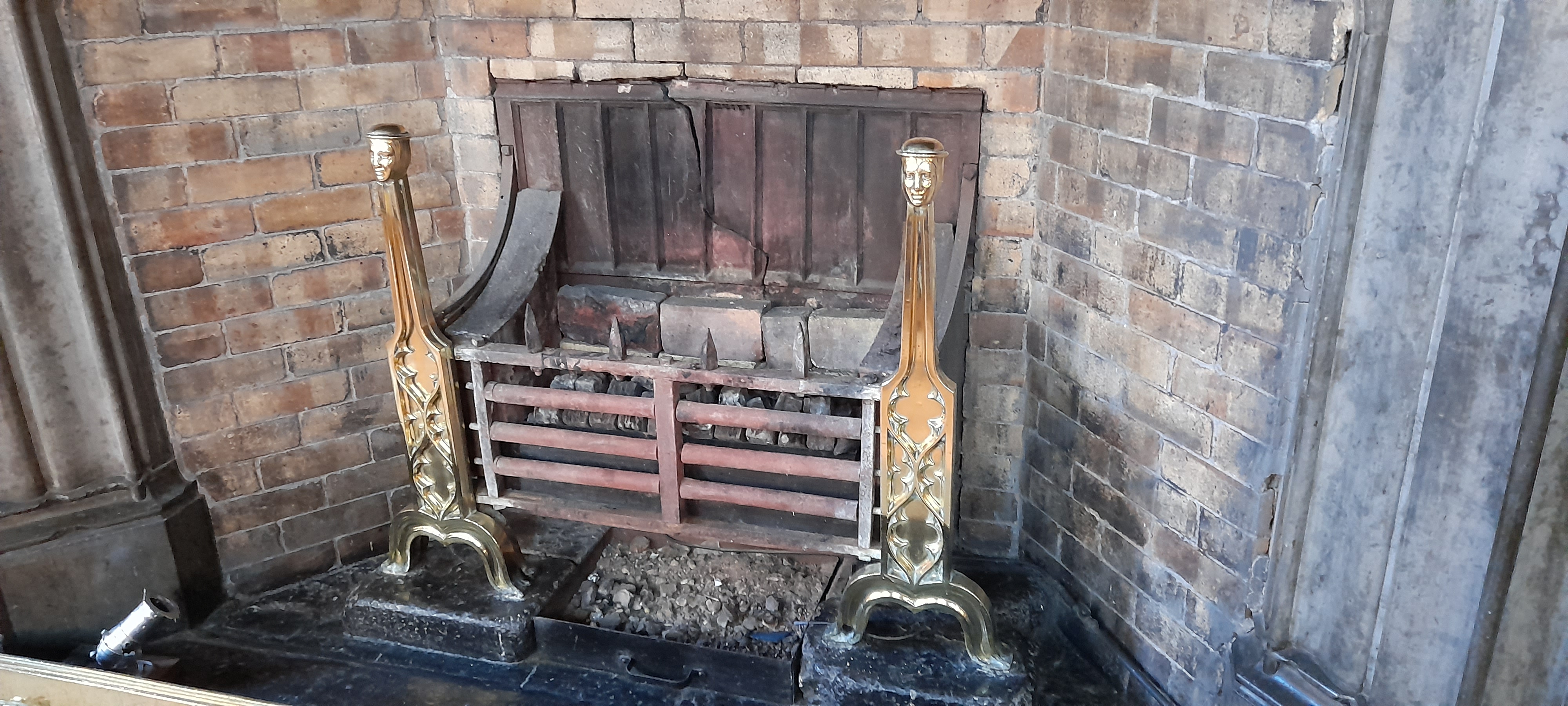
Fireplace in Christ Church Hall. The elongated necks on the brass figures on either side of the fire are said to have inspired one of the scenes in ‘Alice in Wonderland’. Lewis Carroll was a Student (ie Fellow) of Christ Church
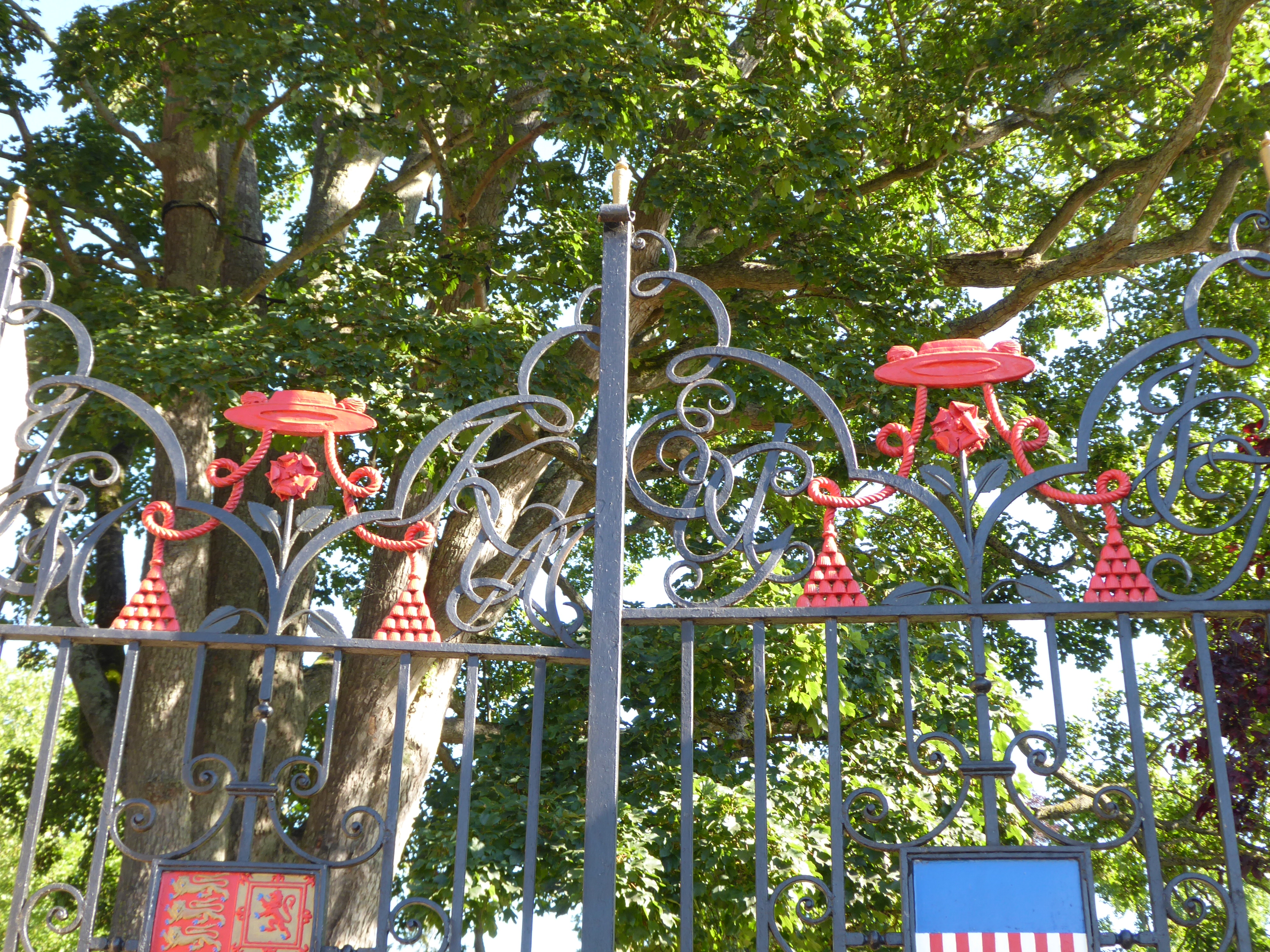
Cardinal’s hats on gates at Christ Church
Cloisters at Christ Church Cathedral, with organ playing in the Cathedral. A short video (49 seconds)

Digging up history on Lime Street

They are digging up the streets of Liverpool city centre all over the place at the moment. This is very much the case on Lime Street where they seem to be widening the pavement at one point and presumably planning to lay a new road surface.

Lime Street is a key thoroughfare in the city’s history. It has undergone some ‘development’ in recent years most notably with the controversial demolition of the old Futurist Cinema which I photographed when efforts were being made to save it. I never posted those pictures at the time although I might do in the future. The Futurist dated back to 1912 and deserved to be preserved. Over the road is the art deco frontage of the former ABC Cinema which is in some sort of limbo but also deserves preservation. I have some interesting historic photographs of Lime Street in times gone by which I might post up at some point. But walking along Lime Street now you are coralled behind a large fence, beyond which a digger is removing the old setts which can be seen in part of the road.

The orignal road surface revealed

It is interesting to see what once constituted the road surface in Lime Street. The digger is scooping up the setts, noisily shaking them about to remove all the excess debris, and then piling them high at the side of the road.

Digging up the setts
Setts piled up

But the other thing this work seems to be exposing is some of the old tramlines on Lime Street. Disused for seventy years and probably unseen for almost as long the tramlines have been uncovered by the digging.

Some of the tramlinse
Further tramlines opposite the ABC Cinema

What will happen to the old tramlines? Presumably the old setts are going to be sold off or possibly reused somewhere by the Council. I don’t know what you do with old tramlines, but it is interesting to see them, and interesting to reflect on what lies below the surface of our streets.

Ghost sign, Berry Street, Liverpool

Ghost sign Berry Street

Driving through the maze of roadworks in Liverpool my eye caught this ‘ghost sign’ on the end of a building in Berry Street. It was revealed when the building next door was demolished last year. It’s an intriguing glimpse into the past.

It’s interesting because, although it is quite clear, it isn’t complete either and is not all that simple to date. Outdoor what? Prices? It’s hard to make out. Are these prices for single bottles of pints or half-pints or are they for bulk purchases? Certainly it is a brewery sign, but because the whole sign is not legible it is hard to tell what exactly is being offered. Over 2 shillings for a pint of beer seems very high for the 1960s, which really is the latest this could date from.

The fact that it mentions the beer (if it is beer) is ‘supplied in screw stoppered bottles’ suggests a much earlier date than the 1960s. Who in the 1960s made an advertising feature of ‘screw stoppered bottles’? In fact this detail suggests a much older date for the sign. Screw stoppered bottles were invented in 1872 by Henry Barrett and used for over 100 years. Made of ‘vulcanite’, or vulcanised rubber, they must have made the portability of beers and other liquids remarkably simple. Nicola White, who has made a lot of interesting videos about her mudlarking on the Thames, has found many examples of these type of bottle tops and has written a very interesting article about them here.

The surviving artwork makes the advertisement look quite old. The gold frame that surrounds the message suggests, to me at least, an early date, pre-First World War possibly. In this case the prices must be for bulk purchases. It is a pity the top of the advertiement is missing, but a fascinating piece of history nonetheless.

The view along the road

The picture is taken on the corner of Roscoe Lane. Peeping above what was once the pub/hotel which bears the sign is the top of Liverpool Cathedral. On the right you can see what was once Great George Street Chapel, you can read more about that building on this blog here.

The A to Z of Non-Subscribing Presbyterianism: Doors

Having reached the letter ‘D’ in our alphabetical survey we look at ‘Doors’.

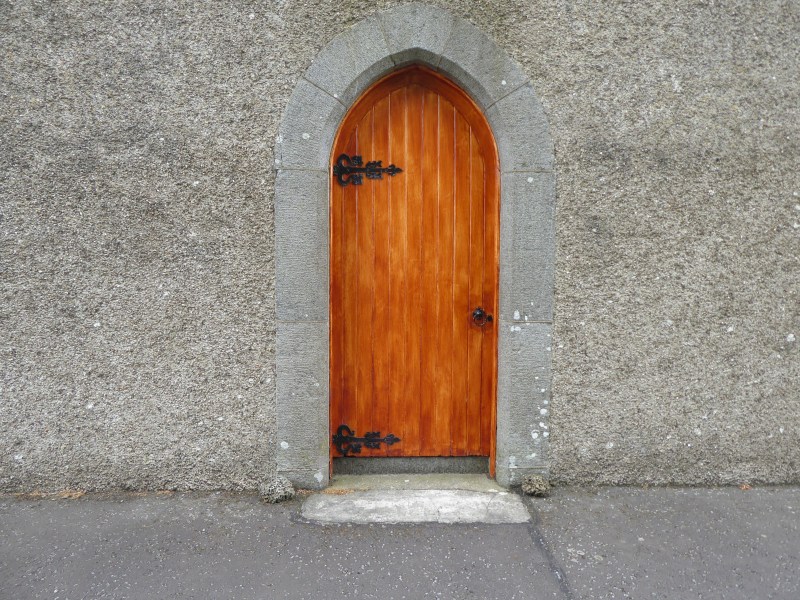
Doors are both highly symbolic and completely essential for our meeting-houses. In this service we look at the doors we find in the Non-Subscribing Presbyterian Church of Ireland.

In religious art perhaps the most famous image of a door is that found in William Holman Hunt’s Light of the World:

Light of the World by William Holman Hunt. Manchester Version. Public Domain. Wikipedia Commons

A more ornate image than the Non-Subscribing Presbyterian Church doors that appear in today’s film. An image inspired by the reading used in today’s service:

Behold, I stand at the door and knock; if any one hears my voice and opens the door, I will come in to him and eat with him, and he with me.

Revelation ch.3 v.20.

What meaning can we find in the doors of our churches, what can they tell us of our attitudes and faith?

Sunday Service. The A to Z of Non-Subscribing Presbyterianism: Doors. Click on the video to see today’s service – after 9.45 am on Sunday, 18th July 2021

Today’s service comes from Dunmurry. The pianist is Allen Yarr who plays Ye holy angels bright (Church Hymnary 39) Yield not to temptation (Church Hymnary 704) and Jesu, Joy of Man’s Desiring, by J.S. Bach. The reading is Revelation ch.3 v.20-22.

All the doors mentioned in the video can be seen on my Non-Subscribing Presbyterian History blog beginning here: Portals to a Liberal Faith

And remember each week we will upload a new video that will go live on Sundays at 9.45 am. The services can be found on our YouTube channel. Click here to see the videos