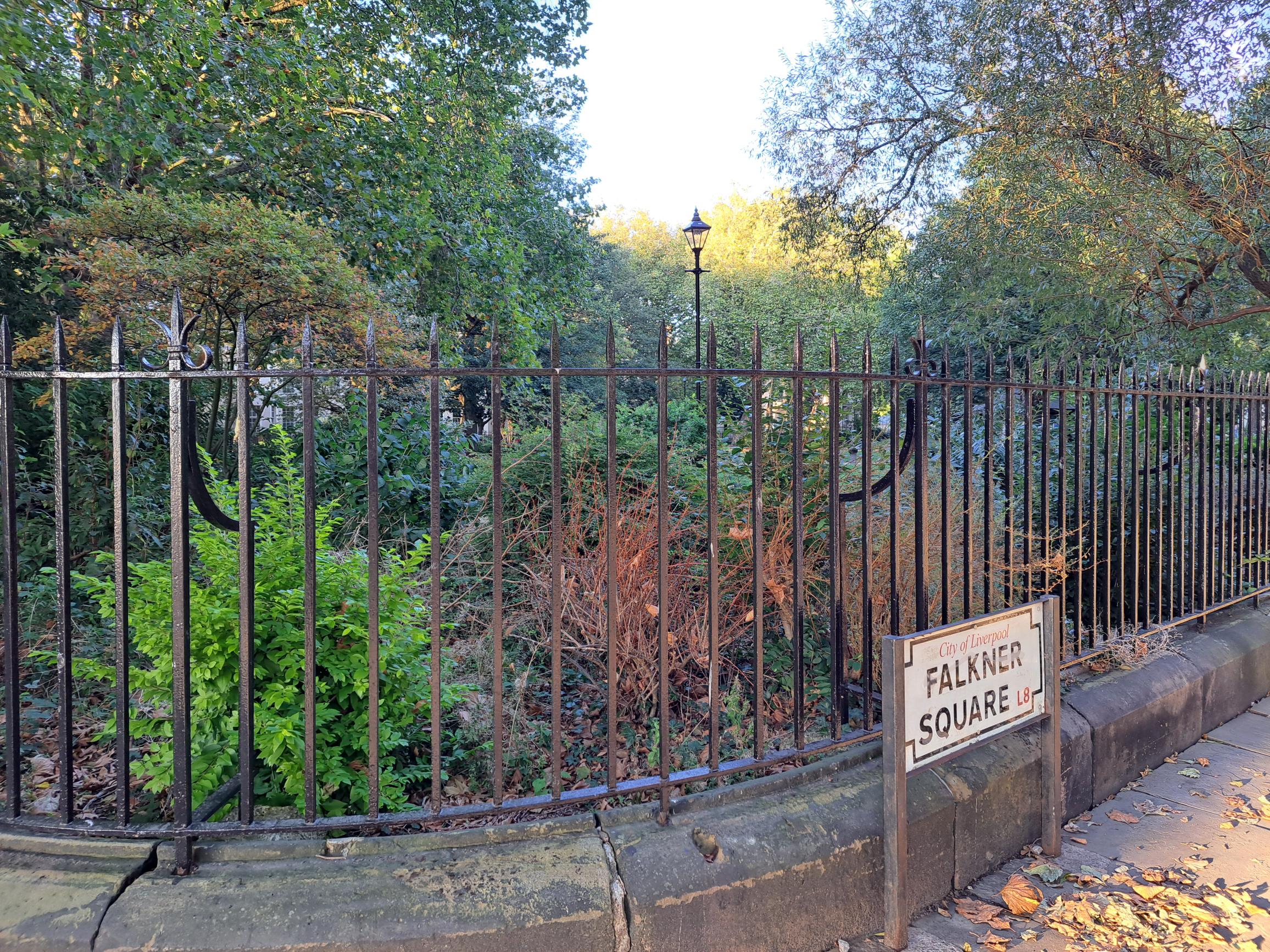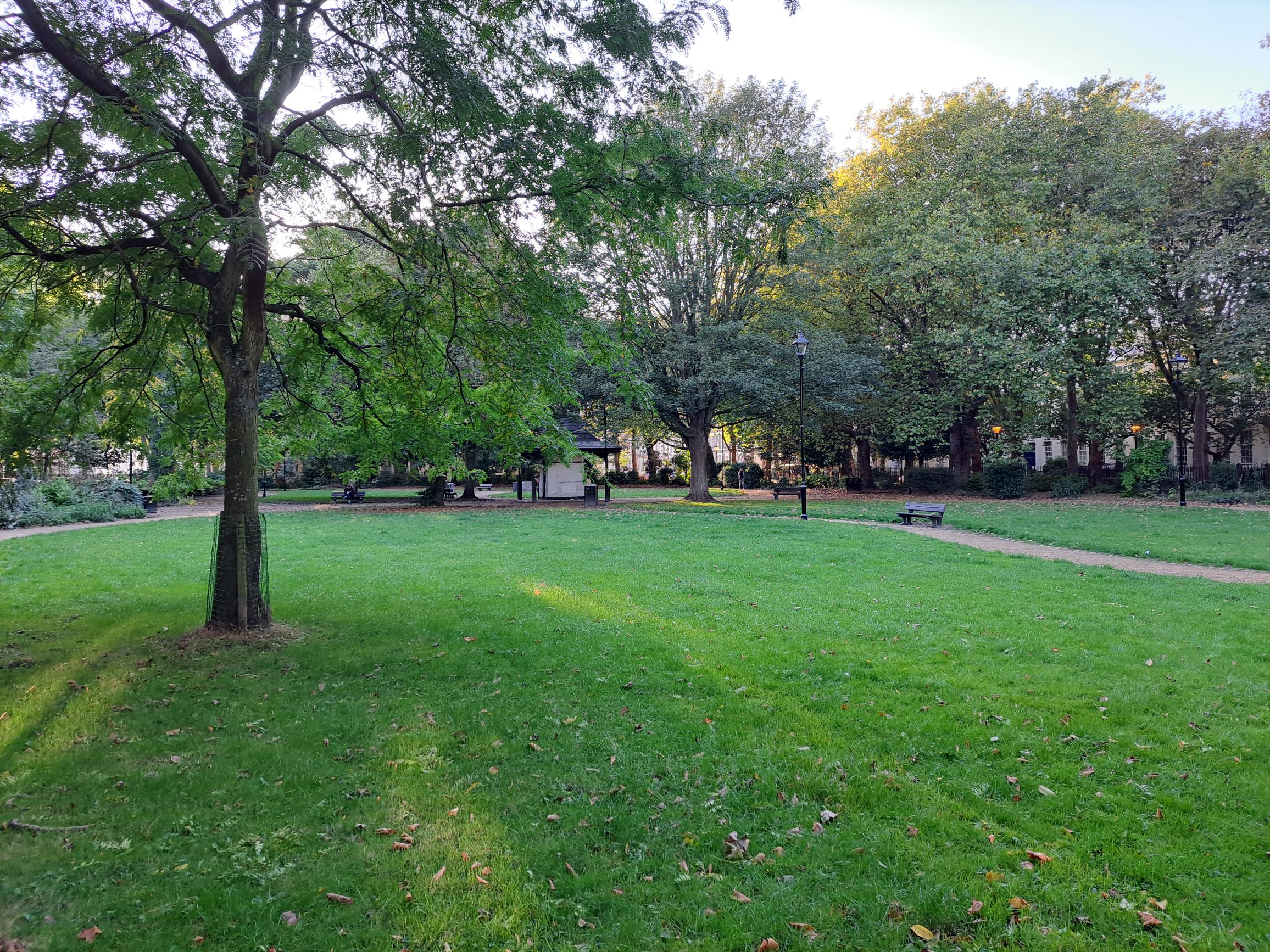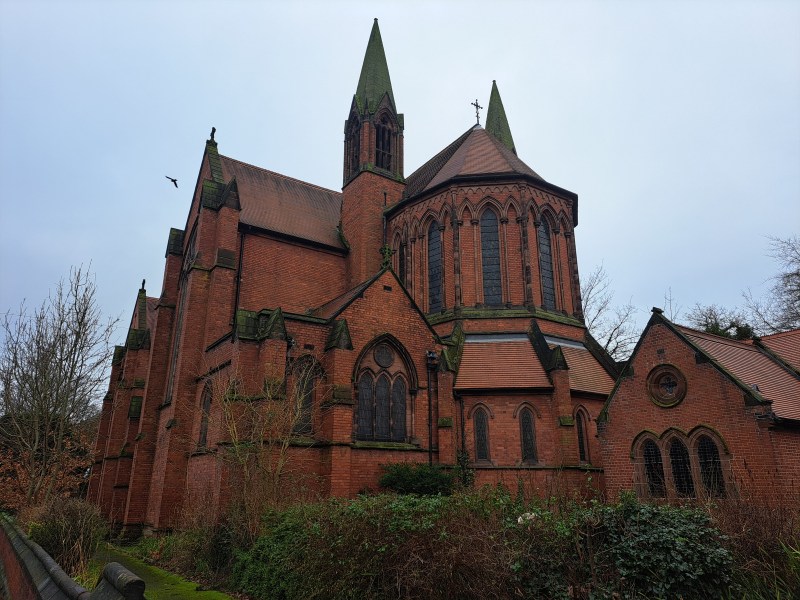
Falkner Square, Liverpool

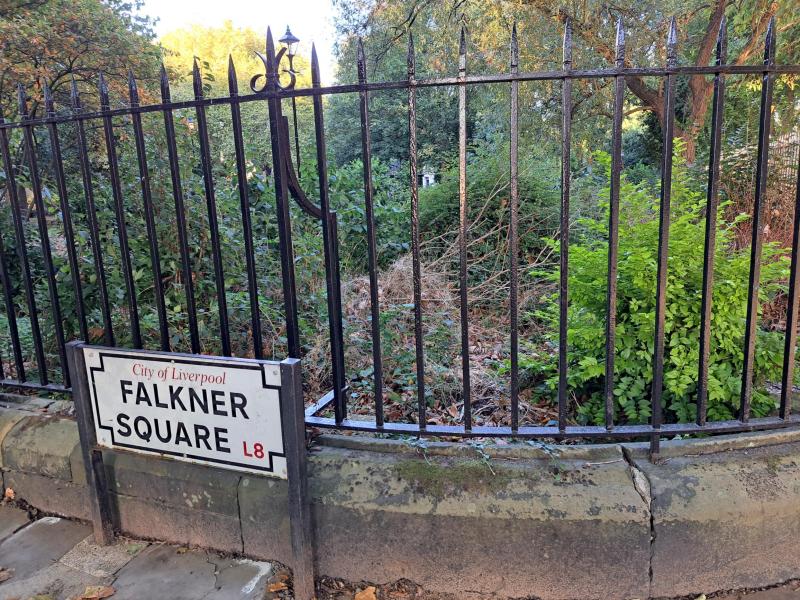
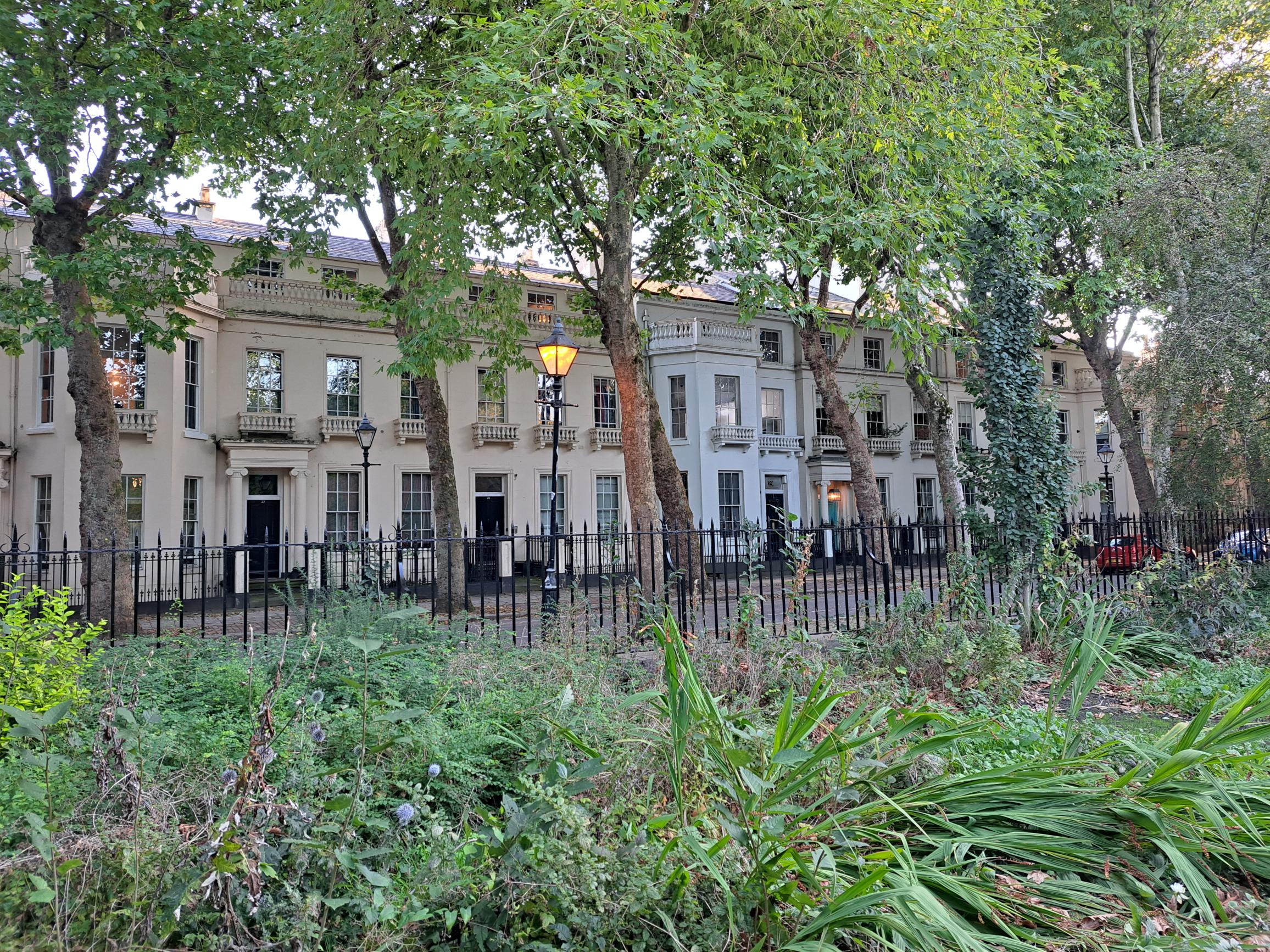
A walk around Falkner Square in Liverpool is always interesting. The buildings are quite impressive although not quite as grand as the houses in the nearby Georgian Quarter, now much utilised for film locations, although Falkner Square itself made a film appearance in the 1971 film Gumshoe with Albert Finney.

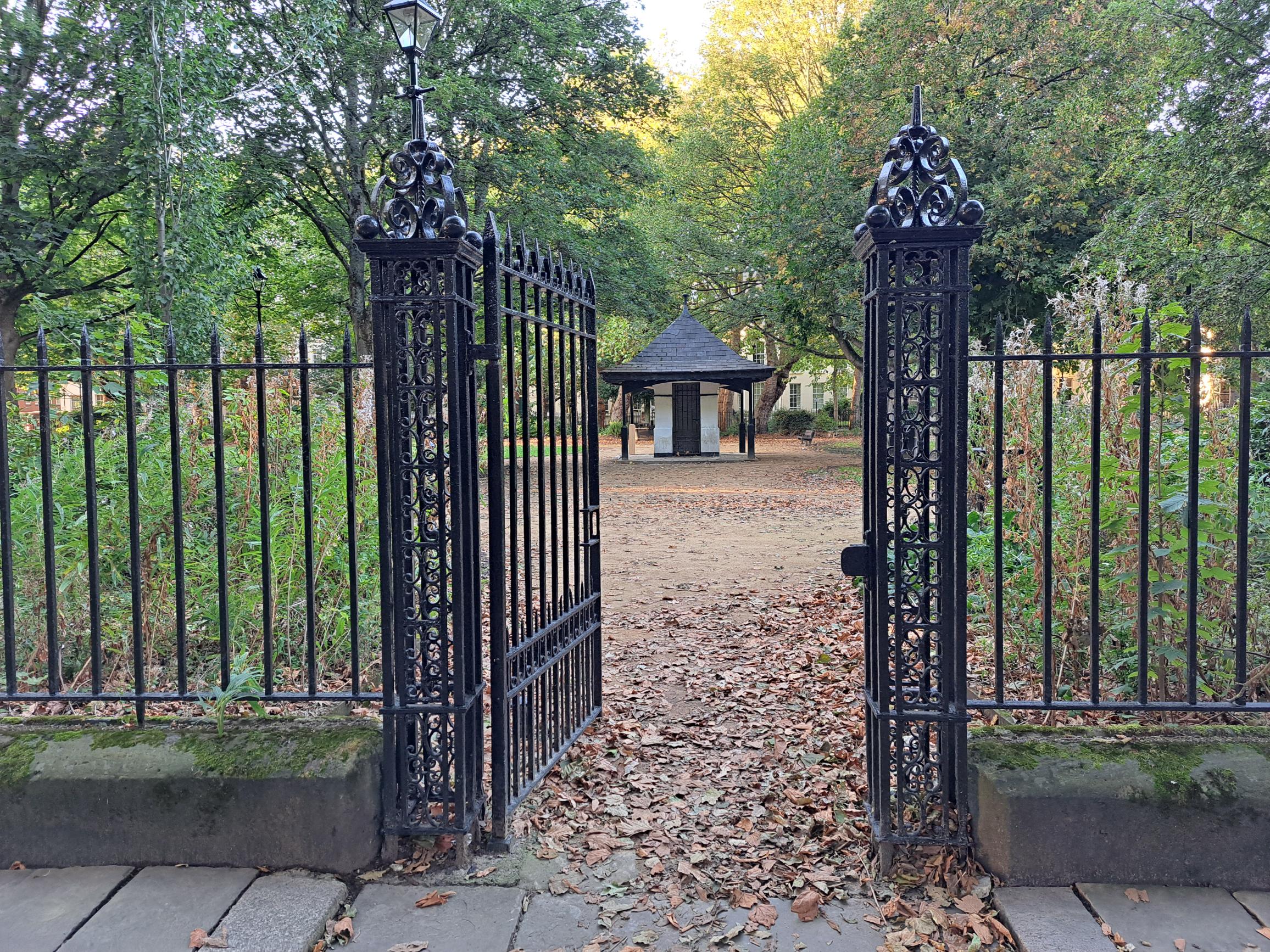
What’s attractive about it is that it has its own central park and resembles the sort of square you would find in Bloomsbury. I was always told, that in days gone by, only the people who lived in the Square had a key to the park, although the City Council now claims it as ‘one of the earliest public open spaces in the city’. I suspect it wasn’t open to the public in its earliest days.

Falkner Square is said to be named after Edward Falkner, an ex-soldier and former High Sheriff of Lancashire, who mustered a force of 1,000 men to defend Liverpool in 1797 when fears of a French invasion were at their highest. He was a successful merchant, involved inevitably in the slave trade, but who died in 1825, so he can’t have been directly involved in the development of the Square.

Joseph Sharples’ Pevsner Architectural Guides Liverpool says ‘The central garden is shown planted on a map of 1831, but the stuccoed houses did not begin to appear until the mid 1840s.’ The only architect he mentions is William Culshaw who designed number 29 in 1845 along with many Liverpool buildings.

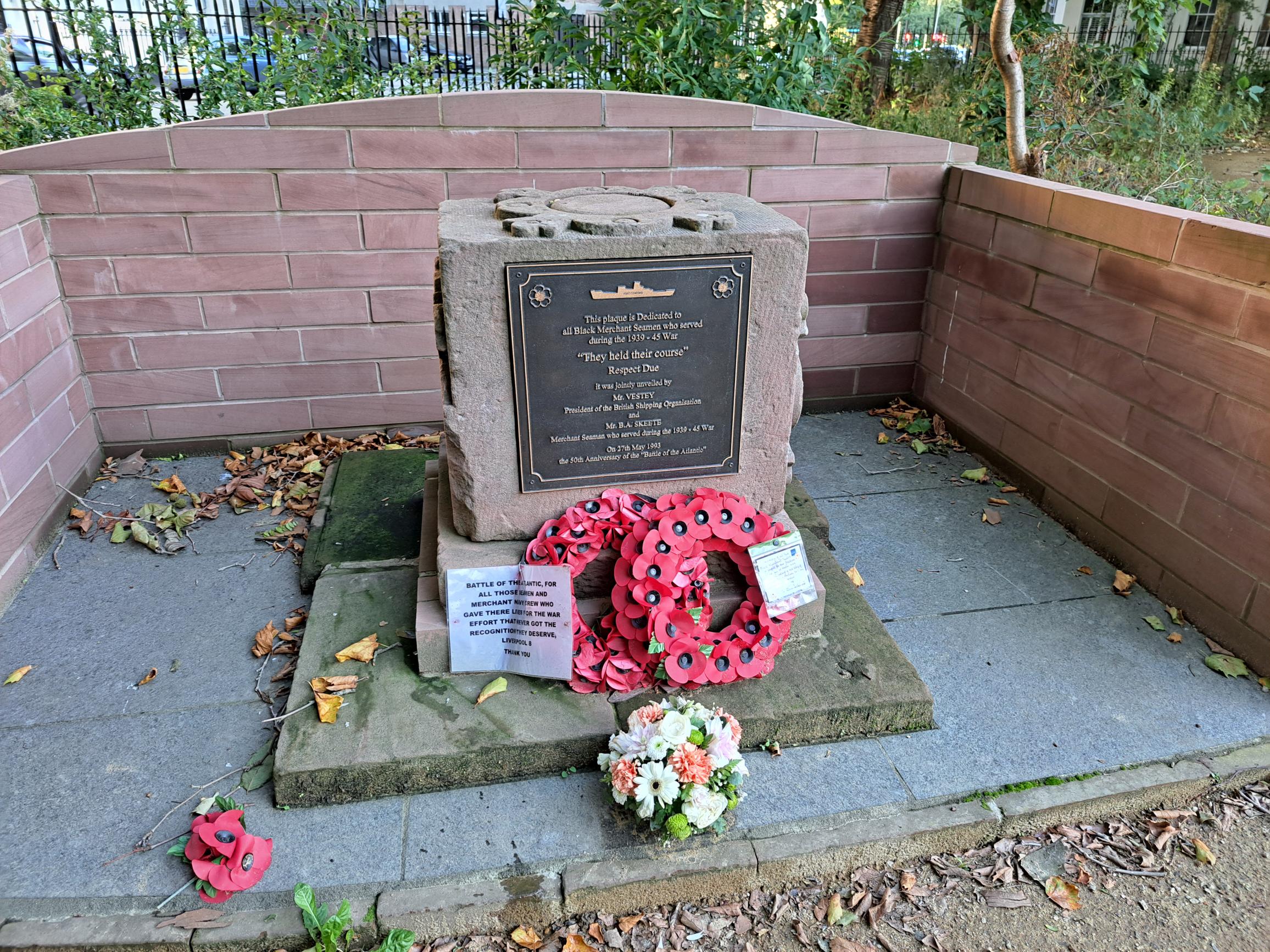
One relatively new feature is the Memorial to Black Merchant Seamen who served in the Second World War. This was unveiled in 1993 on the 50th anniversary of the Battle of the Atlantic and contains the words “They Held Their Course” Respect Due. The bronze plaque, which, shockingly, has endured some vandalism but is now restored, is attached to a large decorated piece of sandstone. This came from the old Liverpool Sailors’ Home, which was once a very prominent landmark in Canning Place near the city centre. Now only the ornate gates survive and can still be seen at the entrance to Liverpool 1.

Memorial to Black Merchant Seamen who served in the Second World War

‘Blue suburban skies’: the Beatles and Ghost Signs on Smithdown Road, Liverpool

A few years ago a post on this blog attracted some interest about a ghost sign that emerged on Berry Street in Liverpool following the demolition of a neighbouring building. You can see that post here. Walking along Smithdown Road recently I was reminded of a number of ghost signs which can be found there which have long been visible and are probably quite well documented. But it means that Smithdown Road is something of a gold mine for ghost signs so I took a few pictures as I walked along.

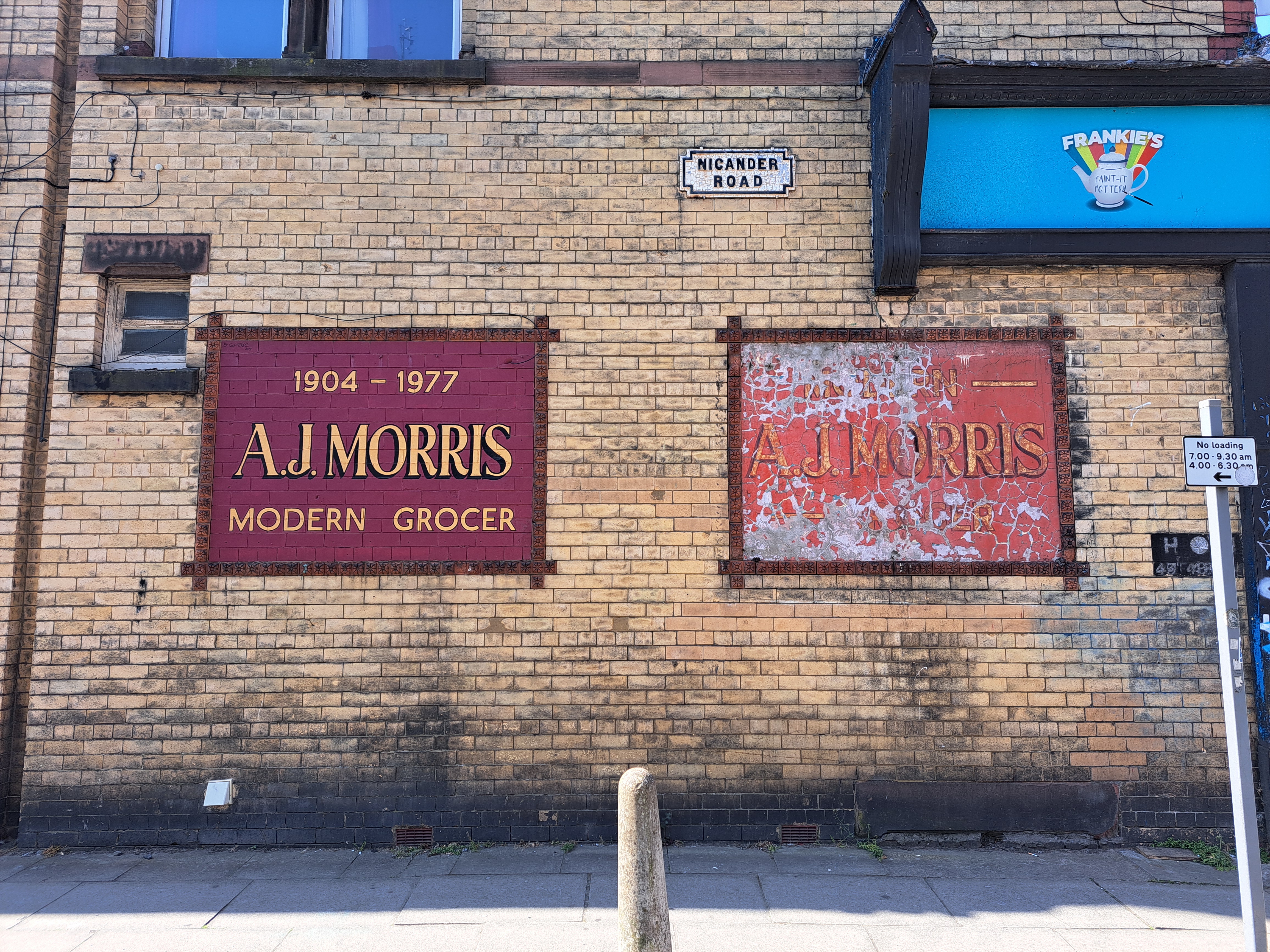
The first is close to the junction of Nicander Road and Smithdown Road. Presumably the shop on the corner was A.J. Morris’s ‘Modern Grocer’ but I have no recollection of it. It is interesting that the original sign just about survives and someone has painted a replica on the adjoining advertising square, which perhaps also once housed a similar message or perhaps was adorned with posters featuring special offers. The ornamental tiles that form the frames here are an interesting feature.

A.J. Morris Modern Grocer

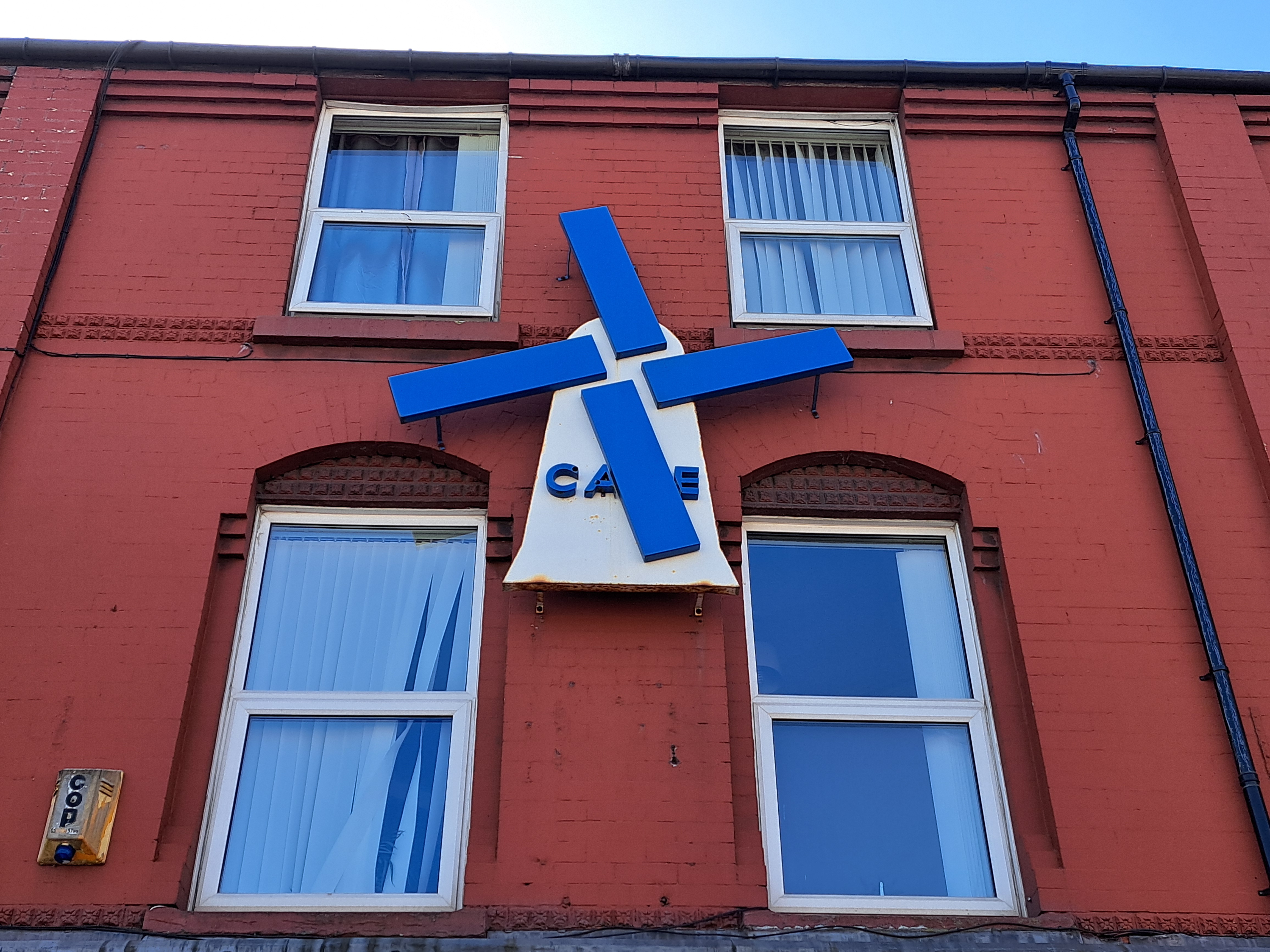
If you continue your perambulation under the railway bridge heading towards Allerton Road you will come across the next ghost sign. I have a long memory of this one, it is easy to miss but for years there was a rusty old windmill fixed above some of the shops. When I was a child I remember asking my mother why this was so and she told me that it marked the site of the Dutch Café. The Café had long gone by the time I remember first seeing the windmill but it must have had a fairly long-standing presence. Strangely when I was at school our history teacher told us about a difficult experience he had had with a group of Teds in the Dutch Café, presumably in the 1950s. I have forgotten whatever the point of his tale was but it was evidence for the existence of the Café. Other evidence has turned up on eBay over the years with black and white pictures of the staff dressed as Dutch girls being offered for sale. Tempting though it was I didn’t bid for them.

But although I am calling the windmill a ghost sign the people who own the Bathroom Centre  underneath have had it restored and it looks quite smart, if slightly incongruous. And this is where this post starts to stray into Beatles territory. There are discussions of the Café online, also known as ‘Dutch Eddies’ and ‘Frank’s’. It had a very popular heyday with bikers and others and seems to have drawn John Lennon into its orbit. This is more than likely given its location. John and Paul apparently played pinball there. Other connections are claimed by various online sources but most interestingly John Lennon is said to have referred to the Café, as ‘the Dutch’, in the original lyrics for In My Life.

Dutch Café Windmill

So there is a lot you can say about a windmill fixed to the wall above a bathroom shop.

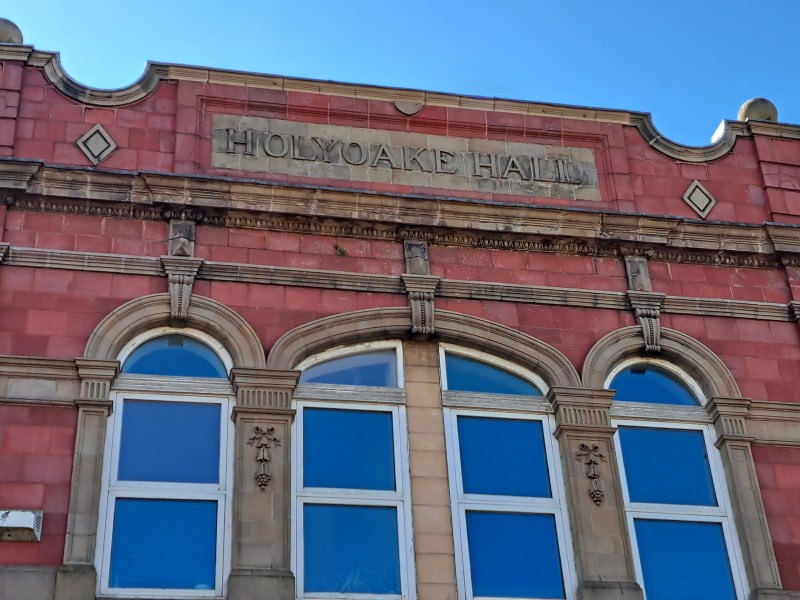
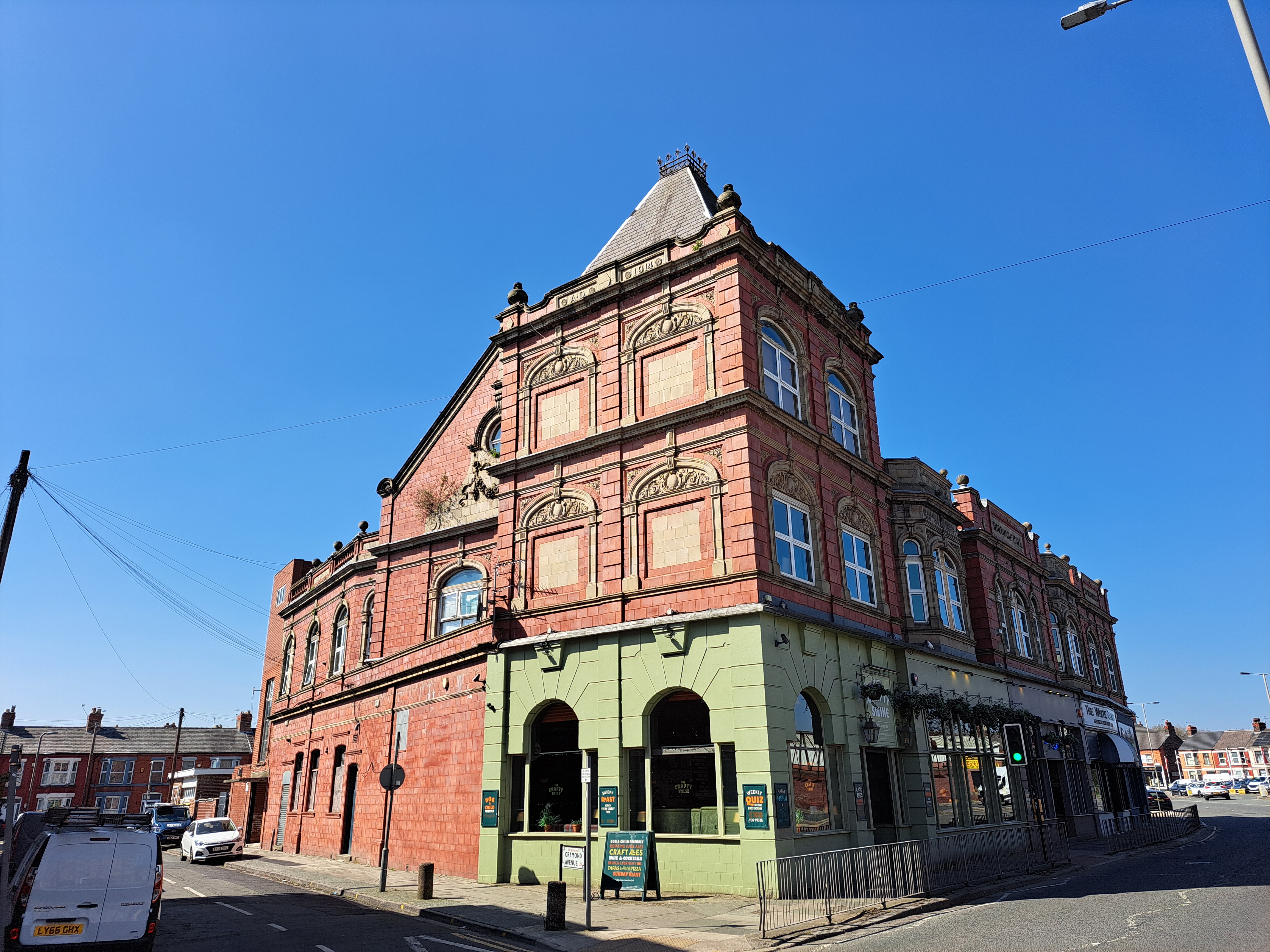
But further on the Beatles connection deepens. Some of the features, not quite ghost signs, of the Holyoake Hall are very redolent of the long departed Co-operative movement which built the Hall in 1913. It is actually quite an attractive building when judged as a whole, although the shop fronts of the modern occupants inevitably take the eye away from appreciating it as originally designed.

Holyoake Hall

I remember this being the Co-op supermarket which seemed pretty dreary at that time, although I am told by those with better memories that it was for a long time a very popular supermarket which sold many food items hard to get in Liverpool in those days. Above the shop there were what I presume were offices and also a large hall. In the 1960s and 1970s this was occupied by the British Legion and was a very popular venue because it was one of the few places you could get a drink in that part of the city. That would not be true today but there was certainly very strict adherence to the licensing laws at that time, as evidenced by the Hatfield Hotel near to the railway bridge on Smithdown Road. I neglected to take a picture of this place when I walked past during this odyssey, there were lorries, skips and scaffolding all around it, but it was clearly built as a pub and was never granted a license.

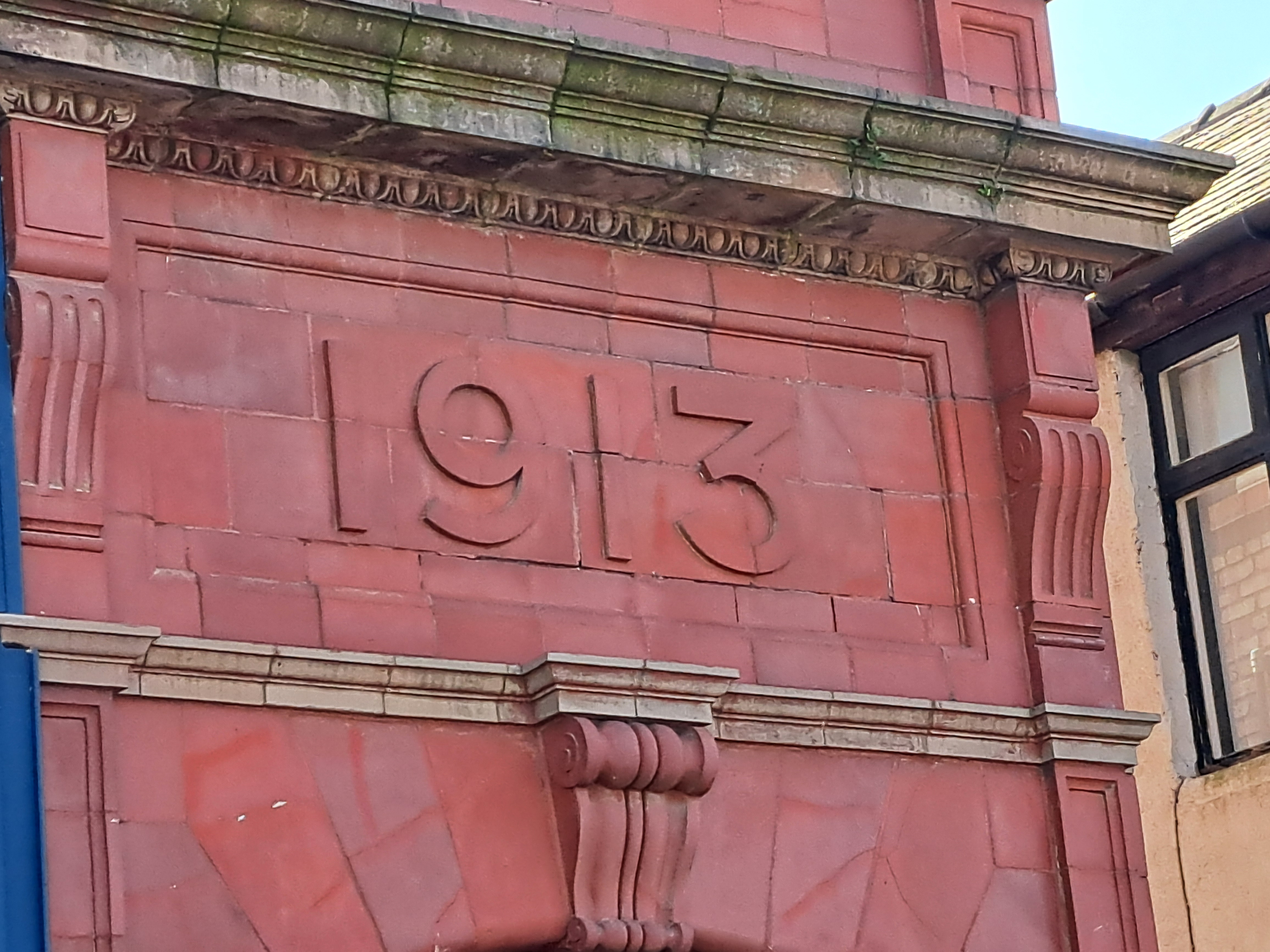
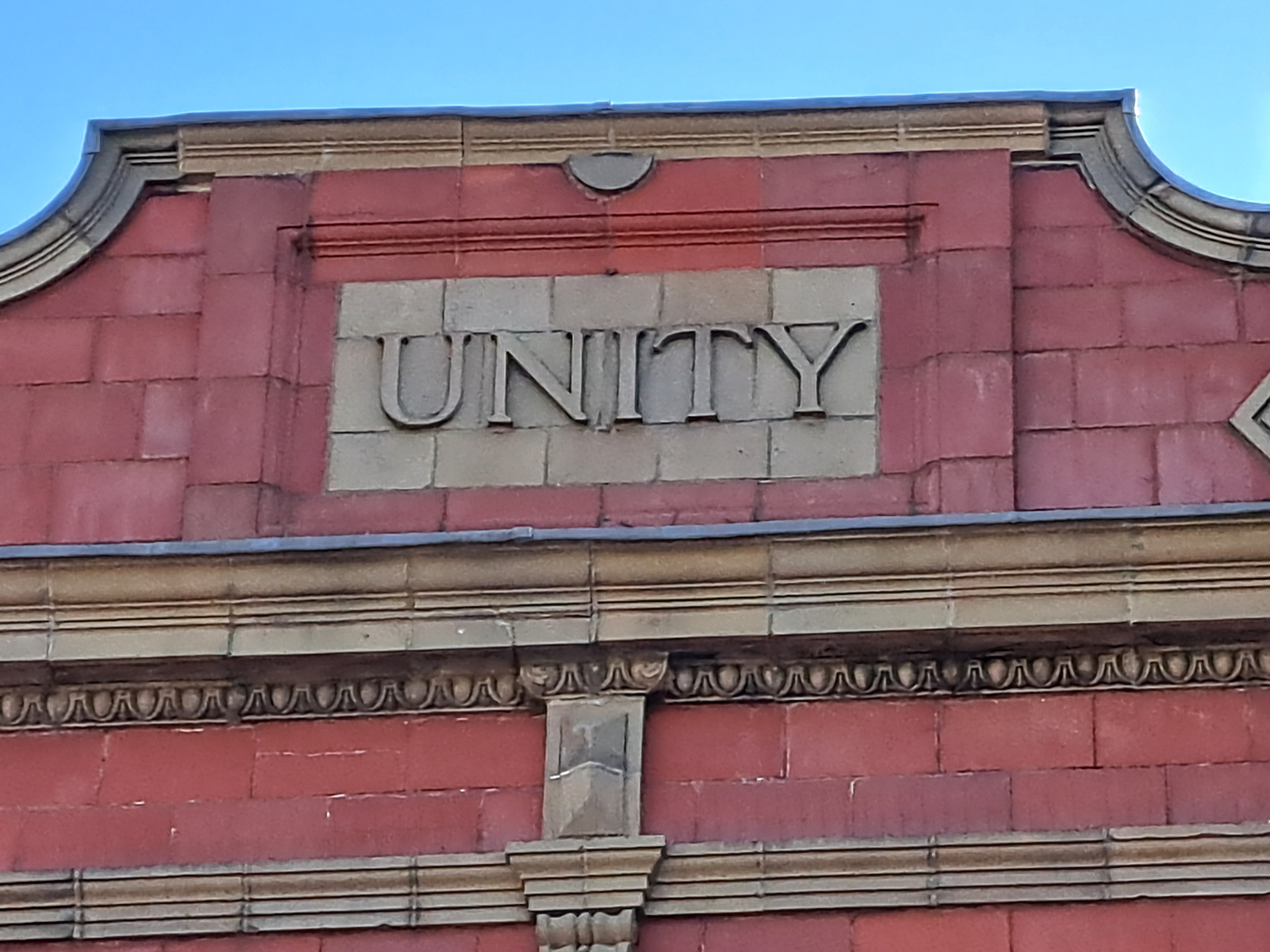
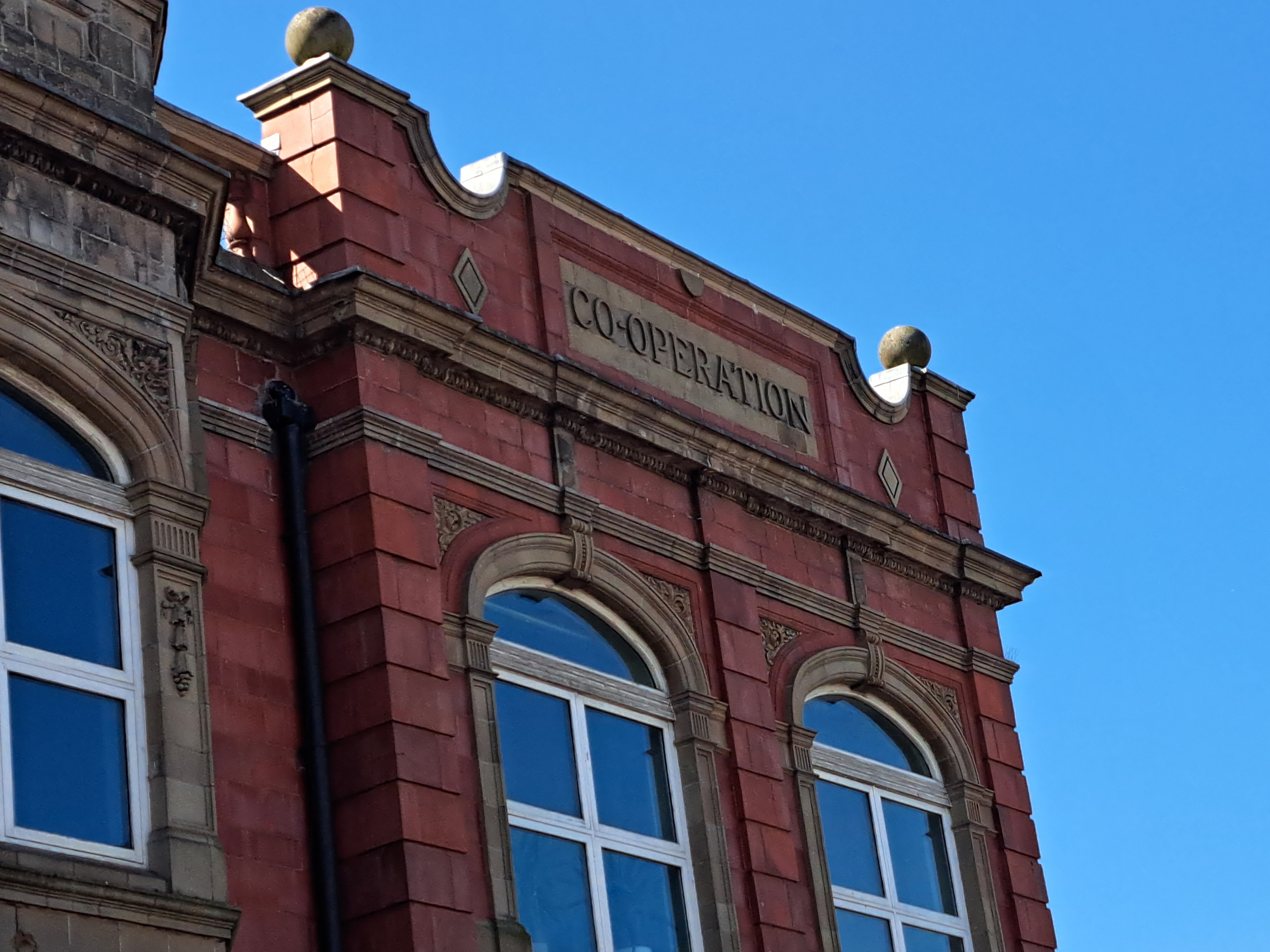
But to return to Holyoake Hall, it has many attractive stone details that proclaim things like Unity and Co-operation, as well as dates – 1913 and 1914.

Datestone 1913
Unity
Co-operation

But this is where the Beatles fit in again for they played the Holyoake Hall twice (on 15th and 22nd July 1961) and according to Mark Lewisohn in his superlative book All these years. Tune In they were paid £12 for each gig.

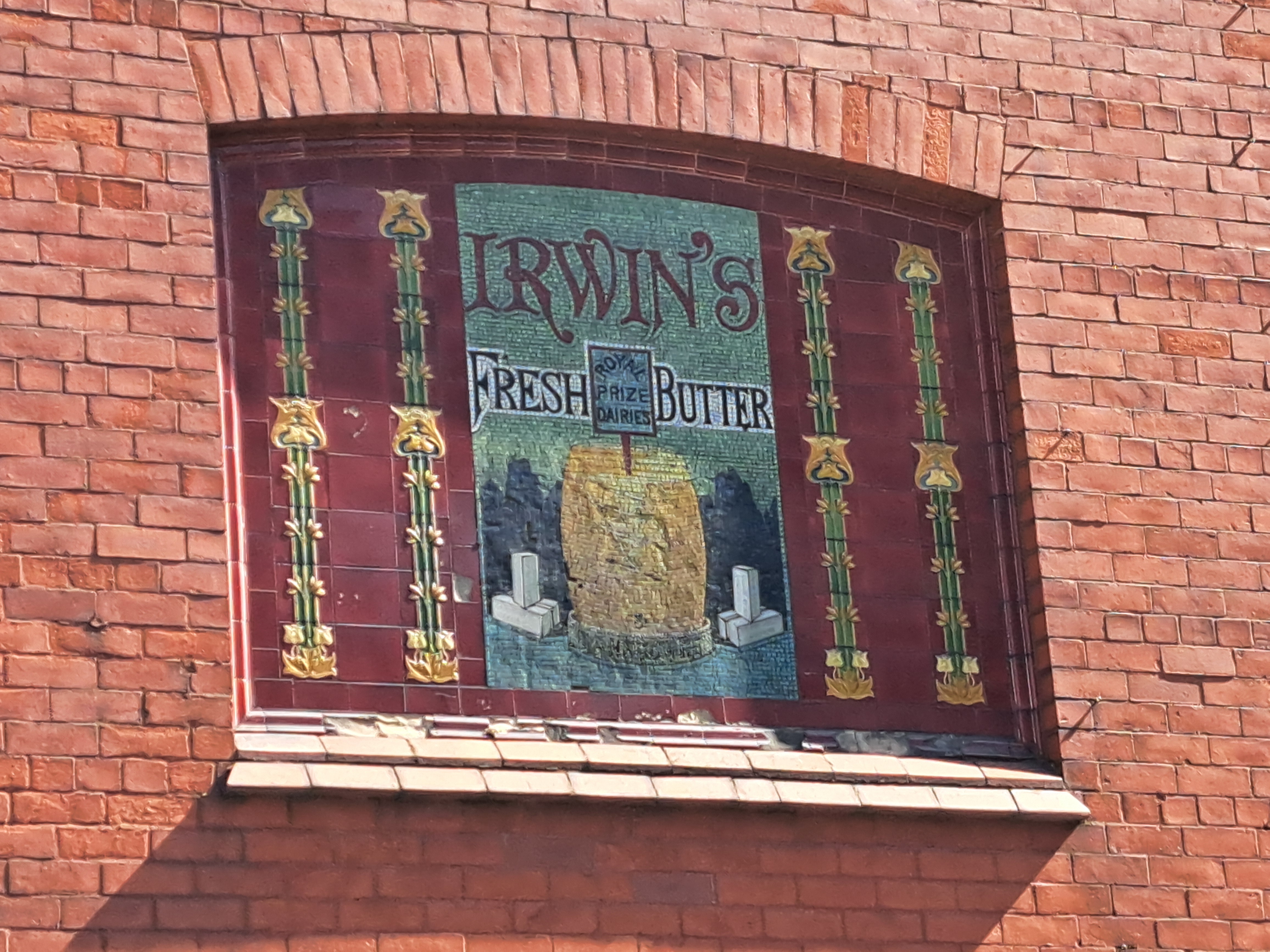
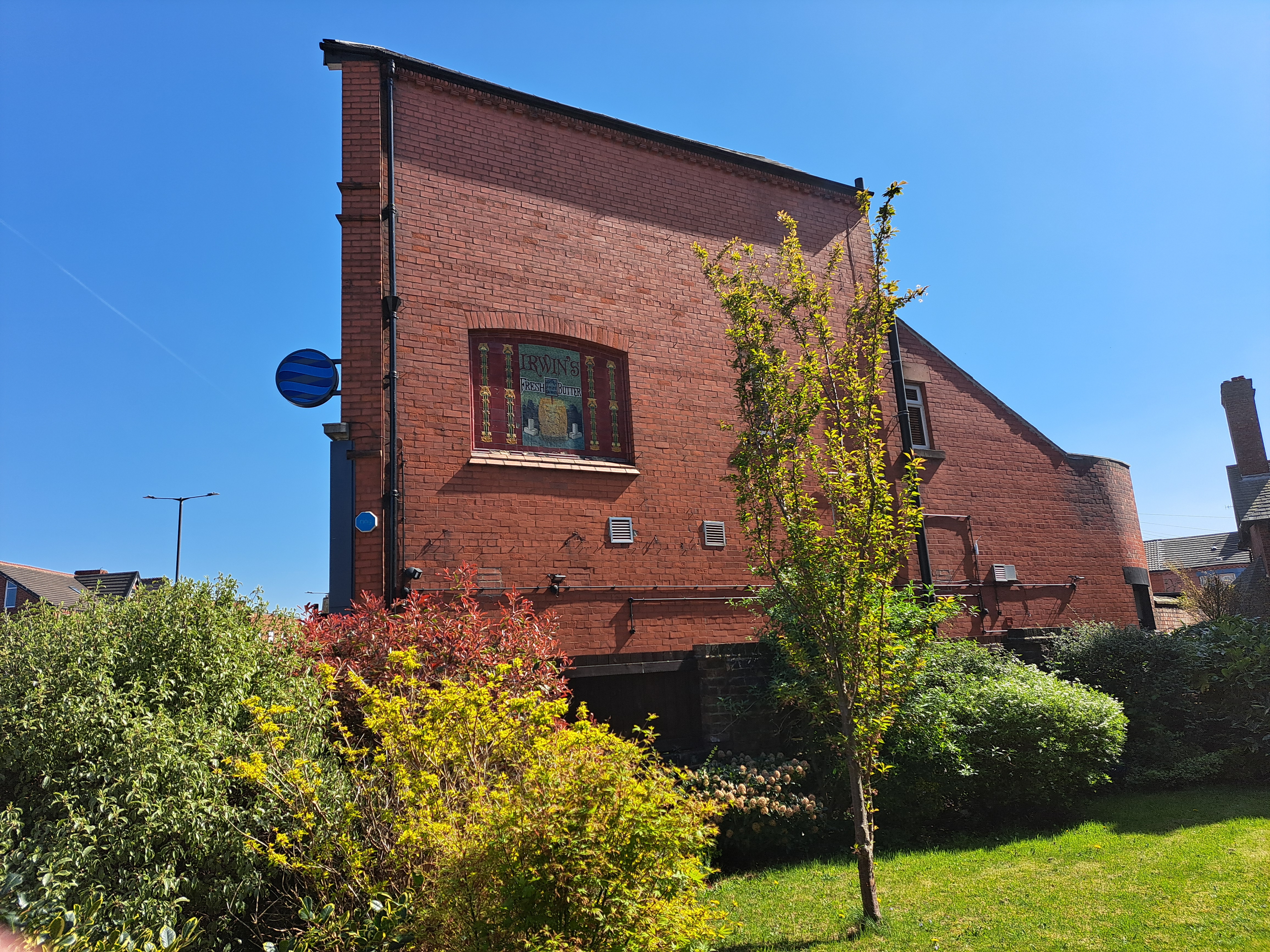
Holyoake Hall is also just around the corner from Penny Lane and if we walk along that route and across Penny Lane to the start of Allerton Road we come to the last ghost sign, an intricate mosaic for Irwin’s. These must have been expensive advertisements to produce for this Edwardian grocery chain. Irwin’s was a very successful supermarket in Liverpool and North Wales from the 1880s, eventually selling out to Tesco in about 1960. A number of these advertisements still exist but this one is a particularly good one. It can be seen in its setting right next to St Barnabas’ Church which itself has another Beatles connection in that this is the Church where Paul was once a choirboy. It is also located on Penny Lane and now has a statue of John Lennon right in front of it, so Beatles connections abound.

Irwin’s Ghost Sign

I know also that some of my readers might like a Unitarian/Non-Subscribing Presbyterian connection and one can cheerfully be given. The curate and then rector of St Barnabas’ Church between 1904 and 1929 was the Rev James Kirk Pike. However, he started out as a Unitarian and was minister of Chowbent Chapel from 1885 to 1890 and then at First Church, Belfast from 1890 to 1893, followed by a short ministry at Warwick before joining the Anglican Church. So there we have a link – for those who would like one – that ties the Beatles to Unitarianism, albeit in a very tenuous way!

The view across the front of St Barnabas to the Irwin’s sign

George Cross (1909 – 2011) and the Normandy Landings

George Cross was born in Toxteth, Liverpool and lived all his life there apart from the war years. As a young man he took part in the D-Day Landings on 6 June 1944, not returning there until 2009 at the age of 100.

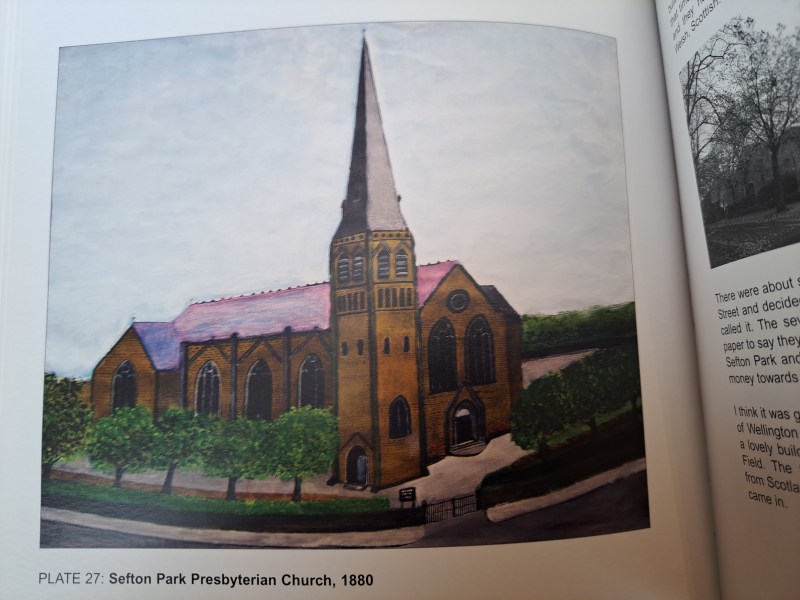
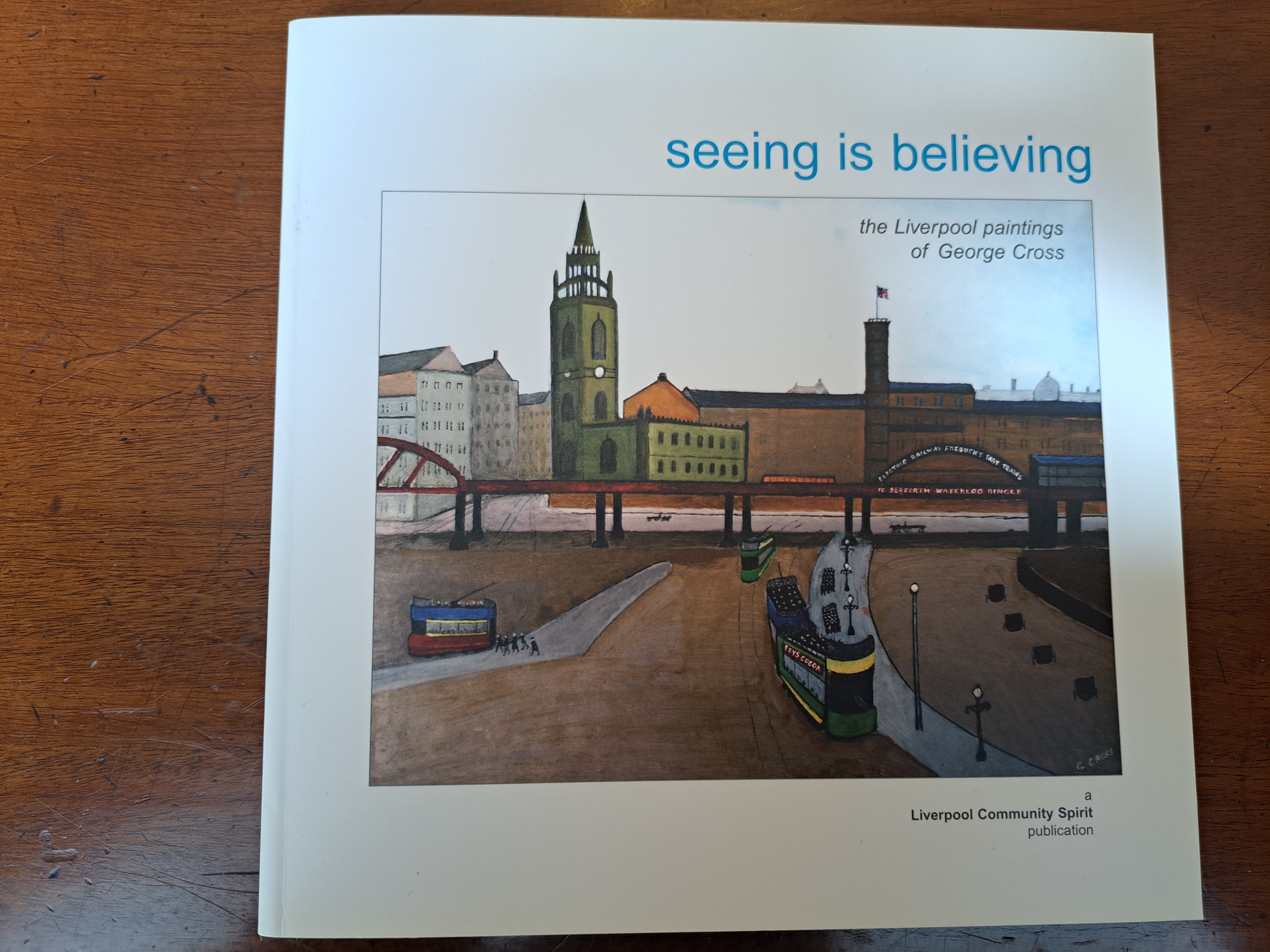
As a young man George attended Hyslop Street Mission, later moving to Sefton Park Presbyterian Church where he was an elder and lay preacher. George developed lots of interests and became a published author, writing about Liverpool history, and late in life emerged as an accomplished artist with public exhibitions and a book of his paintings which commemorated Liverpool buildings, many of them long demolished, including Sefton Park Church (at the top of the page).

In this video we tell some of the story of his life, particularly in relation to the D-Day Landings in which he participated. He has the distinction of having a building named after him in Toxteth and is remembered by a great many people for the warmth of his character and his kindness.

Click on the video to see George’s story
‘seeing is believing: the Liverpool paintings of George Cross’

The video includes some film of George’s return to Normandy in 2009 as well as film of him at one of his exhibitions.

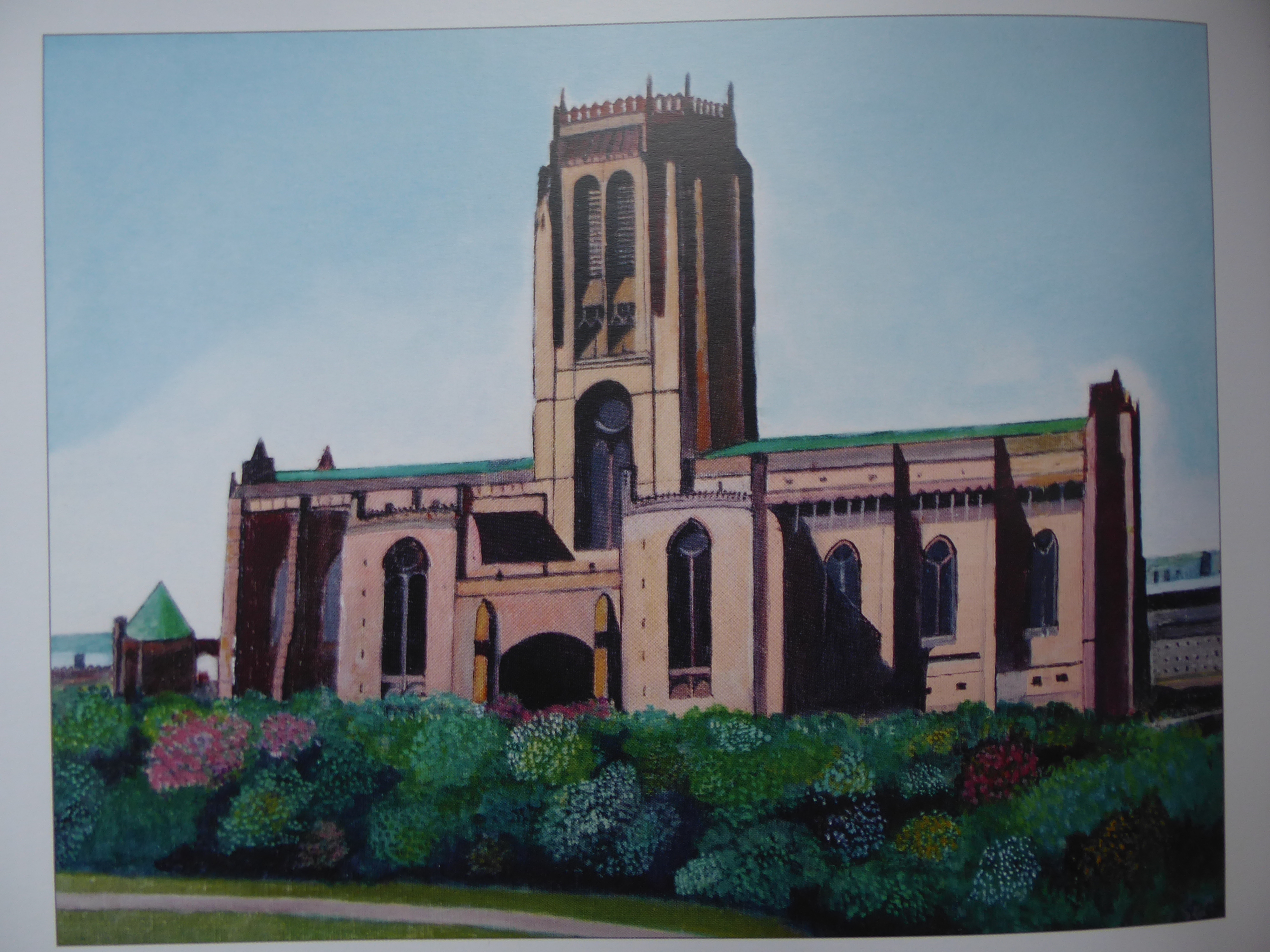
Liverpool Cathedral by George Cross

Rev John Johns (1801-1847)

John Johns, the first Minister to the Poor in Liverpool – the first minister of the Liverpool Domestic Mission – died more than half a century before Ullet Road Church was built. Yet his memorial can be found there. In fact it is one of many memorials. When Ullet Road Church was built in 1899, purpose-built cloisters were added to house the many memorials which had covered the walls of their former Chapel on Renshaw Street.

Renshaw Street Chapel, Liverpool

But John John’s memorial wasn’t added with those from Renshaw Street. His memorial originally was placed in the Domestic Mission, and it was only after it was demolished in the 1970s that it was it removed to Ullet Road and kept in store for some years before being fixed in one of the entrances to the church.

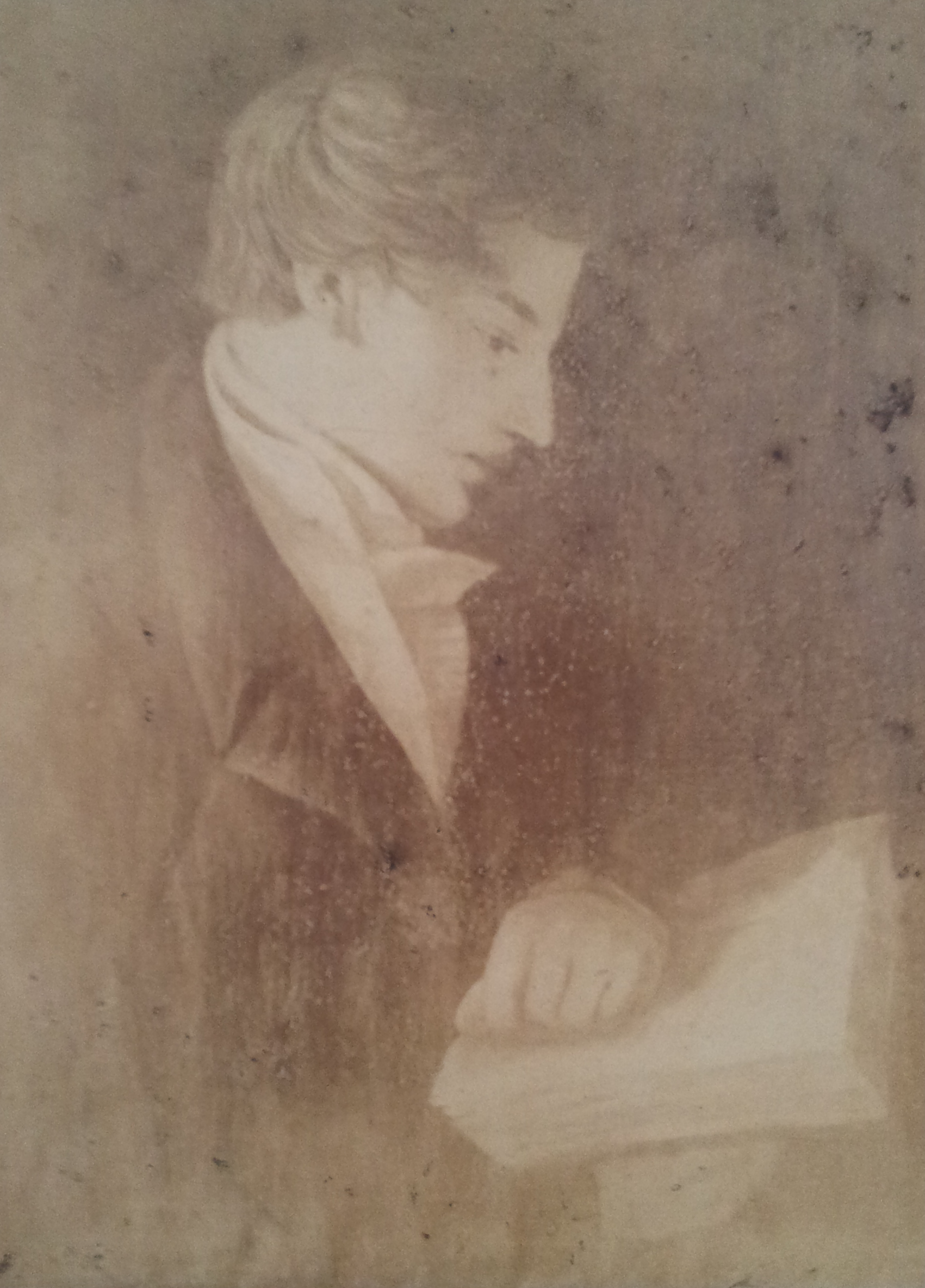
Portrait of John Johns aged 18, held in Ullet Road Church and taken from ‘Liverpool Unitarians’

Using some of the memorials, including that of the Rev John Hamilton Thom, one of the founders of the Domestic Mission, this video tells the story of John Johns and his work as the first ‘minister to the poor’: ‘a medium of kind and Christian connection’, as Joseph Tuckerman put it. In this case a connection between the wealthy congregation of Renshaw Street/Ullet Road and the growing numbers of poor living in the same city.

Click on the video below to see the story of Rev John Johns, first minister to the poor in Liverpool:

Rev John Johns (1801-1847). First minister to the poor in Liverpool

Liverpool’s Titanic Memorial

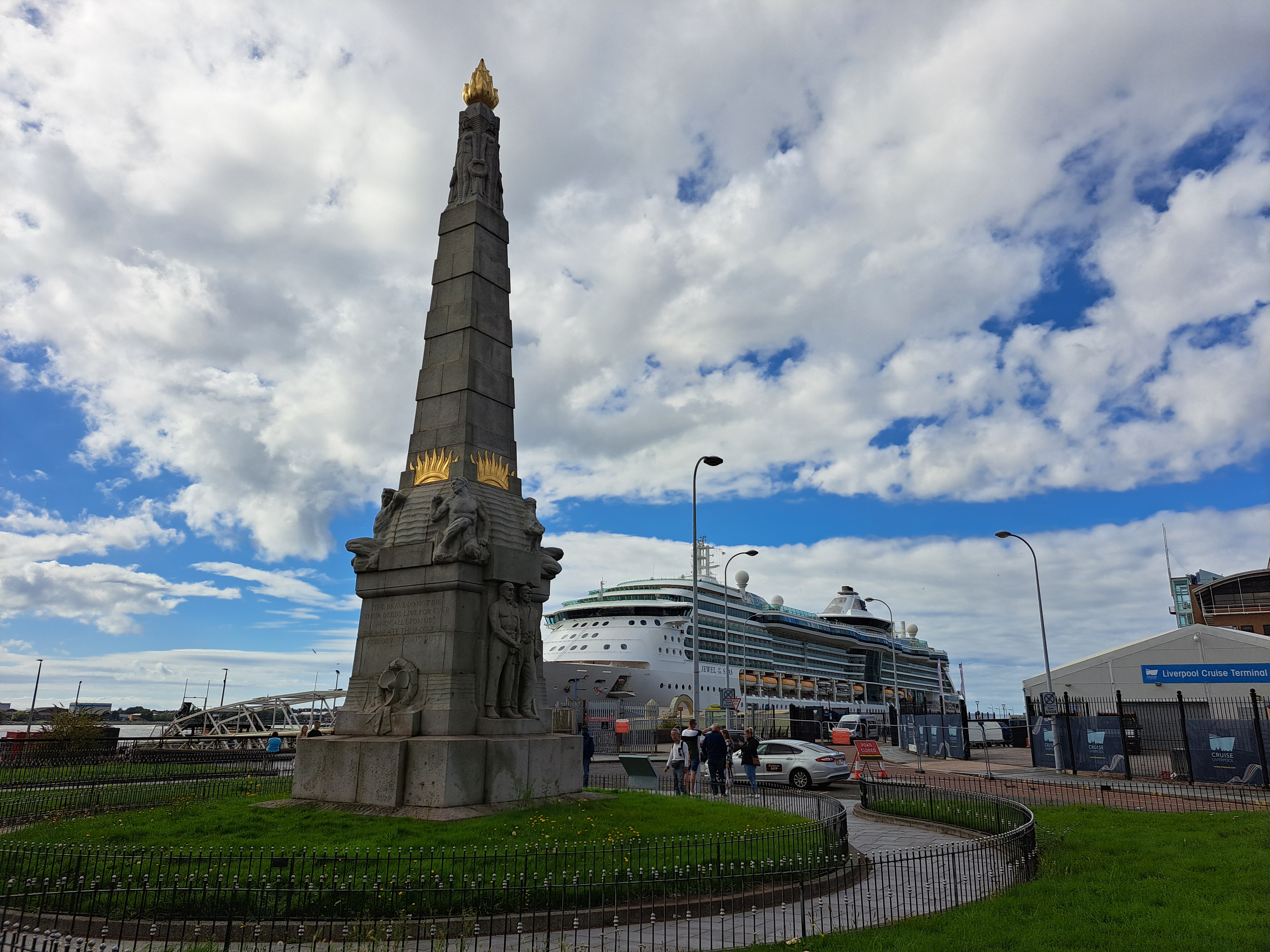
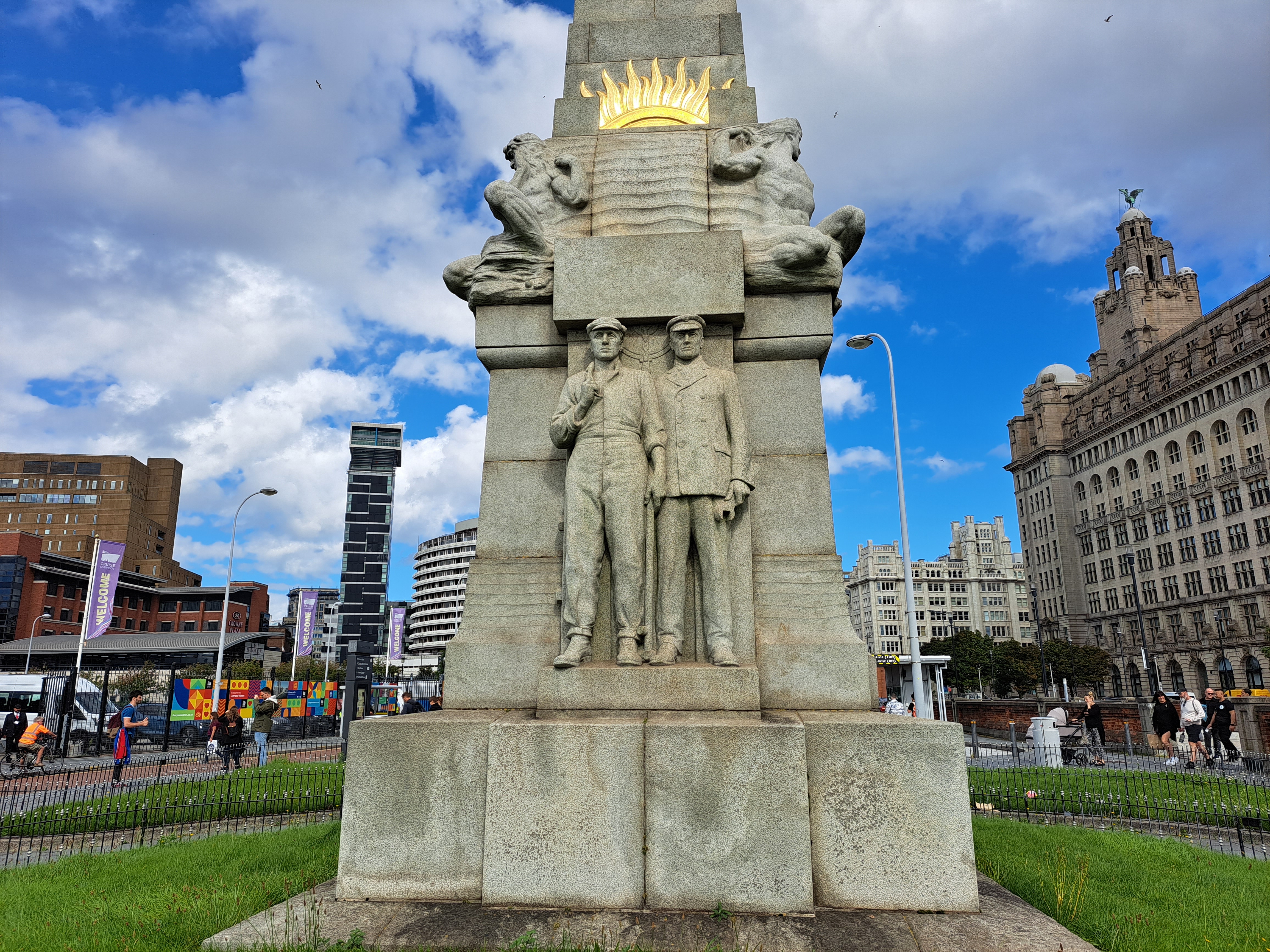
This memorial near Liverpool’s Pier Head is dedicated in honour of the Heroes of the Marine Engine Room. It is often referred to as the ‘Titanic Memorial’ because the original intention was to commemorate those lost in that disaster. The RMS Titanic was registered in Liverpool and the headquarters of the White Star Line was not far from the Pier Head, indeed the building is still there to this day. Although the Titanic didn’t visit Liverpool there were many local connections with the ship and there are a number of Titanic memorials in the city to this day.

But the original idea of the memorial was to commemorate the 244 engine room
staff who remained at their post after the ship struck the iceberg on 15th
April 1912 keeping the ship’s systems running as long as possible to help
people escape as the ship sank.

However, by the time it came to be erected, two other major naval disasters needed to be commemorated. The first was the sinking of the Empress of Ireland which was another Liverpool-registered ship which had regularly made the crossing from Liverpool to Quebec between 1906 and 1914. On 29th May 1914 it sank after a collision in the mouth of the Saint Lawrence River with the loss of 1,012 lives. The next year, during the First World War, another ship with very close Liverpool connections was sunk by a German U-boat on 7th May 1915. This was the Lusitania which was sunk about 11 miles off the coast of Ireland with the loss of 1,201 lives. It was a brutal attack on a passenger ship which also included a number of American citizens at a time when the United States had not yet entered the war.

The Memorial to Heroes of the Marine Engine Room in front of the Liver Building

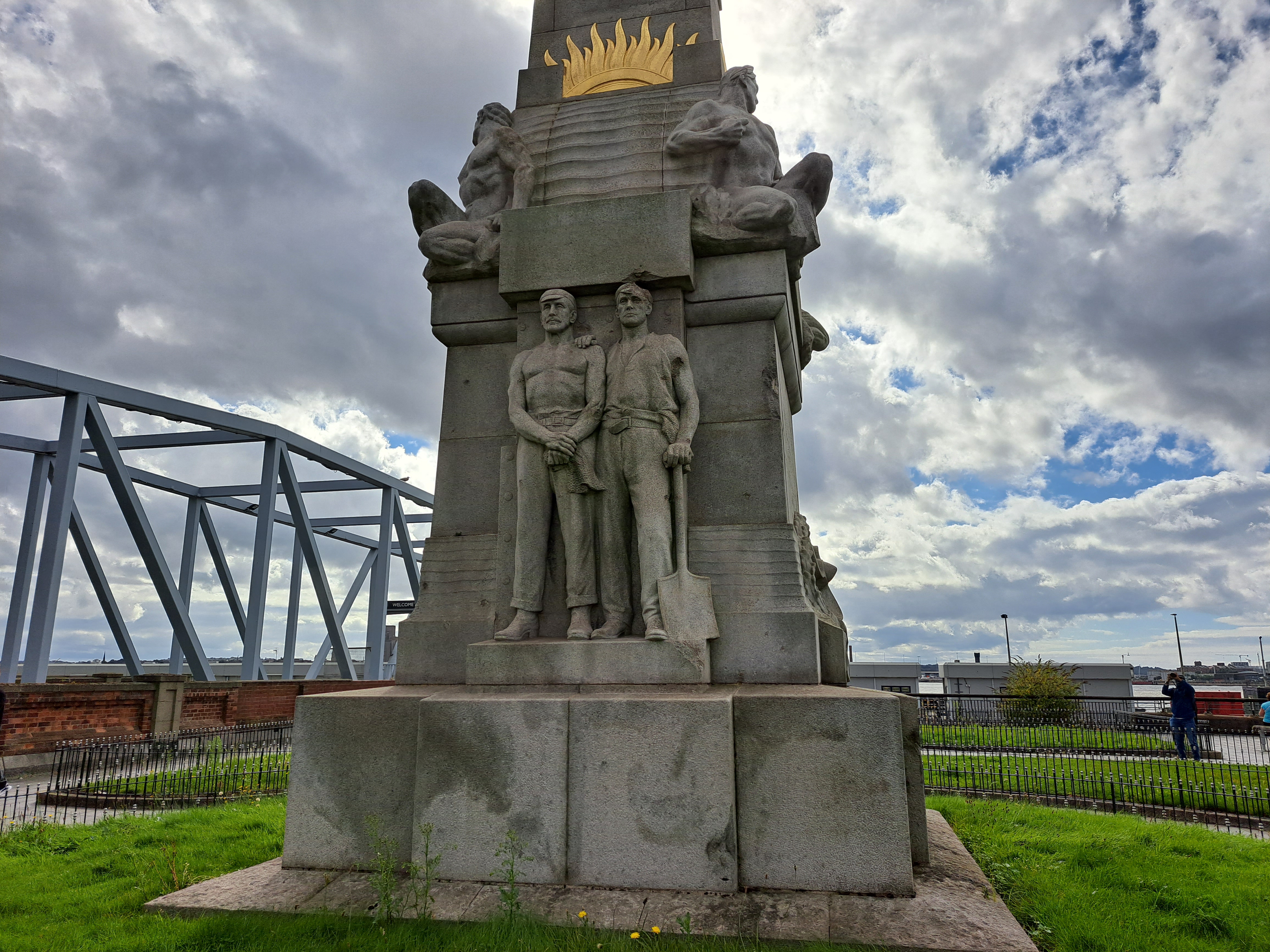
So when the memorial was unveiled in May 1916 it was dedicated to ‘All Heroes of the Marine Engine Room’. It was designed by Sir William Goscombe John and is seen as one of the first memorials to commemorate the heroism of working men who are depicted on the memorial. As Terry Cavanagh puts it in his Public Sculpture of Liverpool it is ‘a rare example in Liverpool of the commemoration not of a single, high-ranking individual but of the “ordinary” workers of the city’.

The west face of the memorial: Two engineers, one holds a stoking-hatch lever and the other a spanner
Figures on the east face: Two stokers, one holding a cloth, the other a shovel. The four figures above, on the corners, represent the elements and, at the very top, four female figures represent the sea

Something like £4,000 was raised from donations around the world before August 1912 to build the memorial. When it was finally unveiled on 9th May 1916 it was done with very little ceremony although it still attracted large crowds, many of them mourners of people who were lost on the Titanic and the Lusitania, although by then the intention was to honour all maritime engine room fatalities incurred during the performance of duty.

Memorial to the Missing of the Naval Auxiliary Personnel of the Second World War

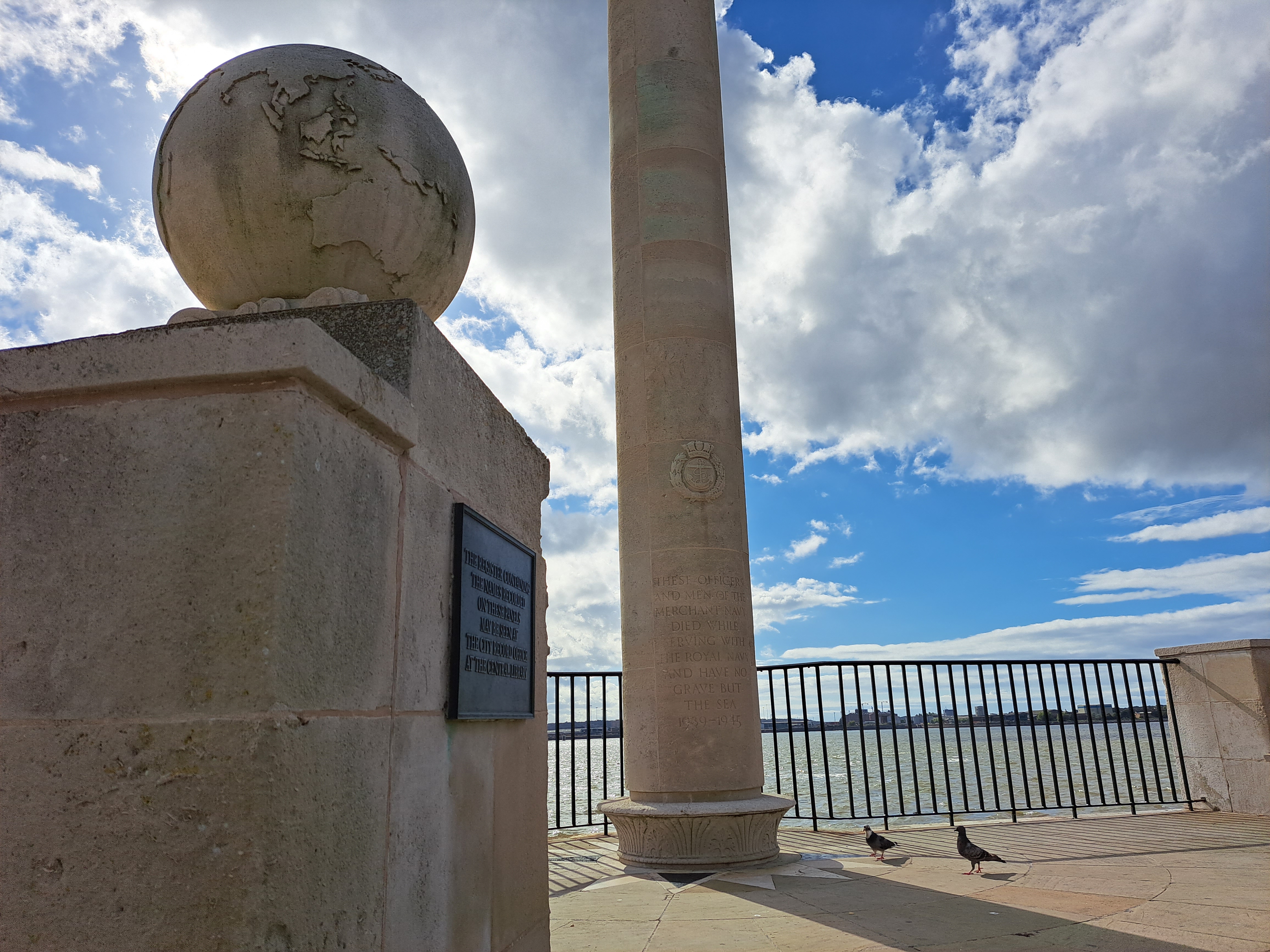
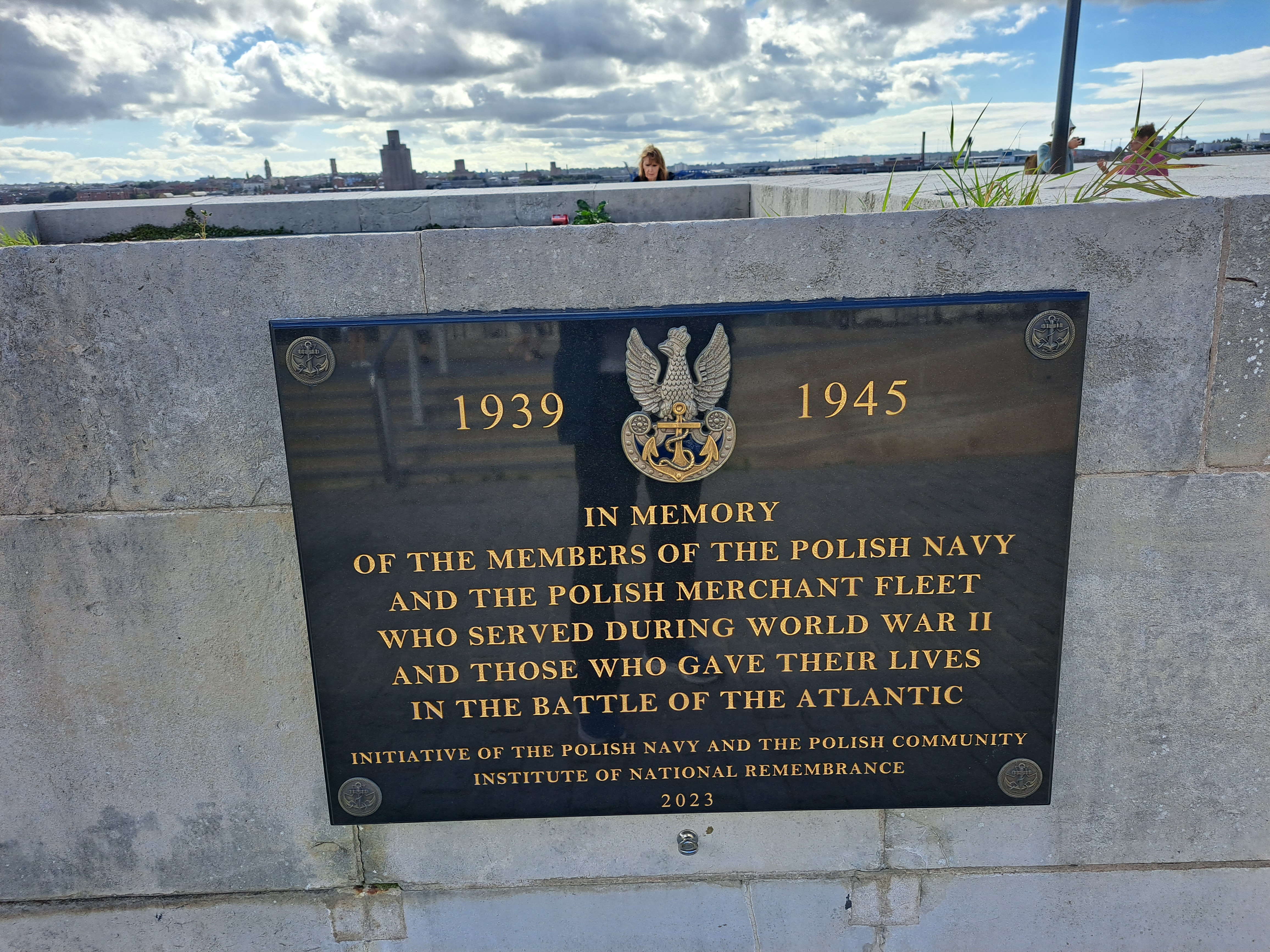
Many more memorials have been added to the Pier Head since the Second World War including the Merchant Navy War Memorial (Memorial to the Missing of the Naval Auxiliary Personnel of the Second World War), the Merchant Navy Memorial dedicated to the men and women who gave their lives in both World Wars and have no other grave than the sea, and an area with a succession of memorials of sailors of different nationalities who served in the Second World War including Belgian, Dutch, Chinese, Norwegian, and Polish merchant seamen and other servicemen and women. In addition there are plaques remembering the sinking of the SS Arandora Star, torpedoed off the coast of Donegal in 1940 with the loss of over 800 people, mainly non-combatants; HMT Lancastria which was sunk while evacuating servicemen at St Nazaire on 17th June 1940 with the loss of about 6,000 people (said to be the worst disaster in British maritime history); and a memorial to the ships that repatriated 20,000 people held in captivity in the Far East up to the end of the Second World War.

Merchant Navy Memorial
In memory of members of the Polish Navy and Polish Merchant Fleet
Video: The Royal Liver Building clock strikes 4 o’clock

Canning Street Presbyterian Church, Liverpool: Then and Now

The solid and imposing structure of Canning Street Presbyterian Church was a feature of that corner of Canning Street and Bedford Street for about 120 years.

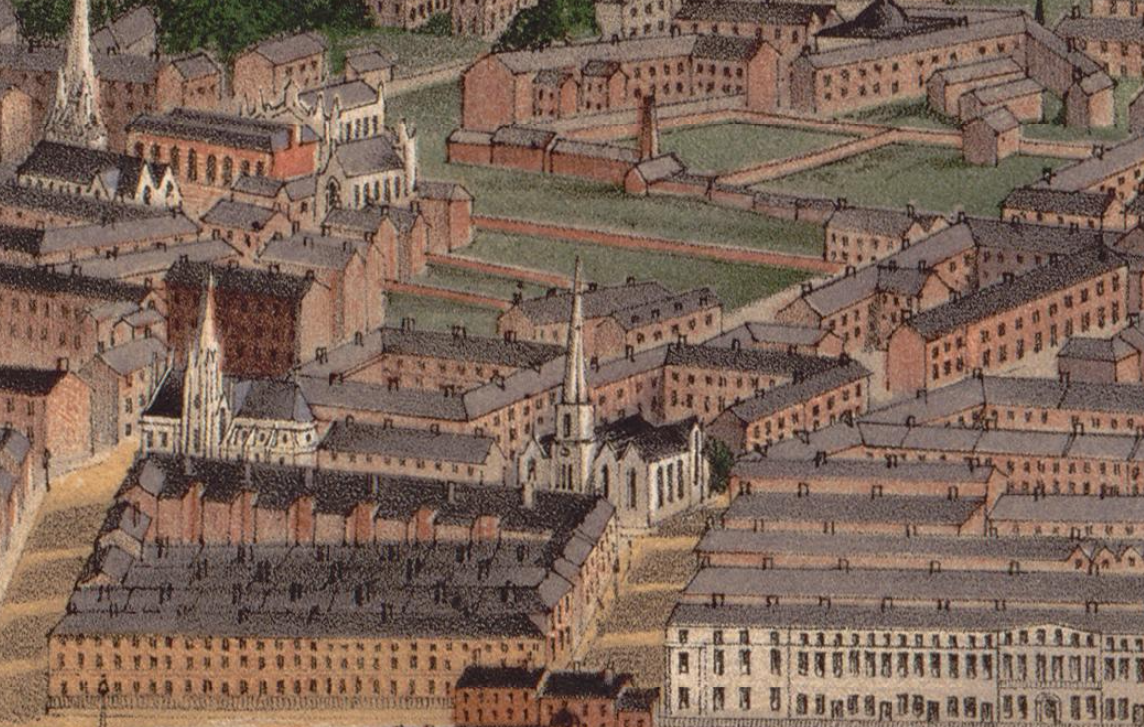
I’ve mentioned this church before and used its image as it appears in an aerial view of Liverpool painted from a hot air balloon by John R. Isaac in 1859 and published in New York. (This can be viewed on the Library of Congress site. You can also read the original post by clicking on this link – Seven Churches in Liverpool in 1859 viewed from the air). Below Canning Street Presbyterian Church can be seen in the centre of this section of the picture:

Detail from Liverpool, 1859, part of Birkenhead, the docks, and Cheshire coast Library of Congress

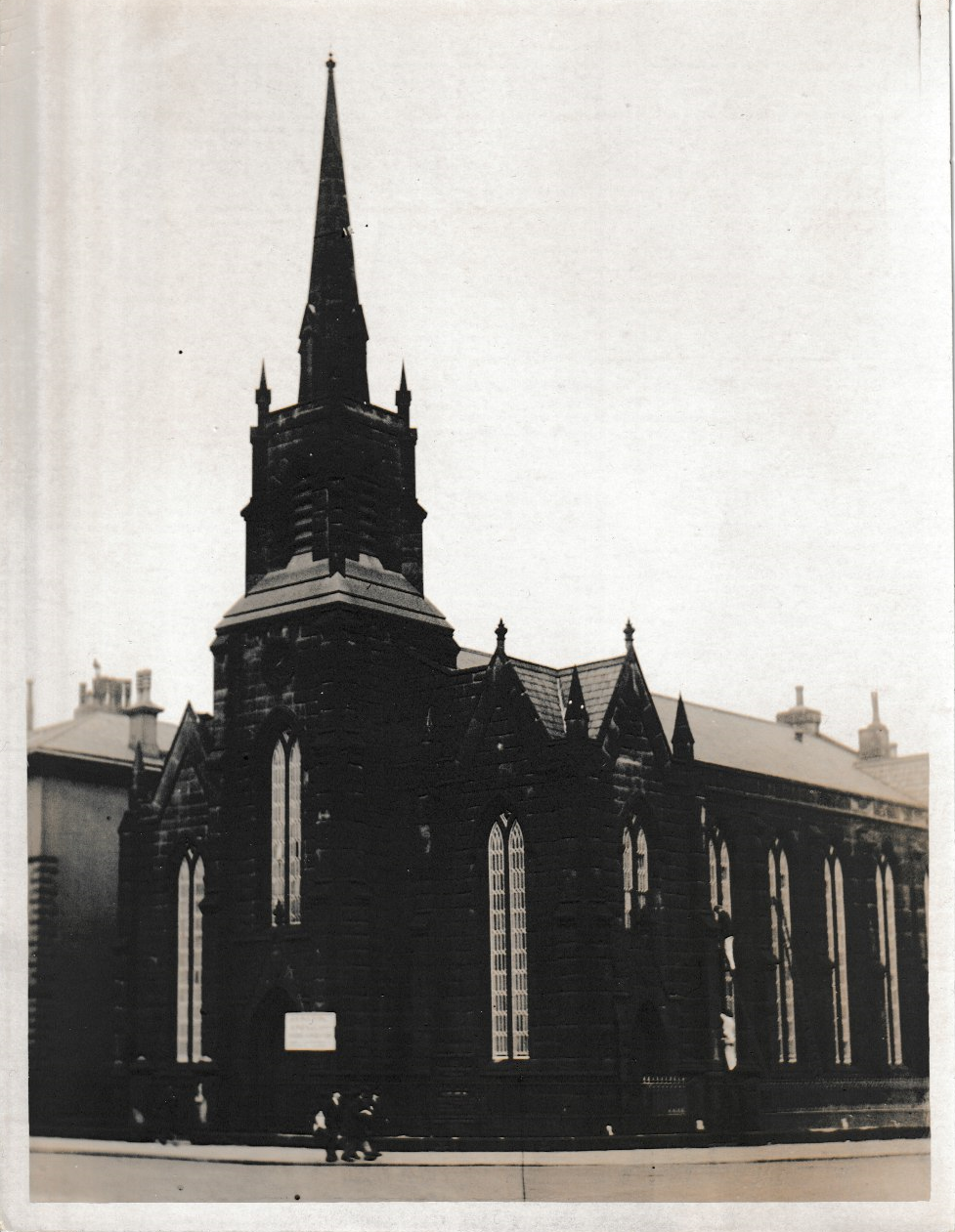
In fact of the seven churches mentioned in that post I have blogged about most of them at one time or another (Hope Street Unitarian Church, the Catholic Apostolic Church and Myrtle Street Baptist Church can all also be seen in this image) but recently I acquired a press photograph of Canning Street Presbyterian Church taken in 1931:

The picture is a bit dark but it shows the edifice built in 1846 and finally demolished in the 1960s. It was built by a denomination of exiled Scots, members of the Free Church of Scotland, which became the Presbyterian Church in England. Later this body united with the United Presbyterian Church (at a ceremony in Liverpool in 1876) to form the Presbyterian Church of England. In 1896 the minister, the Rev Simeon Ross Macphail observed that fifty years previously increasing numbers of Scottish emigrants to Liverpool were not inclined to join the local churches which called themselves Presbyterian but were by then Unitarian in theology. This would be true by the 1840s, although it was not the case a couple of generations before when Scots newly arrived in the city, perhaps influenced by the theological moderatism of the Church of Scotland, were often happy to make common cause with the dissenters.

Canning Street, in its prime location in the wealthiest part of the city flourished for decades until it followed the trend to move out of the by then less fashionable Georgian area of the city to the suburbs. In 1931 they sold up and built a new church in Allerton (now Allerton United Reformed Church). It was at this point that this photo was taken as it was sold to the German Church in Liverpool who moved their location from the very centre of town to Canning Street.

A German-speaking Lutheran congregation had existed in Liverpool since at least 1846. Meeting in various places over the years they had sufficient capital in 1871 to purchase what had been known as Newington Chapel. This had been founded originally as a break away from the Ancient Chapel of Toxteth. Unhappy with the appointment of an Arian (or Unitarian) minister in 1775, a group of Congregationalists built their own chapel on Renshaw Street. From 1811, with the appointment of Rev Thomas Spencer, this congregation grew rapidly and built Great George Street Chapel as a suitable base for his oratorical powers. Unfortunately, Thomas Spencer never took up his place in Great George Street Chapel, when he drowned in a swimming accident in the Mersey, but the congregation moved nevertheless and continued to flourish under the leadership of Rev Dr Thomas Raffles. In the best tradition of non-conformist awkwardness a small minority of the congregation refused to move and stayed in Newington Chapel, stayed, in fact, until 1871 when the German Evangelical/Lutheran Church was able to buy the meeting-house from them.

This congregation remained here until 1931 when the Cheshire Lines Railway Company purchased the site from them for £14,000. That was a good price and more than enough to buy Canning Street Church for just £4,000 in that year, the building being formally opened for Lutheran worship on 25th October 1931.

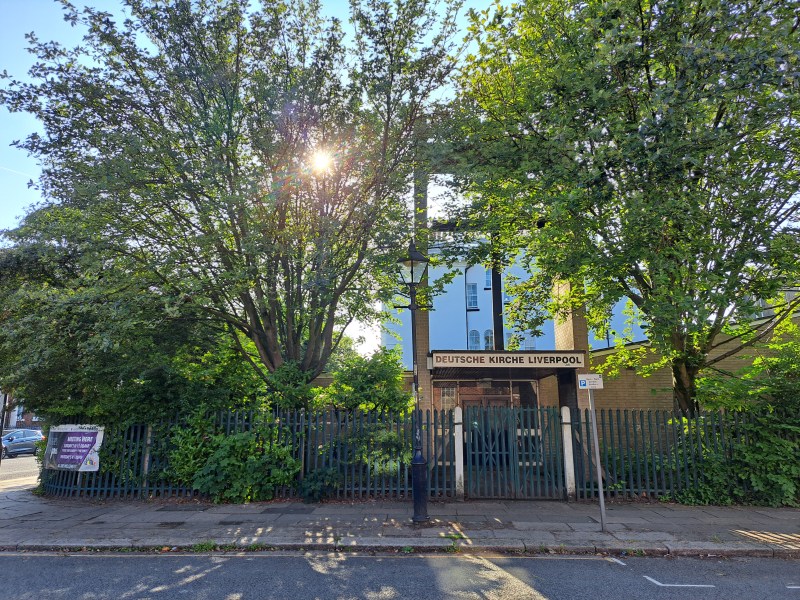
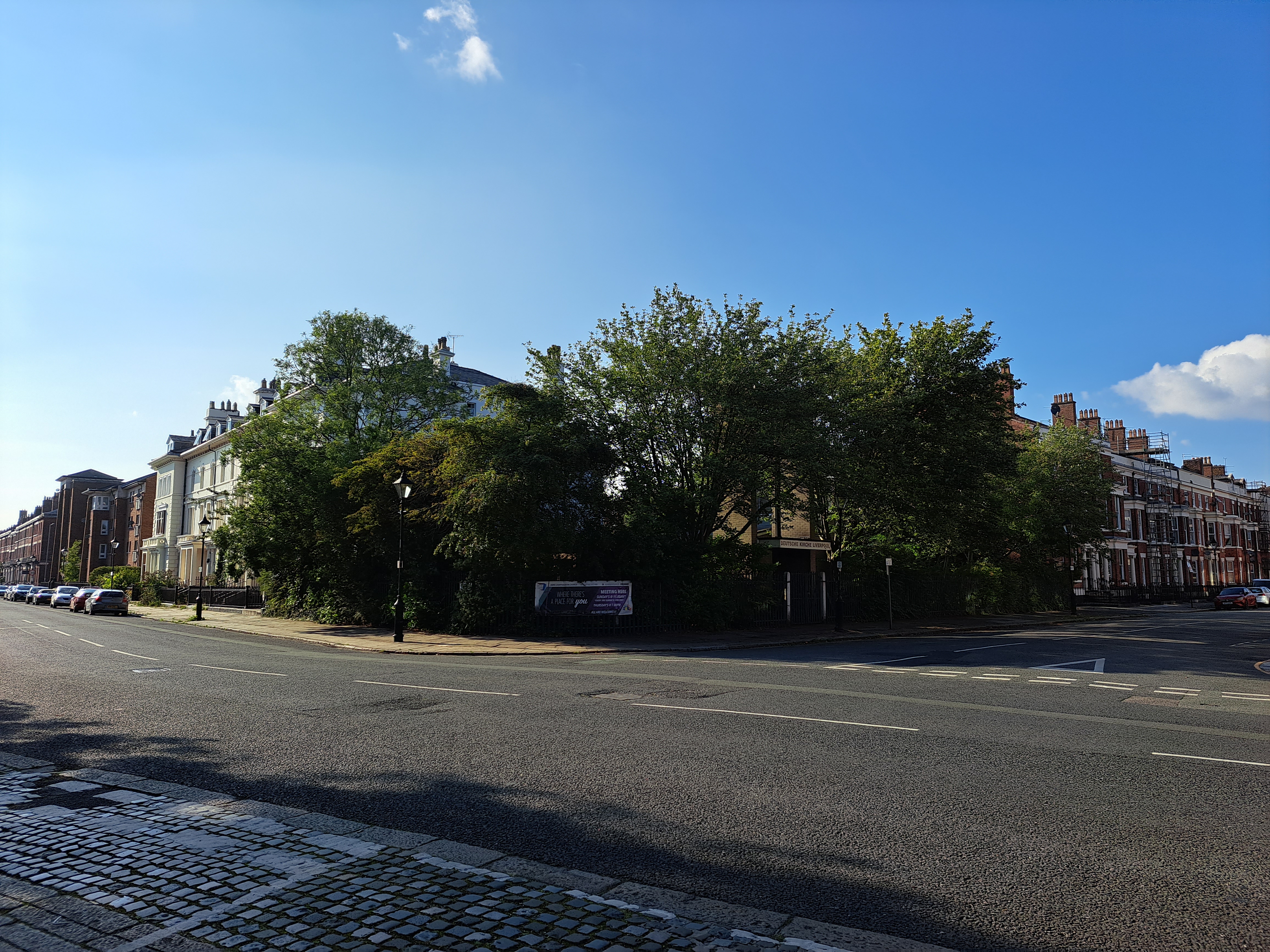
The site of the church today

Canning Street Church – Deutsche Kirche Liverpool

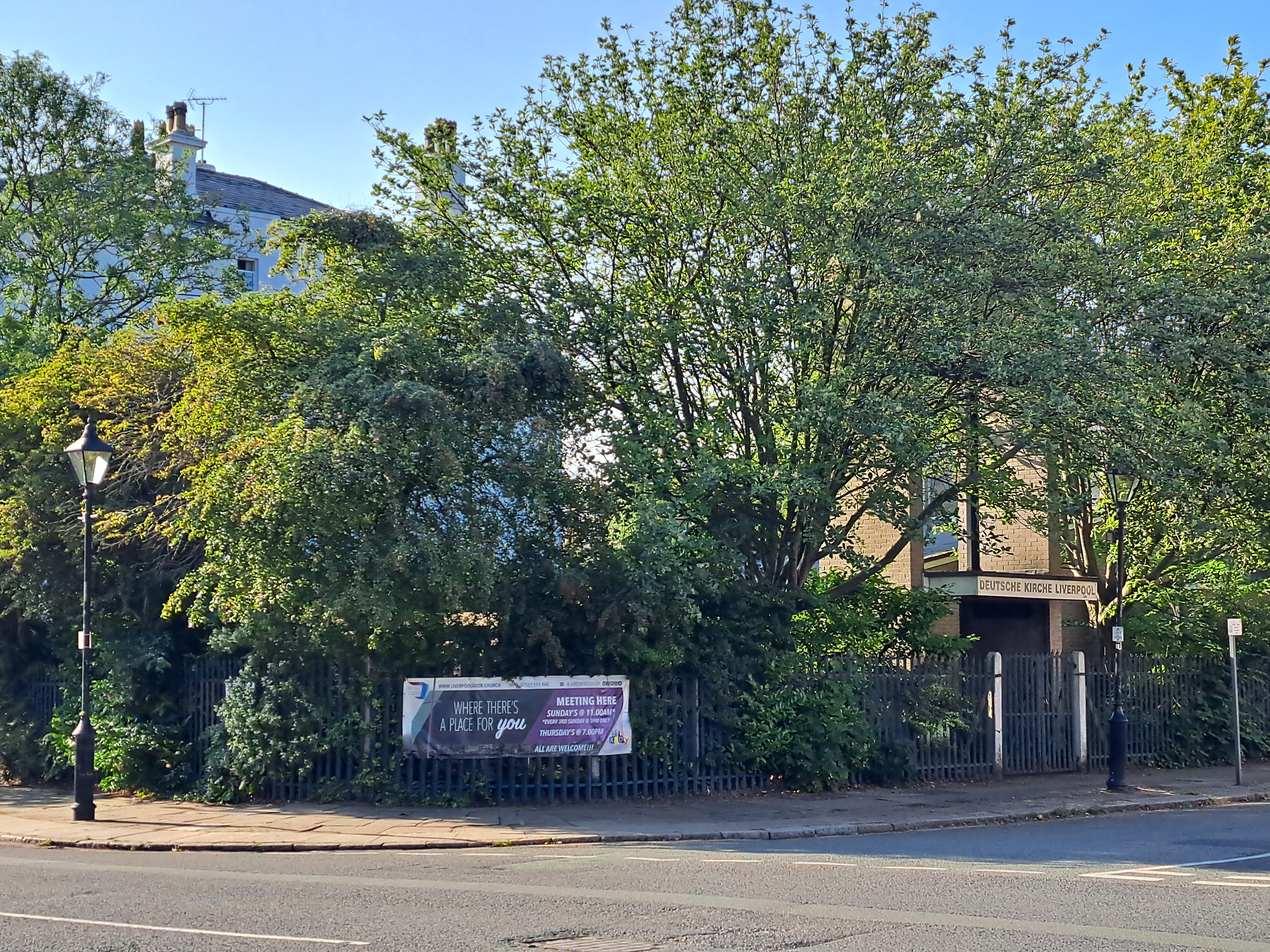
The German congregation has worshipped on that site ever since but in the 1960s they demolished the old church and replaced it with a rather plain building which doesn’t really catch the eye.

A view of the corner of Canning Street and Bedford Street today. The German Church is opposite the viewer, the site of the one-time Catholic Apostolic Church can be seen on the far left.

No pictures or text may be reproduced from this site without the express permission of the author.

Further reflections on Lime Street

I was back on Lime Street about ten or eleven days after the previous post (Digging up History on Lime Street). Lime Street is most notable for a number of things: the railway station that bears its name and, of course, St George’s Hall.

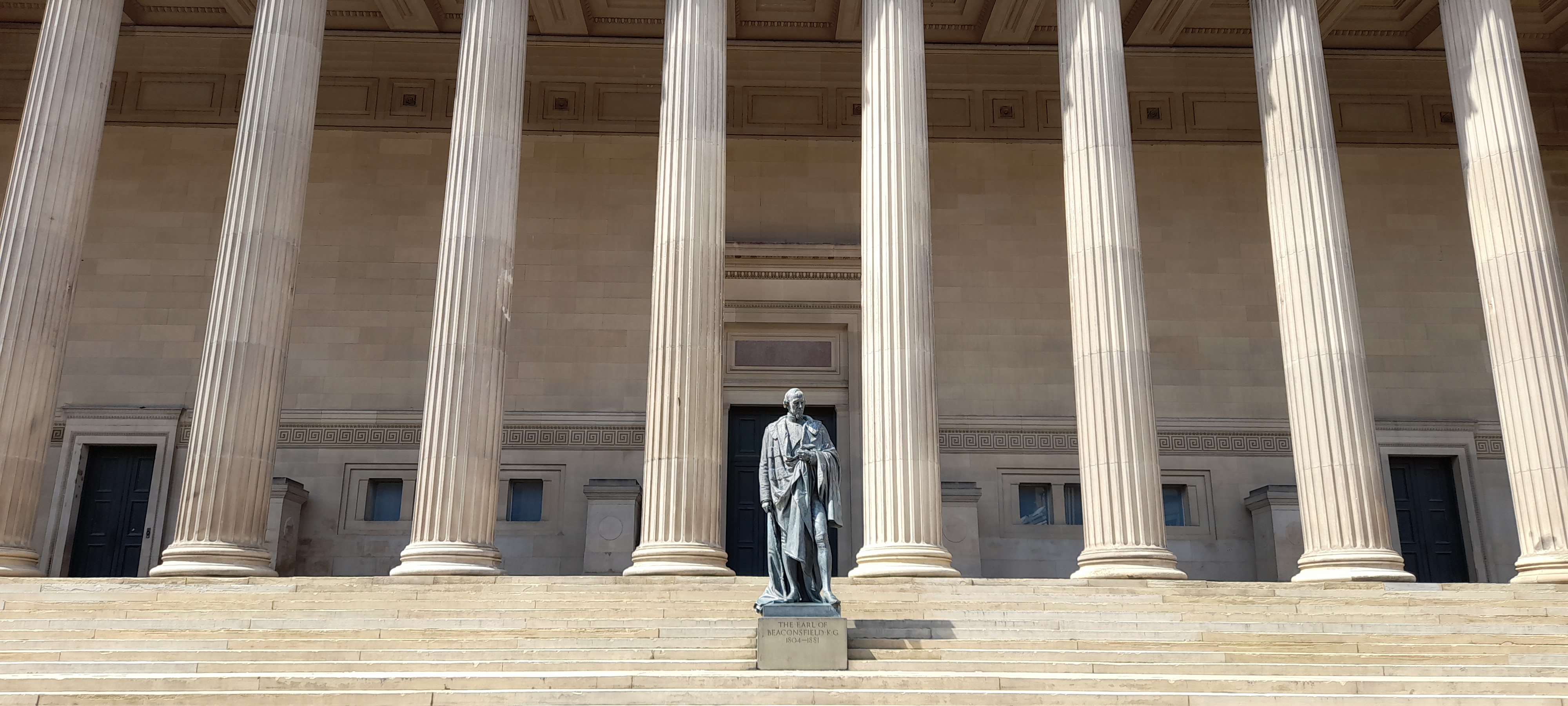
A pensive and solitary Benjamin Disraeli emerges from the classical splendour of St George’s Hall

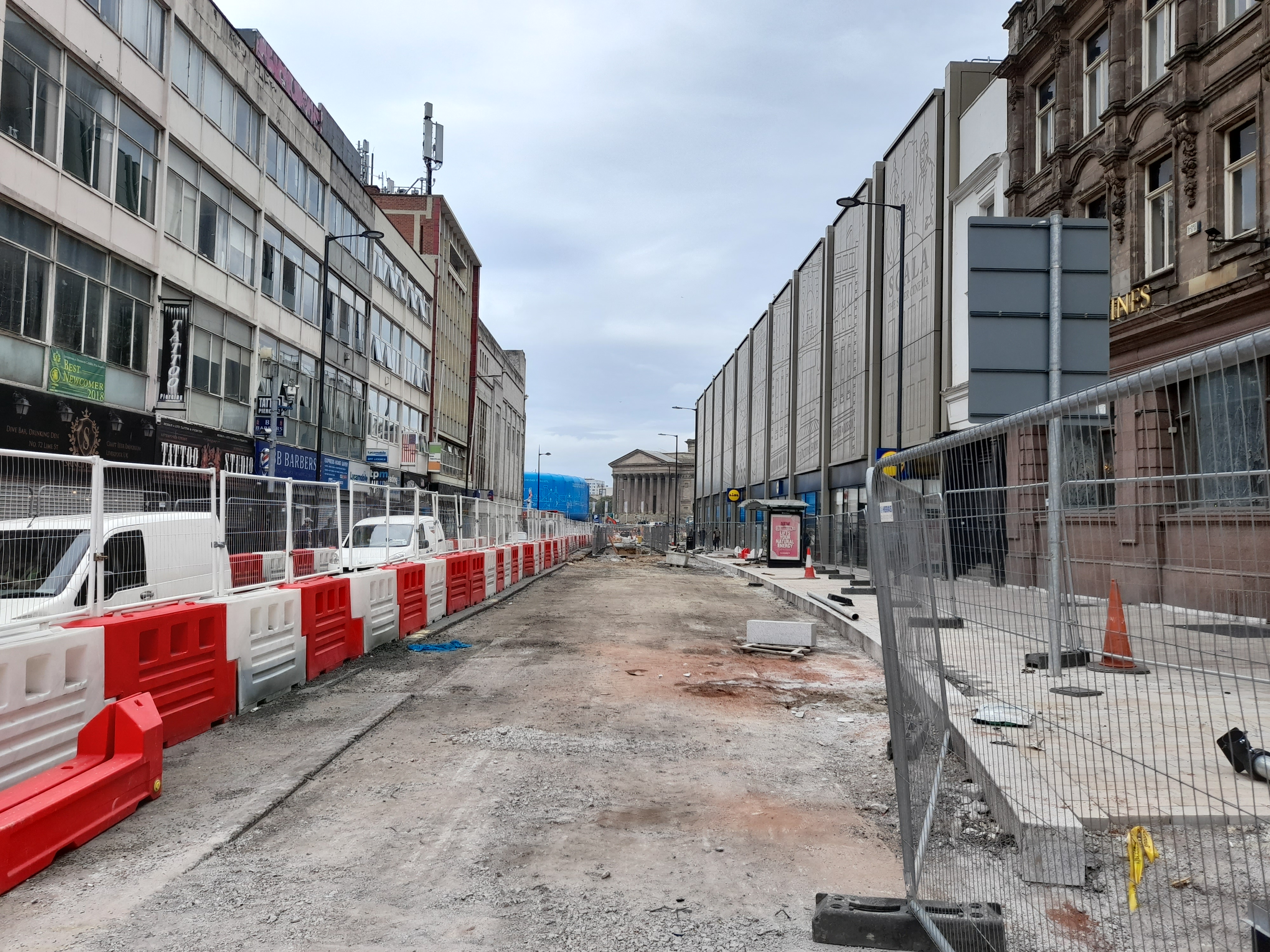
But as I went past the road works I noticed that all the setts/cobbles had been removed as well as the old tram lines. I also noticed that a very deep hole had been dug in the road.

Stopping to take a picture a voice from behind me asked ‘Are you in the habit of taking pictures of large holes in the road?’ It was one of the work men who seemed pleased that someone was photographing their handiwork. He and his colleague explained that all the setts had been taken away to be re-used by the Council and that the tramlines had been taken away for scrap. They were widening the pavement, adding a cycle lane and – inevitably – narrowing the road. The hole, apparently, was to allow the planting of trees which would form a barrier between the cycle lane and the road.

Further up the road, in front of Lime Street Station, they have already planted trees and I suppose these will be something similar:

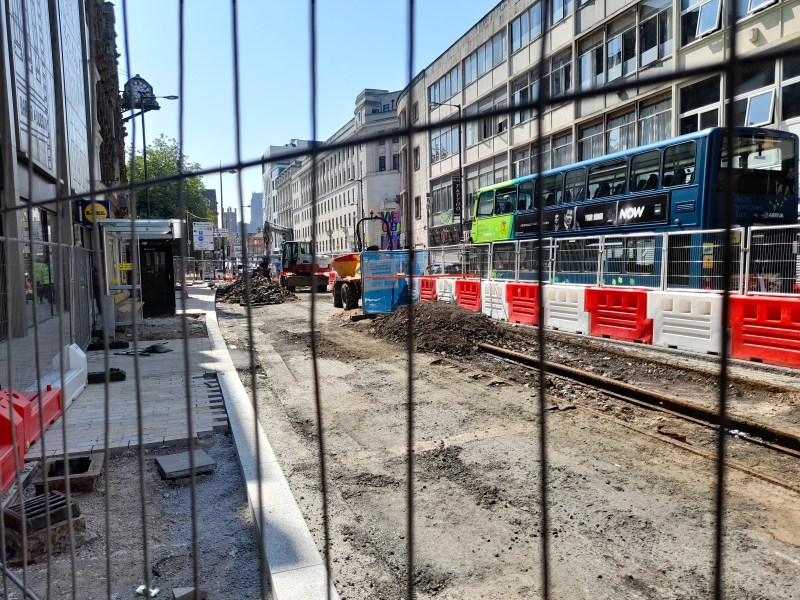
There are a lot of road works going on and safer and well-landscaped roads can only be an improvement but I can’t help wondering what they expect to happen to the current volume of traffic. In the meantime the streets are busy with diggers, barriers and cordons:

St George’s Hall

Looking along Lime Street towards St George’s Hall
Detail of St George’s Hall, by Harvey Lonsdale Elmes

Digging up history on Lime Street

They are digging up the streets of Liverpool city centre all over the place at the moment. This is very much the case on Lime Street where they seem to be widening the pavement at one point and presumably planning to lay a new road surface.

Lime Street is a key thoroughfare in the city’s history. It has undergone some ‘development’ in recent years most notably with the controversial demolition of the old Futurist Cinema which I photographed when efforts were being made to save it. I never posted those pictures at the time although I might do in the future. The Futurist dated back to 1912 and deserved to be preserved. Over the road is the art deco frontage of the former ABC Cinema which is in some sort of limbo but also deserves preservation. I have some interesting historic photographs of Lime Street in times gone by which I might post up at some point. But walking along Lime Street now you are coralled behind a large fence, beyond which a digger is removing the old setts which can be seen in part of the road.

The orignal road surface revealed

It is interesting to see what once constituted the road surface in Lime Street. The digger is scooping up the setts, noisily shaking them about to remove all the excess debris, and then piling them high at the side of the road.

Digging up the setts
Setts piled up

But the other thing this work seems to be exposing is some of the old tramlines on Lime Street. Disused for seventy years and probably unseen for almost as long the tramlines have been uncovered by the digging.

Some of the tramlinse
Further tramlines opposite the ABC Cinema

What will happen to the old tramlines? Presumably the old setts are going to be sold off or possibly reused somewhere by the Council. I don’t know what you do with old tramlines, but it is interesting to see them, and interesting to reflect on what lies below the surface of our streets.

Ghost sign, Berry Street, Liverpool

Ghost sign Berry Street

Driving through the maze of roadworks in Liverpool my eye caught this ‘ghost sign’ on the end of a building in Berry Street. It was revealed when the building next door was demolished last year. It’s an intriguing glimpse into the past.

It’s interesting because, although it is quite clear, it isn’t complete either and is not all that simple to date. Outdoor what? Prices? It’s hard to make out. Are these prices for single bottles of pints or half-pints or are they for bulk purchases? Certainly it is a brewery sign, but because the whole sign is not legible it is hard to tell what exactly is being offered. Over 2 shillings for a pint of beer seems very high for the 1960s, which really is the latest this could date from.

The fact that it mentions the beer (if it is beer) is ‘supplied in screw stoppered bottles’ suggests a much earlier date than the 1960s. Who in the 1960s made an advertising feature of ‘screw stoppered bottles’? In fact this detail suggests a much older date for the sign. Screw stoppered bottles were invented in 1872 by Henry Barrett and used for over 100 years. Made of ‘vulcanite’, or vulcanised rubber, they must have made the portability of beers and other liquids remarkably simple. Nicola White, who has made a lot of interesting videos about her mudlarking on the Thames, has found many examples of these type of bottle tops and has written a very interesting article about them here.

The surviving artwork makes the advertisement look quite old. The gold frame that surrounds the message suggests, to me at least, an early date, pre-First World War possibly. In this case the prices must be for bulk purchases. It is a pity the top of the advertiement is missing, but a fascinating piece of history nonetheless.

The view along the road

The picture is taken on the corner of Roscoe Lane. Peeping above what was once the pub/hotel which bears the sign is the top of Liverpool Cathedral. On the right you can see what was once Great George Street Chapel, you can read more about that building on this blog here.

Service from Hope Street, Liverpool, Sunday 19th July 2020

L01 10 seconds (1)

This Sunday’s service was filmed on location in Liverpool. It is a praise service, intended also to show our appreciation of all those who contribute music to our services during the lockdown.  In the video we visit Liverpool’s Anglican Cathedral, the Roman Catholic Metropolitan Cathedral, the site of the Hope Street Unitarian Church – which are all located on Hope Street – and travel out to the Ancient Chapel of Toxteth, originally built in 1618.
The reading is Psalm 98 and is read by Rosemary Neill of Downpatrick. The organists are: Laura Patterson, Downpatrick; John Strain, Ballee; and Alfie McClelland, Clough.

The hymns sung are:

Onward Christian Soldiers (Mission Praise, 543)

Father Hear the Prayer we Offer (Hymns of Faith and Freedom, 299)

And can it be (Mission Praise, 33)

City of God, how broad and far (Hymns of Faith and Freedom, 299)

Breathe on me, breath of God (Hymns of Faith and Freedom, 177)

All the places visited in the video have been mentioned one way or another on this blog and the following links will give more information about them:

Sir Giles Gilbert Scott, designer of the Anglican Cathedral and iconic telephone kiosks

Liverpool Metropolitan Cathedral under Construction

Liverpool’s Metropolitan Cathedral

The Church on Hope Street

The Ancient Chapel of Toxteth

The 400th anniversary of the Ancient Chapel of Toxteth

Ancient Chapel: then and now


Also uploaded this week – Time for a Story: The Promise

The story of St Dunstan, 10th-century Abbot of Glastonbury (the ruins of which Abbey can be seen above), Archbishop of Canterbury and the person who devised the Coronation Service still used by British monarchs today. Filmed at Downpatrick with pictures from the British Museum and animation by InkLightning.
20200323_102318

Special Offer from Dunmurry – Rev Mac Floral Designs

A Celtic Way was printed in 2007, by Very Rev William McMillan. The 96 page hard back book contains a wide range of colour images of Rev Mac’s floral arrangements, garden and travels.

Dunmurry congregation have copies of this book to give away. If you would like one, please email: firstdunmurrynsp@gmail.com

Copies can be collected from The Manse, Dunmurry by prior arrangement. If you would like a copy posted, please request bank transfer details. P&P is £4 (UK only).