Templepatrick service in memory of Flight Lieutenant John Alexander Bright

clergy 01

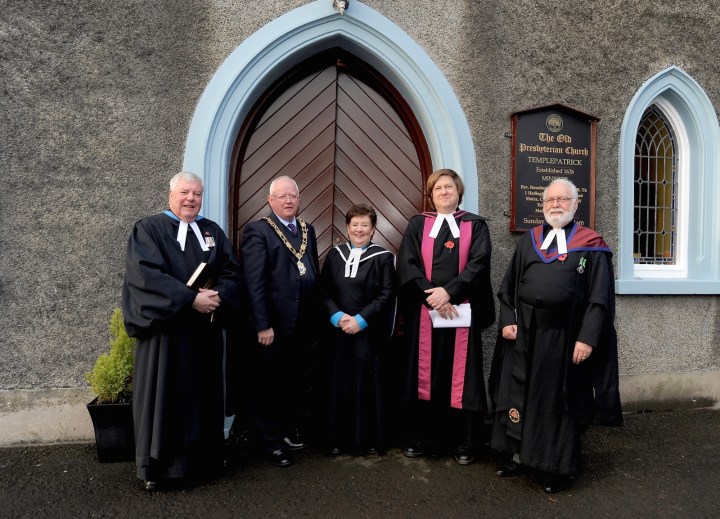
Rev Rosalind Taggart with the Mayor of  Antrim and Newtownabbey Borough Council with participating clergy (Photo: Maurice Montgomery)

On Sunday, 17th November 2019 the minister and congregation of the Old Presbyterian Church, Templepatrick put together a very thoughtful, impressive and moving service to commemorate the life of Flight Lieutenant John Alexander Bright who died in 1943 at the age of 24. The service was attended by a number of dignitaries and representatives of the RAF. I was asked to give the address which can be found below:

On a site at Runnymede in Surrey, over-looking the river Thames, in the same valley where the Magna Carta was sealed by King John in 1215, stands the Runnymede Memorial, also known as the Air Forces Memorial. This memorial commemorates the names of those airmen and women of the Commonwealth who were lost in the Second World War in western Europe and have no known grave. They came from all parts of the Commonwealth and served in Bomber, Fighter, Coastal, Transport, Flying Training and Maintenance Commands. Some were from countries in continental Europe which had been overrun but whose airmen continued to fight in the ranks of the Royal Air Force. There are 20,275 names listed on this memorial. They have no known grave.

Just outside the town of Lincoln stands the International Bomber Command Centre which was opened in 2013 and was built to acknowledge the efforts, sacrifices and commitment of the men and women, from 62 different nations, who came together in Bomber Command during the war. This branch of service included Aircrew, Ground Crew, Women’s Auxiliary Air Force, Auxiliary Air Transport, Auxiliary Transport Services, NAAFI and others. Of the 125,000 Aircrew who served in Bomber Command, 72% were killed, seriously injured or taken Prisoner of War. More than 44% were killed whilst serving, giving the highest rate of attrition of any Allied unit. Each man was a volunteer, and their average age of death was only 23. Here at Lincoln is a memorial known as the Walls of Names containing the names of 57,861 men and women who lost their lives serving or supporting Bomber Command during the Second World War.

In Belfast, in St Anne’s Cathedral, there is a Roll of Honour unveiled as recently as May of this year in memory of the unit of the Royal Air Force Volunteer Reserve (RAFVR) which was formed in Belfast in January 1939. The RAFVR in Belfast was setup to support the rapid expansion of the pilot and navigator establishment necessary once war had been declared. Over 300 young men joined the RAFVR in Belfast between the 1st January 1939 and 1st May 1940. On 3rd September 1939, 140 of them were called into full time service and posted to various RAF stations in England for further training. It is said that many of these young men could not drive a car or ride a motorcycle but within six months of advanced training were flying Lancaster bombers or Spitfire fighters over enemy held territory. Of these 140 some 92 were Killed in Action and Forty-eight survived. These names are the ones listed on this Roll of Honour in St Anne’s Cathedral in Belfast.

We are here today to remember one of the people listed on all three of these RAF memorials. A young man aged just 24, who has no known grave, and who served with Bomber Command in the Royal Air Force Volunteer Reserve. His name was John Alexander Bright and we are here to make our act of remembrance of him and to dedicate our own memorial to him.

John Alexander Bright was the only son of Victor Price Bright and Ellen, sometimes Ella, Bright, née Alexander. His mother, who was born in 1892, grew up on a farm not far from here at Kilgreel. Her family were long-time members of this congregation. Ellen Bright was also a great member and supporter of the Antrim congregation (information from Miss Olive Moore). Victor Price Bright was born in 1884 in Clones in county Monaghan where his family owned a tailors and drapers shop. Following their marriage in Belfast in 1915 they moved to Pembrokeshire where John Bright was born in 1919. It was here that he initially joined the RAFVR in January 1937, just a year after it was established, at the age of 18. Before the war he came to Northern Ireland with his family when they moved back to Stoneview, the family farm at Kilgreel. Nearby they also built a bungalow intended to be occupied by their son (information supplied by Dr Joan McMaster). With the outbreak of war J.A. Bright transferred to the Belfast RAFVR. His service number was 67597 and two years later, on 15th May 1941, Sergeant Bright was promoted to Pilot Officer. This was followed, the next year, by his appointment on 15th May 1942 as a Flying Officer. He was made Flight Lieutenant on 6th November 1942, although it is clear from his citation when mentioned in despatches in June 1942 that he had been an acting Flight Lieutenant for some months before that.

As a member of Bomber Command his experience of the war must have been intense. As I mentioned previously of the 125,000 Aircrew who served in Bomber Command a terrifyingly high number of 72% were either killed, seriously injured or captured by the enemy. It must have been a daily challenge of a high order to fly out into hostile airspace. J.A. Bright acquitted himself with some bravery. He was twice mentioned in despatches.

The efforts of the RAF Bomber Command significantly changed the outcome of the war. Their bombing raids did great damage to the enemies’ industrial capacity and forced them to direct large quantities of aircraft and artillery towards fighting the bombers. There is no doubt that the efforts of Bomber Command helped to contribute to the eventual Allied victory in Europe.
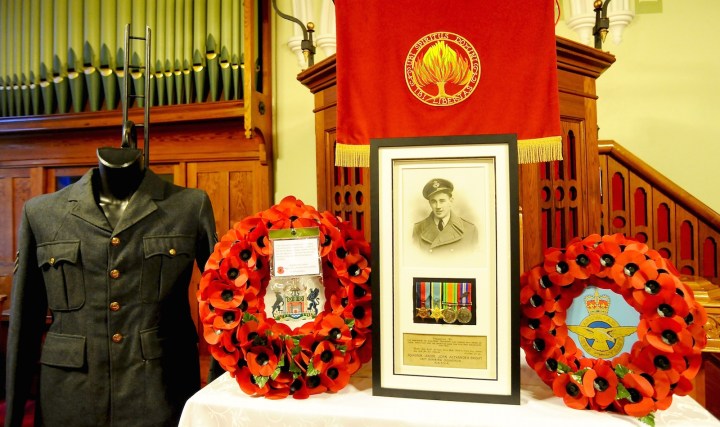
Memorial 03

Memorial to Flight Lieutenant J. A. Bright (Photo: Maurice Montgomery)

John Alexander Bright served throughout the war until his death, reaching the rank of Flight Lieutenant, and it seems likely from the wording of his mother’s will in 1970, that promotion to Squadron Leader may have been imminent at the time he was killed. He was posthumously awarded the four medals that have been beautifully mounted and framed by the congregation. They are from left: the 1939-1945 Star, a medal awarded to all who served in any branch of the armed forces or merchant navy for at least six months during the war. The Air Crew Europe Star which was awarded to air crews of the Commonwealth forces who participated in operational flights over Europe from the United Kingdom during the war. The Defence Medal which was awarded to those who played a part in national defences on the home front which J.A. Bright will have done before he became a pilot. The War Medal which was issued to all who served in the forces for at least 28 days during the war. On this medal is attached an oak leaf which symbolises that J.A. Bright was mentioned in despatches. In other words his personal gallantry was recorded in the air force records during the war at the time, in his case not once but twice.

When J.A. Bright went to England to train to be a flyer he was stationed in a number of places. In the autumn and winter of 1941 he was training at RAF Edgehill, a satellite airfield for RAF Moreton-in -Marsh in Gloucestershire which was the base for 21 Operational Training Unit (OTU) RAF. One night, on 7th December 1941, when he was walking along the road with another pilot he saw a Wellington bomber which had recently taken off from the nearby airfield run into trouble in bad weather. It hit a telegraph pole before crashing into a field and bursting into flames about 500 yards away from the two of them and they ran to try and rescue the crew. Despite the fierce blaze, the intense heat, the continuing explosions as fuel and oxygen tanks caught fire, they managed to rescue two of the crew, although four others were also killed that night. (An account of this event can be found on the website The Fallen from the Villages of North and West Oxfordshire – The Fallen of the Sibfords)

On completion of his training at the OTU base, where he will have trained flying Wellington bombers, J.A. Bright transferred to an operational squadron where he will have had to convert to flying the Lancaster bomber. By February 1943 he was a member of 83 Squadron RAF based at RAF Wyton. On the evening of 19th February 1943 Flight Lieutenant Bright and the other six members of the crew set off on a night raid to Wilhelmshaven a coastal, shipyard town in northern Germany. They left their base at 18.16, flying with an Avro Lancaster, with serial number R5743 and code OL-K. This was the second mission in two days to this particular target and the first one had already failed. Sadly this mission was also to fail, the Lancaster bomber is presumed to have crashed into the North Sea at some point later that night with the loss of all members of the crew. The body of one of the crew was later washed ashore but the bodies of Flight Lieutenant Bright and the others were never recovered.

Like so many others, at the age of just 24, Flight Lieutenant Bright had given his life in the service of his country. We can only imagine the sense of desolation experienced by his family. With no other children, and following the death of her husband in 1949, Ellen Bright wanted to leave a legacy that was of use to others. In a will dated 27th January 1970 Mrs Bright, whose address was given simply as ‘Stoneview’, Templepatrick, bequeathed her estate to the Trustees of the Non-Subscribing Presbyterian Church of Ireland to be used “as the Trustees may in their sole discretion decide”, as the will was worded. The will further went on to say:

The said bequest is made to perpetuate the memory of my son Squadron Leader John Alexander Bright R.A.F.V.R. the Pilot of a Bomber lost over Wilhelmshaven on the Nineteenth/Twentieth day of February One Thousand nine hundred and forty-three aged Twenty-four years

It may be that young John Bright was an acting Squadron Leader and following on from Mrs Bright’s will it does seem to be the case that he was frequently referred to in denominational circles by this rank. However, the official records, including the Commonwealth War Graves Commission all describe him as a Flight Lieutenant at the time of his death.

Ellen Bright died on 8th May 1970 and her generous bequest passed to the Non-Subscribing Presbyterian Church of Ireland. It has been an invaluable Fund that has been used to support many denominational endeavours, especially by providing interest free loans to churches needing to undertake programmes of restoration. The Fund also provided the finance to publish the denominational Roll of Honour produced last year which listed all the men and women who served and who gave their lives in the First World War. So with that in mind it is only right that we make some act of remembrance today of John Alexander Bright and of Ellen Bright and her family as we dedicate these medals to the glory of God.

 Greater love hath no man than this, that a man lay down his life for his friends. (John ch.15 v.13)
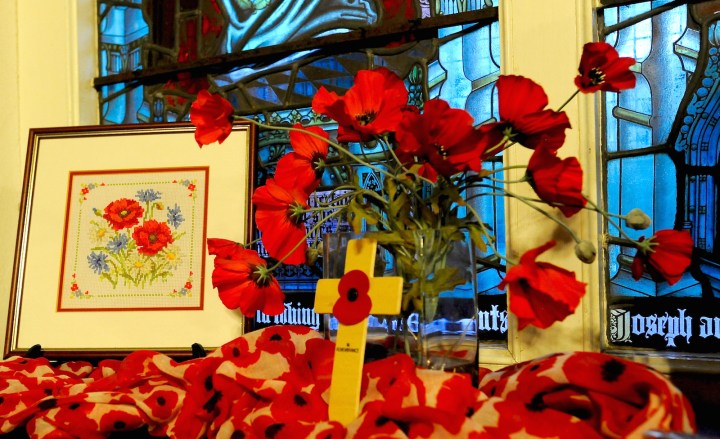
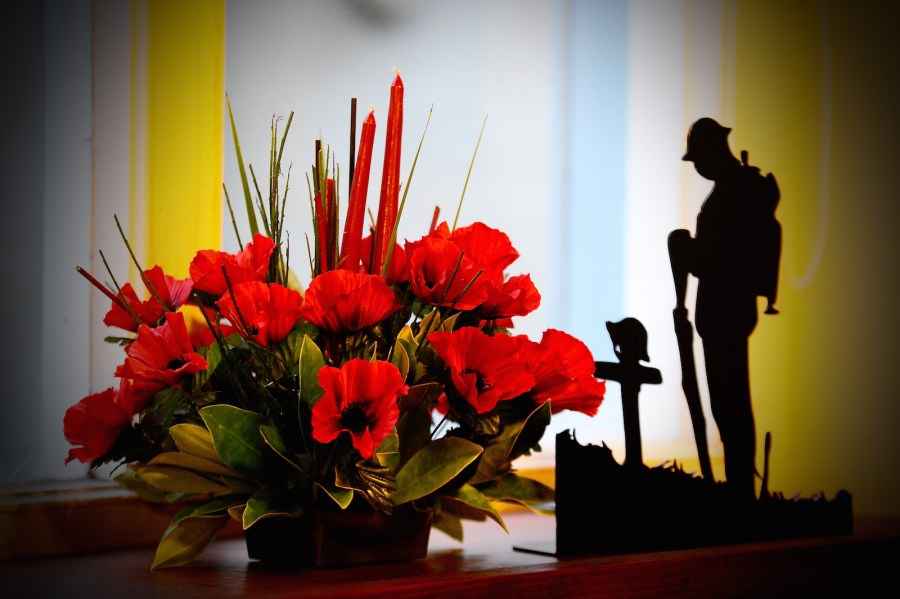
Poppy Memorial

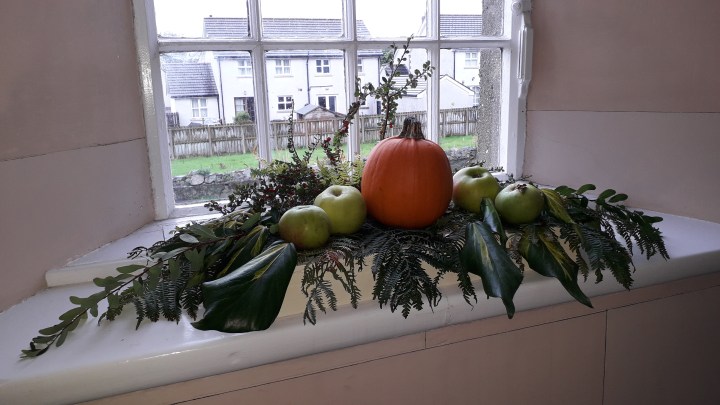
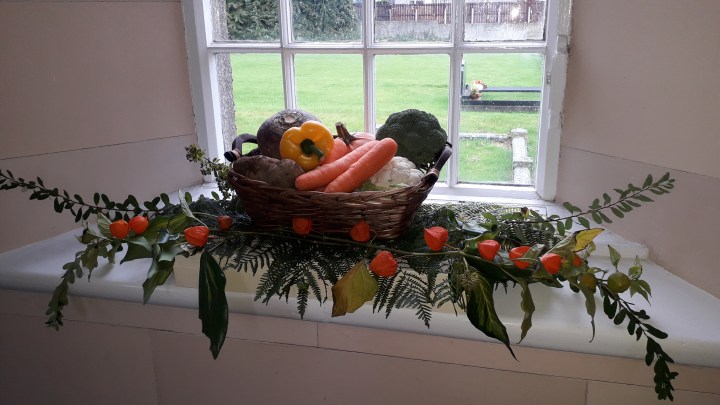
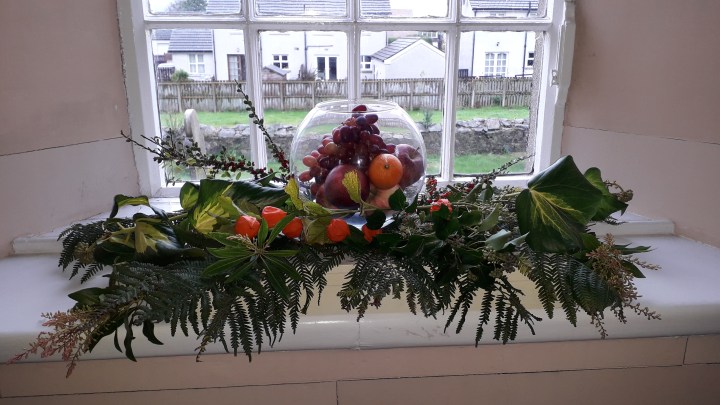
Window display Templepatrick (This photo and photo at the top of this page: Maurice Montgomery)
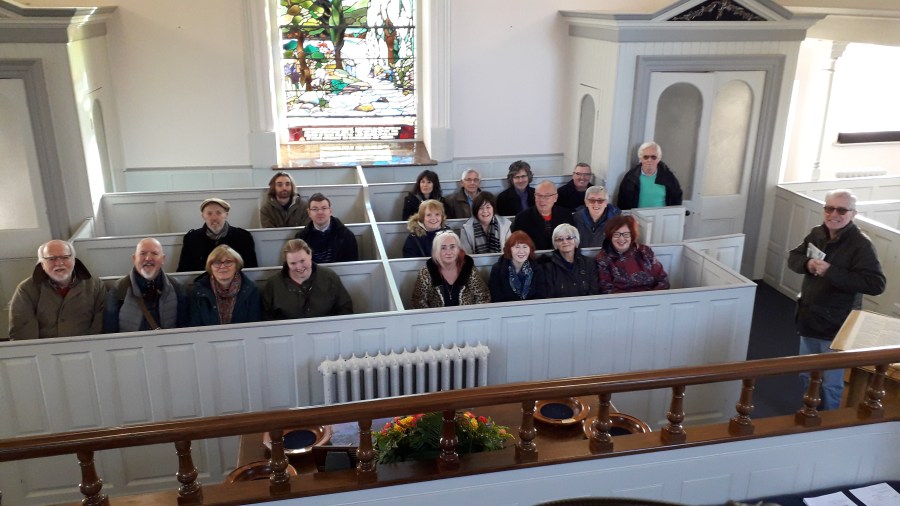
Visit to seven churches – in one day

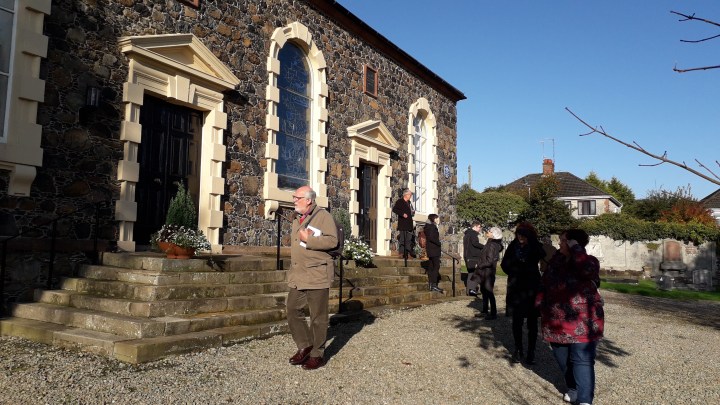
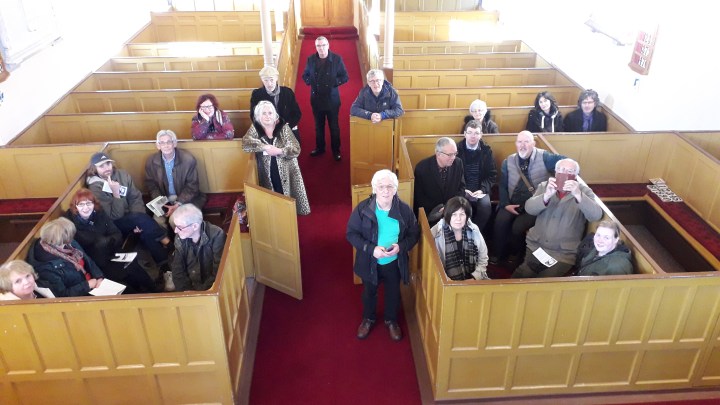
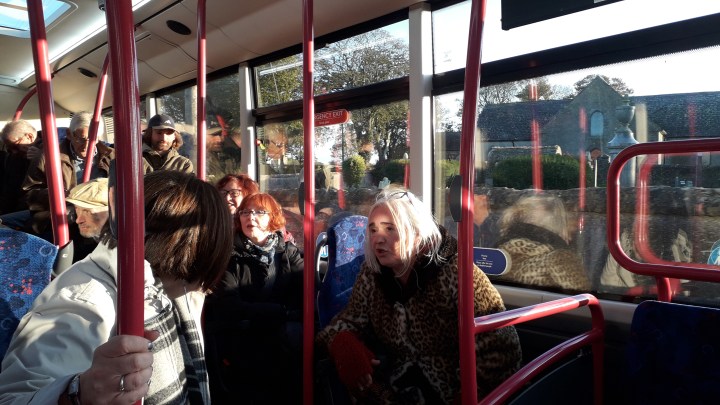
I was pleased to lead members of Reclaim the Enlightenment on a tour of no less than seven Non-Subscribing Presbyterian Churches on Saturday, 26th October. We were fortunate to enjoy a beautiful bright day and although we couldn’t see everything or hear the full story in each place we did cover a lot of ground and saw a great deal. We visited, in turn, All Souls’, Belfast; Dunmurry (where the ladies kindly provided very welcome sustenance in the form of tea and scones); Rademon; Clough; Downpatrick; Ballee and Killinchy. As we went around the congregations we were welcomed by clergy and church members and I gave a talk about each church in each place except in Rademon where Jim Ferris gave a wonderful talk about his church. Below are some images from the day. You can read about Reclaim the Enlightenment here.

RtEDunmurryExt

Dunmurry

RtEDunmurryHall

Refreshments at Dunmurry

RtERademon01

Rademon

RtEDownpatrick

Members of Reclaim the Enlightenment at Downpatrick

RtEBalleeBus

On our way back on the bus outside Ballee


Clough Harvest 2019

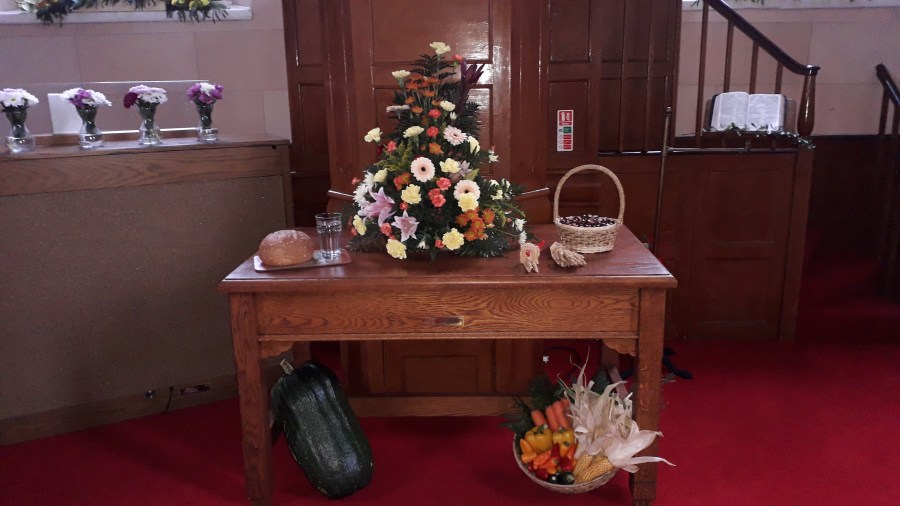
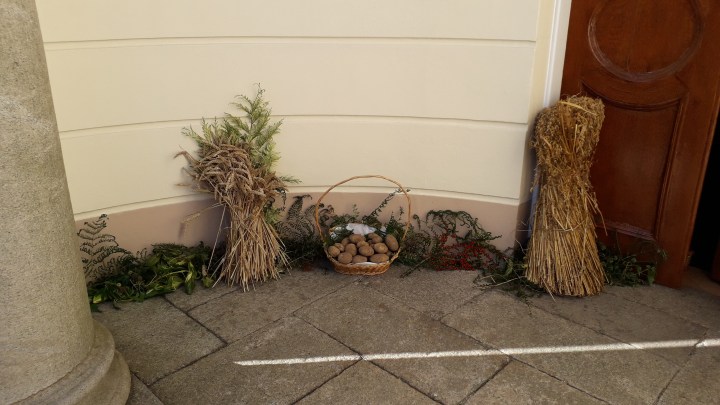
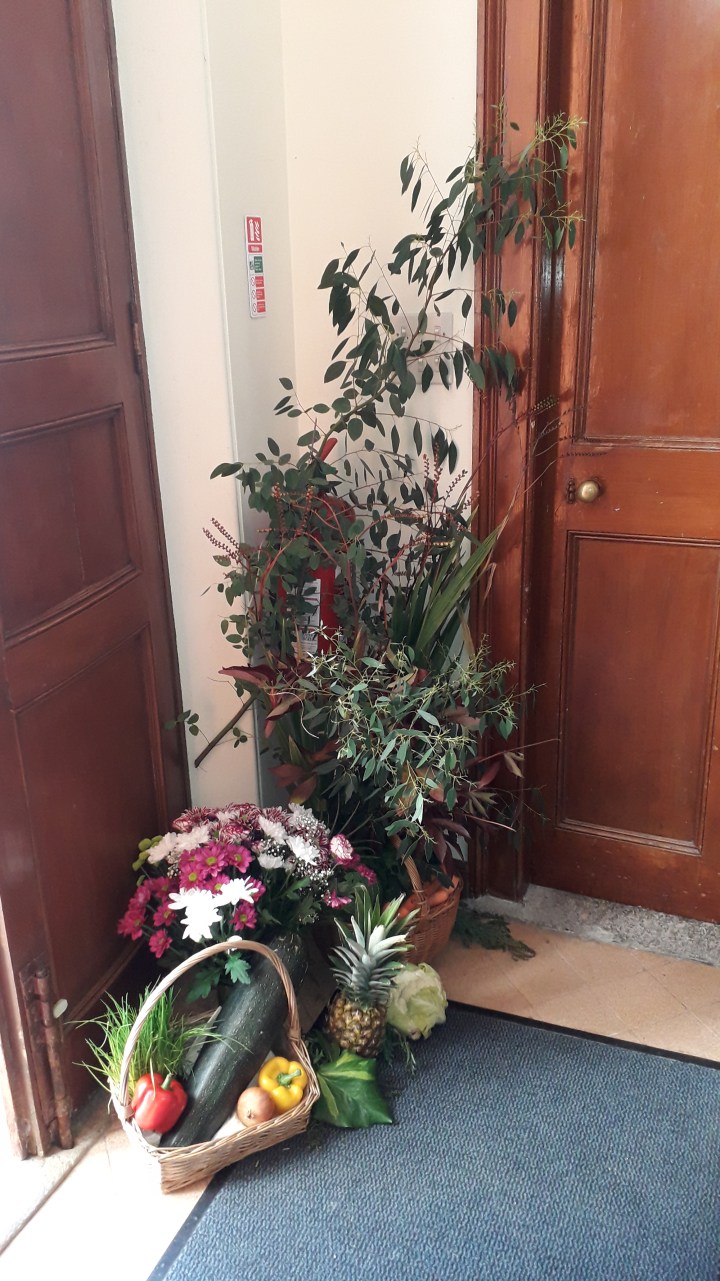
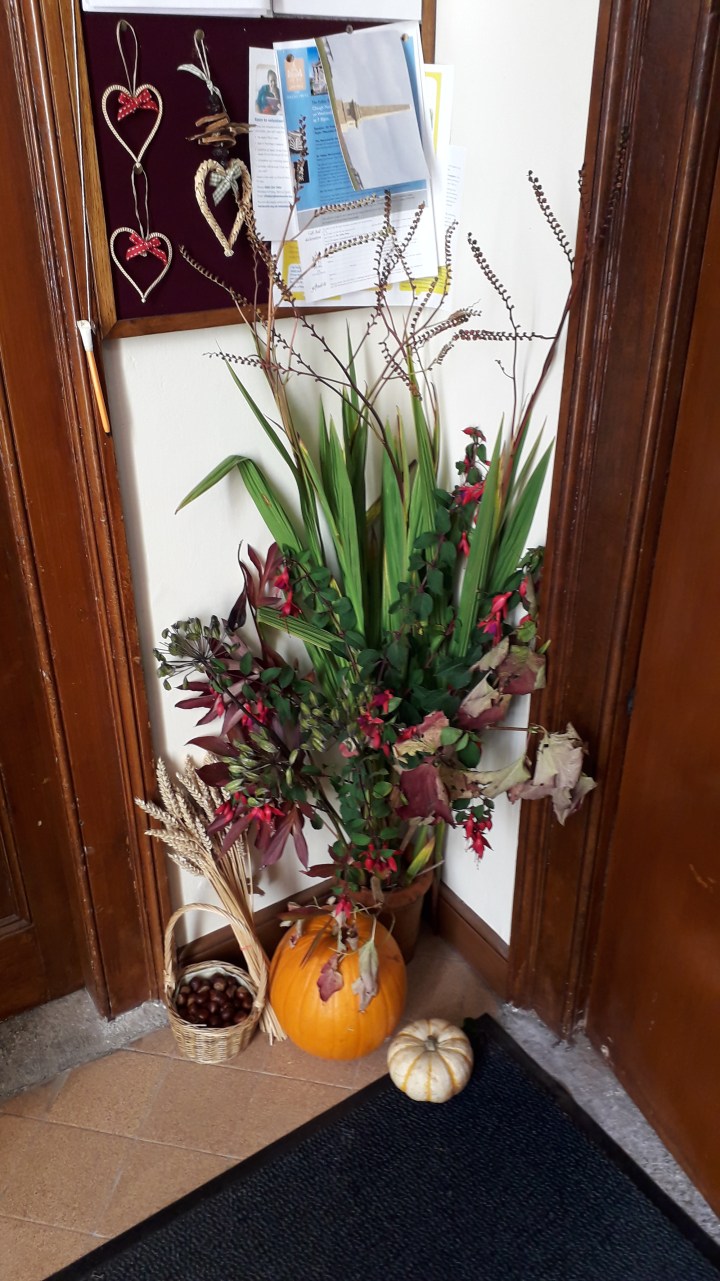
There was a good attendance at Clough Non-Subscribing Presbyterian Church for the annual service of Harvest Thanksgiving on Sunday, 20th October. The special guest preacher was the Rev Dr Will Patterson, such a good friend of the congregation, with special music being provided by the Flutes of Mourne, making their first visit to the Church. Flutes of Mourne played a beautiful selection of pieces during the service. The Church was wonderfully decorated throughout.


CloughFlutes01


Clough entrance 03 2019

Clough vestibule 01 2019

Clough vestibule 02 2019

Clough window 06 2019

Clough window 05 2019

Clough window 04 2019

Clough window 03 2019

Clough window 02b 2019

Clough organ 2019

Clough Table close 2019


Ballee Harvest 2019

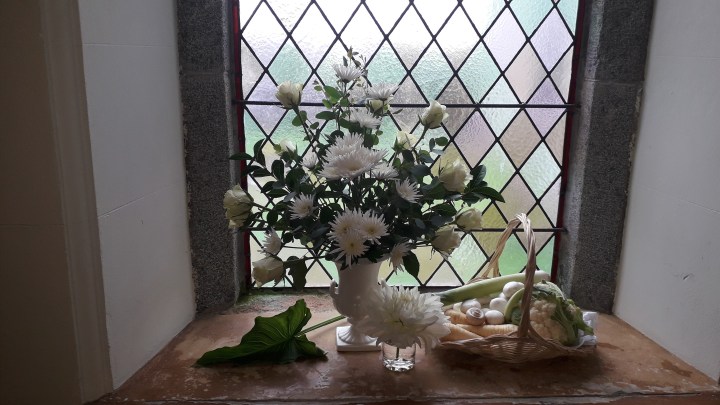
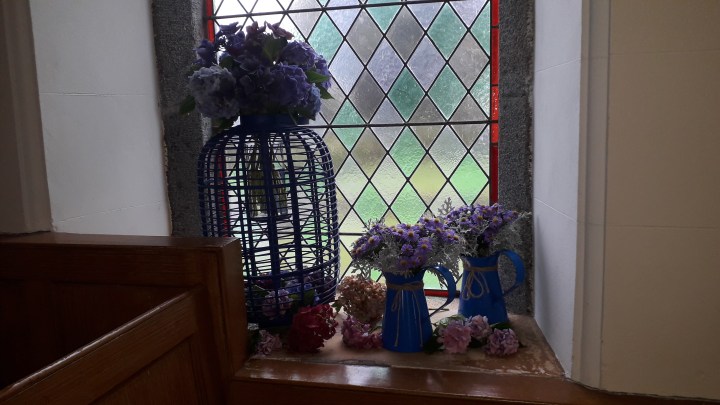
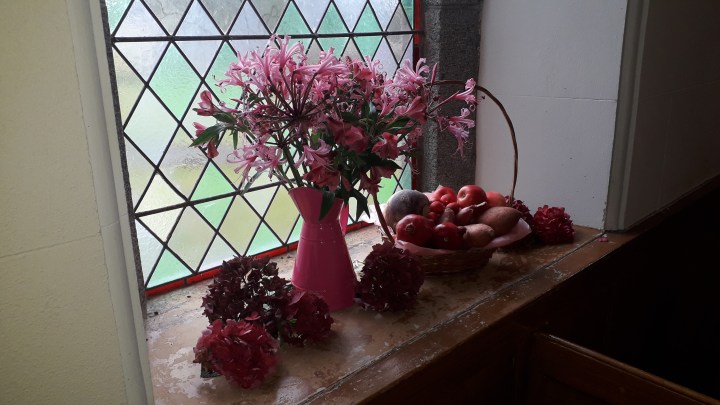
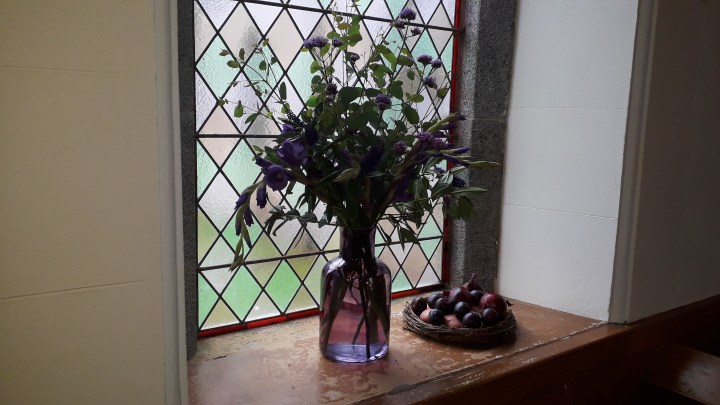
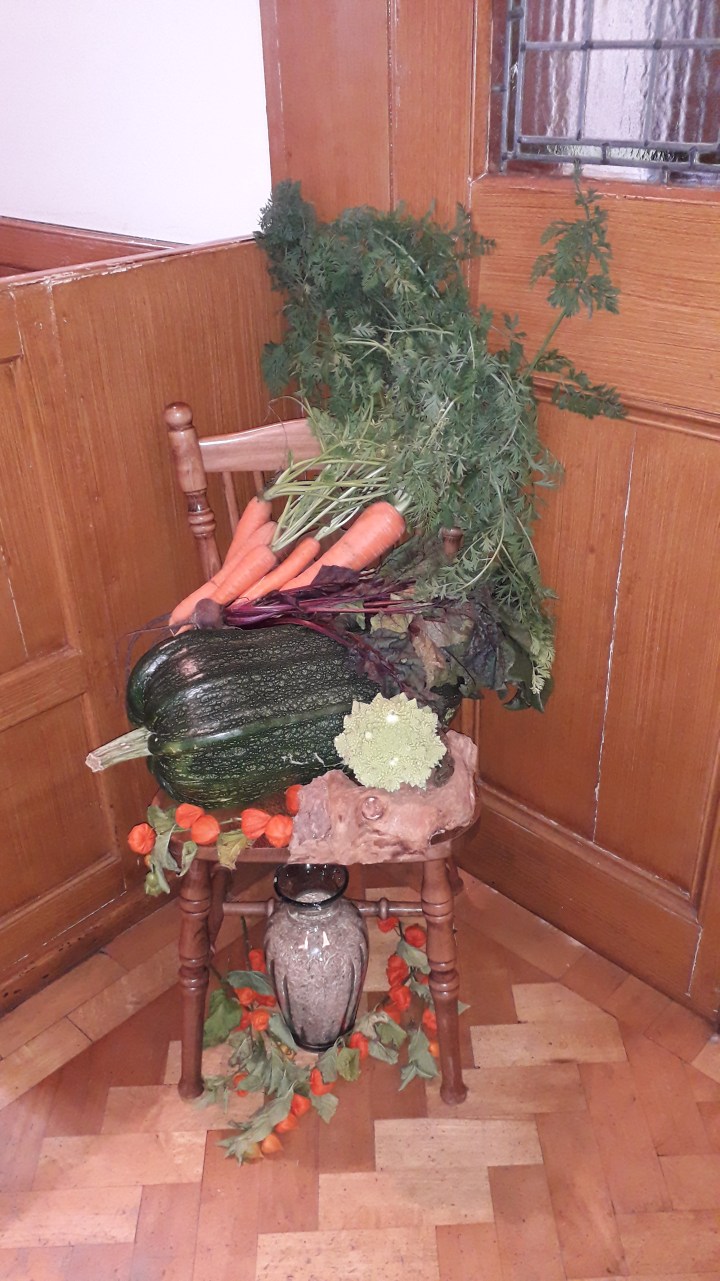
Ballee Non-Subscribing Presbyterian Church held their annual service of Harvest Thanksgiving on Sunday, 13th October when they welcomed as guest preacher the Rev Brian Moodie of Dromore together with the highly regarded choir, the Lindsay Chorale, and their musical director Sheelagh Greer. It was a wonderful service which everyone appreciated. The church was beautifully decorated throughout with each window sill reflecting a different colour of creation, some of which are shown here.

Ballee Harvest Choir

Ballee Harvest 2019 window red

Ballee Harvest 2019 window yellow

Ballee Harvest 2019 window white

Ballee Harvest 2019 window purple

Ballee Harvest 2019 window pink

Ballee Harvest 2019 window orange

Ballee Harvest 2019 window brown

Ballee Harvest 2019 marrow

Ballee Harvest 2019 Pulpit

Rev Tom Banham – An Appreciation

The Rev Tom Banham died suddenly, but peacefully, on Wednesday, 14 August. His funeral took place at Roselawn Crematorium on Monday, 20 August. I gave the address and reproduce it here as my tribute to someone who achieved so much in his ministry and who was also a great friend.

‘He had been instructed in the way of the Lord; and being fervent in spirit, he spoke and taught accurately the things concerning Jesus,

When he came and saw the grace of God, he was glad; and he exhorted them all to remain faithful to the Lord with steadfast purpose;
for he was a good man, full of the Holy Spirit and of faith. And a large company was added to the Lord.’

Some verses from the book of Acts which sum up something of Tom Banham, the faithful minister. Tom passed away on Wednesday, quite suddenly but also very peacefully in the Somme Nursing Home where he had settled quite comfortably. Tom was in his 91st year but as interested and intellectually involved in his church, his denomination and the world of theology as he always had been. Indeed two of the topics for debate brought to the Synod last June had originated with issues directly raised by Tom.

Tom served this denomination, his presbytery and his churches with tremendous loyalty and devotion over the best part of 50 years. In fact so much of the shape and form of our Non-Subscribing Presbyterian Church life was formed by Tom’s vision and endeavour. Tom was a minister, a theologian, an educator, a pastor, a liturgist. Innovative, dynamic and creative he achieved so much. For many of us here today Tom was also a friend, a colleague, a guide, a mentor. For everyone in our churches he was someone who played a key role on so many levels for decades. Typical of Tom he wanted his funeral to be conducted with a minimum of fuss. To be honest, given his achievements, no one deserves more fuss than Tom, but that isn’t the way he would have wanted it.

Tom was one of those people who had tremendous depth. He wasn’t just a leading minister in Northern Ireland throughout the period of the Troubles and beyond, although that would be enough to deservedly win the admiration of everyone. Tom had two consecutive high achieving careers – the first, of course, as an officer in the Royal Navy.

Tom was born in Devon and I think felt the call of the sea from an early age. He went to the Royal Naval College and was trained as an Engineer as he embarked upon his service in the Navy. Tom joined the Navy at a time when you really did see the world and he visited so many places in the course of his naval service. Tom kept pictures on his wall of all the ships he had served on but was unsentimental about the past. His medals and ceremonial sword were donated to the Royal Naval Association some years ago to be auctioned for service charities. He often lamented though that he seemed to have outlived so many of his comrades from the service. As an engineering officer Tom reached the senior rank of Lieutenant Commander bringing a highly specialised technical knowledge to the management of ships.

Tom was someone who was always keen to contribute to society, to make a difference to those in need. He had a long-time association with Scouting and it was this that brought him towards the ministry. As his time in the Navy was drawing to a close Tom was running the Sea Scouts in Bristol which was based at Lewin’s Mead Chapel, a famous and then very large dissenting congregation in the city. Through this association he felt called to the ministry and after around 20 years in the Navy went to the Unitarian College in Manchester to train for the ministry, studying theology at Manchester University leading to the award of the degree of Bachelor of Divinity by the University of London. In those days most of the students were young men, Tom was older and much more experienced, yet everyone who was a student in Manchester in those days remembers him with tremendous affection as a friend.

Had circumstances been only slightly different Tom might well have returned to Bristol to minister but instead Tom was called to Northern Ireland, to be minister of Ballycarry and Raloo churches. So commenced a connection that was to dominate the rest of his life, as a Non-Subscribing Presbyterian church minister.

Tom was ordained by the Presbytery of Antrim in September 1971 and valued his membership of that ancient body. He was clerk for eight years and moderator on a number of occasions. And we can see here what an impact Tom had on the structure of the denomination. He found the method of visitation of congregations to be cumbersome and in need of reform. He straight away set about reconstituting the method of visitation by the presbytery, now basing it on four separate commissions. And so it was that the Presbytery of Antrim, and then the other presbyteries in the denomination, had a new more efficient system of visitation. It was based, Tom always liked to say, on the system used by the Navy for inspecting battleships.

Tom was well respected and very happy in county Antrim but after four years he received a call for a new sphere of work, to First Church, Belfast, the congregation with which he was to be associated for the rest of his life. In 1975 this was a very challenging settlement indeed. The previous minister had been killed in a tragic road accident, the Troubles were at their height, the city centre was under considerable pressure, and the church itself had been badly damaged in a bomb attack; the windows were smashed and the eighteenth-century ceiling lay on the floor. The late Tom Moore, who was such a stalwart member of First Church and a good friend of Tom’s, once said to me that without Tom he didn’t think there would be a First Church today. Tom was the right man in the right place at the right time and under his leadership the Church was resurrected and able to flourish once more.

Both when he was minister and later, when he had retired, Tom could be found every Wednesday morning in Rosemary Street, along with his band of co-workers. Tom was a scholar and a fine preacher and a thinker but he was also an immensely practical person and if there were jobs to be done about the premises Tom would take them on himself. And when the work on the premises was completed there were always books to catalogue in the church library and the index to compile for the Non-Subscribing Presbyterian magazine. Tom was a voracious reader, the arrival of the Postscript catalogue meant more books needed to be bought, many of which he later donated to Rosemary Street. Even in recent times when his health began to decline Tom was, thankfully, still able to read and in the Nursing Home he got to work grappling with the finer points of the theology of Paul Tillich.

So Tom was a minister and a theologian. He was also an educator. He was involved in education both outside the church and inside. He was a governor and ultimately the chairman of the board of governors of Malvern School in Belfast for many years. One major educational contribution he made to the denomination was the creation of the Academic Training Board. With Tom’s vision and energy this body was established for the denomination and for years it provided training and educational courses first of all for ministers but then later for lay people, preachers, church officers and so on. It became an invaluable and essential part of denominational life. Tom devised many of the early courses himself and others followed in his footsteps developing this body for a great many years.

Tom was a liturgist too. The version of the communion service which he devised has been used by many of us in the ministry since and elements of it were later published in Andrew Hill’s Celebrating Life and it was published in full in European Perspectives on Communion in 2001. A couple of years later Tom edited for publication European Perspectives on Baptism in the same series.

Tom was also strongly ecumenical in all his work, most notably serving as the secretary of the Department of Theological Questions of the Irish Inter-Church Meeting, the body which brought the Catholic and Protestant churches together. Here Tom held his own with the leading theologians in Ireland and was soon on first-name terms with Cardinals, Bishops and Moderators of all denominations. Indeed he had many friends across the denominations. Tom effectively wrote the DTQ’s paper on the church in modern society and was disappointed when narrow spirits prevented its publication. For a long time Ireland had some of the most sophisticated top-level ecumenical bodies in the British Isles, but what it lacked, particularly during the Troubles was much grass-roots ecumenical contact. Not so for Tom. As a parish minister Tom was keen to work on a cross-community basis. He was a member of the Eclectic Fraternal, which brought all sides together, and in his church he maintained the close connection between Rosemary Street, St Mary’s and St George’s which bore fruit particularly in the joint Christmas Carol services held between the three churches in Rosemary Street every year when Tom was minister. The importance of such events, particularly during the years of the Troubles, cannot be overestimated.

But Tom also loved music and he found in that a way to bring people together, particularly to celebrate God’s love in a broad and joyful way. For the denomination this meant the Choirs’ Festival which Tom set up and which alternated between All Souls’ and Rosemary Street, great gatherings of choirs large and small from all over the denomination singing praises together as well as their own favourite pieces. Tom greatly enjoyed and valued the musical tradition in First Church and right up to this year was helping to see this flourish.

Tom was throughout his life always kind and generous. Sue and myself and our children all have reason to know this, as do many here. It was part of Tom’s nature to be generous. And it extended far and wide. As a pastoral visiting minister Tom would call on those who were elderly or infirm or lonely. But he didn’t just bring prayers and support to those he visited. If he saw situations that needed practical resolution he would return armed with his tool box, and shelves would be fixed, pictures hung up and other items knocked into shape.

In Belfast Tom ran for a great many years what was then called the handicapped Scouts. Tom put in many hours – organising events, transporting young people to different occasions, working with young people with disabilities and doing so much good across the communities all against a background of civil upheaval. But such work was typical of Tom, done quietly without fanfare but so important and appreciated by those he worked with.

Tom believed in the importance of inter-faith dialogue and understanding and was one of the founders of the Northern Ireland Inter-Faith Forum. I know his presence and counsel was much valued in that body.

Based on his understanding of the history of this denomination and his knowledge of the development of its witness Tom had a vision of how to make his church most effective and most true to its calling as a liberal Christian community. Tom always had an eye for the practical solution or identified a need to devise a new structure when necessary. So something as simple and useful as the Aide Memoire for the denomination was created by Tom – and physically put together by him and his co-workers for many years. The Sunday School Games was his brainchild too and for many years he participated and led in that. Tom helped at every level of this event and once was sitting acting as scribe for a team in the under 5 section of the quiz. In one round the children were asked ‘Who was swallowed by a whale’. Four small faces all looked blank until one turned to Tom and answered brightly ‘Pinocchio’. Tom felt he had no choice but to nod and dutifully write down the answer, for Pinocchio certainly was swallowed by a whale.

On top of all this Tom found time to do even more. He was secretary or chair or convenor or treasurer of many different committees and bodies. And though he was primarily minister first of all of Ballycarry and Raloo and later of First Church he was minister in charge of a great many other churches over the years, that is the minister during a vacancy, bringing pastoral care and help to many other congregations. I don’t think I could prepare an adequate list of the many churches he helped over the last fifty years. But many people will have memories of Tom coming to their church all over the country at different times.

It was a big upheaval for Tom to give up his home on the Cliftonville Road but it was a necessary move and he felt very comfortable in the Somme Nursing Home. At the time of his move I arranged for his papers to be sent to Harris Manchester College, Oxford to be stored there. It took three enormous boxes to carry them and the College had to buy additional archive boxes to store them in but it means so much of Tom’s working life – in the church, in the presbytery, in the denomination, in the DTQ, in ecumenical and inter-faith bodies is preserved for the future.

A few years ago Tom gave me his old Book of Occasional Services which is a minister’s book for the conduct of baptisms, weddings and funerals and so on. In one of the annotations which Tom has added he has written:

To live in the hearts of those we leave behind is not to die

I am sure that is true and we will all long remember Tom, as the valued colleague or minister or friend he was to us.

We commend him to God now in glad thanksgiving for having known him and shared in life with him in all its fullness. And I would close with some words from John Bunyan’s Pilgrim’s Progress:

Then said he, ’I am going to my Father’s, and though with great difficulty I am got hither, yet now I do not repent me of all the trouble I have been at to arrive where I am. My sword I give to him that shall succeed me in my pilgrimage, and my courage and skill to him that can get it. My marks and scars I carry with me, to be a witness for me that I have fought his battles who now will be my rewarder.’ When the day that he must go hence, was come, many accompanied him to the river side, into which, as he went, he said, ‘Death where is thy sting?’ and as he went down deeper, he said, ‘Grave where is thy victory?’ So he passed over, and all the trumpets sounded for him on the other side.”

Clough Children’s Day 16th June 2019

Clough Children's Day 01

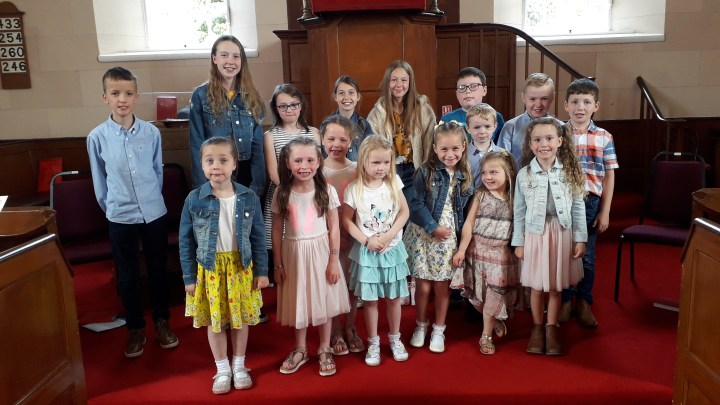
Children of the Sunday School who led the service at Clough

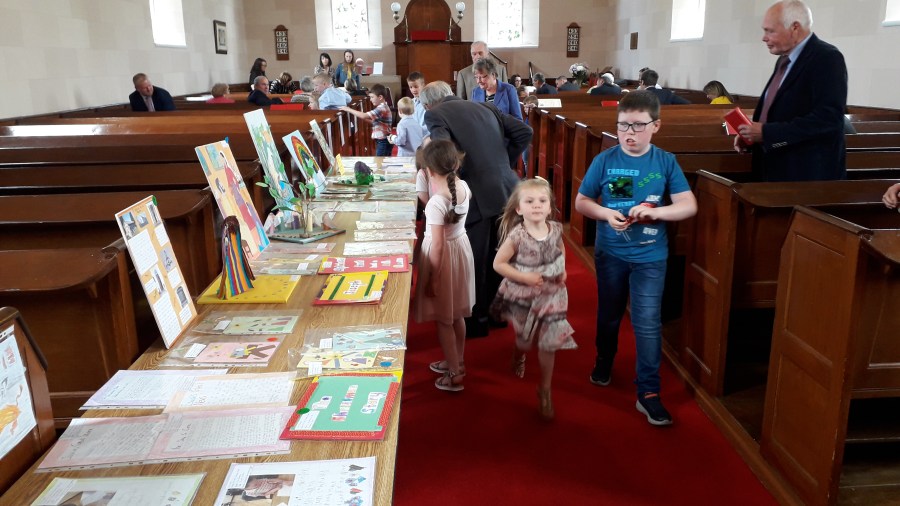
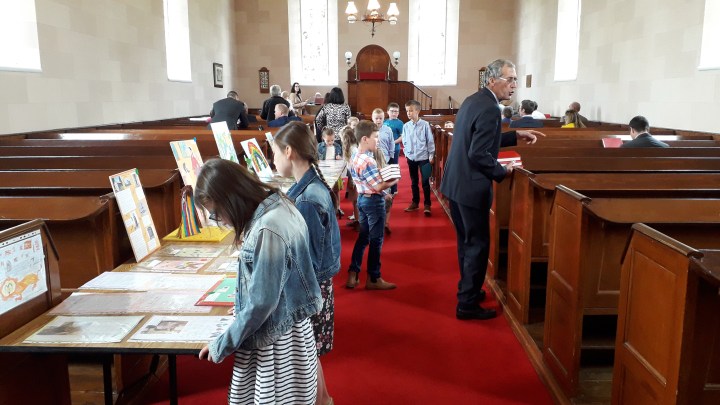
The annual Children’s Day service at Clough was held at the morning service on Sunday, 16th June. With songs, readings and prayers the children led the service on the theme of the Feeding of the Five Thousand and prizes were awarded for attendance and participation in the recent denominational exhibition held in All Souls’ Church, Belfast when Clough Sunday School were awarded a magnificent total of 17 prizes. At the service the Rev Dr David Steers thanked retiring Sunday School Superintendent, Elsie Nelson, for the tremendous service she has given to the children and the church over recent years.

Clough Children's Day 06

All the children’s work was displayed in the church


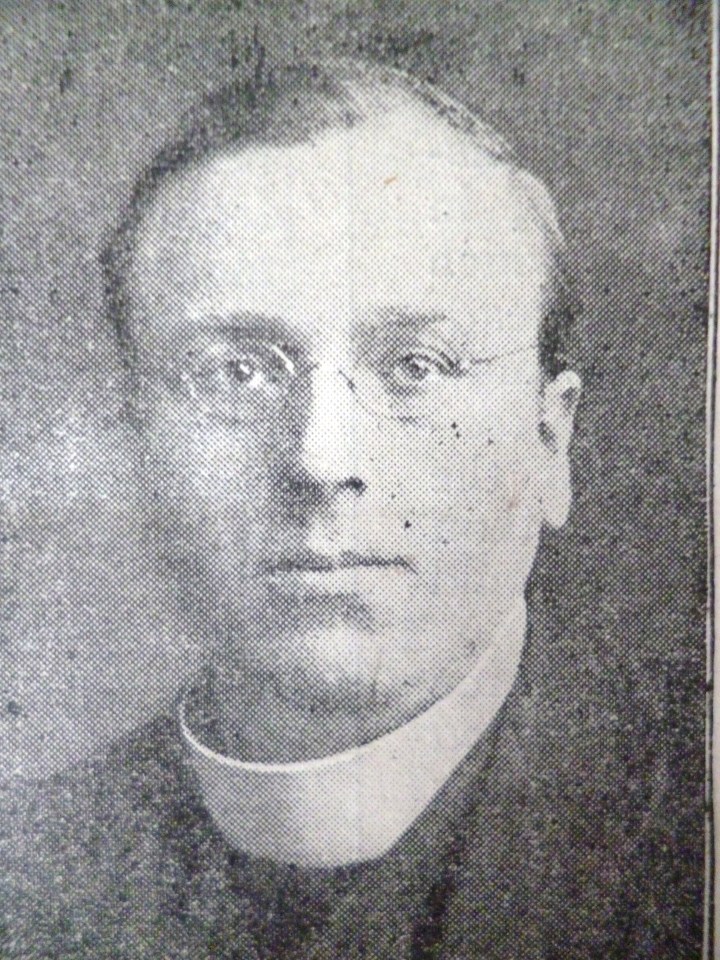
Rev Felix Holt

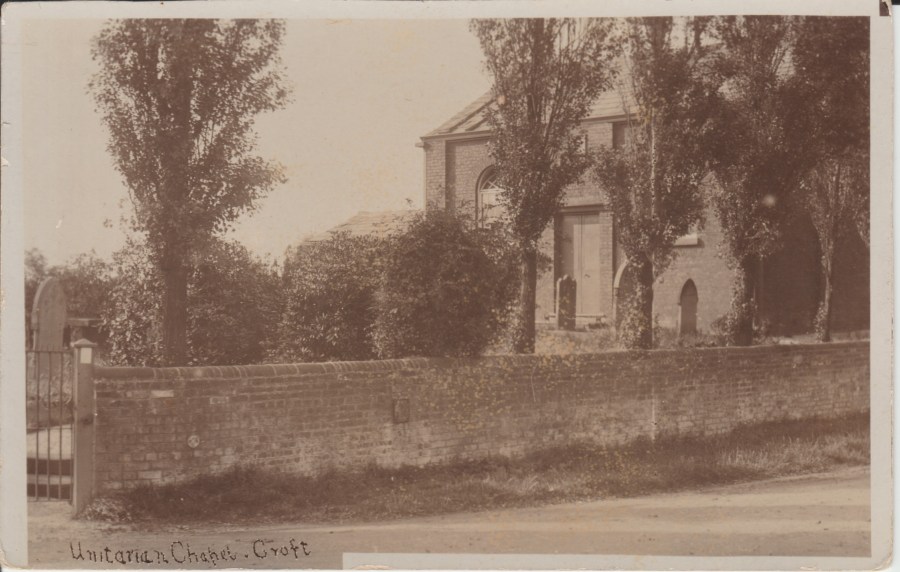
Back in 2016 I wrote about the grave of the Rev Peter Holt in the grave yard of the former Croft Unitarian Chapel (pictured above). The first full-time minister at Croft, he later served at Leigh and Astley in Lancashire. (Click here to read that post.) I remember preaching at Astley when a student in the 1980s and the Holt family was still remembered there then. Peter Holt was the father of two ministers, the most well-known was the Rev Raymond V. Holt, the other being the Rev Felix Holt whose longest ministry was at Ballymoney in county Antrim. Since posting about the Holt family I have heard from Andrew Holt, the grandson of the Rev Peter Holt and son of another brother, and also recovered some material about Felix Holt which came to light a few years ago.
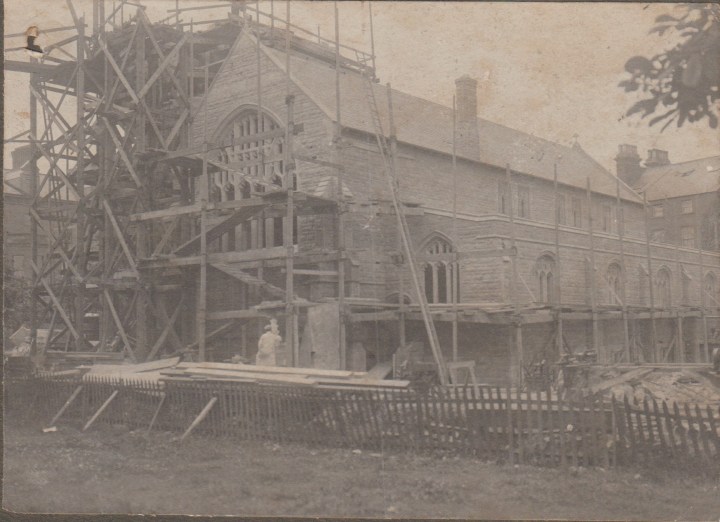
Felix Holt 1

Rev Felix Holt

Felix’s nephew tells me that his cousin, Felix’s son, served with the RAF during the Second World War and was shot down and killed over France. According to the Commonwealth War Grave Commission his son was Flight Sergeant (Navigator) Alwyn Evelyn Stuart Holt who died on 19th July 1944 aged 21. He served with 207 Squadron Royal Air Force Volunteer Reserve. He is recorded by the CWGC as “Son of the Revd. Felix Holt and Margaret Isabel Holt, of Charles Street Manse, Ballymoney, Co. Antrim, Northern Ireland.” He is buried at Margny Communal Cemetery, Marne, France.

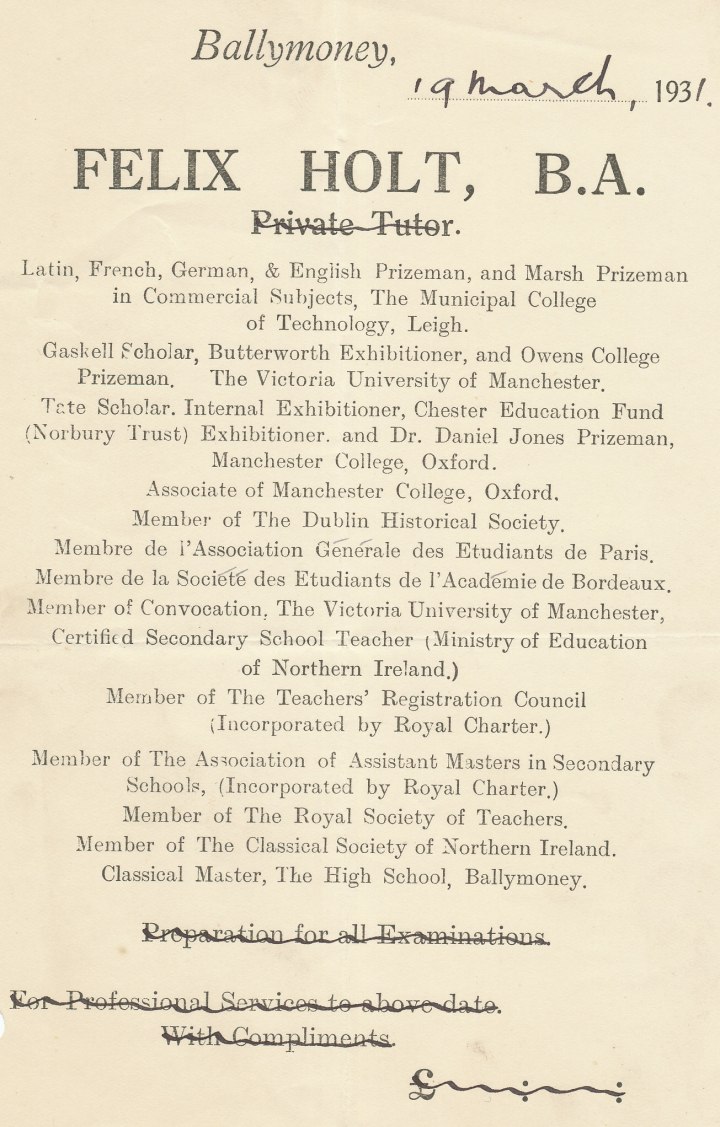
Among other things Rev Felix Holt was the clerk of the presbytery of Templepatrick for seven years and moderator of the Remonstrant Synod of Ulster from 1916 to 1917 and from 1935 to 1936. He must have been a considerable scholar. He taught ancient languages at Dalriada School in Ballymoney as well as working as a private tutor. I have a copy of a flyer he used listing his qualifications.

Felix Holt tutor

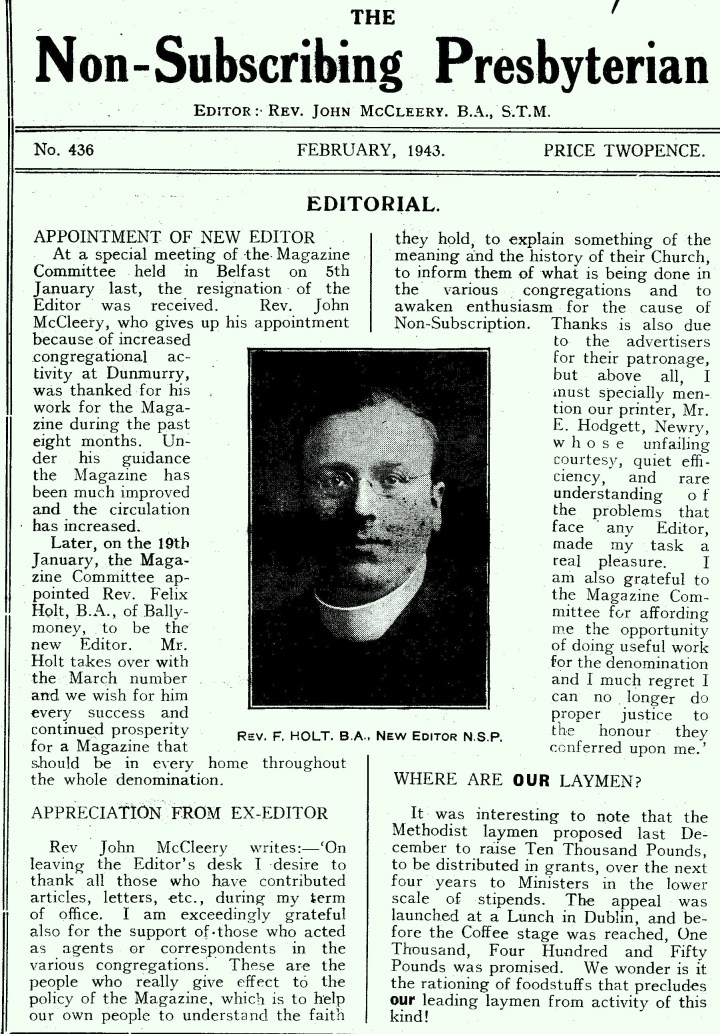
He was also the editor of the Non-Subscribing Presbyterian magazine for a few years. The picture from this front cover is the only picture I know of him.

Felix Holt Cover

No pictures or text may be reproduced from this site without the express permission of the author.


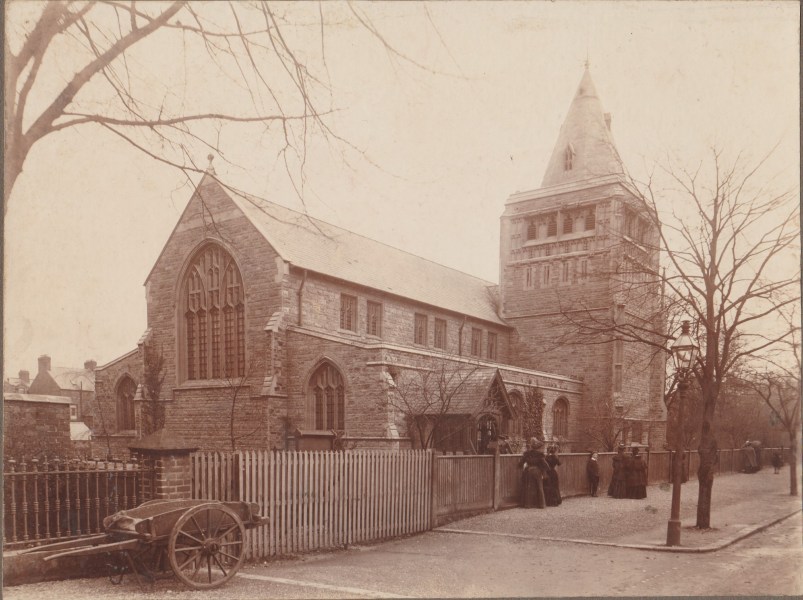
All Souls’ Church, Belfast built 1896

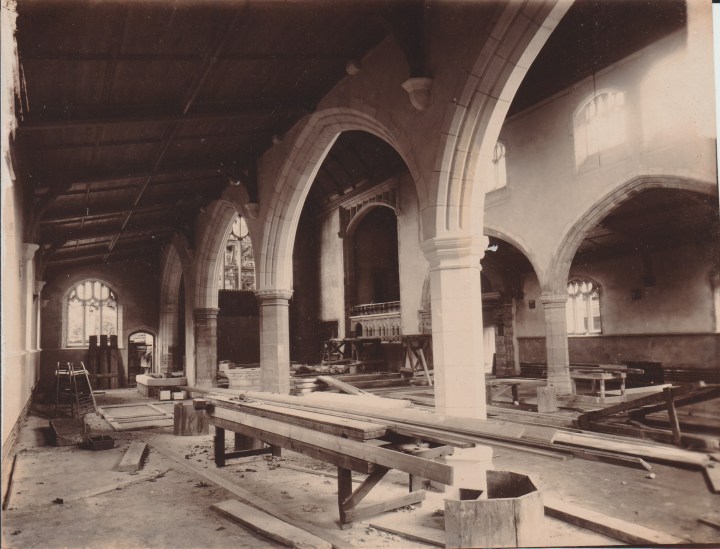
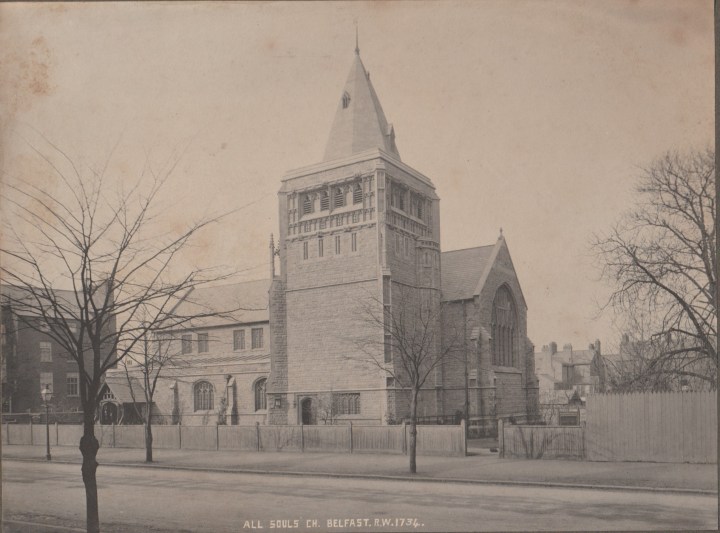
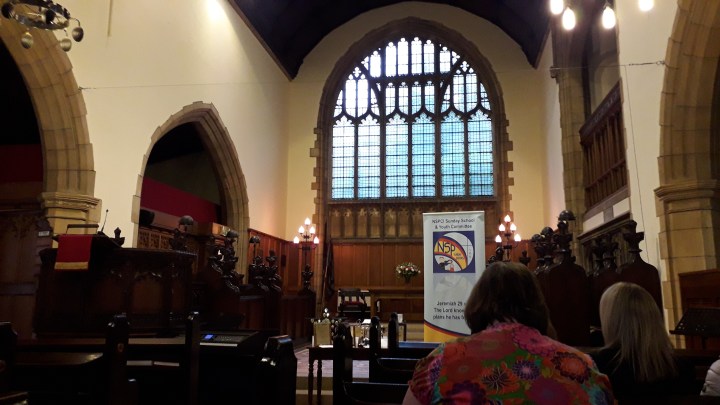
All Souls’ Church, Belfast exterior is modelled on Croyland Abbey in Lincolnshire. Built by the architect Walter Planck and opened for worship in 1896 it is the only church designed by that architect in Ireland. But it is interesting to note how closely the interior resembles the interiors of a number of fifteenth-century English parish churches. The arches, pillars, chancel, east window, clerestory windows all are reminiscent of a number of such places. I realised this when I saw a picture of the interior of the Church of St Mary in North Petherton. An Edwardian postcard of this interior  looks almost identical to All Souls’. Even the pews in All Souls’ underline this effect, the pews were brought in from the old meeting house on Rosemary Street when that church was vacated. These originally dated from the 1870s and a lot of Victorian parish churches would have installed new, modern pews at that time. The choice of this kind of architecture was quite deliberate by the minister, the Rev Edgar Innes Fripp in 1896. He was reaching back to medieval England to establish the kind of devotion he thought was most truly authentic. But architecturally it is a marvel. John McLachlan (in The Unitarian Heritage) says it is “unique in Irish Non-Subscribing church architecture”. But there is nothing like it in English Unitarian church architecture either which has a lot of remarkable gothic buildings.

All Souls ext construction 02

Simon Walker (Historic Ulster Churches) says “it would be as fitting in a rural English setting as in Belfast’s busy University area”. Richard Oram (Expressions of Faith Ulster’s Church Heritage) notes that “It is a unique and beautiful, little building”. Paul Larmour (Belfast: an illustrated architectural guide) calls it “a gem of Victorian architecture”.

All Souls int construction 01

The pictures on this page show the church under construction and soon after it was built, plus a view of the chancel taken before the NSPCI Sunday School service held there on 7th June 2019.

All Souls ext completed 01

All Souls June 2019

Postcard from Downpatrick. Then and Now

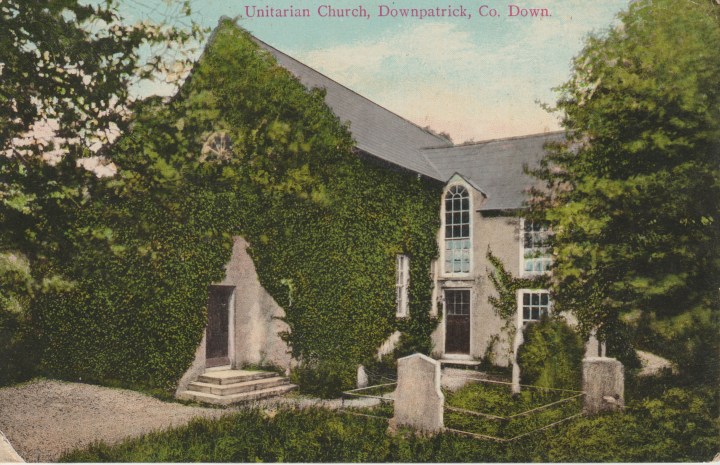
In the last post I included a scan of a newly acquired postcard of Newry Non-Subscribing Presbyterian Church. It is one of only a handful of Edwardian postcards featuring Non-Subscribing Presbyterian (NSP) churches. In this post I include a scan of a postcard which I purchased a few years ago but which is one of the rarest to feature NSP churches:

Downpatrick Postcard

I have never seen another example of this postcard of the First Presbyterian (Non-Subscribing) Church, Downpatrick. It has not been posted but was published by Lawrence Publisher of Dublin, probably c.1905. It is a colourised image, although it is not badly done, but that does suggest that there may also be ‘Real Photographic’ copies of the same postcard. The same publisher also produced postcards of the Cathedral and St Patrick’s Roman Catholic Church in Downpatrick. Not surprisingly the various views of the Cathedral are very common, it being a popular tourist destination because it houses St Patrick’s grave. The postcard featuring St Patrick’s Catholic Church is far less common but not as rare as the picture of the nearby Non-Subscribing Presbyterian Church.

The archive of the publisher of this postcard is held in the National Library of Ireland (NLI) in Dublin. There they hold 40,000 glass plate negatives made by the Lawrence studio between 1870 and 1914 of places all over Ireland. Over 19,000 images in the Lawrence Collection have been digitised and can be viewed online. The Collection includes six images that are labelled as depicting Unitarian churches. This is how most of the Non-Subscribing Presbyterian churches would have been known at the time but although this list includes Downpatrick, Newry (a different, wider view than the one in the previous post by an unknown publisher), Comber and Dromore, it also includes pictures of what the catalogue claims to be the Unitarian churches of Kilkeel and Portadown, indeed Unitarian is written on the photographic plate of the Kilkeel image. However, since there has never been a Unitarian/Non-Subscribing church in either place this is clearly an error. In fact the Kilkeel church has a visible date stone of 1832 which also names it as The Church of the United Brethren. However, in addition to the four correctly identified churches there is also a fifth example of an NSP church in what the catalogue calls the Presbyterian Hall, Larne but which is labelled on the plate as the ‘Old Presbyterian House, Larne’.

The image of Downpatrick which is now held in the National Library of Ireland was reproduced in the Non-Subscribing Presbyterian magazine of July 1909 where it was attributed to Baird of Belfast:

Downpatrick July 1909

Inevitably, because it is taken from a magazine, this image is a lot less clearer than the image held in Dublin but it is an identical picture, even including the same title and identification code of ‘1697 W.L.’ which is cropped from the printed postcard. It also has an addition in the bottom right hand corner where the words ‘Baird, Belfast’ have been added.

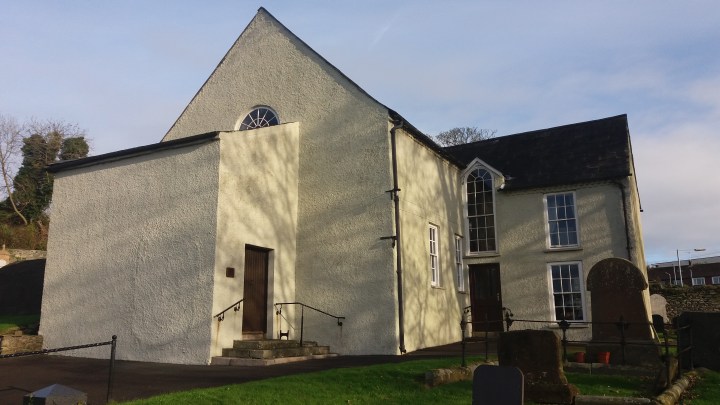
The online digital image which can be seen on the NLI site is mostly very sharp (there is some blurring of the foliage) but you can clearly see the eighteenth-century foot scraper on the main steps into the church. However, in the colourised postcard and the magazine image this kind of detail is lost. But still the original is not a bad image. It is strange though the degree to which the ivy was allowed to run riot on such an ancient building. All of this was removed a long time ago. It is amazing how much cleaner the meeting-house looks without ivy creeping around it and these following photos, taken in 2008 (above) and 2017 (below), give a good contrast to the Edwardian postcard and show details such as the foot scraper and some of the other changes that have taken place around the building in recent years.

Downpatrick ext 2008

The Church in 2008

Downpatrick26Nov2017 02

The Church in 2017


Downpatrick Postcard crop

Detail from the postcard c.1905

Downpatrick entrance gates September 1909

The view from the gates to the church. From the ‘Non-Subscribing Presbyterian’ magazine, September 1909


First Presbyterian (Non-Subscribing) Church, Newry

At the end of February a meeting of the Presbyterian Historical Society took place at the First Presbyterian (Non-Subscribing) Church, Newry when the speaker was the Rev Dr John Nelson who spoke about the life and ministry of Rev Andrew George Malcom, minister at Newry from 1809 to 1823.

Newry JWN

Rev Dr John Nelson addresses the Society

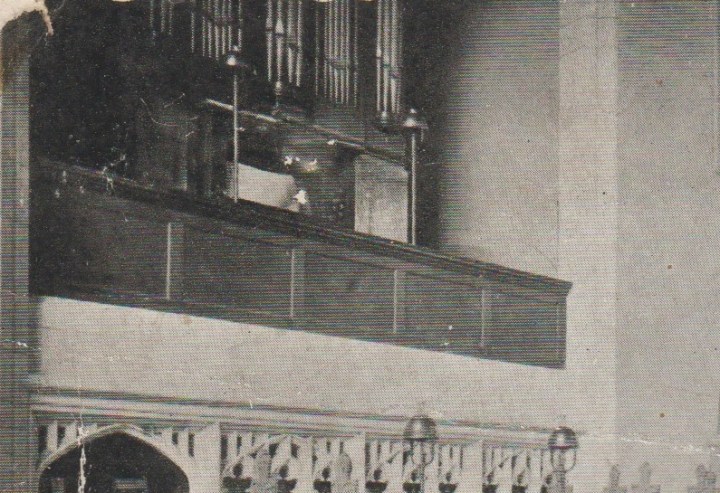
It is always an interesting church to visit, said to be one of the first Presbyterian churches in Ireland to adopt the Gothic style, designed by W.J. Barre in 1853, the first commission of the Newry-born architect then aged just 22. It was my task to introduce the speaker and I also made mention of the magnificent organ built in Belfast in 1806 for the Second Congregation, first played by Edward Bunting and sold to the Newry congregation in the 1920s. It was one of the first organs to be introduced to any dissenting congregation in Ireland and undoubtedly is the organ in longest continuous use in any Presbyterian church in Ireland. The Very Rev John Dunlop asked if there was any chance of hearing the instrument being played and church member Florence Berry kindly stepped up to give everyone the chance to hear it.

Newry organ

Florence Berry plays the organ

I have an example of a postcard of the interior of All Souls’ Church, Belfast which includes a partial view of the instrument in what was its second location:

Postcard All Souls cropped

I have blogged about this postcard and the ‘ghost’ in the picture in a previous post – Postcards from All Souls’.

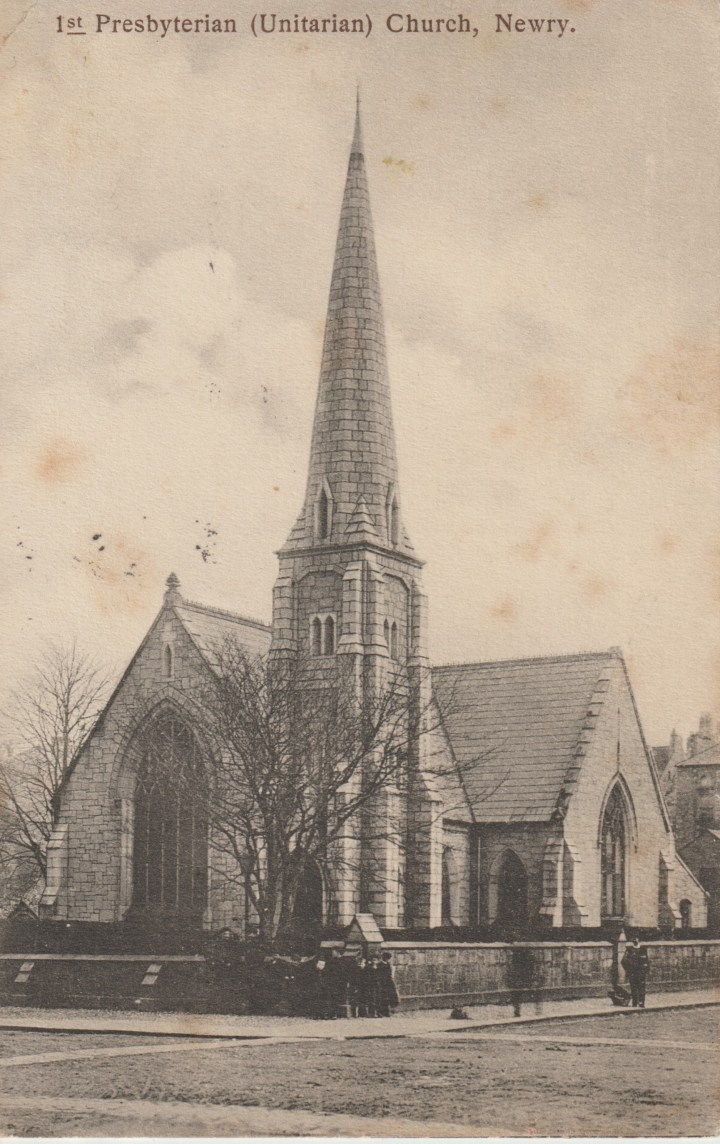
By chance I recently became the proud possessor of an Edwardian postcard featuring the Newry church.

Newry Postcard

The card was posted in Newry on 12th August 1905 by ‘May’ to ‘Mr A.N. Jackson, 17 Scholar Street, Liverpool’. She said simply ‘This is a picture of our Church.’

I only know of eight or nine Non-Subscribing Presbyterian churches which appear on postcards, although there are other oddities such as a postcard featuring the Newry manse from this era, although I don’t have a copy of it. The Newry card of the church is not particularly rare and this is not a wonderful example, bearing, as it does, a fair amount of foxing. But it is interesting nevertheless, complete with a knot of school age children standing at the corner of the road.


Closer inspection reveals that this little crowd might contain some of the Sunday School as the solitary figure a bit further to the right appears to be a clergyman. Since we can date this exactly to 1905 this would be the Rev George Vance Crook. After serving as a Wesleyan Methodist minister he changed denomination and ministered successively at the Unitarian Church, Taunton, then at Newry and Warrenpoint, then Cork and finally at Antrim where he had a long ministry from 1913 until his death in 1949. He had a kindly disposition and although in many ways a figure from the distant past in my first ministry in Belfast one member of the congregation could recall him very well from his Antrim days.

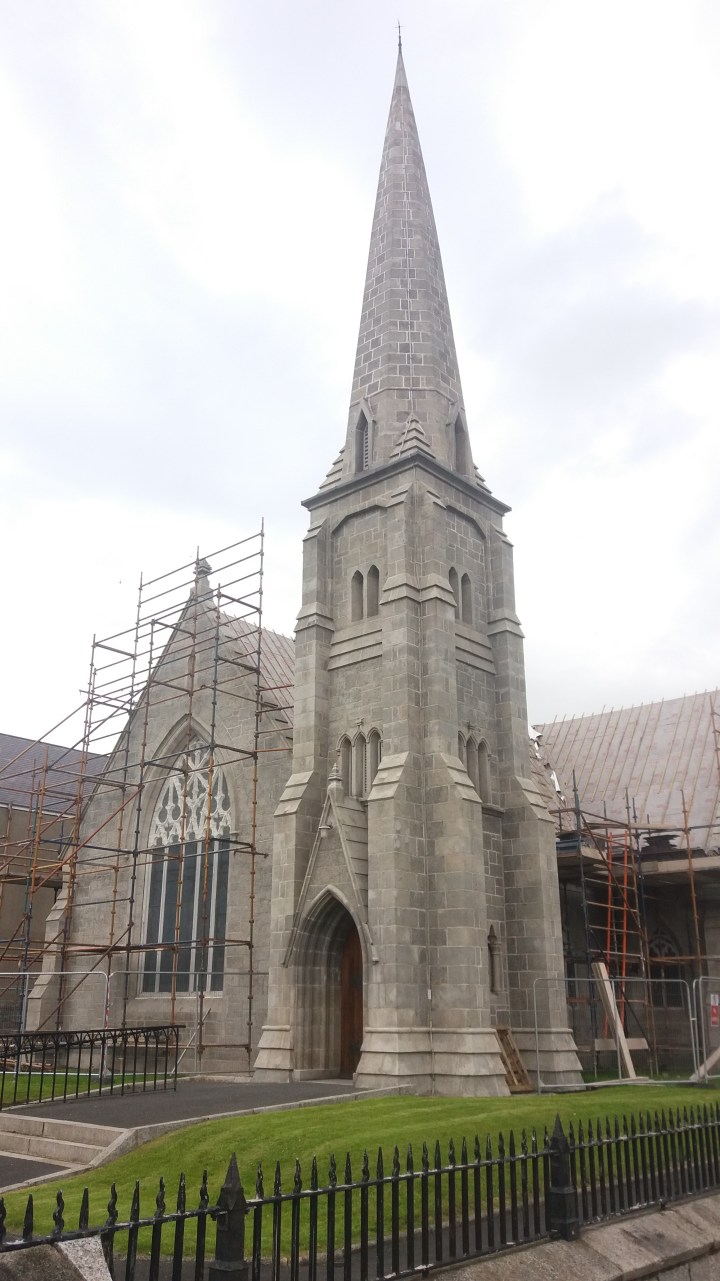
I took a picture of the exterior, complete with scaffolding, a couple of years ago:

Newry July 2017

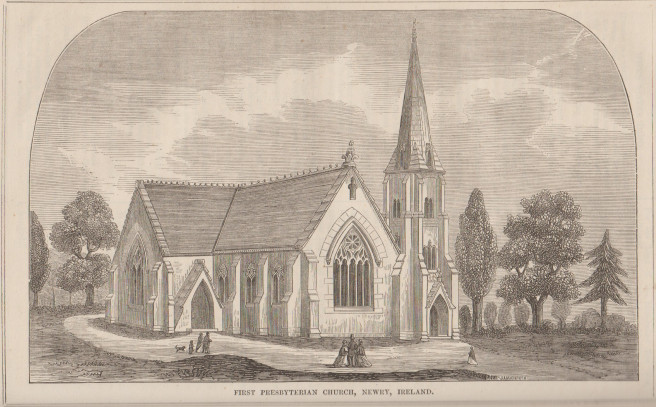
An engraving of the church appears in an 1866 edition of The Christian Freeman, later also reproduced in Emily Sharpe’s 1901 Pictures of Unitarian Churches, one of only three Irish churches to appear there. It is reproduced at the top of this page.

One of the things that always catches the eye at Newry is the large model of a steam engine and its coach mounted high on the wall of the church hall. It was made by Mr Henning a church member who worked as a wheelwright in Newry railway station and who died in 1930. He bequeathed his model to the Newry Sunday School and it has been in the church hall ever since.

Newry engine crop