1930s seaside arcade and fun fair. Neon amusements. A longstanding attraction on the New Brighton sea front.
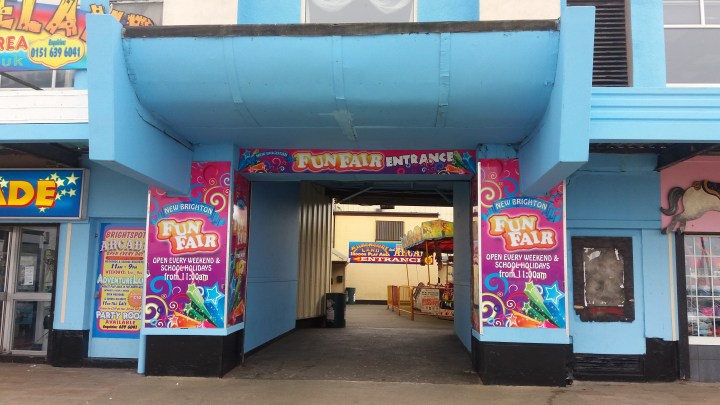
Entrance
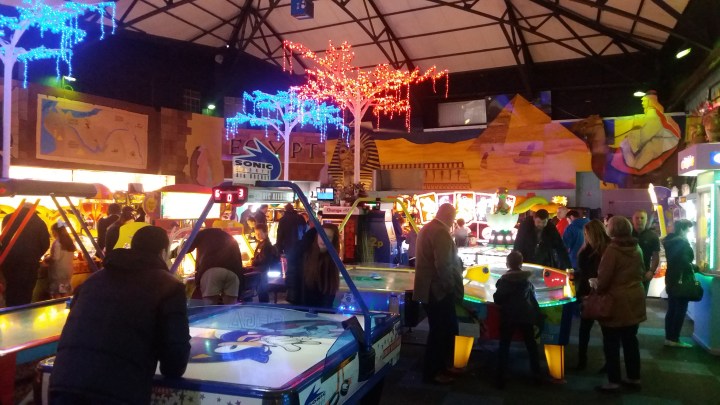
Inside the arcade

Justice League

Dinosaur
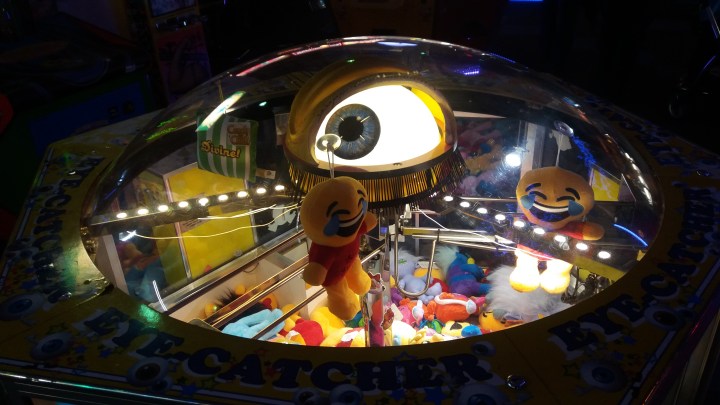
Eyecatcher
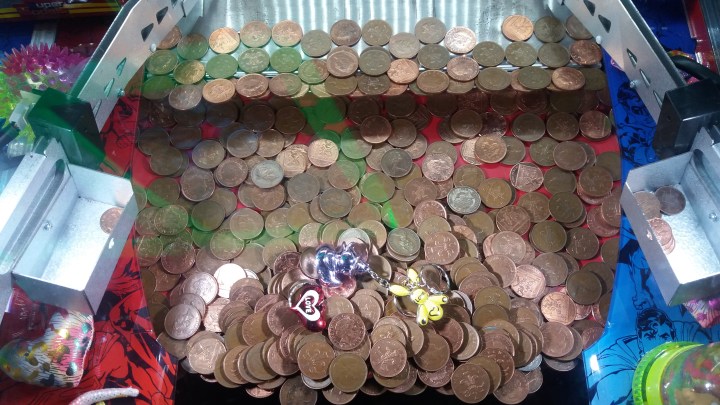
Coins

Prizes

More Prizes
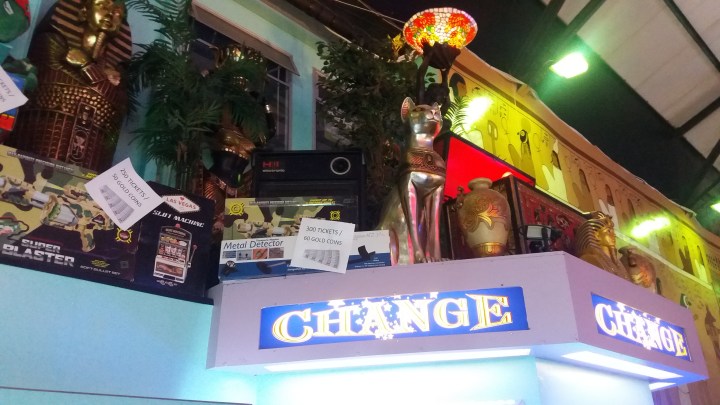
Change
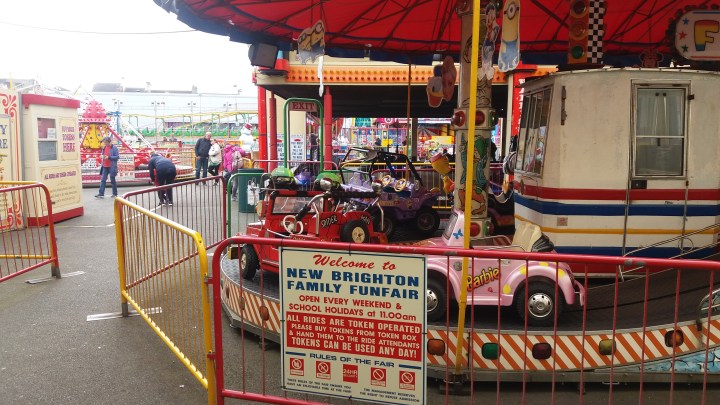
Rides
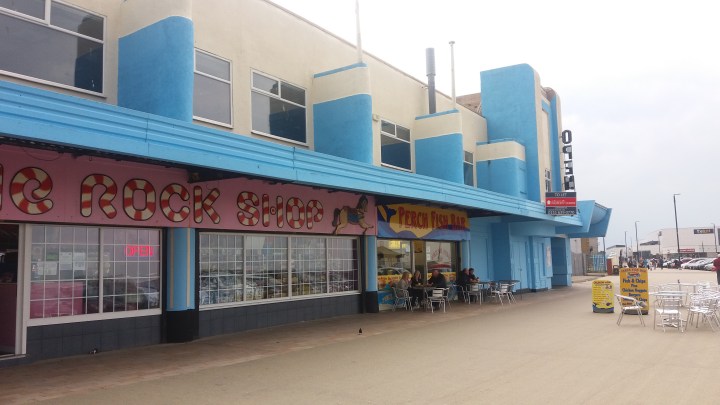
Outside

1930s seaside arcade and fun fair. Neon amusements. A longstanding attraction on the New Brighton sea front.
Entrance
Inside the arcade
Justice League
Dinosaur
Eyecatcher
Coins
Prizes
More Prizes
Change
Rides
Outside
I wasn’t looking for the former Unitarian Church in St Helens but stumbled across it by accident. I was glad I did because whilst it is always a shame when any church closes (and this congregation came to an end in 1998) old church buildings can sometimes be utilised in ways that are imaginative, in keeping with the original purpose and bring some social advantage to the community. All this is certainly the case with St Helens, a solid and utilitarian building that is now a cinema.
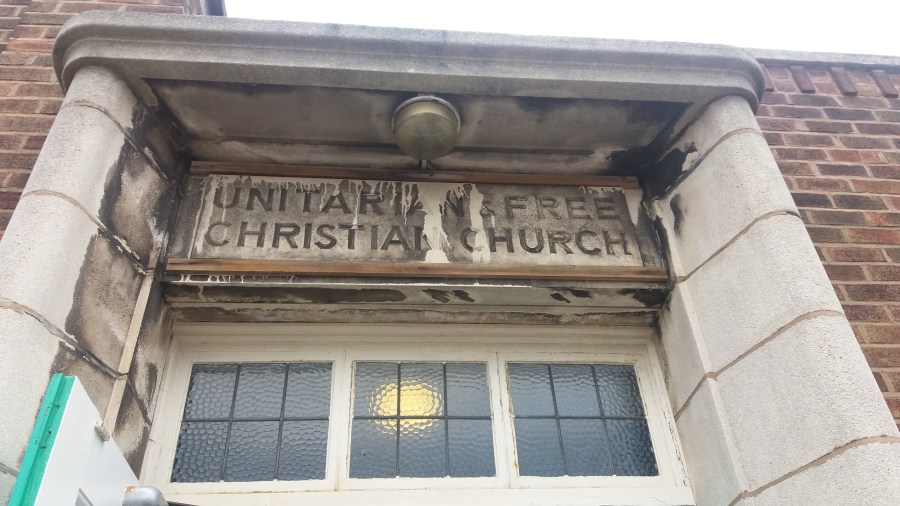
As I walked past my eye caught the inscription above the door proclaiming it to be the Unitarian and Free Christian Church, although it is many years since this was actually the case. In fact there are more reminders of the original function of the building despite it being well converted to other purposes. On the front wall the foundation stone is very prominent, recording the role of Anne Holt my distinguished predecessor as editor of the Transactions of the Unitarian Historical Society – a highly regarded historian and member of the famous Liverpool ship owning family – who had inaugurated the building in 1949. Inside there is another tablet which commemorates the opening of the church in 1950 under the presidency of Elizabeth Ann Fryer.
The sanctuary was not large but the group of buildings were varied and clearly adapted to a number of uses. Nowadays the building is a cinema, named Lucem House, a volunteer-led social enterprise. It takes its name from the motto of the borough of St Helens, Ex Terra Lucem – ‘Out of Earth – Light’ (so I was told by Paul Jones the operations manager of the cinema) and the church itself has been nicely turned into a small cinema auditorium. In the foyer they have created an attractive box office and the whole place has a pleasant ambience.
Paul told me that the cinema has been in operation for over three years, the building also being let out for functions and used by a local photography club. They have a screening every week and the day I was there were looking forward to A Night to Remember starring Kenneth More. Paul Jones is an expert on the Titanic (another item of history with notable Unitarian connections) and this film certainly reflects his interests. The film was to be followed by a poetry reading by Len Saunders, the head steward and a poet and actor who has been known – so I was told – to dress up on suitable Titanic related occasions as Captain Smith or Lord Pirrie. He wasn’t in character that day but shared with me some of his poems.
The Unitarian Heritage (published in 1986) says the congregation was founded in 1901 and the original chapel built in 1904. I can’t locate any images of the original building but it was destroyed during the blitz of 1941 and apparently rebuilt on the same site after the war. Now, after a period of neglect, the buildings have been well restored and well adapted to another imaginative use.
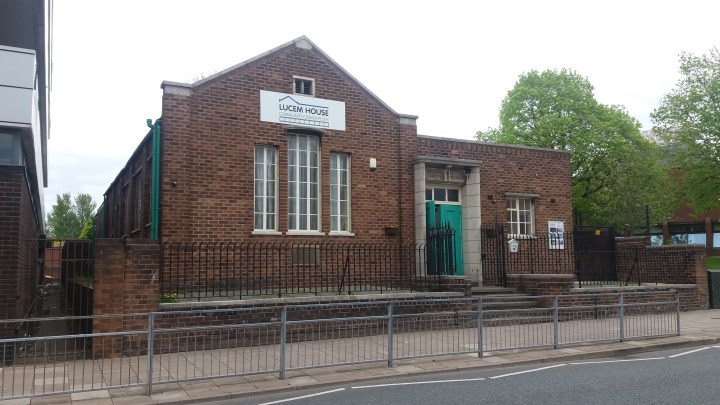
St Helens Unitarian Church – now Lucem House
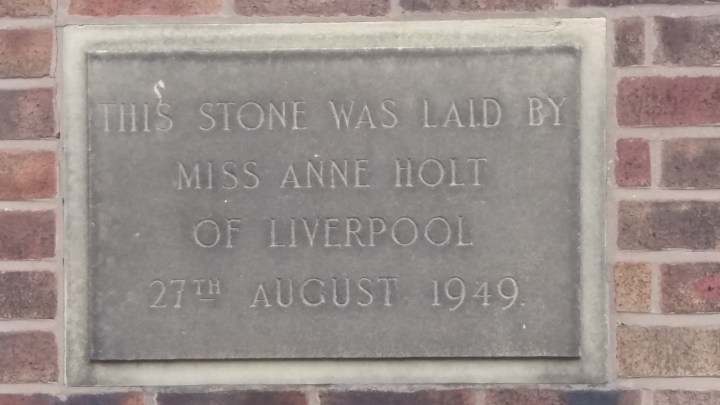
Foundation Stone
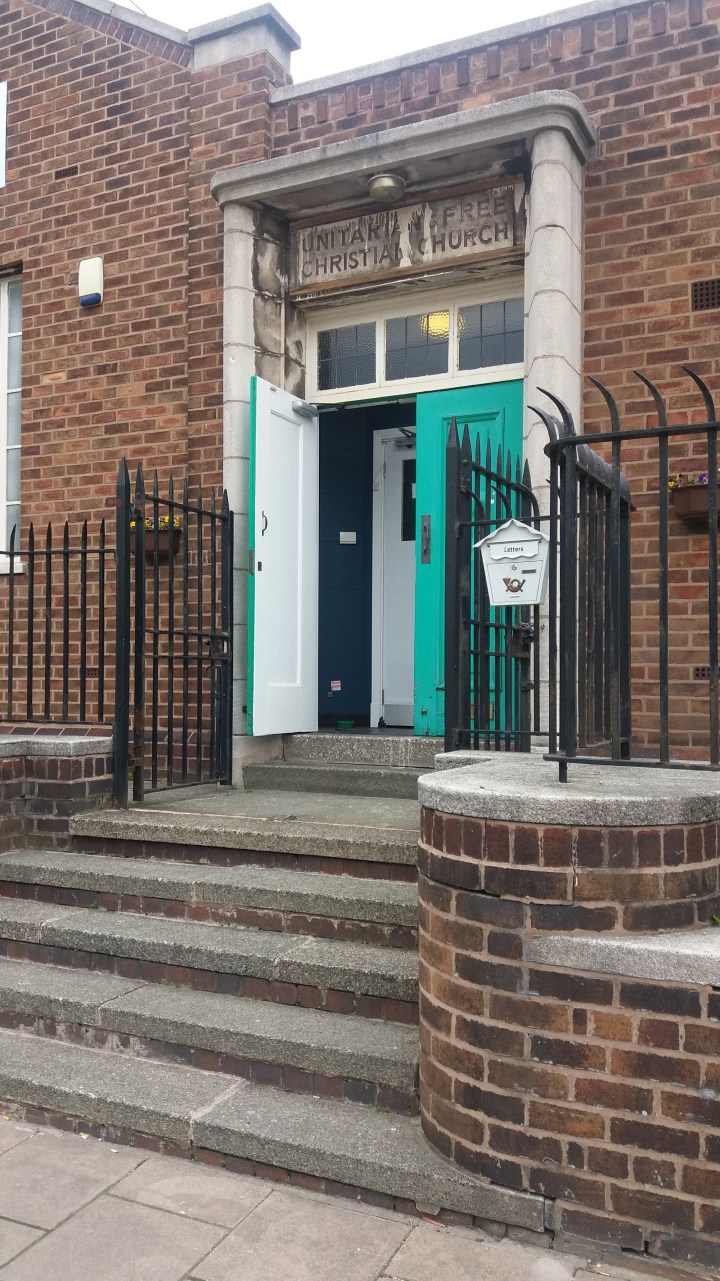
Front entrance
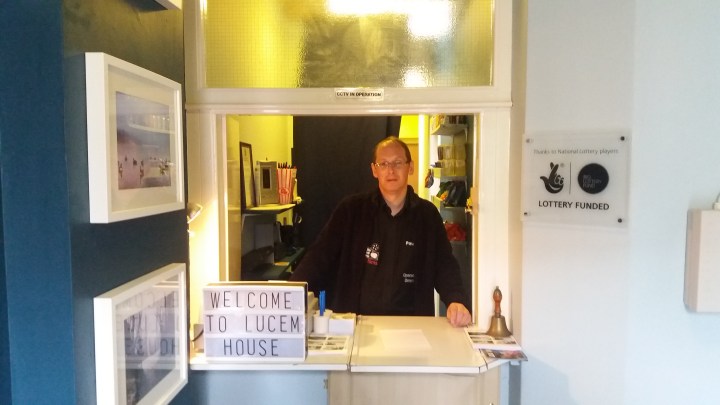
Paul Jones in the box office
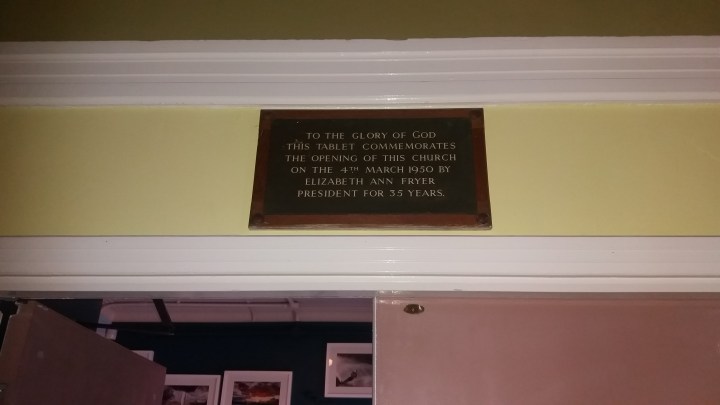
Commemorative plaque
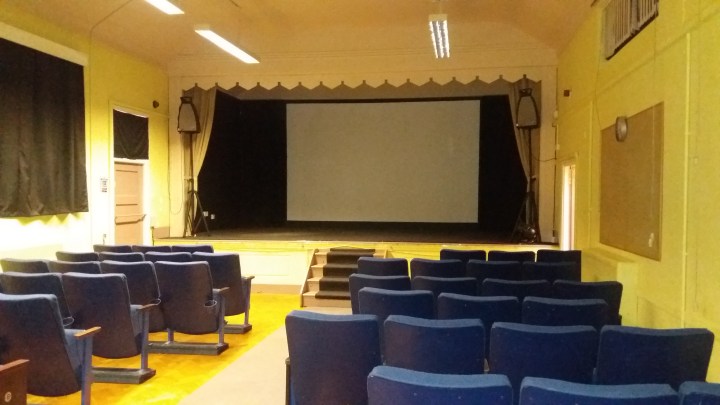
Auditorium
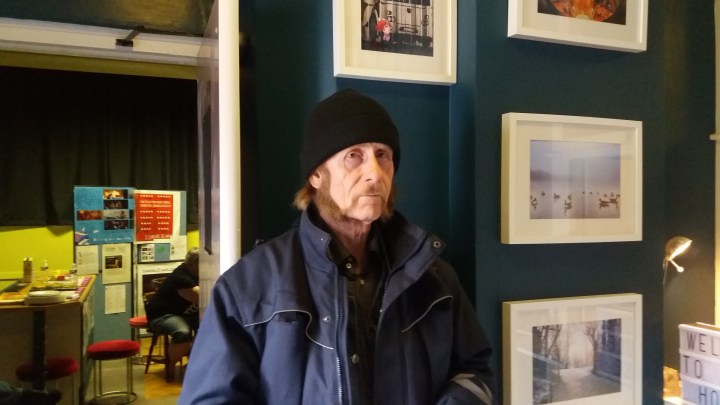
Len Saunders
Update 1st August 2017.
I was very shocked and saddened to read that Len Saunders was the victim of a violent unprovoked assault in July which tragically resulted in his death at the end of the month. There are details and tributes to him in the local paper:
There is a crowdfunding page set up to raise money to provide step free access to Lucem House Cinema in Len Saunders’ memory. The page can be accessed here:
https://www.justgiving.com/crowdfunding/len-saunders?utm_id=107&utm_term=gARZbR5qD
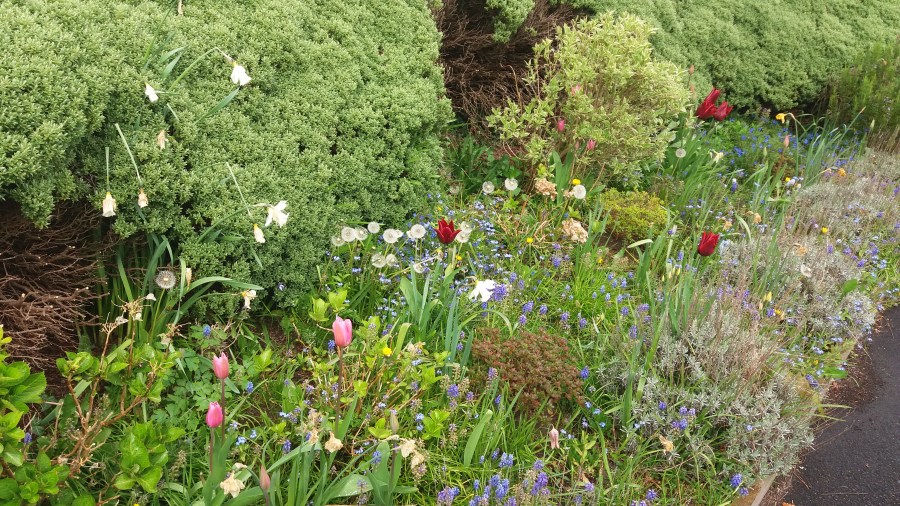
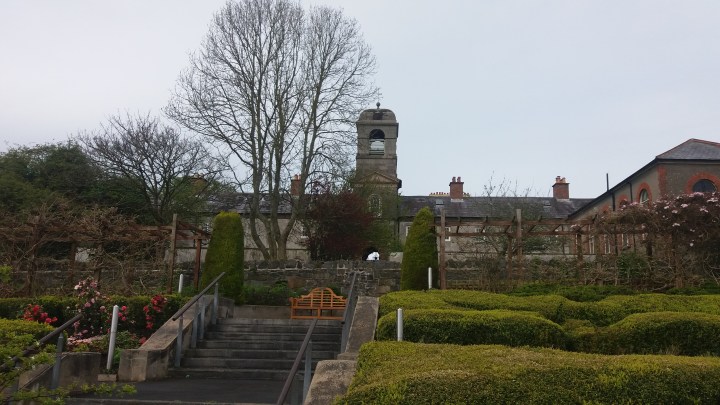
Walking through the Garden at the rear of the St Patrick’s Centre in Downpatrick I noticed how attractive the Garden now is. The little details are worth examining, like St Patrick’s ship (not the original one I would think), the standing stone, and the fairy thorn brought there from another site but growing well set in a Celtic cross just to remind people of Patrick’s victory over superstition. The Cathedral and the Southwell School provide a marvellous backdrop.

Looking towards the Southwell School

The Fairy Thorn
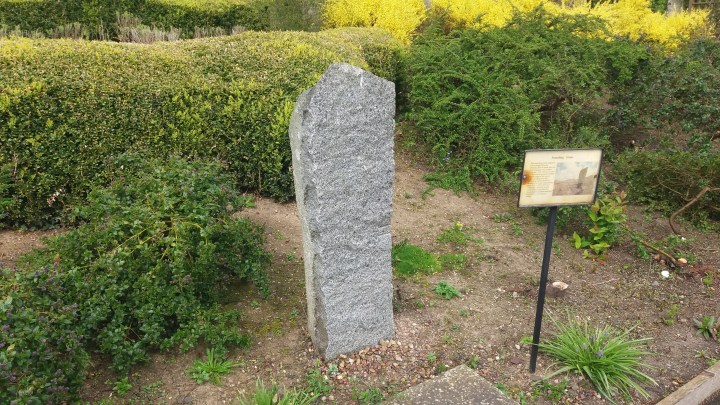
Standing Stone

St Patrick’s Ship and the Cathedral
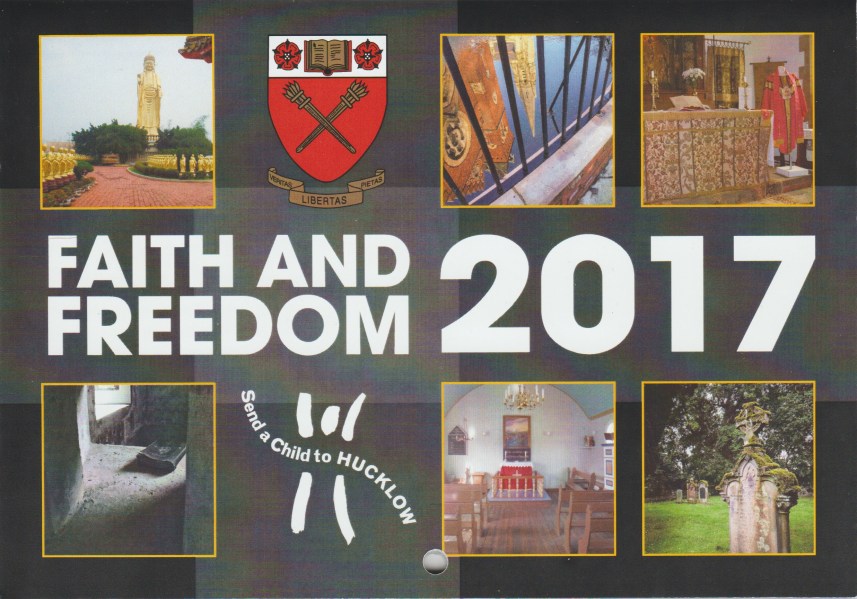
The Faith and Freedom Calendar for 2017 is available, as mentioned in the previous post. Full of interesting dates for all year round this year’s issue contains a diverse selection of beautiful images from Iceland, Warrington, Padiham, Taiwan, Derbyshire, Transylvania, Lincolnshire, Wales and Liverpool. A big thank you is due to all our wonderful photographers.
The Calendar can be downloaded here:
faith-and-freedom-calendar-2017-full-version
Once again any proceeds from the sale of the Calendar will go to the Send a Child to Hucklow Fund.
If you would like to purchase a copy you can send a donation to the Faith and Freedom business manager: Nigel Clarke, 16 Fairfields, Kirton in Lindsey, Gainsborough, Lincolnshire, DN21 4GA.

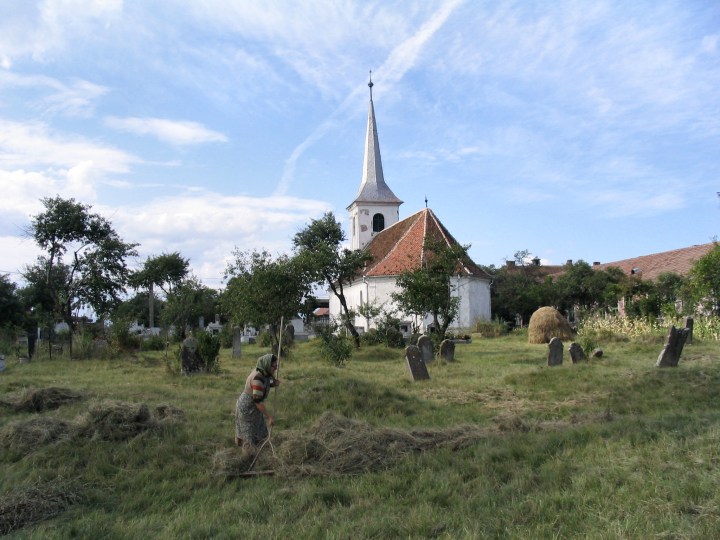
The 2017 Faith and Freedom Calendar will be on its way soon. Containing twelve very striking images by photographers from around the world it depicts scenes related to the practice of faith from many different countries. The Calendar itself lists significant dates with a religious theme throughout the year and any money raised by the sale of copies will go to the Send a Child to Hucklow Fund which exists to enable disadvantaged children who would not otherwise have a holiday to go to Great Hucklow in Derbyshire for a holiday.
On this page you can see the image for the month of October:
Haymaking at Szentivánlaborfalva, Transylvania, Romania.
A beautiful image provided by Márkó László.
If you would like to purchase a copy you can send a donation to the Faith and Freedom business manager: Nigel Clarke, 16 Fairfields, Kirton in Lindsey, Gainsborough, Lincolnshire, DN21 4GA.

In 1893 B. Guinness Orchard in Liverpool’s Legion of Honour declared the Rev John Watson to be “the successful pastor of the most important and active among our local congregations.” In (by his standards) fairly restrained prose Orchard outlined the minister’s achievements: every sitting in the church was let, the number of communicants had risen from 133 to 949, three new causes had been founded, £70,000 raised for congregational activities. The list of achievements was a long one and, Orchard added rather cryptically, “To his congregation his doctrinal teaching is quite acceptable”.
John Watson had already achieved a position of some eminence in his adopted city. In his twenty five years in the ministry at Sefton Park Presbyterian Church he also became centrally involved and prominent in civic life. But Orchard was writing just on the cusp of a new departure for John Watson; his first novel – Beside the Bonnie Brier Bush – was published in the following year. As Ian Maclaren he became a top selling novelist whose fame stretched around the English-speaking world.
As a clergyman/novelist he reached an extraordinary level of fame. He published theology under his own name which sold exceptionally well resulting in highly popular lecturing tours of the USA and honorary DDs from St Andrews and Yale.
As I have mentioned in a previous post
https://velvethummingbee.wordpress.com/2015/04/13/rev-john-watson-ogdens-guinea-gold-cigarettes/
his fame was such that his image was reproduced on a cigarette card. It is a very small card but it is very cleanly printed.

I recently discovered that a separate series of cigarette cards was also issued in Australia by Ogden’s in about 1905 which also included an image of John Watson. I don’t possess an example of this card although it was less well printed than the British one. It re-used a photograph taken by top London photographers Elliot & Fry. The same image was published as a postcard in the ‘Star Series’:

There was a great demand for images of John Watson. Popular prints of him were sold but with the sudden impact of the postcard at the turn of the century his image became rather more widely diffused. Market leaders Rotary sold this postcard of John Watson:

Taken probably for a magazine in what is almost certainly the front room of the manse in Sefton Drive he leans against the fireplace in front of a picture of the Last Supper. It is interesting how the different aspects of his character blended into one. He was an effective and highly successful minister with extensive involvement in many aspects of local life and national church life. But he was also a much sought after author of popular novels. Yet although his novels are still in print and although something of a niche area are still read, his theology, which also sold in tens of thousands, is now forgotten.
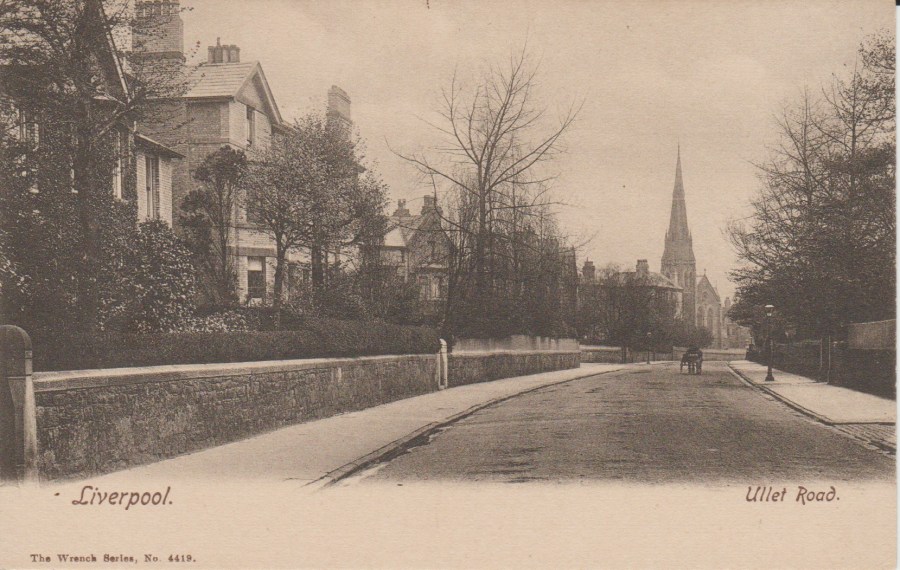
His fame was tied up with his church. I have many examples of postcards of his church in Sefton Park, it was a popular subject. The one at the top of this post shows the church in the background but suggests the importance of its site on a main arterial route through the suburbs. Tram conductors would call out the name of the nearby stop as Dr Watson’s church and the detail on this postcard shows a tram stopped near the junction, its driver and conductor hanging around to be in the photograph:
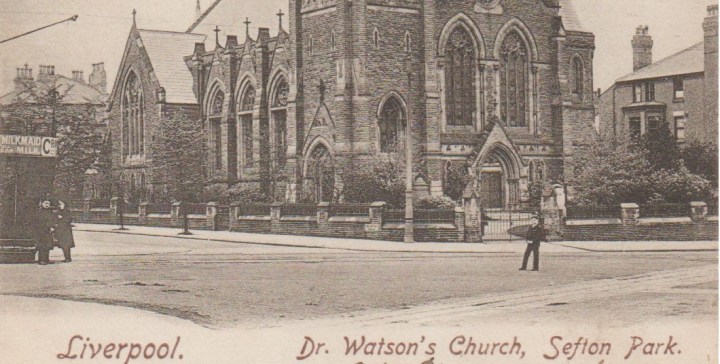
Another feature of all photographs of the exterior of the church is that someone (or sometimes two people) always stood in the middle of the road slightly to the right of the main gate. Was this something demanded by the photographers to give some idea of scale? It is strange how that space is always occupied. Sometimes by a young person staring at the camera other times by someone with their back to the camera and sometimes by a couple in animated conversation. But the title always takes the same form, it is ‘Dr Watsons’s Church’ or ‘Ian Maclaren’s Chapel’. The terms are used interchangeably even by local publishers Wrench.
The Walker Art Gallery has two contemporary portraits of John Watson but these are not on show and I suspect have never been on show. They are both striking examples of late nineteenth-century portraiture and can be found online. But his likeness still circulates on postcards and cigarette cards, a continuing reflection of his late Victorian and Edwardian fame.
The Non-Subscribing Presbyterian Church in Banbridge has a very fine and impressive building. The congregation recently celebrated its tercentenary and this striking Victorian photograph of the exterior was republished in conjunction with the special service.
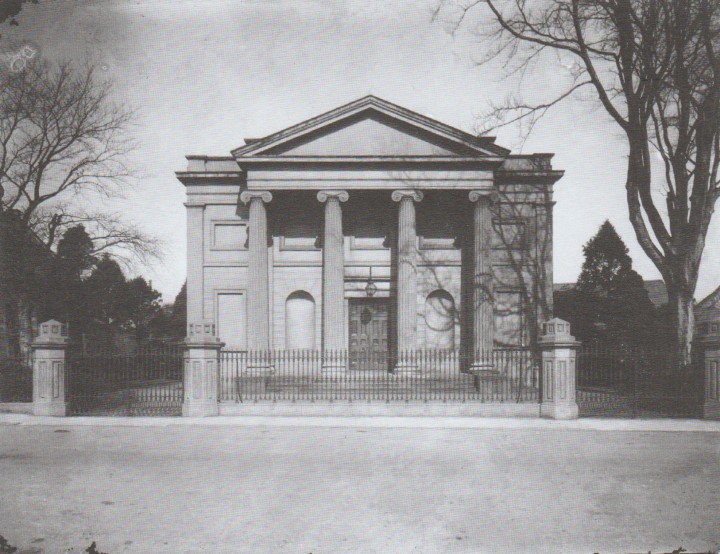
First Presbyterian (Non-Subscribing) Church, Banbridge
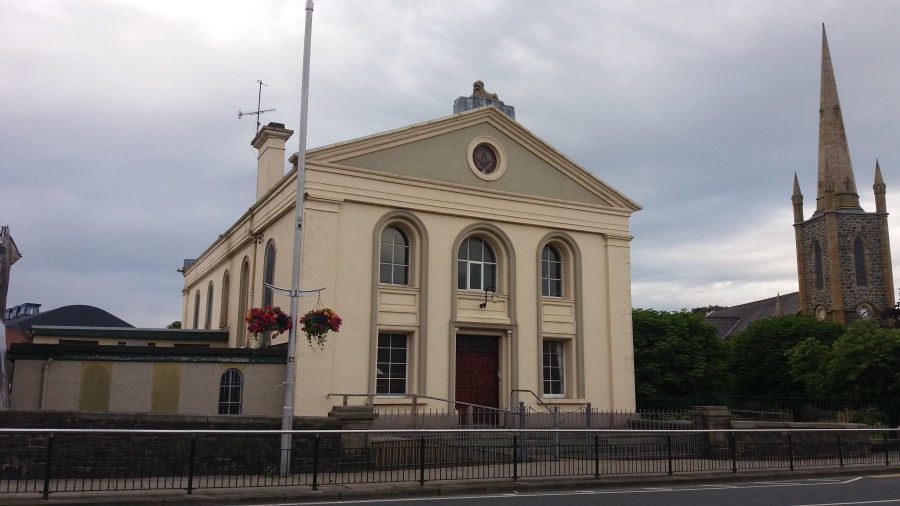
But it is probably not widely known that nearby is the building that once housed the second Non-Subscribing Presbyterian Church in Banbridge. Standing in Church Square as you enter the town it stands opposite the memorial to the polar explorer Captain Francis Rawdon Moira Crozier who died in 1845. This is probably the only memorial anywhere which incorporates polar bears in its design.

Crozier Monument
Despite its prominent location the Second Congregation is often overlooked. The Unitarian Heritage: An Architectural Survey published in 1986 is a usually a very reliable guide to church buildings in the Unitarian and Non-Subscribing Presbyterian tradition but the section on Ireland carries no mention of Second Banbridge at all. Indeed it seems to have been very largely forgotten although the size and location of the building suggests it was quite an important congregation in its day.

The former meeting house of the Second Congregation
Dryasdust gives an account of the congregation’s history in the Non-Subscribing Presbyterian (April 1995) and tells how it grew out of a dispute over the appointment of the Rev John Montgomery, a nephew of the Rev Henry Montgomery. A minority left and formed a new congregation and called the Rev David Gordon as their minister who was installed on 15th March 1848. The new building was opened sometime after that.

Rev David Gordon
David Gordon remained until 1866, later becoming minister of Downpatrick, but he was succeeded by the Rev Richard Acland Armstrong. R.A. Armstrong ended up as a very distinguished minister of Hope Street Church in Liverpool but he arrived in Banbridge straight from College in 1866.

Rev R.A. Armstrong in later life
Fortunately for posterity R.A. Armstrong’s son published a Memoir of his father in 1906 which included a number of family reminiscences of his time in Banbridge and this gives us a rare glimpse into the operation of the Second Congregation.
His father, the Rev George Armstrong, had been the Church of Ireland incumbent of Bangor Abbey before becoming a Unitarian and minister of Lewin’s Mead, Bristol. It was perhaps not surprising then that after education at London University and Manchester New College in 1866 Richard received a unanimous call to a congregation in Ireland. His stipend was £125 (including the regium donum) and he lodged with a Mrs Morrow, his kindly landlady who secretly supplemented his paltry allowance of tea. But he did not settle easily in Banbridge. Following the death of the Rev John Montgomery in 1867 he attempted to amalgamate the two congregations, even offering to resign if this would help. But a “Mr Walker”, possibly a leading member of the First Congregation, told him that “there was not the least good [in resigning], and that there was no chance of an amalgamation, as there was a difference of principle between the two congregations”.
He also became deeply embroiled in Ulster politics, being identified as “Papish Armstrong” by hard-line opponents. As sectarian tensions accelerated the windows of the manse were smashed by a mob following the publication of a letter by Armstrong in the Northern Whig in defence of the rights of Roman Catholics. A large mob also intended to attack the meeting house but this was protected by a detachment of police. He also courted theological controversy when answering lectures on the inspiration of the Bible by orthodox clergy with public lectures of his own. These were held in the Town Hall and proved rumbustious affairs. The first one was broken up by a mob with more threats being made against him. The second one took place but was a difficult night. His only supporter on the platform was the Rev John Orr of Comber and the chair was taken by a member of his congregation, Gilbert Mulligan. The opposing side was represented by nine clergy who insisted on having their own second chairman (a Mr Simms) on the platform. The meeting lasted for hours and R.A. Armstrong did not get home until 3.30 in the morning, exhausted and with a sore throat and a fever.
By this time he was also married, to Clara Wicksteed, the sister of Philip Henry Wicksteed, and their son had been born. In a letter to her mother Clara described the attack on the manse:
Baby and I were in bed when they passed our house, between ten and eleven, and they threw great stones at the bedroom window, smashing six panes. I did not feel frightened some way; my great fear was that we should catch cold with the broken window but we did not. I never thought before what a punishment it was to have one’s windows broken. First there is the danger of being hit by the stones (some people were), then of taking cold, then of being cut by the broken glass, then the expense of mending! Tuesday being a fair-day, a great riot was apprehended, so a regiment of soldiers was brought here, as well as still more police. There were attempts at fights between the Catholics and the Orangemen, but the soldiers dispersed them with bayonets.
Clara Armstrong also recorded:
Our Banbridge people were always kind and loyal. They admired your father, and were proud of him. As he says in one of his letters: “They are doing their best to spoil me there.” They did not always see why he wanted to fight and they would rather have peace, but if their parson wanted to fight, they would back him! ….He always thought of his Banbridge people with affection and gratitude, from the woman who washed for him and brought him presents of eggs, and whose brother once brought a sack of potatoes on his own back for a present, up to Mr Gilbert Mulligan, the chief supporter of the Meeting, and always a most kind friend. He was chairman of your father’s lecture on the Bible. Your father did not know what he was going in for, but Mr Mulligan did – and faced it.
Nowhere in the Memoir does it actually detail what Armstrong said or the issues at stake in Banbridge and in that context the last line quoted from Clara Armstrong’s letter above is quite telling. With this background it is perhaps not surprising that in February 1869 he accepted a Hibbert Trust reading fellowship and with his family left Banbridge. In their farewell address the congregation said:
Whilst we deeply regret the severance of the tie which for upwards of two years has bound you to our congregation and to our hearts, we cannot say that your voluntary resignation of the congregation has taken us by surprise, as you had not been long settled among us before we felt convinced that your talents, acquirements and refinement as a Christian minister would lead to your being invited to some higher and wider field of usefulness.
R.A. Armstrong was succeeded by the Rev John Miskimmin who arrived directly from the Unitarian Home Missionary Board and stayed until 1876 when he moved to Greyabbey.

Rev John Miskimmon
He proved to be the last minister of Second Banbridge, the congregation subsequently closing and selling the meeting house to the Masons in 1893. The building has continued to be used as a Masonic Hall ever since and presumably it was the new owners who put a lion on top of the edifice. So the church closed quite a long time ago but when I was minister of All Souls’ Church in Belfast there was one member whose family had originally come from Banbridge in about 1920, and she certainly regarded her family as identifying themselves with the Second Congregation. But the actual closure of this church took place a very long time ago, although the building is still there to be seen, with a recumbent lion looking down on four polar bears.

Rooftop lion
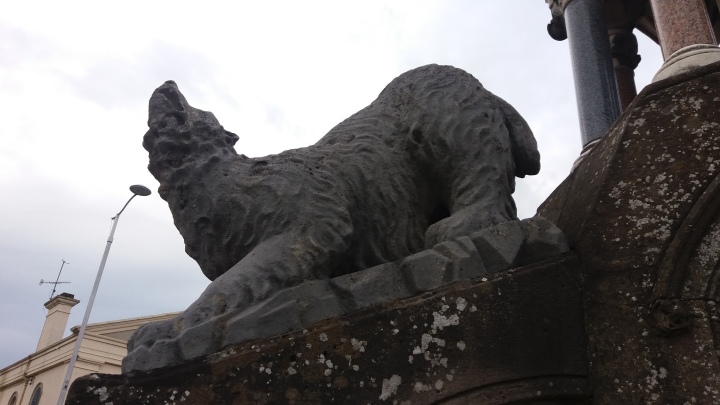
Monument polar bear
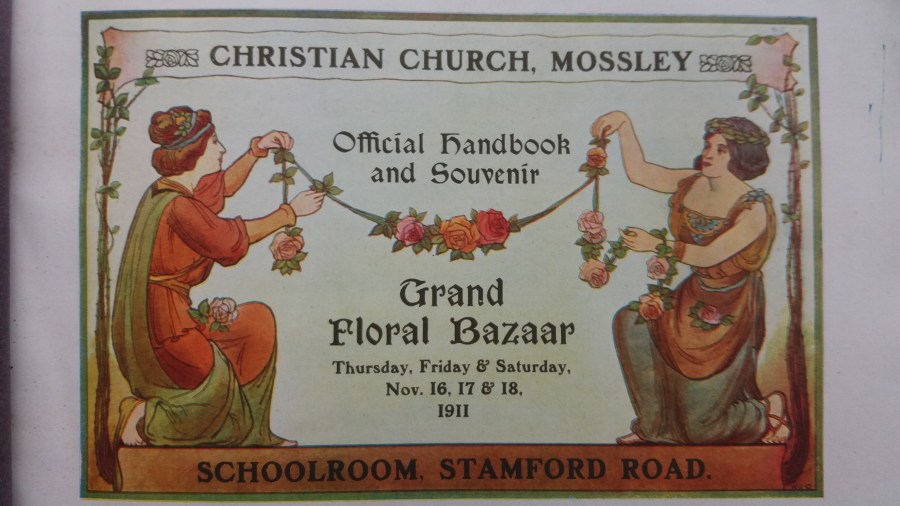
An incredibly useful and interesting resource for the study of congregational histories is the Edwardian ‘Souvenir of Bazaar’. These are often overlooked and are certainly under-appreciated. Their ephemeral nature means that their survival rate is not good and they are seldom found in library catalogues yet they invariably contain a great deal of information that gives us insight into the social and recreational life of a congregation at a time that was something of a high watermark for nonconformity and frequently also contain historical information that simply might otherwise be unavailable.
So few people know, I suspect, that the souvenir issued by the Templepatrick congregation a few years before the First World War contained a history of the congregation written by the great historian Alexander Gordon. One of my own congregations at Downpatrick issued a brochure at a similar date that contained history, pictures, biographies, poems by the minister and much more, it is a treasure trove of historical material, and very rare.
I picked up this ‘Souvenir of Bazaar’ on eBay for the princely sum of £4.99 which is more than I like to pay but really can’t complain about the price. It is the Souvenir for the Grand Floral Bazaar held by Mossley Christian Church (Unitarian) from 16th to 18th November 1911.
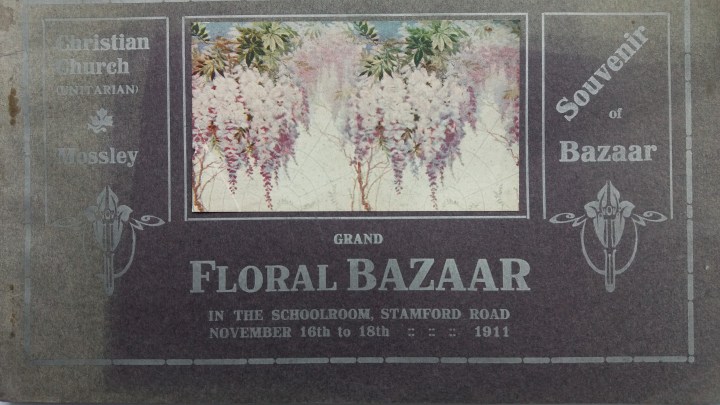
The cover does not inspire confidence, parts of it are very faded and there is evidence of a rusty staple peeping through. But despite that the forty page booklet is in excellent condition, it is beautifully illustrated and is replete with valuable information and images.
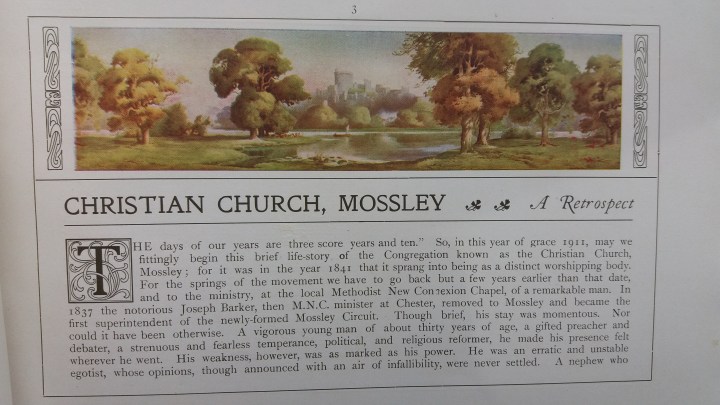
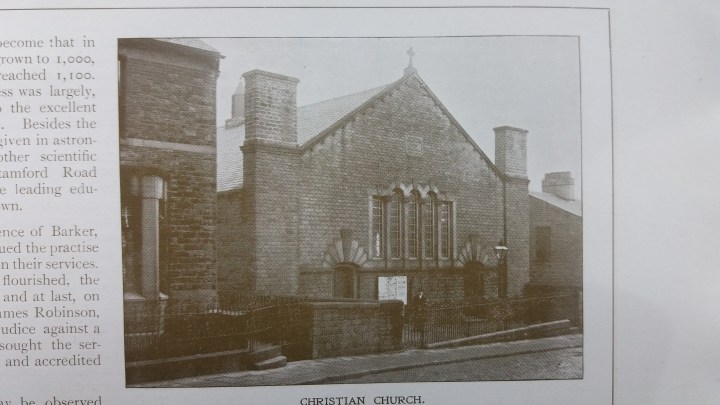
The colour images (nine in all) are still bright and attractive although one soon realises that they are stock images provided by the printers. The start of the ‘Retrospect’ is illustrated by what appears to be a watercolour of Windsor Castle but this detailed and well written twenty-page history of the congregation provided by the minister, the Rev H. Fisher Short, also contains a photograph of “th’owd garrett” where the congregation first met, the chapel interior and exterior, and all eight of the ministers from 1859 including the Rev Fisher Short:
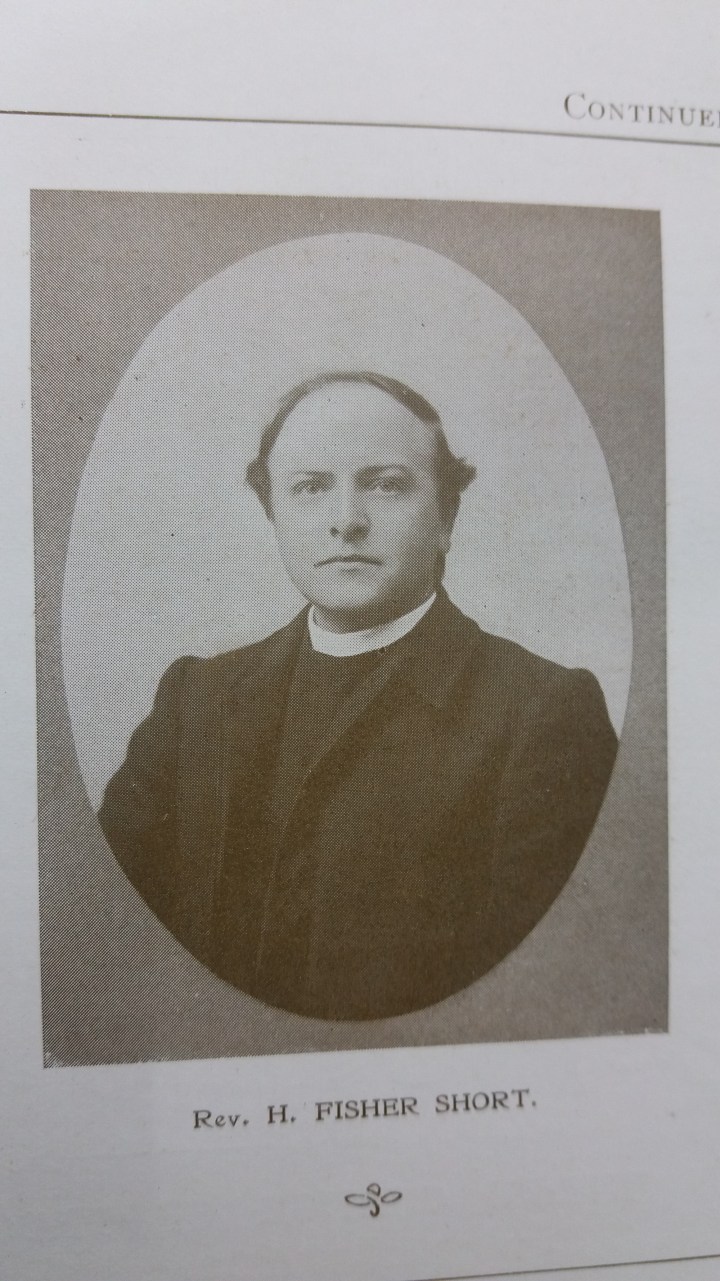
It is a fascinating and unusual history rooted as it is in the ministry of Joseph Barker who founded the ‘Christian Brethren’ after being expelled from the Methodist New Connection. He and his followers would have no other name than ‘Christian Church’ for their Chapel at Mossley and this has remained their official name ever since.
Fisher Short was a member of a significant dynasty of Unitarian ministers in the 20th century who held a number of effective ministries himself in the north of England. This short history is testimony to his own scholarship and ability. I don’t think that any other history of the Mossley congregation has ever been published but this account of the first seventy years is very valuable indeed carrying much detail and analysis of the congregation’s development and the work done by its ministers in the local community.
The Floral Bazaar ran over three days and aimed to raise £1,000 for the renovation of the buildings. An impressive list of patrons was assembled including many Unitarian worthies and local leaders headed by Lord Ashton of Hyde. A congregational committee of thirty-six carried out the local arrangements.
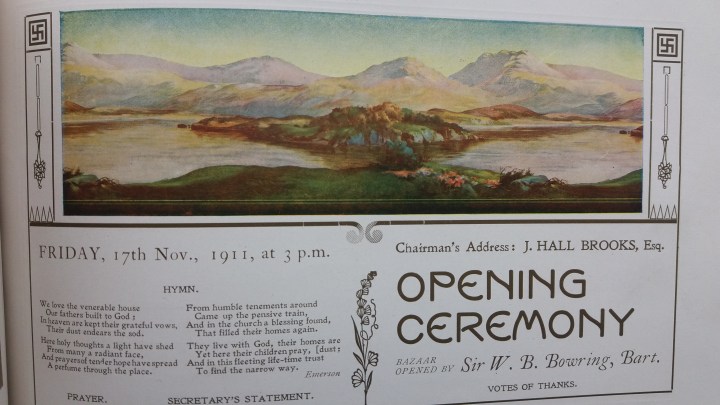
Each day had an opening ceremony with two dignitaries taking part, one acting as the chairman of the proceedings and the other as the opener. The ‘Openers’ were Charles Hawksley, Esq., C.E. (President of the B&FUA), Sir W.B. Bowring, Bart., and Francis Neilson, Esq. M.P. The ‘Chairmen’ were Lt. Col. J.W. Pollitt, V.D., J.P., J. Hall Brooks, Esq., and Rev H. Enfield Dowson, B.A. (President of the National Conference). A photograph of each gentleman is also included in the book.
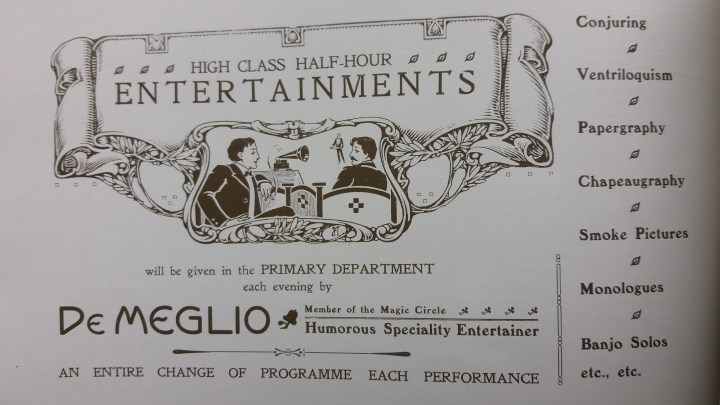
There were six stalls, namely Congregational, Sewing Society, Flower, Young Ladies’, Young Men’s and Children’s. In addition there was a Refreshment Stall, a Tea Room and a ‘Café Chantant’. One wonders quite why such a selection of opportunities for tea was thought necessary but there must have been plenty of demand. The Mossley String Band had a full programme of music on each day. Entertainments included competitions, bran tub, a weighing machine, ‘houp la’ and a shooting range, although it would be hard to keep away from DeMeglio’s nightly performances in the primary department. A member of the Magic Circle and a ‘Humorous Speciality Entertainer’ Mr DeMeglio mixed Monologues, Banjo Solos, Conjuring and Ventriloquism with ‘Papergraphy, Chapeaugraphy and Smoke Pictures’. Chapeaugraphy is probably not as exciting as it sounds and is defined as “the art of taking a ring-shaped piece of felt to manipulate it to look like various types of hats”. But still it must have been a good show.
But for anyone with an interest in history a little book like this pays dividends and offers many avenues for further research.

Like the photograph of Platt Chapel in the previous post this picture did not come cheap but it is a very rare, relatively early picture of a long vanished church. I can’t find any other picture of this church as good as this online.
The Scotch Presbyterian Church was situated on Grosvenor Square, near the top of Oxford Road in Manchester, an area that has long been colonised by academic buildings although the square still exists as a small green space. In the centre of the square stood All Saints’ Church and the Presbyterian Church was on the far side of the square, on Lower Ormond Street, the road parallel with Oxford Road. Both churches are long gone the Presbyterian Church ending its days in the 1950s as a wallpaper shop and later as a paint shop before demolition in the early 1970s. All Saints’ was damaged in the blitz.
In the foreground of the picture the graves seen there form part of the church yard of All Saints’ Church. It is an untidy looking area in the picture – there are two lifeless looking trees, denuded of leaves and branches, and the gravestones stand in the middle of a scruffy no-man’s land which is covered in either sand or bare earth amidst clumps of grass. Was it taken in the middle of some building work or renovation or did it always look a mess? Either way it is nothing to do with the Presbyterian Church other than it crops up in the foreground of the picture.
There is a very full set of records for the congregation deposited in Manchester Libraries, Information and Archives. Amongst these the Communicants’ roll books begin in 1832 which suggests a foundation of that date. The pew rents/seat lettings books begin in 1850 when the church was opened for worship, the foundation stone of the new building having been laid on 17th September 1849.
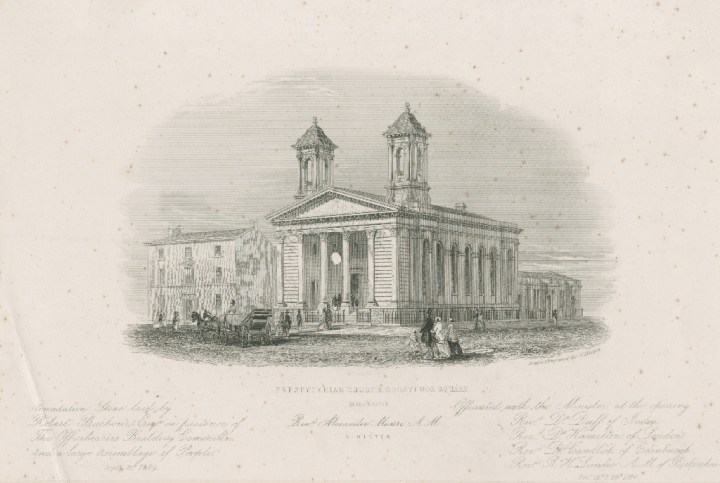
An architectural drawing of the church at the time of its opening (Manchester Libraries, Information and Archives)
The church closed in 1940 and merged with Withington Presbyterian Church to form Withington Grosvenor Presbyterian Church further out of Manchester. This congregation closed in 1971 to form Grosvenor St Aidan’s Presbyterian (later URC) Church in Didsbury (now called simply Didsbury United Reformed Church).
The photograph is quite small, it only measures about 8 cm by 6 cm, but it is very sharp and very old. The sister photograph that shows Platt Chapel dates from before 1874 so there is no reason to date this one to any other period. But here it is, the oldest photograph of the Scotch Presbyterian Church, Grosvenor Square, Chorlton-on-Medlock. Long vanished but preserved in this little study, a very precise architectural photograph taken on a sunny day sometime in the middle of the reign of Queen Victoria.
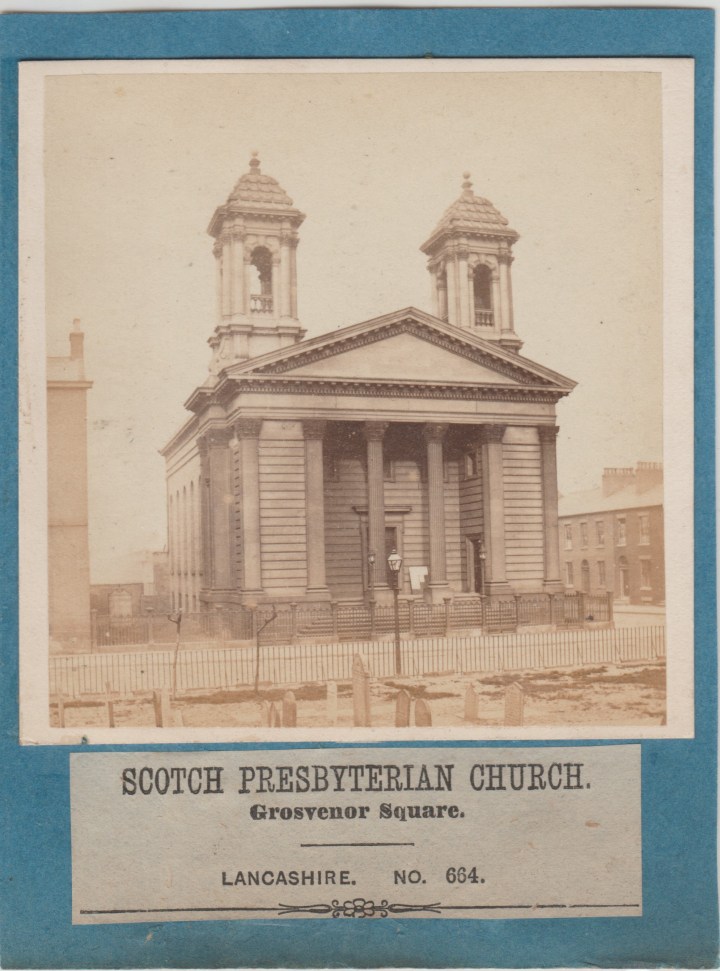
The original photograph attached to its card
Google Street View, from a position along Oxford Road just past Manchester Metropolitan University, shows this view looking towards where the church once stood. It would have been visible beyond the trees on the other side of the square (now called ‘All Saints Park’).
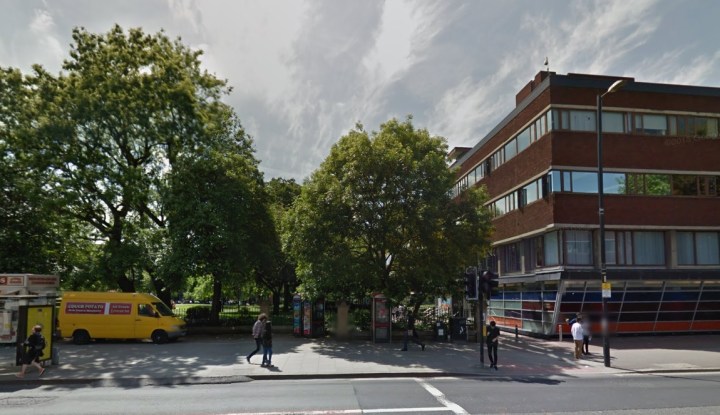
Google Street View – Oxford Road
No pictures or text may be reproduced from this site without the express permission of the author.
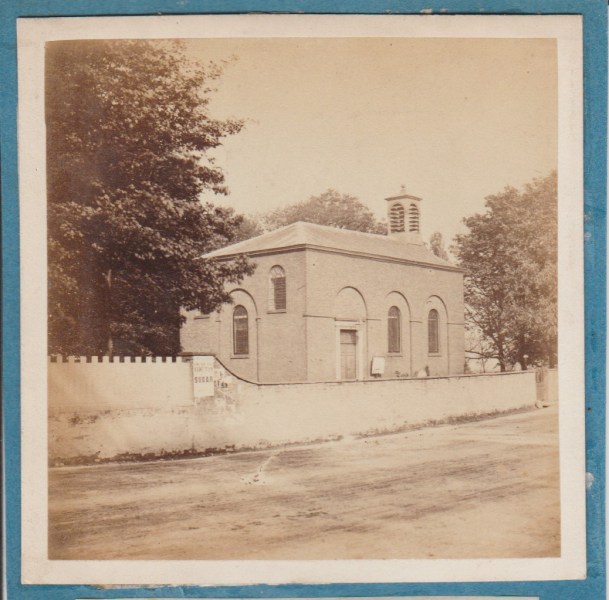
I bought this photograph on eBay a few years ago. I paid more for it than I like to do but it is quite a rare photograph of the old Platt Chapel in Rusholme, south Manchester. I bought it along with a picture of the ‘Scotch Presbyterian Church, Grosvenor Square’ also in Manchester to which I will return in the next post.
The photograph of Platt Chapel is interesting because it appears to have been taken by a professional. In a similar way to the Grosvenor Square photograph it is mounted on a card with its title printed below along with a reference number. It is probably some kind of photographer’s sample, perhaps one of a set of images available for use by purchasers for use on a cabinet card or carte de visite. Often these types of cards carried portraits of individuals or family groups, but other views, including views of churches, were also popular.
What is particularly interesting about this picture is that it shows the chapel of 1791 which was substantially rebuilt in 1874-76. This dates the photograph to before 1876, probably to before 1874 in fact. A big help towards an accurate dating might be the poster pasted up on the chapel wall. Victorians could be no respecters of property when it came to fly-posting and this one has been stuck up on a corner of the wall where the remnants of other posters can be detected. If it were an advertisement for a show or some other event then it might be very useful to us for dating the picture but, alas, it doesn’t give that much information. It appears to be a notice from a grocer or some other supplier. The largest word that can be made out is ‘sugar’, a bit above that is the word ‘reduction’ but nothing else is really visible.
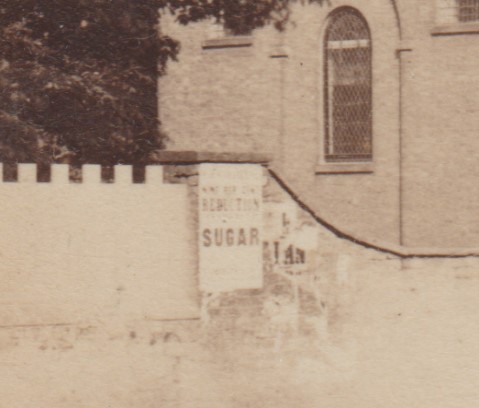
The poster on the wall of the chapel
The congregation had its roots in a nearby chapel of ease which they managed to hold on to after 1662 under the patronage of the Birch family until 1697. Two years later they acquired the site at Platt and built a chapel in the same year. A second chapel was built in 1790-1 which is the building as shown in the photograph. The modern building is substantially the same but was extensively re-modelled over two years between 1874 and 1876. It was given a red brick exterior, the doors and windows were changed, an apse was added and a much steeper slate roof replaced the old one. Edwin Swindells in The History of Platt Chapel (1949) describes this period of rebuilding like this:
At the commencement of his long and faithful service, Mr. Poynting was faced with a trying difficulty. The Chapel building, although not very old, had got into a very bad state of repair, and it was found that considerable reconstruction would have to be carried out. This meant that for about two years the chapel was not available for services, and these had to be held in the newly erected school at Portland Grove, Fallowfield. The alterations which were completed in 1876, included the removal of the vestry from the north end to its present position, and the building of the small apse in its place. The chapel was re-roofed and the old oak straight backed pews replaced by the present pews, while a new pulpit was also provided. The original doors faced Wilmslow Road, and these were built up and the present South entrance substituted, with the provision of the vestibule screen as it is now. The heating arrangements were also brought up to date about this time. In spite of such an inconvenient disturbance, Mr. Poynting quickly settled down to a life devoted to the service of his congregation and the wider church, ably supported by his young wife whom he married in 1872, and who proved an ideal helpmeet in all respects. In those days Rusholme and Fallowfield still included large areas which were decidedly rural, and the work entailed in the mixed community presented its own peculiar problems. The project so dear to his heart of establishing a flourishing Sunday School, did not prove easy of attainment at first, and the first attempt was not a great success. However, Mr. Poynting was not the man to be easily discouraged, and a little later a fresh beginning was made and carried through to fruition. His interest in the young people was not confined to his own chapel, and he took a great interest always in the district Sunday school federation. Mr. Poynting was never a preacher of extreme views in theology, his knowledge of, and love for the New Testament was deep and sincere. On its teaching he founded the message he felt given to preach. It followed that his Unitarianism was neither negative nor aggressive, and the present writer well remembers how his name was respected among members of other denominations in Rusholme in the closing years of the nineteenth century.
A brick bell cote was constructed to house the bell which dated back to 1718. In the 2016 issue of the Transactions of the Unitarian Historical Society Len Smith traces the history of the Platt Chapel bell cast by Abraham Rudhall I of Gloucester and inscribed with ‘Come away make no delay’, the same phrase found on the bell in Gateacre Chapel which was made by his son Abraham Rudhall II. Len also records:
The clapper fell to the ground c.1959/60 while the bell was being rung for an evening service, narrowly missing worshippers approaching the chapel door.
The congregation was fortunate to be supported by the Worsley family in nearby Platt Hall who gave the land on which the chapel was built. Of puritan and Parliamentarian stock from the era of Cromwell they continued to support the chapel until 1830 when Thomas Carrill Worsley joined the Church of England and later built Holy Trinity, Platt.
All this can be read in Edwin Swindells’ excellent, although probably long-forgotten, little history of the chapel. He also details the contributions of a succession of ministers in the nineteenth century – Rev William Whitelegge, Rev Samuel Alfred Steinthal and Rev Charles Thomas Poynting – who created a very effective and flourishing ‘institutional church’ with day schools, Sunday schools, Dorcas society, Temperance Guild, social evenings, lantern lectures, debates etc., as well as a “Goose Club” which had a turnover of £100 per year in the late nineteenth century. Was this to enable members to buy a goose for Christmas I wonder? S.A. Stenthal and the chapel also played a part in the extension of the franchise to women. In The History of Platt Chapel it says:
Anti-slavery found in him a warm advocate, and he was also one of the very early pioneers of Women’s Suffrage. It was during his years as minister at Platt Chapel that this truly remarkable man carried out some of his most valuable work, in these and other directions. In conjunction with John Stuart Mill, Cobden, Jacob Bright and others, what was probably the earliest society with the object of securing votes for women, was formed at a meeting held at Mr. Steinthal’s house. A story is told of the way in which he and Miss Becker were indirectly responsible for an amendment in the House of Commons, which secured the municipal franchise for women. In 1869, during the passage of a private bill through the House, Mr. Steinthal scribbled an amendment on the back of an envelope, and sent it in to Mr. Jacob Bright. The object was simply to raise a discussion on the disabilities of women ratepayers in corporate boroughs, but to the surprise of everybody the amendment was carried with very little opposition, in the small hours of the morning. A National Association for the Promotion of Social Science was launched in 1857, and for many years Mr. Steinthal sat on its Council. The cause of Temperance was yet another sphere which enlisted his very active sympathy, and he was for many years a member of the executive of the United Kingdom Alliance, and during his time at Platt Chapel he joined the board of management of the Manchester Children’s Hospital and served until 1898.
The twentieth century eventually brought social and demographic change which the chapel couldn’t keep up with and it closed in 1973. For many years it was the home of a photography club which was the case on the one occasion I was inside the building. By then there was nothing to identify the interior as that of a religious place of worship and no sign of the monuments listed in Christopher Stell’s Nonconformist Chapels and Meeting-houses in the North of England. I also can’t help but wonder what happened to the silver communion plate which included a two-handled chalice dating from as long ago as 1641. These were sold in 1874 but restored to the trustees in 1895:
on the one condition [wrote G.E. Evans] that they are to remain the property of the Trustees, who receive them on the understanding that they are never to be again alienated by sale or otherwise.
George Eyre Evans was very impressed by this chalice and included an illustration in Vestiges of Protestant Dissent:
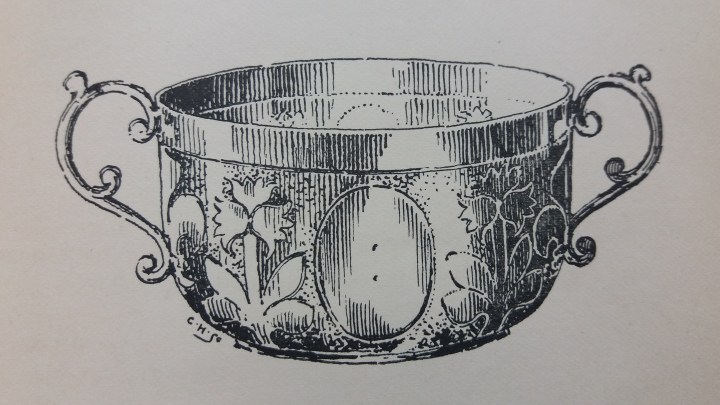
Chalice, silver, porringer shape 2 3/8 inches tall, 4 1/2 inches diameter, bold ornamentation, G.E. Evans
More recently the chapel has been on the market as a potential dwelling house with an asking price of £350,000. Google Street View provides a sorry picture of how it looks today:
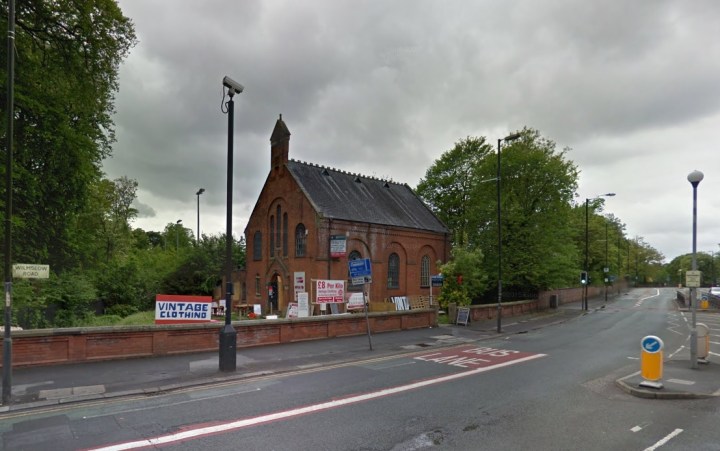
Google Street View
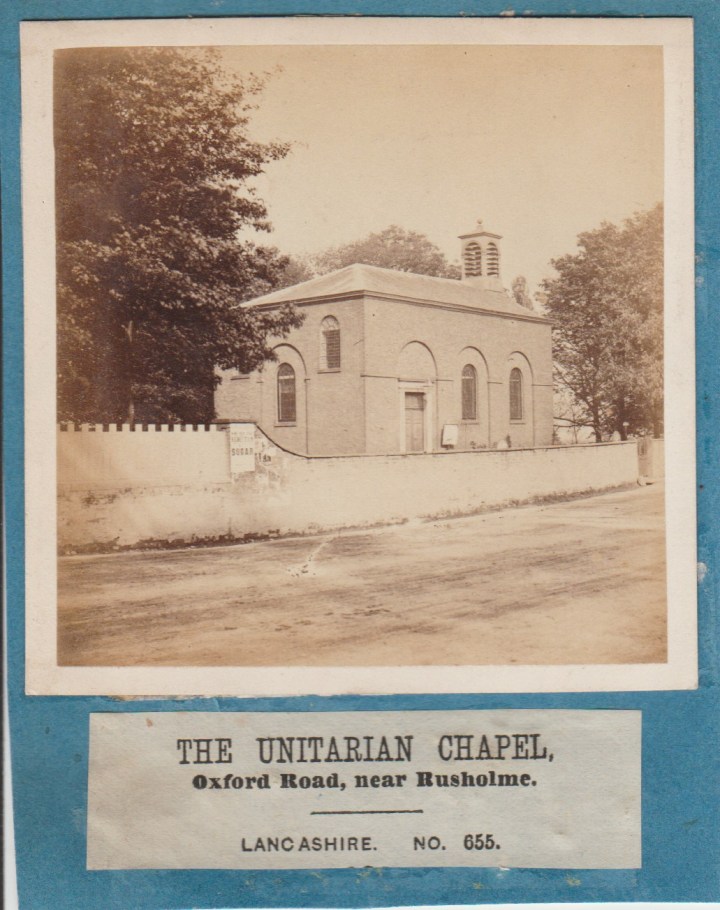
The original photograph on its card
No pictures or text may be reproduced from this site without the express permission of the author.
 velvethummingbee