Worship Sunday, 17th May: Dunmurry

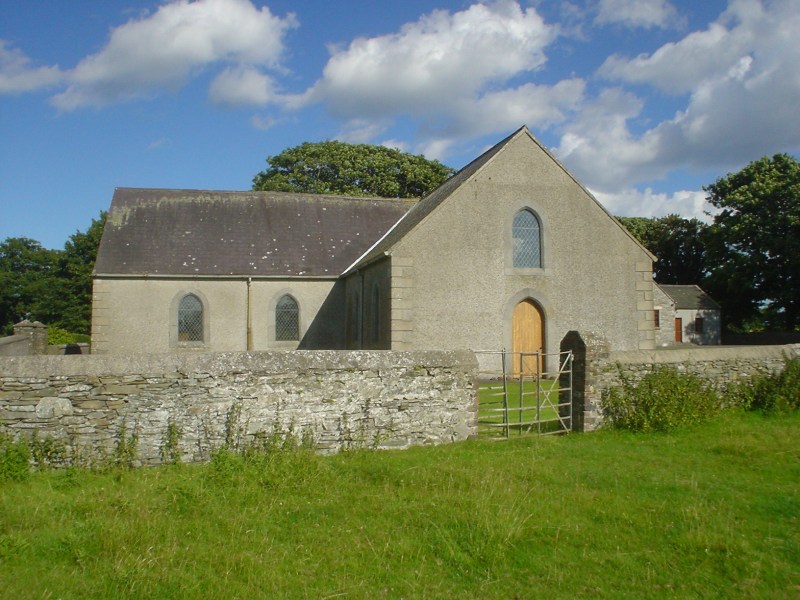
Dunmurry window

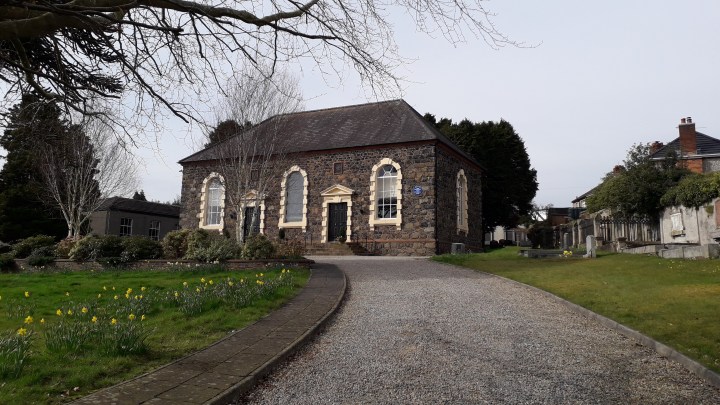
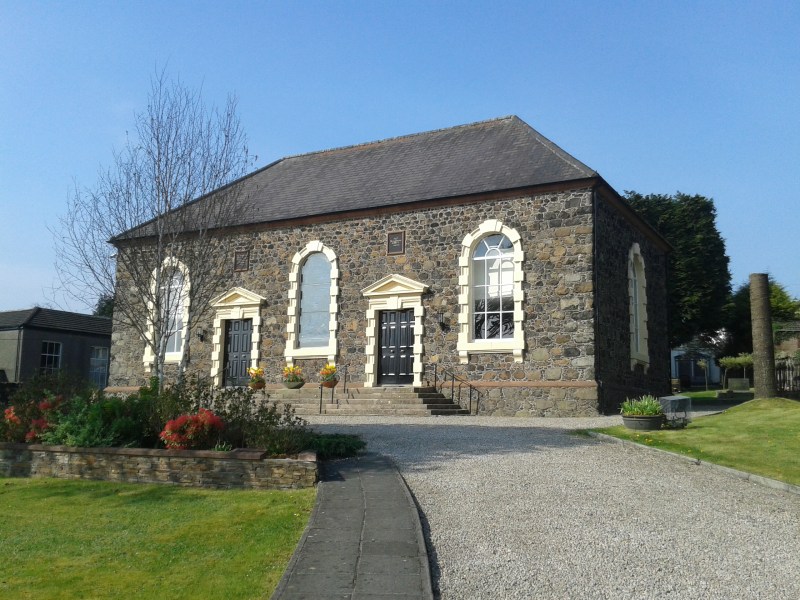
This week our service is recorded at the First Presbyterian NS Church, Dunmurry and Allen Yarr, the church organist, has very kindly provided music on piano for two hymns plus some additional music for the opening and closing of the service. The hymns are:

‘The Church Hymnary’ No. 704 ‘Yield not to temptation’

‘The Church Hymnary’ No.532 ‘Stand up! Stand up for Jesus’

The reading is from John ch. 2 v.13-2 and the address contains some reflection of Philip Larkin’s poem Church Going.

It pleases me to stand in silence here;


A serious house on serious earth it is,

In whose blent air all our compulsions meet,

Are recognized, and robed as destinies.

And that much never can be obsolete

In the end though our spiritual relationship with the divine is about something more than any building.


Over this last week we also uploaded another video, one which tells the little-known story of Henry Croft. His life-size, but diminutive, statue is hidden underneath Trafalgar Square in London. As such it is the complete antithesis of the giant statue of Lord Nelson that sits high in the sky, almost touching the clouds. You can hear all about the life of Henry Croft on this Time for a Story video above.

703011001

View looking across Trafalgar Square from Charing Cross, towards the National Gallery and Nelson’s Column, St Martin’s Church on the far right, in the foreground to the left is the equestrian statue of Charles I, the surrounding streets busy with pedestrians, riders, coaches and carriages. 1852 Colour lithograph. © The Trustees of the British Museum

Worship: Sunday, 10th May

Ballee int Sept 2017

This week’s service is recorded at Ballee Non-Subscribing Presbyterian Church, county Down. We are pleased again to have the services of John Strain, our Ballee organist, who plays some music at the start and end of the service as well as the two hymns:

‘Through all the changing scenes of life’ (Hymns of Faith and Freedom 48)

‘Great is thy faithfulness, O God my Father’ (Hymns of Faith and Freedom 54)

Readings:

Lamentations ch.3 v.21-26

Don’t Quit by John Greenleaf Whittier (with special thanks to Emma McConnell)

Don’t Quit

When things go wrong as they sometimes will,

When the road you’re trudging seems all uphill,

When the funds are low but the debts are high,

And you want to smile, but you have to sigh.


When care is pressing you down a bit, rest if you must but don’t you quit.

Life is queer with its twists and turns as every one of us sometimes learns.

And many a failure turns about when he might have won if he stuck it out.

Don’t give up though the pace seems slow, you may succeed with another blow.


Success is failure turned inside out, the silver tint of the clouds of doubt.

And you never can tell how close you are, it may be near when it seems so far.

So stick to the fight when you’re hardest hit, it’s when things seem worse that you must not quit.


Recent videos on the churches’ channel also include a reflection on Time which includes consideration of J.R.R. Tolkien:

‘All we have to decide is what to do with the time that is given us.’

(J.R.R. Tolkien)

And a prayer for VE Day also by Sue Steers which includes an account of the life of George Cross who took part in the D Day landings and returned to Normandy at the age of 100:


Communion Sunday, 3rd May 2020

This week’s service is a Communion Service recorded at Ballee Non-Subscribing Presbyterian Church

Sunday, 3rd May 2020

Service conducted by the minister the Rev Dr David Steers

Organist: John Strain

Reading: Matthew ch.14 v.13-21

The hymns played are:

‘Hymns of Faith and Freedom’ No. 326

Guide me, O thou great Jehovah

‘Hymns of Faith and Freedom’ No. 61

Now thank we all our God

The full words of the hymns can be found in the description under the video on YouTube.

For most congregations in the Non-Subscribing Presbyterian Church of Ireland May is the month in which one of the two communion services of the year are held.

We also uploaded to YouTube, earlier in the week, another video which set out to explain something of the background to the celebration of Communion within the Non-Subscribing Presbyterian Church of Ireland. Recorded at Downpatrick it can be seen here:

Worship in a Church of the Polish Brethren

Kolosy date 02

There are a number of previous posts on this blog about the Minor Reformed Church/Polish Brethren and my visit to Poland in the summer of 2019. They can be seen here:

The Polish Brethren

Fausto Sozzini, the Polish Brethren and Kraków

The Dominican Church of the Holy Trinity and the Unitarian history of Kraków

Raków

The grave of Fausto Sozzini

But I have now uploaded to YouTube a video of the short act of worship we held on Sunday, 28th July 2019 in the former Polish Brethren church at Kolosy.

To be honest there is a lot wrong with this video – sound, picture, continuity, all are faulty in one way or another. It was recorded on a device that was seriously unreliable, indeed the picture cuts out altogether towards the end although the sound continues for a little bit longer. However, the end of the film now contains a number of still images of the former church at Kolosy, both exterior and interior shots, and closes with the text of the Lord’s Prayer in Polish which we tried, but did not succeed, in saying together in that language.

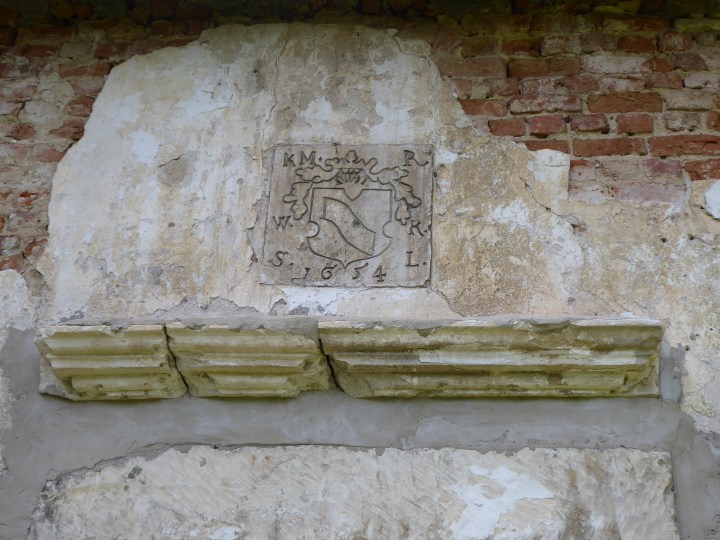
It is reproduced here because it represents a rare if not quite unique event – an act of worship in a church of the Polish Brethren/Minor Reformed Church, a church which was suppressed during the counter-reformation in 1658, just four years after this little church was built.

The service is led by myself, the Rev Dr Sándor Kovács (Unitarian, Kolozsvár, Transylvania), and the Rev Dr Roger Jones (UU, Sacramento, California). We were part of an organised tour of sites connected with the Polish Brethren in July and August 2019. Although a service was planned for this day this was essentially an impromptu act of worship because the Rev Dr Jay Atkinson, who was to have led the service, was unfortunately taken ill on the way to the building and had to go to hospital. So it fell to the three other clergy present to devise a service on the way. This is the service which is presented in the video, albeit in rather imperfect form. The chapel was built in 1654 and closed in 1658 but somehow has survived to the present day, perhaps being used as a store for many years. But it is still immediately recognisable as a place of worship. 

Sunday Worship

Our service on Sunday, 19th April comes from Clough Non-Subscribing Presbyterian Church and encompasses, among other things, in different ways: the Mountains of Mourne; the Church’s cherry blossom tree; a bagpipe duet; a nineteenth-century Unitarian minister in Wandsworth, London and sometime editor of the Inquirer; George Herbert, Anglican clergyman and poet; the book of Proverbs, and much more.

At times we cannot be at the thing we would; yet there’s a good thing to do.

W.G. Tarrant

Recorded Service at Clough Non-Subscribing Presbyterian Church, county Down, Northern Ireland

Sunday, 19th April 2020

Minister: Rev Dr David Steers

Organist: Alfie McClelland

Bagpipes: Robert Neill & Laura Neill

Reading: Proverbs ch.13  v.14-21.

The hymns played are:

‘Immortal, invisible, God only wise’

Hymns of Faith and Freedom No. 30

‘Fight the good fight with all thy might’

Hymns of Faith and Freedom No. 198

‘Amazing Grace’ (bagpipes)

When every day is pretty much like any other it is important to remember which day is Sunday. We need to keep one day special, to punctuate our week with prayer and meditation.

God is spirit, and those who worship him must worship in spirit and truth.

John ch.4 v.24 NRSV

Pink Moon crop

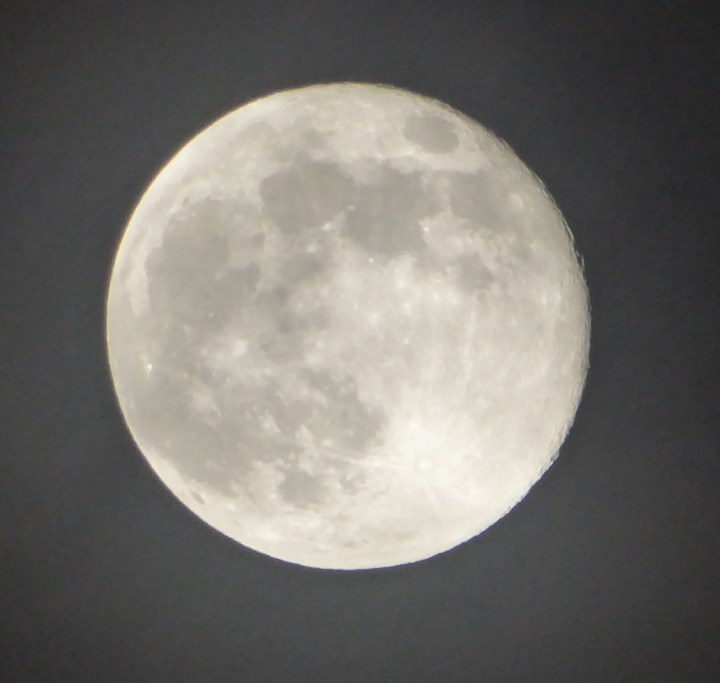
Pink Moon on 8th April 2020.


Online Worship: Easter Day

20200323_102318

Our service for Easter Sunday comes from First Dunmurry NS Presbyterian Church, Dunmurry.

Easter service, Sunday, 12th April 2020.

Service conducted by the minister in charge: Rev Dr David Steers

Piano: Allen Yarr

Guitar and solo: David Gibbs

Reading: John ch.20 v.11-18


The hymns played are:

Church Hymnary No. 119

‘Jesus Christ is risen today’ (first three verses)

Church Hymnary No. 123

‘The day of resurrection’

With special music provided by David Gibbs of Portrush. David sings Moliannwn (Let’s Rejoice) a Welsh folk hymn written by a Welsh slate quarryman called Benjamin Thomas who lived from 1838 to 1920. This is a great song for this time of year. Benjamin Thomas emigrated from Wales to North America and with his roots in Wales but living in America it beautifully brings together his experiences of the Spring on both sides of the Atlantic.

The Stories in Slate blog says:

“Born on April 9, 1838, Benjamin Thomas was a native of the famous slate quarrying town of Bethesda in North Wales, but he spent a good half a century on the North American Continent ending his days in the Slate Valley. He was a man who involved himself in things Welsh, most notably in poetry – he penned several verses which can be found in countless old periodicals of the age. Most are musings upon the vicissitudes of life, but there is no doubt that his most enduring piece is ‘Moliannwn’, the vigorous song of praise at the arrival of spring.”

You can read the full fascinating account of this song here:

Moliannwn (Let’s Rejoice)

Thank you David for singing it for us.

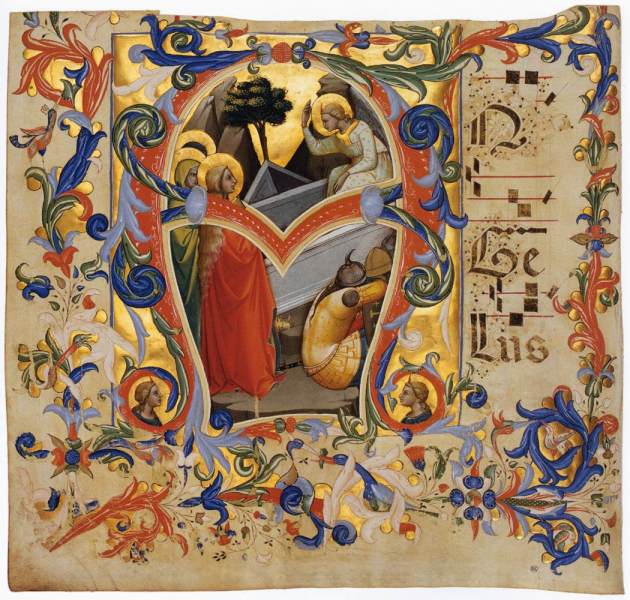
Image at the top of this page: The Three Marys at the Tomb (1396) by Lorenzo Monaco, Illumination on vellum, 46 x 48 cm, Musée du Louvre, Paris. Source: Wikimedia. Public Domain.

Online Worship: Palm Sunday

Assisi-frescoes-entry-into-jerusalem-pietro_lorenzetti

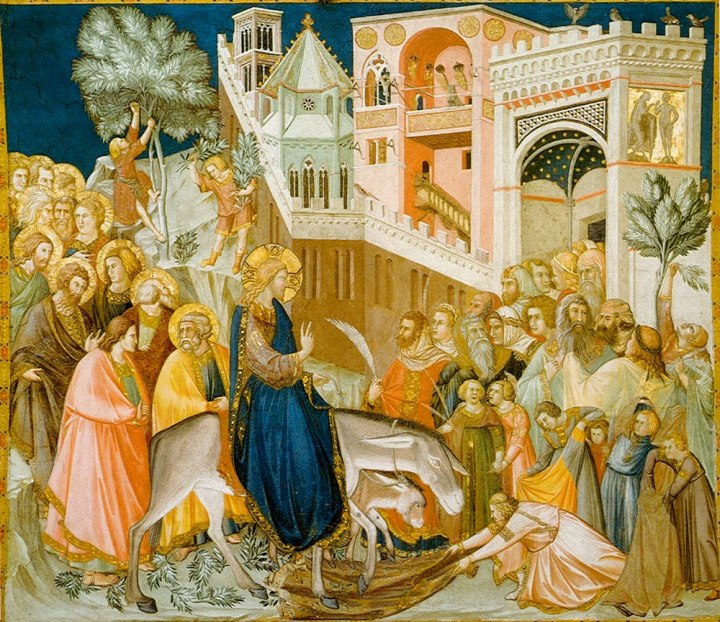
‘The Entry of Christ into Jerusalem’ (1320) by Pietro Lorenzetti. A fresco in the south transept of the Lower Church, San Francesco, Assisi. (Source: Wikimedia Commons. Public Domain).

Our Sunday service today comes from Ballee Non-Subscribing Presbyterian Church county Down.

Minister: Rev Dr David Steers

Organist: John Strain

Reading: Matthew ch.21 v.1-11.

The hymns played are:

Hymns of Faith and Freedom No. 43

King of glory, King of peace,
I will love thee;
And that love may never cease,
I will move thee.
Thou hast granted my request,
Thou hast heard me;
Thou didst note my working breast,
Thou hast spared me.

Wherefore with my utmost art
I will sing thee,
and the cream of all my heart
I will bring thee.
Though my sins against me cried,
Thou didst clear me;
And alone, when they replied,
Thou didst hear me.

Seven whole days, not one in seven,
I will praise thee;
In my heart, though not in heaven,
I can raise thee.
Small it is, in this poor sort
To enrol thee:
E’en eternity’s too short
to extol thee.


Hymns of Faith and Freedom No. 327

Lead us, heavenly Father, lead us
O’er the world’s tempestuous sea;
Guard us, guide us, keep us, feed us,
For we have no help but thee;
Yet possessing every blessing
If our God our Father be.

Jesus, breathe forgiveness o’er us;
All our weakness thou dost know,
Thou didst tread this earth before us,
Thou didst feel its keenest woe;
Tempted, taunted, yet undaunted,
Through the desert thou didst go.

Spirit of our God, descending,
Fill our hearts with heavenly joy,
Love with every passion blending,
Pleasure that can never cloy;
Thus provided, pardoned, guided,
Nothing can our peace destroy.


Recorded Sunday Services


ONLINE SUNDAY WORSHIP

Today I have uploaded the first of what will be a weekly act of worship which I will record in one of our churches, complete with music. On this occasion I was very pleased to have Alfie McClelland with me to provide some musical accompaniment in a short service at Clough Church.

We now have our own dedicated YouTube Channel entitled ‘Downpatrick, Ballee & Clough NSP Churches’, although it will include services recorded at Dunmurry and Banbridge as well.

Sunday Worship, 22nd March 2020

Clough Non-Subscribing Presbyterian Church

22nd March 2020

Conducted by Rev Dr David Steers

Edited by Jack Steers

Organist: Alfie McClelland

Reading: Psalm 137 v.1-6.

Hymns:

All people that on earth do dwell

Hymns of Faith and Freedom: 1

(Tune: Old 100th)

The King of love my shepherd is

Hymns of Faith and Freedom: 87

(Tune: Dominus Regit Me)


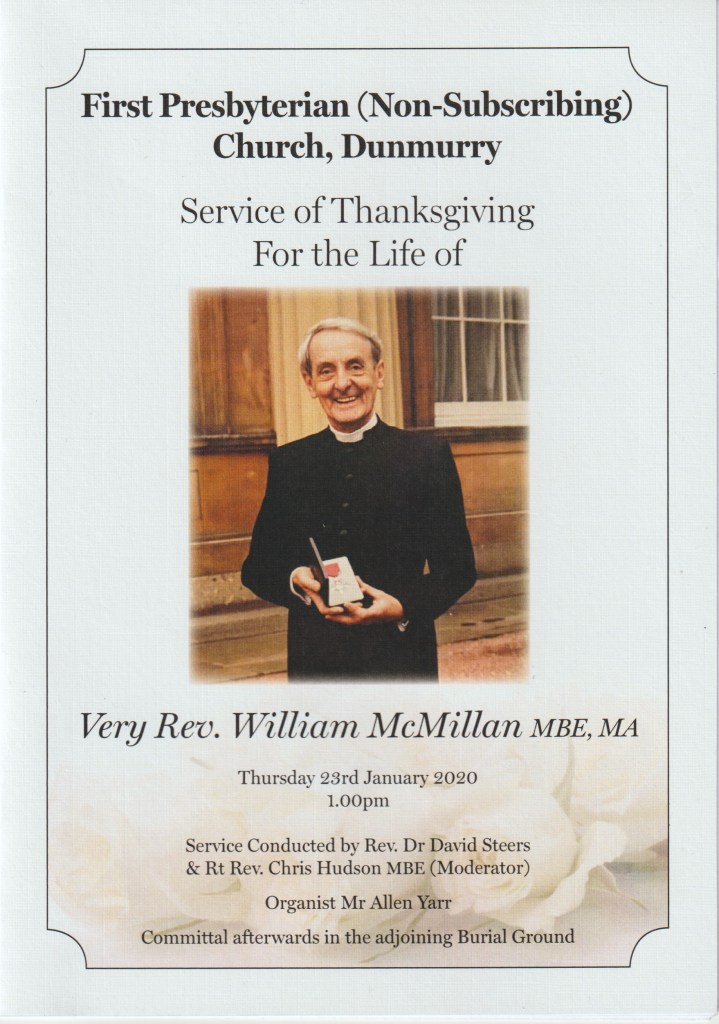
Very Rev William McMillan MBE, MA

I was honoured to be asked to take part in the service of thanksgiving for the life of the Very Rev William McMillan at First Presbyterian (Non-Subscribing) Church, Dunmurry on Thursday, 23rd January 2020. I am posting here the short address I gave as a tribute to a truly inspirational minister.


How do we do justice to a person as vivid, as lively, as remarkable as the Rev Mac? There were so many facets to his character, so many ways in which he touched such a wide variety of people, so many ways in which he came to our attention and was such a force for good.

In 2004 the Oxford Dictionary of National Biography was published in 60 volumes and launch ceremonies were held across the British Isles including one at Queen’s University. Mac was a contributor to this important publication that lists tens of thousands of biographies and I was there at the publication’s launch with Mac. But one of the features of this set of books when it was first produced was that there was a handful of people whose eminence in different, not necessarily connected, disciplines meant that more than one person had to write their biography. Well Mac is such a person today. It is hard for one person to do justice for the range of achievements, interests and accomplishments which Mac displayed in his life.

First and foremost we should say that Mac was a minister, someone who preached the gospel in our liberal Christian tradition and who was not afraid to stand up for what was right often in difficult circumstances, especially through the period of the Troubles. But I think that everything else he did – and he did such a lot – was rooted in his call to ministry, in his sense of vocation.

So, widely and affectionately known as the Rev Mac, the hosta that was named after him was also called just that and whether it was working in the church or working with flowers in the horticultural world or in many of the other spheres he operated in he brought the values of a reflective, thoughtful, tolerant faith that inspired him all his life through.

When I was minister of All Souls’ Church in the 1990s Mac came to do a floral display to celebrate the centenary of the church building. He flew in through the door like a force of nature bringing friends and collaborators in his wake and creating – what he did in so many places  – a wonderful display that drew on the history, theology, and the architecture of the building using flowers and blooms and plant material which spoke of God’s love and God’s creation, a true expression of faith using natural materials.

This was something that Mac did all around the world, his fame in this area was literally spread across the globe. I remember once asking some ladies in St Giles Cathedral in Edinburgh if they knew the Rev Mac, “O yes”, they told me and began to reel off when he had been in Scotland what he had done when he was next coming. Indeed I often think you could play a game to find the most remote place where someone has come into contact with someone else who knew the Rev Mac. For starters I would offer the members of my church at Ballee who were on honeymoon in Barbados who met a local person on a beach who somehow found out they were Non-Subscribers. “Do you know the Rev Mac?” was the inevitable next question.

I remember being at the Synod one year when news reached us that Mac had become the leading floral artist in the world. In those pre-internet days news did not travel rapidly but we heard of this great achievement and everyone was truly impressed. It was something to learn that one of our number had achieved this accolade, someone who was also a scholarly minister, a great preacher, a devoted and hard-working pastor, someone who through his work was, like Gamaliel, held in honour by all the people.

Mac was a distinguished minister of this denomination, born into the Dromore church and who went into training after beginning work as a journalist, working for the Dromore Leader. Mac had so many anecdotes about people and places but his account of being taken on as a student, having to preach on trial before the whole presbytery and the severe attitudes of some of the clergy in those days was frightening. Mac went to train at the Unitarian College in Manchester and at Manchester University. There was no financial scholarship to train for the ministry and very little income to do that but was supported anonymously by members of his church.

I don’t think it was easy for Mac in the early days of his training and at one point he had to re-sit the entirety of his exams becoming in the process the only person who had ever done this in one go. He also apparently had – for reasons I don’t understand – to learn a bit of the Icelandic language. I have to confess that I very much doubt that Icelandic ever came to be in any way useful in the work of the ministry.

Mac’s training included a stint doing a pastorate in our church in Cork, quite a different world then in so many ways but the culmination of all his work was to be called to be minister of Newry and Warrenpoint where he also took on a role teaching. Mac was minister to those two churches from 1959 to 1970 and was held in high regard and great affection by all the congregations. His ministry there coincided with the start of the Troubles and Mac was at the forefront of those who tried to calm down the growing tension, at one point being hit on the head by a breeze block when he was attempting to stop a riot. This was a serious enough injury and the situation was so dangerous that he and some other clergy had to take shelter overnight in the convent, but it did also end the painful migraines he had been experiencing. Not a conventional cure or one you could expect on the NHS but effective nevertheless.

In 1970 Mac accepted a call to Dunmurry in succession to his father in law, the Rev John McCleery, and remained as minister here until 2016 when he retired and became the senior minister. The congregation flourished under his leadership and I know that everyone is devastated by the loss of their senior minister. From 1976 to 1980 he also had charge of the Moira congregation.

Mac’s service to this denomination on different committees, funds and organisations was enormous. But among other things he was moderator of the General Synod from 1969 to 1971 and again from 1985 to 1987.

But his ministry was multi-faceted, it reached into so many places and manifested itself in different ways.

In one way it was truly international. Mac represented this denomination on the International Association for Religious Freedom, the world’s oldest international inter-faith organisation for twenty years from 1961. He was held in very high regard by all his colleagues there. Partly through that organisation Mac travelled to many places as a preacher and lecturer. He preached at the famous King’s Chapel in Boston in the 1960s and told me that he received more for that one service than he was paid for a whole year at the time! In Europe he had a close link with many church people of a similar mind, particularly with liberal and free Christian groups in Switzerland, France and Germany where the affection in which he was held by the professors and church leaders of those groups was always palpable when you met them. He also travelled to Romania during the Communist era to visit the Unitarian Church in Transylvania, enduring the challenge of the arduous and lengthy night time rail journey across the border from Budapest to Kolozsvár which was then the only way in to that city. Here he was one of the first Westerners allowed to preach at that time but always under the watchful scrutiny of the Securitate, the secret police.

Mac’s work in Northern Ireland throughout the Troubles, particularly in regard to the establishment of cross-community nursery schools, at a time when such things were regarded as dangerously novel was recognised and supported by the IARF and resulted in him being awarded the Albert Schweitzer Award at the 1978 Congress in Oxford, a signal honour for his work in breaking down barriers.

But another aspect of his ministry was his tremendous achievement as an historian. This grew out of his training for the ministry in Manchester where he went on to be awarded a Master’s degree on ‘The Subscription Controversy in Irish Presbyterianism from the Plantation of Ulster to the Present Day’ by Manchester University in 1959. Mac’s knowledge and understanding of the history of this denomination was unparalleled. It was sustained by his interest in antiquarian books which led him to build up a tremendous library, originally by careful scrutiny of what was available in Smithfield Market until he built up an astonishing collection of books, periodicals, prints and sermons. Mac’s knowledge was formidable, often I would ring him with random questions about obscure figures and Mac would tell me who I was looking for and all there was to know about him. Mac had developed a wonderful fasti or biographical resource of everyone who had entered the ministry in our tradition and with these he had amassed a great collection of images and illustrations. From this he was able to produce many excellent books, articles and pamphlets often drawn out of lectures or talks that he had given. There is not time to list them all here but his writings displayed both a depth and breadth of knowledge presented in a style that was eloquent, accurate and instructive. He was always so willing to help any inquirer with information.

At the end of his biography of Henry Montgomery, A Profile in Courage, Mac quotes the Rev C.J. McAlester preaching at his memorial service in this church in 1865 and I will close my words with that quote which is equally applicable to Mac:

More acceptable to our venerated friend than ‘storied urn or animated bust’ would be the earnest efforts of those who honour him to cultivate with diligence, and guard with jealous care, those principles of Christian freedom, truth and love, which it was the noblest labour of his lengthened life to vindicate and extend.
Rev Mac

400th Anniversary of the Ancient Chapel of Toxteth


The Ancient Chapel of Toxteth was built in 1618 during the ministry of the Rev Richard Mather in the former royal deer park of Toxteth by Puritans who desired to worship according to the dictates of their own conscience. Originally situated in a remote rural community the Chapel is now in the midst of a heavily built-up suburb of Liverpool. This year marks the 400th anniversary of the Chapel which has been in continuous use since 1618. A special service to celebrate this 400th anniversary of this historic Chapel will be held on Sunday, 25th November at 2.30 pm.

ACoT portrait logo

Please note – if you are thinking of attending this service – that the time has been changed from 3.00 pm to 2.30 pm – as shown above.