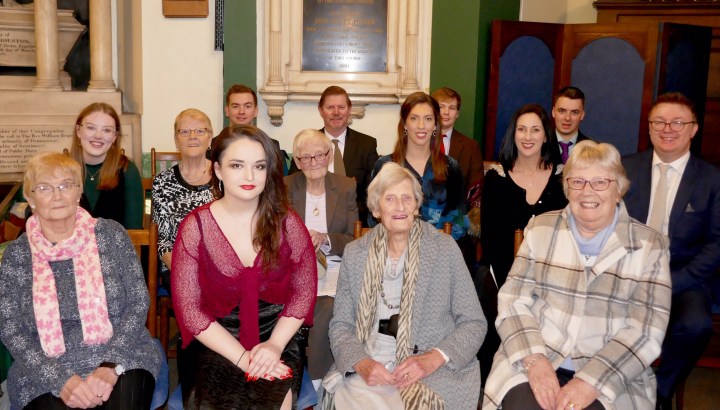
Non-Subscribing Presbyterian Reflections

Today is St Patrick’s Day (17th March) but it comes in the midst of our growing awareness of the threat of the Coronavirus (COVID-19). Among other things it looks like this virus is going to put the normal operation of churches out of action. Earlier today the Church of England announced the suspension of its Sunday services and a number of other denominations in Britain and Ireland have since followed suit. In their letter the Archbishops of Canterbury and York talk of putting less emphasis on weekly worship and more emphasis on giving daily prayers and support to those around us. I am sure this is a model that others will take up and although we face a lot of difficulties there are ways we can develop new forms of ministry that reach out to people and provide meaningful support in these testing times.

I uploaded a video to our new You Tube channel reflecting on this situation:


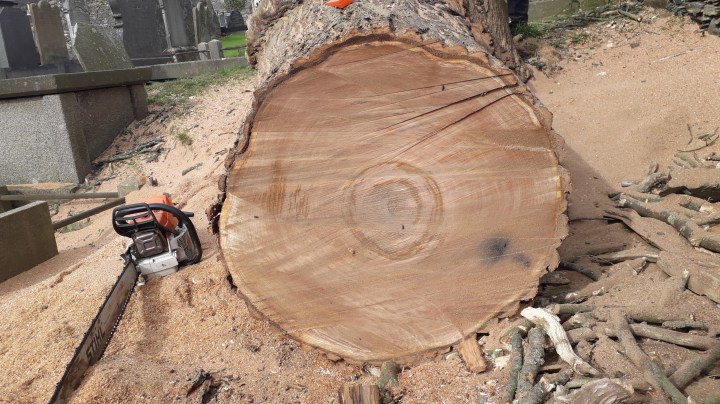
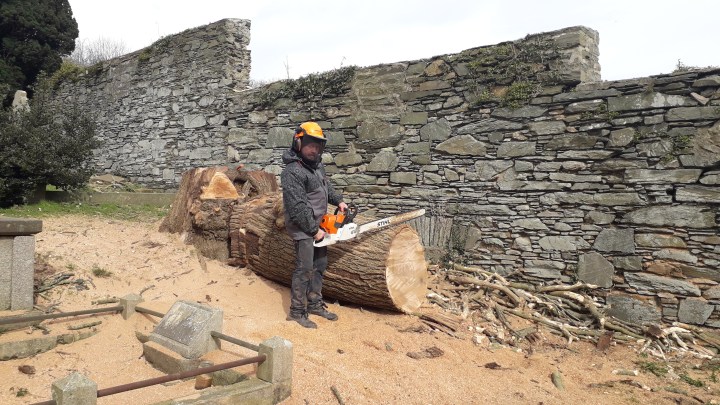
Over the weekend before St Patrick’s Day, in our Downpatrick Church, we had to take down the venerable old horse chestnut that stood at the back of the church. Sadly it was rotten in many places and was becoming a danger. Its age has been estimated at 300 years, so it is probably as old as the church itself. You can see the growth rings in the side view of the trunk telling us of the changing patterns of growth in each different year. It had surveyed the world through rebellion, industrial revolution, famine, two world wars and all the countless human experiences that have gone on in the church, as well as provide generations of children with conkers. We will now have to consider planting new trees to replace it.

Tree 02

Tree 01

Transactions of the Unitarian Historical Society April 2020

The next issue of the Transactions of the Unitarian Historical Society (Volume 27, Number 2, April 2020) will soon be on its way to all subscribers. This is the first of two issues that will appear in 2020.

Volume 27, Number 2 has a special focus on three prominent twentieth-century Unitarians who have each been overlooked in recent years:

James Chuter Ede

James Ramsay MacDonald

Nathaniel Bishop Harman

800px-James_Chuter_Ede_

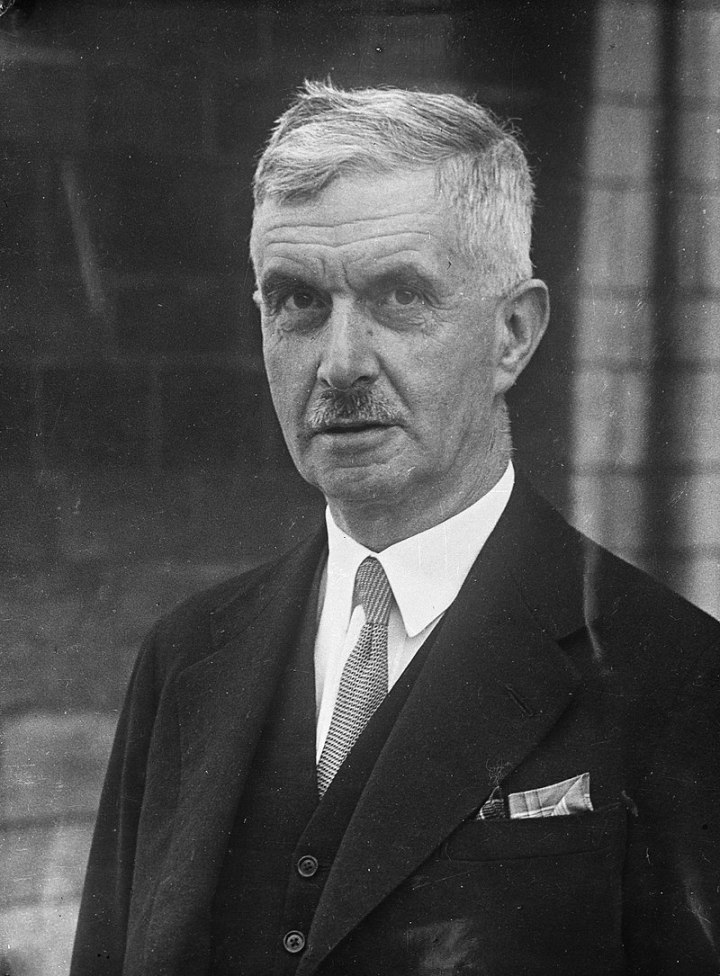
James Chuter Ede (Photo: Wikimedia Commons)

Despite being the longest-serving Home Secretary of the twentieth century James Chuter Ede is the only senior member of Clement Attlee’s Cabinet of 1945 to have so far attracted no complete biography. Dr Stephen Hart has been researching the life of James Chuter Ede and will see his new biography published later this year. In the Transactions he provides a detailed and information account of Ede’s life including his dedicated service to the Unitarian movement which culminated in his election as President of the General Assembly.

JRM Picture

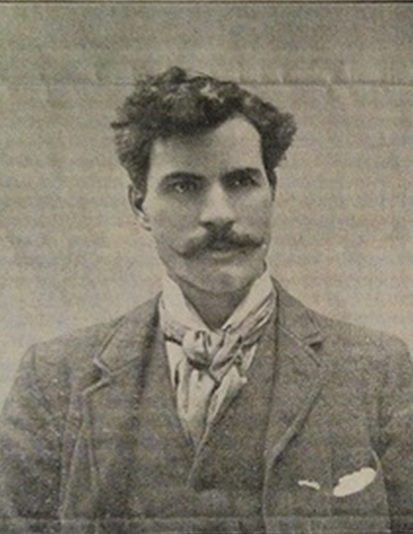
James Ramsay MacDonald in 1895 (Photo: Tom McCready. Also photo at the top of the page showing sermons in the J.R. MacDonald Archive: Tom McCready)

James Ramsay MacDonald’s commitment to Unitarianism for a considerable portion of his life has often been overlooked, yet he preached in Unitarian churches many times and served as ‘temporary minister’ in Ramsgate and Margate for a short period. Rev Tom McCready has unearthed a hitherto neglected Unitarian archive detailing the future Prime Minister’s religious commitment and shows how his anti-militarism and pacifism were rooted in his youthful Unitarianism.

BesselsGreenKent

Bessels Green Old Meeting House, Sevenoaks (Photo: Unitarian Historical Society)

Nathaniel Bishop Harman was another leading twentieth-century Unitarian layperson who became President of the General Assembly. Alan Ruston shows how he became a Unitarian following his marriage and despite achieving considerable eminence as an ophthalmologist also devoted a great deal of his life to Unitarian affairs as writer, organiser and lay preacher, being particularly active in the congregation of Bessels Green in Kent.

To make space for these three ground-breaking articles all pieces for our Reviews, Notes and Record Section have been held over until the autumn when we will publish an extra issue. Volume 27 Number 3 will have as its lead article Dr Stephen Burley’s paper ‘William Hazlitt (1737-1820), Joseph Priestley and the Origins of Unitarianism in America’. There is no extra cost for Volume 27, Number 3 and this will be sent out to all members who renew their subscription in April.

Details of membership and how to subscribe can be found on the website of the Unitarian Historical Society


Paradise Street, Liverpool

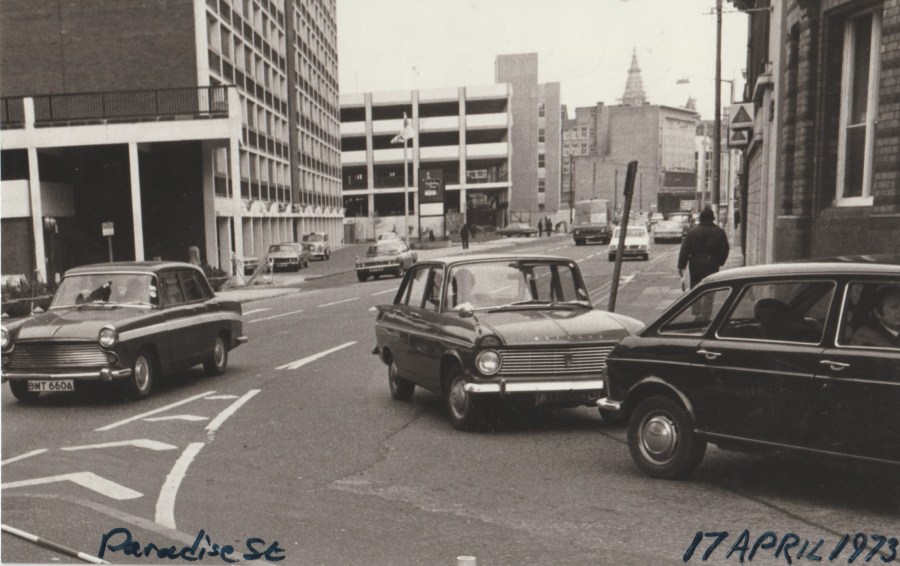
I bought this black and white print of a view of Paradise Street dated 17 April 1973 for a small amount on eBay recently. I was interested in seeing it because Paradise Street as it was before the building of the Liverpool 1 shopping development has been so completely obliterated. It is today forgotten and it takes some effort to recall it to mind. Not that Paradise Street in the 1970s deserves to loom large in anyone’s memory, even at the time it had the feeling of something like a backlot to the city centre, a place where there was nothing much to see, a place that existed as an adjunct to the streets and places that mattered.

A lot of it was car parks and this picture clearly shows the new multi-story car park which was then just being completed in 1973. A brutal and functional building, it wasn’t very pleasant although it was handy enough. Its contemporary neighbour the Holiday Inn, seen on the left of the photograph, was little better to look at. But the multi-story wasn’t the only car park on Paradise Street. On the opposite side of the road, not visible in the picture, was a street-level car park complete with parking meters. I can’t be the only person straining to remember this entirely forgettable piece of streetscape because another photograph of Paradise Street featuring the corner of the street-level car park sold just after this one on eBay for about £5. But that car park must have been somewhere near the site of the Paradise Street chapel of 1791.

G2 - Paradise Street

Paradise Street, Chapel

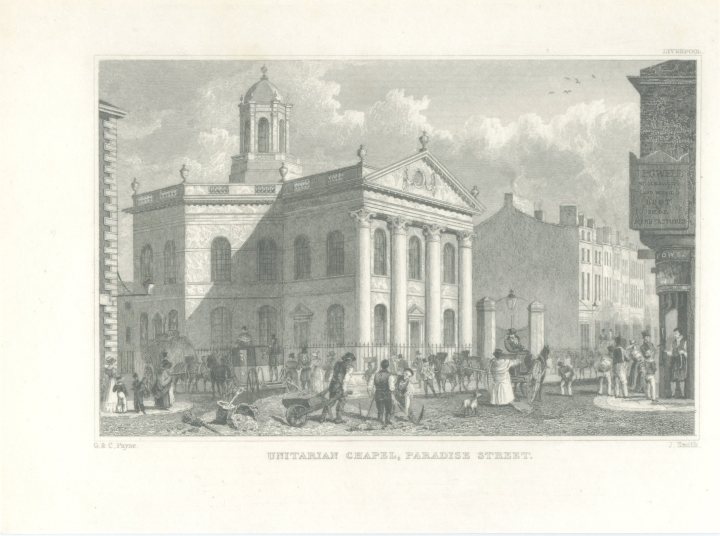
I have written before about this chapel which had an unusual history and ended up as a music hall. To some extent it enshrined the fortunes of this city centre street – from a well to do residential neighbourhood with its fashionable chapel and the home of the first US consul, to a seedy street with a licentious and dangerous reputation. Later still it became a commercial area (and the old chapel a warehouse) and later still Nazi bombs in 1941 finished off what was left and prepared the ground for the 1970s car parks and cheap hotels.

Coinobverse02

Click on the above image to read about the history of Paradise Street Chapel/Royal Colosseum

So let’s compare then and now views of Paradise Street.

Paradise Street

Paradise Street April 1973

Paradise Street 2020

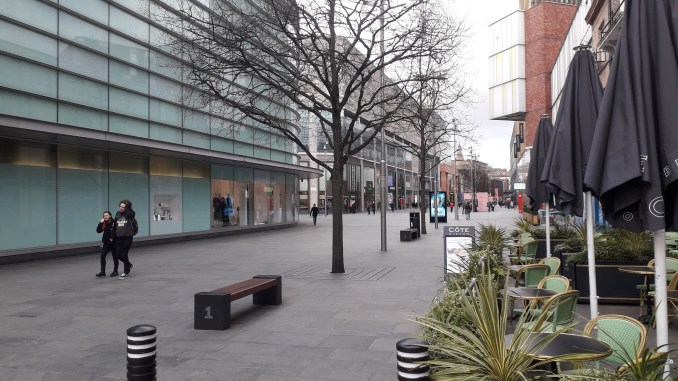
Paradise Street February 2020

The only buildings which remain are at opposite ends of the road. On the right in the 1973 picture is a red-brick building and the Eagle pub. The red-brick building is still there and is today a tapas bar, but you can’t take a picture from the same spot because there is so much furniture outside. Just visible next door is what was the Eagle pub, originally the US Consul’s house and which still carries an American eagle above the front door. Everything else has been redeveloped except for the post-war building at the far end of the street behind which the tower of the Municipal Buildings on Dale Street can still be seen. This was for many years Horne Brothers, the gentleman’s outfitters. In my youth I had to be a customer there because they had a monopoly on the provision of uniforms for my school. An at least annual visit there was inevitable. But I had another connection with Horne Brothers in that I was sent to the barbers shop in the basement to get my hair cut. This was done by Mr Cannon, one of the team of barbers who worked in the gloom of the basement. You had to make an appointment and my appointment was always with him. Unknown to me then it was Mr Cannon who first cut the hair of the Beatles. In volume one of Mark Lewisohn’s excellent book All These Years he tells how when Brian Epstein took over their management he sent them to Mr Cannon to get their first Beatles hair cut. Had I known anything of this back in the 1970s I would have asked him about it, but such things were of little general interest in the 70s. But although the building is still there Horne Bros has long gone, it was turned into a McDonalds years ago.

No pictures or text may be reproduced from this site without the express permission of the author.

Gladstone’s Library, North Wales

20200212_140253

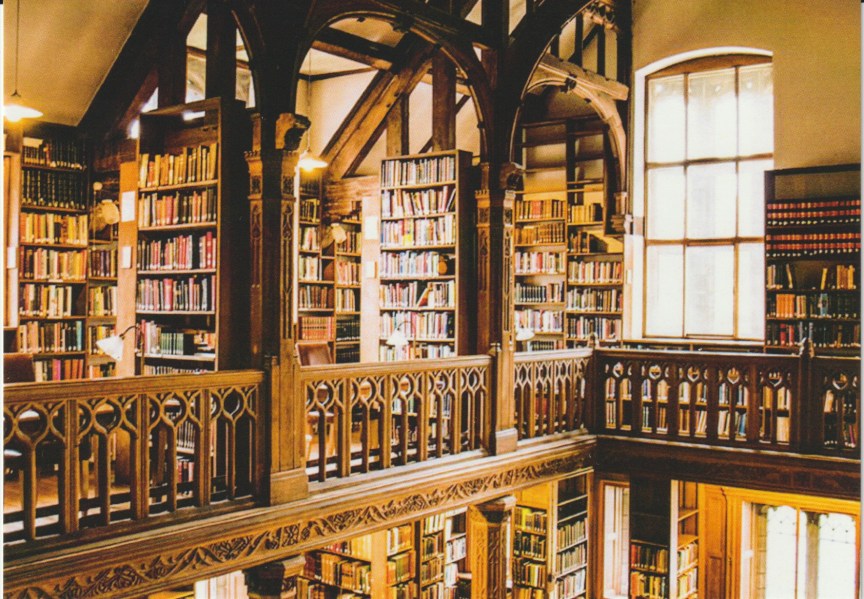
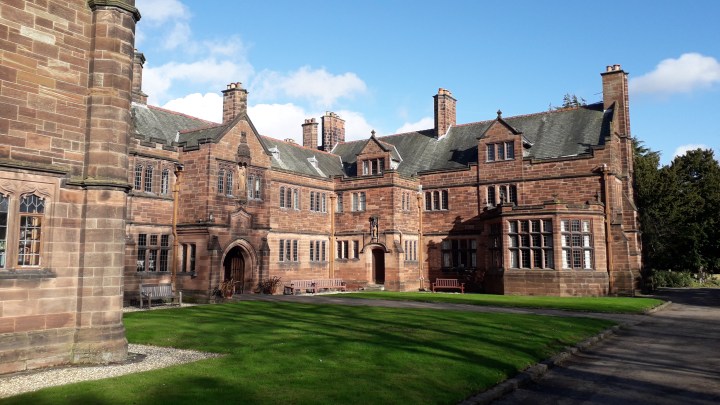
Along with my friends and colleagues in the ministerial covenant group I had a great time at our meeting at Gladstone’s Library, Hawarden, Flintshire, in February. A unique institution, there is no other Prime Ministerial library in Britain and nothing else like it that hosts all manner of literary and theological courses and meetings.

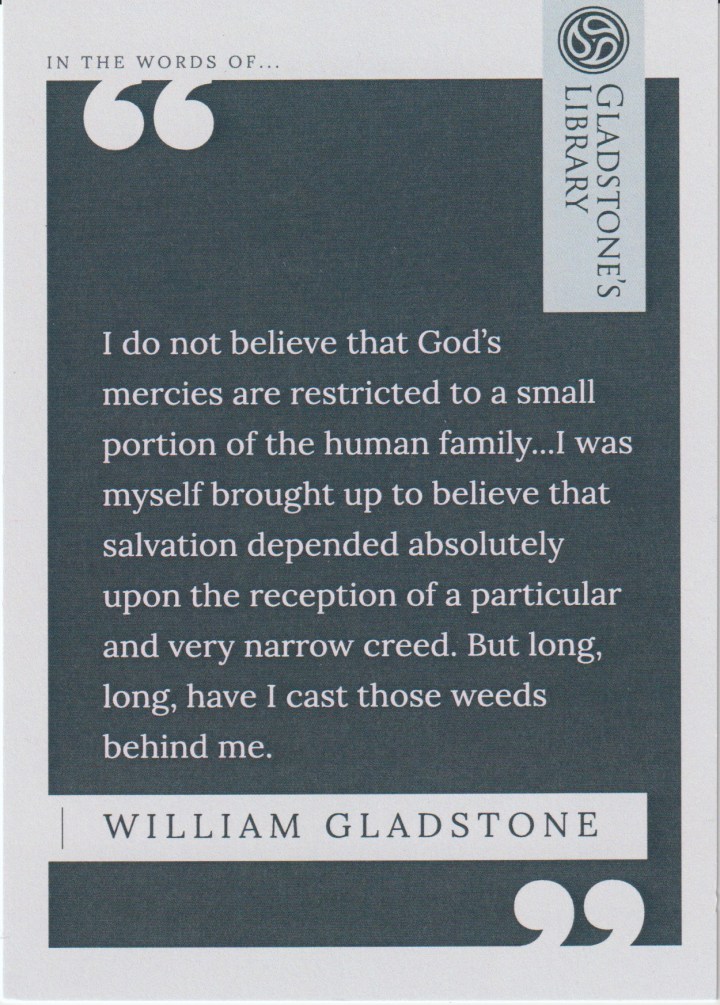
But I was particularly struck by the words on this postcard on sale at the library:

Gladstone Library 01

The back of the card states: Source W.E. Gladstone, from a letter to Samuel Dukenfield (sic) Darbishire of 2nd January, 1895, quoted in John Morley, Life of Gladstone (1903). Samuel Dukinfield Darbishire and his family were all prominent Manchester Unitarians, members of Cross Street Chapel, so I was interested to see that this quote was in a letter written to him. It makes me want to follow up the 1903 biography and also Roy Jenkins’ biography of W.E. Gladstone, copies of which were available in the library.

But it is a remarkable place. No other Prime Minister has ever been motivated to leave their library to the nation. An impressive legacy and  a marvellous resource.

20200212_140328

Very Rev William McMillan MBE, MA

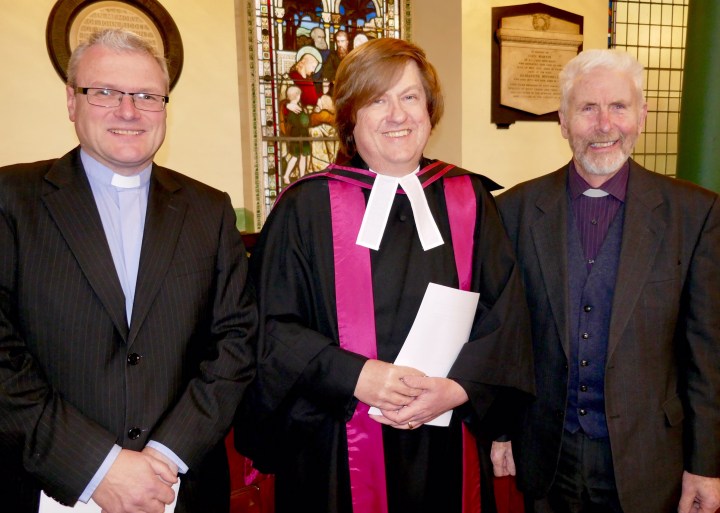
I was honoured to be asked to take part in the service of thanksgiving for the life of the Very Rev William McMillan at First Presbyterian (Non-Subscribing) Church, Dunmurry on Thursday, 23rd January 2020. I am posting here the short address I gave as a tribute to a truly inspirational minister.


How do we do justice to a person as vivid, as lively, as remarkable as the Rev Mac? There were so many facets to his character, so many ways in which he touched such a wide variety of people, so many ways in which he came to our attention and was such a force for good.

In 2004 the Oxford Dictionary of National Biography was published in 60 volumes and launch ceremonies were held across the British Isles including one at Queen’s University. Mac was a contributor to this important publication that lists tens of thousands of biographies and I was there at the publication’s launch with Mac. But one of the features of this set of books when it was first produced was that there was a handful of people whose eminence in different, not necessarily connected, disciplines meant that more than one person had to write their biography. Well Mac is such a person today. It is hard for one person to do justice for the range of achievements, interests and accomplishments which Mac displayed in his life.

First and foremost we should say that Mac was a minister, someone who preached the gospel in our liberal Christian tradition and who was not afraid to stand up for what was right often in difficult circumstances, especially through the period of the Troubles. But I think that everything else he did – and he did such a lot – was rooted in his call to ministry, in his sense of vocation.

So, widely and affectionately known as the Rev Mac, the hosta that was named after him was also called just that and whether it was working in the church or working with flowers in the horticultural world or in many of the other spheres he operated in he brought the values of a reflective, thoughtful, tolerant faith that inspired him all his life through.

When I was minister of All Souls’ Church in the 1990s Mac came to do a floral display to celebrate the centenary of the church building. He flew in through the door like a force of nature bringing friends and collaborators in his wake and creating – what he did in so many places  – a wonderful display that drew on the history, theology, and the architecture of the building using flowers and blooms and plant material which spoke of God’s love and God’s creation, a true expression of faith using natural materials.

This was something that Mac did all around the world, his fame in this area was literally spread across the globe. I remember once asking some ladies in St Giles Cathedral in Edinburgh if they knew the Rev Mac, “O yes”, they told me and began to reel off when he had been in Scotland what he had done when he was next coming. Indeed I often think you could play a game to find the most remote place where someone has come into contact with someone else who knew the Rev Mac. For starters I would offer the members of my church at Ballee who were on honeymoon in Barbados who met a local person on a beach who somehow found out they were Non-Subscribers. “Do you know the Rev Mac?” was the inevitable next question.

I remember being at the Synod one year when news reached us that Mac had become the leading floral artist in the world. In those pre-internet days news did not travel rapidly but we heard of this great achievement and everyone was truly impressed. It was something to learn that one of our number had achieved this accolade, someone who was also a scholarly minister, a great preacher, a devoted and hard-working pastor, someone who through his work was, like Gamaliel, held in honour by all the people.

Mac was a distinguished minister of this denomination, born into the Dromore church and who went into training after beginning work as a journalist, working for the Dromore Leader. Mac had so many anecdotes about people and places but his account of being taken on as a student, having to preach on trial before the whole presbytery and the severe attitudes of some of the clergy in those days was frightening. Mac went to train at the Unitarian College in Manchester and at Manchester University. There was no financial scholarship to train for the ministry and very little income to do that but was supported anonymously by members of his church.

I don’t think it was easy for Mac in the early days of his training and at one point he had to re-sit the entirety of his exams becoming in the process the only person who had ever done this in one go. He also apparently had – for reasons I don’t understand – to learn a bit of the Icelandic language. I have to confess that I very much doubt that Icelandic ever came to be in any way useful in the work of the ministry.

Mac’s training included a stint doing a pastorate in our church in Cork, quite a different world then in so many ways but the culmination of all his work was to be called to be minister of Newry and Warrenpoint where he also took on a role teaching. Mac was minister to those two churches from 1959 to 1970 and was held in high regard and great affection by all the congregations. His ministry there coincided with the start of the Troubles and Mac was at the forefront of those who tried to calm down the growing tension, at one point being hit on the head by a breeze block when he was attempting to stop a riot. This was a serious enough injury and the situation was so dangerous that he and some other clergy had to take shelter overnight in the convent, but it did also end the painful migraines he had been experiencing. Not a conventional cure or one you could expect on the NHS but effective nevertheless.

In 1970 Mac accepted a call to Dunmurry in succession to his father in law, the Rev John McCleery, and remained as minister here until 2016 when he retired and became the senior minister. The congregation flourished under his leadership and I know that everyone is devastated by the loss of their senior minister. From 1976 to 1980 he also had charge of the Moira congregation.

Mac’s service to this denomination on different committees, funds and organisations was enormous. But among other things he was moderator of the General Synod from 1969 to 1971 and again from 1985 to 1987.

But his ministry was multi-faceted, it reached into so many places and manifested itself in different ways.

In one way it was truly international. Mac represented this denomination on the International Association for Religious Freedom, the world’s oldest international inter-faith organisation for twenty years from 1961. He was held in very high regard by all his colleagues there. Partly through that organisation Mac travelled to many places as a preacher and lecturer. He preached at the famous King’s Chapel in Boston in the 1960s and told me that he received more for that one service than he was paid for a whole year at the time! In Europe he had a close link with many church people of a similar mind, particularly with liberal and free Christian groups in Switzerland, France and Germany where the affection in which he was held by the professors and church leaders of those groups was always palpable when you met them. He also travelled to Romania during the Communist era to visit the Unitarian Church in Transylvania, enduring the challenge of the arduous and lengthy night time rail journey across the border from Budapest to Kolozsvár which was then the only way in to that city. Here he was one of the first Westerners allowed to preach at that time but always under the watchful scrutiny of the Securitate, the secret police.

Mac’s work in Northern Ireland throughout the Troubles, particularly in regard to the establishment of cross-community nursery schools, at a time when such things were regarded as dangerously novel was recognised and supported by the IARF and resulted in him being awarded the Albert Schweitzer Award at the 1978 Congress in Oxford, a signal honour for his work in breaking down barriers.

But another aspect of his ministry was his tremendous achievement as an historian. This grew out of his training for the ministry in Manchester where he went on to be awarded a Master’s degree on ‘The Subscription Controversy in Irish Presbyterianism from the Plantation of Ulster to the Present Day’ by Manchester University in 1959. Mac’s knowledge and understanding of the history of this denomination was unparalleled. It was sustained by his interest in antiquarian books which led him to build up a tremendous library, originally by careful scrutiny of what was available in Smithfield Market until he built up an astonishing collection of books, periodicals, prints and sermons. Mac’s knowledge was formidable, often I would ring him with random questions about obscure figures and Mac would tell me who I was looking for and all there was to know about him. Mac had developed a wonderful fasti or biographical resource of everyone who had entered the ministry in our tradition and with these he had amassed a great collection of images and illustrations. From this he was able to produce many excellent books, articles and pamphlets often drawn out of lectures or talks that he had given. There is not time to list them all here but his writings displayed both a depth and breadth of knowledge presented in a style that was eloquent, accurate and instructive. He was always so willing to help any inquirer with information.

At the end of his biography of Henry Montgomery, A Profile in Courage, Mac quotes the Rev C.J. McAlester preaching at his memorial service in this church in 1865 and I will close my words with that quote which is equally applicable to Mac:

More acceptable to our venerated friend than ‘storied urn or animated bust’ would be the earnest efforts of those who honour him to cultivate with diligence, and guard with jealous care, those principles of Christian freedom, truth and love, which it was the noblest labour of his lengthened life to vindicate and extend.
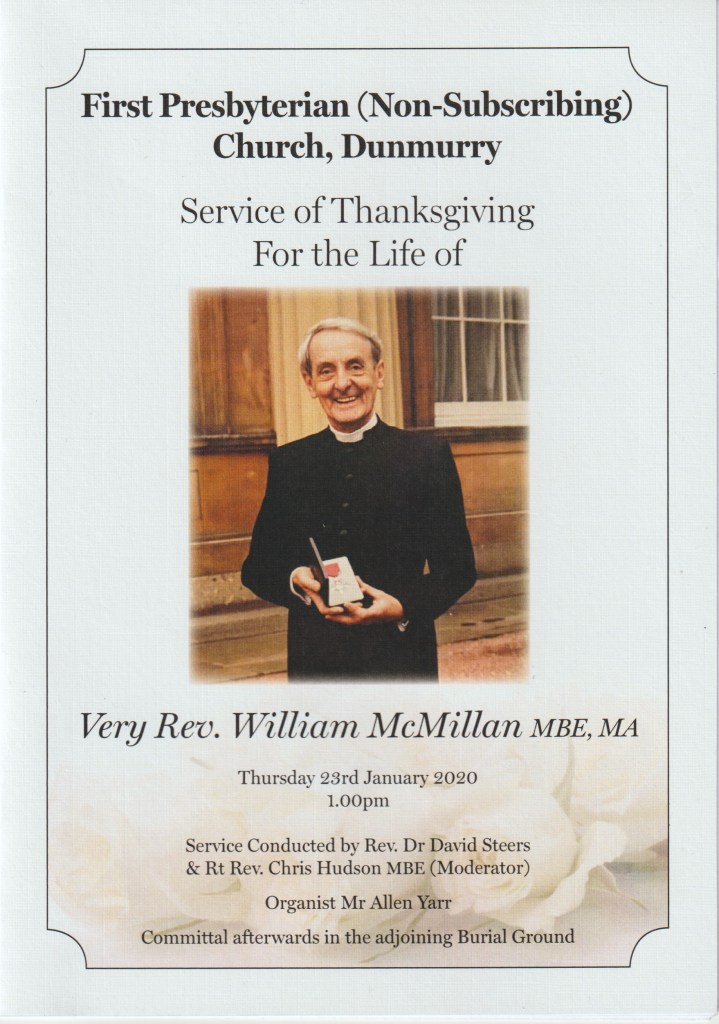
Rev Mac

Faith and Freedom Calendar 2020 available to download

FandFCalendar 2020 01

Once again the annual Faith and Freedom Calendar has been sent out to all individual subscribers to the journal. Additional hard copies can be ordered (while stocks last) from Nigel Clarke, the business manager (email: faithandfreedom@btinternet.com) in return for a donation which will go to the Send a Child to Hucklow Fund.

The Calendar can also be viewed and downloaded for free via the following link:

Faith and Freedom Calendar 2020

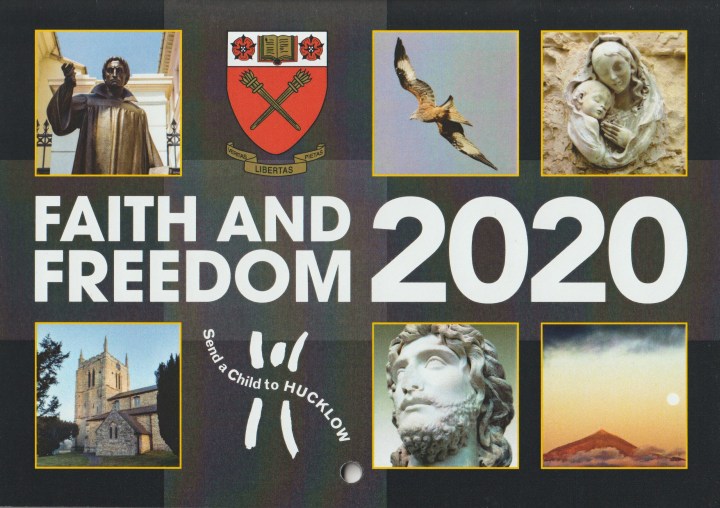
The 2020 Faith and Freedom Calendar features:

January

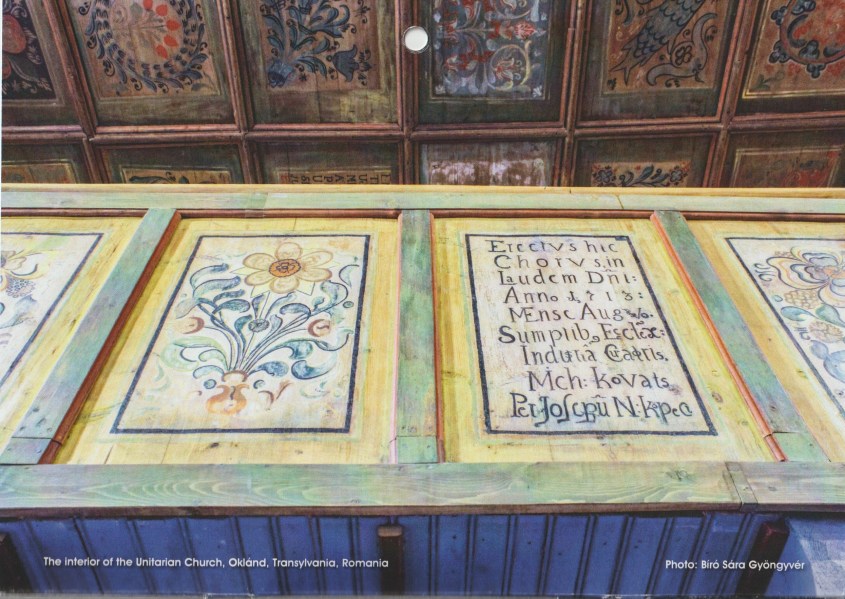
The interior of the Unitarian Church, Oklánd, Transylvania, Romania. Photo: Bíró Sára Gyöngyvér (see picture at the top of this page)

February

Wigeon (male at front, female at back) on Startops End reservoir, near Tring, Herts. Photo: Graham Bonham

March

Sunrise, Kirton in Lindsey, Lincolnshire. Photo: Nigel Clarke

April

Sikh festival of Vaisakhi, Gravesend. Photo: Rev Daniel Costley

May

Gatehouse of Thornton Curtis Abbey, North Lincs. Photo: C.P. Williams

June

Retrieving the football. Photo: E. Evanson

July

Open air celebration of Roman Catholic Priesthood, Dover Castle. Photo: Rev Daniel Costley

August

The Kabbalat Shabbat, Western Wall, Jerusalem. Photo: Rev Daniel Costley

September

Machuco, in the Chilean Andes. Photo: Anthony Lemon

October

The Choir, Beverley Minster. Photo: Meg Myers

November

Remembrancetide service. Photo: Nigel Clarke

December

Unitarian Pilgrims at Déva, Transylvania, Romania. Photo: Bíró Sára Gyöngyvér


A big thank you goes to all of this year’s contributors and to everyone who sent photos in.

FandFCalendar 2020 02

From the Archives

Clough Flower Service 1954

Clough 1956 01

James Robinson lent me this Calendar from Clough dating to 1956. As the caption says it shows the Sunday School before the Flower Service in July 1954. I think the Rev George Buckley made a Calendar for each year he was minister of Ballee and Clough and I will search out any more of them that we can post online. But this one is particularly interesting because it shows the members of the Sunday School. The Flower Service was an important annual service in Clough in those days and many members remember it. Mr Buckley took the picture one year and used it in the Calendar eighteen months later. I am sure everyone in the photo can be identified and a great many of them are regular attenders in the church to this day. It would be nice to put a name to each of the children so that we can post those online too.

Clough 1956 02


Downpatrick: Then and Now

I am grateful to Mary Stewart and Thelma Lowry for the next image which is of the interior of Downpatrick in 1967 immediately following its previous renovation and redecoration in the 1960s. This picture was taken on the day of Thelma’s wedding in the church:

Church renovations 1967

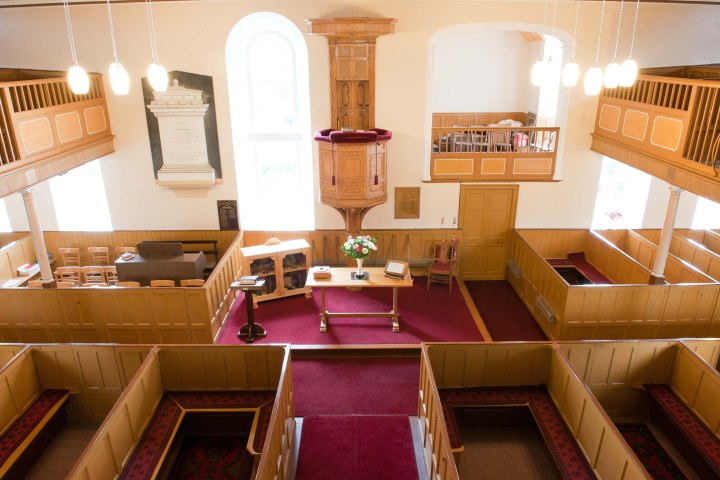
As can be seen the colour scheme is quite different to what we are used to today as this picture taken by Down County Museum in 2014 shows:

NonSubscribingChurch--36

In the five years since this picture was taken a number of features have changed, including the addition of furniture and wall plaques. The ‘Squire’s Gallery’ is tidier too! But there is a different feel entirely to the interior, which is believed to be one much closer to the original interior of 1711.

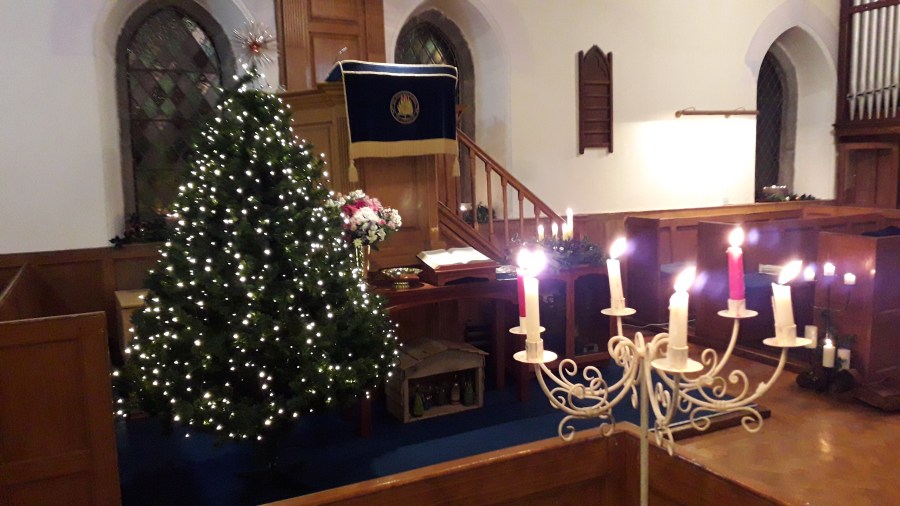
Christmas Events at Downpatrick, Ballee and Clough

In December we had a number of successful special events beginning with the Downpatrick Table Quiz at the Lakeside Inn on Saturday, 7th December. There were 80 – 90 people present and £781.50 was raised for church funds.

Downpatrick Table Quiz

Picking the prizes for the draw 

On Wednesday, 11th December we held our joint Candlelight Carol Service this year at Ballee. John Strain was the organist and once again we were delighted to welcome the Laganvale Ensemble under the direction of Gareth Downey to play for us. Equal numbers of readers from all three churches took part and were: Robert Neill, Eleanor Baha, Thomas Rooney, Elsie Nelson, Sarah Rooney, Mary Stewart, Sophia Cleland, Eve Lightbody, and Donna Lightbody.

Ballee Candlelight Carol Service 2019 band 01

Laganvale Ensemble preparing for the Candlelight Carol Service at Ballee

Ballee Candlelight Carol Service 2019 readers

The readers at the Candlelight Carol Service

Clough Church held their Christmas Carol Service on Sunday, 15th December when the service was led by the children of the Sunday School who provided readings, poems, songs and solos to retell the Christmas story.

Clough Carol Service 01

Clough children at the Carol Service

The Sunday School led the Ballee Carol Service on Sunday, 22nd December at the end of which everyone was delighted to receive a surprise visit from Santa Claus.

Ballee Carol Service

Santa comes to Ballee

At the Downpatrick Carol Service on 22nd December the Sunday School made a presentation to Bertie Taylor of £1,000 raised for the life-changing operation needed by nine year old Ben Taylor. Bertie gave the congregation an update on Ben’s progress since his operation and thanked everyone for their support.

Downpatrick Carol Service 2019

Participants in the Downpatrick Carol Service together with members of the Taylor family (Photo: Mary Stewart)

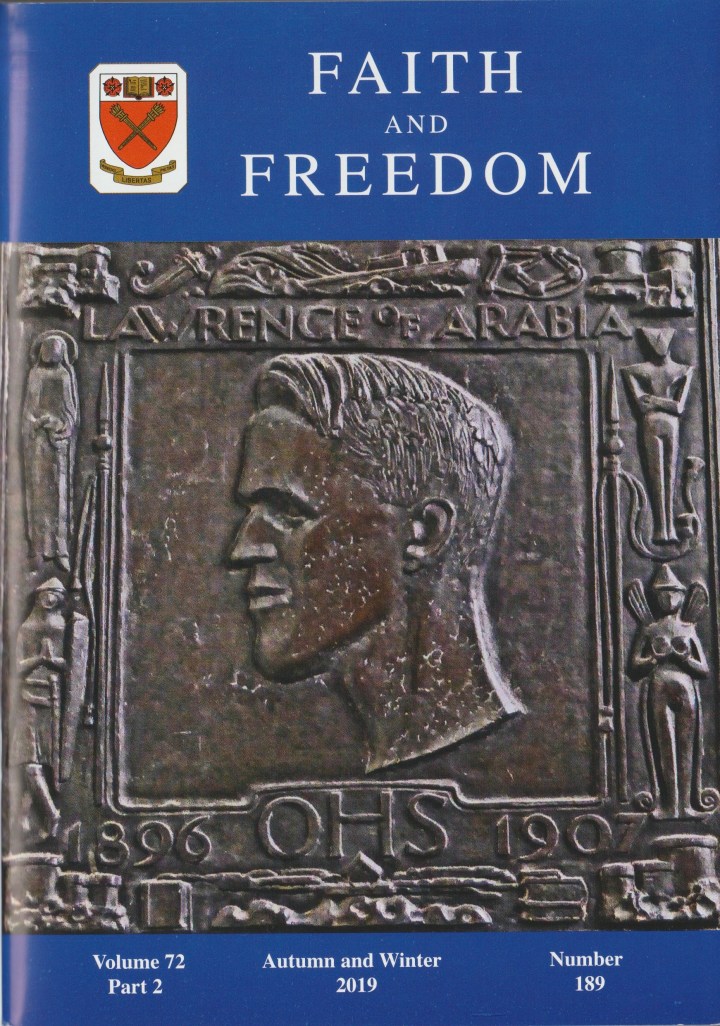
The true story of ‘Silent Night’, in Faith and Freedom

In the latest issue of Faith and Freedom Andrew Page tells the true story of the famous carol Silent Night and gives a new and entirely faithful translation of the hymn.

Christmas Ballee Candlelight December 2009

Andrew Page writes:

“We are all familiar with Silent Night – or, at least, we think we are. We know the famous tune, we can recite the familiar English words, we might even know the tale of the church organ and the mice – whose supposed gnawing through the bellows necessitated the writing of a new carol played by guitar.

Familiarity, however, does not necessarily lend itself to understanding. To understand the meaning of Silent Night the first thing that must be done is to strip away the myths. Myths inevitably point us towards truth – real, deep and meaningful truths, that a mere retelling of the facts never could. However, when a mythologised version of events becomes widely accepted as historical truth, it must be challenged.
A myth is a story that never was, but always is. And so it is with the myth of Silent Night. The traditional story tells us of how hungry church mice had eaten a hole in the bellows of the church organ in Oberndorf. The damage was discovered in Christmas Eve, just a few hours before the young priest, Father Mohr, was due to lead Midnight Mass. Attempts were made to find a means of repairing the organ, but these efforts proved unsuccessful. As Mohr’s congregation would need something to sing, and with the organ out of commission, the priest was inspired by a pastoral visit he had carried out earlier in the day, to a mother and her sick baby. He penned the now world-famous words, and then ran to his friend Franz Gruber – a schoolmaster and organist – to ask him to quickly compose a tune. When a man arrived after Christmas to repair the organ, he was so impressed with the new composition that he passed it on to the Strasser family, a travelling group of musicians and singers very similar, I assume, to the Von Trapps of Sound of Music fame. The Strassers later published it and the rest is history.

Or is it?….”

From ‘The Story of Silent Night’ by Andrew Page published in Faith and Freedom, AUTUMN AND WINTER 2019 (Volume 72, Part 2) issue 189

An annual subscription costs £15 (postage included). Please contact the business manager to take out a subscription:

Nigel Clarke,
Business Manager, Faith and Freedom,
16 Fairfields, Kirton in Lindsey,
Gainsborough, Lincolnshire.  DN21 4GA.

It’s also possible to pay via PayPal via clicking here.

Email: faithandfreedom@btinternet.com

Faith and Freedom Cover 2019

Remembering Tom Banham

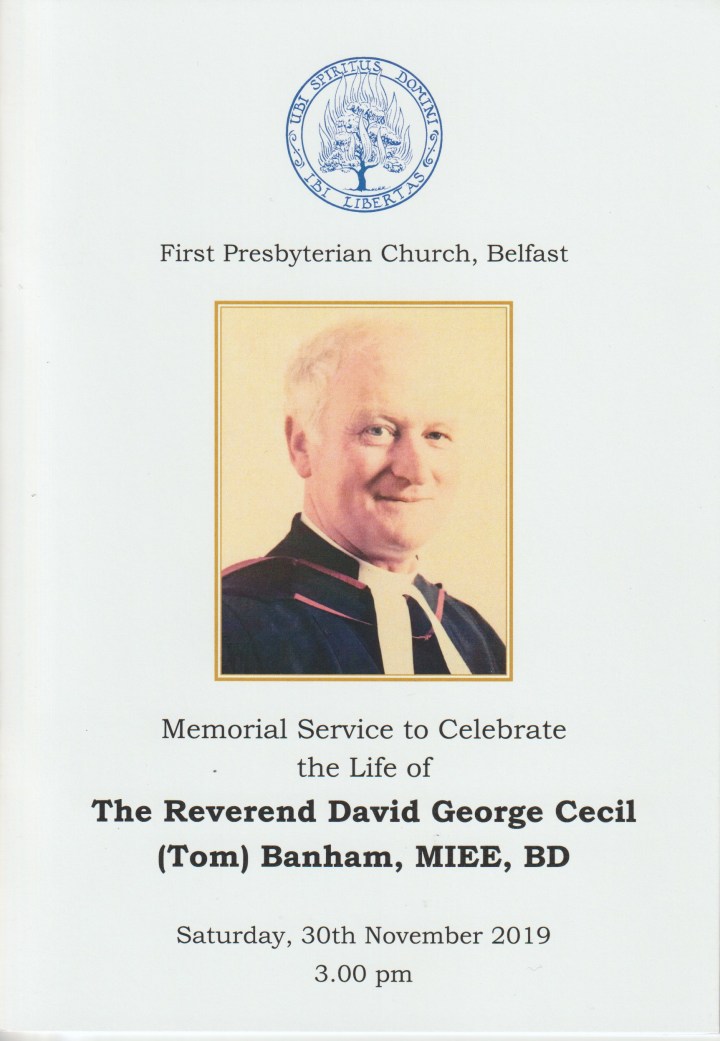
On Saturday, 30th November I was honoured to be asked to lead the service and give the address at the Memorial Service for the Rev Tom Banham at First Presbyterian Church, Rosemary Street, Belfast. Tom was the minister of First Church from 1975 until his retirement in 1993 and was senior minister from then until his death in August 2019.

IMG_1951

With Rev Simon Henning and Rev Robert McKee (Photo: Mark Adair)

It was a very impressive service indeed with contributions from Rev Simon Henning, Dr Pamela Topping, the church secretary, who read So Many Different Lengths of Time by Brian Patten, and Mark Adair who spoke warmly of his memories of Tom and read Praise of a Man by Norman McCaig.

Memorial Service

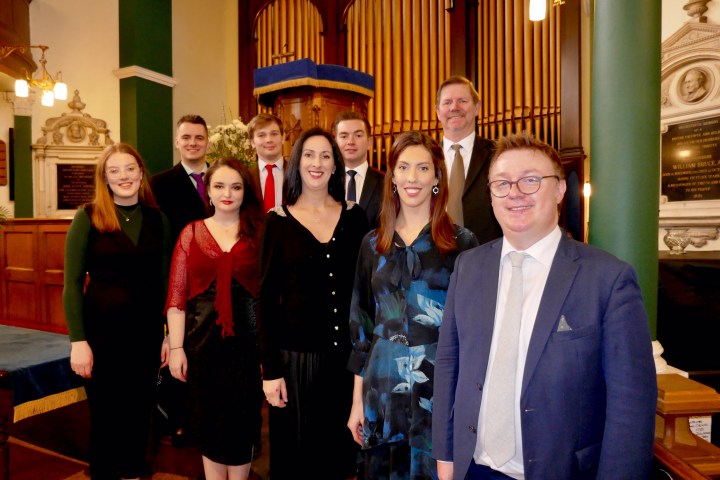
The service was particularly notable for its musical contributions under the leadership of the church’s Director of Music, Richard Yarr. Tanya Houghton, the newly appointed Musician in Residence, played two pieces on the harp and the eight Banham Scholars gave their first ever public performance. The organist was Nigel McClintock.

IMG_1947

Tanya Houghton with the Banham Scholars and Richard Yarr (Photo: Mark Adair)

Before he died Tom endowed the church to enable them to establish a choral scholarship scheme for the church. As a result a group of choral scholars have been formed who, it is planned, will sing once a month at Rosemary Street, as well as on special occasions, and will undertake outreach projects on the church’s behalf. The congregation has named them the Banham Scholars in Tom’s memory.

IMG_1949

The Banham Scholars and Richard Yarr (Photo: Mark Adair)

The musical programme in the service comprised pieces which reflected Tom’s own musical interests and some of his favourite pieces:

Church Choir & Banham Scholars: Beethoven – Creation’s Hymn

Tanya Houghton (harp), Musician in Residence, First Church –

Puccini: O Mio Babbino Caro, from Gianni Schicchi (with soprano Mary McCabe)

Mascagni: Intermezzo from Cavalleria Rusticana

Banham Scholars –

Rutter: The Lord Bless You And Keep You

Handel: Hallelujah Chorus, from Messiah

The Banham Scholars are eight professional singers: two Sopranos: Mary McCabe and Katie Lyons; two Altos: Dawn Burns and Sarah Richmond; two Tenors: Owen Lucas and Mark Tilley; and two Basses: James Cooper and Adam Reaney.

IMG_1950

The Church Choir and the Banham Scholars (Photo: Mark Adair)

The hymns were Love divine, all loves excelling, The day thou gavest, Lord, is ended and Guide me, O thou great Jehovah.

The whole occasion was such a fitting tribute to someone who was a major figure in his denomination for so long and who made such a great contribution to society through his ministry and leadership.

Rev Tom Banham 1971

Rev Tom Banham 1929 – 2019

Lieutenant Commander, Royal Navy

Minister, Ballycarry and Raloo 1971 – 1975

Minister, First Presbyterian Church, Belfast 1975 – 1993, senior minister 1993 – 2019

(Picture taken in 1971)