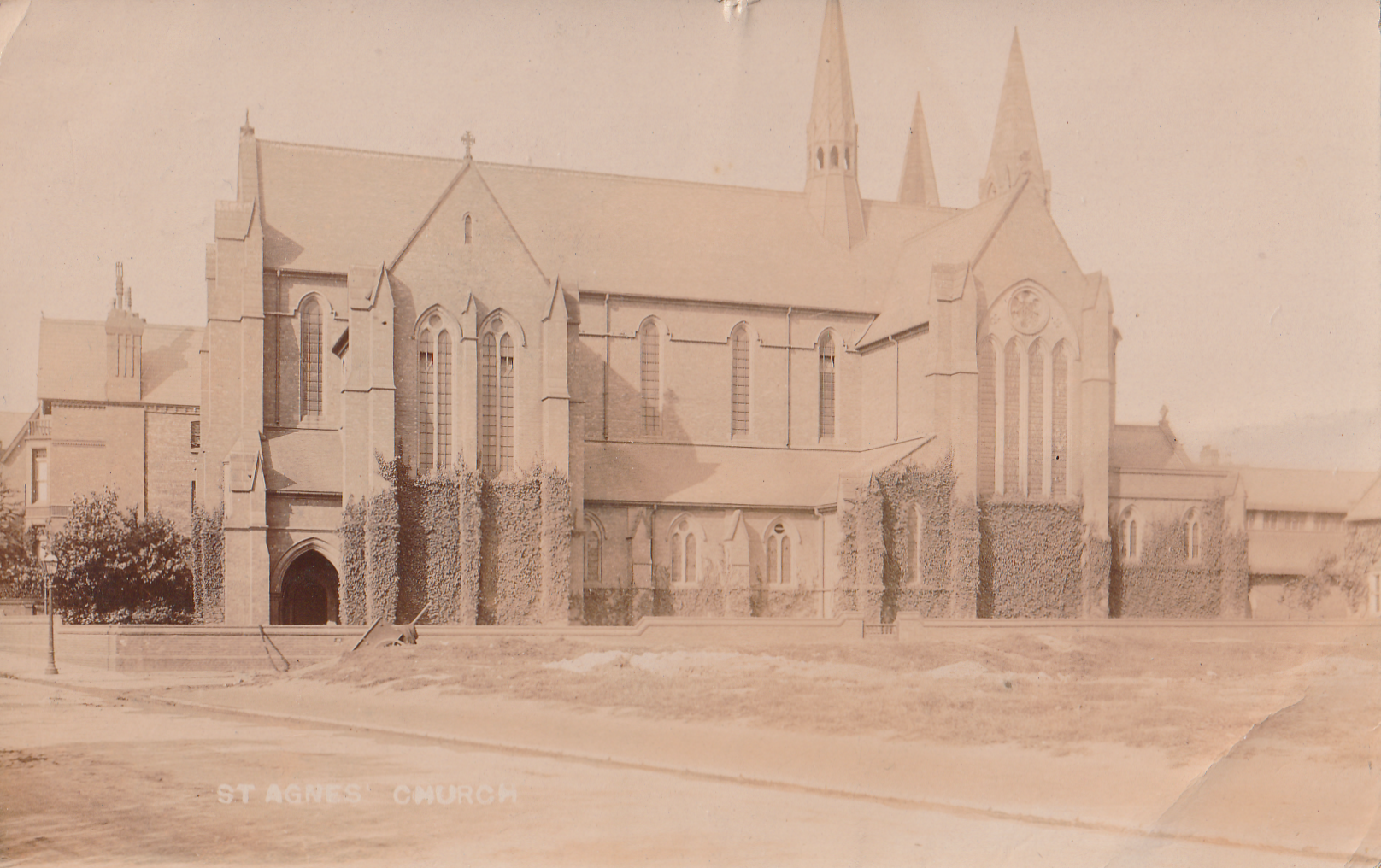
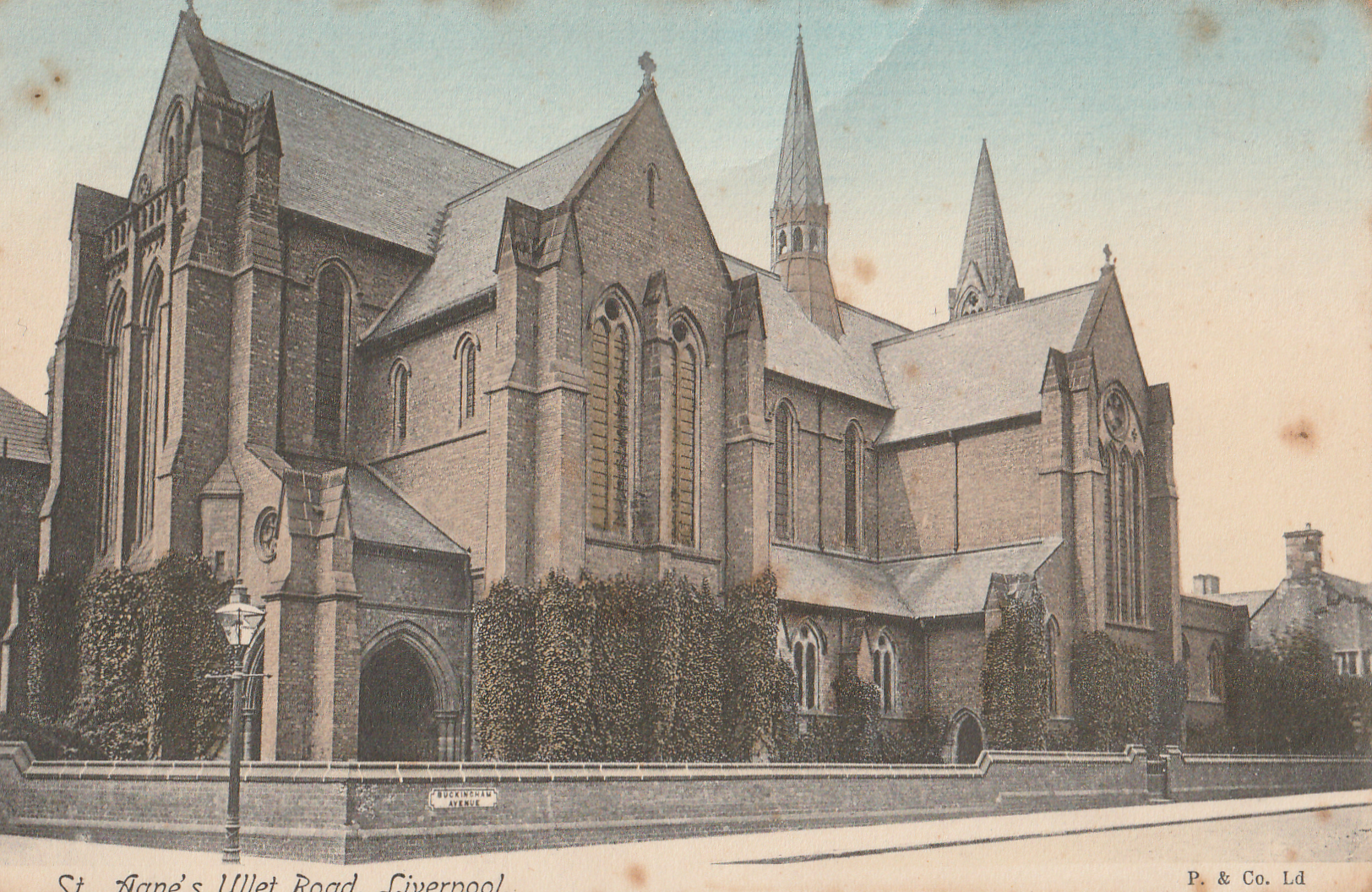
I recently acquired this postcard of St Agnes Church, Ullet Road, Liverpool. It’s a church that often features in Edwardian postcards but this was the first time I had seen this view which is interesting because it shows the church before the houses were constructed on the end of Buckingham Avenue and Ullet Road. The church itself was built between 1883 and 1885, the hall and vicarage being added in 1887. This picture must date from the around the turn of the century, the side and the front are already covered in ivy.
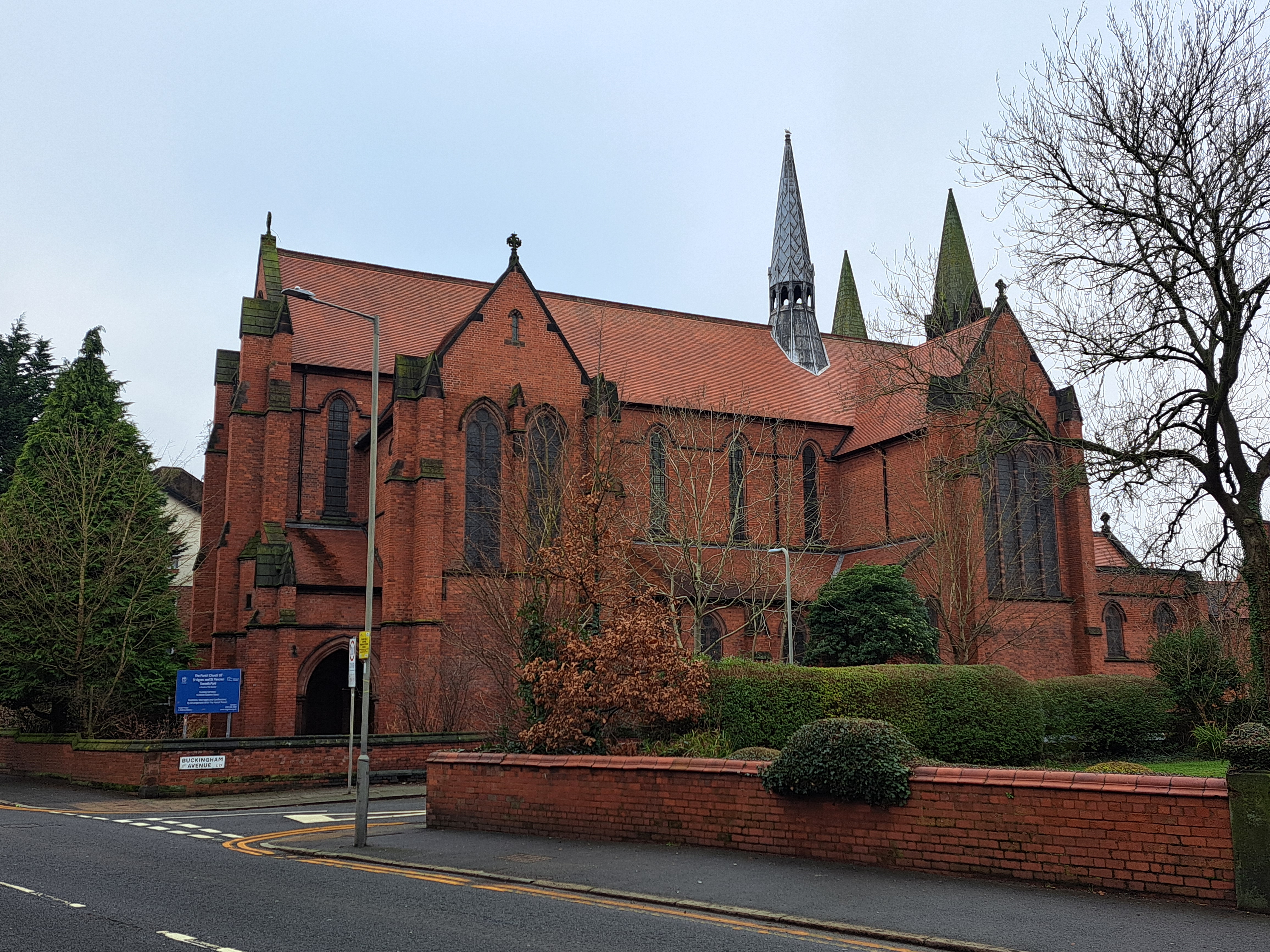
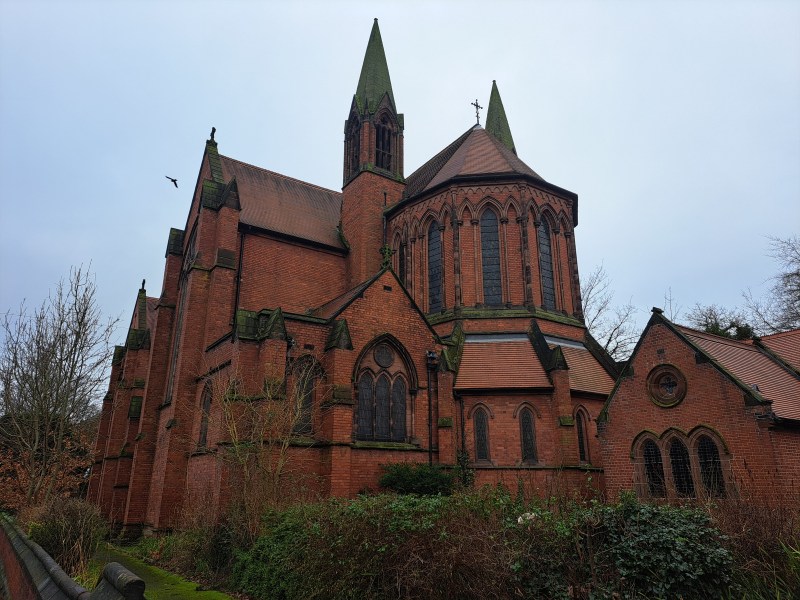
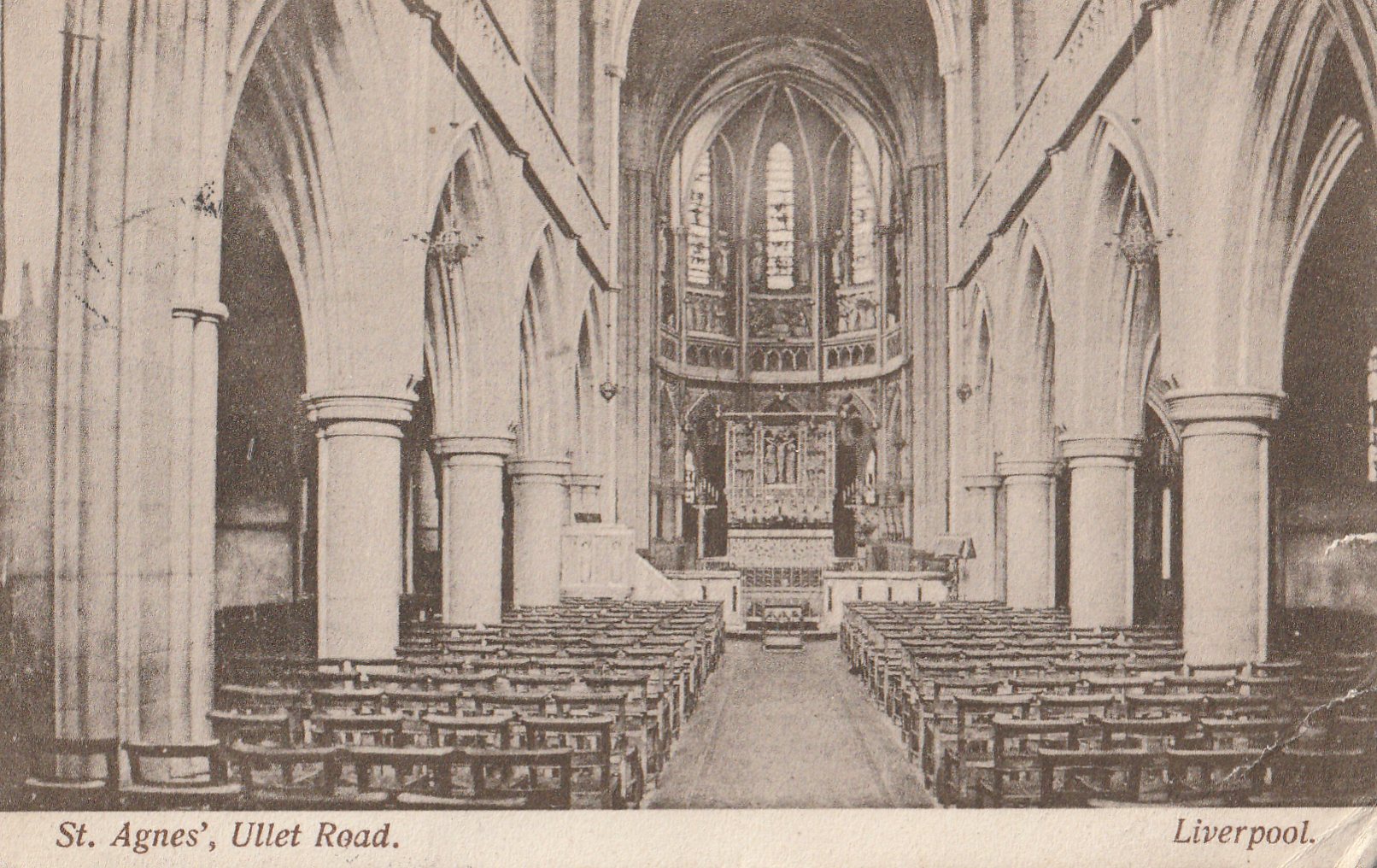
A modern view of the church from the same angle shows no ivy clinging to the side of the building. Like the nearby Unitarian Church the exterior is brick but the interior is stone. St Agnes, the Unitarian Church on Ullet Road and St Clare’s RC Church just a short walk away, are all very significant ecclesiastical buildings which caught the eye of Andrew Lloyd-Webber back in the 1990s when he provided funding for all three churches to be made open to the public. They remain remarkable buildings which illustrate the ability of churches to follow suburban expansion at the end of the 19th and start of the 20th century and build churches of the highest quality which were pleasing to the eye and built of the best materials. There was once a fourth church in this group, much less celebrated in architectural terms but the first of the suburban outreach churches to move into the locality and a striking edifice with a spire placed at the top of the hill of avenues in 1879. This was Sefton Park Presbyterian Church, which was demolished just over 100 years later and of which there is today no trace, although it would have remained an appropriate reformed companion to the other three churches.
St Agnes, or the Parish Church of St Agnes and St Pancras to give it its full name, was paid for by Liverpool stockbroker Douglas Horsfall to represent the Anglo-Catholic tradition within the new diocese of Liverpool. A low church, evangelical spirit was the dominant mood within Liverpool but Douglas Horsfall was a keen proponent of the ritualism that was so controversial within the Church of England at the time.
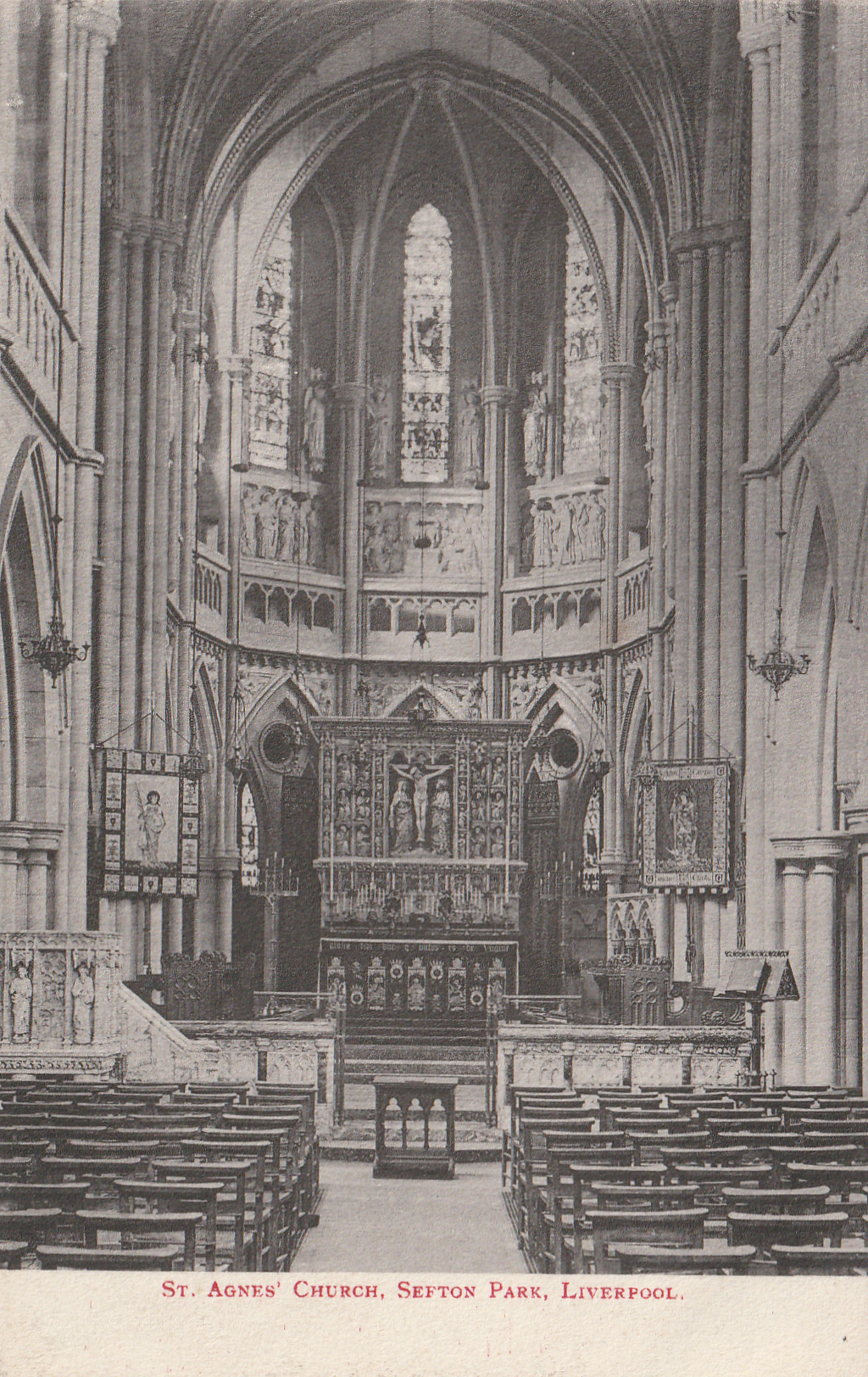
The architect was J.L. Pearson, the newly appointed architect of Truro Cathedral, and he created a remarkable building which, in the words of Joseph Sharples, ‘conveys an impression of cathedral-like dignity’.
Nikolaus Pevsner was very impressed, calling it, ‘the noblest Victorian church in Liverpool, erect and vigorous, and not in the least humbled by being of red brick. The style is that of the C13, English with French touches, combined to achieve perfect unity.’
The St Pancras part of the name refers to a relatively short-lived continuation of the suburban extension of the churches into the Smithdown Road area early in the 20th century. St Pancras was built on Lidderdale Road but was later utilised as part of the infant school there, and is now demolished.
But St Agnes remains, a surviving symbol of 19th century Anglican controversies, but one of the most impressive churches in Liverpool.
 velvethummingbee