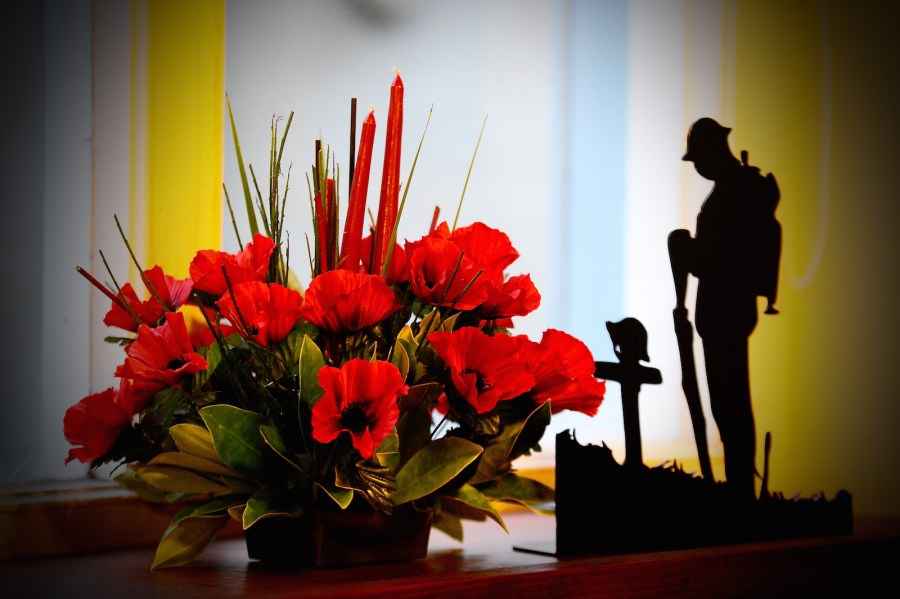
Templepatrick service in memory of Flight Lieutenant John Alexander Bright

clergy 01

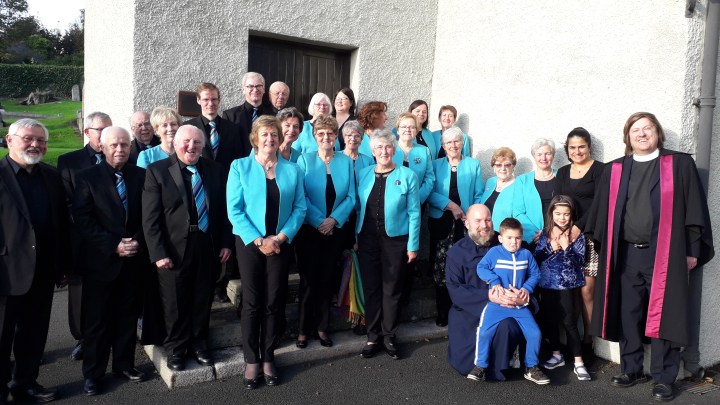
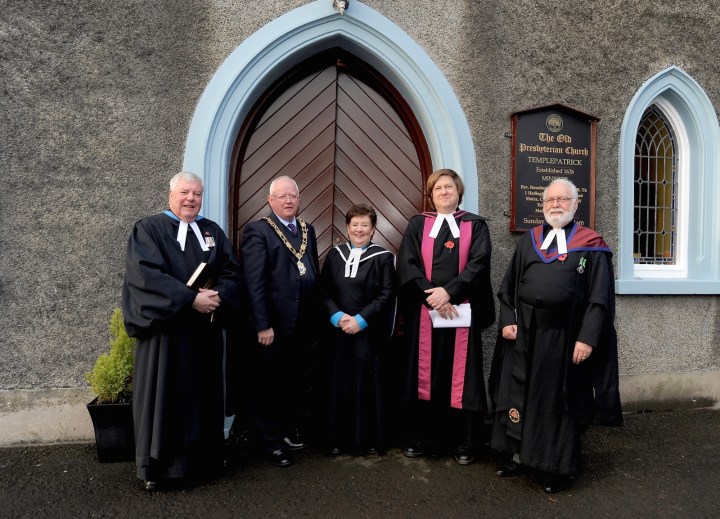
Rev Rosalind Taggart with the Mayor of  Antrim and Newtownabbey Borough Council with participating clergy (Photo: Maurice Montgomery)

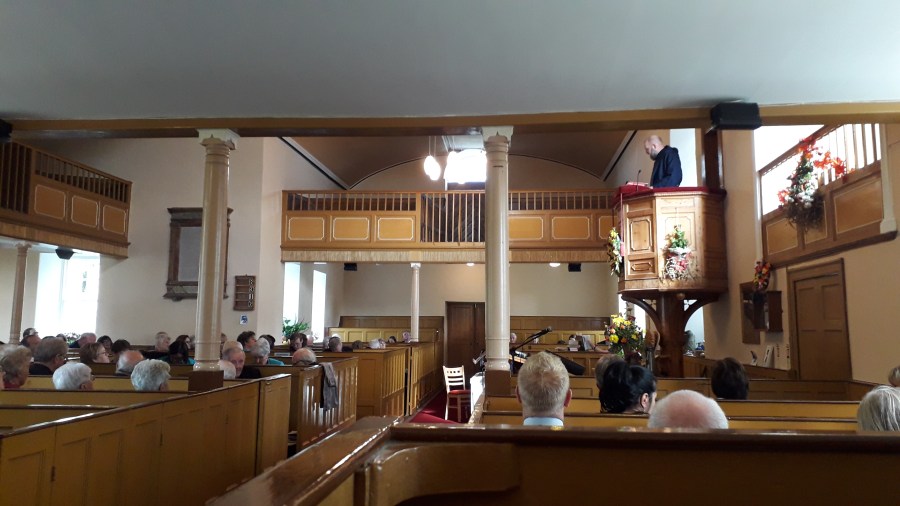
On Sunday, 17th November 2019 the minister and congregation of the Old Presbyterian Church, Templepatrick put together a very thoughtful, impressive and moving service to commemorate the life of Flight Lieutenant John Alexander Bright who died in 1943 at the age of 24. The service was attended by a number of dignitaries and representatives of the RAF. I was asked to give the address which can be found below:

On a site at Runnymede in Surrey, over-looking the river Thames, in the same valley where the Magna Carta was sealed by King John in 1215, stands the Runnymede Memorial, also known as the Air Forces Memorial. This memorial commemorates the names of those airmen and women of the Commonwealth who were lost in the Second World War in western Europe and have no known grave. They came from all parts of the Commonwealth and served in Bomber, Fighter, Coastal, Transport, Flying Training and Maintenance Commands. Some were from countries in continental Europe which had been overrun but whose airmen continued to fight in the ranks of the Royal Air Force. There are 20,275 names listed on this memorial. They have no known grave.

Just outside the town of Lincoln stands the International Bomber Command Centre which was opened in 2013 and was built to acknowledge the efforts, sacrifices and commitment of the men and women, from 62 different nations, who came together in Bomber Command during the war. This branch of service included Aircrew, Ground Crew, Women’s Auxiliary Air Force, Auxiliary Air Transport, Auxiliary Transport Services, NAAFI and others. Of the 125,000 Aircrew who served in Bomber Command, 72% were killed, seriously injured or taken Prisoner of War. More than 44% were killed whilst serving, giving the highest rate of attrition of any Allied unit. Each man was a volunteer, and their average age of death was only 23. Here at Lincoln is a memorial known as the Walls of Names containing the names of 57,861 men and women who lost their lives serving or supporting Bomber Command during the Second World War.

In Belfast, in St Anne’s Cathedral, there is a Roll of Honour unveiled as recently as May of this year in memory of the unit of the Royal Air Force Volunteer Reserve (RAFVR) which was formed in Belfast in January 1939. The RAFVR in Belfast was setup to support the rapid expansion of the pilot and navigator establishment necessary once war had been declared. Over 300 young men joined the RAFVR in Belfast between the 1st January 1939 and 1st May 1940. On 3rd September 1939, 140 of them were called into full time service and posted to various RAF stations in England for further training. It is said that many of these young men could not drive a car or ride a motorcycle but within six months of advanced training were flying Lancaster bombers or Spitfire fighters over enemy held territory. Of these 140 some 92 were Killed in Action and Forty-eight survived. These names are the ones listed on this Roll of Honour in St Anne’s Cathedral in Belfast.

We are here today to remember one of the people listed on all three of these RAF memorials. A young man aged just 24, who has no known grave, and who served with Bomber Command in the Royal Air Force Volunteer Reserve. His name was John Alexander Bright and we are here to make our act of remembrance of him and to dedicate our own memorial to him.

John Alexander Bright was the only son of Victor Price Bright and Ellen, sometimes Ella, Bright, née Alexander. His mother, who was born in 1892, grew up on a farm not far from here at Kilgreel. Her family were long-time members of this congregation. Ellen Bright was also a great member and supporter of the Antrim congregation (information from Miss Olive Moore). Victor Price Bright was born in 1884 in Clones in county Monaghan where his family owned a tailors and drapers shop. Following their marriage in Belfast in 1915 they moved to Pembrokeshire where John Bright was born in 1919. It was here that he initially joined the RAFVR in January 1937, just a year after it was established, at the age of 18. Before the war he came to Northern Ireland with his family when they moved back to Stoneview, the family farm at Kilgreel. Nearby they also built a bungalow intended to be occupied by their son (information supplied by Dr Joan McMaster). With the outbreak of war J.A. Bright transferred to the Belfast RAFVR. His service number was 67597 and two years later, on 15th May 1941, Sergeant Bright was promoted to Pilot Officer. This was followed, the next year, by his appointment on 15th May 1942 as a Flying Officer. He was made Flight Lieutenant on 6th November 1942, although it is clear from his citation when mentioned in despatches in June 1942 that he had been an acting Flight Lieutenant for some months before that.

As a member of Bomber Command his experience of the war must have been intense. As I mentioned previously of the 125,000 Aircrew who served in Bomber Command a terrifyingly high number of 72% were either killed, seriously injured or captured by the enemy. It must have been a daily challenge of a high order to fly out into hostile airspace. J.A. Bright acquitted himself with some bravery. He was twice mentioned in despatches.

The efforts of the RAF Bomber Command significantly changed the outcome of the war. Their bombing raids did great damage to the enemies’ industrial capacity and forced them to direct large quantities of aircraft and artillery towards fighting the bombers. There is no doubt that the efforts of Bomber Command helped to contribute to the eventual Allied victory in Europe.
Memorial 03

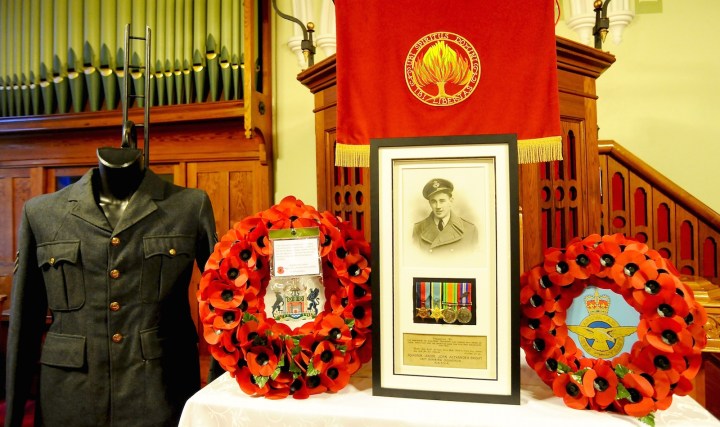
Memorial to Flight Lieutenant J. A. Bright (Photo: Maurice Montgomery)

John Alexander Bright served throughout the war until his death, reaching the rank of Flight Lieutenant, and it seems likely from the wording of his mother’s will in 1970, that promotion to Squadron Leader may have been imminent at the time he was killed. He was posthumously awarded the four medals that have been beautifully mounted and framed by the congregation. They are from left: the 1939-1945 Star, a medal awarded to all who served in any branch of the armed forces or merchant navy for at least six months during the war. The Air Crew Europe Star which was awarded to air crews of the Commonwealth forces who participated in operational flights over Europe from the United Kingdom during the war. The Defence Medal which was awarded to those who played a part in national defences on the home front which J.A. Bright will have done before he became a pilot. The War Medal which was issued to all who served in the forces for at least 28 days during the war. On this medal is attached an oak leaf which symbolises that J.A. Bright was mentioned in despatches. In other words his personal gallantry was recorded in the air force records during the war at the time, in his case not once but twice.

When J.A. Bright went to England to train to be a flyer he was stationed in a number of places. In the autumn and winter of 1941 he was training at RAF Edgehill, a satellite airfield for RAF Moreton-in -Marsh in Gloucestershire which was the base for 21 Operational Training Unit (OTU) RAF. One night, on 7th December 1941, when he was walking along the road with another pilot he saw a Wellington bomber which had recently taken off from the nearby airfield run into trouble in bad weather. It hit a telegraph pole before crashing into a field and bursting into flames about 500 yards away from the two of them and they ran to try and rescue the crew. Despite the fierce blaze, the intense heat, the continuing explosions as fuel and oxygen tanks caught fire, they managed to rescue two of the crew, although four others were also killed that night. (An account of this event can be found on the website The Fallen from the Villages of North and West Oxfordshire – The Fallen of the Sibfords)

On completion of his training at the OTU base, where he will have trained flying Wellington bombers, J.A. Bright transferred to an operational squadron where he will have had to convert to flying the Lancaster bomber. By February 1943 he was a member of 83 Squadron RAF based at RAF Wyton. On the evening of 19th February 1943 Flight Lieutenant Bright and the other six members of the crew set off on a night raid to Wilhelmshaven a coastal, shipyard town in northern Germany. They left their base at 18.16, flying with an Avro Lancaster, with serial number R5743 and code OL-K. This was the second mission in two days to this particular target and the first one had already failed. Sadly this mission was also to fail, the Lancaster bomber is presumed to have crashed into the North Sea at some point later that night with the loss of all members of the crew. The body of one of the crew was later washed ashore but the bodies of Flight Lieutenant Bright and the others were never recovered.

Like so many others, at the age of just 24, Flight Lieutenant Bright had given his life in the service of his country. We can only imagine the sense of desolation experienced by his family. With no other children, and following the death of her husband in 1949, Ellen Bright wanted to leave a legacy that was of use to others. In a will dated 27th January 1970 Mrs Bright, whose address was given simply as ‘Stoneview’, Templepatrick, bequeathed her estate to the Trustees of the Non-Subscribing Presbyterian Church of Ireland to be used “as the Trustees may in their sole discretion decide”, as the will was worded. The will further went on to say:

The said bequest is made to perpetuate the memory of my son Squadron Leader John Alexander Bright R.A.F.V.R. the Pilot of a Bomber lost over Wilhelmshaven on the Nineteenth/Twentieth day of February One Thousand nine hundred and forty-three aged Twenty-four years

It may be that young John Bright was an acting Squadron Leader and following on from Mrs Bright’s will it does seem to be the case that he was frequently referred to in denominational circles by this rank. However, the official records, including the Commonwealth War Graves Commission all describe him as a Flight Lieutenant at the time of his death.

Ellen Bright died on 8th May 1970 and her generous bequest passed to the Non-Subscribing Presbyterian Church of Ireland. It has been an invaluable Fund that has been used to support many denominational endeavours, especially by providing interest free loans to churches needing to undertake programmes of restoration. The Fund also provided the finance to publish the denominational Roll of Honour produced last year which listed all the men and women who served and who gave their lives in the First World War. So with that in mind it is only right that we make some act of remembrance today of John Alexander Bright and of Ellen Bright and her family as we dedicate these medals to the glory of God.

 Greater love hath no man than this, that a man lay down his life for his friends. (John ch.15 v.13)
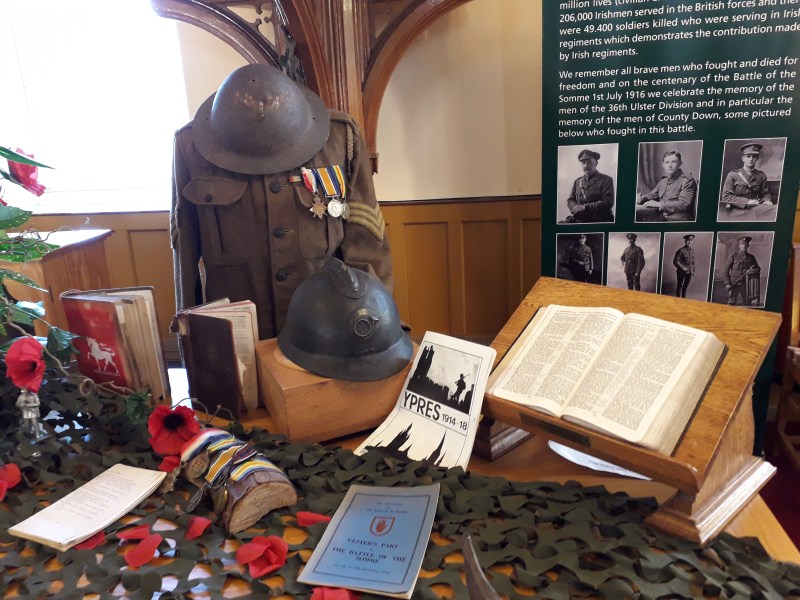
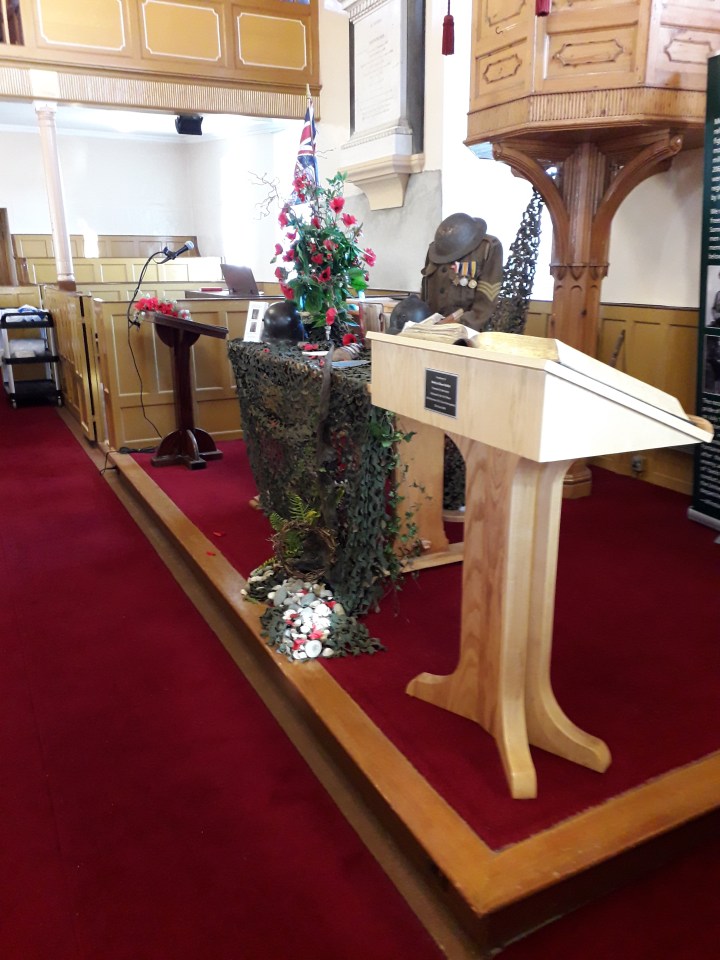
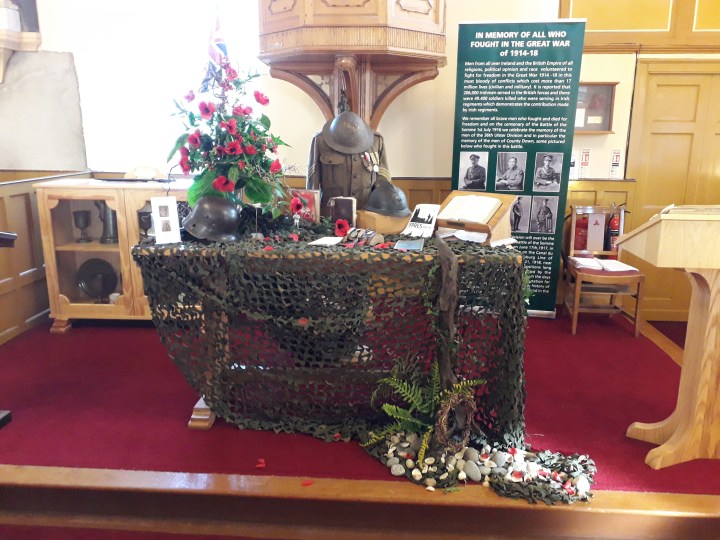
Poppy Memorial

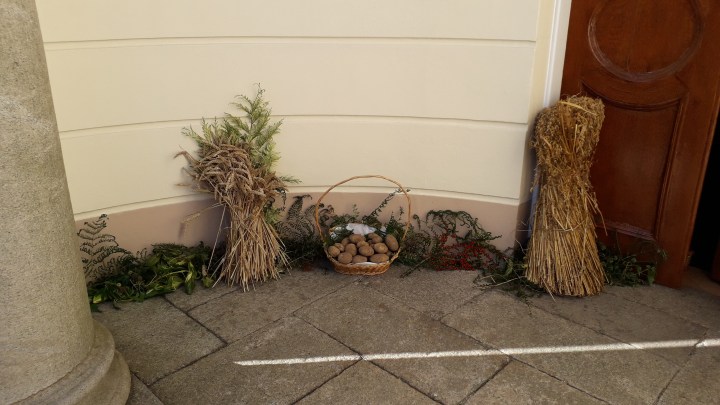
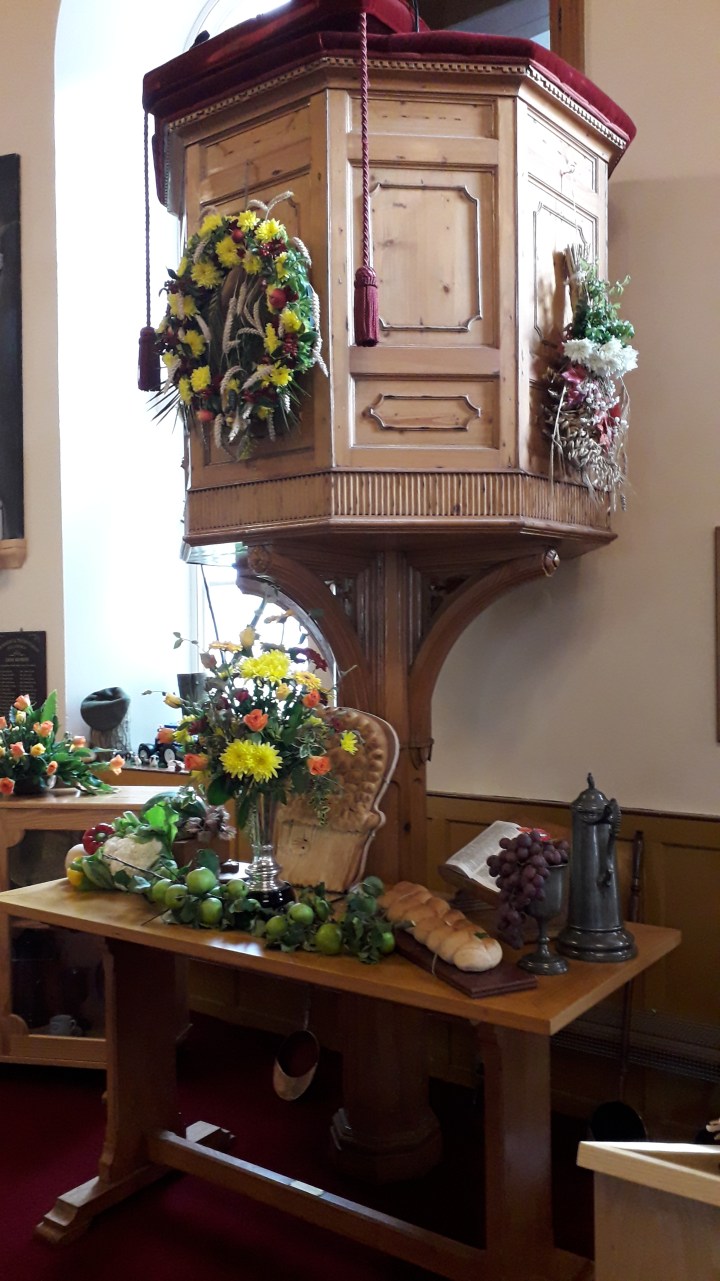
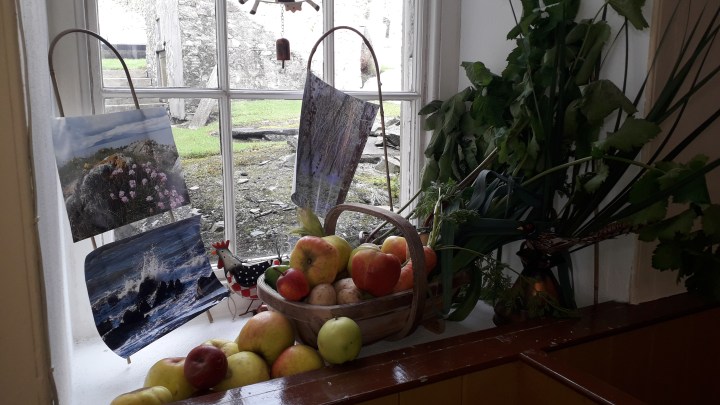
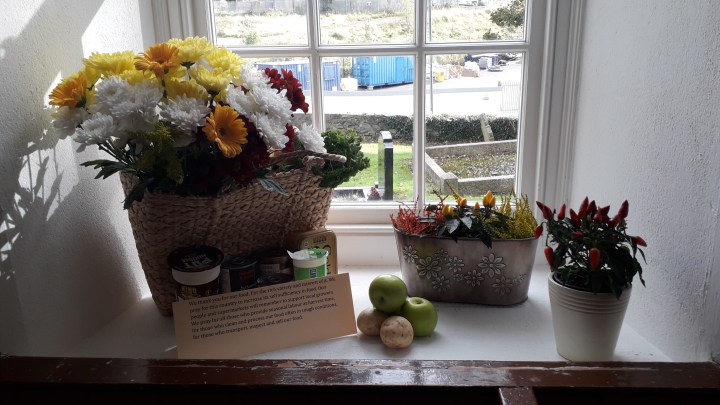
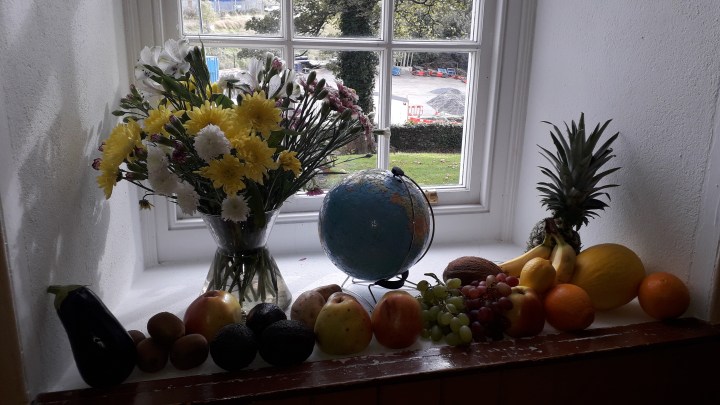
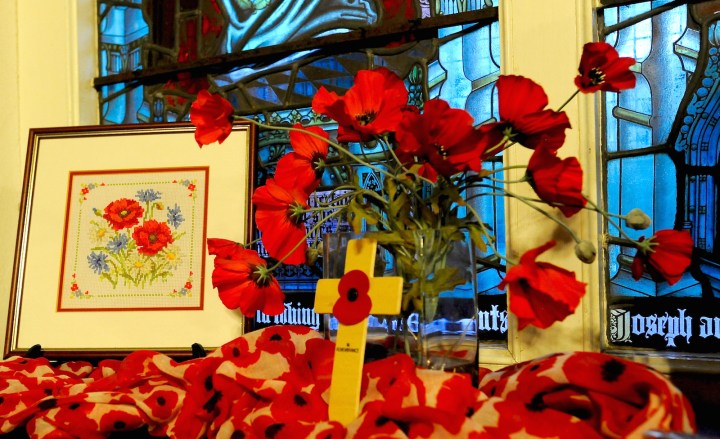
Window display Templepatrick (This photo and photo at the top of this page: Maurice Montgomery)
Visit to seven churches – in one day

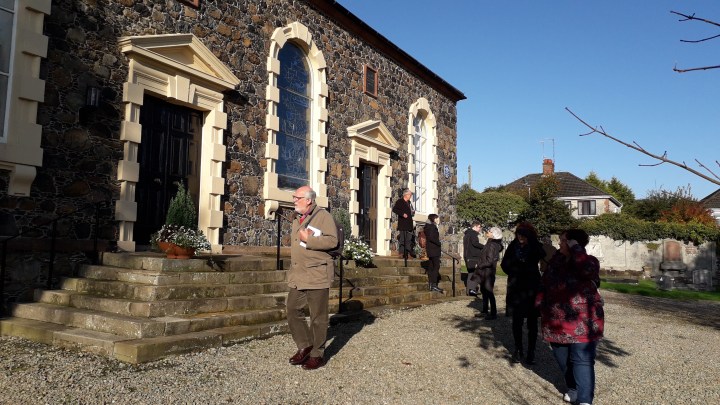
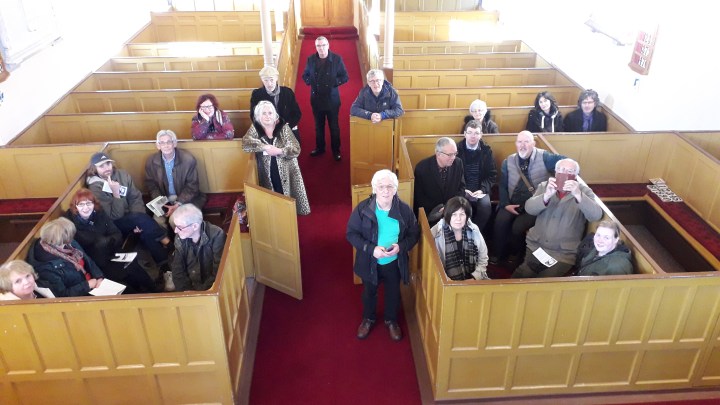
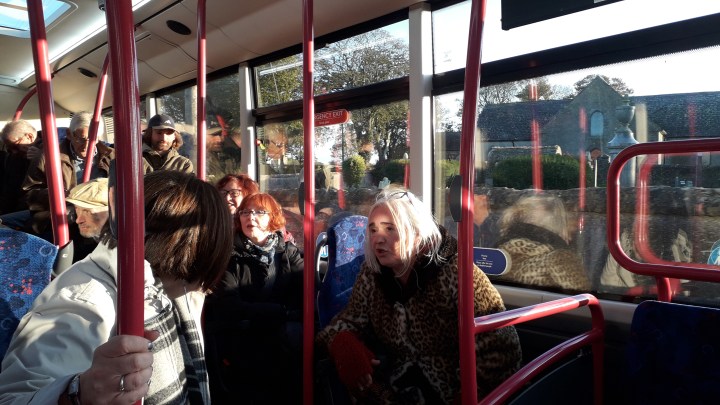
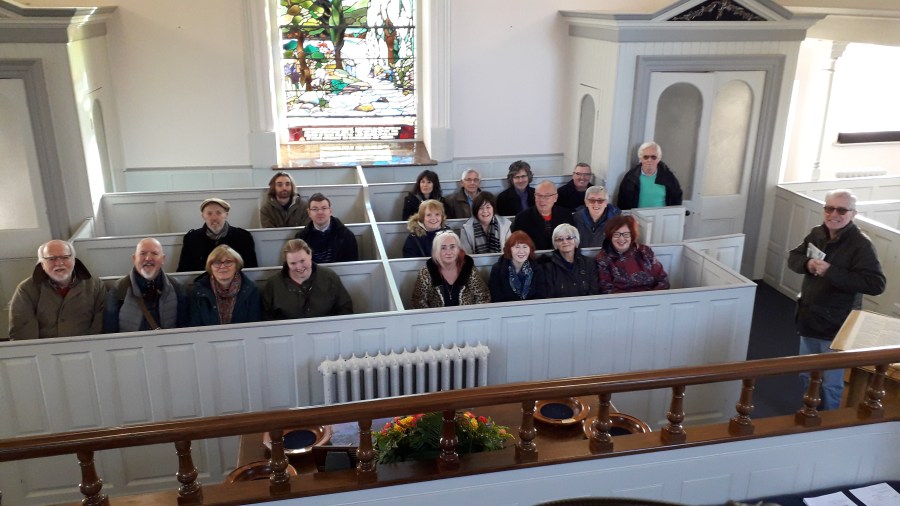
I was pleased to lead members of Reclaim the Enlightenment on a tour of no less than seven Non-Subscribing Presbyterian Churches on Saturday, 26th October. We were fortunate to enjoy a beautiful bright day and although we couldn’t see everything or hear the full story in each place we did cover a lot of ground and saw a great deal. We visited, in turn, All Souls’, Belfast; Dunmurry (where the ladies kindly provided very welcome sustenance in the form of tea and scones); Rademon; Clough; Downpatrick; Ballee and Killinchy. As we went around the congregations we were welcomed by clergy and church members and I gave a talk about each church in each place except in Rademon where Jim Ferris gave a wonderful talk about his church. Below are some images from the day. You can read about Reclaim the Enlightenment here.

RtEDunmurryExt

Dunmurry

RtEDunmurryHall

Refreshments at Dunmurry

RtERademon01

Rademon

RtEDownpatrick

Members of Reclaim the Enlightenment at Downpatrick

RtEBalleeBus

On our way back on the bus outside Ballee


Clough Harvest 2019

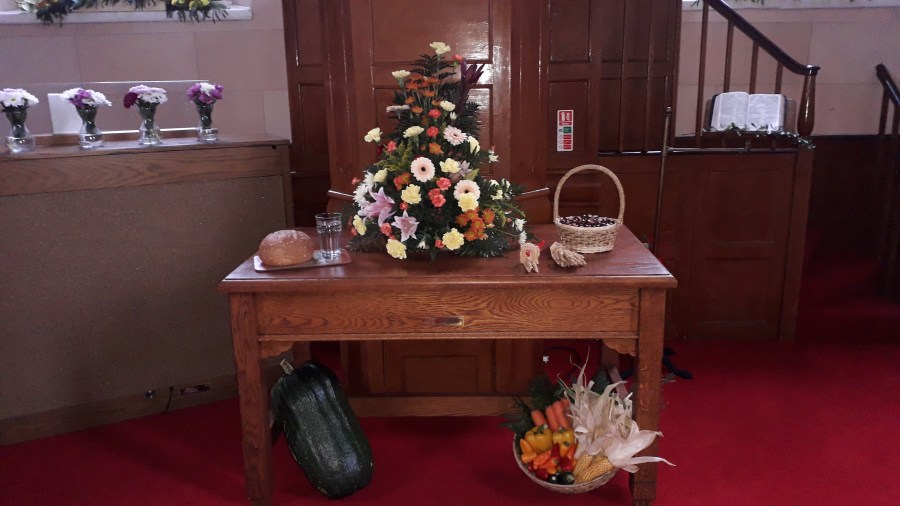
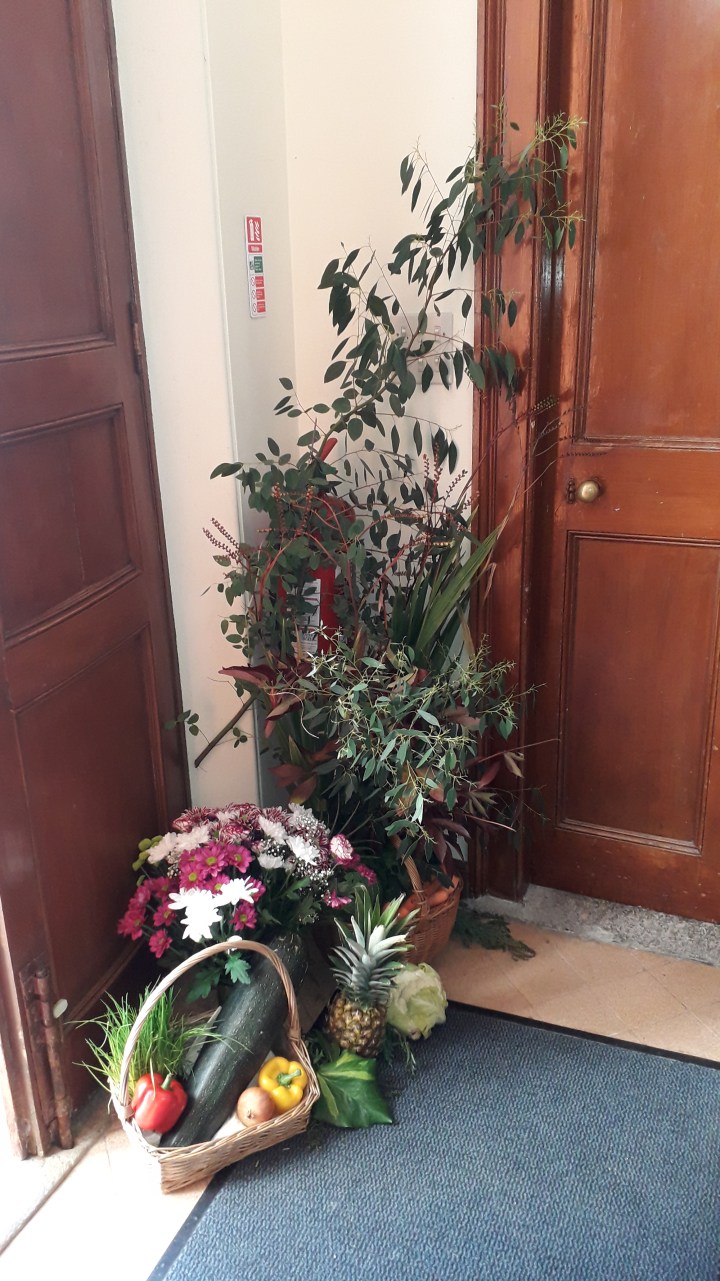
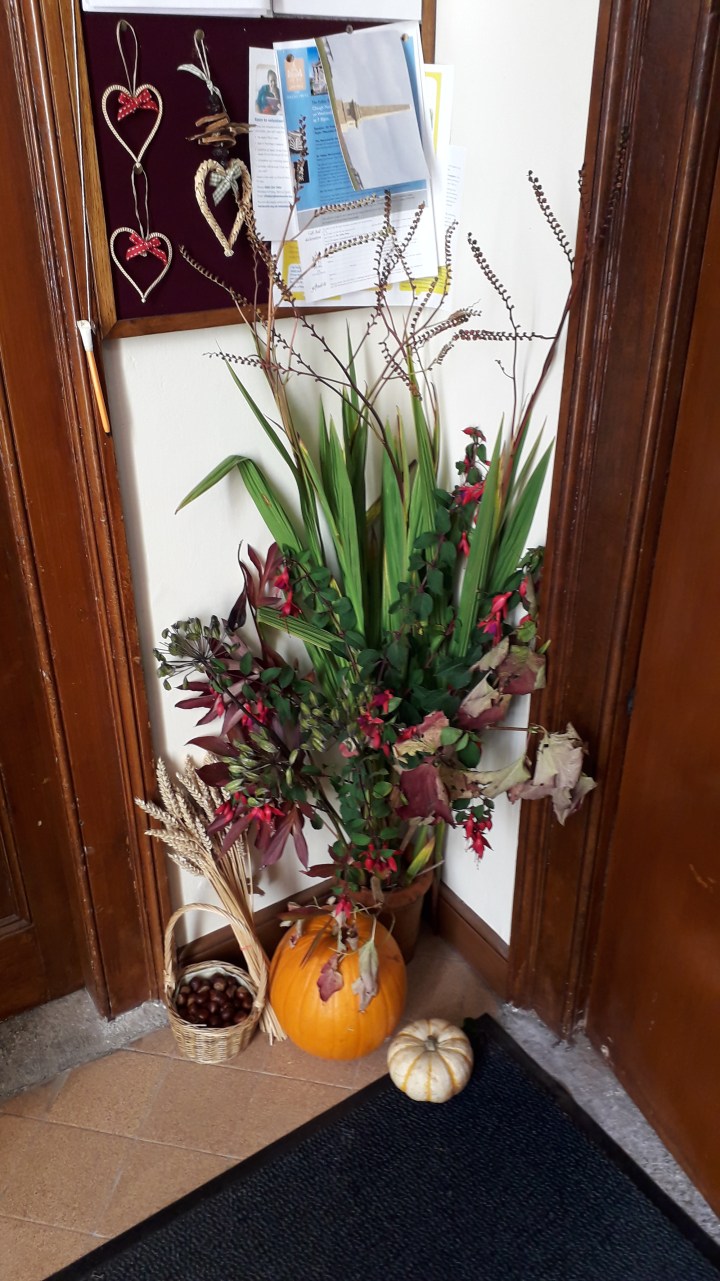
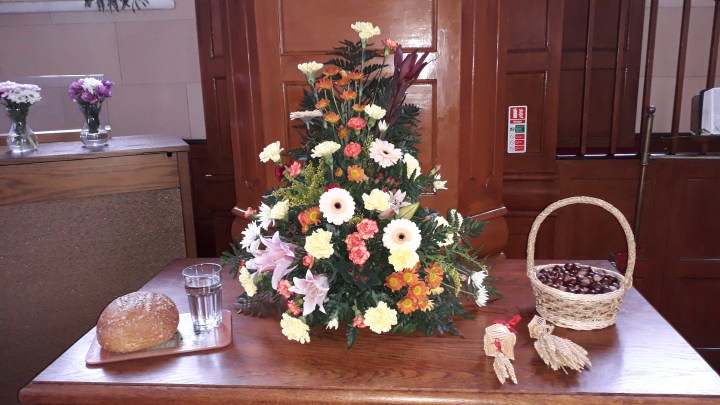
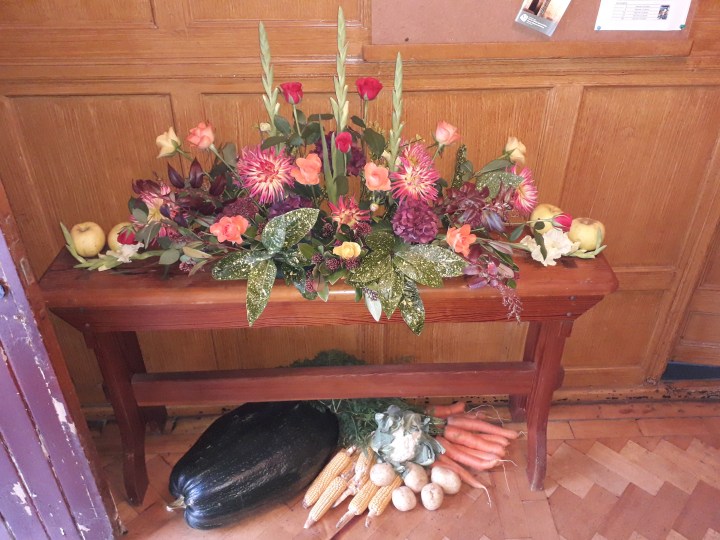
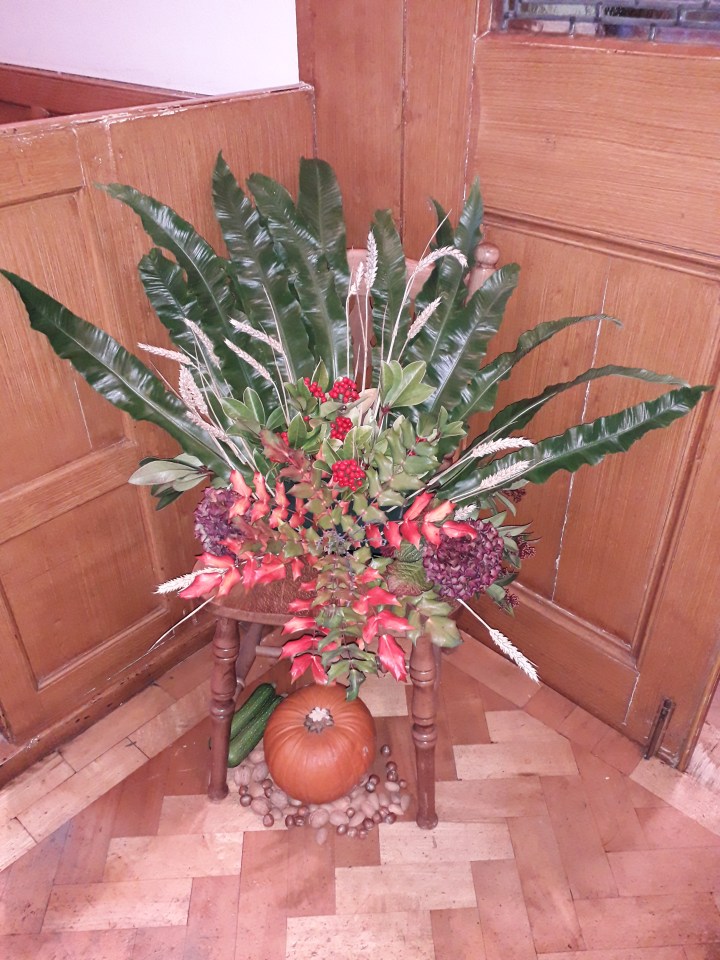
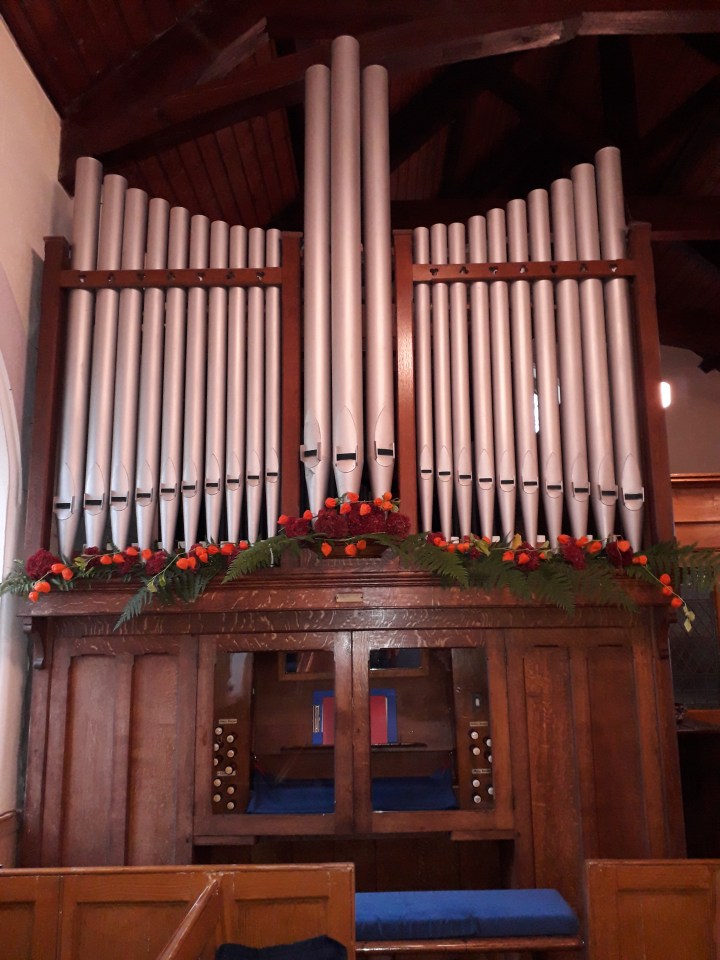
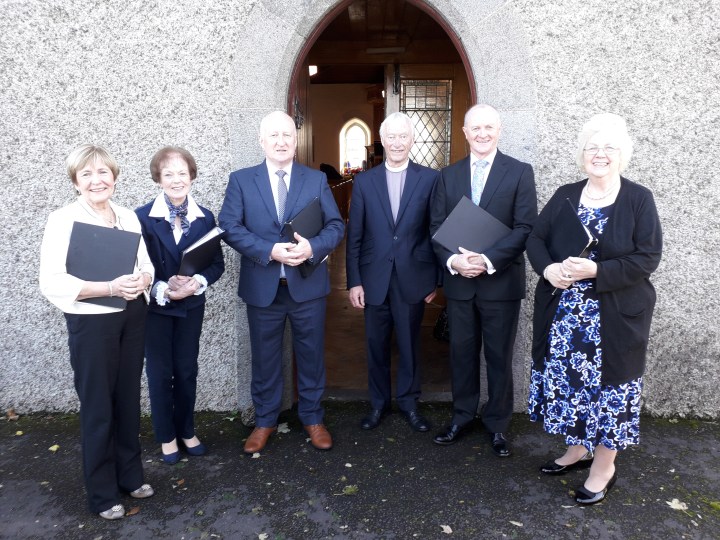
There was a good attendance at Clough Non-Subscribing Presbyterian Church for the annual service of Harvest Thanksgiving on Sunday, 20th October. The special guest preacher was the Rev Dr Will Patterson, such a good friend of the congregation, with special music being provided by the Flutes of Mourne, making their first visit to the Church. Flutes of Mourne played a beautiful selection of pieces during the service. The Church was wonderfully decorated throughout.


CloughFlutes01


Clough entrance 03 2019

Clough vestibule 01 2019

Clough vestibule 02 2019

Clough window 06 2019

Clough window 05 2019

Clough window 04 2019

Clough window 03 2019

Clough window 02b 2019

Clough organ 2019

Clough Table close 2019


Downpatrick Harvest 2019

The First Presbyterian (Non-Subscribing) Church, Stream Street, Downpatrick held their annual service of Harvest Thanksgiving on Sunday, 6th October. The special guest preacher was Sam Shaw, a missioner with an ecumenical order who delivered an inspiring address based on the story of the Good Samaritan.
Harvest service 2019 Mary Stewart 01

Photo: Mary Stewart

Special music was provided by the choral group Counterpoint, with their conductor Dr Norman Richardson who has also had a long career working in peace and reconciliation in Northern Ireland.

Harvest service Dpk 2019 Choir

Photo: Marion Moffett

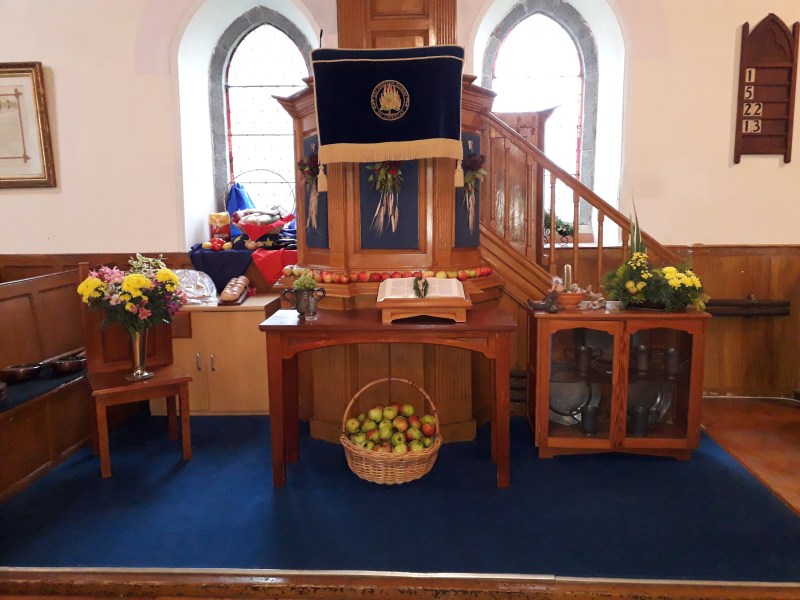
Counterpoint are now in their 70th year and a sang a wonderful, varied and impressive programme. During the service we dedicated the church’s new loop system for the hard of hearing which had been made possible by a generous gift from the Baptist Church in Downpatrick which was given on its closure recently. Sam Shaw was an elder in that church and during the service we expressed our thanks for that generous act by the Baptists in Downpatrick. We were delighted to welcome Sam and his wife Silvana with their children Seán and Aislinn. The church organist was Laura Patterson. The church was beautifully decorated throughout with varied themes on the window ledges expressing different aspects of harvest and the challenges that we face in stewarding and protecting the world’s resources, accompanied also with appropriate prayers for creation.

Harvest service Dpk 2019 Entrance 01

Harvest service Dpk 2019 Entrance 02

Harvest service Dpk 2019 Pulpit

Harvest service Dpk 2019 Window 03

Harvest service Dpk 2019 Window 01

Harvest service Dpk 2019 Window 02

Harvest service Dpk 2019 Window 04

Harvest service Dpk 2019 Window 05

Harvest service Dpk 2019 Window 06


Ballyclare Male Choir Concert at Dunmurry

Dunmurry window crop

Dunmurry Tiffany window viewed from the outside on the way into church

On Friday, 30th November First Dunmurry NS Presbyterian Church hosted a wonderful concert by Ballyclare Male Choir. The choir provided a varied and exciting programme under the direction of Paul Briggs (who wore a different waistcoat for each segment of the show!) with accompaniment by Sheelagh Greer on the church’s new piano.

Dunmurry choir 02

Dunmurry choir 03

Dunmurry window ledge

Ballyclare Male Choir

Dedication of the Roll of Honour

Dedication Downpatrick 18th November 2018 table 03

Decoration around communion table

Dedication Downpatrick Order of Service

Order of Service

On Sunday, 18th November the First Presbyterian (Non-Subscribing) Church, Downpatrick hosted the service for the Non-Subscribing Presbyterian Church of Ireland to commemorate the centenary of the end of the First World War and the dedication of the new Roll of Honour of all the men and women who served in the war.

Dedication Downpatrick 18th November 2018 table 01

The service included Biblical readings as well as poetry from the First World War and extracts from the diaries and writings of Nurse Emma Duffin and Captain J.S. Davidson, who was killed on the first day of the battle of the Somme. Laura Patterson was the organist, Jack Steers played the Last Post while Laura Neill played a lament on the pipes after the dedication of the Roll and at the start of the service.

Dedication Downpatrick 18th November 2018

Some of those taking part in the service (Photo: Mary Stewart)

Those who took part in the service included (left to right) Rev Paul Reid (Larne) who led the congregation in prayer, Jeffrey Martin who read the extracts concerning Captain Davidson, Rev Brian Moodie (Dromore) who read from the diary of Emma Duffin, Rt Rev Colin Campbell (Moderator, Holywood and Ballyclare) who dedicated the Roll, Rev Dr David Steers (Downpatrick, Ballee and Clough) who conducted the service, Rev Rosalind Taggart (Templepatrick) who read John ch.15 v.1-17, Rev Norman Hutton (Newry, Banbridge and Warrenpoint) who preached, Laura Neill who played the bagpipes and Sue Steers who read In Flanders Fields. The Rev Bridget Spain (Dublin – not shown in picture) read Micah ch.4 v.1-5.

Dedication Downpatrick 18th November 2018 poster

Poster, including picture of Downpatrick Church member Rifleman John Hayes, supplied by Richard Edgar

This slideshow requires JavaScript.

Some images from before and after the service (Photos: Jeffrey Martin and Mary Stewart)


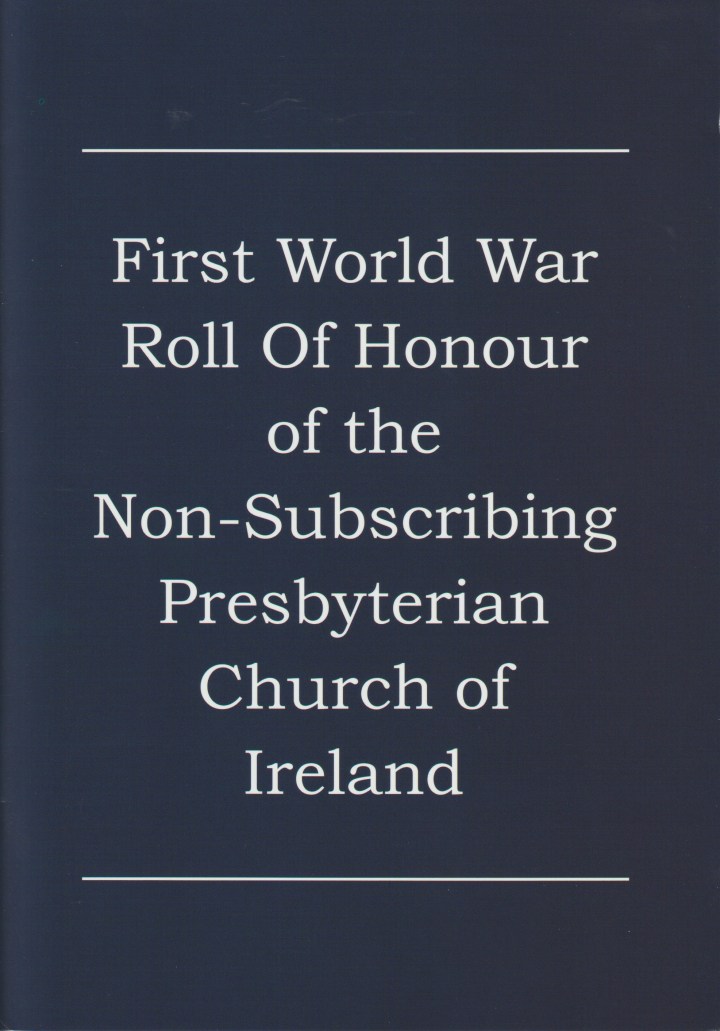
Roll of Honour of the Non-Subscribing Presbyterian Church of Ireland

The Roll of Honour for the First World War of the Non-Subscribing Presbyterian Church of Ireland is now ready and will be dedicated at the service at Downpatrick on Sunday, 18th November at 3.00 pm.

Everyone is welcome at the service which will also commemorate the centenary of the end of the First World War.

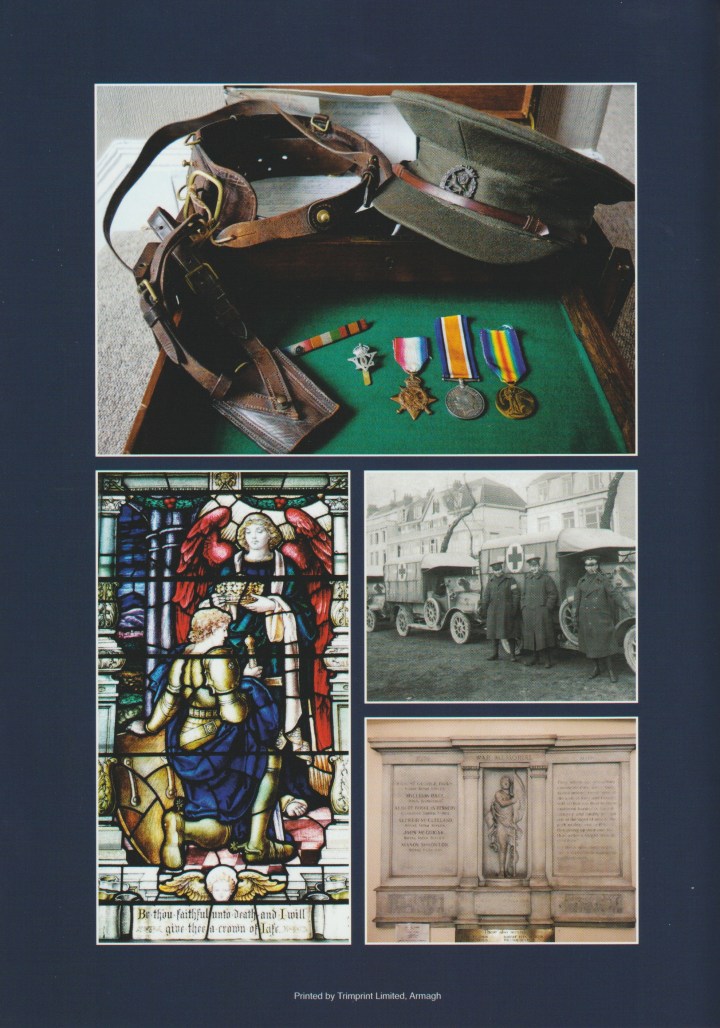
The Roll contains an introduction and two sections. The first is a list, by congregation, of all the men and women, with their service details where known, who are known to have served in the First World War. The second part is an alphabetical list of all those who gave their lives in the Great War. The book runs to 50 pages and everyone who attends the service at Downpatrick will receive a complimentary copy. Thereafter the book will be available for purchase at a cost of £5 (postage not included). All profits from sales of the book will go to the Poppy Appeal and Help for Heroes.

Front Cover 02

Front Cover

Back Cover 02

Back Cover

Service to Commemorate the Centenary

of the end of the First World War and

Dedication of the Roll of Honour

in memory of all the men and women of the

Non-Subscribing Presbyterian Church of Ireland

who served or gave their lives in the Great War

Sunday, 18th November 3.00 pm

at the

First Presbyterian (Non-Subscribing) Church, Stream Street, Downpatrick


Remembrance Sunday 2018

On this Remembrance Day, the 100th anniversary of the end of the First World War, I conducted Remembrance services at Clough and Downpatrick and was pleased to take part in the district Remembrance Service at the War Memorial in Downpatrick.

Faith and Freedom/Hibbert Trust Podcasts

I was also sent just today this information and links by Rev Kate Dean:

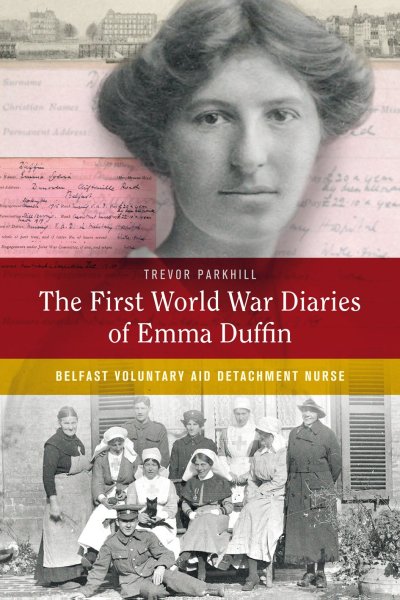
Discover the story of Emma Duffin, a Unitarian from Belfast who served as a voluntary nurse during the First World War. Thanks to her detailed Diaries we have a fascinating insight into her experiences. ‘Their Sister in Both Senses’ is written by Trevor Parkhill and the recording has been made with the support of The Hibbert Trust. The article originally appeared in the Unitarian publication Faith and Freedom. You can listen to the podcast on the Hibbert Trust SoundCloud channel, which also includes a recording about Unitarians in WWI, written and read by Alan Ruston.


Emma Duffin ‘Their Sister in Both Senses’: https://soundcloud.com/user-415732446/emma-duffin-their-sister-in-both-senses


Or there is a video version of the recording on UKUnitarianTV’s YouTube channel: https://youtu.be/kB01CbbkRzE


A big thank you to Kate for doing this.
The text of the original article (and Alan Ruston’s articles about Unitarians and the First World War) can be read on the Faith and Freedom Great War Project website here:
http://www.faithandfreedom.org.uk/GWarticles.htm
‘Their Sister in Both Senses’ can be read here:
http://www.faithandfreedom.org.uk/pdfs/Their%20sister%20in%20both%20senses%20GWP.pdf
The Diaries of Emma Duffin are a moving and eloquent account of her experiences in the war.
……………………………………………………………………………………………………………………………………………………..
With the centenary of the end of the First World War in mind one of the things I read this morning in church was the poem ‘Aftermath’ by Siegfried Sassoon, written in 1919:
……………………………………………………………………………………………………………………………………………………..

Have you forgotten yet?…
For the world’s events have rumbled on since those gagged days,
Like traffic checked while at the crossing of city-ways:
And the haunted gap in your mind has filled with thoughts that flow
Like clouds in the lit heaven of life; and you’re a man reprieved to go,
Taking your peaceful share of Time, with joy to spare.

But the past is just the same – and War’s a bloody game…
Have you forgotten yet?…
Look down, and swear by the slain of the War that you’ll never forget.

Do you remember the dark months you held the sector at Mametz –
The nights you watched and wired and dug and piled sandbags on parapets?
Do you remember the rats; and the stench
Of corpses rotting in front of the front-line trench –
And dawn coming, dirty-white, and chill with a hopeless rain?
Do you ever stop and ask, ‘Is it all going to happen again?’

Do you remember that hour of din before the attack –
And the anger, the blind compassion that seized and shook you then
As you peered at the doomed and haggard faces of your men?
Do you remember the stretcher-cases lurching back
With dying eyes and lolling heads -those ashen-grey
Masks of the lads who once were keen and kind and gay?

Have you forgotten yet?…
Look up, and swear by the green of the spring that you’ll never forget.

Irish Non-Subscribers serving in the Canadian Expeditionary Force

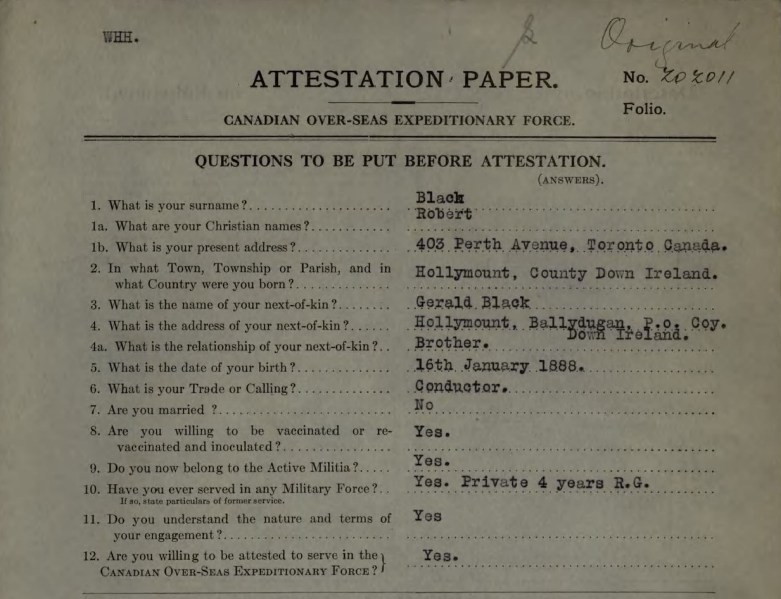
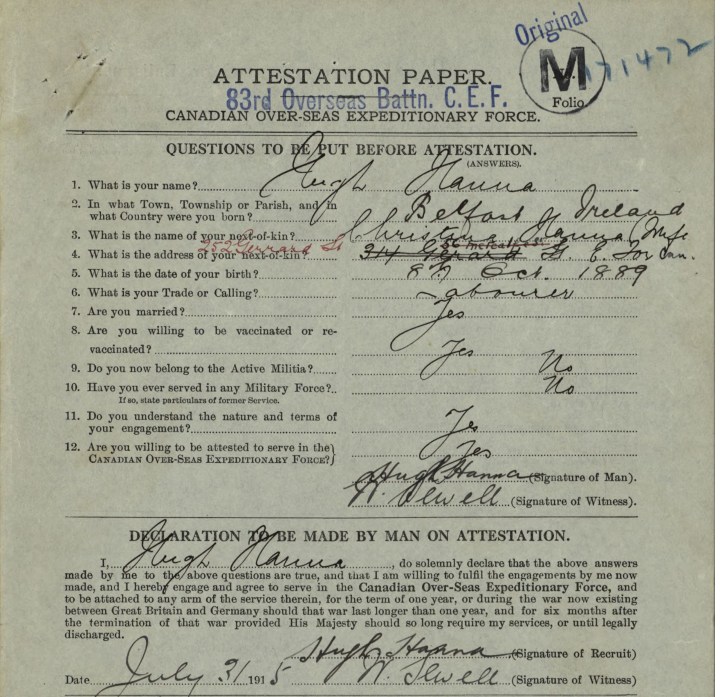
Another curious detail of the First World War Roll of Honour of the Non-Subscribing Presbyterian Church of Ireland is the high proportion of servicemen who served in the Canadian Expeditionary Force. Out of the 588 names on the Roll a fair number served in overseas regiments including Australia (6), New Zealand (2), and South Africa (1). In addition there were four soldiers who served in the Indian Army and three joined up in the US Army. But by far the largest category for overseas service was the Canadian armed forces which totalled 27 personnel. Of these men 11 were killed during the war.

The congregations of All Souls’, the Domestic Mission, Mountpottinger, Belfast First Church, Clough, Downpatrick, Dromore, Glenarm, Holywood, Killinchy, Larne, Newry, Rademon and Templepatrick all number Canadian servicemen amongst those who joined up. Young men who had left their homes to begin a new life in a new country answered the call to return to Europe to fight in the war. As a Dominion Canada declared war on Germany in conjunction with Great Britain and a high proportion of the early volunteers in the Canadian army were men who had emigrated originally from Britain or Ireland.

One feature of the Canadian – and also Australian and New Zealand servicemen – is the online availability of their full military records. It is quite simple to call up their records and follow their careers from enlistment onwards in some detail. It is painfully sad to read of young men killed in France or Flanders and the Canadian authorities making arrangements to send a widows’ pension to their wife perhaps in Winnipeg or perhaps in county Down. It is frequently sad to read the records of those who survived the war. Few came through the years of conflict without a wound or some experience of disease or illness. Many must have suffered for the rest of their lives.

Hugh Hanna cropped

Extract from the attestation papers of Belfast born Hugh Hanna, a member of Mountpottinger congregation who was killed serving with the 3rd Battalion Canadian Infantry. (At the top of the page can be seen part of the enlistment papers of Robert Black, a member of Downpatrick, originally from Hollymount, Ballydugan who served with the 20th Battalion Canadian Infantry but who survived the war and was discharged in January 1919).

Both images are taken from:

Library and Archives Canada

Personnel Records of the First World War

https://www.bac-lac.gc.ca/eng/discover/military-heritage/first-world-war/personnel-records/Pages/personnel-records.aspx


Ballee Harvest 2018

Ballee Harvest 04

Ballee Non-Subscribing Presbyterian Church held their annual service of Harvest Thanksgiving on Sunday, 14th October at 3.00 pm. The church was beautifully decorated by church members with the theme ‘World Harvest’, with special displays depicting harvest from the five continents. The special preacher was the Rev Dr Will Patterson, who led the worship, with special music contributed by local singing group Harmony. It was a wonderful occasion and following the service all the non-perishable produce was distributed to the Downpatrick Foodbank.

Ballee Harvest 05

Ballee Harvest 03

Ballee Harvest Organ

This slideshow requires JavaScript.

Window display showing the Harvest of the World by continent

Ballee Harvest

Members of Harmony with the visiting preacher, Rev Dr Will Patterson, outside the church after the service