Every Christmas Carol has its own backstory but there is none more intricate and unusual than O Come, all ye faithful, which is also one of the most universally popular of all Carols.
Adeste Fidelis
Click on the video above to see the Reflections on ‘O Come, all ye faithful‘
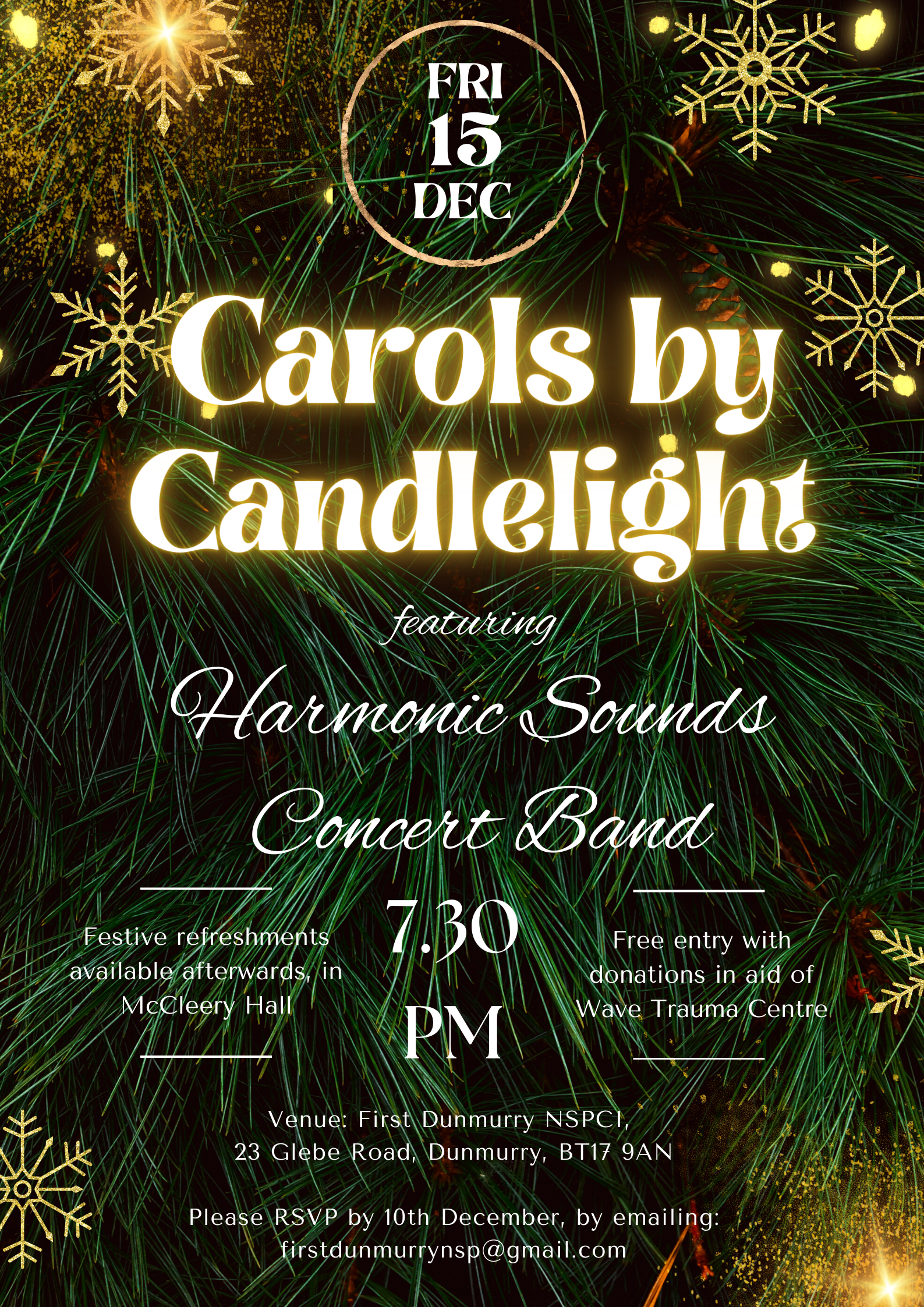
Carols by Candlelight
At Dunmurry we are really looking forward to our Carols by Candlelight service on Friday, 15th December at 7.30 pm when we will welcome Harmonic Sounds Concert Band with their Director of Music, Paul Hamilton. We will tell the story of Christmas through traditional carols and the traditional Christmas readings given by church members and friends from other churches. Everyone is welcome.
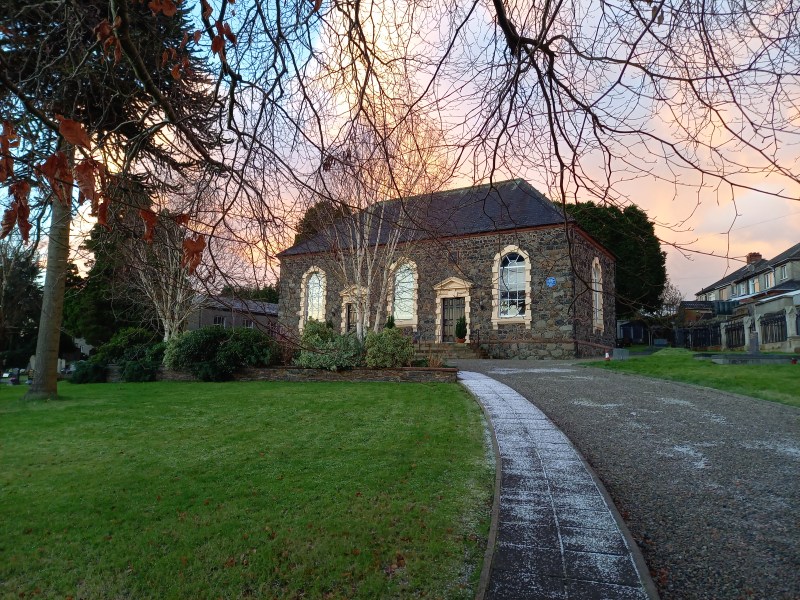
The grounds of the First Presbyterian (NS) Church, Dunmurry look particularly impressive at this time of year as the various plants come into bloom. At the moment the azaleas look especially attractive, most notably the well established orange one flowering at the front of the church.
It struck me as something worth catching on video with perhaps an appropriate reading or two. So as well as some lines from Wordsworth I read part of the ‘Litany of Faith’ found in Orders of Worship.
Orders of Worship was published back in 1932 and is possibly mostly forgotten these days. But it has many virtues whether updated into contemporary language or read in the traditional form in which it was written, which still give it value today. ‘A Litany of Faith’ is part of the Fifth Service and can be found on pages 56-57.
Click on the video above
The music is provided by Allen Yarr, our church organist.
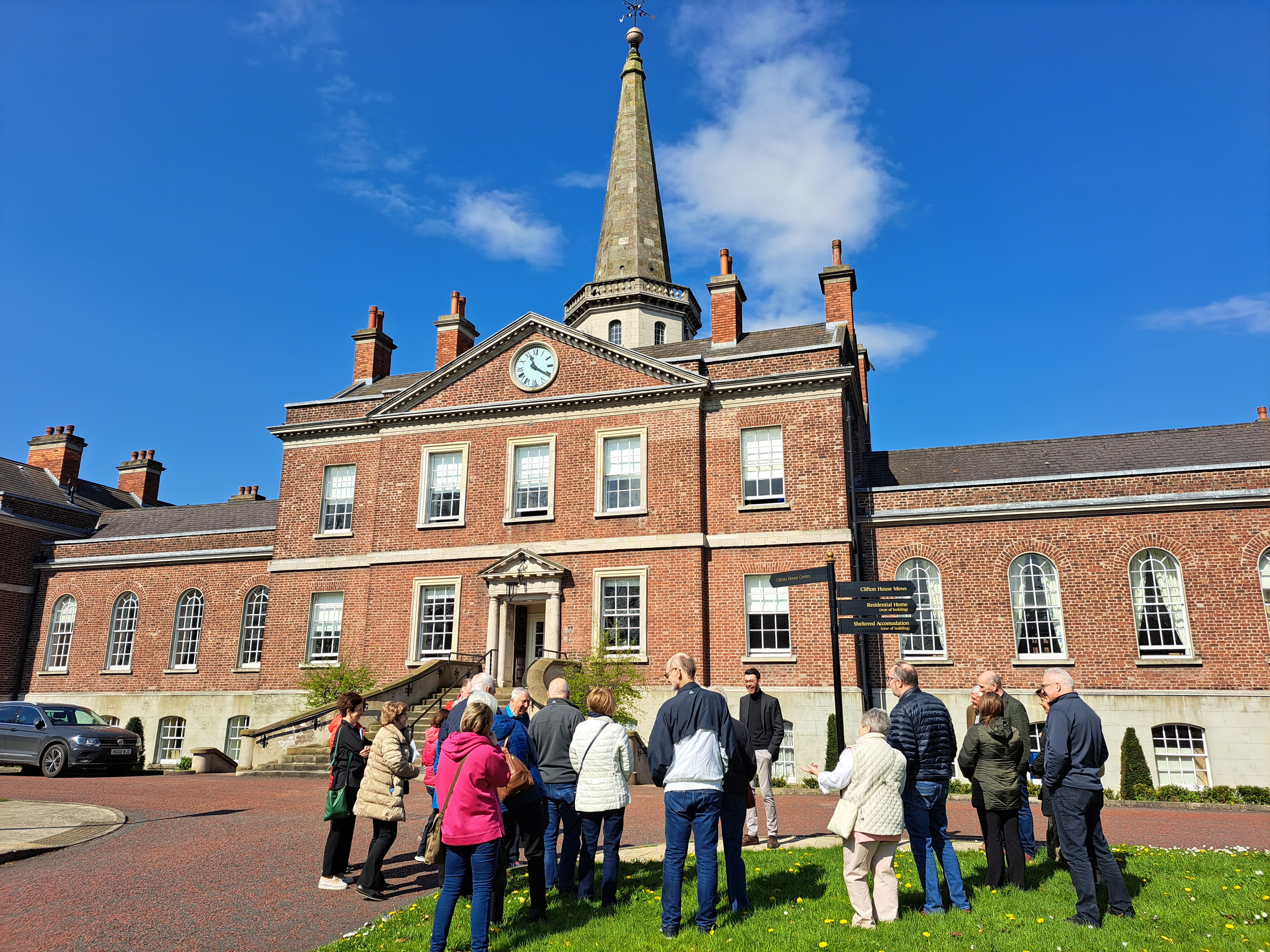
Assembling outside Clifton House at the start of the tour
On Friday, 21st April we had a wonderful congregational visit to Clifton House. Reputedly one of the oldest buildings in Belfast, having been built in 1774, it is actually only five years older than our own church in Dunmurry. But it is a very impressive building featuring its unusual spire which must have towered over Belfast when it was first built and certainly angered the Earl of Donegall who gave the land not expecting a building that would dominate the skyline and overshadow St Anne’s parish church.
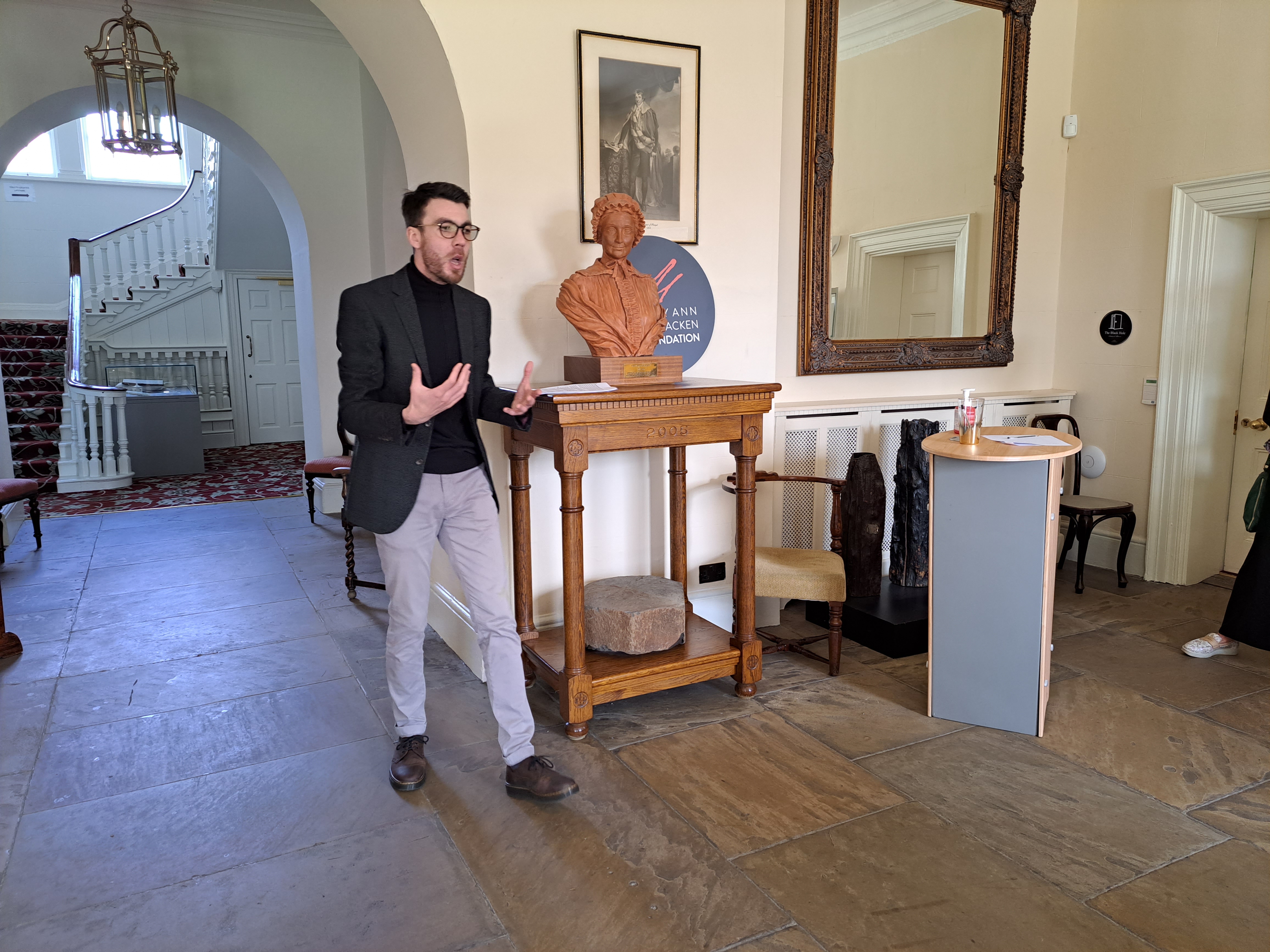
Jason Burke, one of our guides, in front of a bust of Mary Ann McCracken
Right from the start it was a much more enlightened institution than its usual name of ‘Poor House’ would indicate. Even the ‘punishment room’ was equipped with a bed, something ordinary inmates of institutions such as the workhouse might not expect in the nineteenth century. Curiously the mostly Presbyterian founders had no hesitation in employing a lottery to set up Clifton House but through that scheme were able to build a Poor House and an infirmary.
I hadn’t realised either that the Belfast Charitable Society (to give it its full name) was set up by Act of Parliament and also had responsibility for the provision of water in Belfast as well as street lighting.
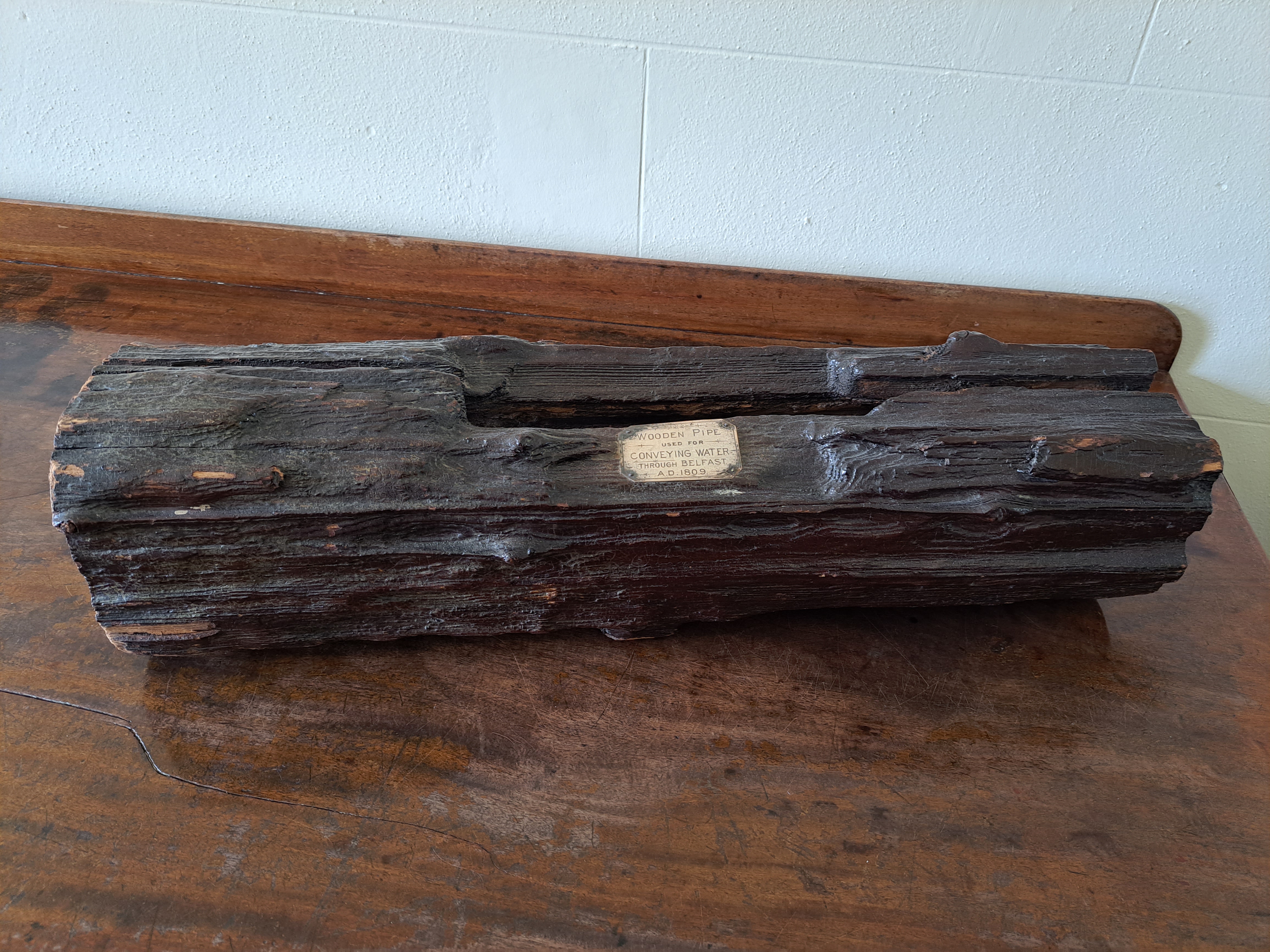
Water pipe made from elm dating from 1809
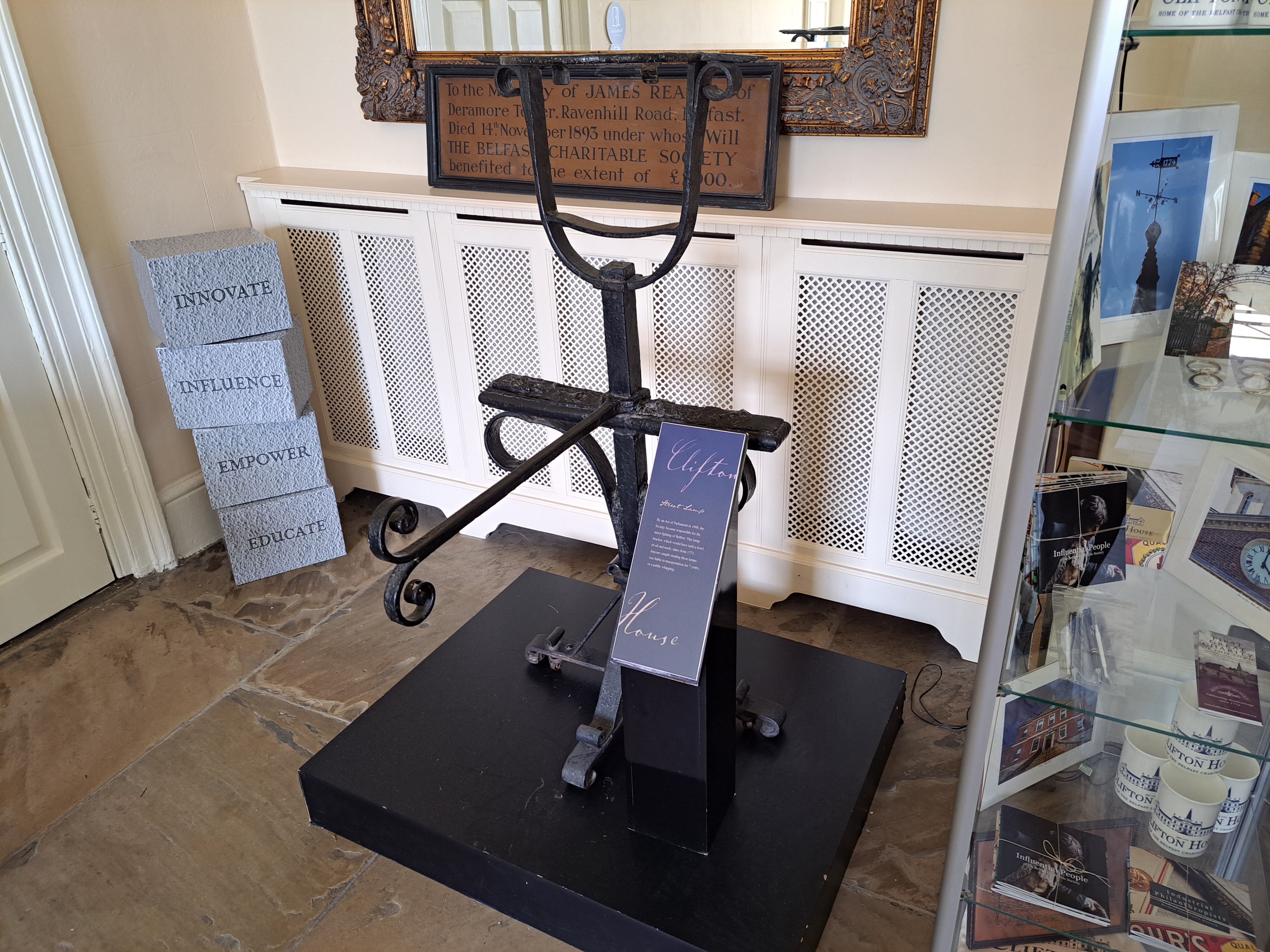
Early lamp bracket in use in Belfast in the 1770s
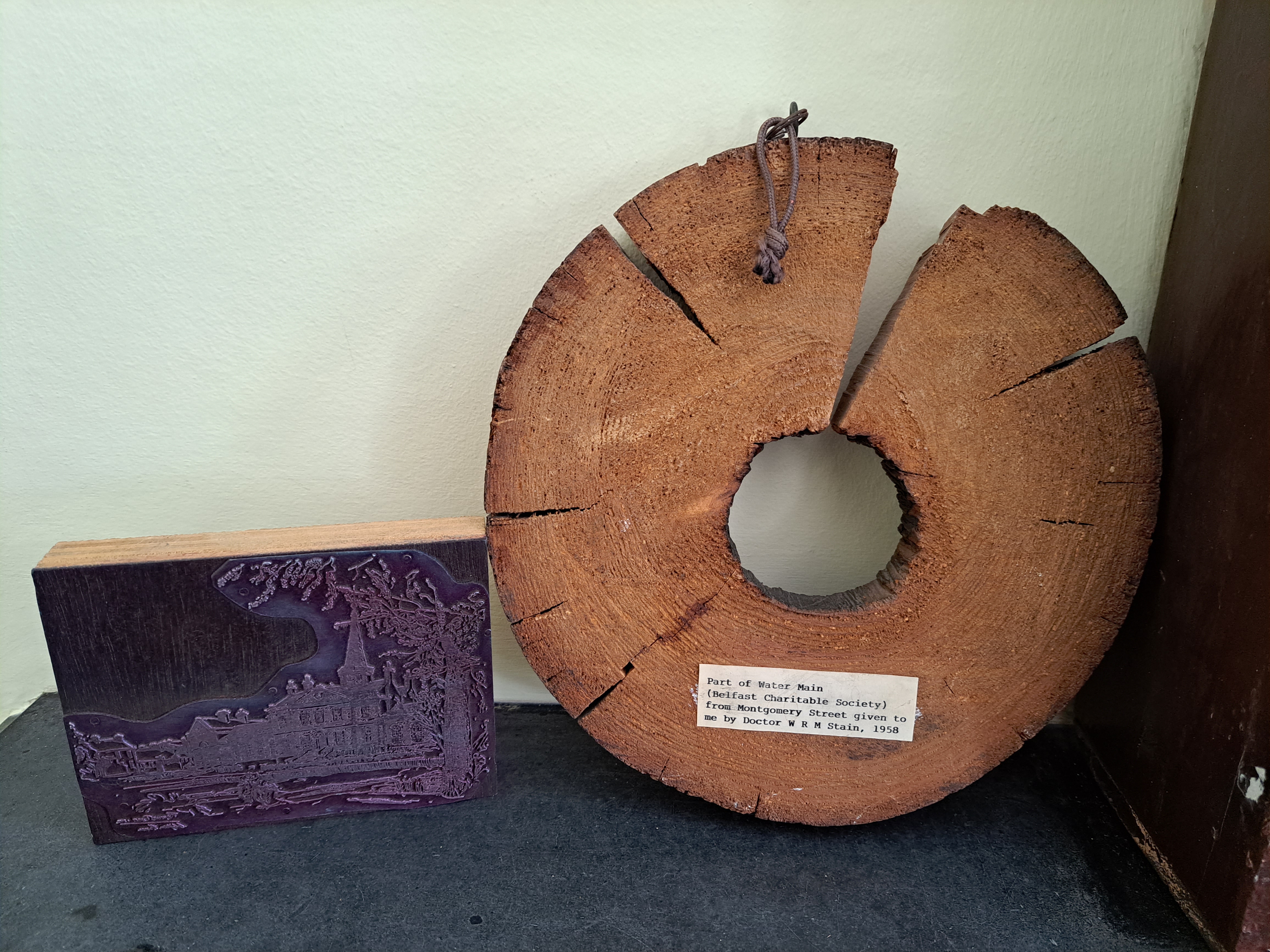
Examples of the English Elm which were used as water pipes were on show and such was the importance of this function the Water Commissioners had to make an annual payment of £800 in perpetuity to the Belfast Charitable Society. This still continues to this day with NI Water having taken the place of the Water Commissioners and still being obliged to pay £800 per annum to the Charitable Society.
Cross-section of water pipe
The Society played its part in the development of cotton spinning and weaving in Belfast when machinery was established in the basement of the building for children to work on.
It is an impressive and dignified building, beautifully restored in recent decades and still fulfilling its original function of caring for those in need.
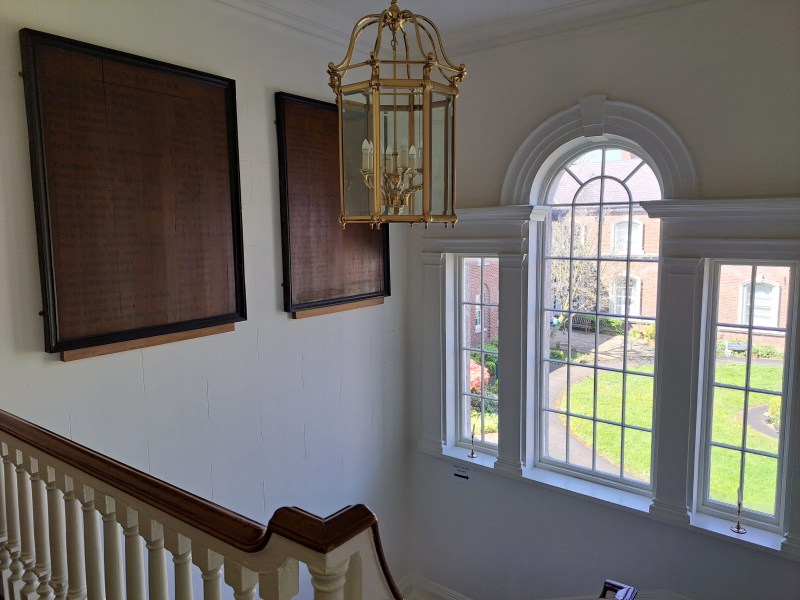
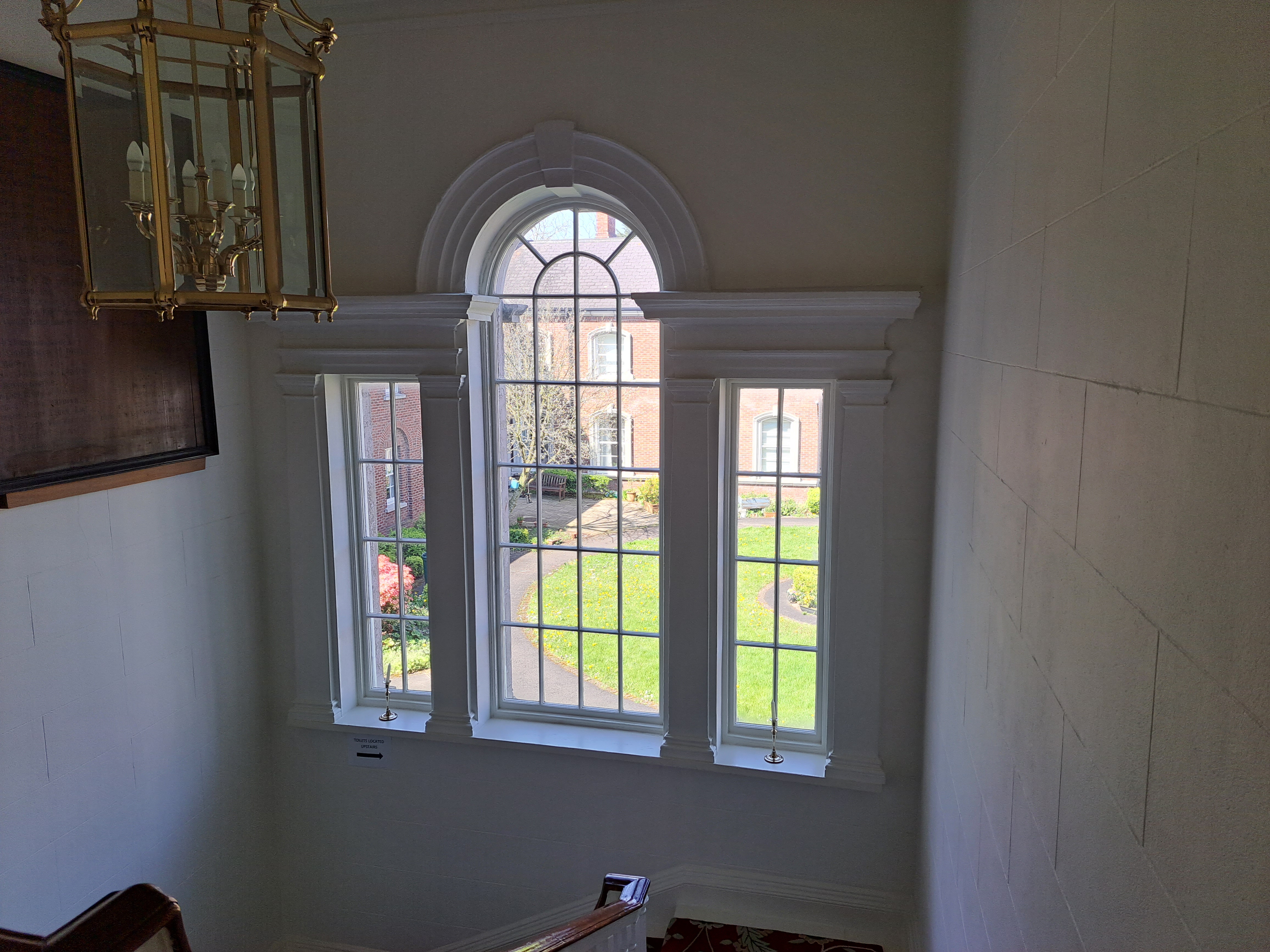
View from the staircase
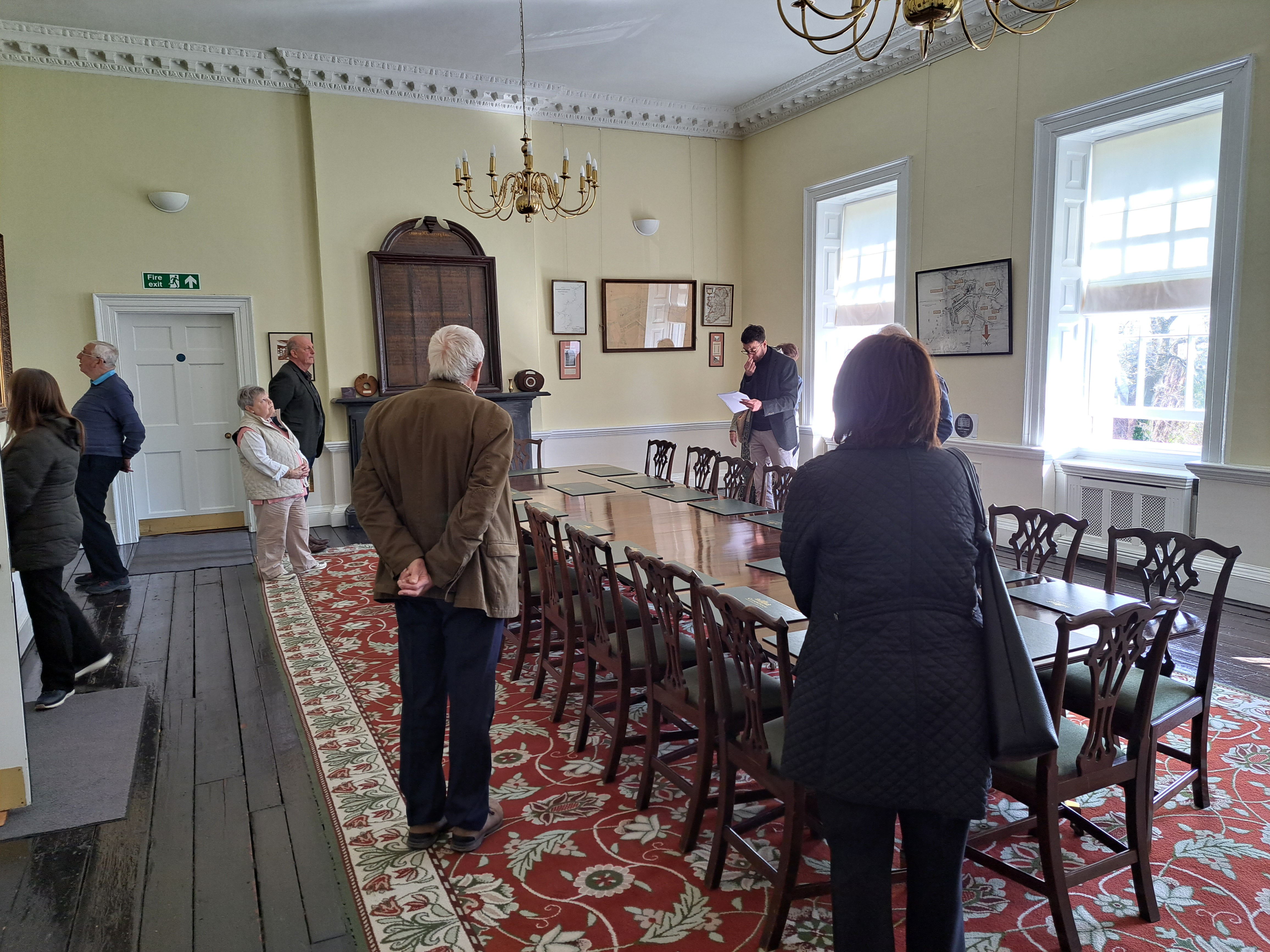
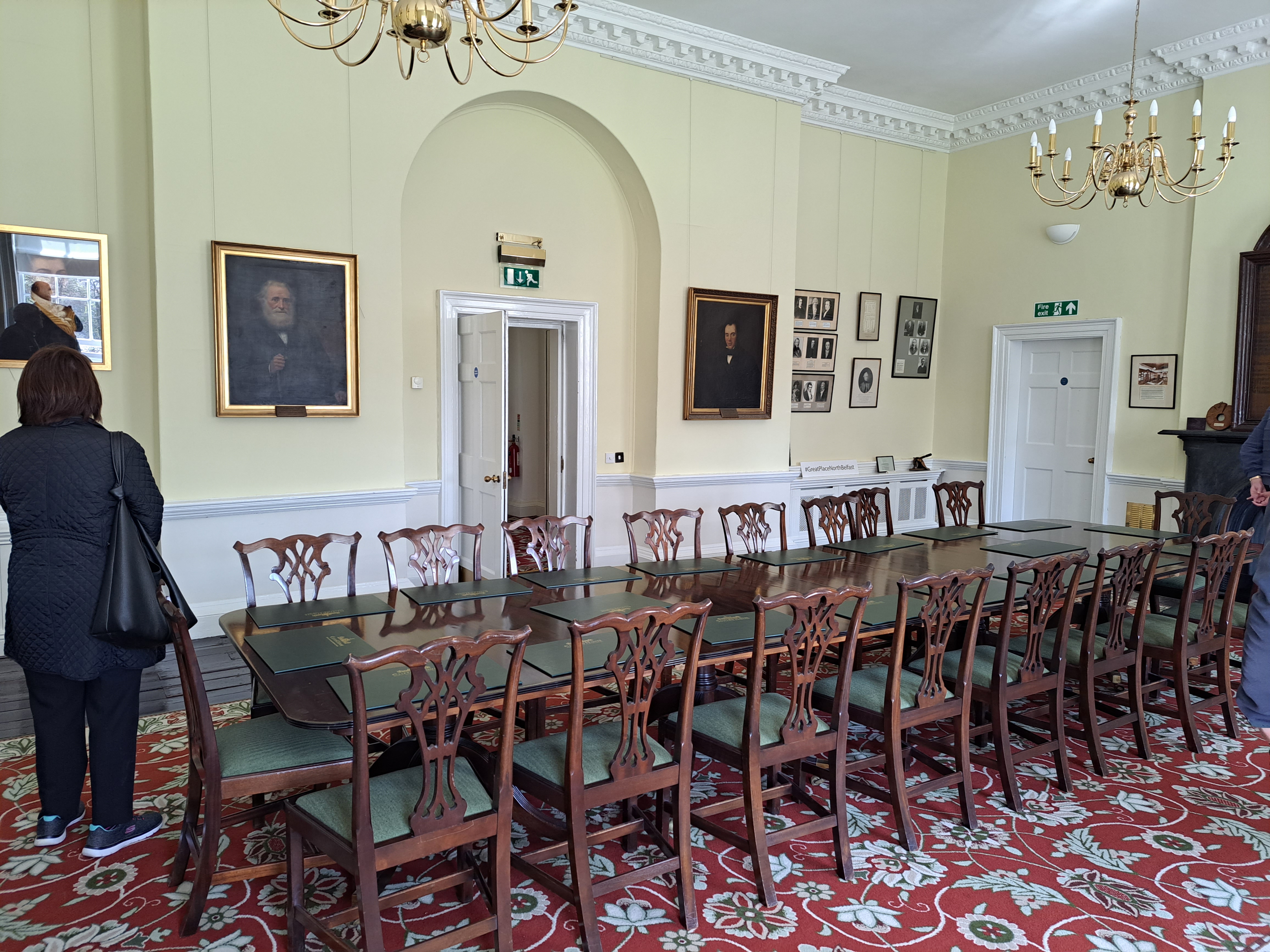
At the heart of the building is the boardroom, a room which also has a key place in so many aspects of the history of Belfast:
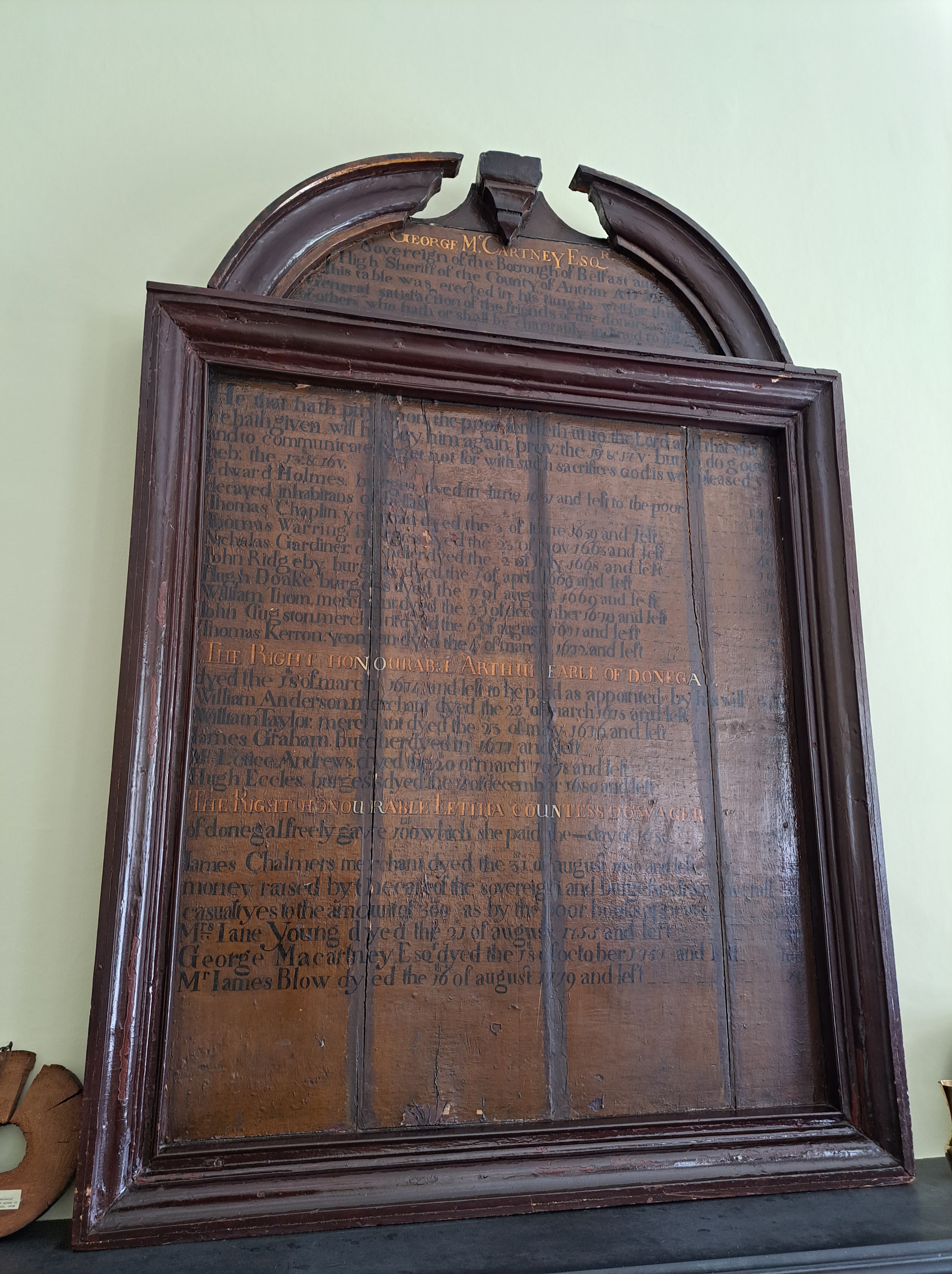
Charity board in the Boardroom
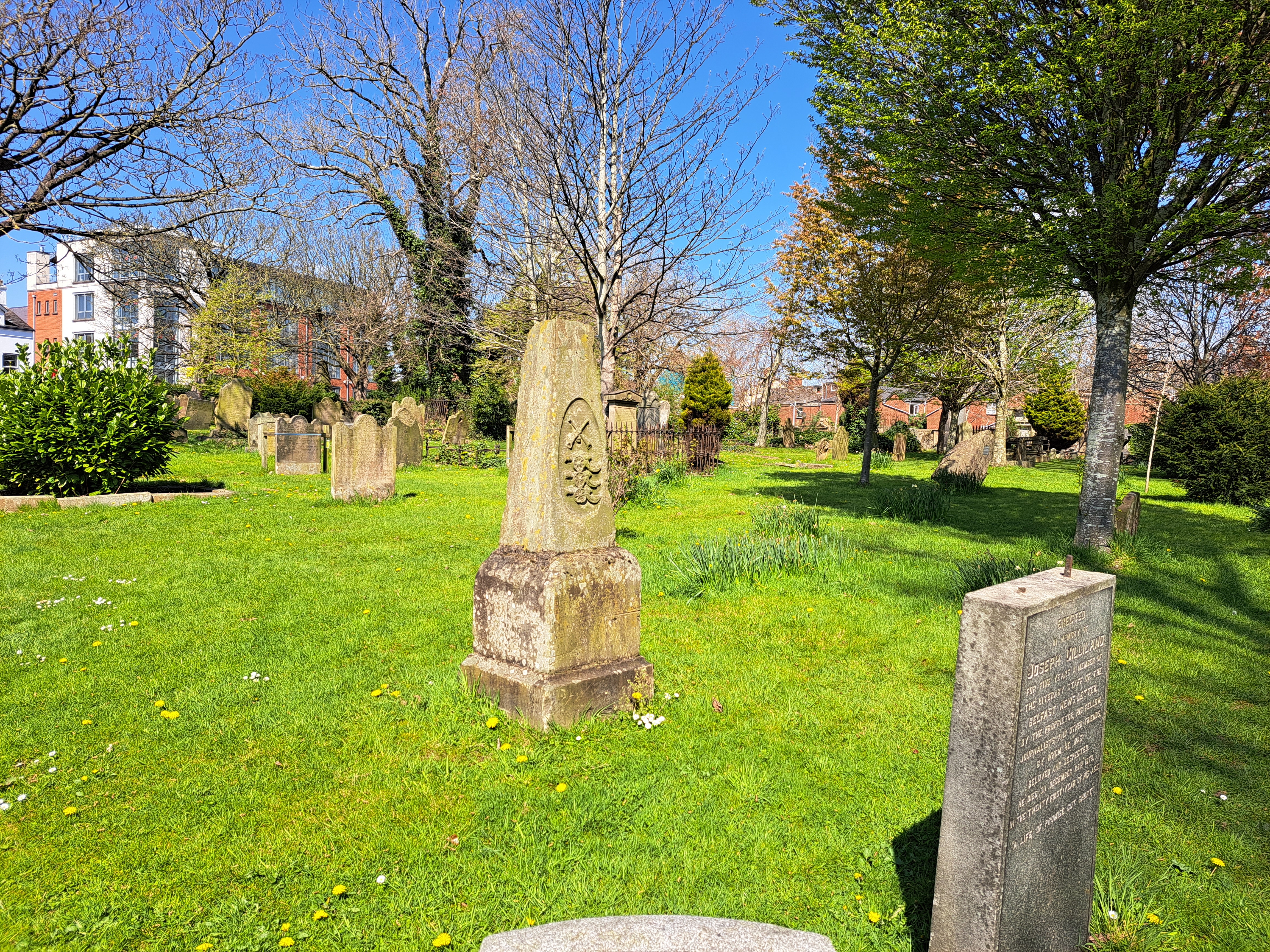
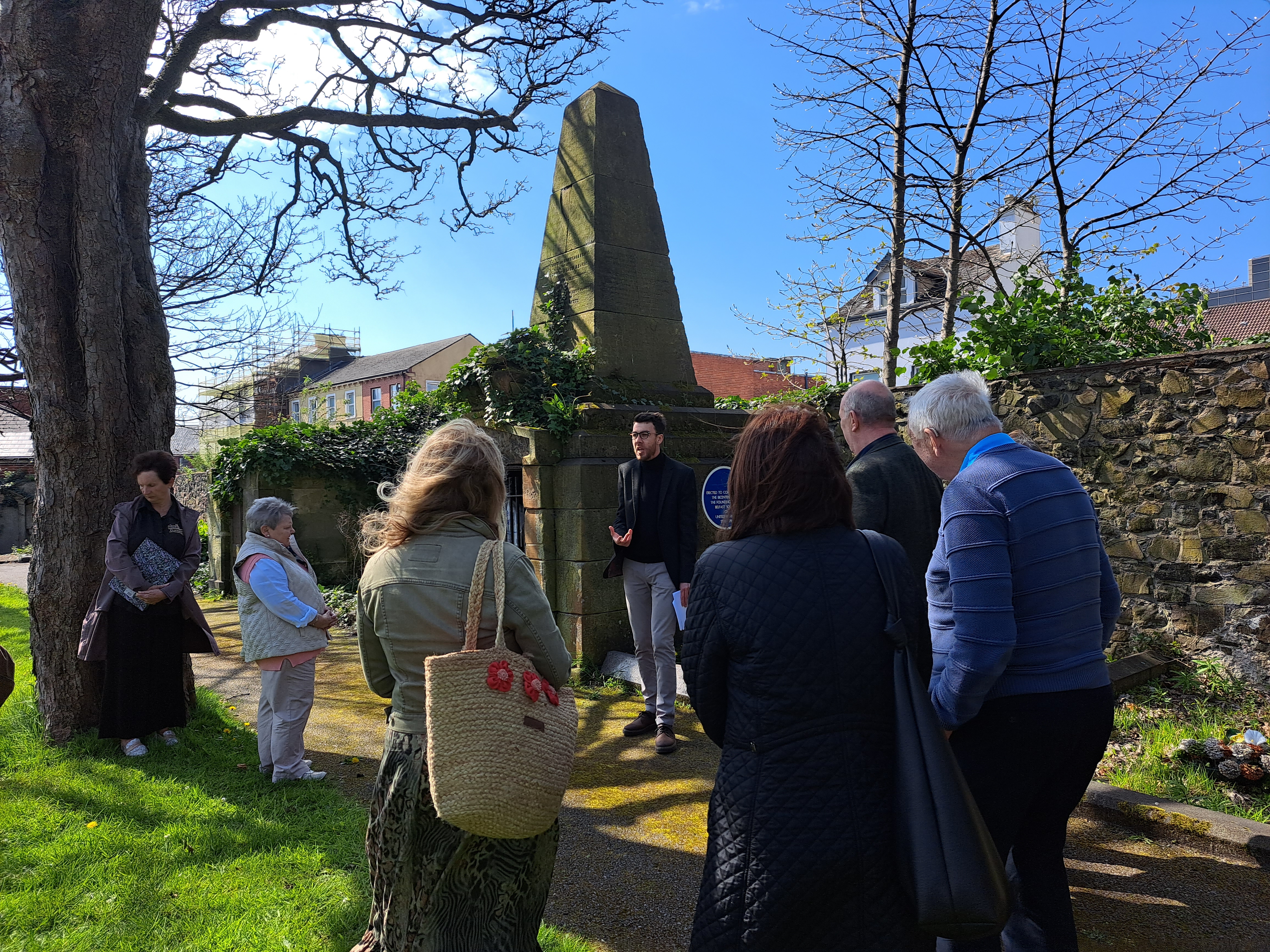
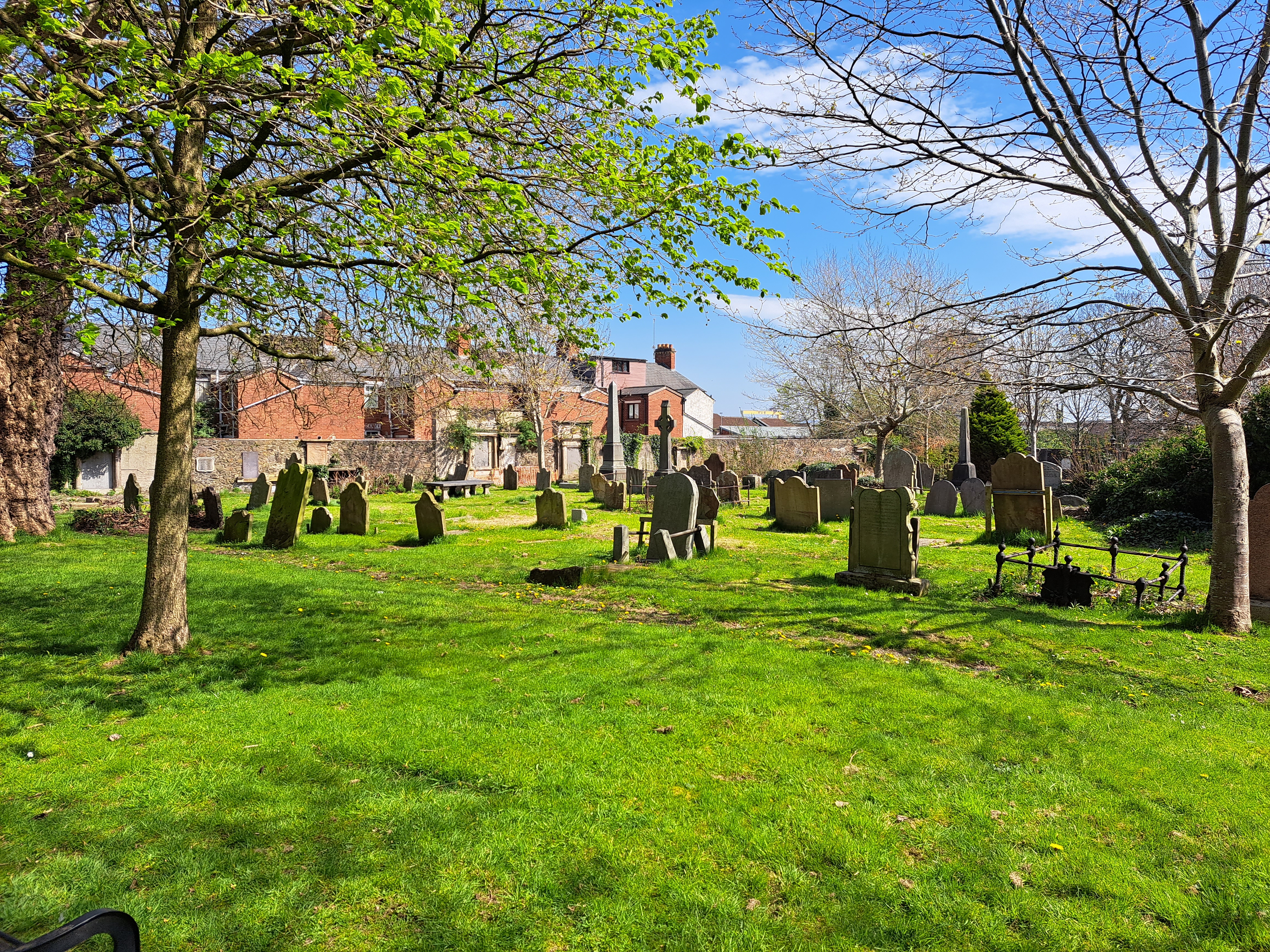
The extensive tour also took us round the Clifton Street graveyard. Another repository of Belfast history.
Sadly the graveyard suffered greatly from vandalism at the start of the Troubles, although its existence was threatened fairly dramatically in its early days when it was frequently targeted by grave robbers and we were told many tales of their nefarious activities over the years.
Vandalised grave of Robert Haliday
But there is still a great deal there that connects us with Belfast’s past, many of the people buried there being Non-Subscribers. Indeed throughout the tour many of the names we heard who had been associated with Clifton House were members of our denomination.
Grave of Mary Ann McCracken and possible resting place of Henry Joy McCracken
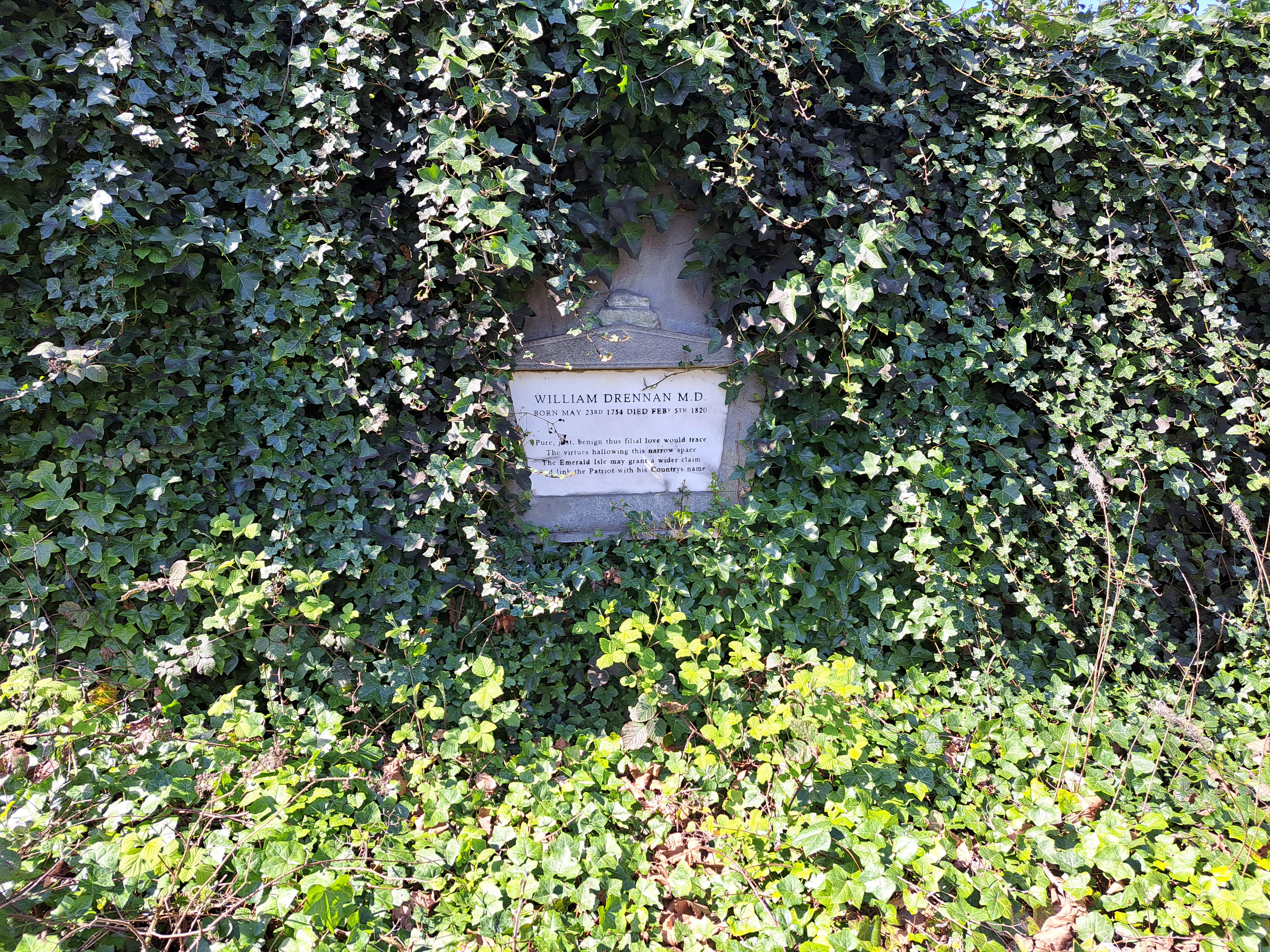
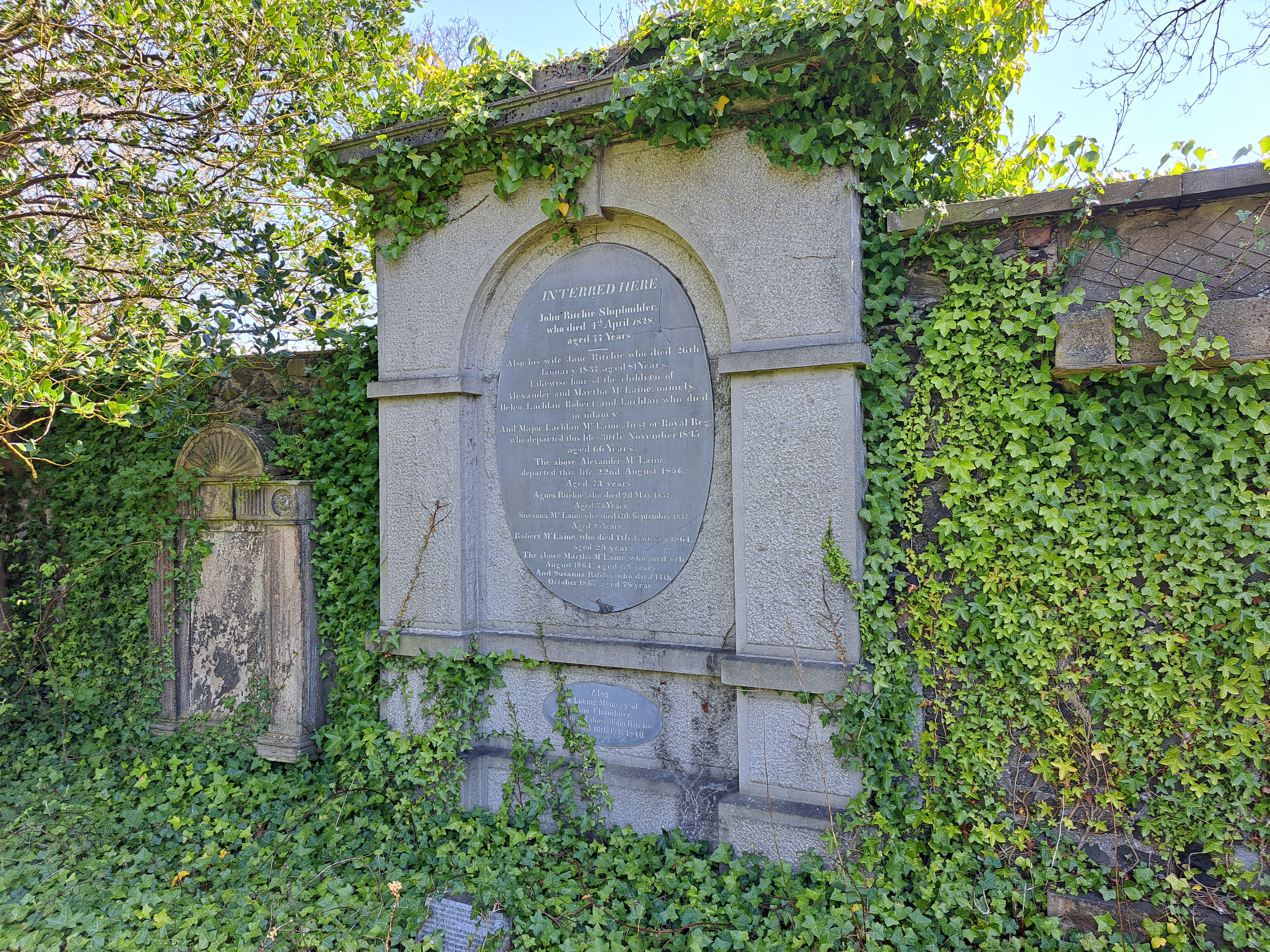
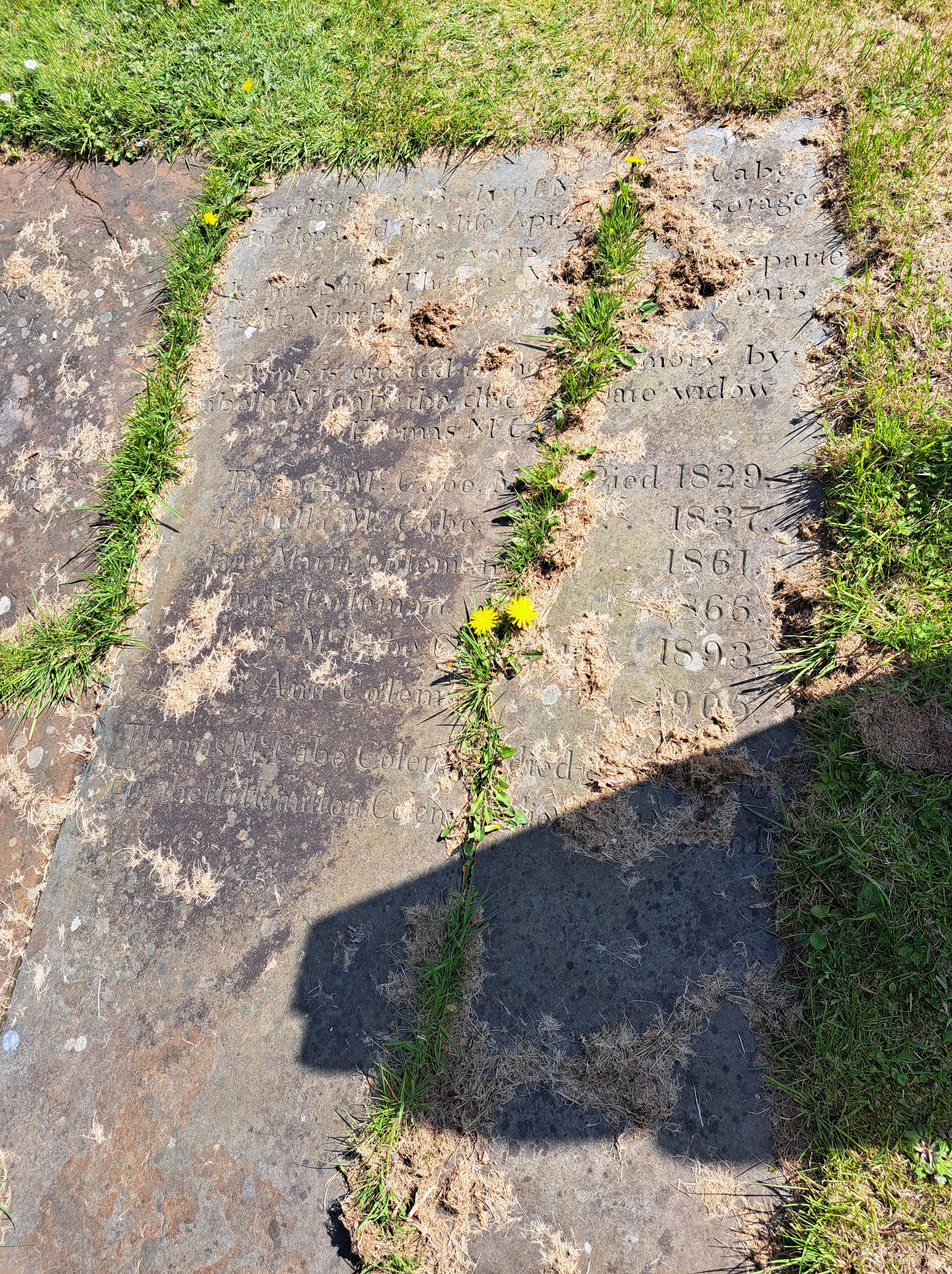
But in the graveyard we saw the graves of such notables as Dr William Drennan (poet, doctor, educationalist, United Irishman), John Ritchie (who established ship building in Belfast), and Thomas McCabe (who successfully opposed the establishment of a Belfast slave ship company) who were all Non-Subscribers, as indeed was Waddell Cunningham who it was who proposed establishing a slave ship company in Belfast (but who isn’t buried in Clifton Street).
Grave of William Drennan
Grave of John Ritchie
Grave of Thomas McCabe
It was a fascinating tour and we are grateful to our guides for such an interesting and illuminating morning.
The 2023 issue of the Transactions of the Unitarian Historical Society includes Ian Wood’s article on his great great grandfather William Sunderland Smith, minister at Antrim from 1872 to 1912 and a figure of some note in the town at the time because of his writings on history, including the 1798 Rebellion, natural history, geology and theology.
W.S. Smith’s son William Ivan Smith was an enthusiastic amateur photographer and he took a number of pictures in Antrim in 1902 which are a main feature of this video which introduces the 2023 Transactions:
Click on the video above to find out about the Transactions and W.S. Smith
Prior to coming to Antrim in 1872 and after leaving the Unitarian Home Missionary Board in 1859 W.S.Smith had ministered successively at Aberdeen, Rawtenstall, Doncaster, Tavistock and Crediton. So he had a series of short ministries all over the country before crossing the Irish Sea and finding, one assumes, a deep sense of fulfilment in his last charge at Antrim. W.I. Smith’s visit to Antrim in 1902 produced a number of photographs which give us a splendid picture of his ministry and I am grateful to Ian Wood and his family for digitising them and for making them available.
So here is W.I. Smith’s portrait of his father:
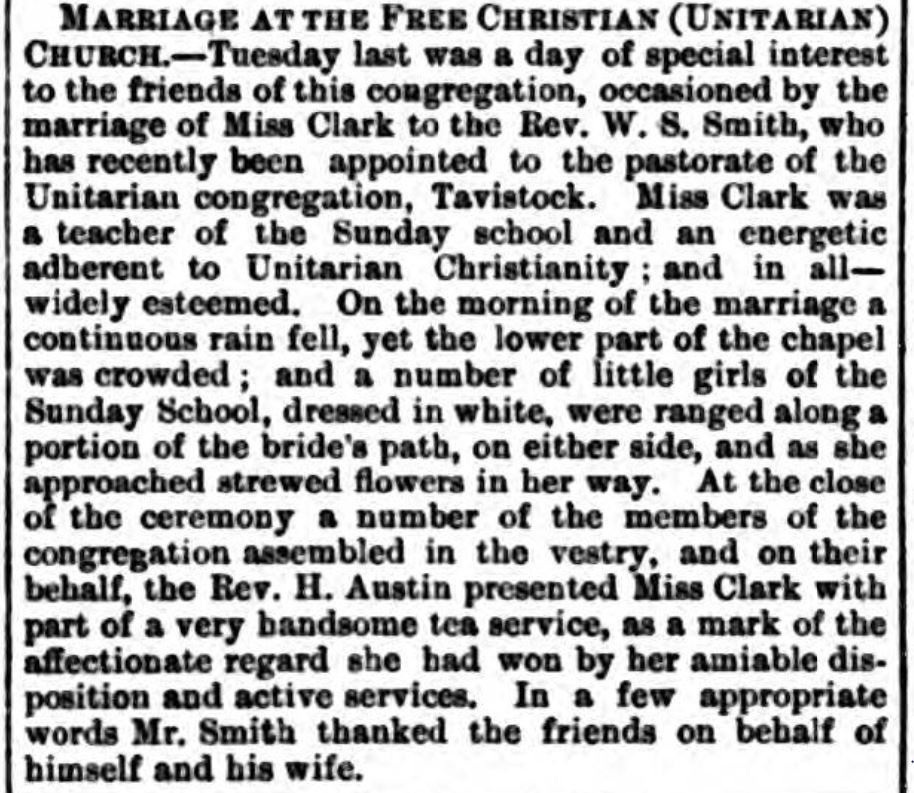
W.S. Smith’s first wife died in 1868 but the following year, having moved from Doncaster to Tavistock , he met and married Clara Ann Clark. Ian Wood has found this cutting from the Wilts and Gloucestershire Standard which gives an engaging account of the wedding between the Cirencester Sunday School teacher and the Tavistock Unitarian minister on 9th November 1869:
In 1902 when William Ivan Smith visited Antrim he took this picture of his step-mother:
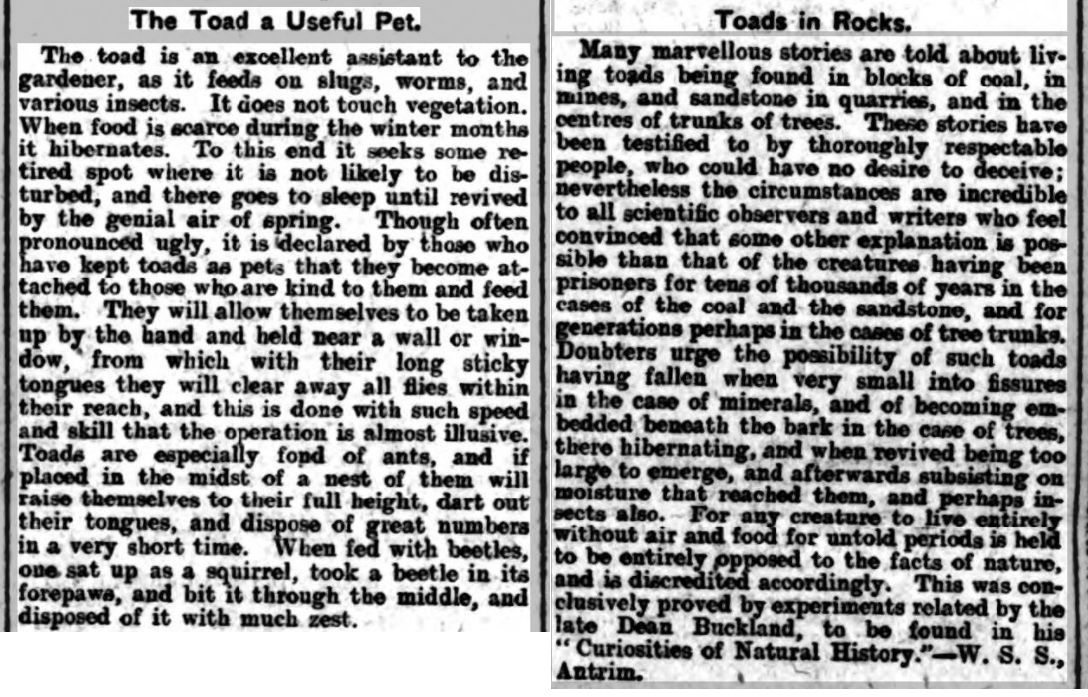
William Sunderland Smith arrived in Antrim, after a short ministry in Crediton, Devon, in 1872. He must have established a prominent name for himself in the town with publications such as Historical Gleanings in Antrim and Neighbourhood and Memories of ’98 as well as regular contributions to the Ulster Journal of Archaeology and the provision of ‘Nature Notes’ to the Northern Whig, including this account of toads in 1906:
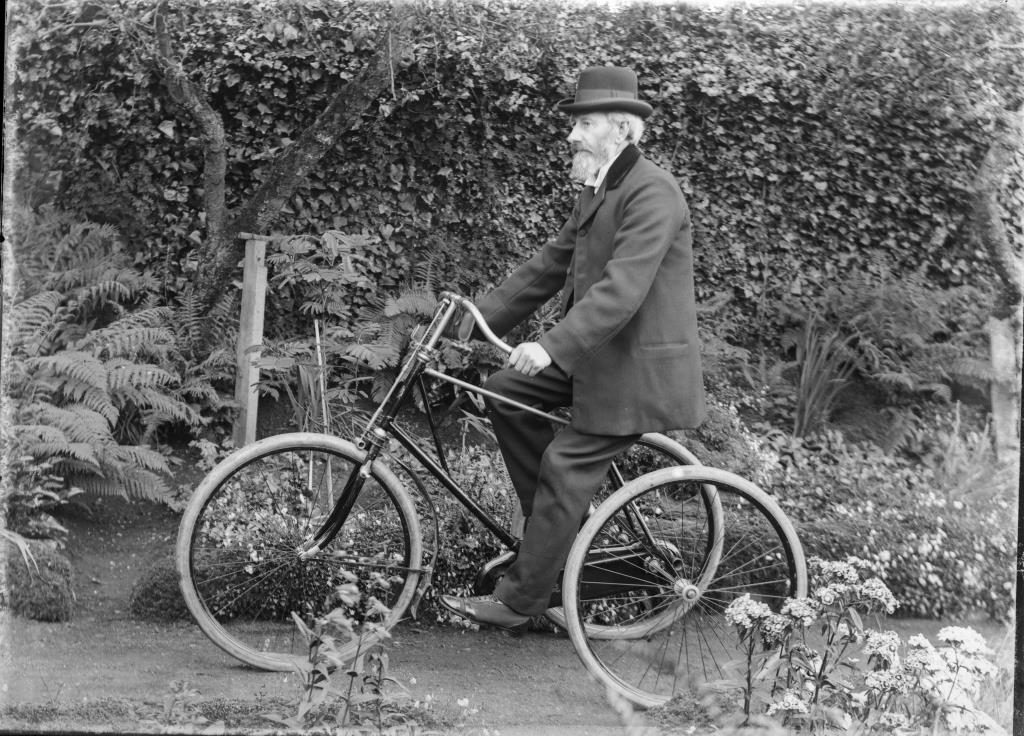
W.I. Smith’s photograph of his father astride his preferred method of transport in Antrim suggests that he must have been a very familiar figure on the local roads at the time:
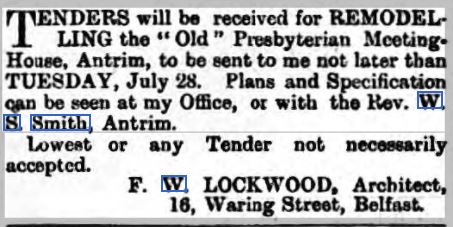
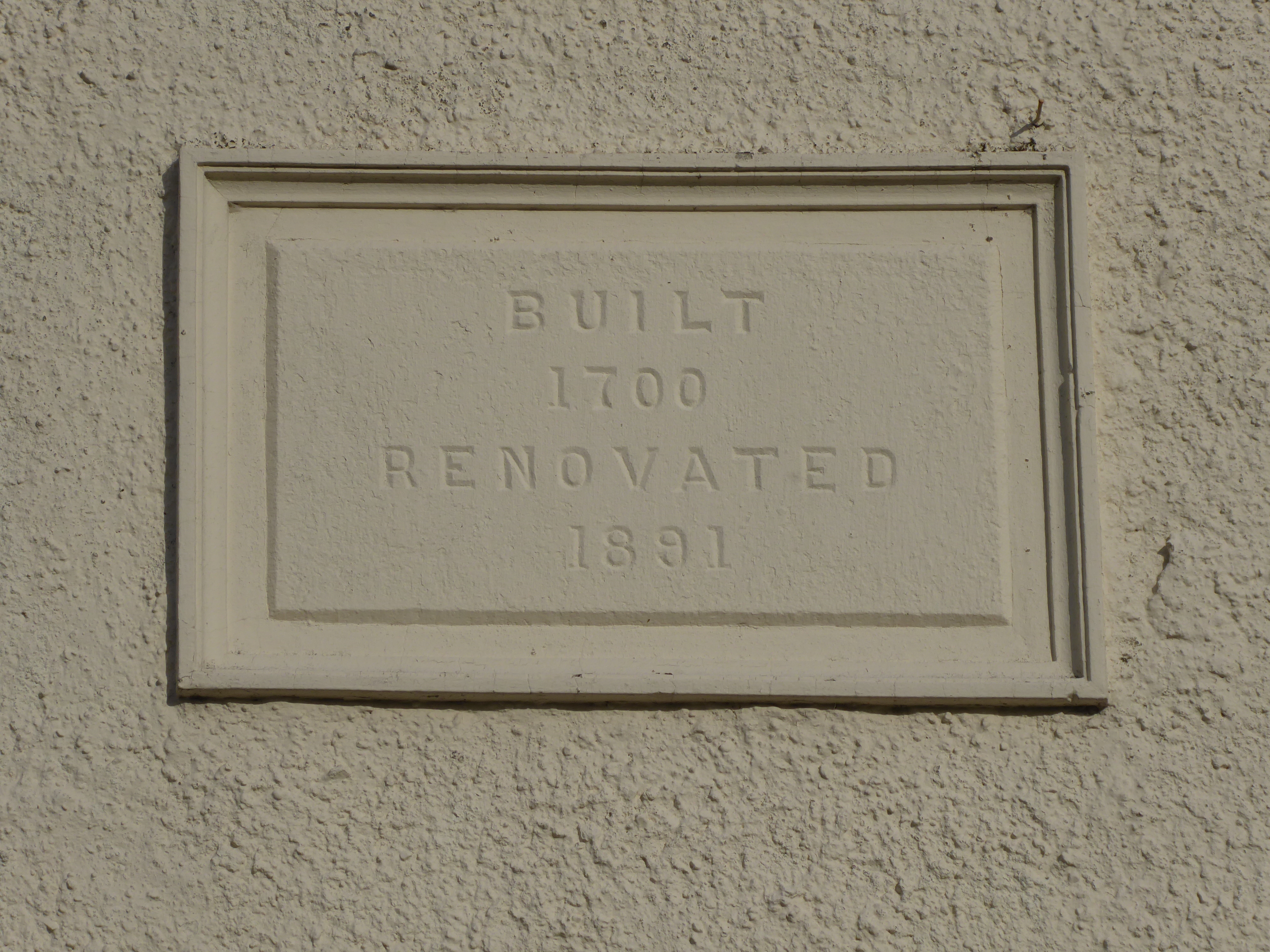
The Antrim meeting-house had been built in 1700 but under his ministry the interior was completetly refurbished in 1891. Ian Wood has found the following cutting from the Northern Whig seeking tenders to undertake this work:
This was a major undertaking which seems to have been successfully completed but images of the interior, either in its original form or in the remodelled layout created by W.S. Smith, are hard to come by. If you would like to see the interior as it looks today – denuded of its ecclesiastical furniture – click here. One postcard which I have acquired features the interior of the Antrim meeting-house as it originally looked. It is a strange picture that has been very amateurishly doctored with Rev John Abernethy’s portrait cut out from somewhere and stuck over the pulpit:
But when he came to Antrim in 1902 William Ivan Smith also took a picture of the interior of the church as it looked by this time. This is it:
Now, at first glance, this may not look like such an interesting image, but as the only surviving picture of the inside of Antrim complete with its pews it is not without importance. However, on top of that W.I. Smith was quite a skilled photographer and there is more detail in this high resolution image of a 1902 print than you might initially notice. If you click on the video above you can discover some more of what this picture contains.
Thank you to Ian Wood for researching his ancestor and for discovering these fascinating pictures and making them available.
You can find out more about the Unitarian Historical Society and the Transactions by visiting its website here.
You can see a bit more about the manse in Antrim on this website via this link.
No pictures or text may be reproduced from this site without the express permission of the author.
Volume 28 Number 2 (April 2023) of the Transactions of the Unitarian Historical Society is now ready and, as ever, it is full of interest. It contains:
To give ‘occasional contributions’ and ‘annual subscriptions’ to promote ‘those great principles of religious truth’: Unitarian Fellowship Funds in the early nineteenth century by David L. Wykes
Dr David Wykes
Our first article is by Society Vice-President David Wykes who has researched in great detail the story of the Unitarian Fellowship Funds. Although these were not long-lasting they deserve attention as an early national initiative which expressed a Unitarian identity and which found outlets all over the country. The Funds have long been neglected by historians but they are a very important indication of lay involvement in Unitarianism. They embraced both the poorer strata of society for a denomination that was often seen as appealing only to the rich, as well as gave an opportunity for women to be more actively involved in church life. The article includes a check list of Fellowship Funds and richly illustrates a movement that was one of the earliest expressions of a Unitarian denominational identity.
Emily Ronalds (1795–1889) and her social reform work by Beverley F. Ronalds
Emily Ronalds. Photograph by Edmund Wheeler, Brighton, 1880. Courtesy: Auckland Library, New Zealand, Sir George Grey Special Collections, NZMS 1235
Beverley Ronalds, a Fellow of the Australian Academy of Technology and Engineering, uncovers the life and contribution of Emily Ronalds, a much-neglected Unitarian figure who played an important part in the extension of infant schooling. In her youth she was, by nature, a retiring figure, she was later described by the American social activist Frances Wright as ‘clever’ with ‘energy of character’, while Henry Crabb Robinson spoke of her ‘vivacity & good spirits’. She had close links with many of the most advanced thinkers of her day and contributed to experiments in socialist co-operative communities, the abolition of slavery and the development of feminism.
William Sunderland Smith (1833 – 1912) and his family by Ian Wood
William Sunderland Smith photographed by his son William Ivan Smith in 1902. Courtesy: the family of W.I. Smith
William Sunderland Smith was the twelfth student to enrol in the Unitarian Home Missionary Board (later College) and went on to have a succession of ministries in England, Scotland and Ireland. Ministering, in turn, at Aberdeen, Rawtenstall, Doncaster, Tavistock and Crediton, his final and longest ministry was at Antrim. Ian Wood, his great great grandson, traces his life and that of his family, along with his theological and political ideas. A writer and journalist he developed extensive scientific interests, contributing ‘Nature Notes’ to the Northern Whig newspaper, and made numerous contributions on natural history and Irish history to the Ulster Journal of Archaeology.
Review Article. The Oxford History of Protestant Dissenting Traditions by Alan Ruston
Alan Ruston contributes a Review Article on The Oxford History of Protestant Dissenting Traditions, a five volume investigation of the place of Protestant Dissent not only in England and Ireland but also the Empire and Commonwealth, the USA and ultimately all over the world. Alan reviews all five volumes but pays especial attention to volumes two and three which contain a great deal concerning Unitarianism.
In addition we have our review section.
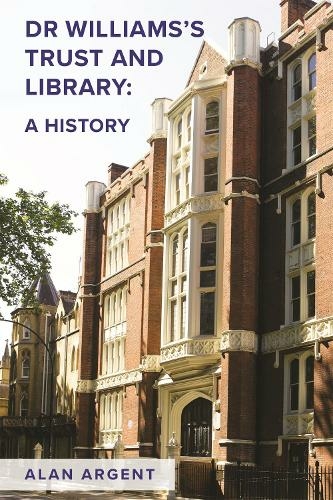
Dr Williams’s Trust and Library: A History by Alan Argent
A Short History of the Non-Subscribing Presbyterian Church of Ireland. Including Sketches of Individual Congregations and a Fasti of Ministers who served in them by J.W. Nelson
These Eighty Years. A Recollection by Alan Ruston
All reviewed by David Steers, Editor of the Transactions
plus
OBITUARY Professor Sir Tony Wrigley, FBA (1931-2022): a Unitarian appreciation by David L. Wykes
There was a lot of snow this week, suddenly the world didn’t look so Spring-like and we had to postpone a meeting with the RSPB as we plan to help re-introduce swifts to our locality.
But the weather led me to reflect on Lent and Spring and this short video contains a few readings from Psalm 148, Walter Brueggemann and Melissa Jeter, as well as music played by Allen Yarr, the church organist.
It can be seen here:
We also made another short video that makes full use of the snow, with thanks to InkLightning for the special animation:
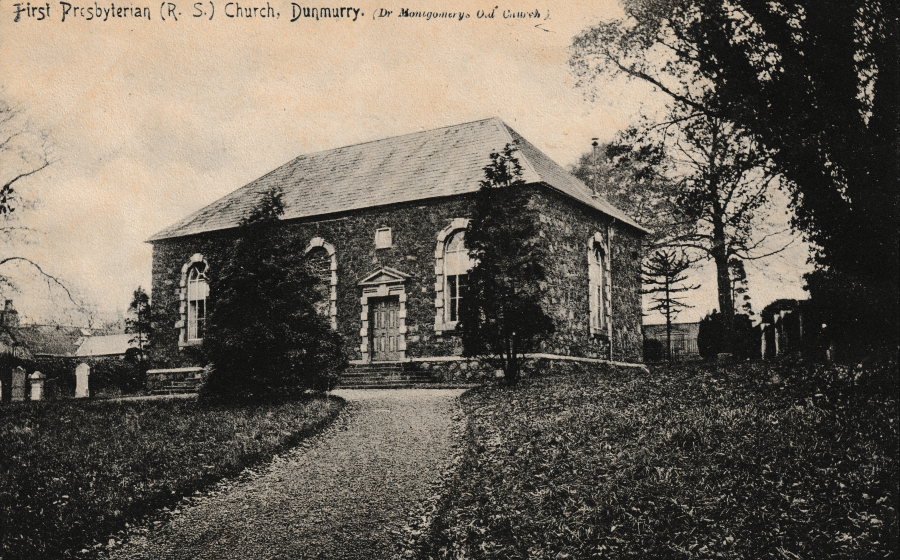
I am not sure how many Non-Subscribing Presbyterian Churches had postcards produced featuring the meeting-house in Edwardian days. Not all of them I would guess but I have a good few examples and have blogged about a few of them including Downpatrick, Newry, Banbridge, All Souls’ Belfast (including one that quite clearly is not All Souls’), and Crumlin. There are others such as Clough and Dromore which I have seen but not acquired, but recently I was pleased to pick up a picture of Dunmurry.
Dunmurry postcard
Labelled First Presbyterian (R[emonstrant] S[ynod]) Church, Dunmurry, (Dr Montgomery’s Old Church) I have seen this card offered for sale before but I am pleased to at last track one down. Published by F.W. Harding of Lisburn this card was posted on 12th November 1906 to Miss Browne in Aghalee, ‘M.B.’ writes to ‘Maggie’ telling they her they are still waiting for a letter from her but hope to see her soon.
We can compare it with a modern view, taken from more or less the same position last week and see that, of course, although some of the graves, the trees and planting around the church have changed the view is essentially unchanged.
Dunmurry January 2023
In January we filmed some short reflections in the church featuring Allen Yarr on the piano. The video can be seen here:
January Reflections
Reflections for the month of January with the Rev Dr David Steers, minister, and Allen Yarr, church organist. Music: ‘When I survey’, ‘Music for the Royal Fireworks’
Service of prayer from First Dunmurry NSP Church, Friday, 9th September
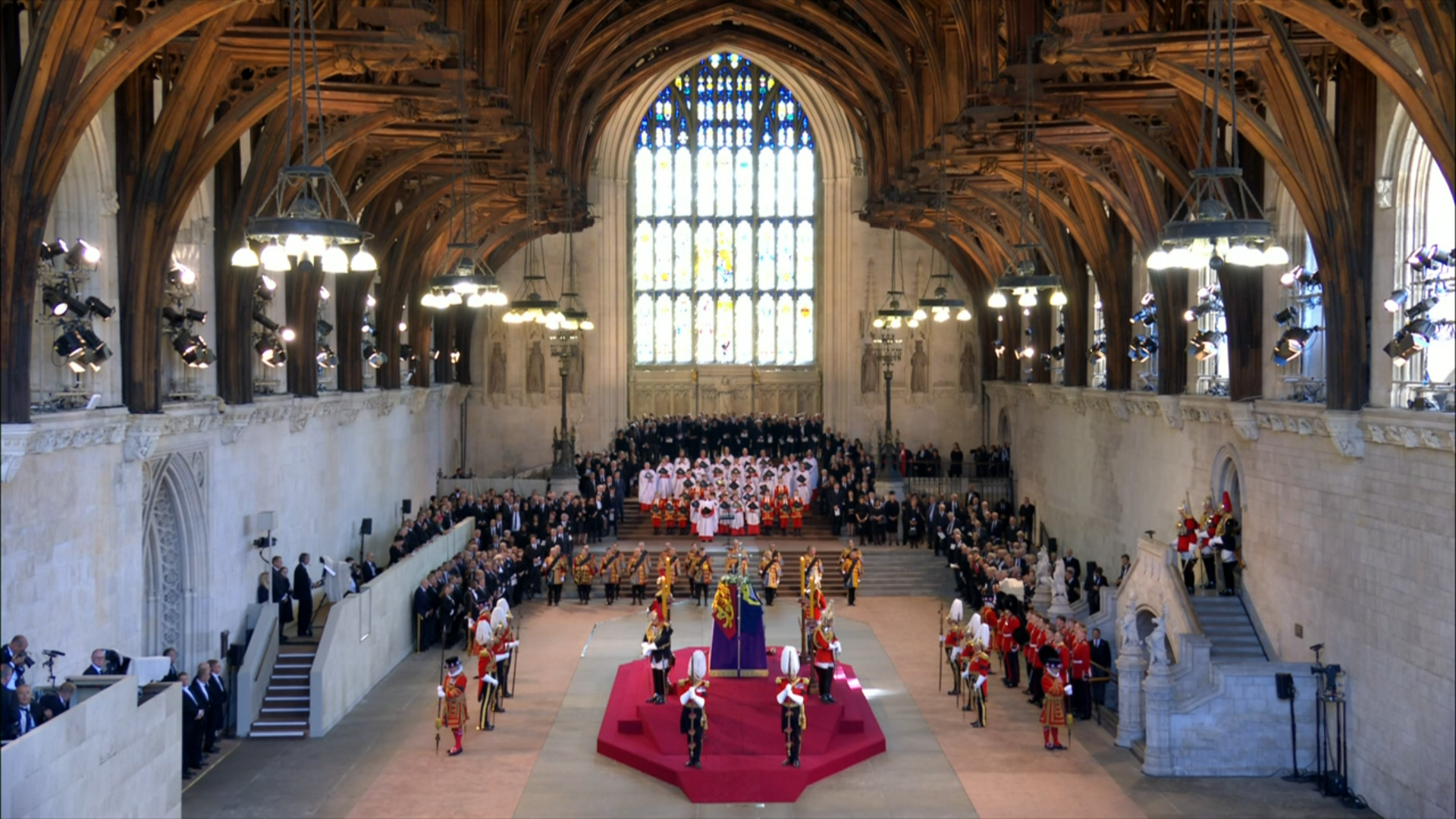
At the time of writing the coffin of Her Majesty the Queen is lying in state in Westminster Hall and many thousands of people are queuing in order to be able to pay their last respects. Special services have been held all over the country in the last week and at First Dunmurry (NS) Presbyterian Church we held a short service of prayer and reflection on Friday, 9th December. An edited audio recording of the service can be heard by clicking on the video above. Allen Yarr is the organist.
Below are some images from the lying in state in Westminster Hall.
Pallbearers carry the Queen’s coffin into Westminster Hall
A short service was held on the arrival of the Queen’s coffin
With the Imperial State Crown atop the coffin the Queen is guarded by members of the Life Guards and the Blues and Royals
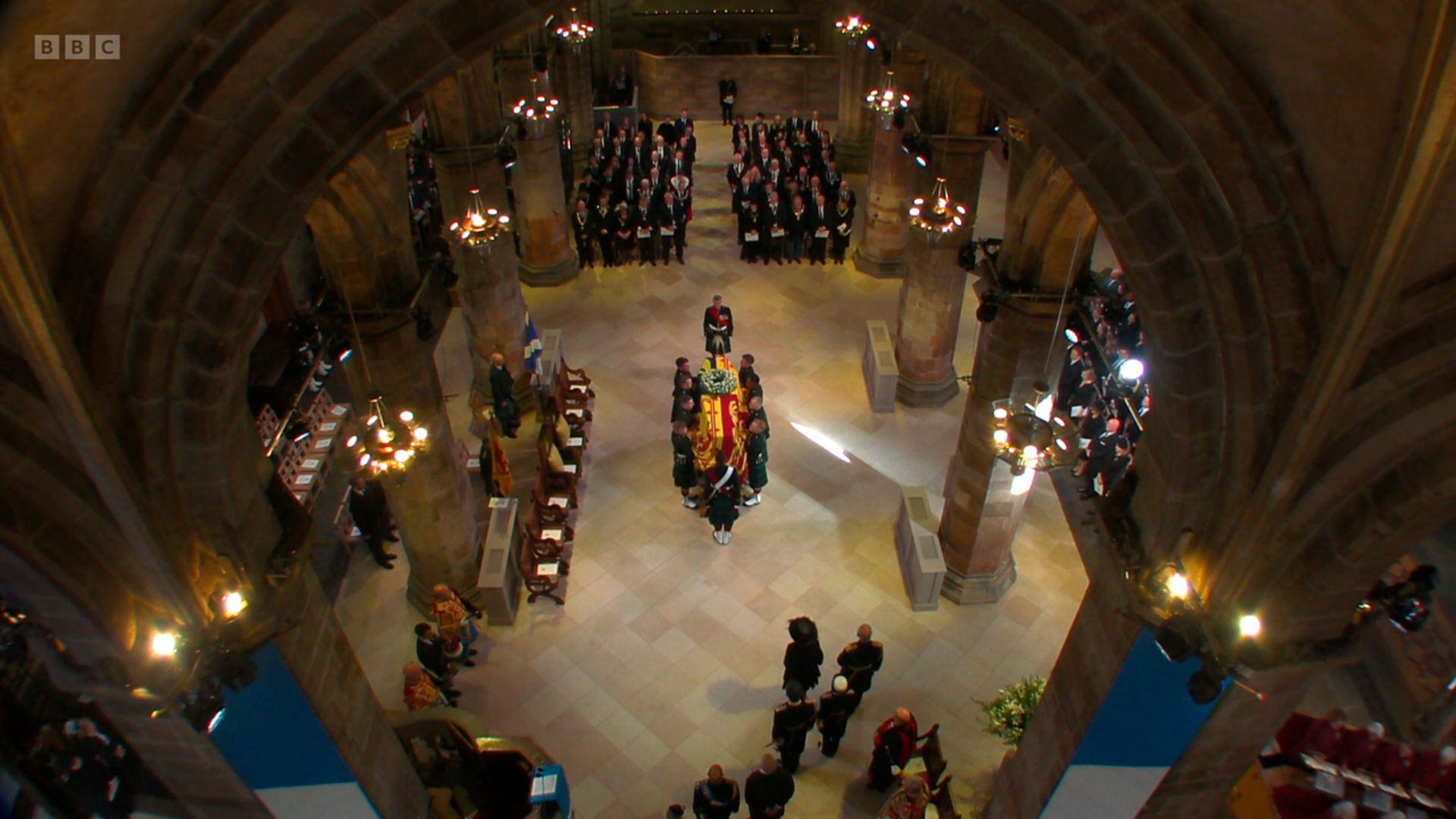
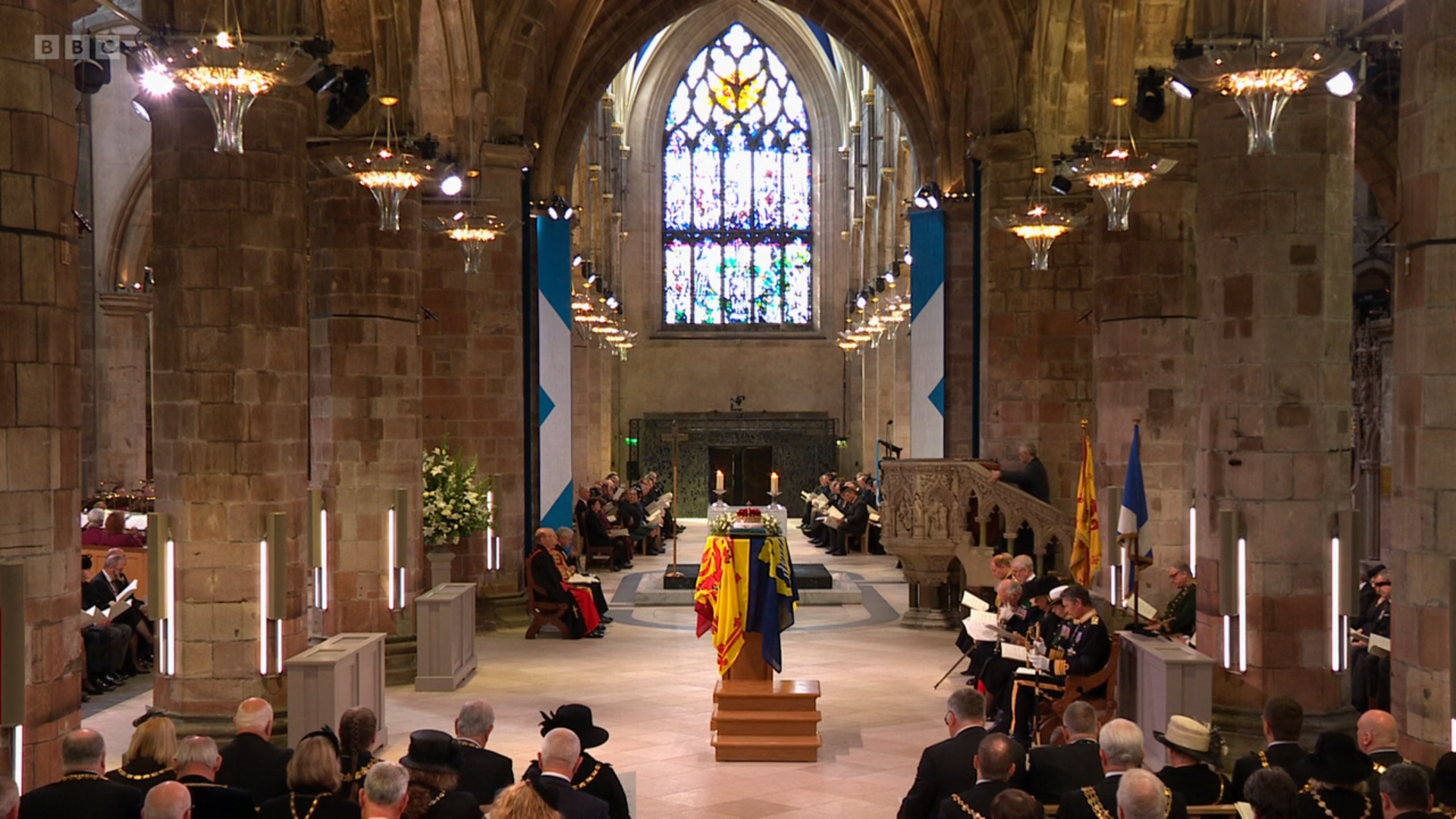
Earlier in the week, on Monday, 12th September a very moving service of thanksgiving for the life of the Queen was held in St Giles Cathedral, Edinburgh. Below are some images from that occasion.
The coffin is brought in to the Cathedral
The sermon was delivered by the Moderator of the Church of Scotland
The ancient Crown of Scotland, part of the Honours of Scotland, is placed on the Royal Standard of Scotland
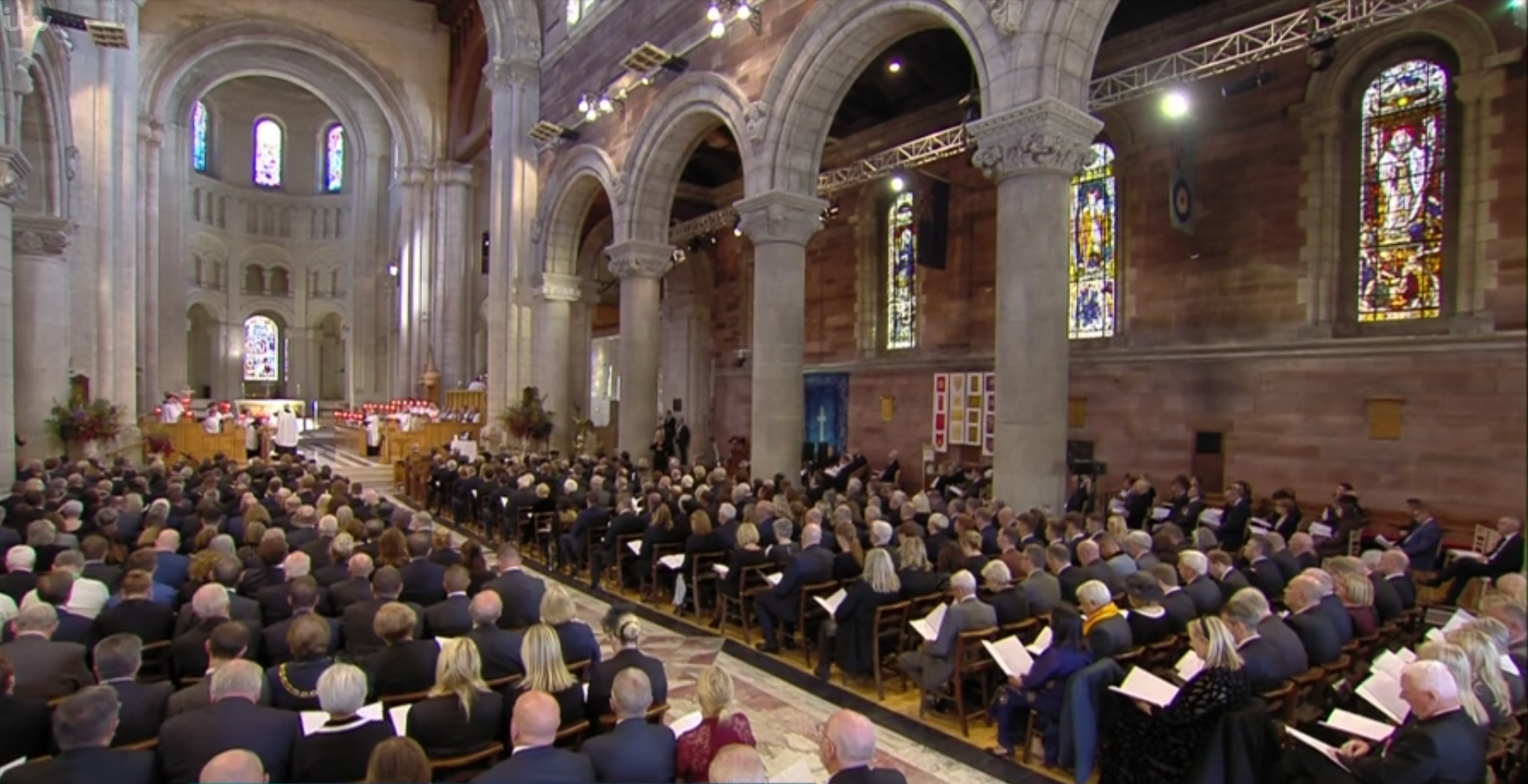
Services of thanksgiving for the life of the Queen were also held in Belfast and Cardiff.
The service at St Anne’s Cathedral, Belfast
I shall not die, but live, and shall the works of God discover. The Lord hath me chastised sore, but not to death giv’n over. O set ye open unto me the gates of righteousness; Then will I enter into them, and I the Lord will bless. This is the gate of God, by it the just shall enter in. Thee will I praise, for thou me heard’st and hast my safety been.
Translation of Psalm 118 v.17-21 which was sung in Scots Gaelic by Karen Matheson at the service in St Giles Cathedral, Edinburgh.
Your enjoyment of the world is never right, till every morning you awake in Heaven: see yourself in your Father’s palace; and look upon the skies, the earth, and the air as celestial joys: having such a reverend esteem of all, as if you were among the angels.
Thomas Traherne
One of the beauties of Dunmurry is not just the gardens and grounds that surround the church but the variety of animal and bird life that lives there. Louise Steers has been busy filming many of the birds, animals and insects that live there and we have two videos that consist of Louise’s films and photographs of them accompanied by music provided by John Strain on the organ at Ballee. Among the animals you can expect to see in Part One are robins, blue tits, blackbirds, a thrush, grey squirrels, a mouse, ladybirds, a speckled wood butterfly and a peacock butterfly.
Dunmurry Garden Wildlife Part One
Click on the video above to see some of the birds, animals and insects that live in the gardens round the First Presbyterian (NS) Church, Dunmurry. Medley played by John Strain on the organ at Ballee Non-Subscribing Presbyterian Church.
Dunmurry Garden Wildlife Part One
The second of two films featuring some of the birds, animals and insects that live in the gardens round the First Presbyterian (NS) Church, Dunmurry. All pictures are by Louise. In this case the accompaniment is by John Strain on the organ at Ballee playing God speaks to us in bird and song, For the beauty of the earth, and God who made the earth.
Click on the video above to see Part Two. The video includes forty-two images featuring: blue tit, female chaffinch, male chaffinch. starling, thrush, shieldbug, lacewing, bumblebee, carder bumblebee, hoverfly, ladybird, peacock butterfly, speckled wood butterfly, grey squirrel, hedgehog, wood pigeon, blackbird, magpie, fledgling blue tit, male bullfinch, great tit, robin.
Louise also has her own animation channel (InkLightning), which includes animation like this short video:
Back in September 2017 I started to look at pew numbers (click here to see that post), particularly looking at Ballee and Downpatrick. Ballee is interesting because numbers like this
Ballee Number 12 – on the inside of a cupboard
were impressively painted on each box pew but removed when the interior was refurbished before the First World War. Since they re-used the timber in the reconstruction of the new interior if you know where to look you can still find the old numbers in odd places like the one above, which is on the inside of a cupboard door. The Ballee numbers, where they still exist, are much larger and emphatic than most pew numbers.
Downpatrick only has pew numbers upstairs in the galleries, and Clough and Dunmurry for instance, don’t have any numbers at all. In modern times the idea of numbering pews is not something that anyone would take up, but for hundreds of years it was essential. Pews were occupied via pew rents, the families who rented them had an entirely proprietorial attitude to the pew or half pew which they paid for. This is the origin of the sense – which many people still have – of a certain pew being ‘their’ pew. In many cases, generations ago, this was quite literally true. In more recent times large urban congregations that had prominent preachers would tell those who rented pews to be in place fifteen minutes before the service began or else their pew would be given to some of the queue of potential hearers formed up outside.
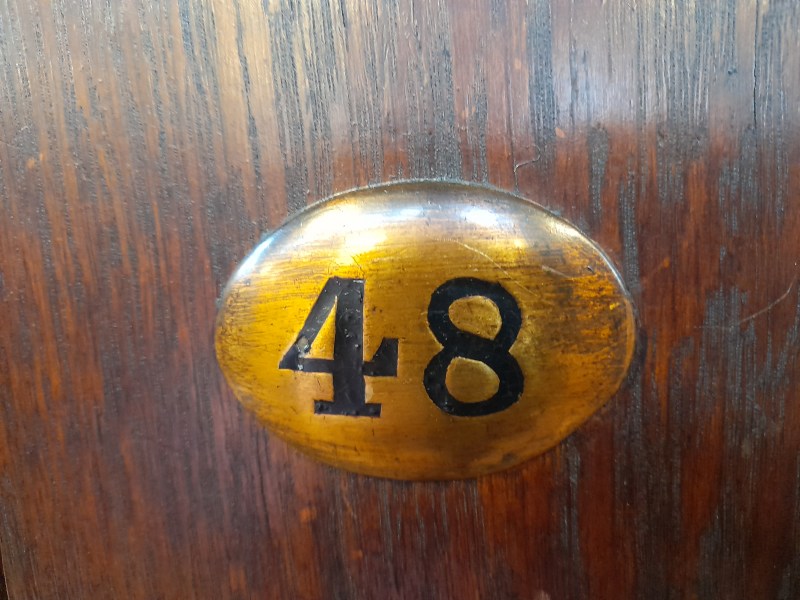
But I have had a look out for pew numbers recently and here is a selection.
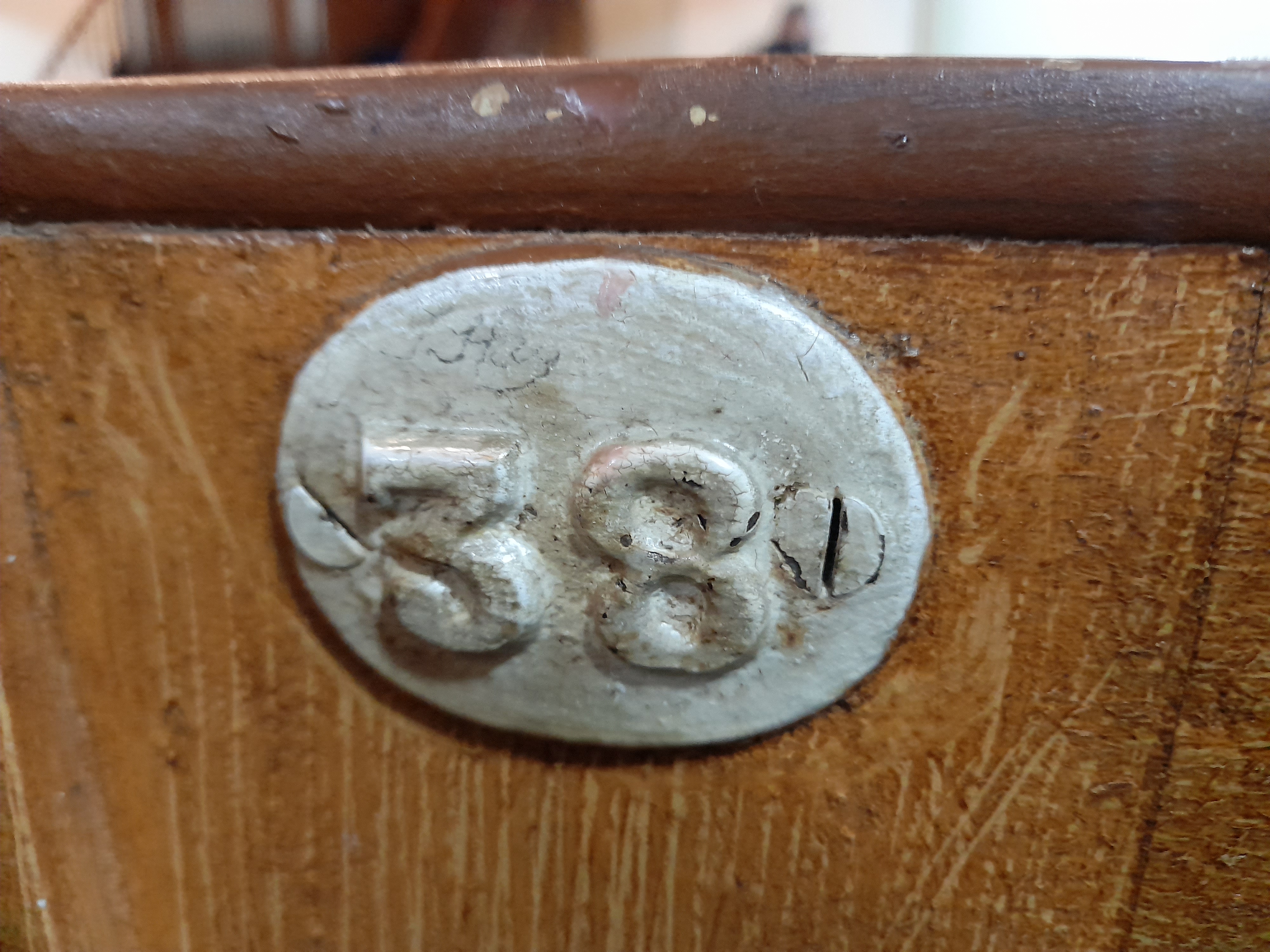
First of all a nice example of a ceramic pew number from Killinchy. The Non-Subscribing Presbyterian Church in Killinchy was built in 1846 and I have no reason to doubt that this sequence of numbers all date from that period:
Killinchy 38
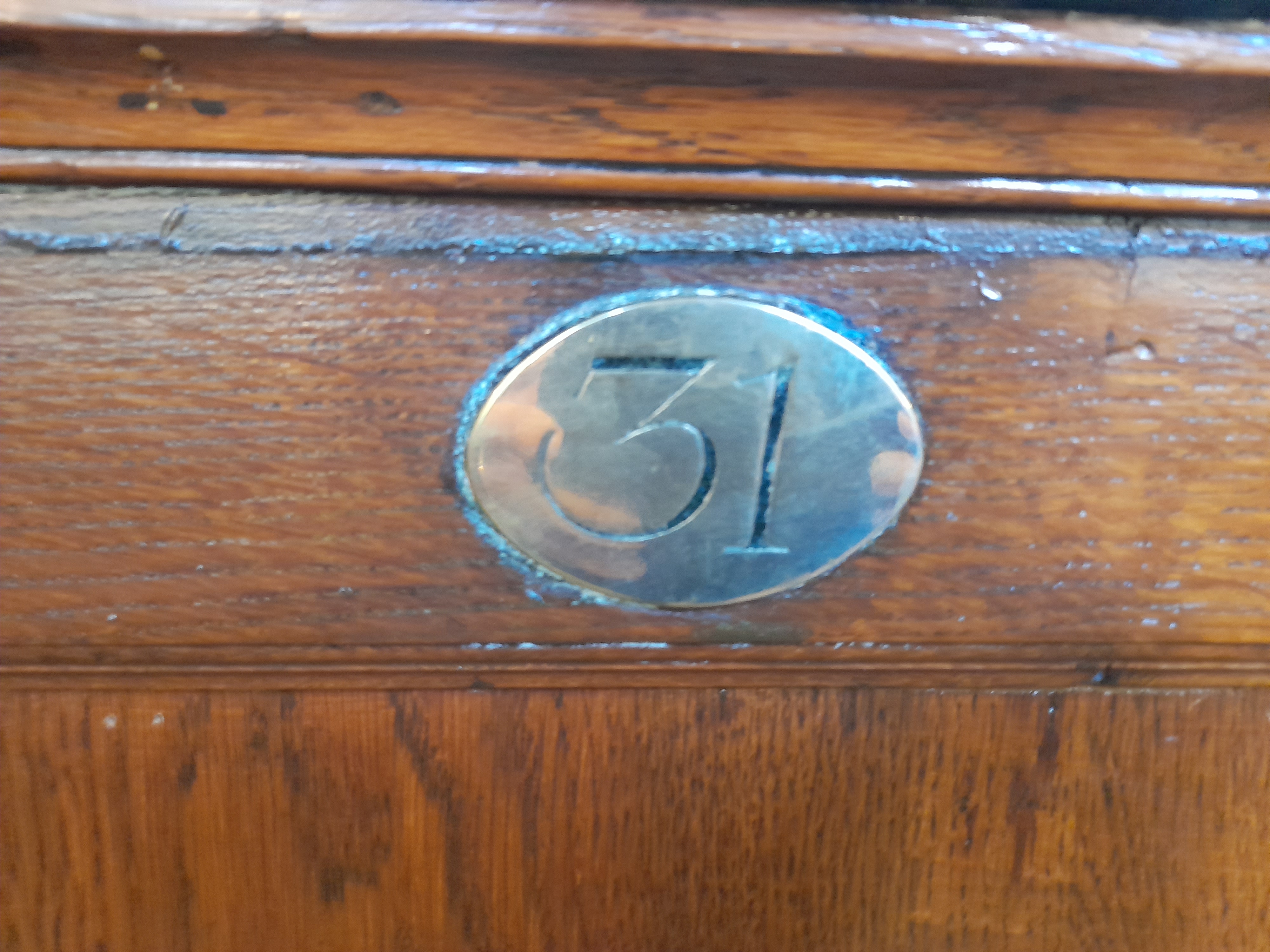
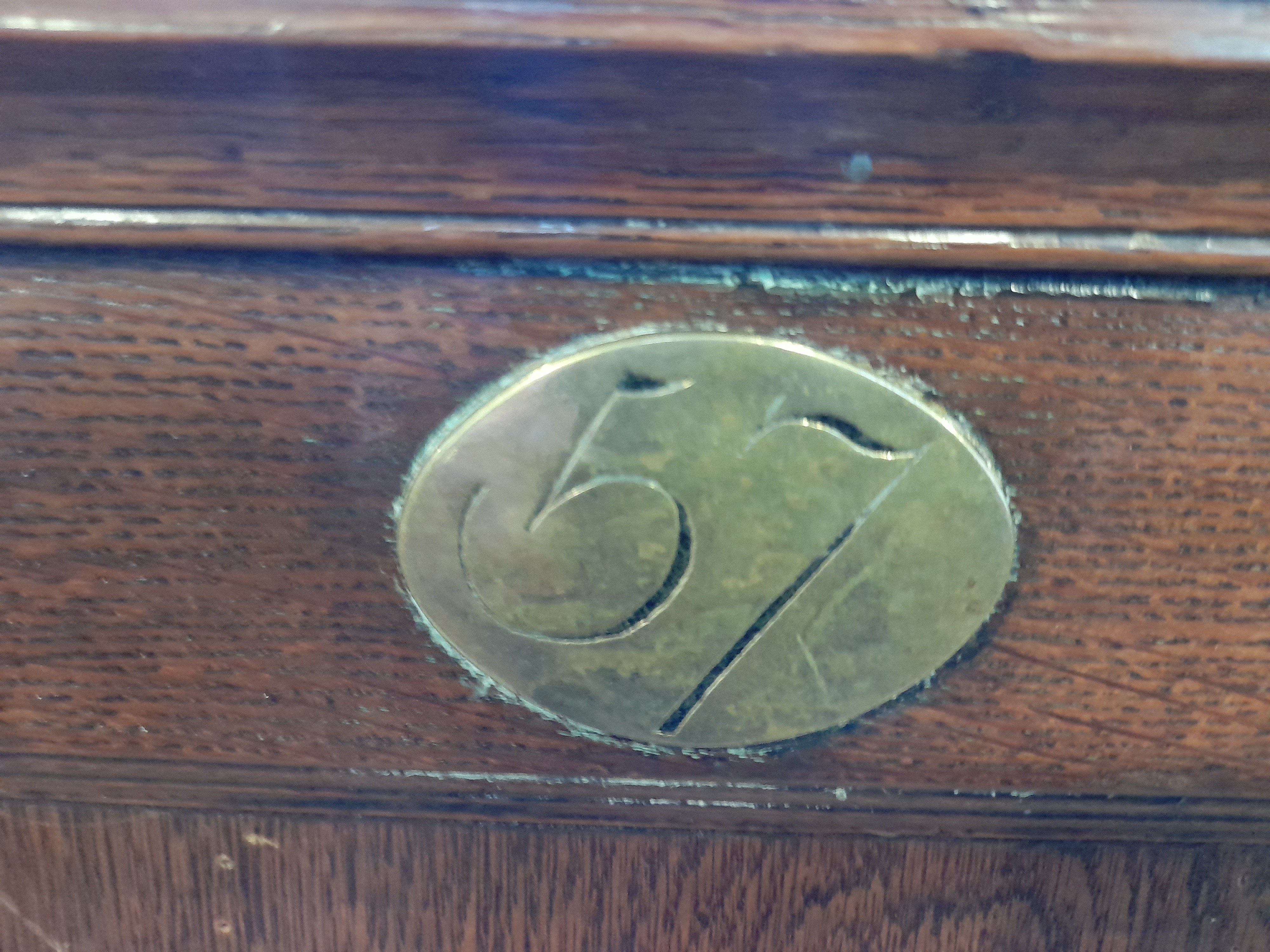
Older examples, which I would suspect date from the opening of the church in 1783, are the engraved brass numbers affixed to the oak doors of the pews in First Church, Rosemary Street, Belfast:
First Church, Belfast 31
First Church, Belfast 57
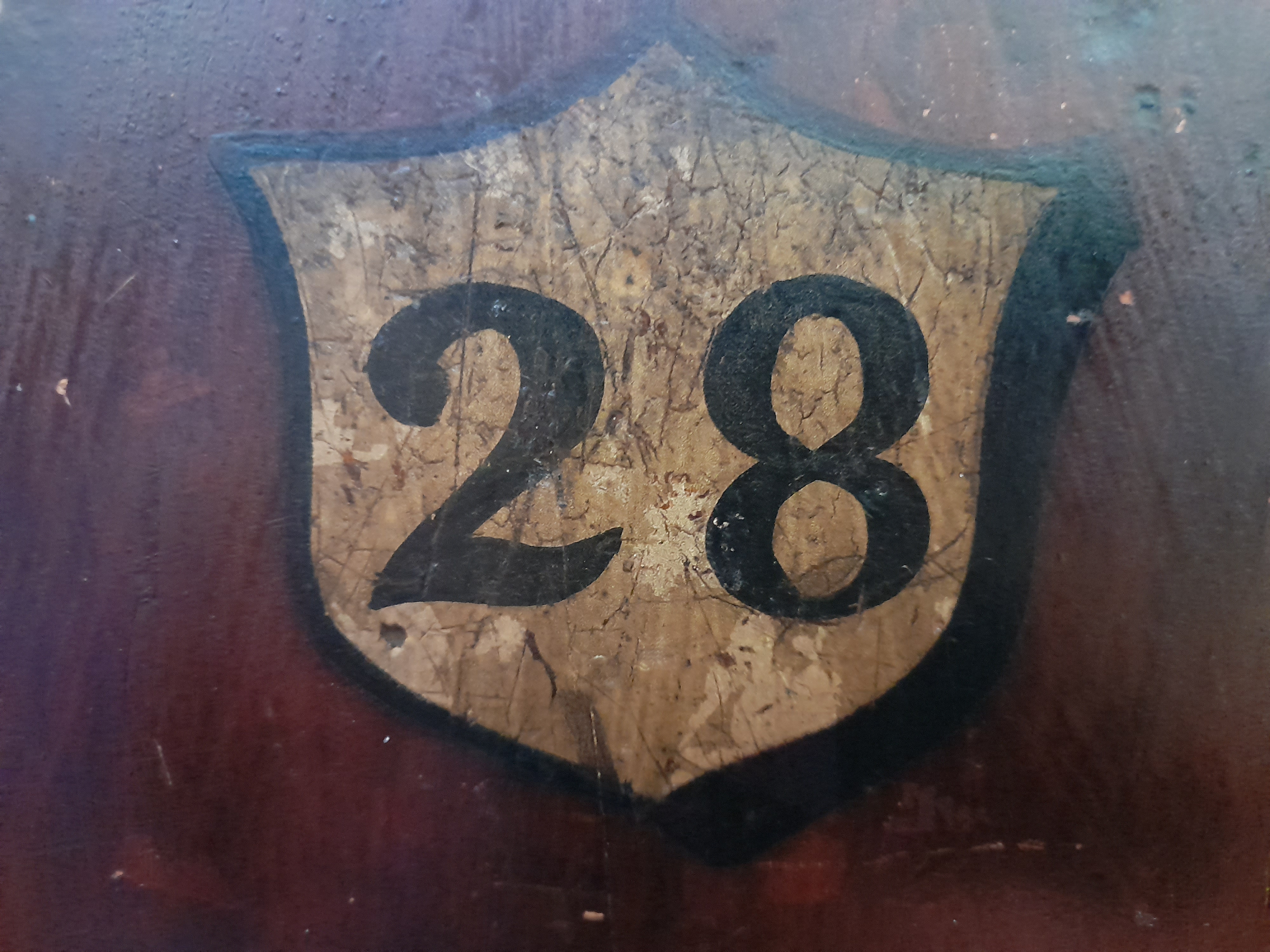
In Dublin Unitarian Church the numbers are painted and again will date from the opening of the church, in this case in 1863.
Dublin 28
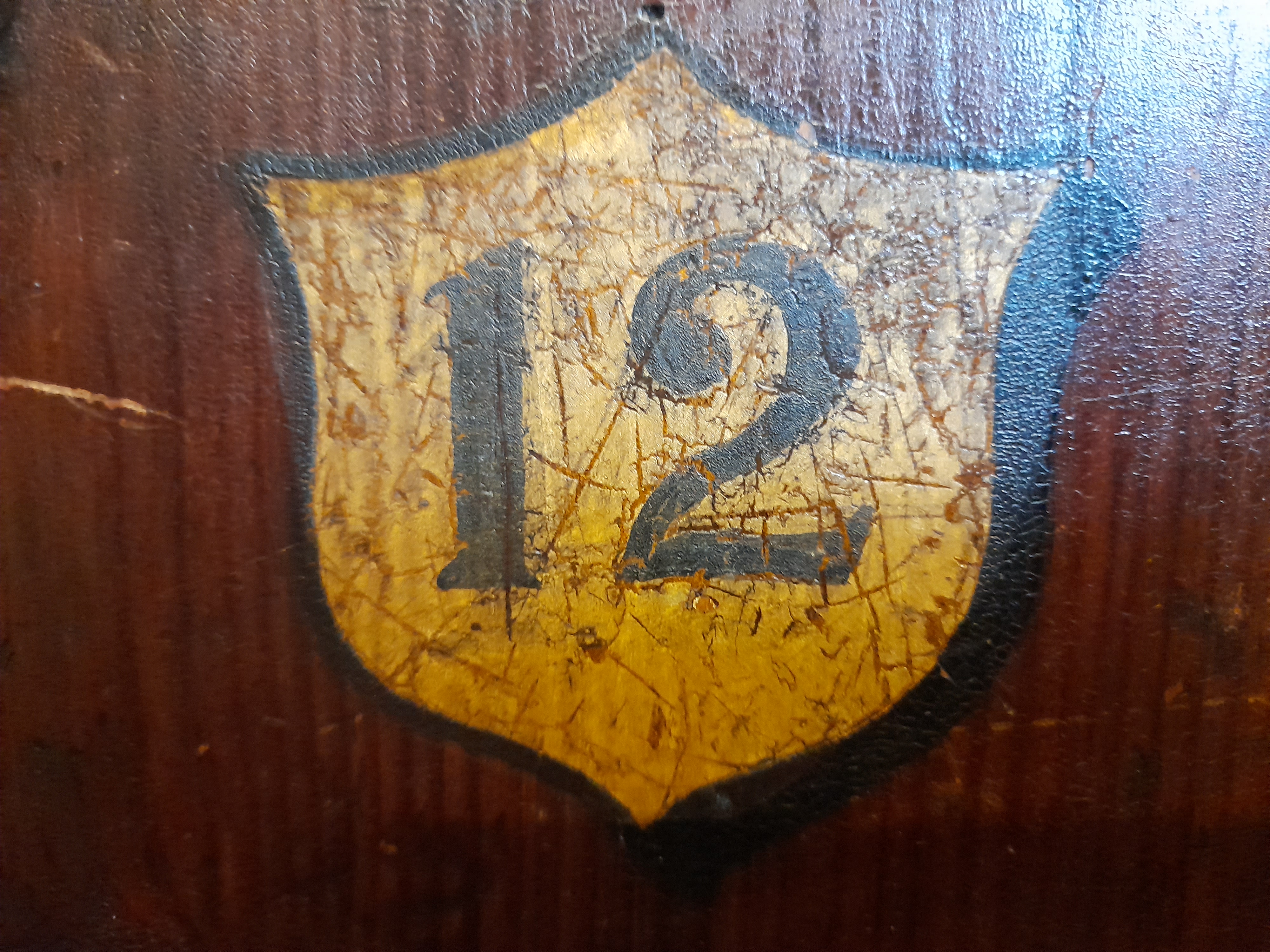
You can see the care and precision that has gone into these numbers with their three dimensional gold shields.
Dublin 12
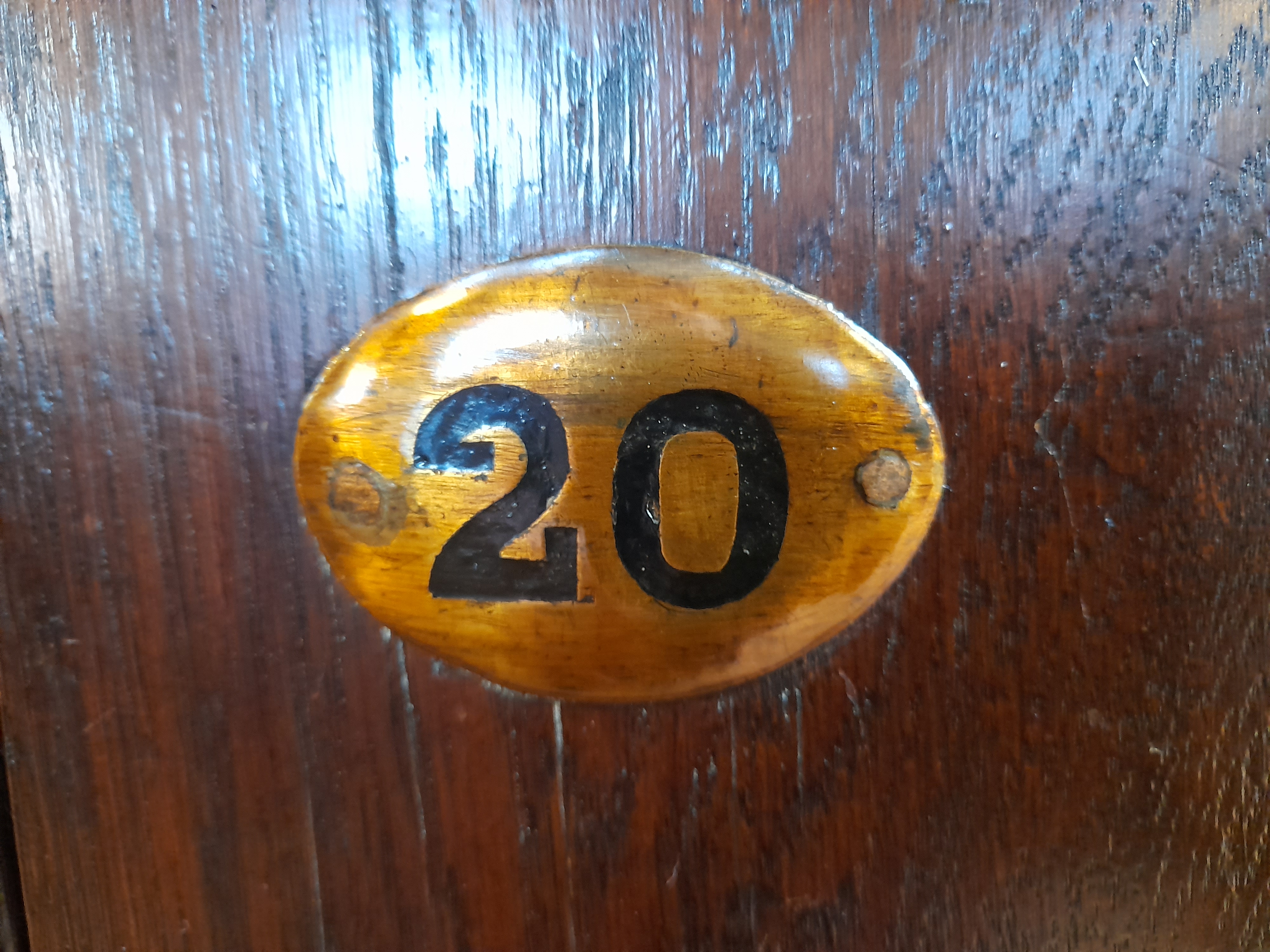
All Souls’ Church, Belfast dates from 1896, a building designed by the architect Walter Planck. But the pews are much older and the numbers will be as old as the pews. Again these are brass with the numbers engraved on the surface and picked out in black paint. They still look sharp and clear. The pews in All Souls’ date from 1871. In that year the interior of the Second Congregation, also on Rosemary Street, Belfast, was entirely re-modelled and the box pews replaced with modern open pews, possibly re-using some of the timber from the old pews. This would have been a move as bold and radical in 1871 as a church hauling out its pews today and replacing them with chairs.
All Souls’ 24
The numbers must date from Rosemary Street times because they never were an entirely complete sequence, a tendency which has become more noticeable as more pews have been removed in the last decade.
All Souls’ 20
In all these churches a lot of effort has gone into supplying bespoke numbers for the pews. Times change and their importance has waned but each example speaks to us eloquently of a particular time and place.



















 velvethummingbee