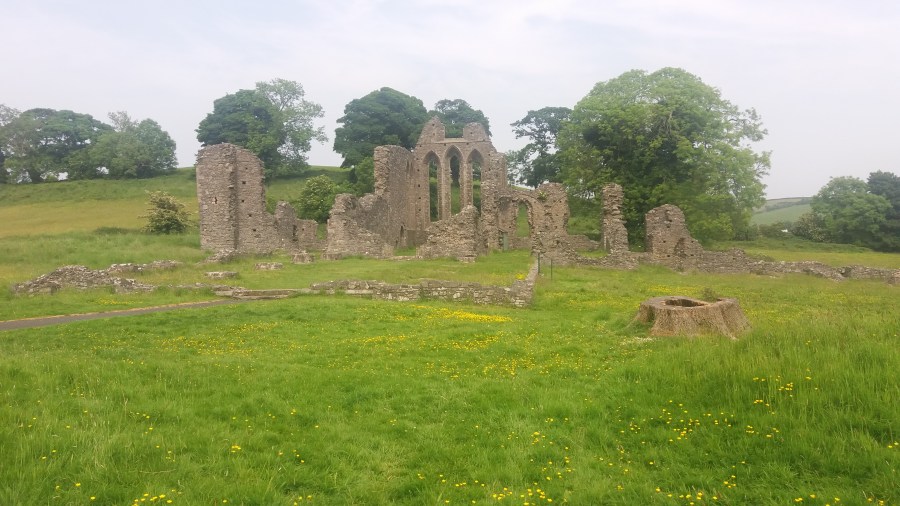
Inch Abbey, county Down

IA Inch Abbey 04

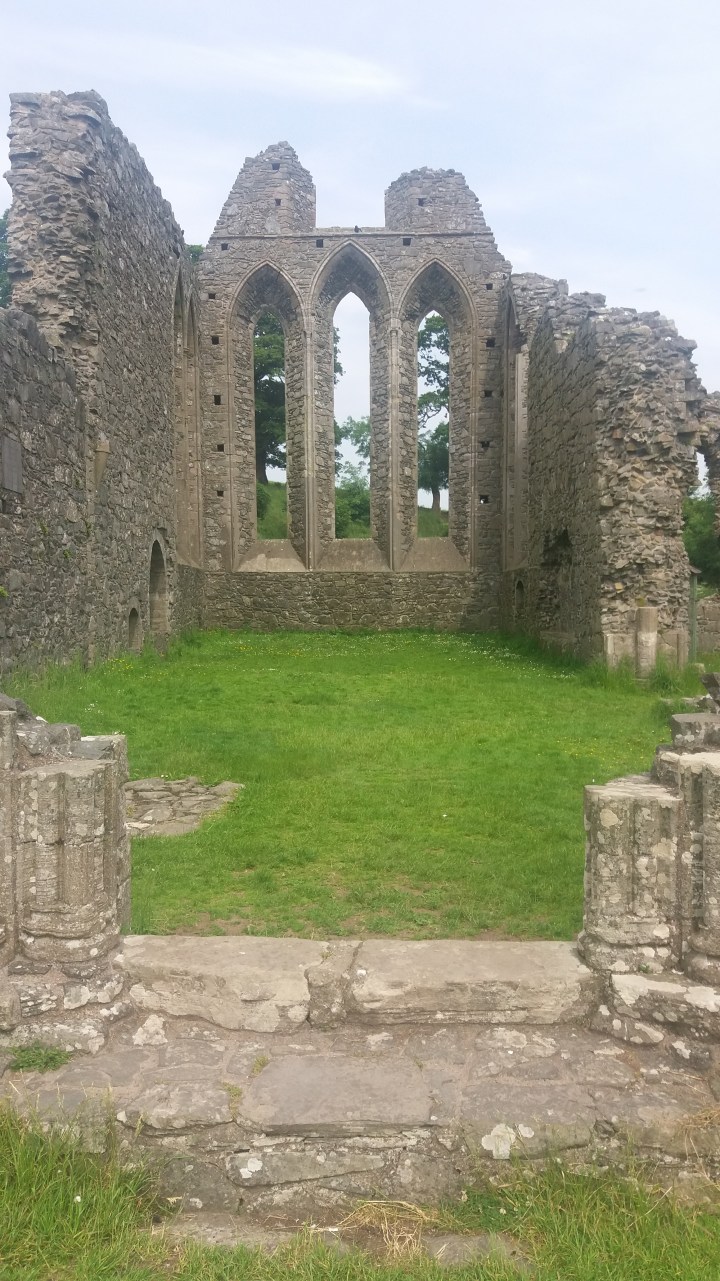
Inch Abbey is located in what is a still remarkably peaceful and secluded setting. Founded by John de Courcy in the 1180s as his atonement for his destruction of Erenagh Abbey on the other side of Downpatrick, Cistercian monks were brought here to populate it from Furness Abbey in Lancashire. According to the tourist board it is (along with Grey Abbey on the Ards peninsula) “the earliest example of Gothic architecture in Ireland and finest example of Anglo-Norman Cistercian architecture in Ulster.” There was a monastery on this site before the present monastery, a timber church and ancillary buildings surrounded by an earth bank, founded as early as 800 AD. But this was plundered by the Vikings on at least two occasions and destroyed before its re-establishment under John de Courcy.

IA Inch Abbey 03

The nave

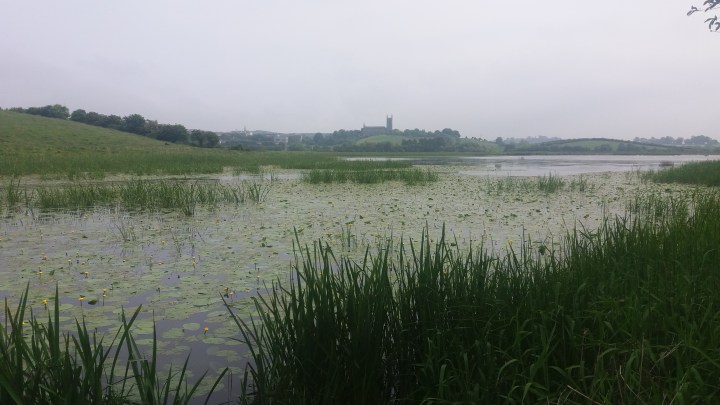
The view across the Quoile to Downpatrick and its cathedral gives an idea of its location near to the main settlement but quite separate from it.

IA view to Cathedral

Looking across the Quoile to Down Cathedral

The cathedral was also originally established as a monastery by John de Courcy in the 1180s with Benedictine monks from St Werburgh’s monastery in Chester (see https://velvethummingbee.wordpress.com/2018/02/24/chester-cathedral-refectory/).

IA Inch Abbey entrance b

Entrance to the chancel

IA Inch Abbey base of columns at entrance

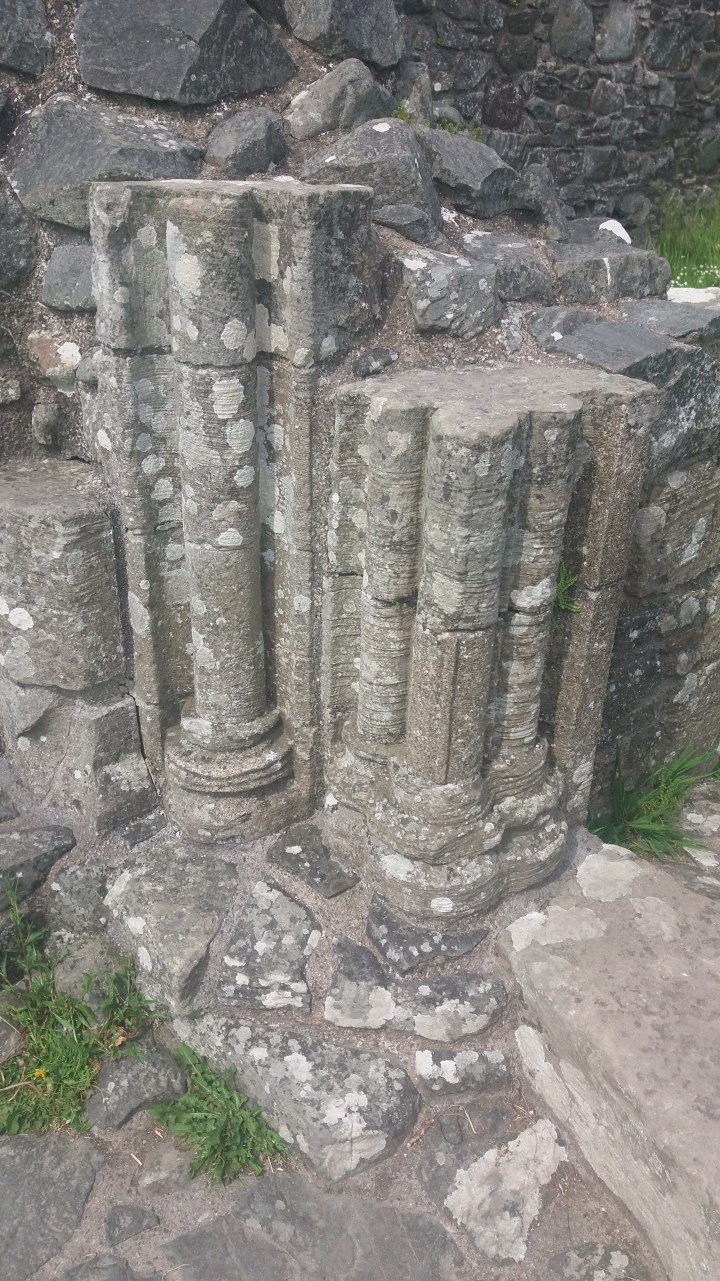
Base of column

The Cistercians followed a strict rule, with much silence, little music and a self-sufficiency that eschewed the use of meat. There would have been a plentiful supply of fish for them here, the site originally was an island.

IA Inch Abbey chapter house

Chapter house

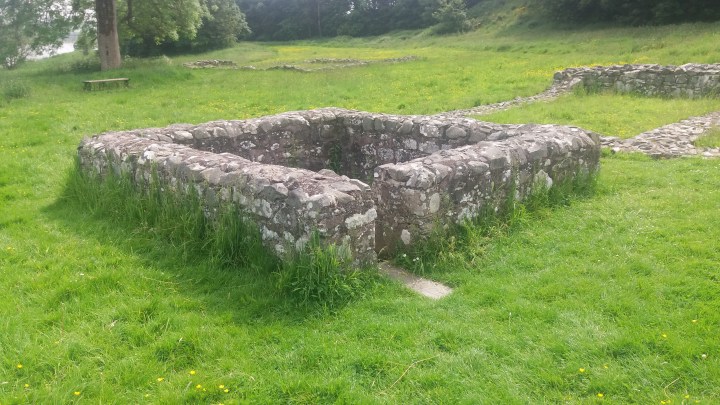
Around the ruins of the Abbey there are the remains of what have been identified as the kitchen, a bakehouse, a guest house, the infirmary and a well. The Abbey was dissolved in 1541.

IA Inch Abbey well

Abbey well

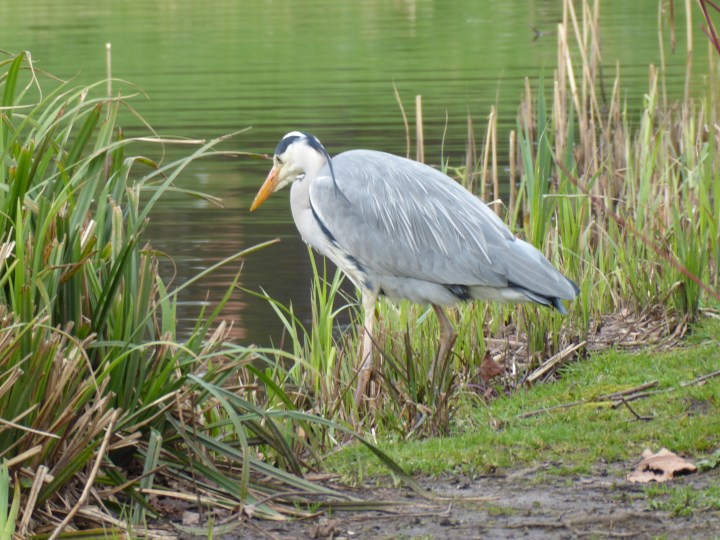
Sefton Park Heron

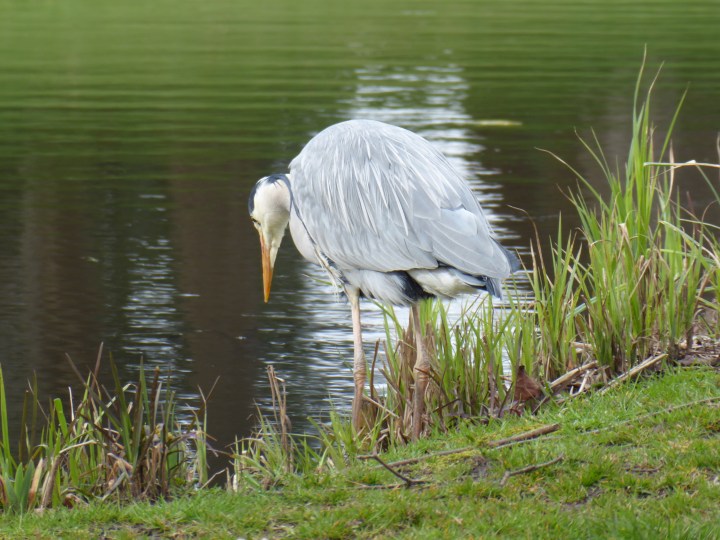
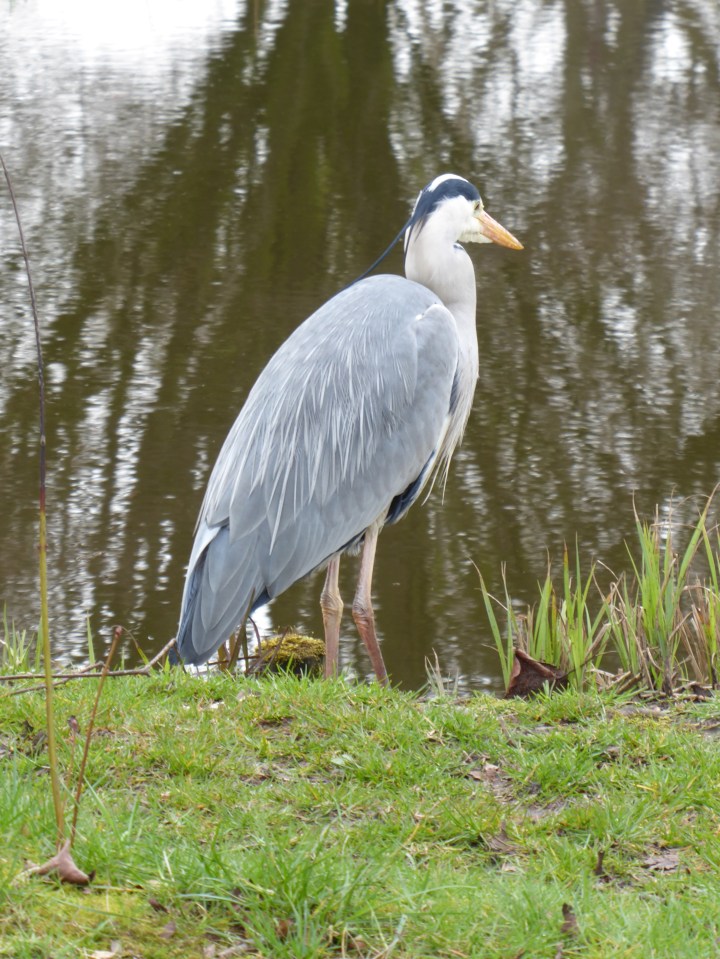
In Liverpool recently I was pleased to get these pictures of the heron in Sefton Park. The heron seemed quite unperturbed by my presence and that of many other people quite nearby as he watched the lake for signs of a potential meal.

Sefton Park Heron 02

Sefton Park Heron 04

Sefton Park Heron 05

Sefton Park Heron 06

Sefton Park Heron 07


Unitarian College Cluj/Kolozsvár

College LS 05

Kolozsvar Unitarian HQ 01

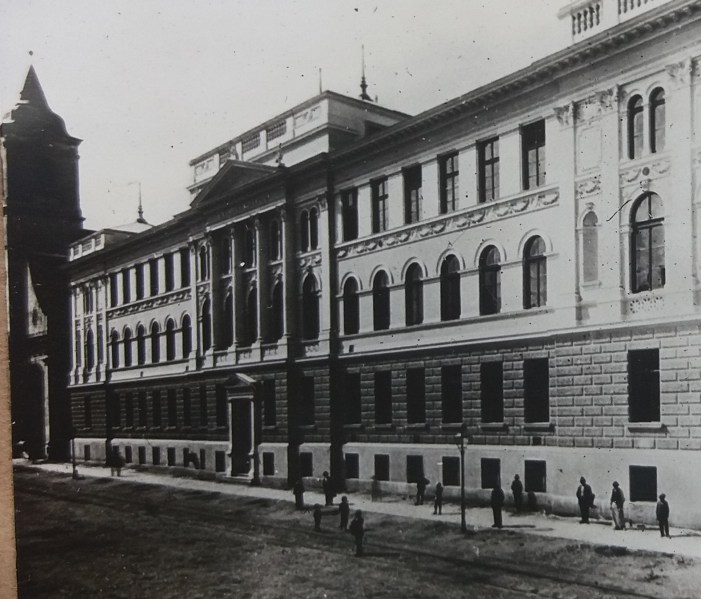
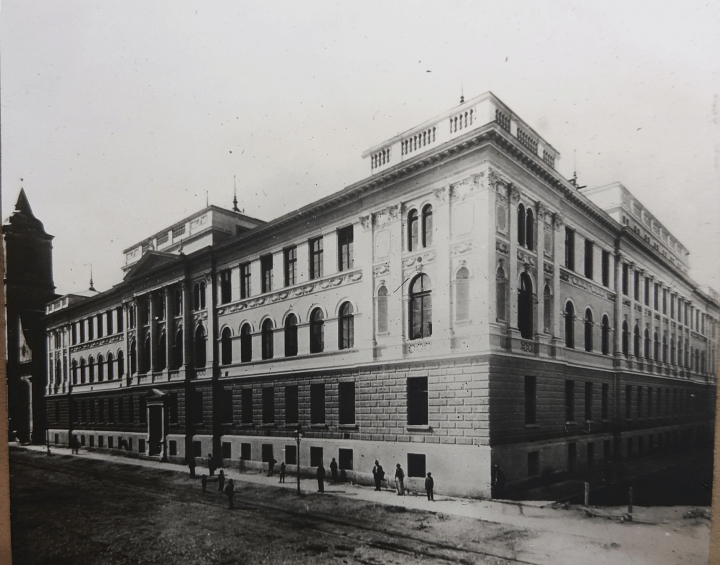
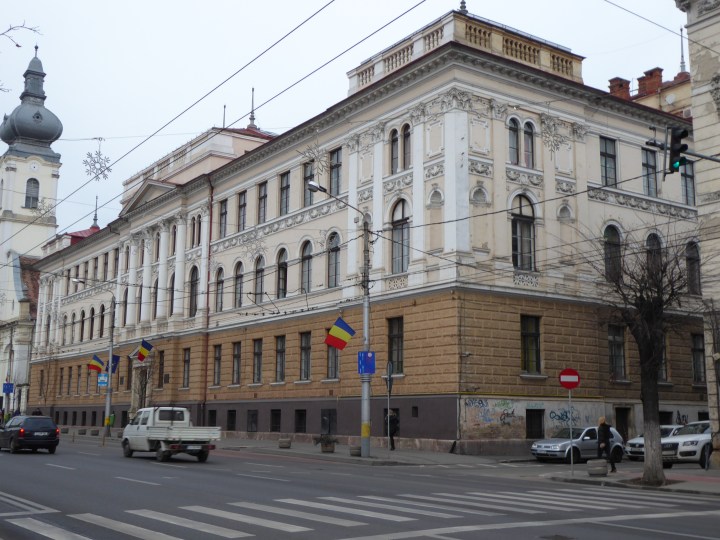
Recently I have published a couple of ‘then and now’ shots featuring Edwardian postcards and contemporary photographs on this blog. One featured a view of a street in Toxteth and one some of the churches in Banbridge. This is another ‘then and now’ view but, in this case, it is taken from a glass lantern slide of the Unitarian College building in Cluj/Kolozsvár.

I have an interesting set of magic lantern slides depicting notable sites in Hungary and Transylvania, some of them showing groups of people at what must be some sort of gathering, possibly international. The purpose of the collection, which is in a poor state and which is probably not complete, is to illustrate something about the Unitarian history and life of that region. They are not easy to date exactly but this slide helps enormously.

The Unitarian College was built in 1901, then a very modern, state of the art building which is still impressive and giving excellent service as headquarters, College as well as senior and junior schools.

It is right next door to the First Unitarian Church which can just be seen on the left of the photograph. This helps us date the slides since the College was built in 1901 and the church had the top of its tower replaced in 1908. In that year Lajos Pákey, the city architect who was educated at the Unitarian College and was also responsible for many of the prominent buildings and monuments in the town, redesigned the tower in its present baroque form. I had always assumed that this feature dated to the 1790s when the church was built and had never seen a picture of the original tower before finding this slide.

By chance I took a picture in January 2018 from the same place as the photographer of 1901-1908, not surprising since there are not so many vantage points for such a large building. But here we have the same view, separated by about 110 years.

As time and circumstance permit I will try and digitise the glass lantern slides and post them on here.


St Patrick’s Day, Downpatrick 2018

Preparations underway

Preparations getting underway in the town


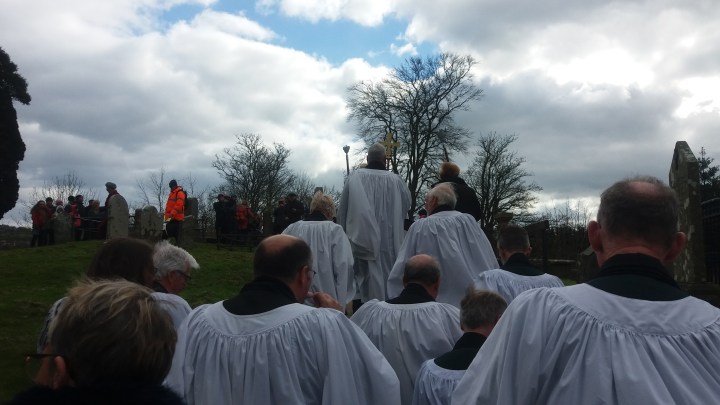
Going up to the Cathedral

Going up to the Cathedral for the service


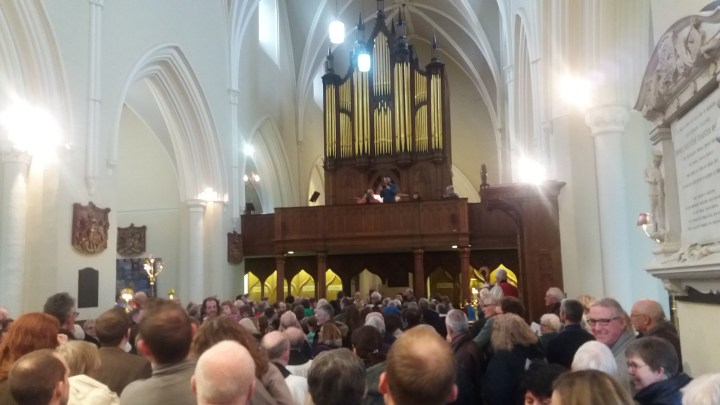
Congregation photographed

The congregation gather for a photograph inside the Cathedral


20180317_131239

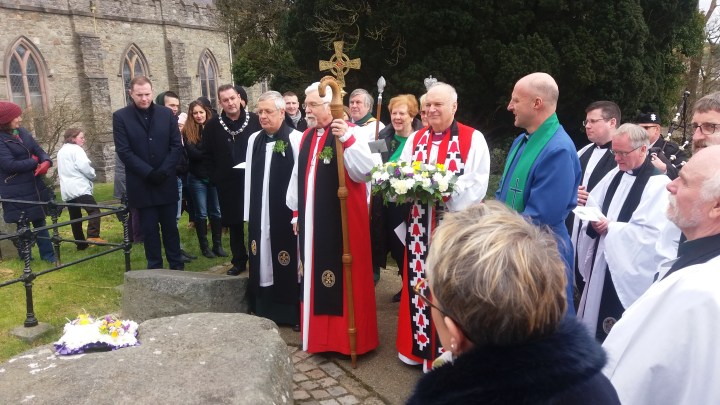
Processing up to the grave after the service


Laying wreath

Visiting Bishop Alf Cooper from Chile lays a wreath


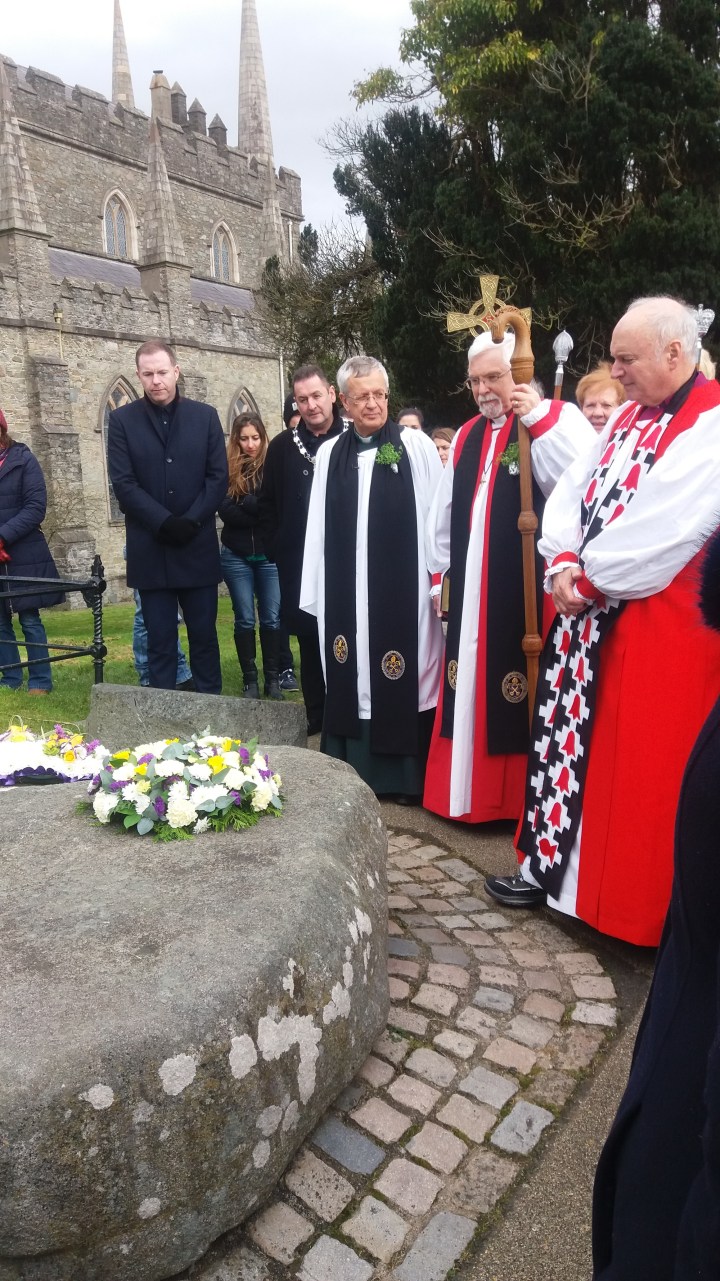
St Patrick's grave

St Patrick’s grave outside Down Cathedral


Giant Saint 01

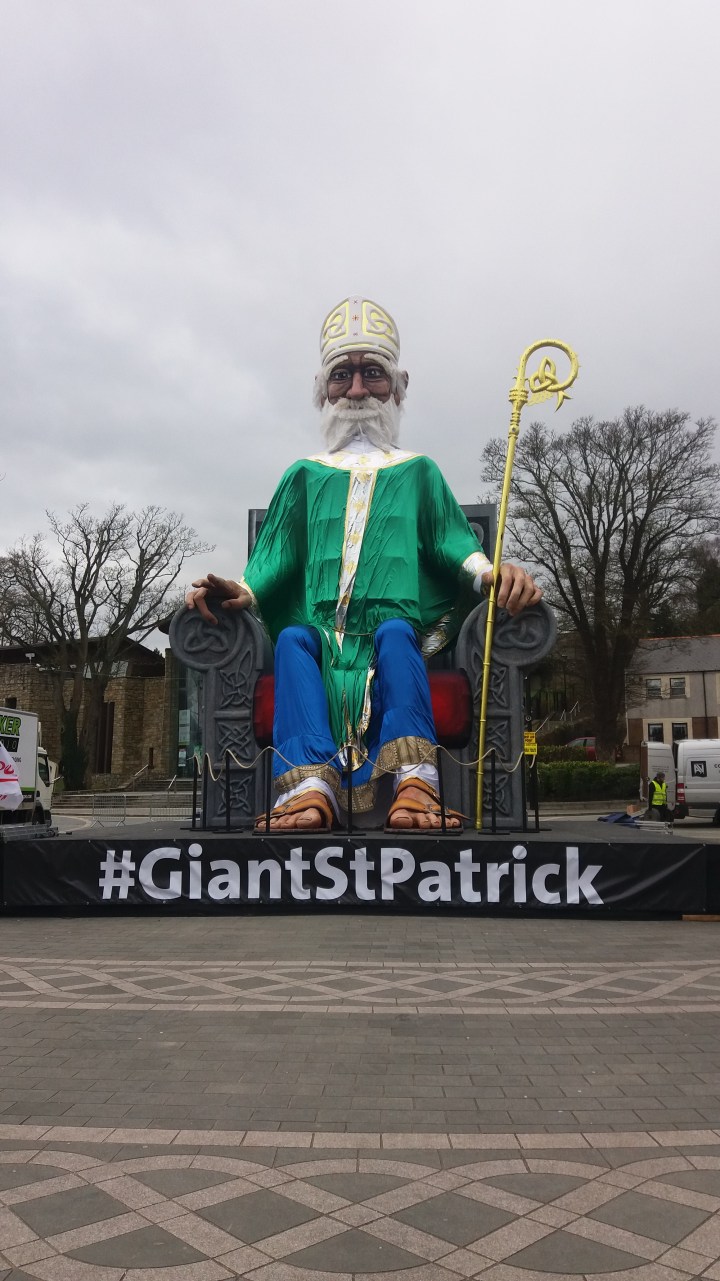
The giant statue of the saint

Faith and Freedom Calendar 2018

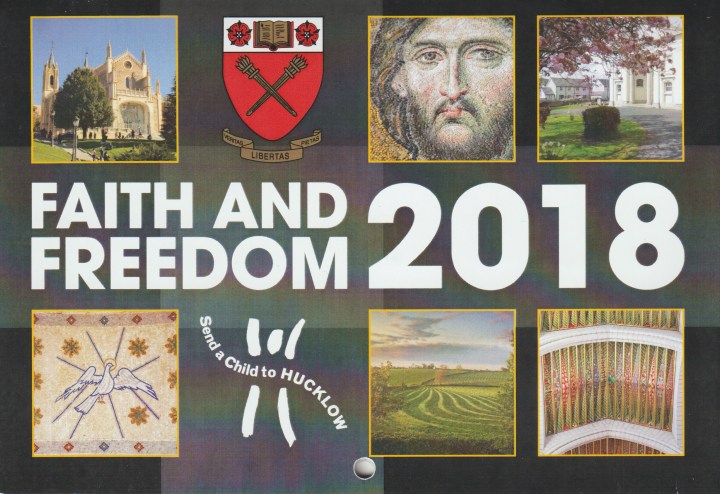
The 2018 Faith and Freedom Calendar is now available. A complimentary copy has been sent to every subscriber to the journal and additional copies can be ordered.

Faith and Freedom Calendar Cover 2018

If you would like to order additional copies please contact Nigel Clarke (faithandfreedom@btinternet.com). For any extra copies we suggest you consider making a donation of £5. All proceeds will be donated to the Send a Child to Hucklow Fund, to help further its work in enabling disadvantaged children to enjoy a much-needed holiday in the Peak District.

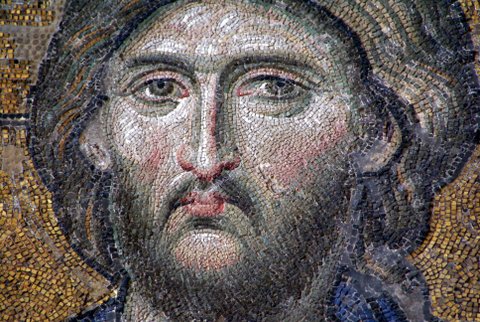
We have some magnificent images – and receive far more than we could ever use, although we try to include as many as possible in the cover. The image at the top of this page is taken from the cover – it is a detail of a mosaic at the monastery of Sumela, Trebizond, taken by Anne Wild, who contributes a number of spectacular images to the Calendar.

Here are some more images from the 2018 Calendar:

Chester Calendar

West Window, Chester Cathedral (Photo: Alison Steers)

Cows Calendar

Evening in Lissagally (Photo: Paul Eliasberg)

The back page of the Calendar lists some of the thanks owed to those involved in the production. Thanks also go to Trimprint, our printers, and to Nigel Clarke who directs the whole project. Order your copy while stocks last!

Faith and Freedom Calendar Back Cover 2018

Remonstrant Meeting-House, Ballymena

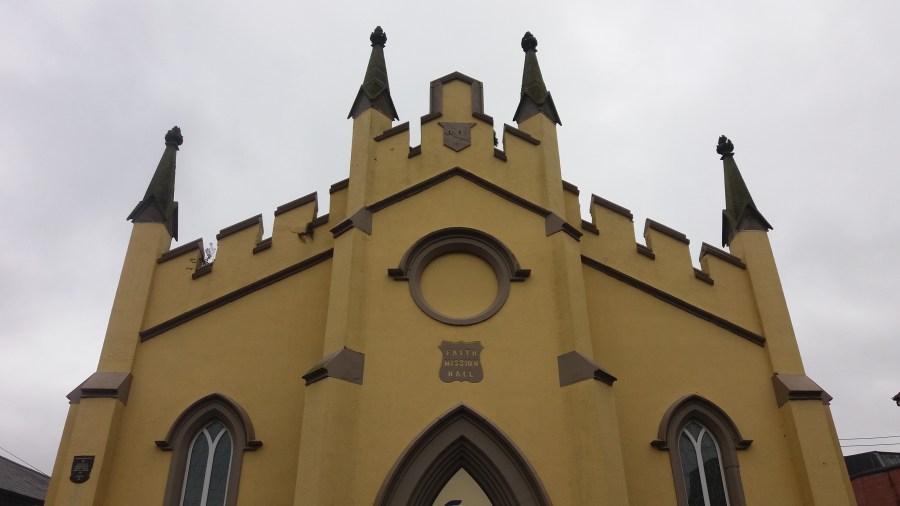
A visit to Ballymena meant the opportunity to go and have a look at the former Remonstrant meeting-house there. The entry in the Unitarian Heritage book is a bit limited, as the Irish section of that otherwise invaluable book often is. It says simply ’High Street. Antrim. 1845’ in the disused churches section and gives no further details and has no illustrations. Although it is situated on the High Street it’s actually a bit tucked away and not that easy to find.

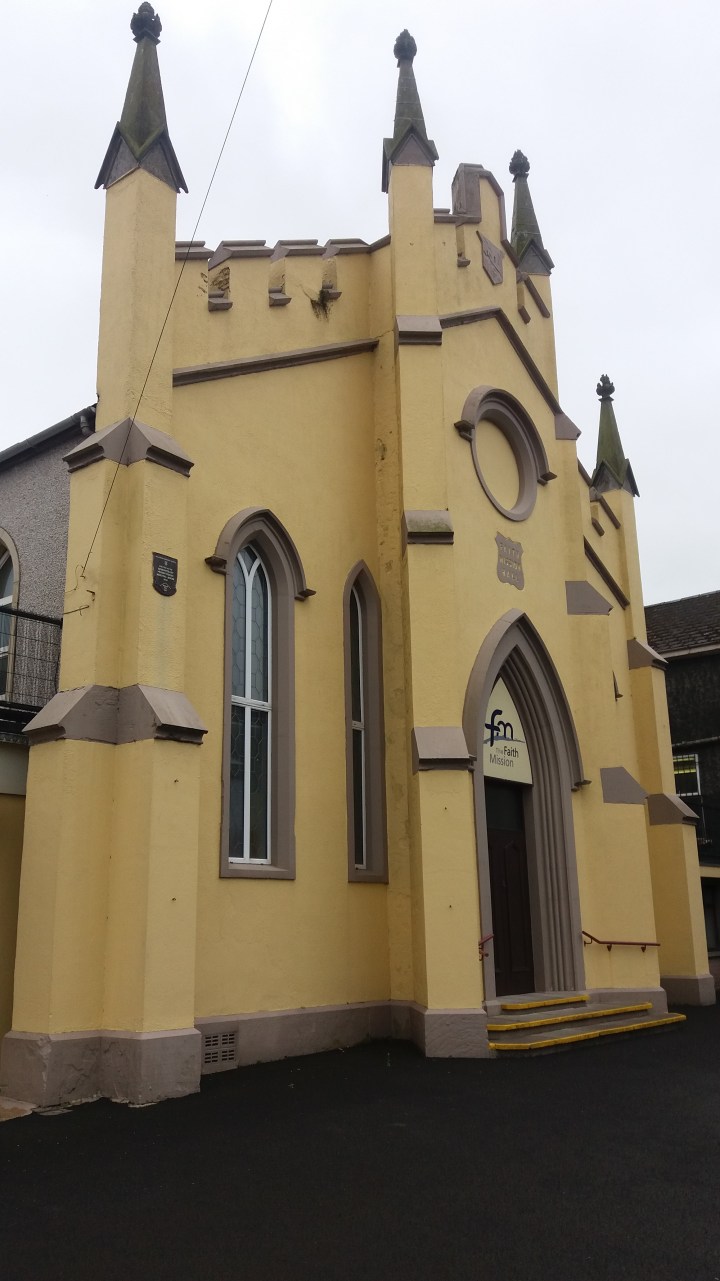
But as the photos show it is an interesting and unusual building that was erected by the Non-Subscribers in 1845. The date stone can still be seen, and although the congregation finally departed in 1926 it is not ‘disused’ having been the home of the Faith Mission church for decades.

Date plaque Ballymena 04

Having said that there is precious little information on the ground in Ballymena about this building. I asked in the Faith Mission shop if they had any information on the building and they told me no. In the Council run Braid Centre – a Museum and Arts Centre – although they had an interesting collection of leaflets and other pamphlets, they had nothing on this building.

I was surprised the Council had nothing because their predecessor, the Ballymena Borough Council, had thought it worthy enough to merit a plaque which was put up in 1995, on the 150th anniversary of the building’s opening. I knew this because I was there all those years ago and somewhere have a black and white press picture of the occasion.
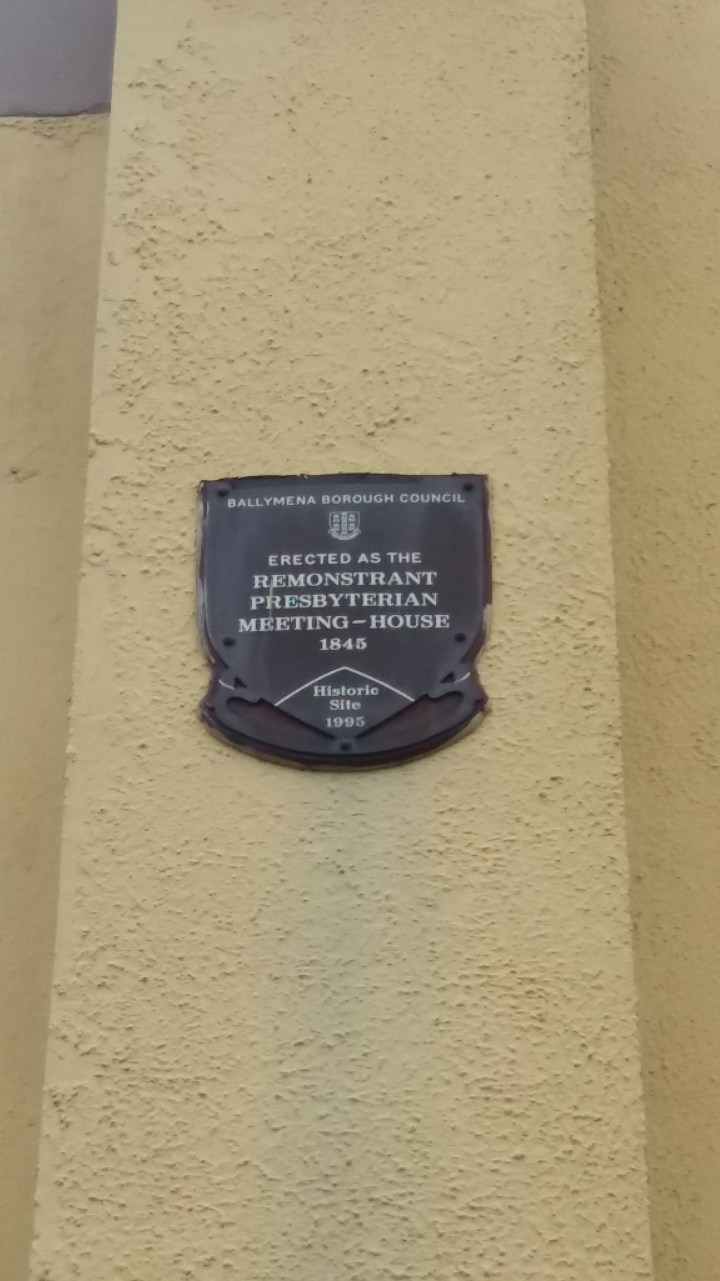
Remonstrant plaque 03

It is a curious building designed by Thomas Jackson, an architect with a Quaker background, who contributed a great deal to the buildings of Belfast including St Malachy’s Roman Catholic Church which, although much grander by far, nevertheless shares some architectural details with the Ballymena Remonstrant church.

The Ballymena congregation was part of the impressive missionary drive inaugurated by the Remonstrant Synod and was opened on Sunday, 9th November by Rev Henry Montgomery. I am indebted to ‘Dryasdust’ writing in the Non-Subscribing Presbyterian in September 1994 for details concerning the congregation’s life. He writes that the original congregation had 57 families in its first year of existence. Given that they had built such a notable edifice they might have been expected to be able to flourish. The first minister was the Rev Francis McCammon who was born in Larne but had been ministering in Diss in Norfolk immediately prior to receiving a call to Ballymena. Unfortunately his ministry ended fairly acrimoniously as did the ministry of his successor James McFerran. However, he was followed by the Rev J.A. Crozier (1855-1865) who seems to have been highly successful in building the church up into a flourishing cause. Unfortunately following his departure to Newry in 1865 numbers never really recovered and the last minister (Rev Halliwell Thomas) left in 1875. The congregation struggled on in some form or other until the First World War but finally closed in the 1920s with the building being sold in 1926.
Faith Mission full view side

The Bible Christian reported the opening in the following way:

The meeting-house of the new congregation in Ballymena, in connexion with the Remonstrant Synod of Ulster, was opened for divine worship, on Sunday, Nov. 9, by Dr Montgomery, who preached from Matthew, 10th chapter and 34th verse, an eloquent and powerful discourse. It has been erected from the designs, and under the direction of Mr. Thomas Jackson, architect Belfast. The style of the building is an adaptation of the ecclesiastical style (commonly, but erroneously called Gothic) of about the twelfth and thirteenth centuries. The front elevation is in the form of a gable, boldly enriched by projecting buttresses, with cut-stone weatherings, surmounted by pinnacles and leaving embrasures, with cut-stone dressings, extended between them. The entrance door, with the windows in front, and on the flanks of the building, is surrounded by appropriate cut-stone dressings, the sash frames being of cast metal in imitation of cut stone. In the centre of the front, over the door entrance, is a large ornamental wheel window, also formed of cast metal. The meeting-house contains 250 sittings; it is entered through a commodious porch and hall, over which is a school room, which is arranged so as to admit of being added as a gallery to the house, at a future time, should additional accommodation be required. The committee contemplate the erection of a residence for their clergyman, contiguous to the meeting-house. The following gentlemen acted as collectors on the occasion: Thomas Casement, Esq. J.P. Ballee-house; Wm. Coates, Esq. J.P. Glentoran, Belfast; Archibald Barklie, Esq. Inver, Larne; John Dickey, Esq. Leighenmore, Ballymena; Alexander O’Rorke, Esq. Ballymena; William Beggs, Esq. Lisnafillen, Ballymena. The collection, including donations from parties who could not attend, amounted to upwards of £170.

Faith Mission 03

Events in July at the Lakeside


In July we had two highly successful events at the Lakeside Inn, Ballydugan. We were blessed by good weather on both occasions and both events were really well supported.

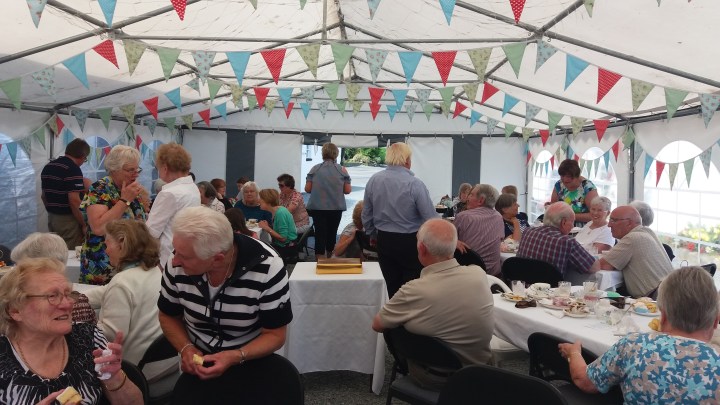
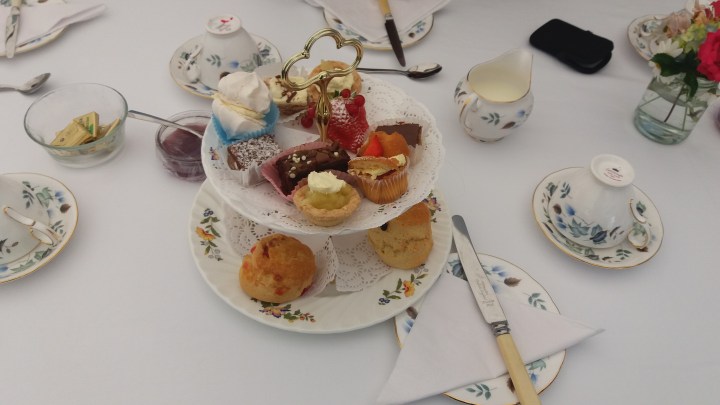
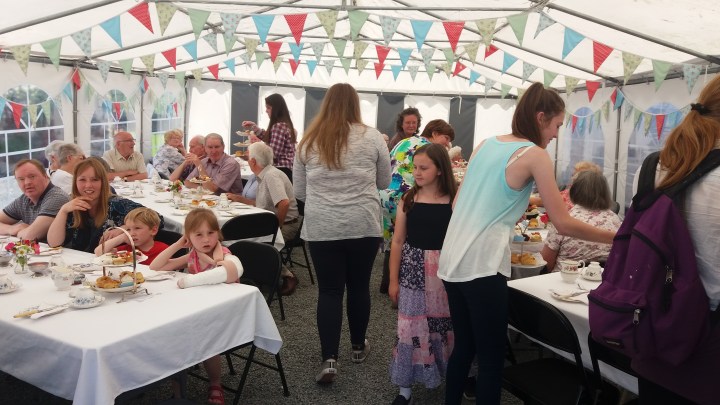
The first, on 8th July, was a joint Afternoon Tea for members of Downpatrick, Ballee and Clough. This was a very pleasant gathering at which a special presentation was made to Myrtle for her thirty years as treasurer of the Downpatrick congregation. As always the lake looked particularly impressive and we were joined (see picture at the top of the page) by the swans, their cygnets and a heron.

ATview01

Inside the marquee

ATcakes

Cakes

ATview02

Afternoon tea

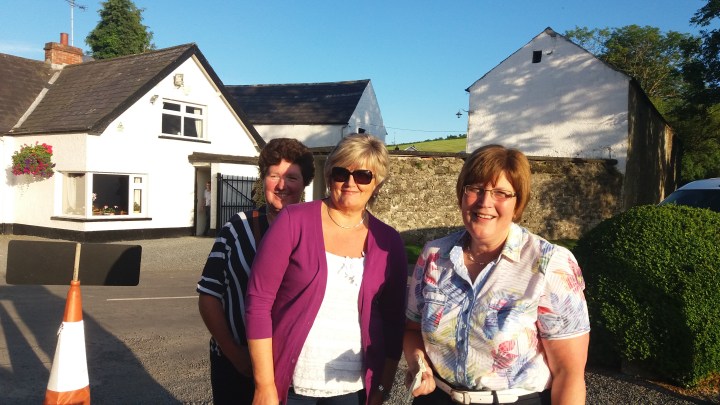
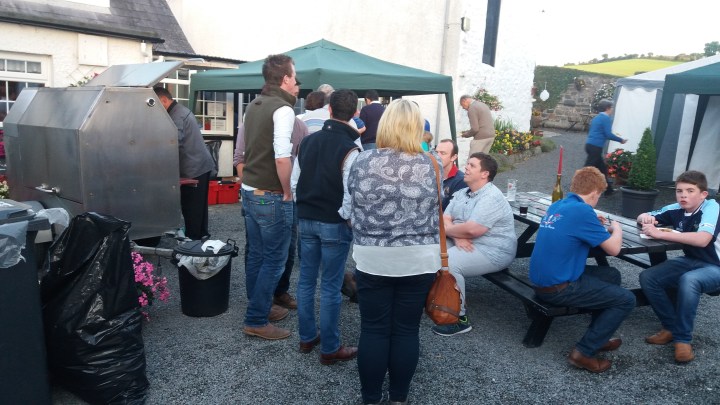
On 22nd July we held our Treasure Hunt and Hog Roast. This was another wonderful occasion with many people participating and around £1,000 raised for Downpatrick church funds. It was an especially beautiful night to be travelling around the countryside of this part of county Down and we are indebted, as ever, to those who set the tricky questions, those who marked them, the team who set the cars on their way and those who helped with the parking. Dr Milhench and his family won the Treasure Hunt and very kindly gave the prize back to the church. As always the Lakeside Inn is such a tremendous venue for occasions like this and we are grateful to Margaret and Geoffrey for hosting the event so wonderfully well.

THsettingoff01

Setting off from the car park on the treasure hunt

THAnblMarnMarg

Annabel, Marion and Margaret

THinmarquee01

Gathering after the treasure hunt

THRF

Renee on the keyboards

THhog

Queuing for the hog roast

THannounceresults

Announcing  the results and the winners

1904 Oldsmobile Curved Dash


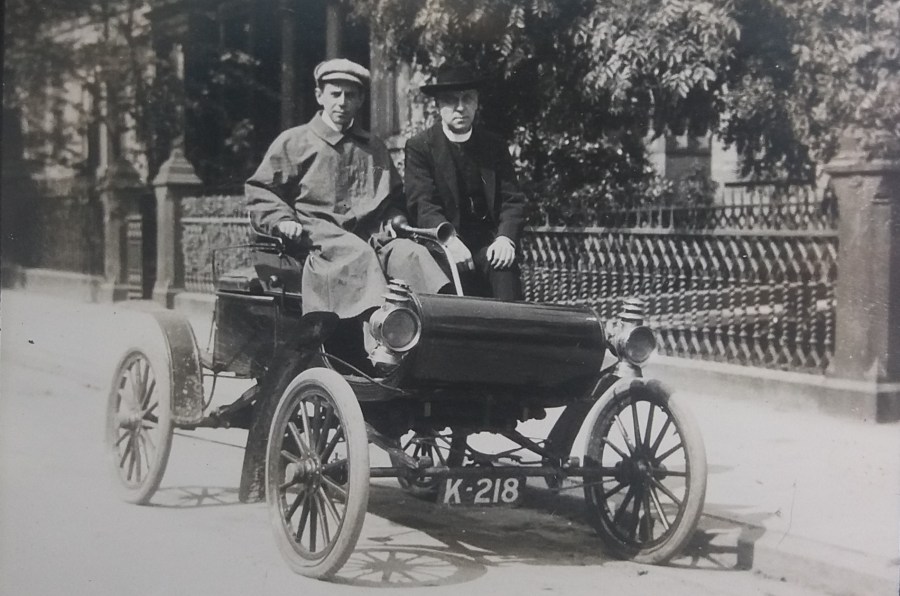
A few weeks ago I posted the above picture of a glass lantern slide featuring a driver and a clergyman on an unidentified early motor car bearing a very early Liverpool registration number. I have not been able to identify the driver or his passenger but thanks to Linda King and also Bozi Mohacek of the Surrey Vintage Vehicle Society the car can definitely be identified.

Linda suggested Rootschat would be able to help and from there received a suggestion that the Surrey Vintage Vehicle Society could help. They have over 2,750 enquiries on their website so I asked them and very quickly received word back that the car is a 1904 Oldsmobile Curved Dash 5HP Two-seater. The date is approximate but since Liverpool registrations only began in December 1903 some time in 1904 seems reasonable.

Oldsmobile Runabout 1906

Oldsmobile Runabout (Source: Grace’s Guide to British Industrial History)

It was a very popular car and images of it can be found all over the internet. The first mass-produced motor car it was manufactured in Detroit, Michigan and between 1901 and 1907 some 19,000 were made and sold around the world. In the UK it sold for £185 in 1902.


1902 Oldsmobile advert

Advert from The Autocar, November 1st 1902 (Source: Grace’s Guide to British Industrial History)


Oldsmobile1903 advert

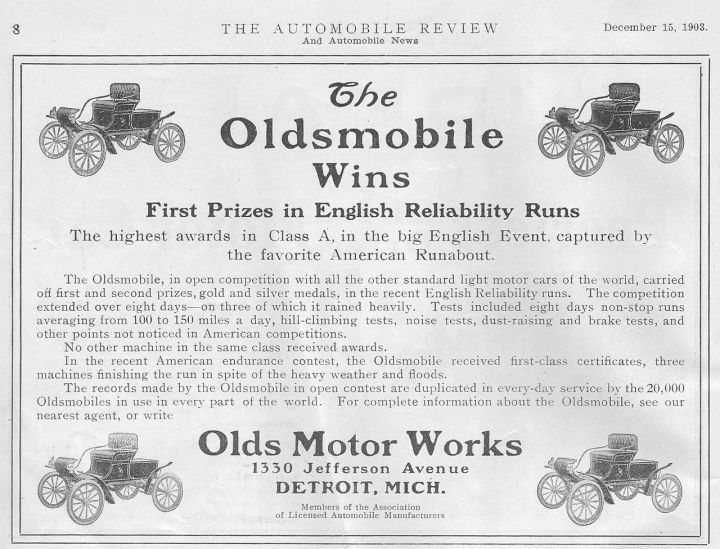
Advertisement from The Automobile Review, December 15th 1903 (Source: Wikipedia)

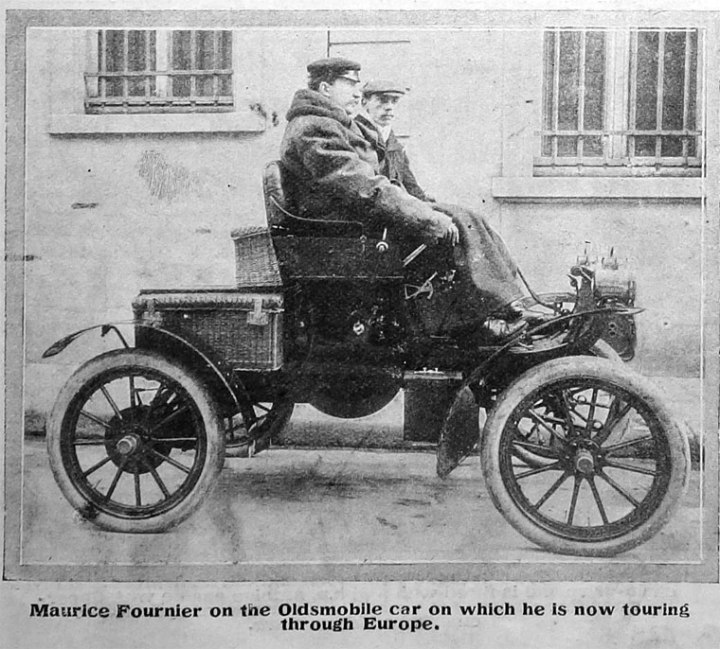
In 1904 Maurice Fournier, an engineer and the 1903 ‘World Motorcycling Champion’, travelled 4,600 kilometres around Europe in an Oldsmobile. It must have been an uncomfortable journey.

Oldsmobile 1904

Maurice Fournier travelling through Europe in 1904 Source: Grace’s Guide to British Industrial History)

It was a relatively cheap vehicle, although at £185 outside the pocket of most people, but still cheaper than a lot of other cars, if far more basic in its design. Despite the claims of the advert that “with only one lever to use….you hardly need to know how to operate an Oldsmobile” it must have been difficult to handle. Maurice Fournier certainly got all round Europe in one though, and it must have been good enough for our unnamed driver and his passenger to get round Liverpool in, during the first decade of the twentieth century.

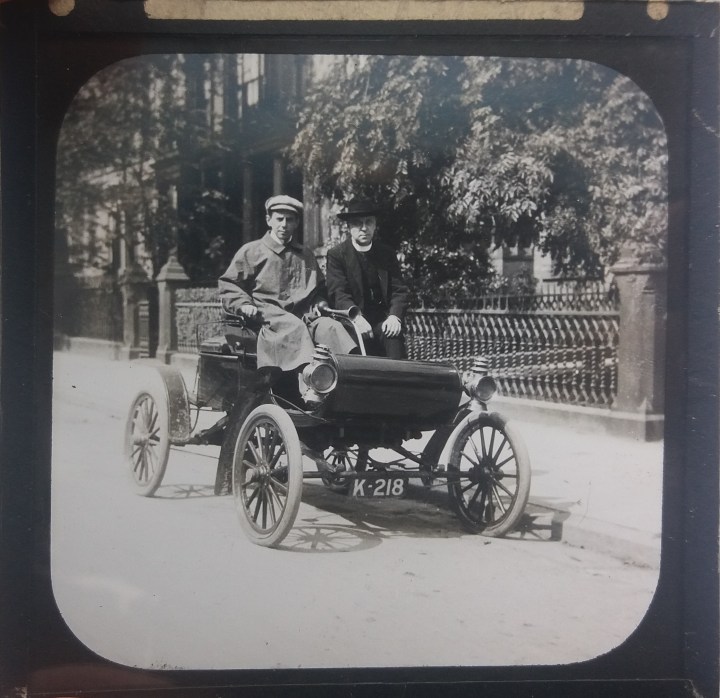
K-218 Liverpool registered car c.1903

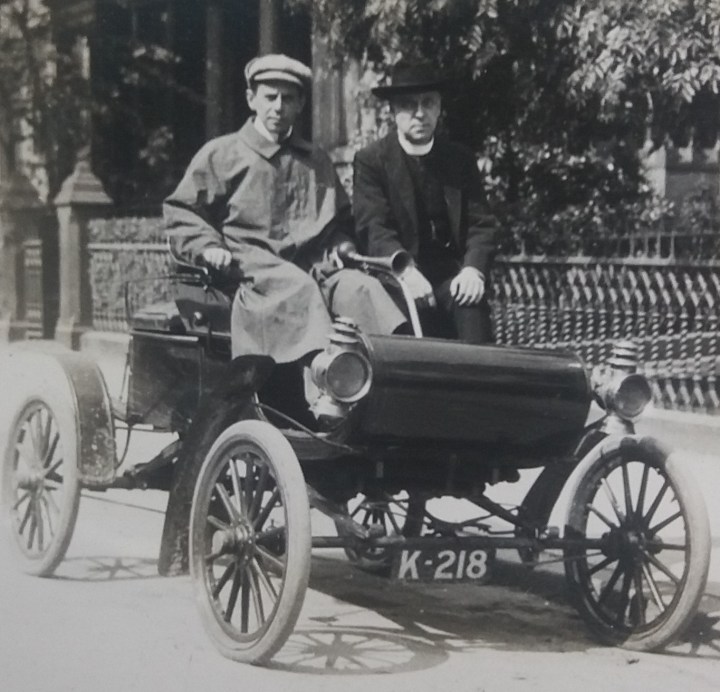
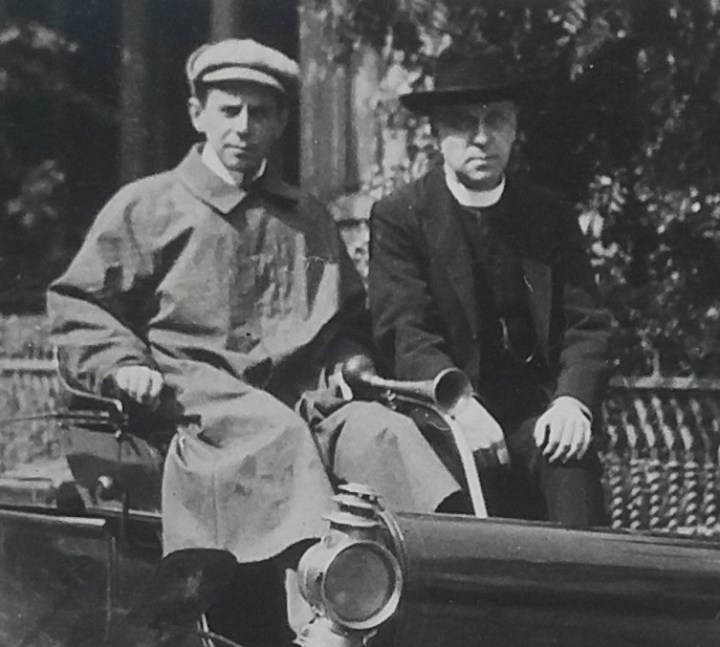
A car is parked at the roadside on a sunny day.  The driver is dressed for some serious motoring whilst his passenger is a clergyman without an overcoat. He looks slightly uncomfortable perched on the seat of the open car. Who is he? Could he be the owner, or a friend or relative of the driver? It’s hard to say but here we have a glimpse into a pioneering moment in motoring history.

K218 cropped full

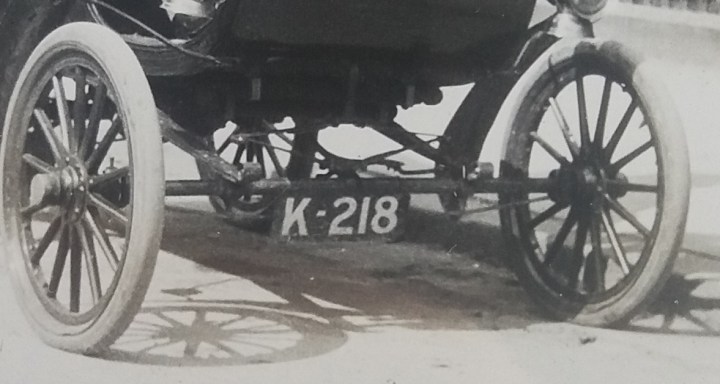
I picked this glass lantern slide up on eBay for a couple of pounds. It interested me because it is an early example of an automobile, probably dating from about 1903. I haven’t been able to identify the make of the car (indeed I would be grateful for any suggestions) but what is clear is that it was registered in Liverpool and was probably photographed on Princes Avenue. I don’t know who the clergyman was or the driver but the letter K was used for cars in Liverpool from 1903 to 1914. The records for these early registrations no longer exist but presumably this car was the 218th car to be registered in Liverpool. Whether that means the photograph was taken in 1903 I don’t know (would at least 218 cars be registered in the first year of the registration system?), but judging from the style of the car, which doesn’t have a steering wheel, I would guess that it was manufactured closer to 1903 than 1914. I had thought it might have been a Liver Phaeton, manufactured in Birkenhead by William Lea, of which only one example survives in the Museum of Liverpool. However, the car in the Museum has a number of differences and this clearly isn’t a Liver Phaeton. Having said that William Lea was a highly successful entrepreneur who made his own cars using imported Benz engines including a larger version of the Phaeton. His showrooms in Birkenhead had an indoor track that could be used for test drives with room, apparently, for fifty cars. By 1909 he was also the agent for “Benz, Progress, Darracq and English Benz Cars”, all available from his depot on Berry Street in Liverpool. He also advertised a very large stock of vehicles for sale. But he was far from being the only car dealer in Liverpool at the time. The city had its own Self-propelled Traffic Association from 1896 (President, the Earl of Derby) and The Liverpool Show of 1903 at St George’s Hall claimed to possess the largest (and best) exhibition of motors outside of London. It is possible to search back issues of The Autocar online courtesy of Grace’s Guide (http://www.gracesguide.co.uk/Main_Page) but that just confirms the massive variety of vehicles available to early enthusiasts of motoring. If this clergyman was one of them he must have caused quite a stir being able to shoot around his parish in his own motor car, but I rather suspect that he was induced to climb aboard by a car-owning parishioner and have his photograph taken for posterity.

K218 detail

Paused at the roadside for a photograph

K218 numberplate

Numberplate

K218 Passenger and Driver

Driver and Passenger

The Ancient Chapel of Toxteth

ACT March 2017 exterior Sue photo

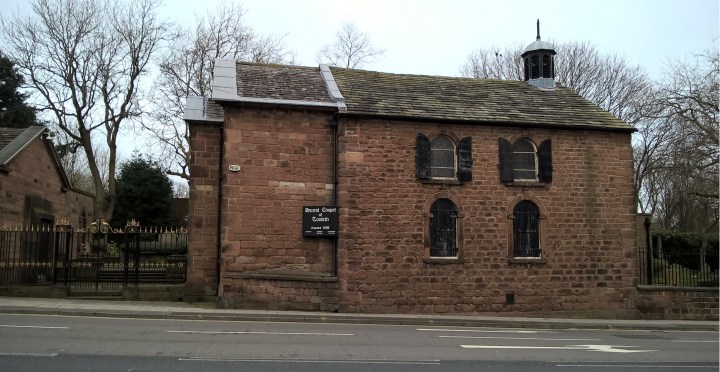
The Ancient Chapel of Toxteth (photo: Sue Steers)

I never like to pass up an opportunity to visit the Ancient Chapel of Toxteth. Anyone with an interest in Unitarian and Dissenting history, church architecture, or the history of Liverpool will not fail to be enthralled by such an evocative building. On Mothering Sunday I was very pleased to be able to join in Sunday worship there, a service conducted by lay preacher Graham Greenall who led an appropriate act of worship which weaved together themes for Mothers’ Day, peace and a reflection on the recent shocking events in Westminster.

The late Christopher Stell, who produced the Royal Commission on Historical Monuments inventory of chapels and meeting-houses in England, was a big fan of this chapel. Dating back to 1618 the building is really redolent of the late eighteenth century when it was restored. It is part of Toxteth but speaks of a continuity of worship that stretches from the puritan farmers who cleared the forest and built the chapel for their minister Richard Mather to the present day.

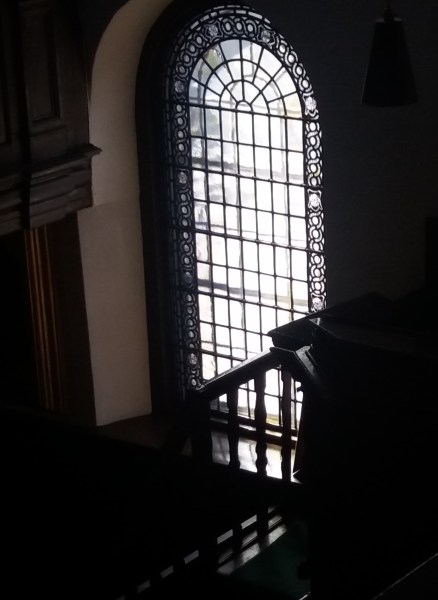
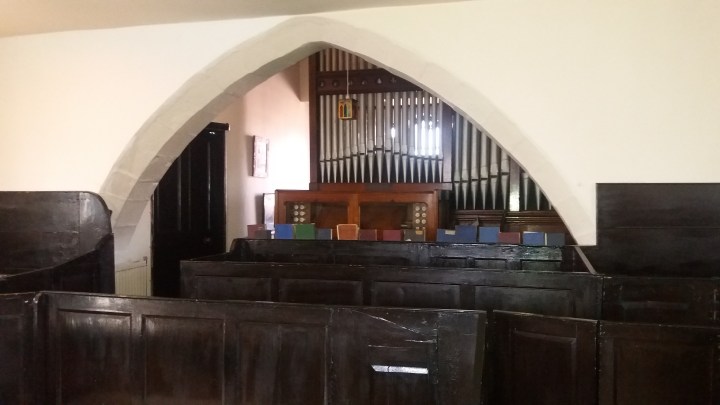
An examination of the interior always throws up new things. One thing that I learnt from Christopher Stell was that the chapel builders, although puritans, were also heirs to the Anglican tradition and almost certainly built a small chapel with a chancel on the lines of a parish church. Little remains to display this today but above the organ you can still see the chancel arch. At some point in the eighteenth century the chancel was turned into a schoolhouse, later still it was used to house the organ loft and the present porch.

In 2018 the congregation will celebrate 400 years of worship in their building and will mark that milestone with suitable events.

ACT March 2017 gallery view across

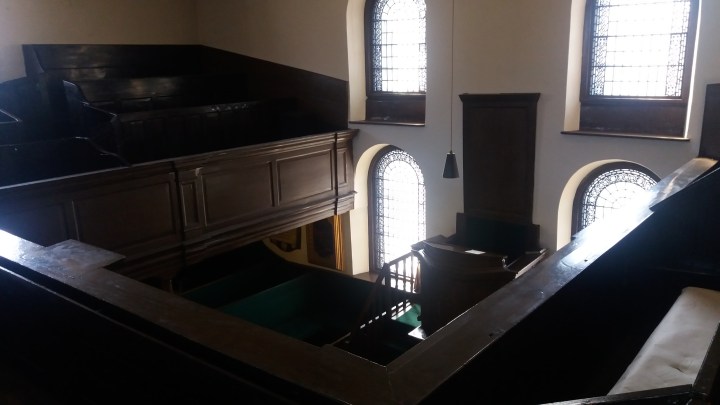
The view from the gallery

Richard Mather

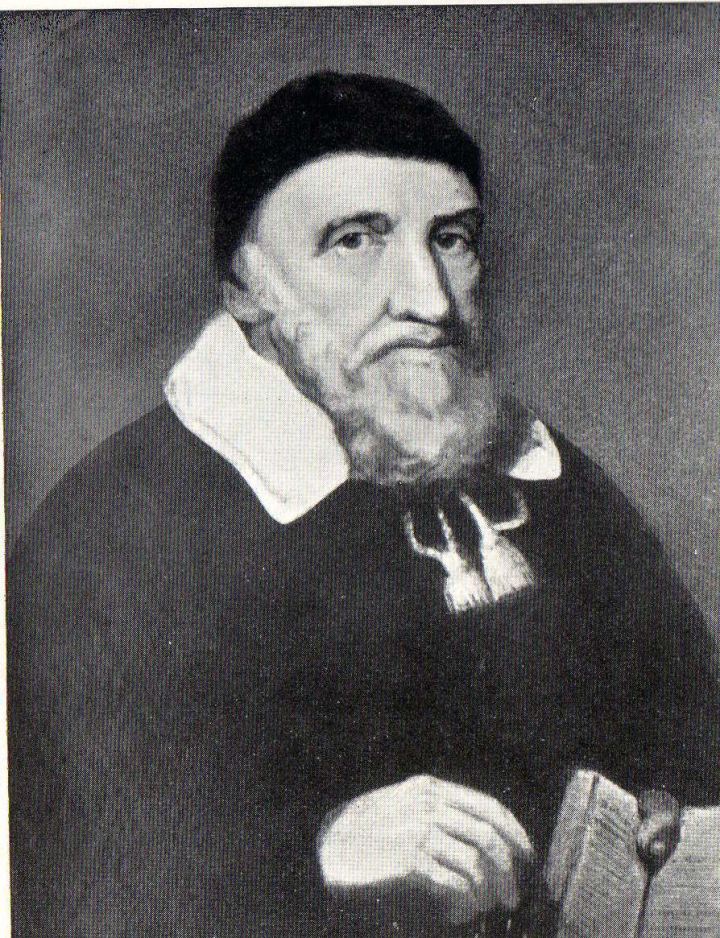
Richard Mather

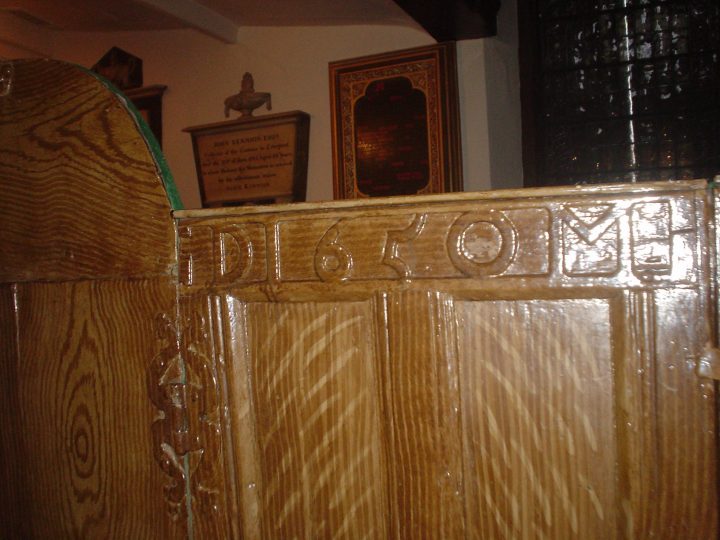
RM 1650

Mather family pew dating from 1650

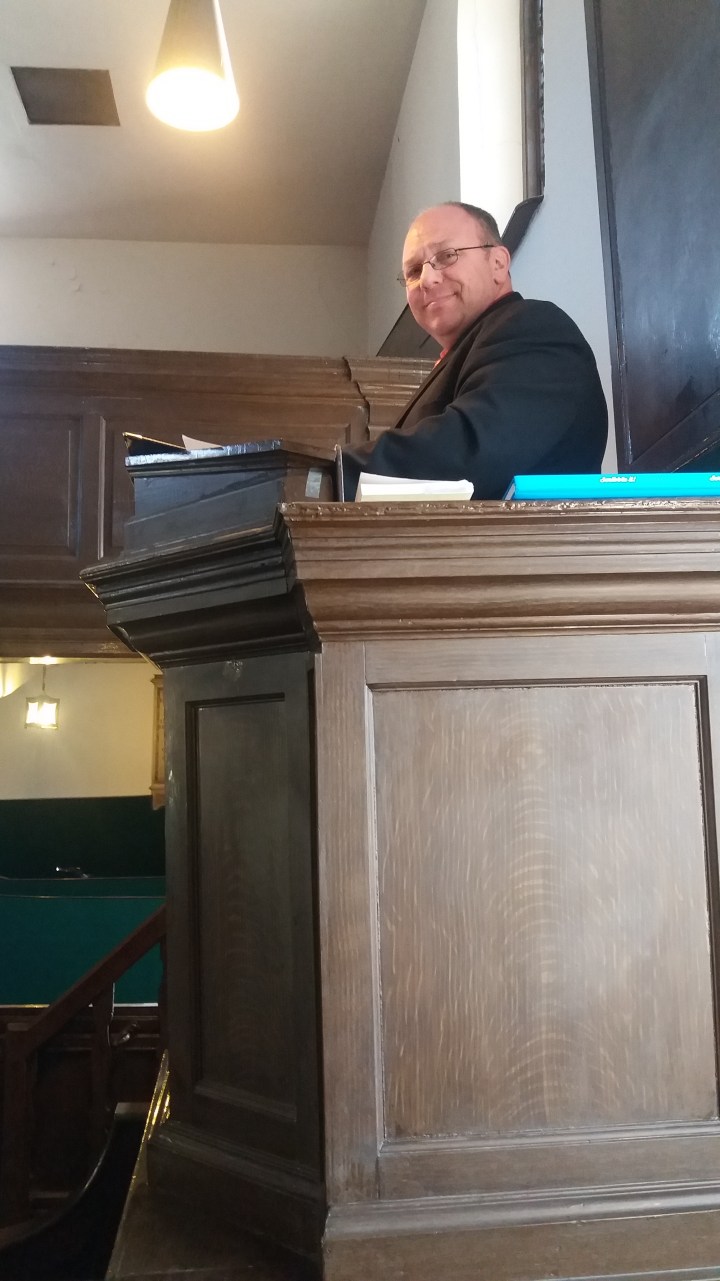
ACT March 2017 pulpit preacher

Graham Greenall in the pulpit

ACT March 2017 chancel arch 02

The chancel arch in front of the organ

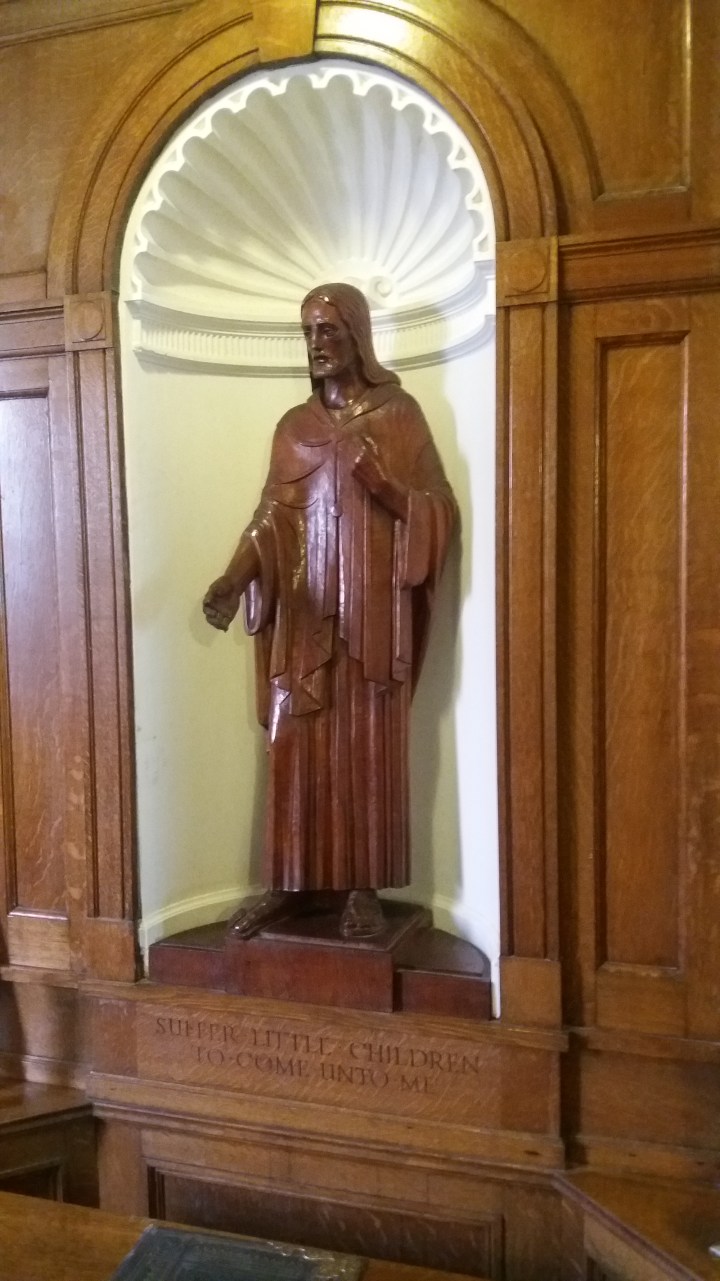
ACT March 2017 Sunday School corner

Sunday School corner, recently restored

ACT March 2017 Fifi 01 Sue

Fifi, who was also present, waiting patiently for some cake following the service (photo: Sue Steers)