You can’t help but be impressed by Coventry Cathedral, impressed because everything is given such height. The entrance area that connects with the old cathedral; the glass entrance screen featuring angels and saints; the baptistry window; the Chapel of Unity; Graham Sutherland’s tapestry of Christ in Glory; the walls themselves – everything is so high. And it is all so redolent of the cutting edge of art in the mid-1950s. Of course, absolutely every building can only reflect the times it was built in but I think for a building as important as a cathedral some attempt at transcending the contraints of the present day are necessary. Now I may be very naive to imagine that a medieval Gothic cathedral ever did this, or any other type of cathedral for that matter, but if you want to be pointed to some deeper experience of the divine through the medium of a building you need something that says more than ‘This is 1954’ writ large. Even Liverpool’s Metropolitan Cathedral, which speaks volumes for the 1960s and the heavy constraints placed by money and circumstances on building a cathedral by that date, still communicates very well a more profound encounter with the truly spiritual.
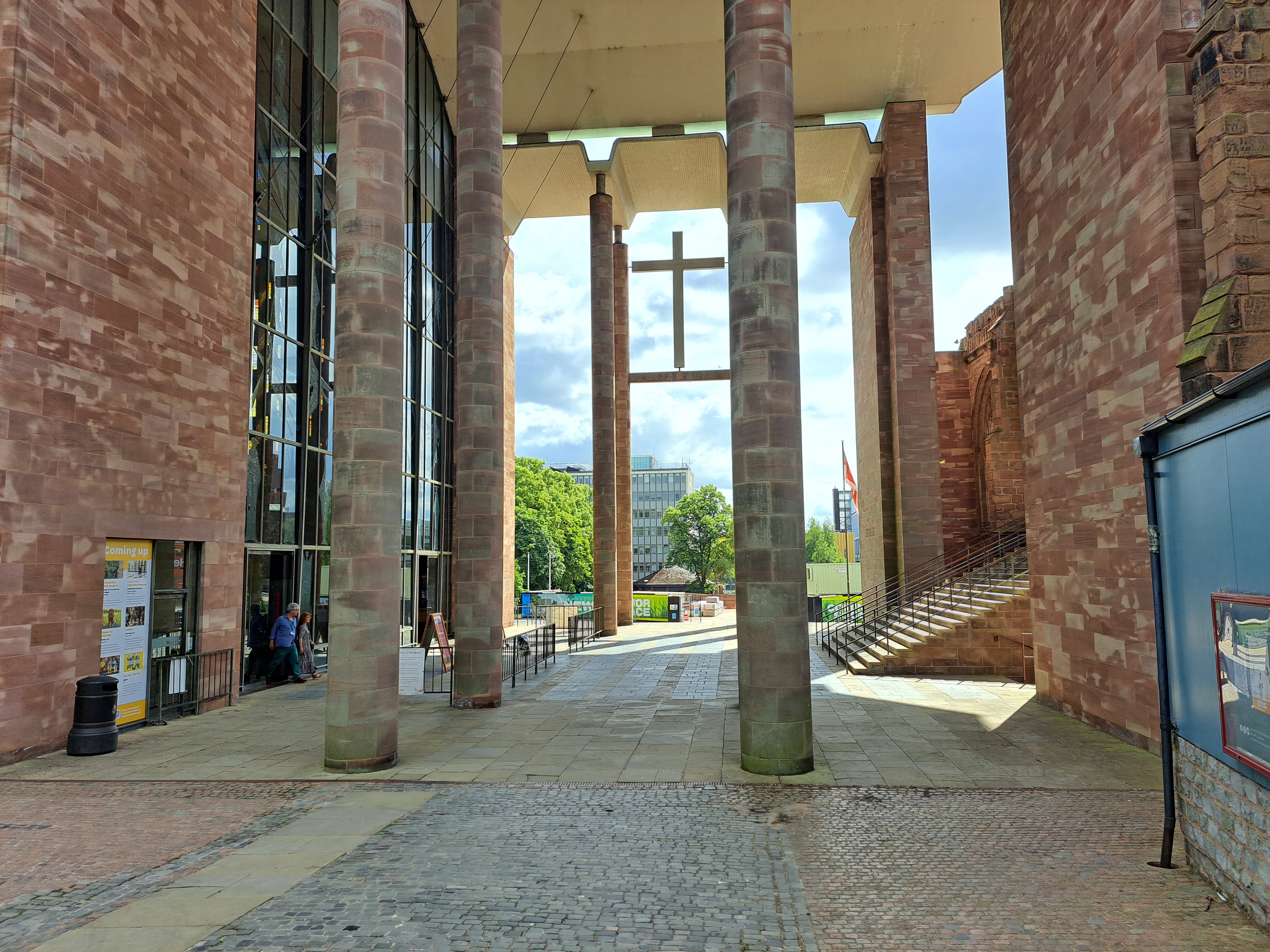
Coventry Cathedral has developed a living and active ministry of reconciliation which has reached out to the whole world. Its response to the horrors of the blitz and the destruction of the old cathedral has been an inspiration to many. But as a visitor to the building, a very occasional one, I am never really sure how to respond.
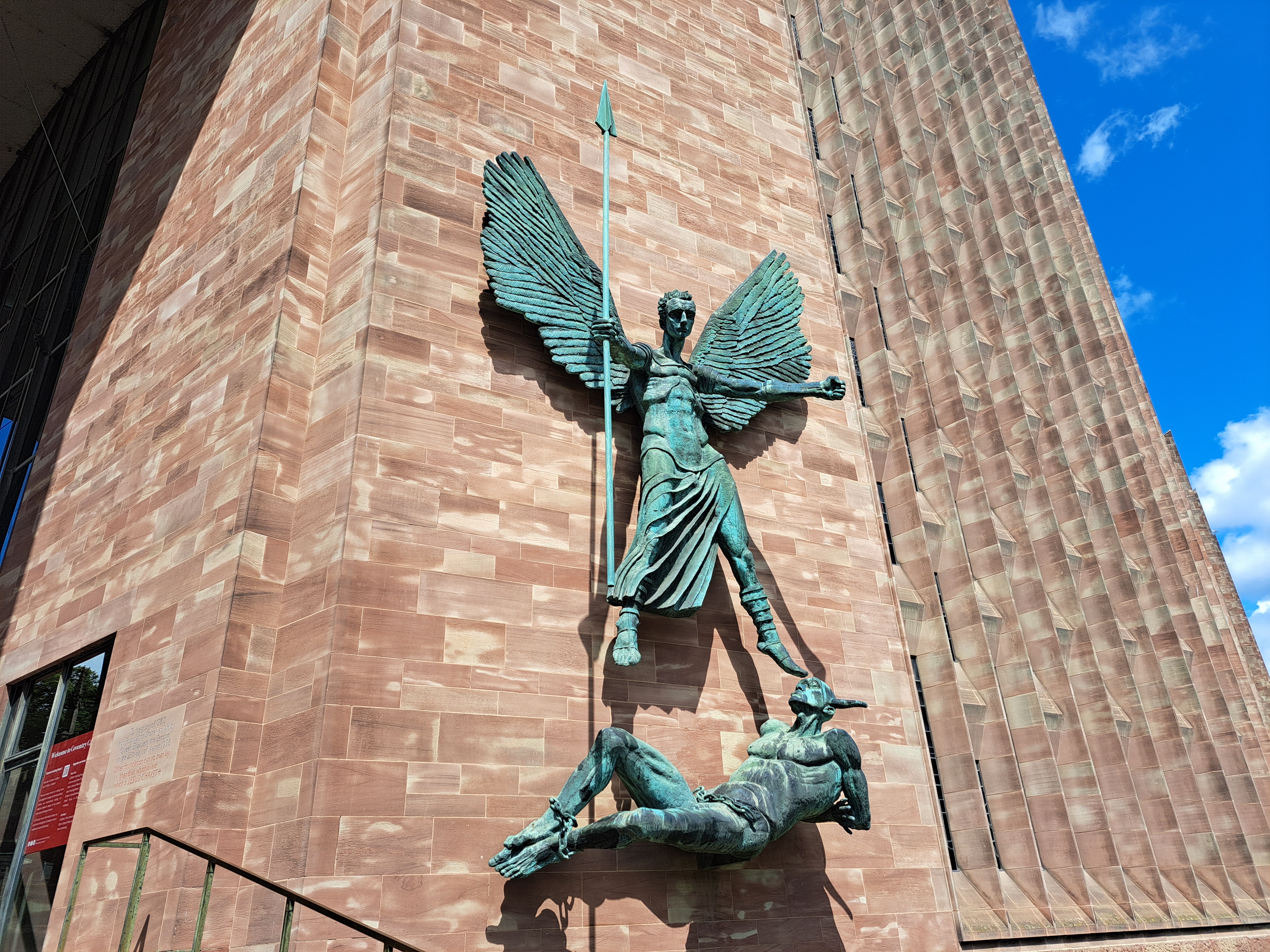
The thing I remember most about visiting as a child is Jacob Epstein’s figure of St Michael conquering the devil. I think I found it a bit unsettling as a kid and I am not sure I feel any better about it now. What is it meant to communicate? Of course, I know literally what it is meant to mean, but what did it say to the world in 1962 when it was unveiled? And what does it say now? Outside the cathedral there is a slightly cloying poster which stresses the extent of the welcome given to visitors but what the ‘keep-fit mums, football dads, starving artists, tree-huggers, latte-sippers, vegans, junk food eaters…those who think the earth is flat, work too hard, don’t work, can’t spell, or are here because granny is visiting and wanted to look round’ will make of Epstein’s work is a difficult question. Cutting edge art of the 1950s has now become the imagery of horror, fantasy, comic books, movies, cartoons and anime. Does anyone feel liberated by seeing St Michael with swan’s wings getting one over the character from Hellboy? One thing we know for sure today is that evil in the world does not take that form.
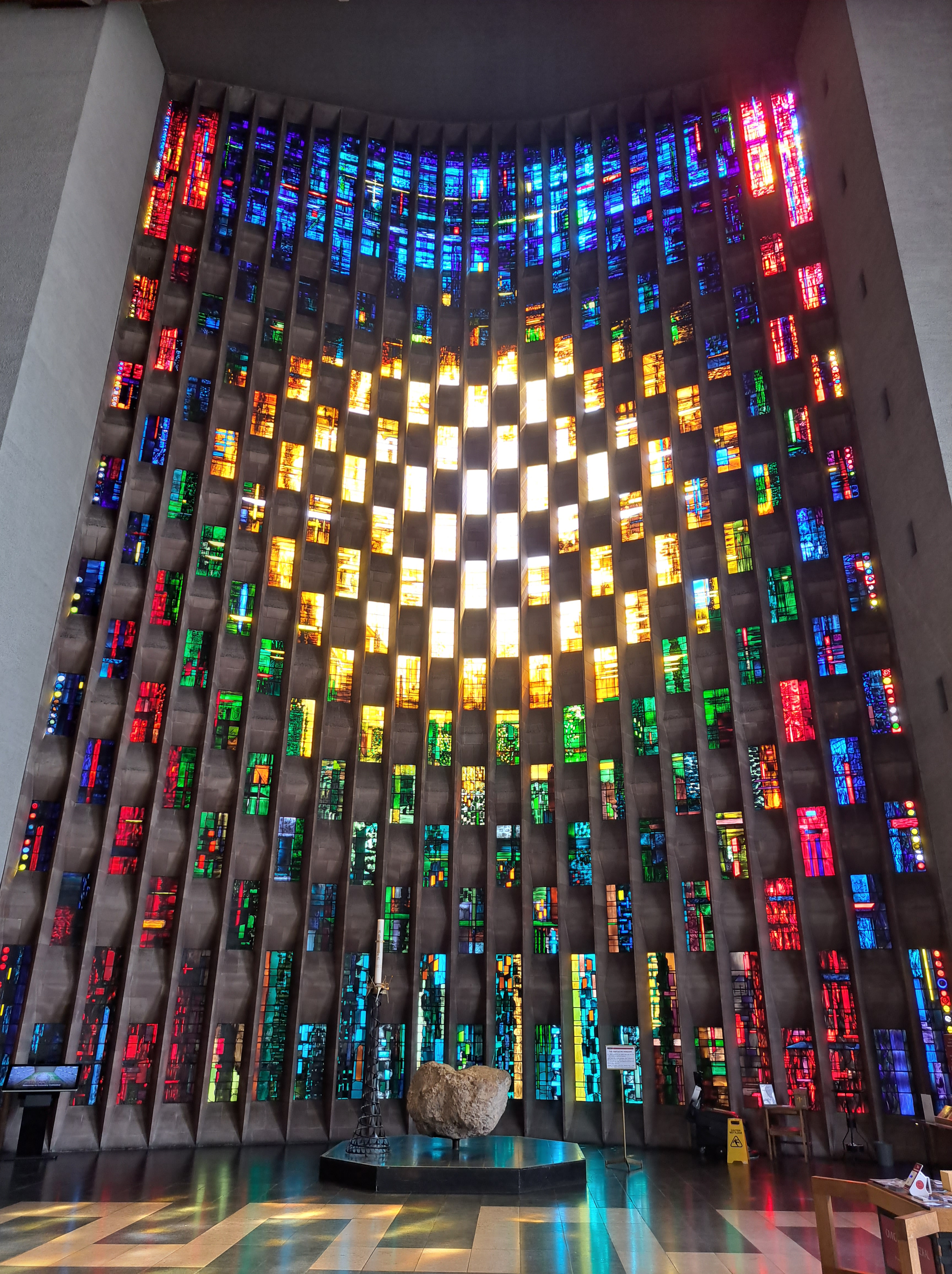
But some parts of the cathedral are breathtaking. The baptistry window, designed by John Piper, floods that part of the building with an explosion of light and colour. Again its immensity hits you full on.
The same is true when you look back at the entrance screen with its dozens of ascending figures flying up in front of the old cathedral.

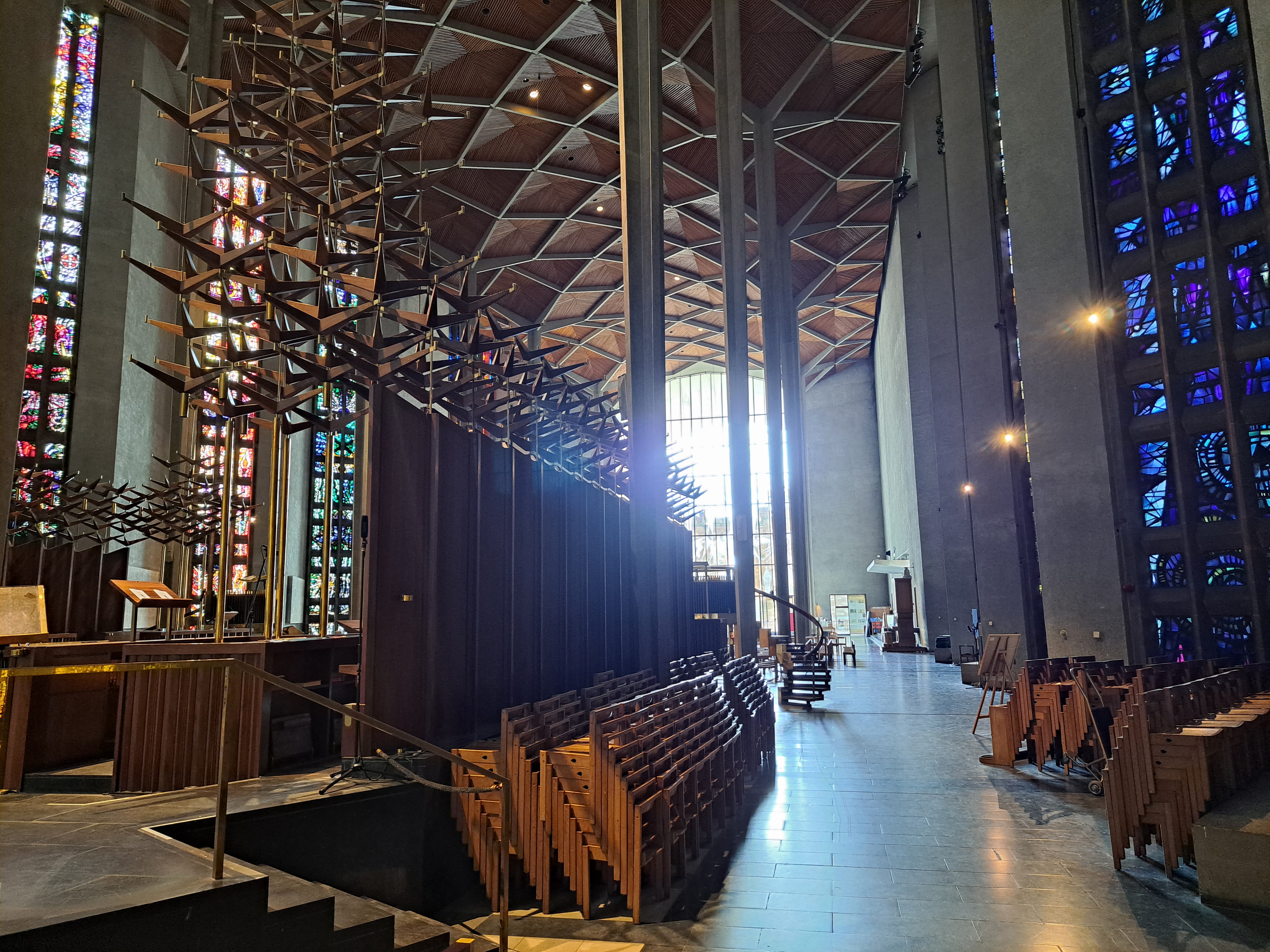
Again part of this is the scale, and the combination of massive candlesticks, the very high choir stalls and the stained glass that is only visible when you look back from the altar all contribute to this impressive immensity.
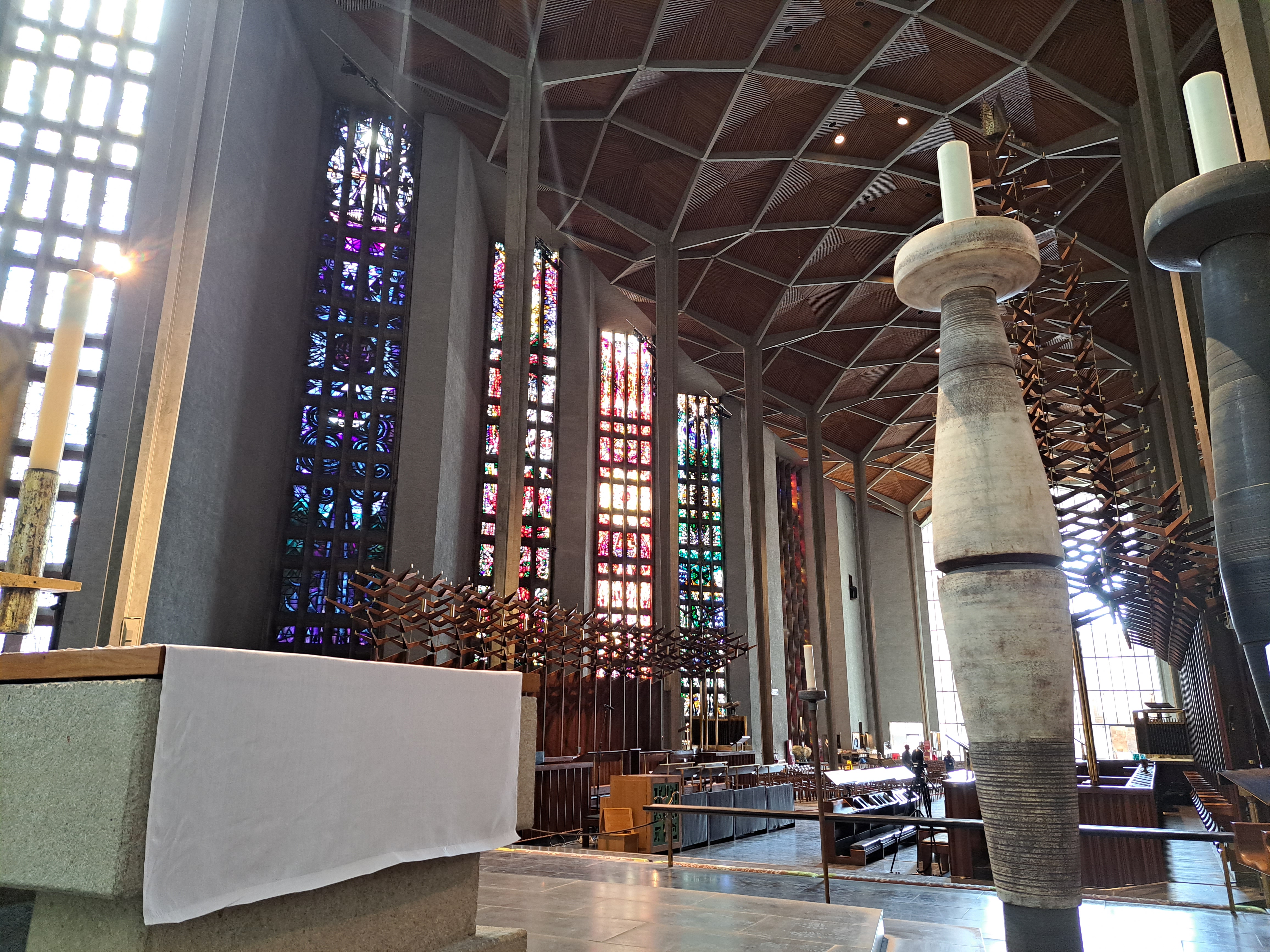
Even what might be termed the brutalist elements of the structure continue to impress. The wall that lets light on to the chancel and the tapestry has a grandeur and a solidity still, but if it had been placed out of doors in a housing estate or in a car park or shopping centre it would have had to have been demolished years ago:
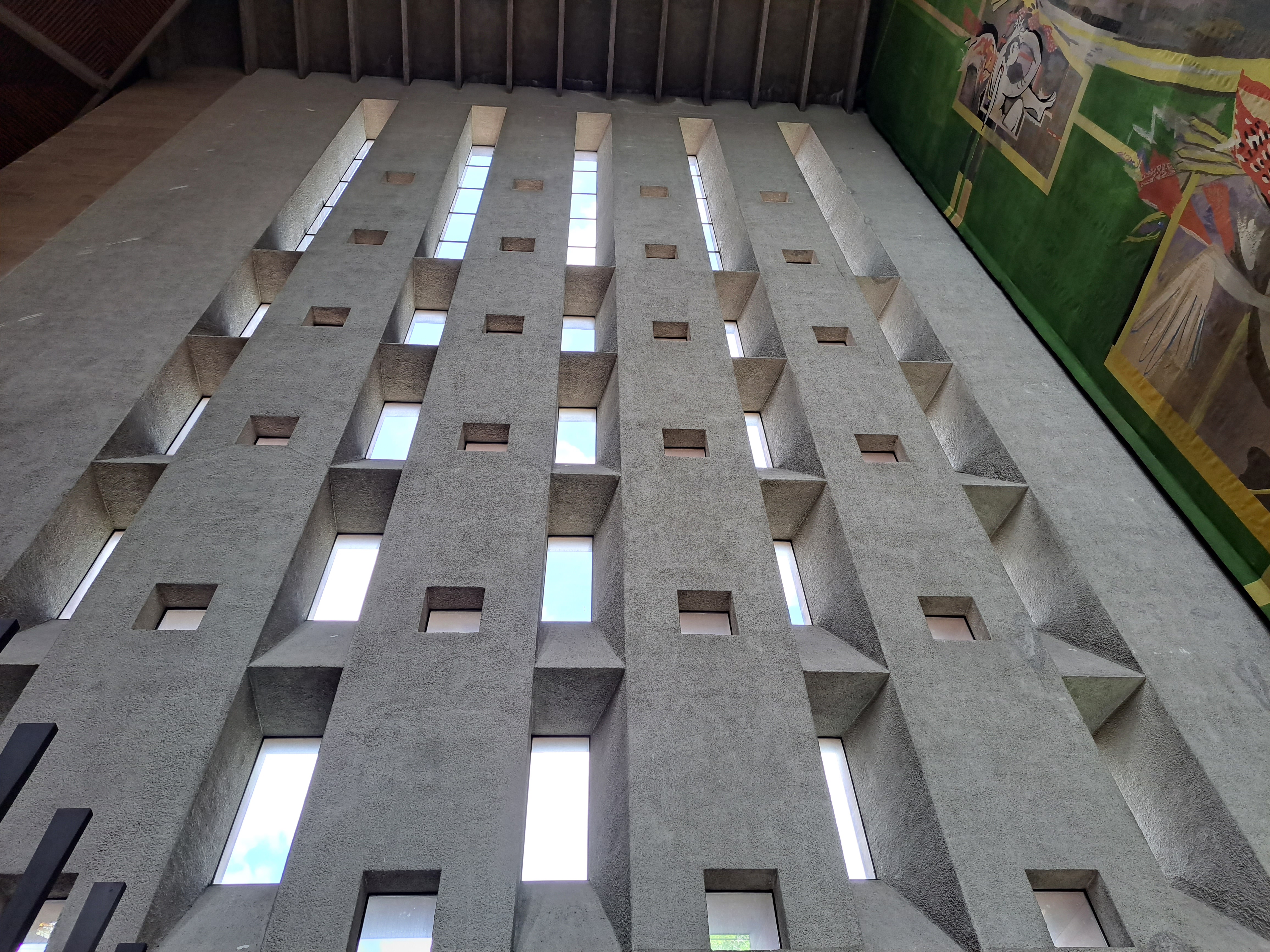
The focus of the cathedral is Graham Sutherland’s tapestry of Christ in Glory. Once again this is so impressive because of its size; a massive tapestry, woven by hand in a single piece, weighing around a ton, it’s a remarkable piece of work. Standing between Christ’s feet is the figure of a man, emphasising humanity’s smallness before the grandeur of God.

The great height is continued in the Chapel of Unity

but not so much in the Chapel of Christ the Servant which is lined by walls of plain glass, giving a brightness and an openness to the chapel. When I was there a very moving exhibition of quotations from letters home from Indian soldiers serving in the First World War was on display, one on each window.

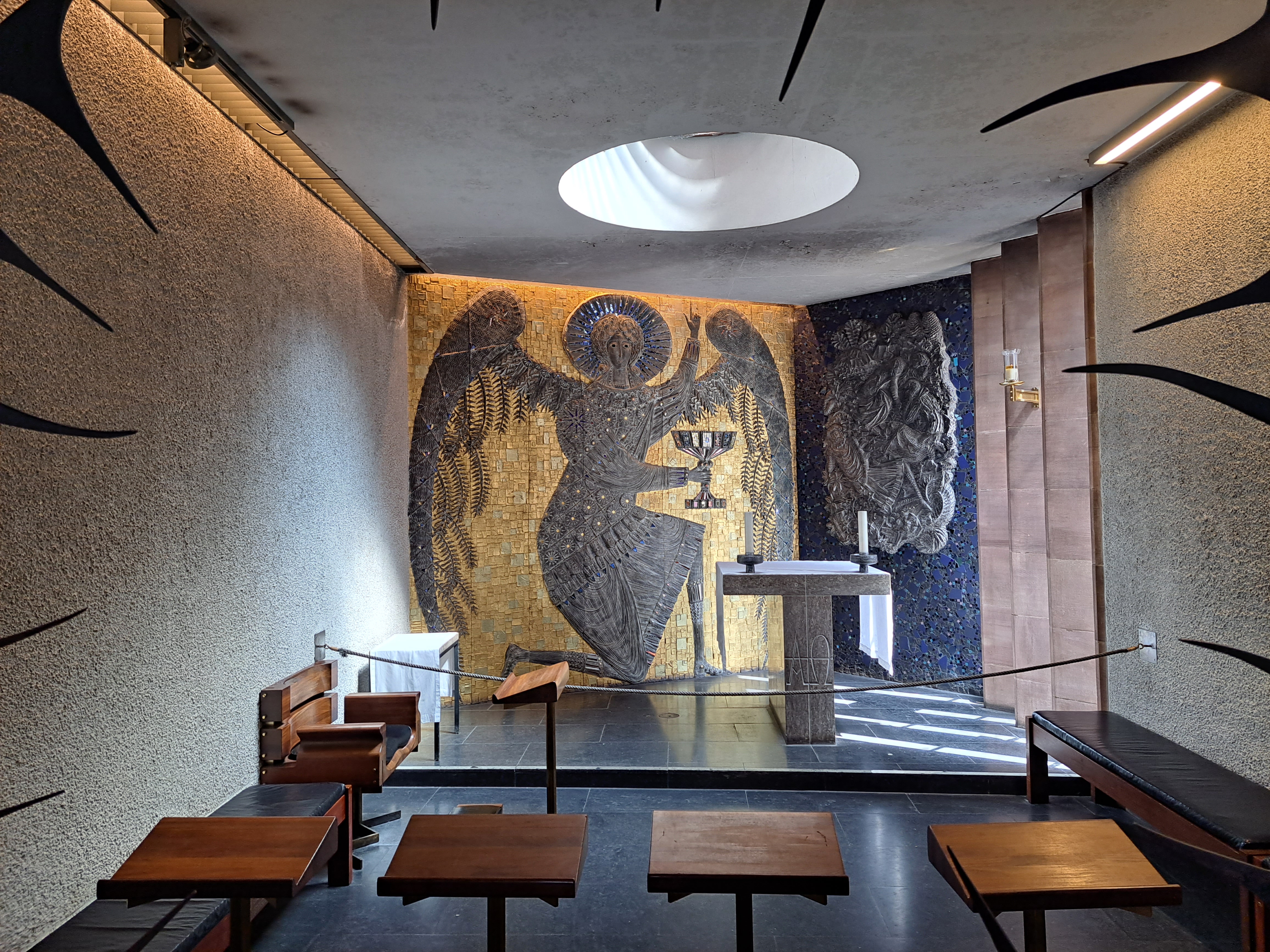
The Chapel of Christ in Gethsemane is also different, it resembles a cave and the sculpture on the wall by Steven Sykes shows Jesus being ministered to by an angel. It is viewed through a crown of thorns.
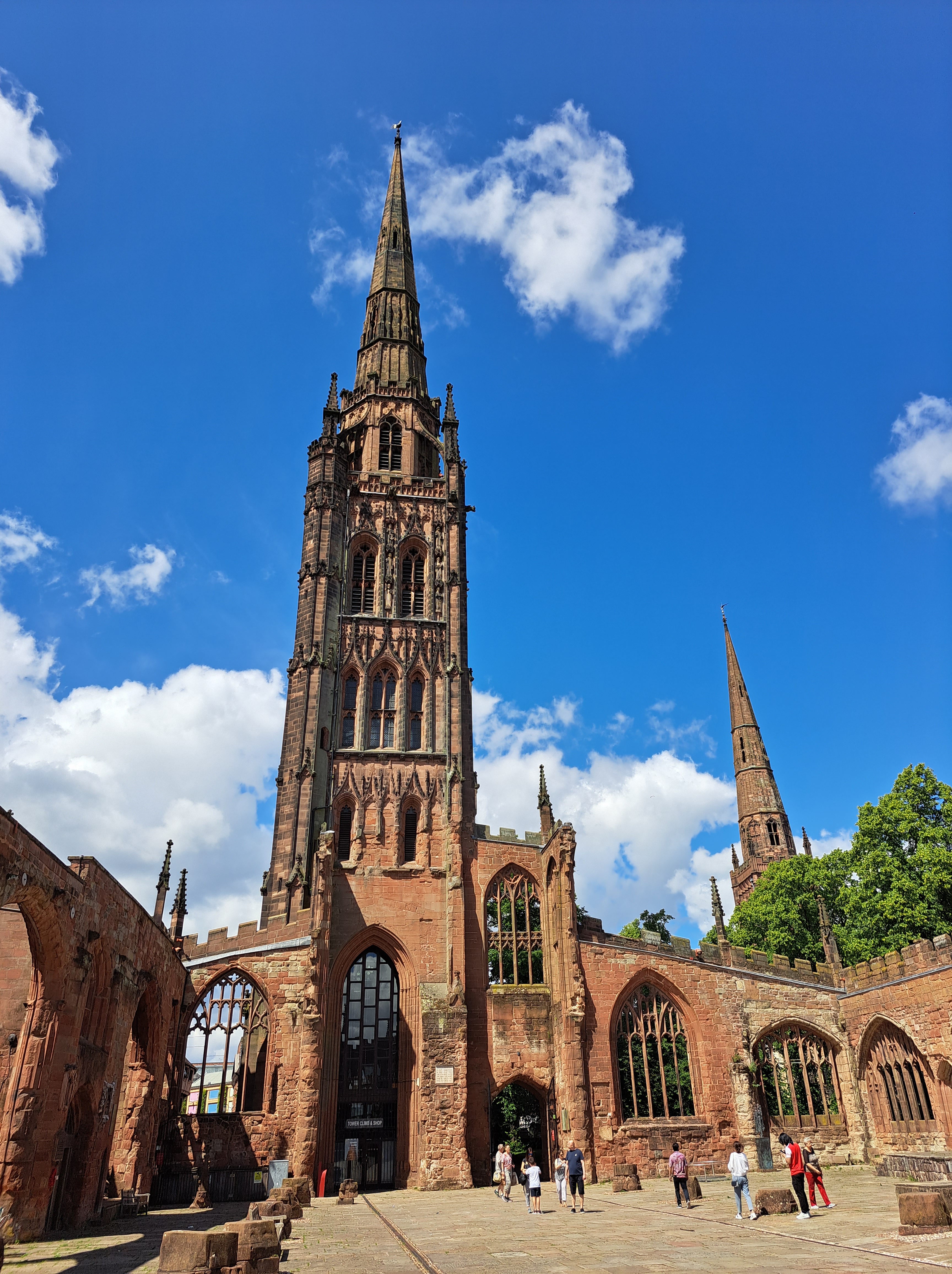
The ruins of the old cathedral emphasise the horrors of the blitz
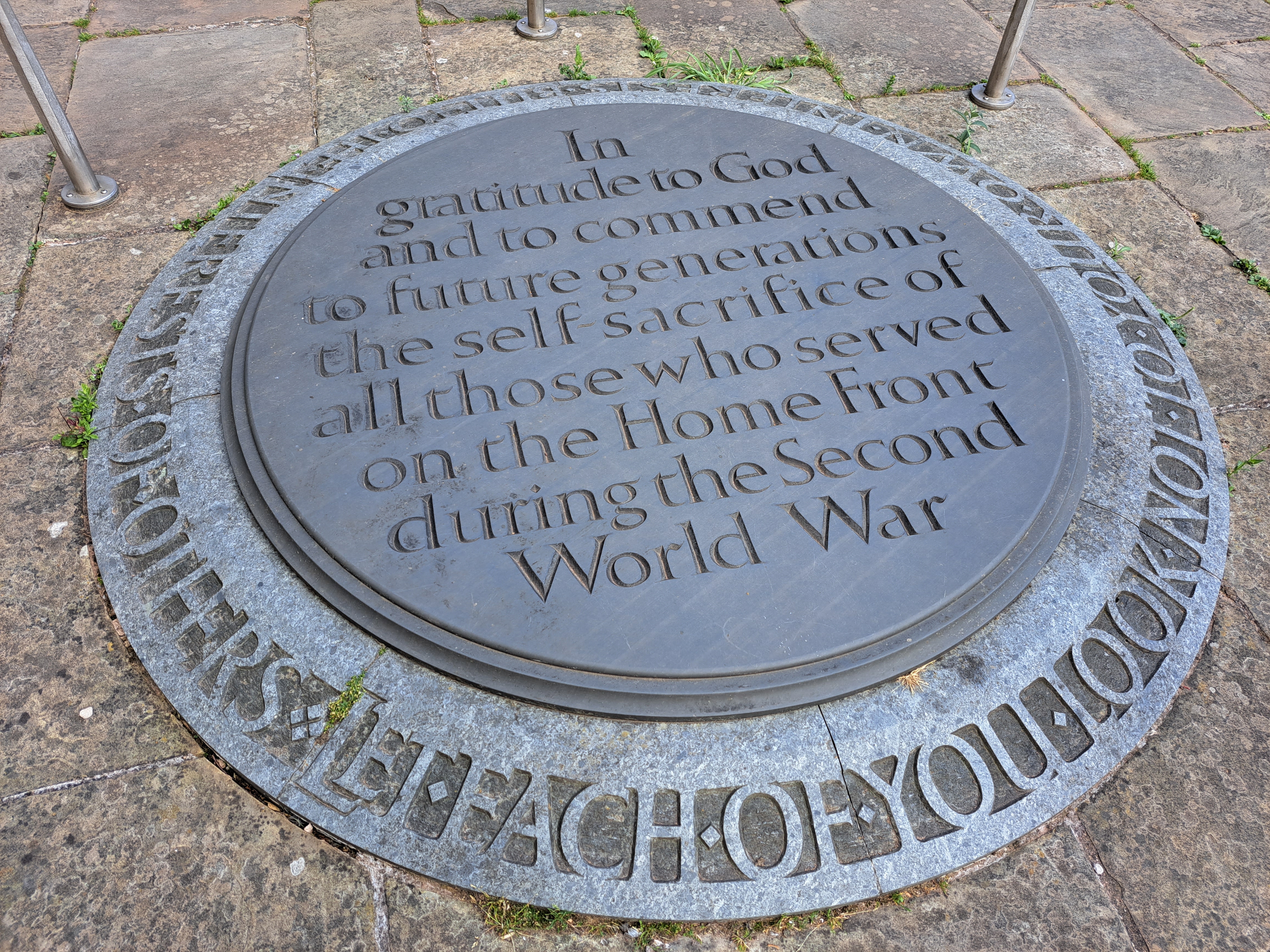
and fittingly a memorial records the sacrifices of those who served on the home front in the Second World War.
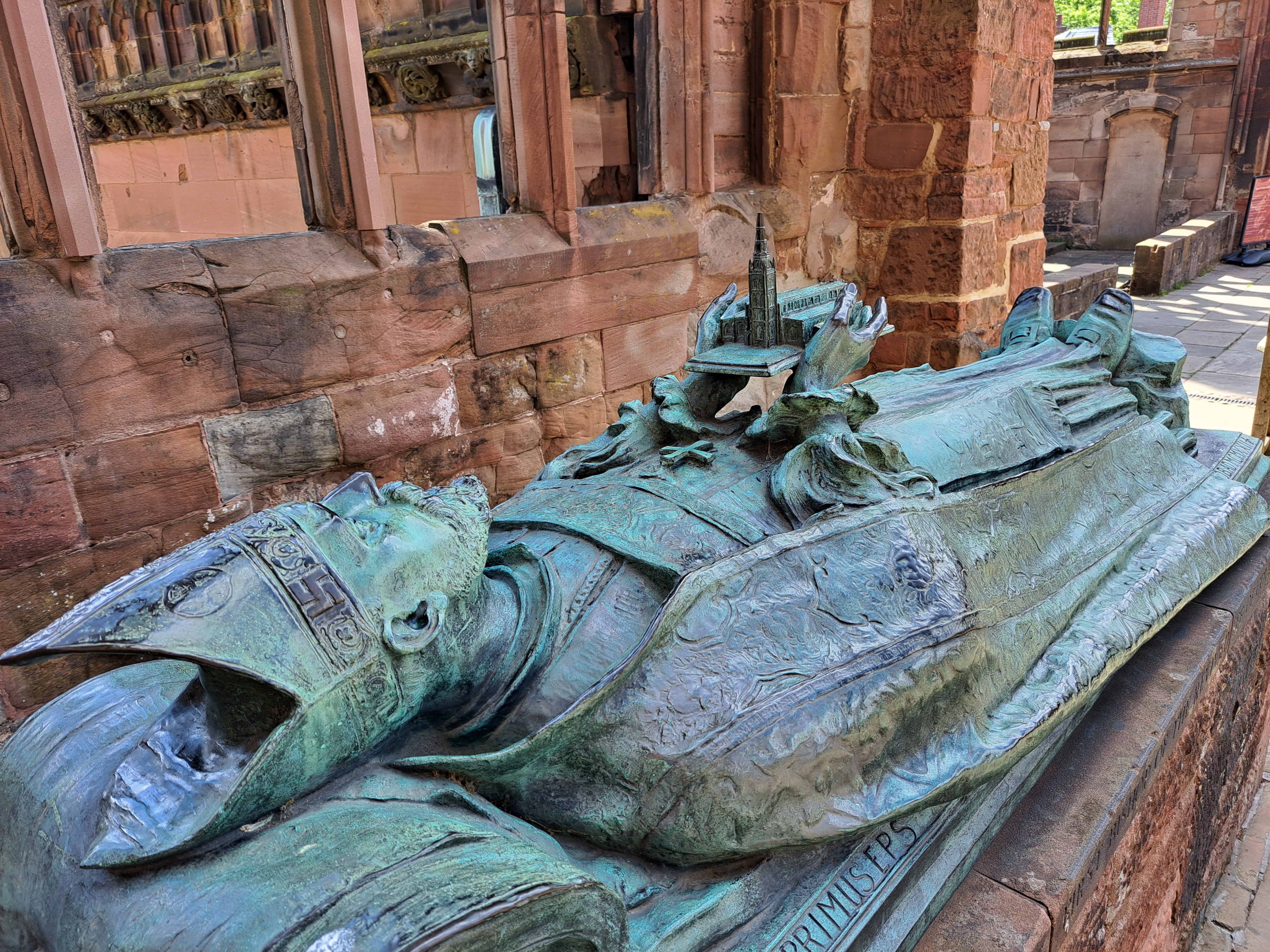
One of the few things to survive the blitz in the old cathedral is the tomb of Bishop Yeatman-Biggs, the first Bishop of Coventry. He holds a model of the cathedral and, curiously, his mitre includes a swastika in its decoration. The guide book doesn’t call it a swastika but names it as a fyflot. But as the guide book also says this was an ancient religious symbol, used in different cultures before it was adopted by Nazi Germany. But it does look strange on his mitre and it has gradually become shiny as generations of visitors have pointed to it in shock or surprise.
As a building it is somewhere that I find impressive and intriguing. It does represent a positive response to the horrors of war and an affirmation that faith can overcome suffering and reach out where there has been hatred, and this is all for the good. Parts of it are wonderfully impressive and uplifting but I can’t say that, as a building, it really speaks to me in the way other cathedrals do. But it will always communicate a certain kind of optimism and fortitude that came out of the immediate post-war period.
 velvethummingbee
Impressive as the cathedral building is even more impressive was the spirit of ecumenism and commitment to peace among Christians in Coventry in the 1960’s and beyond all led by the work of the cathedral staff. Added to that was the industrial ministry bringing the voice of Christianity to the factory setting. Living in Tile Hill as a teenager I imagined that real dialogue and cooperation with other denominations was the norm. The International Centre was a very important part of this beginning with the links with Dresden and the desire to heal hurt. A marvellous example to us all!
LikeLiked by 1 person
Thank you Valerie
LikeLike