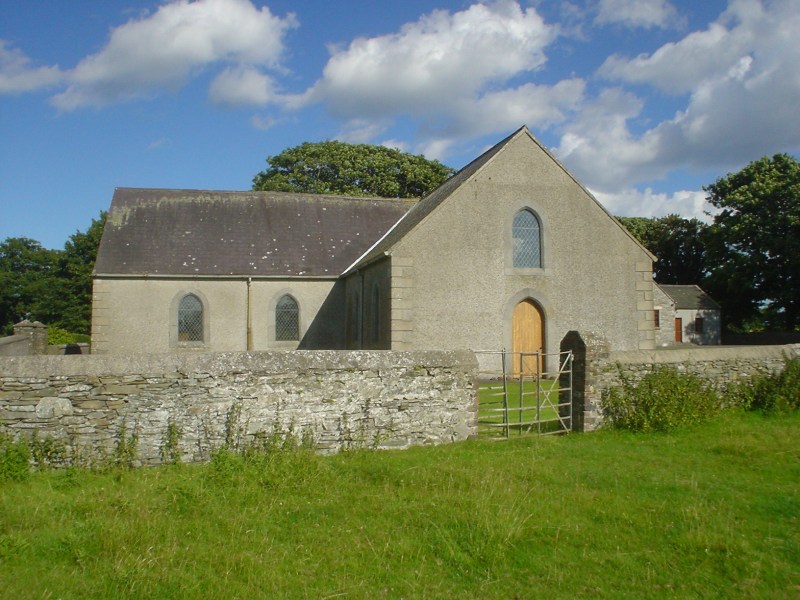
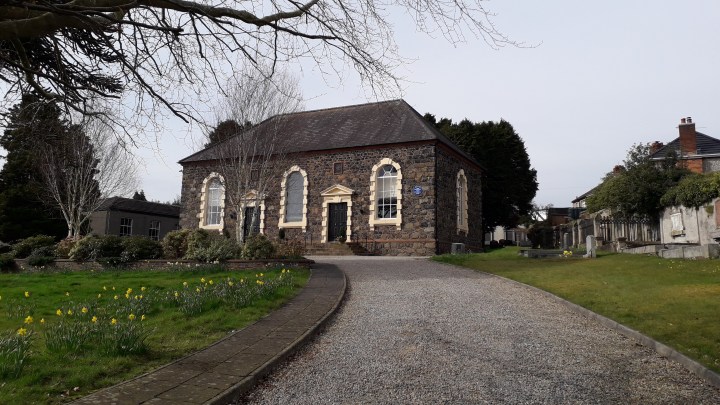
Our service today comes from Clough Non-Subscribing Presbyterian Church and features music played by Laura Patterson and Alfie McClelland on the organ, a duet on bagpipes by Laura and Robert Neill and a reading by Adele Johnston (Acts ch. 2 v.1-21).
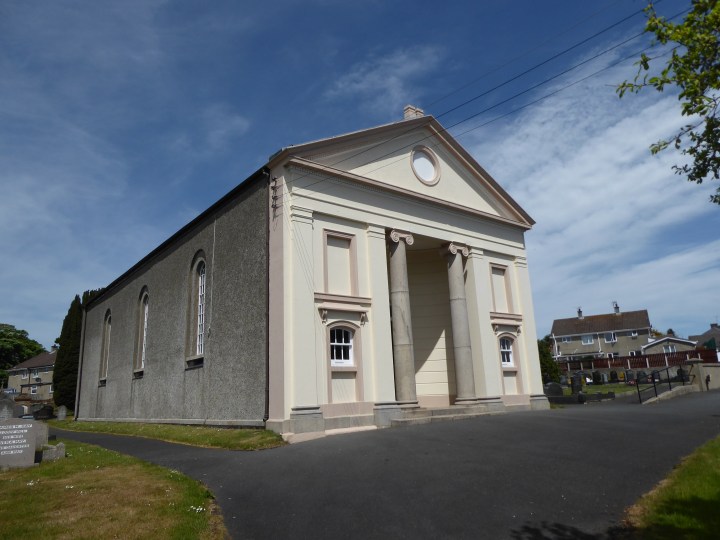
Clough Non-Subscribing Presbyterian Church
Taking our cue from the onlookers at the first Pentecost, in the service today we ask what does Pentecost mean to us today? Can we reclaim Pentecost as part of our liberation? Can we find meaning for us today?
The hymns played are:
I, the Lord of sea and sky (Mission Praise 857)
and
Thy kingdom come – on bended knee (Hymns of Faith and Freedom 210)
Friday, 29th May saw the 67th anniversary of the climbing of Everest and in our Time for a Story this week Sue Steers reflects on the meaning of this famous event achieved by Sir Edmund Hillary and Tenzing Norgay in terms of co-operation and team work.
Morning has broken
Like the first morning,
Blackbird has spoken
Like the first bird.
Praise for the singing!
Praise for the morning!
Praise for them, springing
Fresh from the Word!
Our service today comes from the First Presbyterian (NS) Church, Downpatrick. Our organist is Laura Patterson, the reading (from Ephesians chapter 3 verses 7-19) is provided by Robert Neill, and Jack Steers also plays the trumpet.
The hymns played are:
Morning has broken (Hymns of Faith and Freedom 433)
and
Amazing grace – such love profound (Hymns of Faith and Freedom 337)
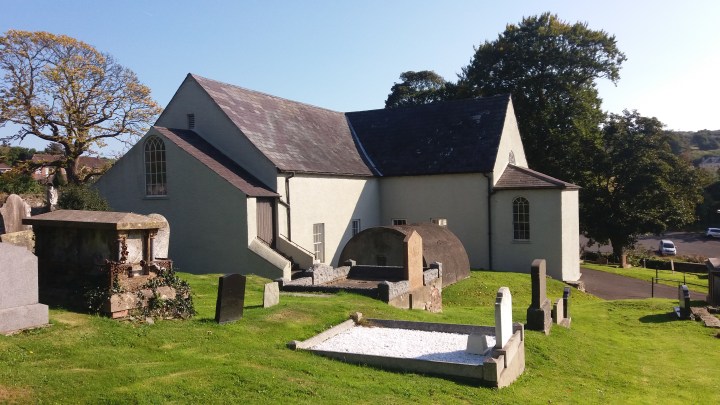
The service includes an exploration of the idea of ‘Thin Places’ and includes a quotation from a poem by the eighteenth-century Welsh poet and Calvinistic Methodist minister Thomas Jones (from The Mistle Thrush – in Celtic Christian Spirituality, edited by Mary C. Earle):
If our Lord is great, and great his praise
From just this one small part of earth,
Then what of the image of his greatness
Which comes from the whole of his fine work?
And through the image of the ascending steps
Of his gracious work, which he has made,
(Below and above the firmament,
Marvellously beyond number),
What of the greatness and pure loveliness
Of God himself?
We also uploaded in the week just gone a new Time for a Story video, in this case the story of the widow and the emperor, a marvellous tale about Hagia Sophia, the emperor Justinian, the widow Euphrasia and some hungry donkeys.
Starting today, and then on each subsequent day, I will be uploading to the new velvethummingbee YouTube channel, a section from John James Tayler’s 1868 ‘Narrative of a Visit to the Unitarian Churches of Transylvania’. Published in The Theological Review for January 1869.
The first instalment can be seen here:
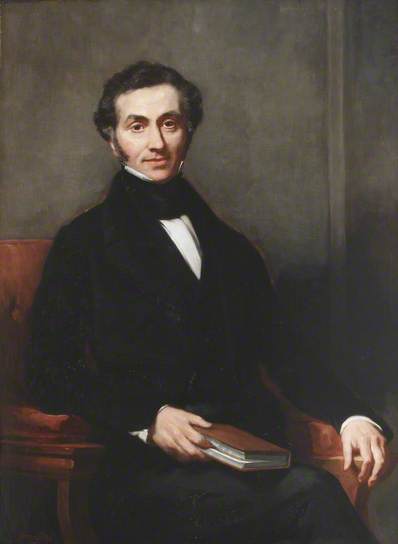
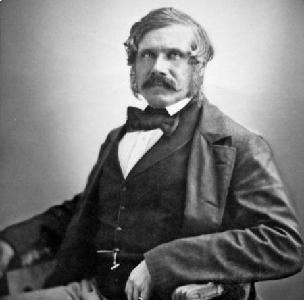
John James Tayler (1797 – 1869) was born in Surrey, the son of a non-conformist minister. At the age of 17 he went to Manchester College, York to be trained for the ministry under the direction of the principal, Charles Wellbeloved.
John James Tayler (1797–1869). Portrait (1848) by George Patten. Wikimedia Commons. Public Domain
Proving himself an able scholar he graduated from Glasgow University in 1819 and the following year took on the ministry of Mosley Street Chapel in Manchester. Heavily influenced by the romantic movement, and a friend of Wordsworth, Tayler became one of the leaders of Unitarianism in Britain. A close ally of James Martineau he imbibed much of the new theological thinking from German scholars, particularly after a year spent studying there, and, being fluent in German, corresponded with many German theologians. With Martineau and others he also began to propound a more spiritual and devotional approach to worship which was physically embodied in the building of Upper Brook Street Chapel, the new gothic church built for his congregation to the plans of no less an architect than Sir Charles Barry, the architect of the new houses of parliament.
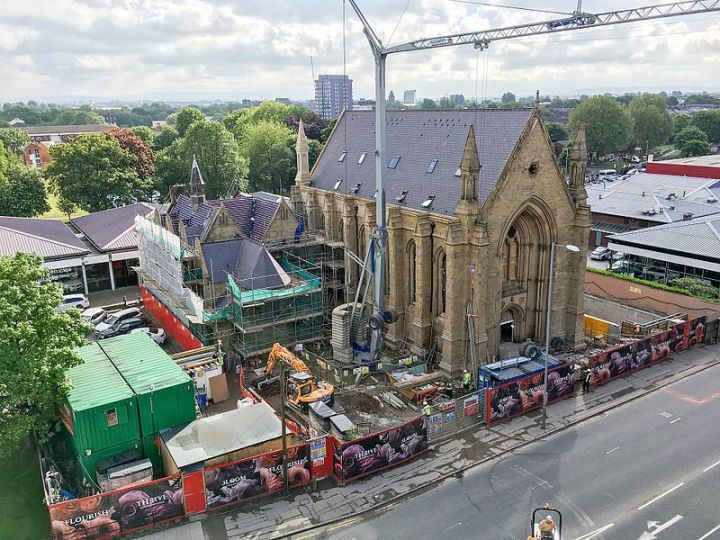
Upper Brook Street Chapel during its recent restoration as student flats [Photograph by Mike Peel (www.mikepeel.net)]
For a number of years he combined his ministry in Manchester with the role of professor of ecclesiastical history at Manchester College when it had moved back to that city. However, in 1853 when the college moved to London he moved with it and became the principal.
Over the years Manchester New College had an increasing connection with the Unitarian church in Transylvania which traced its history back to the reformation but which had had very little direct contact with groups in Britain until the mid-nineteenth century. Ministerial students from Transylvania travelled to the College as part of their education so by the time of the celebration of the 300th anniversary in 1868 there was a cohort of English-trained ministers in the country. Another connection came through the person of John Paget, a Leicestershire Unitarian partly educated at Manchester College, York, who met and married a Transylvanian countess, Baroness Polyxena Wesselényi, and went to live at Gyéres in Transylvania.
John Paget, Wikimedia Commons. Public Domain.
Paget was a noted commentator on Hungarian politics, agriculture and education and turned his estates into a model of modern agriculture. His two volume account of his travels and experiences in the country, Hungary and Transylvania; with Remarks on their Condition, Social, Political, Economical (1839), illustrated by George Hering, became essential reading across Europe and remains an important text today. He was known to Tayler who also made use of Paget’s book in his account of his journey. Paget’s home, estates and vineyards had been ransacked in 1849-50 following the Hungarian war of independence and he and his family were forced to flee to England for a number of years. By 1869 he had been back in Transylvania for about fourteen years and Tayler and his daughter were able to visit him and his wife on their way to Torda.
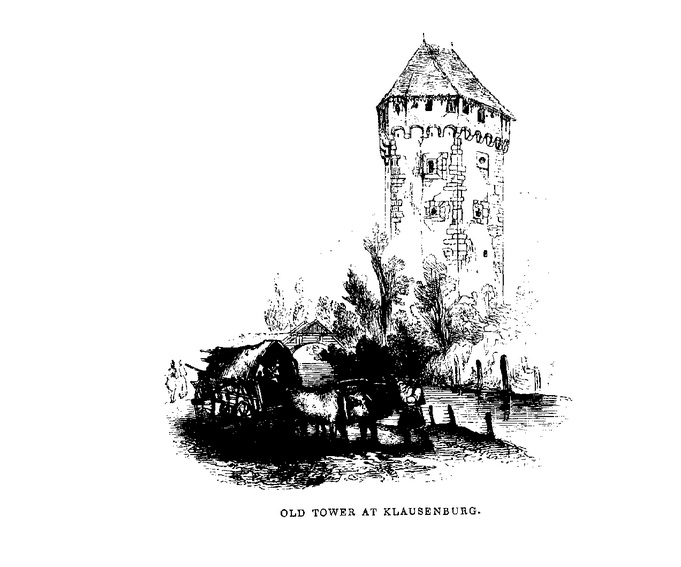
Illustration by George Hering from John Paget’s ‘Hungary and Transylvania’
Every day I am going to read an extract from Tayler’s ‘Narrative’ as we follow him through his journey through Transylvania to join in the celebrations of the 300th anniversary of the Edict of Torda and will upload the readings on my personal YouTube channel.
To be certain of receiving an update for each new video click on the subscribe button at the end of the video.
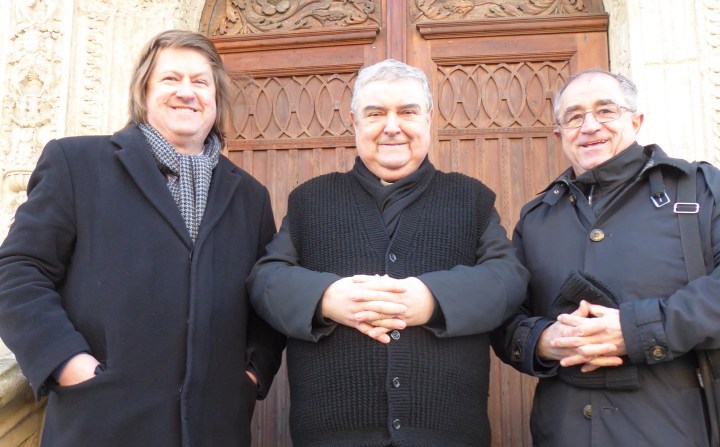
David Steers (at the time Moderator of the Presbytery of Antrim); György Jakubinyi, Roman Catholic Archbishop of Gyulafehérvár; Ferenc Bálint Benczédi, Bishop of the Hungarian Unitarian Church, at the cathedral, Gyulafehérvár in January 2018. The view at the top of the page is also the cathedral at Gyulafehérvár.
I was very honoured to be asked to attend the 450th anniversary celebrations of the anniversary of the Edict of Torda in 2018 and I will include some pictures from that time with the ‘Narrative’ along with a few other illustrations by George Hering from John Paget’s book and from other sources.
There is further information to read concerning my experiences in Transylvania on this blog in the following posts:
This week our service is recorded at the First Presbyterian NS Church, Dunmurry and Allen Yarr, the church organist, has very kindly provided music on piano for two hymns plus some additional music for the opening and closing of the service. The hymns are:
‘The Church Hymnary’ No. 704 ‘Yield not to temptation’
‘The Church Hymnary’ No.532 ‘Stand up! Stand up for Jesus’
The reading is from John ch. 2 v.13-2 and the address contains some reflection of Philip Larkin’s poem Church Going.
It pleases me to stand in silence here;
A serious house on serious earth it is,
In whose blent air all our compulsions meet,
Are recognized, and robed as destinies.
And that much never can be obsolete
In the end though our spiritual relationship with the divine is about something more than any building.
Over this last week we also uploaded another video, one which tells the little-known story of Henry Croft. His life-size, but diminutive, statue is hidden underneath Trafalgar Square in London. As such it is the complete antithesis of the giant statue of Lord Nelson that sits high in the sky, almost touching the clouds. You can hear all about the life of Henry Croft on this Time for a Story video above.
This week’s service is recorded at Ballee Non-Subscribing Presbyterian Church, county Down. We are pleased again to have the services of John Strain, our Ballee organist, who plays some music at the start and end of the service as well as the two hymns:
‘Through all the changing scenes of life’ (Hymns of Faith and Freedom 48)
‘Great is thy faithfulness, O God my Father’ (Hymns of Faith and Freedom 54)
Readings:
Lamentations ch.3 v.21-26
Don’t Quit by John Greenleaf Whittier (with special thanks to Emma McConnell)
Don’t Quit
When things go wrong as they sometimes will,
When the road you’re trudging seems all uphill,
When the funds are low but the debts are high,
And you want to smile, but you have to sigh.
When care is pressing you down a bit, rest if you must but don’t you quit.
Life is queer with its twists and turns as every one of us sometimes learns.
And many a failure turns about when he might have won if he stuck it out.
Don’t give up though the pace seems slow, you may succeed with another blow.
Success is failure turned inside out, the silver tint of the clouds of doubt.
And you never can tell how close you are, it may be near when it seems so far.
So stick to the fight when you’re hardest hit, it’s when things seem worse that you must not quit.
Recent videos on the churches’ channel also include a reflection on Time which includes consideration of J.R.R. Tolkien:
‘All we have to decide is what to do with the time that is given us.’
(J.R.R. Tolkien)
And a prayer for VE Day also by Sue Steers which includes an account of the life of George Cross who took part in the D Day landings and returned to Normandy at the age of 100:
This week’s service is a Communion Service recorded at Ballee Non-Subscribing Presbyterian Church
Sunday, 3rd May 2020
Service conducted by the minister the Rev Dr David Steers
Organist: John Strain
Reading: Matthew ch.14 v.13-21
The hymns played are:
‘Hymns of Faith and Freedom’ No. 326
Guide me, O thou great Jehovah
‘Hymns of Faith and Freedom’ No. 61
Now thank we all our God
The full words of the hymns can be found in the description under the video on YouTube.
For most congregations in the Non-Subscribing Presbyterian Church of Ireland May is the month in which one of the two communion services of the year are held.
We also uploaded to YouTube, earlier in the week, another video which set out to explain something of the background to the celebration of Communion within the Non-Subscribing Presbyterian Church of Ireland. Recorded at Downpatrick it can be seen here:
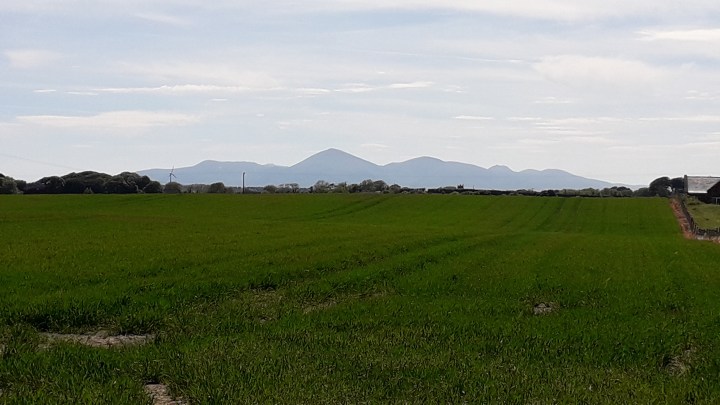
Our service this morning comes from the First Presbyterian (NS) Church, Downpatrick and again features the Mountains of Mourne which can be viewed in the distance while a bagpipe duet plays courtesy of Robert and Laura Neill. When the music stops it is replaced with the music of birdsong. We are pleased to again have John Strain playing the organ at Ballee Non-Subscribing Presbyterian Church, providing us with the music for the hymns:
All things bright and beautiful (Hymns of Faith and Freedom 245)
Holy, holy, holy, Lord God Almighty! (Hymns of Faith and Freedom 19)
Reading: Genesis ch.1 v.20-31.
The sermon takes as its starting point some words of Rabbi Jonathan Sacks:
We are each, regardless of class, colour or culture, in the image and likeness of God. This is the most important statement in Western culture of the non-negotiable dignity of the human person.
There are a number of previous posts on this blog about the Minor Reformed Church/Polish Brethren and my visit to Poland in the summer of 2019. They can be seen here:
But I have now uploaded to YouTube a video of the short act of worship we held on Sunday, 28th July 2019 in the former Polish Brethren church at Kolosy.
To be honest there is a lot wrong with this video – sound, picture, continuity, all are faulty in one way or another. It was recorded on a device that was seriously unreliable, indeed the picture cuts out altogether towards the end although the sound continues for a little bit longer. However, the end of the film now contains a number of still images of the former church at Kolosy, both exterior and interior shots, and closes with the text of the Lord’s Prayer in Polish which we tried, but did not succeed, in saying together in that language.
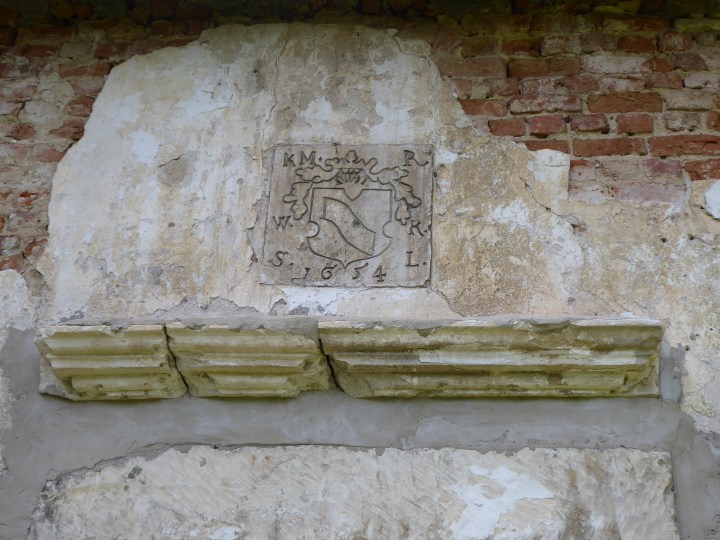
It is reproduced here because it represents a rare if not quite unique event – an act of worship in a church of the Polish Brethren/Minor Reformed Church, a church which was suppressed during the counter-reformation in 1658, just four years after this little church was built.
The service is led by myself, the Rev Dr Sándor Kovács (Unitarian, Kolozsvár, Transylvania), and the Rev Dr Roger Jones (UU, Sacramento, California). We were part of an organised tour of sites connected with the Polish Brethren in July and August 2019. Although a service was planned for this day this was essentially an impromptu act of worship because the Rev Dr Jay Atkinson, who was to have led the service, was unfortunately taken ill on the way to the building and had to go to hospital. So it fell to the three other clergy present to devise a service on the way. This is the service which is presented in the video, albeit in rather imperfect form. The chapel was built in 1654 and closed in 1658 but somehow has survived to the present day, perhaps being used as a store for many years. But it is still immediately recognisable as a place of worship.
Our service on Sunday, 19th April comes from Clough Non-Subscribing Presbyterian Church and encompasses, among other things, in different ways: the Mountains of Mourne; the Church’s cherry blossom tree; a bagpipe duet; a nineteenth-century Unitarian minister in Wandsworth, London and sometime editor of the Inquirer; George Herbert, Anglican clergyman and poet; the book of Proverbs, and much more.
At times we cannot be at the thing we would; yet there’s a good thing to do.
W.G. Tarrant
Recorded Service at Clough Non-Subscribing Presbyterian Church, county Down, Northern Ireland
Sunday, 19th April 2020
Minister: Rev Dr David Steers
Organist: Alfie McClelland
Bagpipes: Robert Neill & Laura Neill
Reading: Proverbs ch.13 v.14-21.
The hymns played are:
‘Immortal, invisible, God only wise’
Hymns of Faith and Freedom No. 30
‘Fight the good fight with all thy might’
Hymns of Faith and Freedom No. 198
‘Amazing Grace’ (bagpipes)
When every day is pretty much like any other it is important to remember which day is Sunday. We need to keep one day special, to punctuate our week with prayer and meditation.
God is spirit, and those who worship him must worship in spirit and truth.
Our service for Easter Sunday comes from First Dunmurry NS Presbyterian Church, Dunmurry.
Easter service, Sunday, 12th April 2020.
Service conducted by the minister in charge: Rev Dr David Steers
Piano: Allen Yarr
Guitar and solo: David Gibbs
Reading: John ch.20 v.11-18
The hymns played are:
Church Hymnary No. 119
‘Jesus Christ is risen today’ (first three verses)
Church Hymnary No. 123
‘The day of resurrection’
With special music provided by David Gibbs of Portrush. David sings Moliannwn (Let’s Rejoice) a Welsh folk hymn written by a Welsh slate quarryman called Benjamin Thomas who lived from 1838 to 1920. This is a great song for this time of year. Benjamin Thomas emigrated from Wales to North America and with his roots in Wales but living in America it beautifully brings together his experiences of the Spring on both sides of the Atlantic.
The Stories in Slate blog says:
“Born on April 9, 1838, Benjamin Thomas was a native of the famous slate quarrying town of Bethesda in North Wales, but he spent a good half a century on the North American Continent ending his days in the Slate Valley. He was a man who involved himself in things Welsh, most notably in poetry – he penned several verses which can be found in countless old periodicals of the age. Most are musings upon the vicissitudes of life, but there is no doubt that his most enduring piece is ‘Moliannwn’, the vigorous song of praise at the arrival of spring.”
You can read the full fascinating account of this song here:
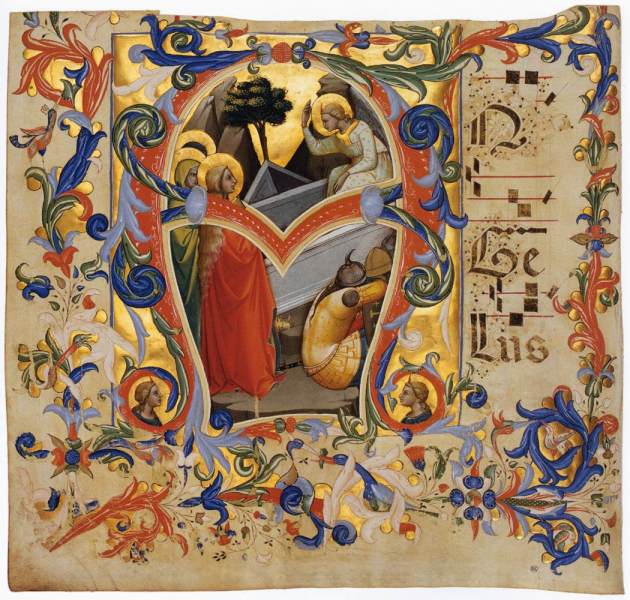
Image at the top of this page: The Three Marys at the Tomb (1396) by Lorenzo Monaco, Illumination on vellum, 46 x 48 cm, Musée du Louvre, Paris. Source: Wikimedia. Public Domain.






 velvethummingbee