G.E. Evans and the ‘Vestiges of Protestant Dissent’

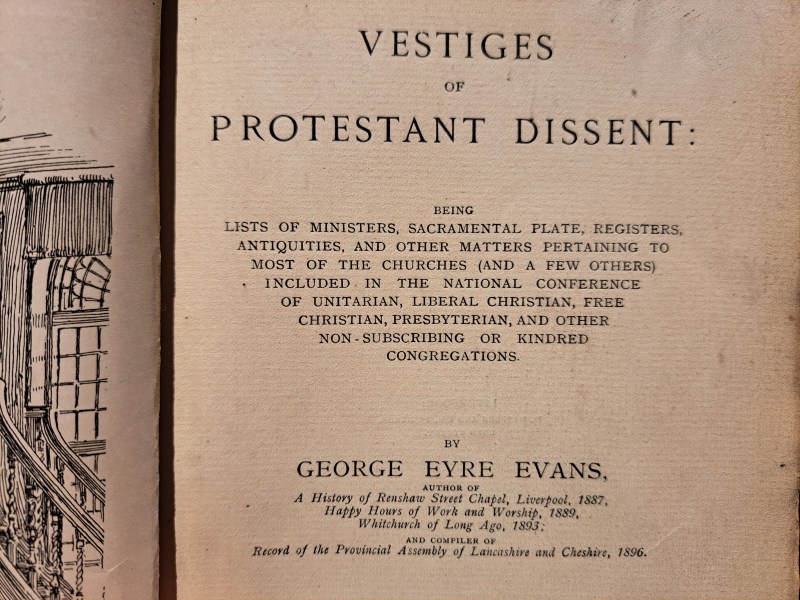
Everyone who has an interest in the study of Non-Subscribing Presbyterian/Unitarian history in the British Isles will know George Eyre Evans’s book the Vestiges of Protestant Dissent. Published in 1897 it was just one publication that came out of the extensive researches of G.E. Evans. His book is the subject of our latest video which is the second to explore the contents of the Very Rev William McMillan Library here at Dunmurry which will be opened and dedicated on Sunday, 22nd September 2024 at 3.00 pm:

Click on the video above for Vestiges of Protestant Dissent

The Library copy once belonged to a prominent lay member of the congregation who gave it to his minister before the end of the nineteenth century, but the full story can be seen on the video.

One of the things I try to draw attention to in the video is the occasional unusual detail G.E. Evans adds to the book, such as this picture, which exists in every copy as a real photograph pasted in to the book:
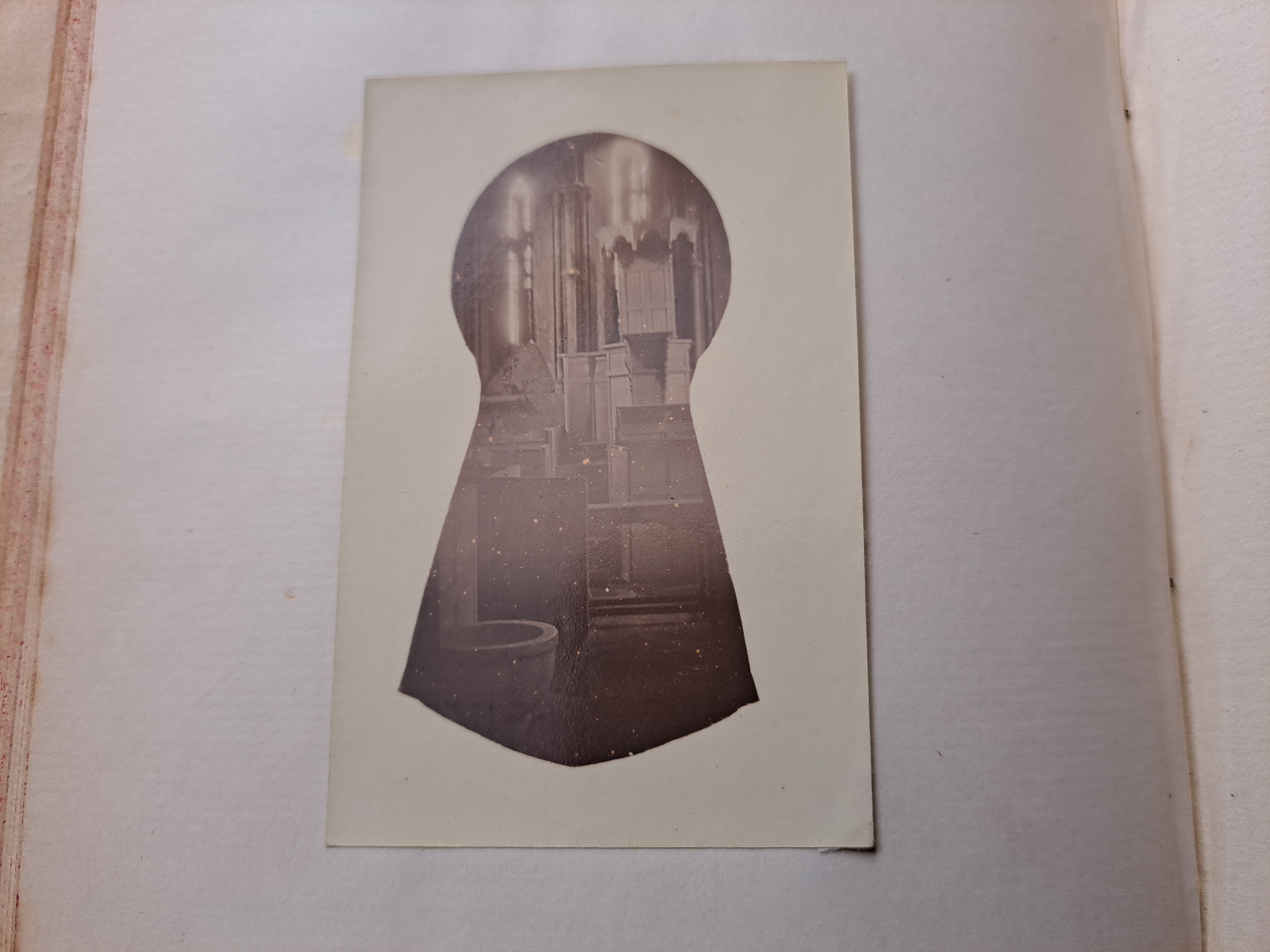
The picture from opposite page 123 of ‘Vestiges of Protestant Dissent’

The meaning of the photograph is explained in the video.
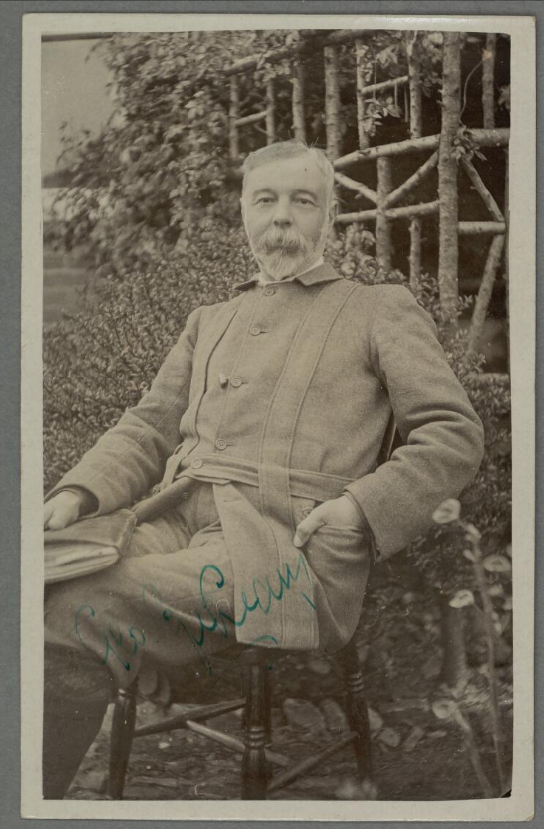
George Eyre Evans (photo: Dictionary of Welsh BiographY)

G.E. Evans was born in Colyton, Devon, the son of Welsh parents. His father was Rev David Lewis Evans, Unitarian minister at a number of places in Wales and England, including Colyton where his son was born, and ultimately being tutor in Hebrew, mathematics, and natural philosophy at the Presbyterian College, Carmarthen. He was also one of the founders of Yr Ymofynydd, although he wrote little in Welsh himself.

George E. Evans followed his father into the ministry and served at the Church of the Saviour at Whitchurch (1889-1897) as well as unpaid minister at Aberystwyth later in life. Primarily though he was an historian and antiquarian. Many of his publications relate to his interest in the history Unitarianism. Vestiges of Protestant Dissent is probably his best known work of this type although he also produced Record of the Provincial Assembly of Lancashire and Cheshire, a very useful detailed study of churches and their ministers in the north west of England, and Midland Churches: A History Of The Congregations On The Roll Of The Midland Christian Union. This all displays his wide geographical interests, also seen in publishing works about places such as Whitchurch, Colyton and Lampeter. He also wrote the first history of Renshaw Street Chapel in Liverpool, a city where he studied after being at the school of Gwilym Marles, the noted Unitarian minister and social reformer.

His main research interests increasingly centred on Wales, however. He was a founder member, secretary and editor of the journal of the Carmarthenshire Antiquarian Society. A member of the Cambrian Archaeological Society, he sat on its general committee and became a member of its editorial board, contributing to its journal Archaeologia Cambrensis. He was active in helping to establish two local museums in Wales and served on the Court of Governors of the University College of Wales, Aberystwyth, the Council of the National Museum of Wales, Cardiff, and the Council of the National Library of Wales, Aberystwyth. But this is by no means the full extent of his labours. He was made an Inspecting Officer of the Royal Commission on Ancient Monuments in Wales and Monmouthshire and in that capacity visited almost every monument or historic site in Wales. He joined the Boy Scouts in his 60s and became a County Scout Commissioner for Carmarthenshire and in 1928 became deputy Scout Commissioner for Wales. In 1937, two years before he died at the age of 82, he was made a Freeman of the Borough of Carmarthen where the Carmarthenshire Antiquarian Society has placed a blue plaque on one of the museums he founded and worked in.

He was a member of the Council of the Unitarian Historical Society and a frequent contributor to the Transactions, particularly writing about ‘Our communion plate and other treasures’. He visited Ireland in preparation for producing the Vestiges, mainly to inspect the communion plate, and from notes in his book we can follow his progress through Ireland in August 1892 when he went from Dublin (16th August), to Newry and Warrenpoint (17th), Clough, Downpatrick, and Rademon (19th), Moneyrea and Newtownards (20th), Ballycarry, Carrickfergus, and Larne, (22nd), and finishing up at Antrim, Templepatrick and Belfast (23rd). The only visit outside this sequence came on 14th October 1896, just a year before publication, when he visited Dunmurry and where he will have met the Rev J.A. Kelly who had been installed as minister on 23rd July of that year.
Visit to six churches in Belfast and county Down

Between 7th and 9th May, Dunmurry congregation was visited by four Unitarian ministers from Great Britain. These included Rev Laura Dobson, minister at Chorlton, Rev Mária Pap, minister at Mansfield, Francis Elliot-Wright, student minister at Knutsford, and Rev Jim Corrigall, the London District Minister. On the evening of Tuesday, 7th May Dunmurry congregation welcomed them, plus members of other congregations and a good number of local ministers, to a social evening in the McCleery Hall. I conducted an interview/dialogue with Jim who told us about his role as London District Minister, growing up in South Africa and his anti-apartheid activities, his decades as a journalist around the world which took him to Northern Ireland among other places, as well as the theological reflections which led him eventually to enter the ministry. As part of the evening Jim shared with us the reading that means most to him in his ministry – ‘God’s Grandeur’ by Gerard Manley Hopkins – and we listened to his favourite piece of music –  Nkosi Sikelel iAfrika, God Bless Africa. It was a great night enjoyed by everyone.
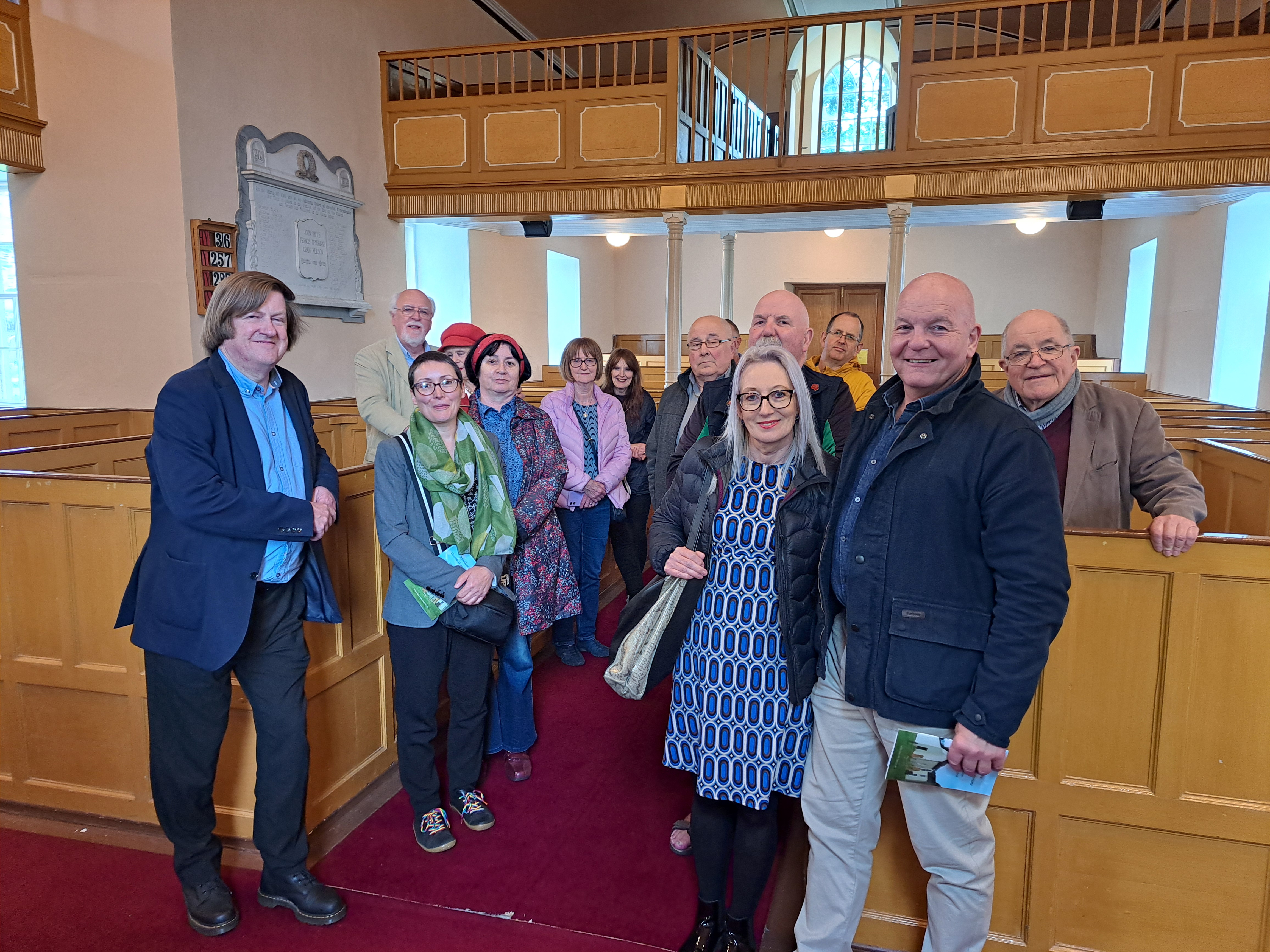
Left to right Rev Dr David Steers, Rev Mária Pap, Rev Lynda Kane, Rev Laura Dobson, Francis Elliot-Wright, Rev Jim Corrigall, Rev Stephen Reain Adair, Rev Brian Moodie in the McCleery Hall, Dunmurry.

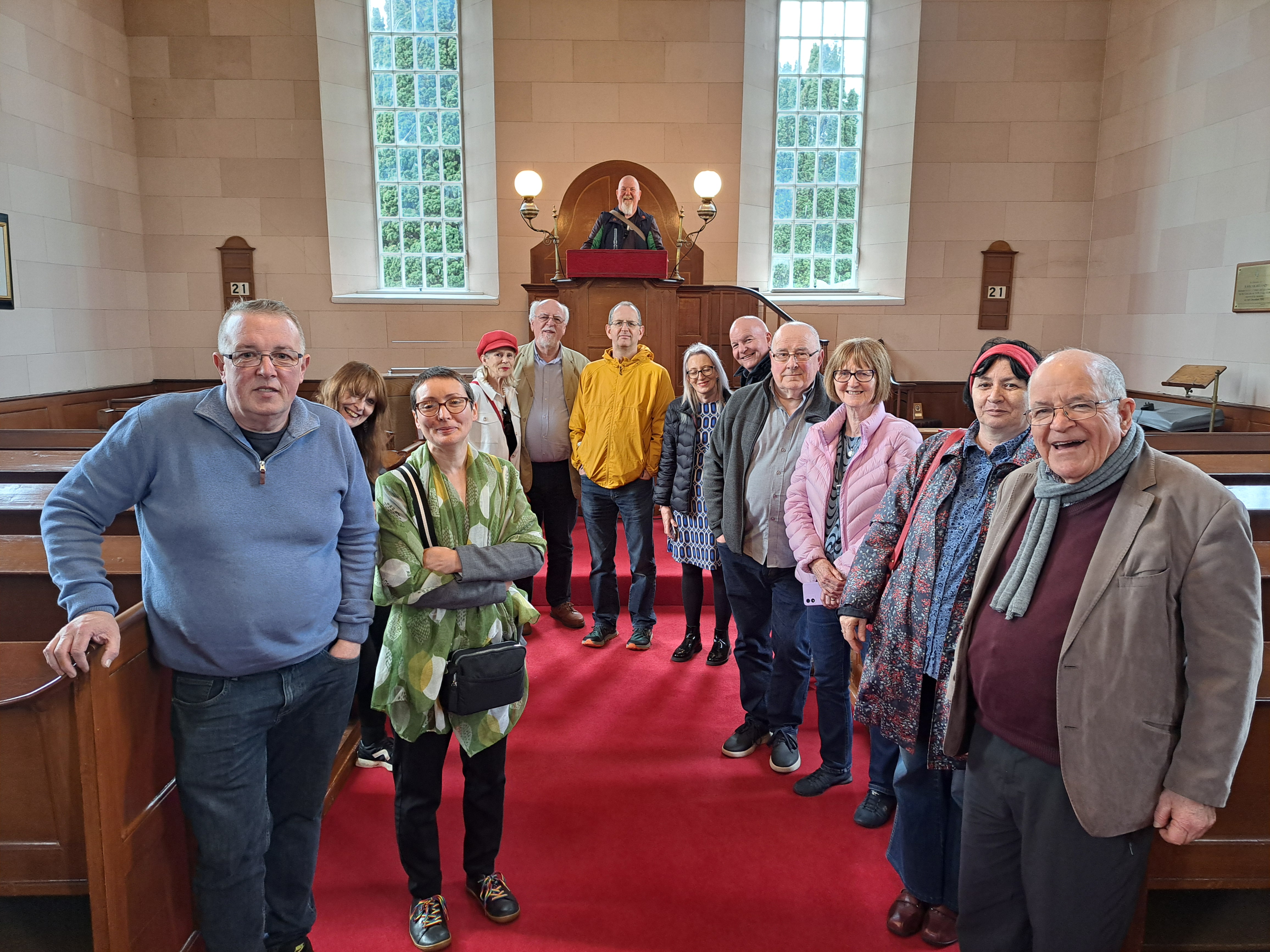
On Wednesday morning we made an early start in the company of a group of members of Dunmurry and First Church to visit six churches in Belfast and county Down and learn something about their history and witness. Thanks to Gary Douds we were taken around the churches in a minibus in great comfort and we were also blessed with fantastic weather.

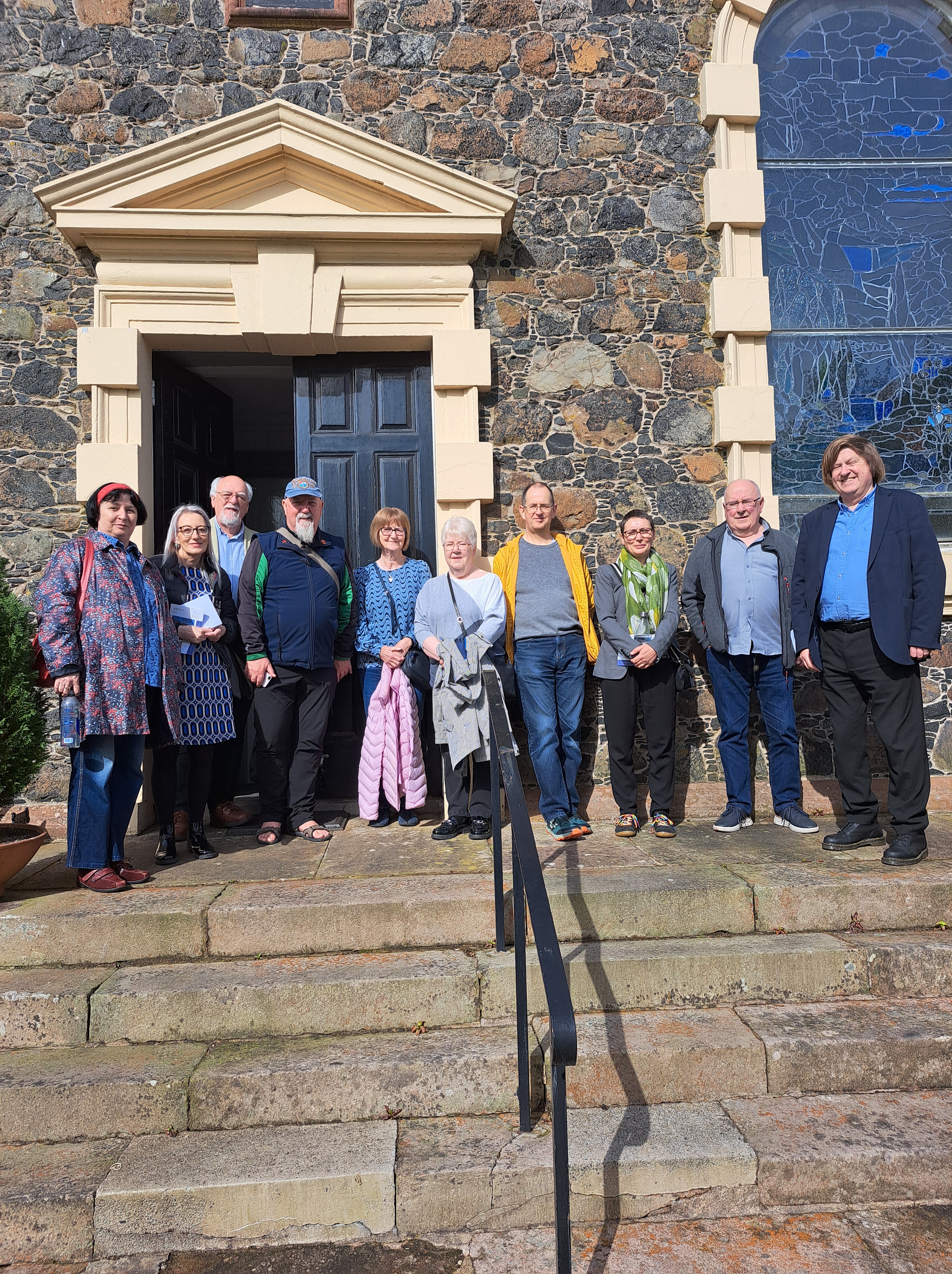
Some of the party at Dunmurry, ready to set off at 9.00 am.
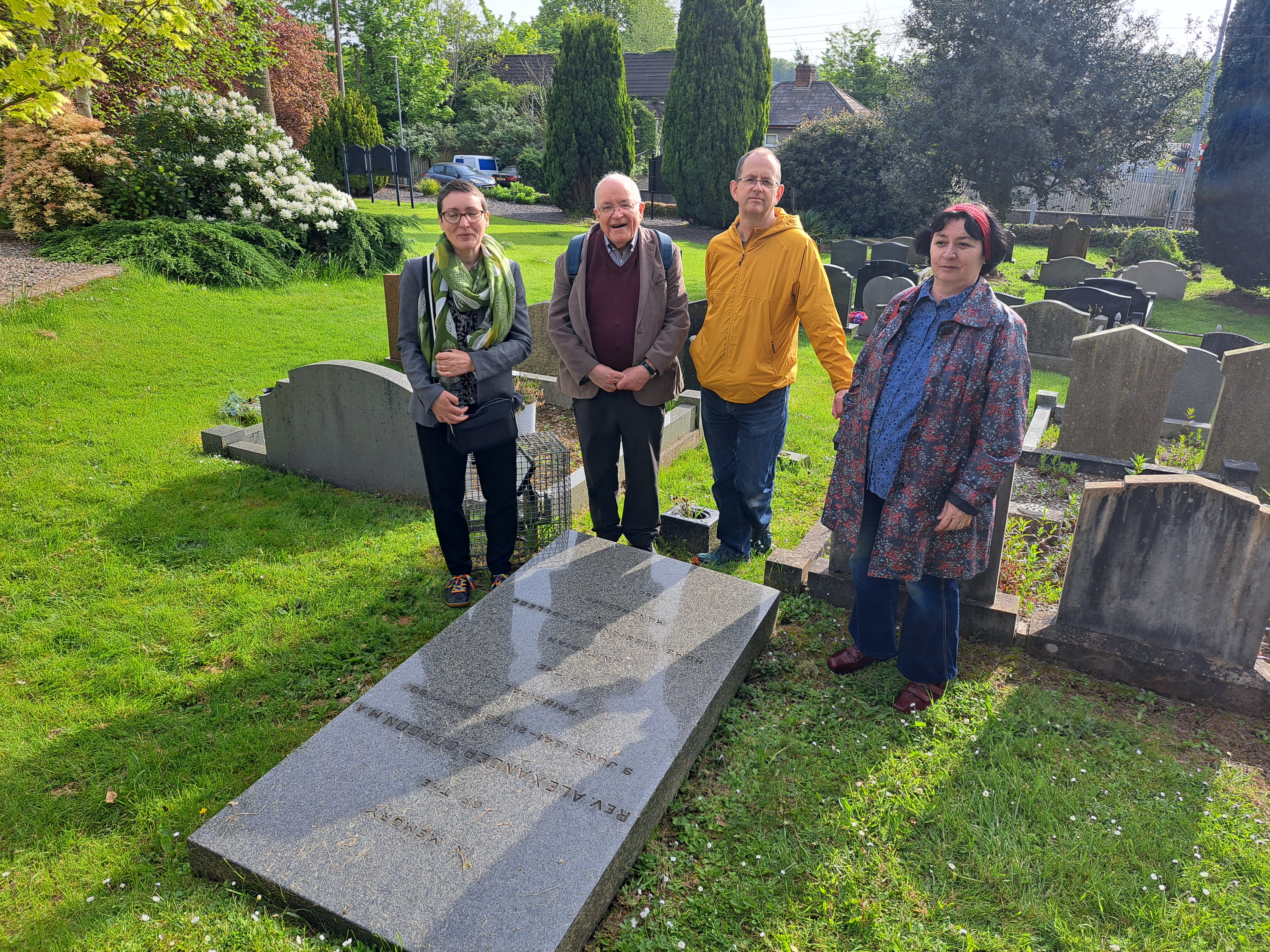
Laura, Jim, Francis and Mária visit the grave of Rev Alexander Gordon (Principal of the Unitarian Home Missionary College) at Dunmurry.
Outside Rademon later in the day.

In most of the churches I said something about the building and the history of the congregation and in Rademon Jim Ferris shared his historical expertise to give us a talk about his congregation. Our thanks go to all the ministers and members who welcomed us in our travels including Des McKeown, Rev Chris Hudson, Rev Dr Heather Walker, Mary Stewart and David Rooney, as well as Jim Ferris.

Des McKeown welcomes everyone to First Church, Rosemary Street.
Rev Chris Hudson welcomes everyone in the chancel in All Souls’.

We had lunch in Denvir’s in Downpatrick and returned to Dunmurry just 15 minutes later than our planned schedule had anticipated, so all in all a great day out.

In Downpatrick.
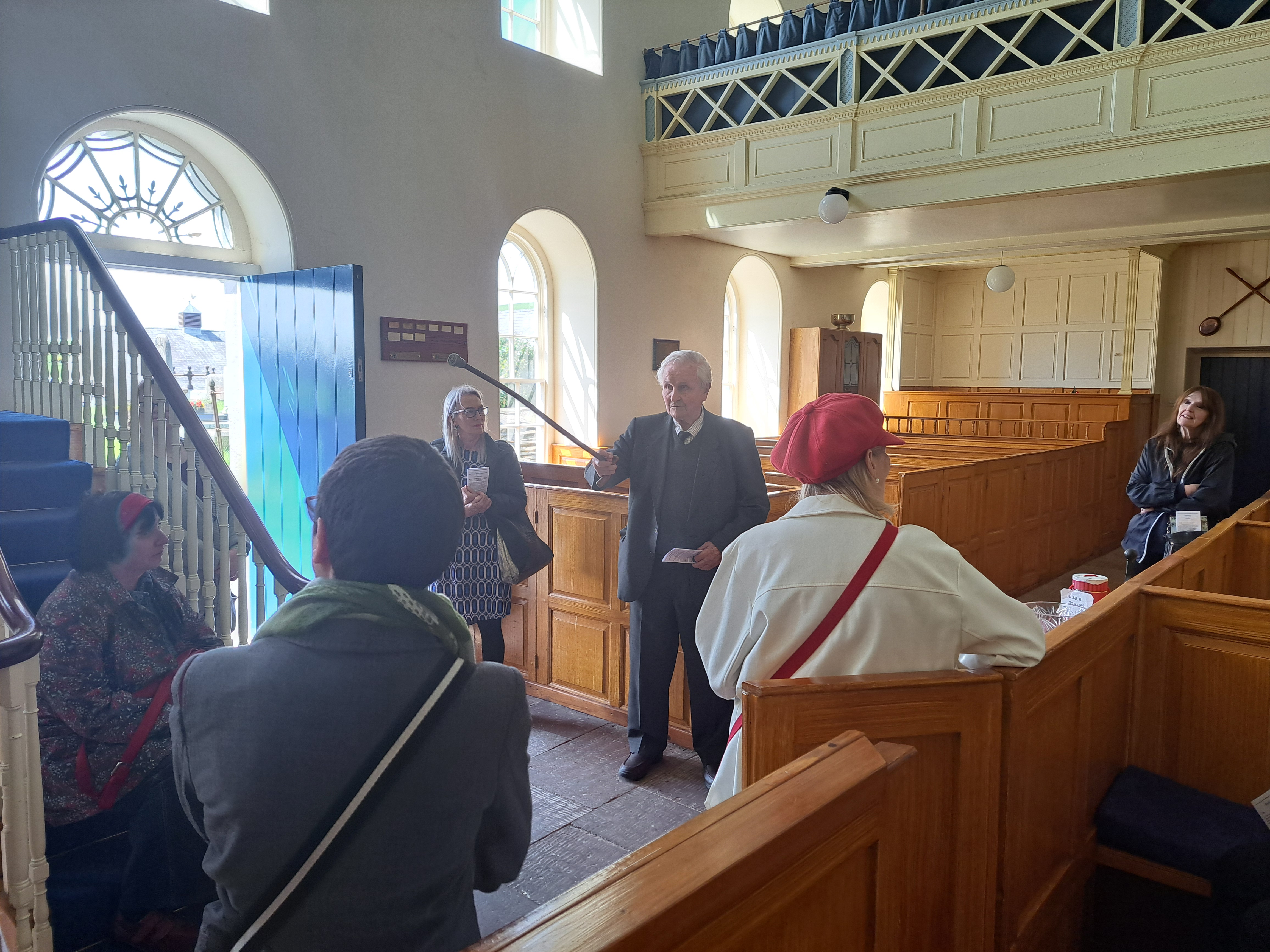
Jim Ferris explains the history of Rademon.

We visited in turn Dunmurry (1779), First Belfast (1783), All Souls’ Belfast (1896), Rademon (1713), Downpatrick (1711) and Clough (1837), buildings of different styles and ages but all with their own story to tell as part of our distinctive tradition.

In Clough, the last visit of the day.

Postcard from Dunmurry: Then and Now (a different view)

Back in January 2023 I posted a piece about a postcard of Dunmurry which showed the classic view of the church built in 1779. It was published in Lisburn by F.W. Harding and posted in November 1906. This is the picture:

and you can read about it by clicking here.

As I mention in that post, postcards of Non-Subscribing Presbyterian churches are not that common. I have seen the 1906 view before and there is also a much later one but I was pleased to discover another postcard featuring the church, this one new to me:

This dates from a little later and although it is taken from a less popular vantage point in many ways it gives a much clearer view of the building. This card was published locally by ‘W. McCartney, Stationer and Tobacconist, Dunmurry’ in the ‘Signal Series’. It has at the bottom left hand corner the title ‘Unitarian Church, Dunmurry’ and was never posted. On the back, however, it is dated May 19th 1919 and has a message to an unnamed recipient which reads ‘With best wishes for your welfare from the People of Dunmurry and district from W. Laursen’. The name is actually a bit hard to make out but that is my best guess.

In a way it is a clearer picture than the 1906 view, being a Real Photograph, if a little damaged. But the view is not obscured by trees and you can clearly see the large amount of ivy that was then being allowed to grow over the left hand door. This is actually also present on the 1906 view although it is hard to make out behind the tree.

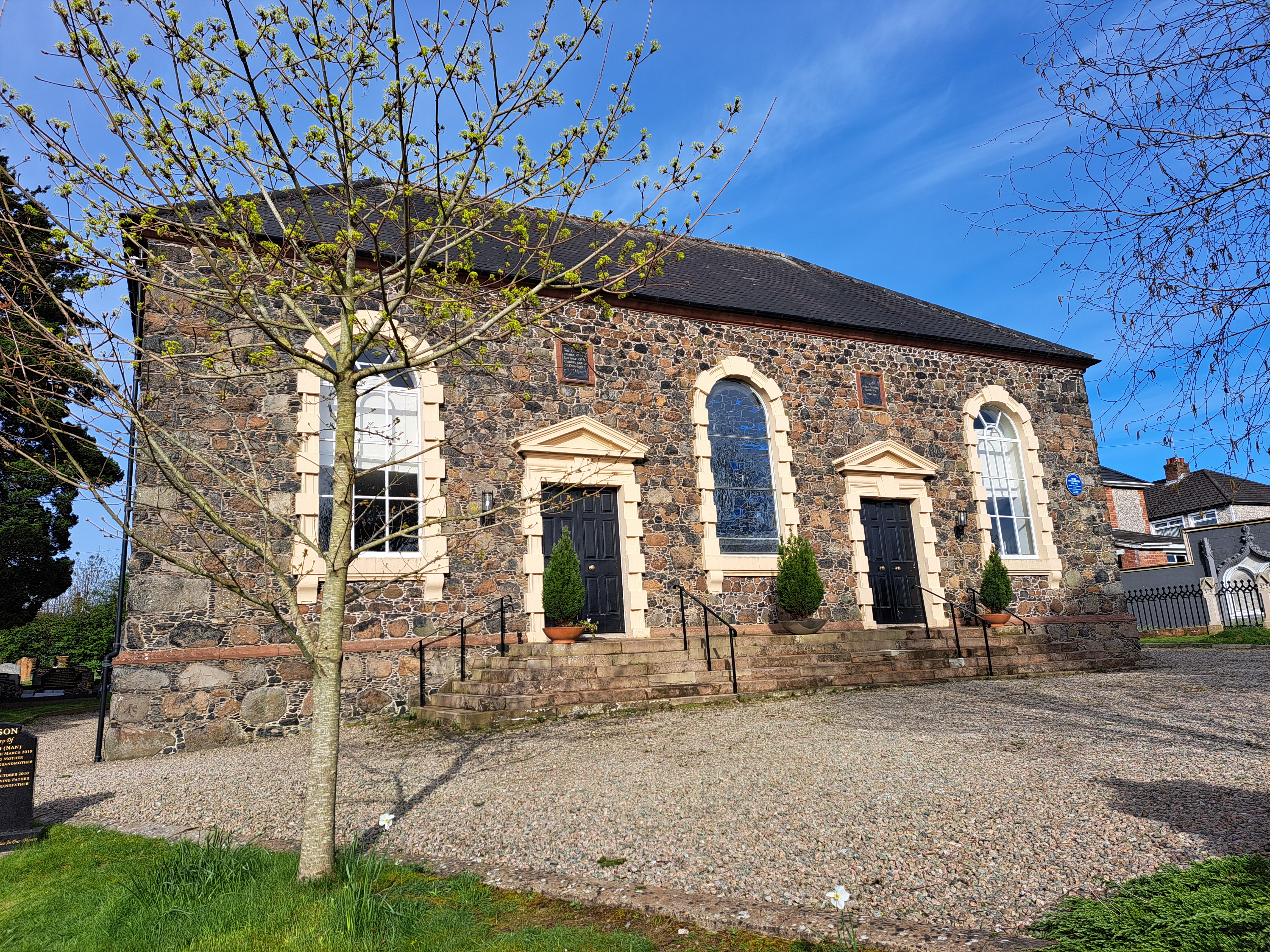
A modern image from more or less the same angle, taken a couple of weeks ago, shows the same view:

The view of the church hasn’t changed between 1919 and 2024. There are now houses along the side which weren’t there but the splendid building of 1779 is reassuringly the same.

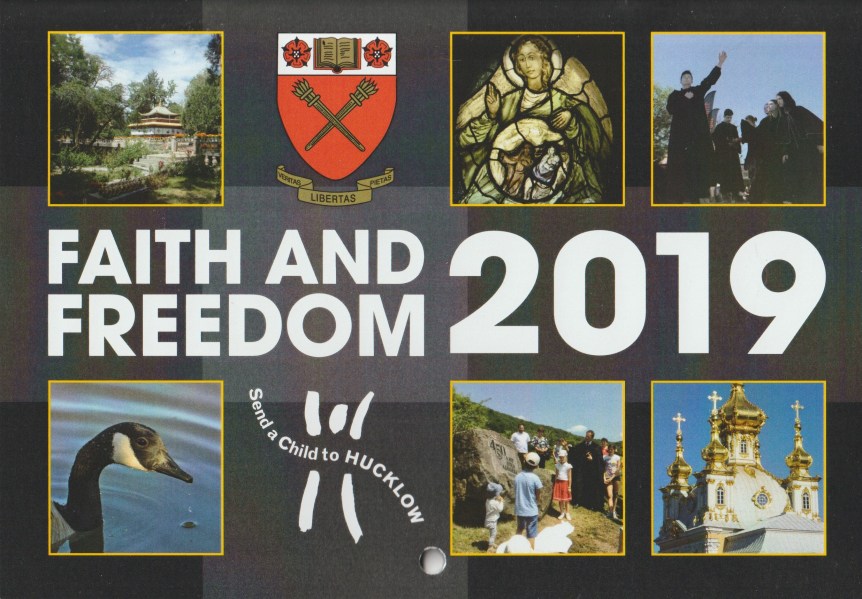
Faith and Freedom Calendar 2019 available to download

The Faith and Freedom Calendar is available and has been sent out to all individual subscribers to the journal. You can order additional hard copies from Nigel Clarke, the business manager (faithandfreedom@btinternet.com), in return for a donation which will go to the Send a Child to Hucklow Fund.

The whole Calendar is also available to view and to download via the following link:

faith and freedom calendar 2019 web


This year’s Calendar features:

Winter in the Vale of Edale, Peak District National Park. Photo:  Andrew Clarke

Church House, Abbey Street, Armagh.Photo: Paul Eliasberg

Gerbera (African Daisy). Photo: Graham Bonham

Juvenile blackbird. Photo: Graham Bonham

A celebration of famous Unitarians on Dunas Day, Torockó, Romania. Photo: Sára Bíró

St John’s Co-Cathedral, Valletta, Malta. Photo: Anne Wild

Lake Ohrid viewed from the church of the Archangel Michael, Radožda, Macedonia. Photo: Tony Lemon

Unitarian service at Bölön, Transylvania, Romania. Photo: Sára Bíró

Dandelion seed head. Photo: Graham Bonham

Methodist chapel, Barber Booth, Edale, Derbyshire. Photo: Andrew Clarke

Commemorating the centenary of the end of WW1, Downpatrick. Photo: David Steers

Cygnets on Ballydugan Lake, county Down. Photo: David Steers

Cover scan back 2019

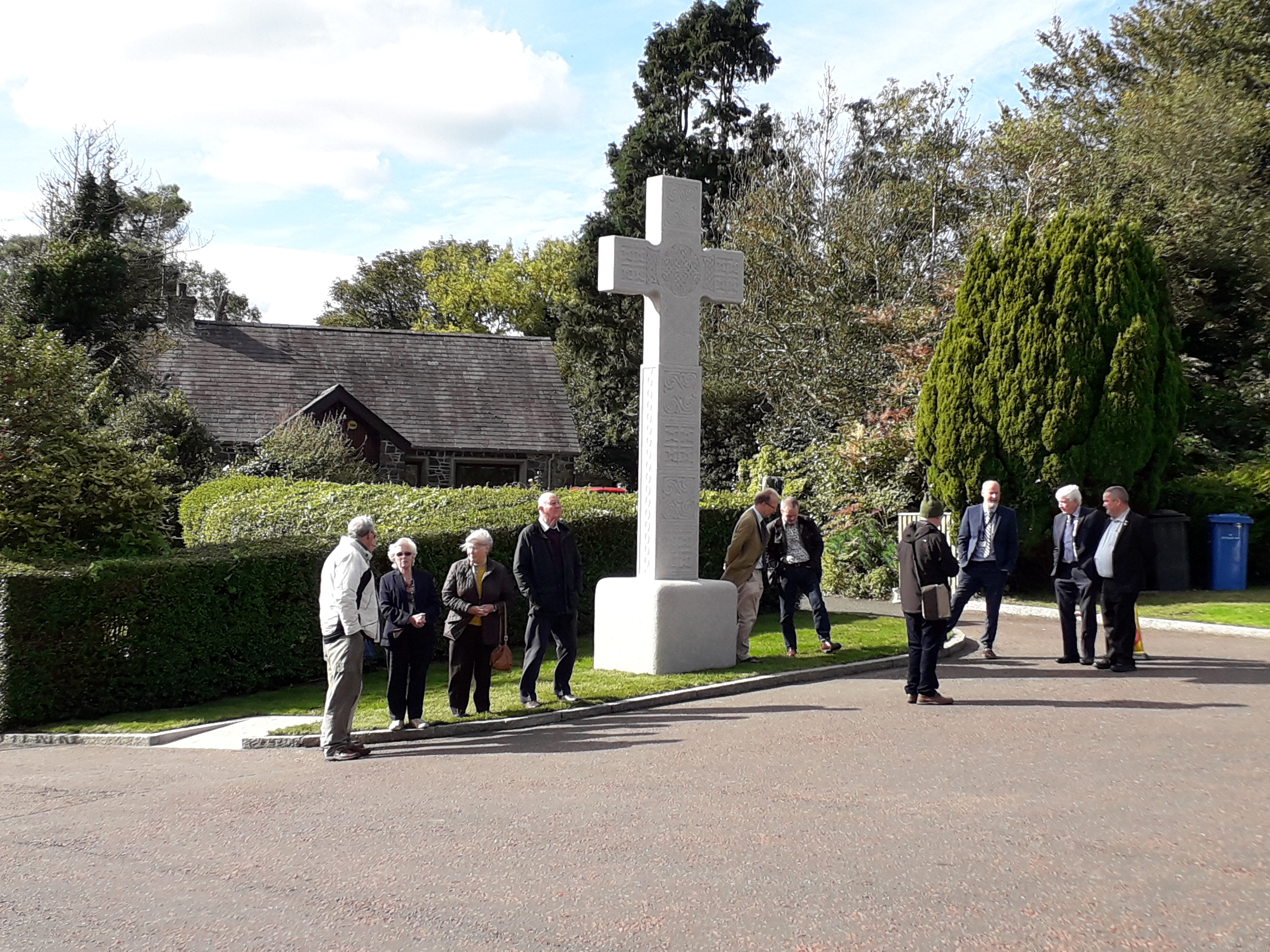
New St Patrick’s Cross at Down Cathedral


Cross long view

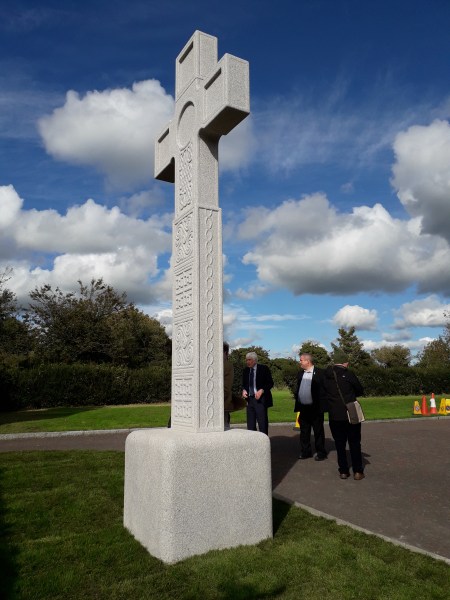
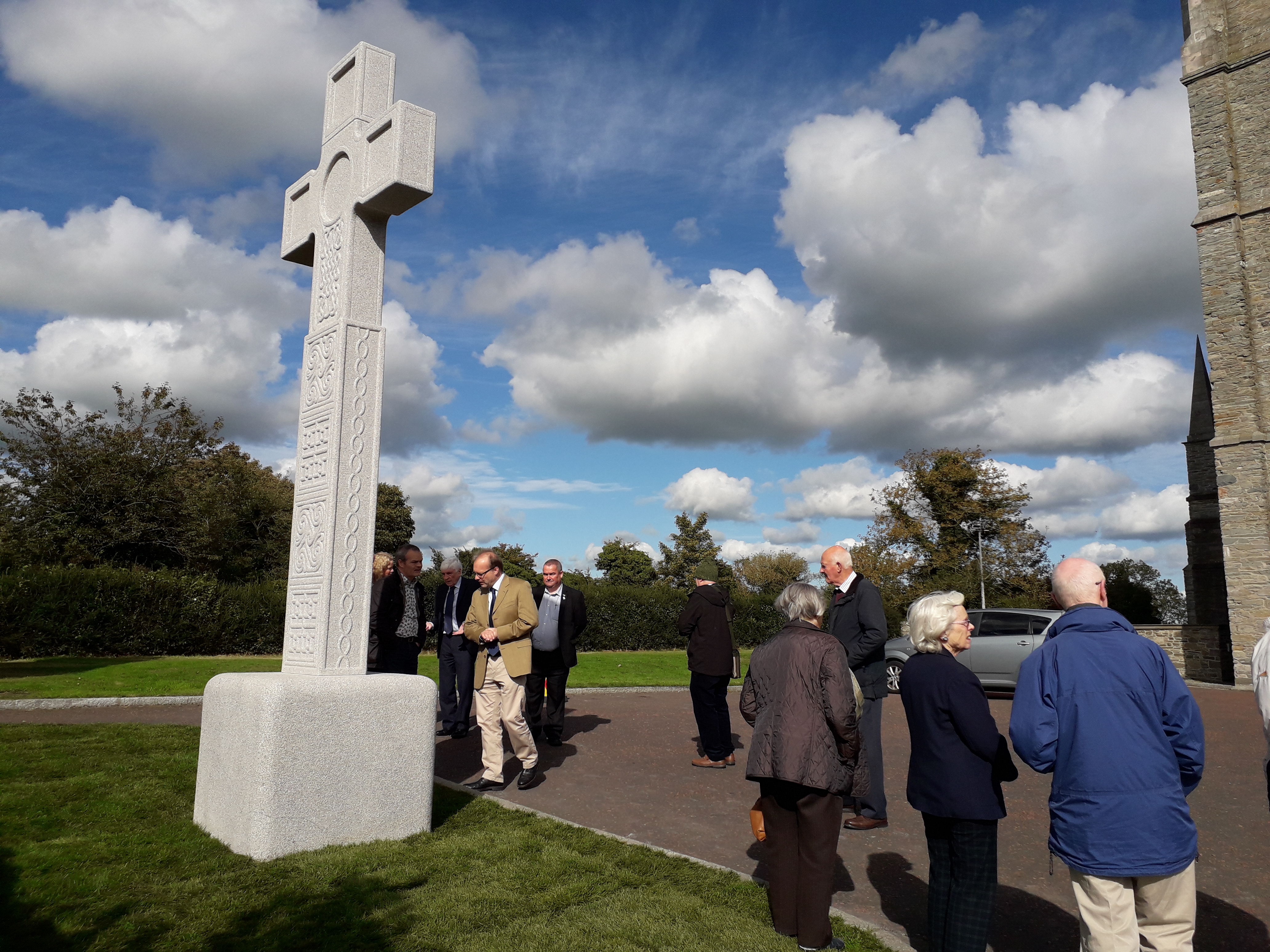
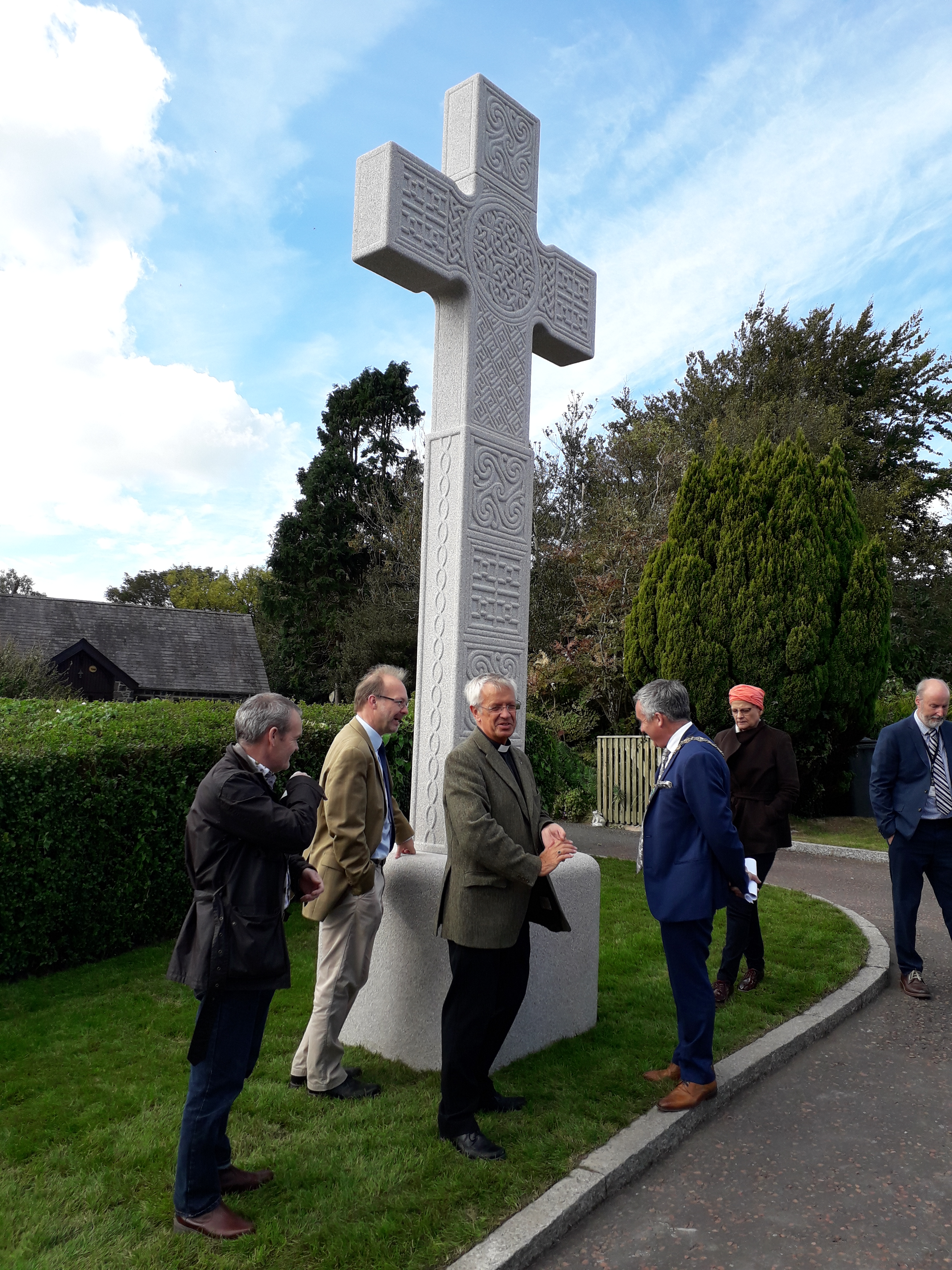
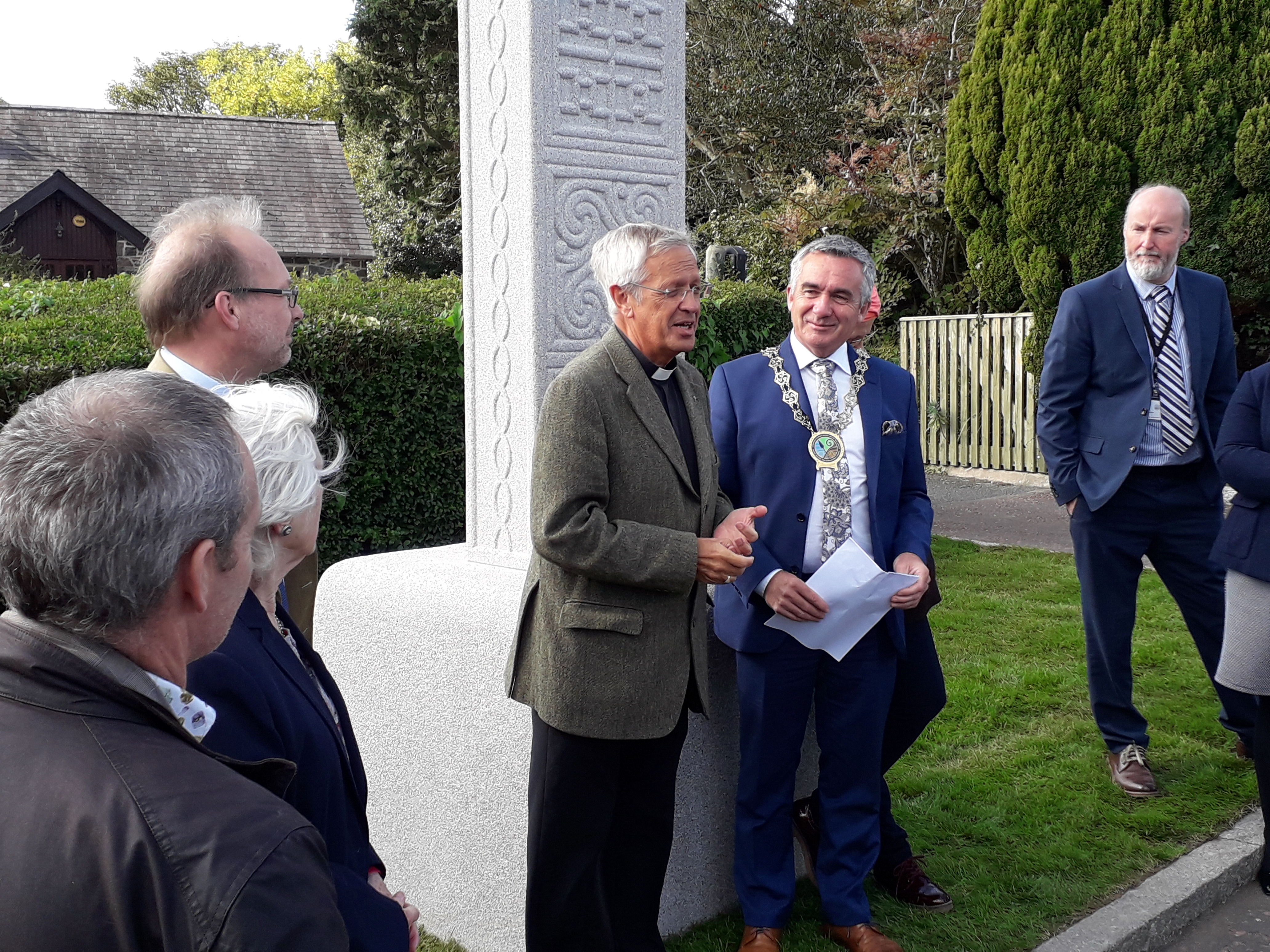
I was very pleased to be amongst those present for the Civic reception for the new High Cross erected at Down Cathedral on 24th September. Based on fragments of an ancient cross kept in the Cathedral it is carved from Mourne granite, weighs five tonnes and towers over its immediate surroundings. It is an impressive structure, a work that eloquently reflects the legacy of St Patrick so close to his grave. The fragments that are inside the Cathedral were originally found on the site that is now marked as St Patrick’s grave and are thought to date from the eighth century. The pieces were digitally scanned and the decoration carved onto the new Cross to create a pristine replica of what may once have stood at the entrance to the Benedictine monastery which originally stood on the hill.

Cross reverse view

Cross front view

Cross speeches

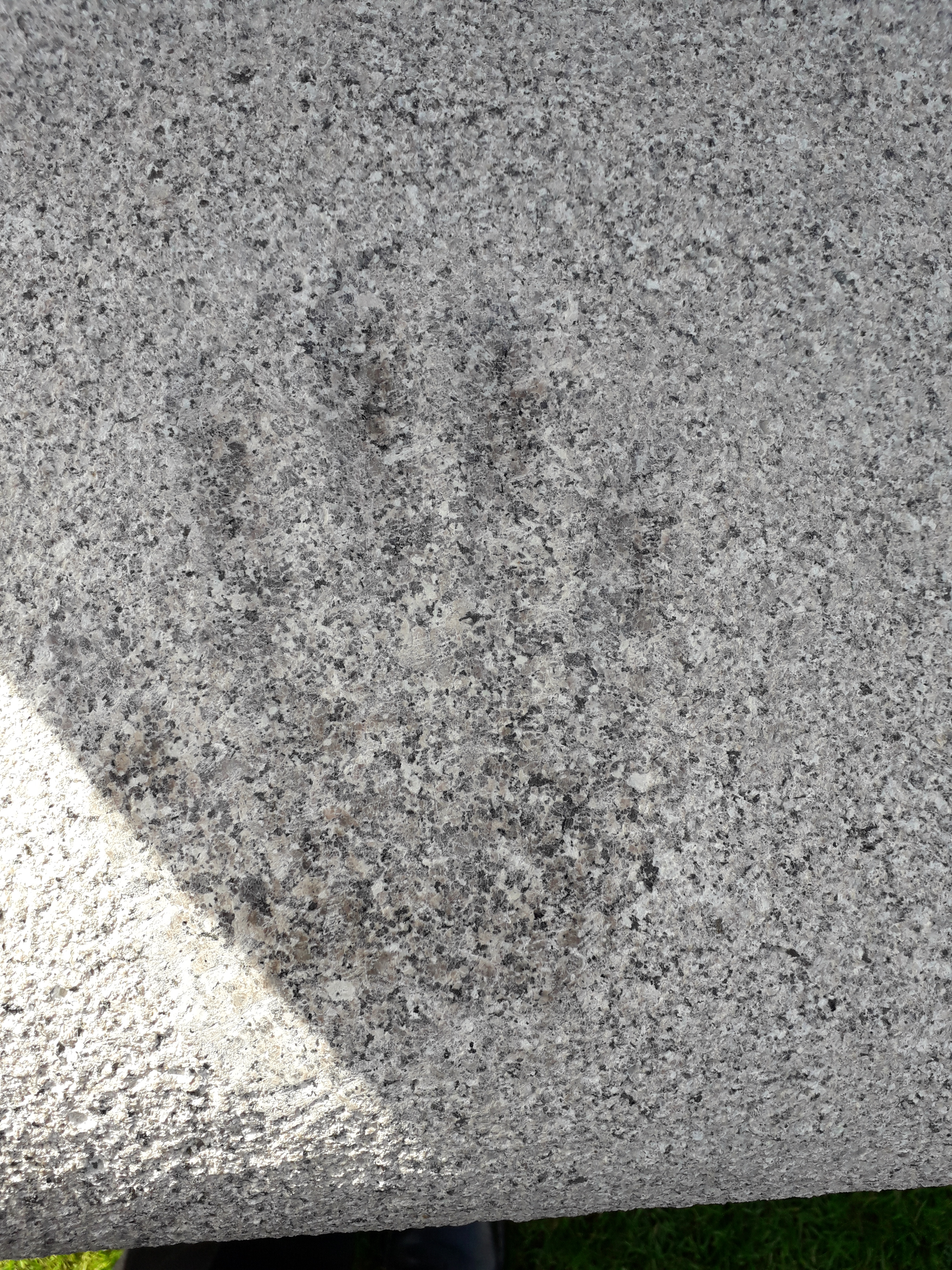
Cross hand print

Hand print at the foot of the Cross for pilgrims


The most interesting place in Southport


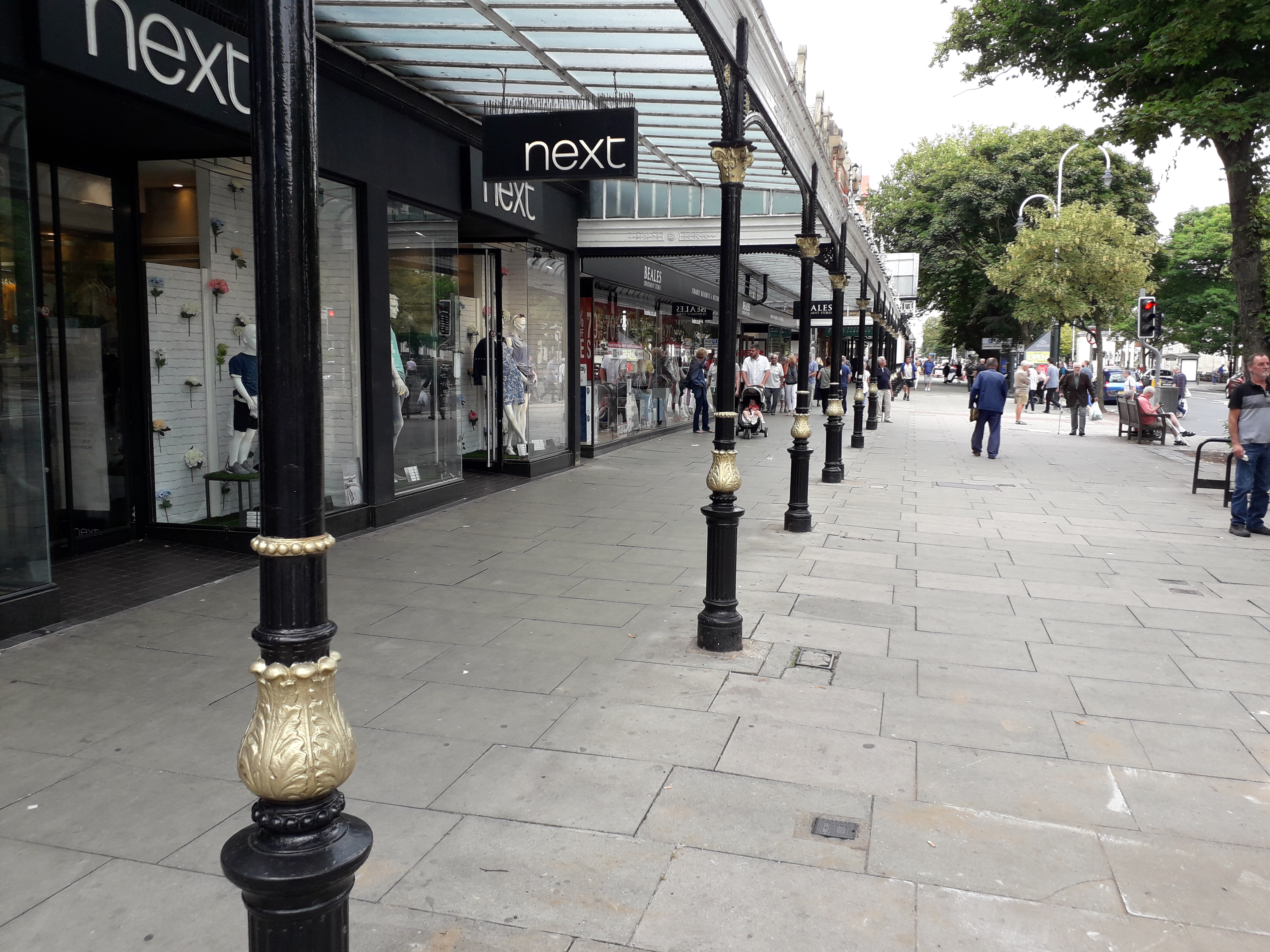
Southport is always an interesting place. It has all the usual seaside details you would expect plus some features that mark it out as a little more dignified than the usual destination. Most notably these include the intricate nineteenth-century cast iron verandahs which adorn Lord Street.

But for me, for as long as I can remember, the one place that really stands out is the Shell Shop. You could easily miss it if you didn’t know it was there but it is a place I never walk past without going in.

Youthful visits to Southport with church and youth groups always included a trip to the Shell Shop. It was arranged as a museum around some rickety staircases and took the visitor on an eccentric journey to the South Sea Islands. A large and grubby looking plug from borstal hung near the end of the experience along with, I was recently reminded by Tony the current owner, a large model of a witch doctor placed there to discourage young visitors from shop lifting! Nowadays I don’t go so much for the shells as for the three floors of second hand books. I didn’t realise until a recent visit that the original Shell Shop and book shop were two separate businesses and indeed both were different to the current business, Parkinsons Books, but such was the demand from visitors for shells and other unusual items that the large stock of shells, fossils and curios from around the world remain very much a part of the display.

There is always a good selection of theology upstairs and it is always worth the hike to see what is there. But the shadowy passageway containing the 50p bargains never fails to yield some great finds. Not so long ago I purchased six random volumes of the original Dictionary of National Biography for 50p each. You might wonder why I wanted them since they are quite bulky and are, of course, available online these days, but you couldn’t leave them there for £3. Besides I only have to find 16 more and I will have the full set.

Southport shop front

A Lord Street shop front

Southport colonnade

Victorian cast iron and glass shop canopies

Southport shell entrance

The entrance to the Shell Shop

Southport shell 50p books

50p bargains

Southport shell passage

Getting nearer to the shop

Southport shell books

Ground floor

Southport shell shelves

Some shells

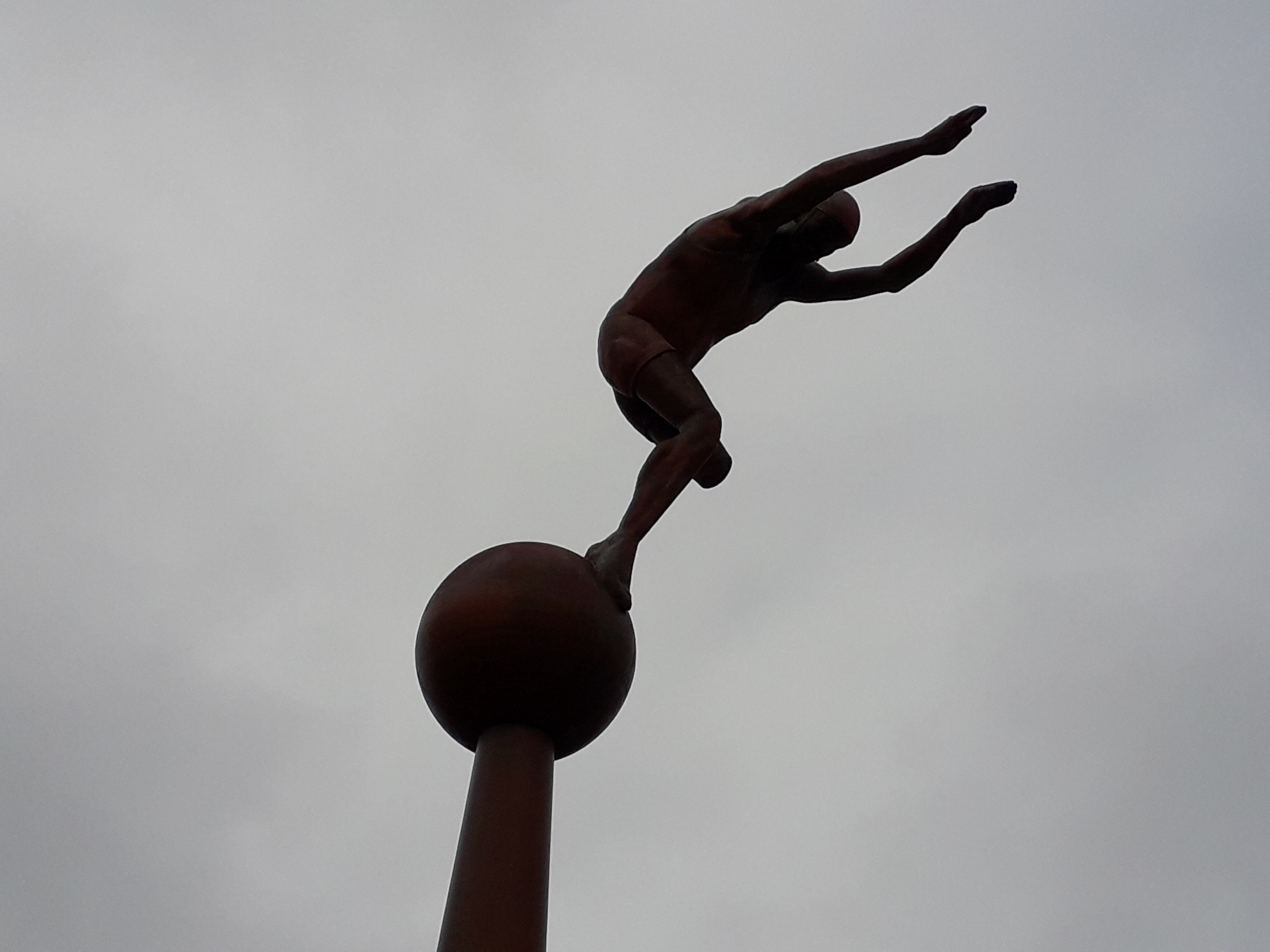
Southport diver

Don’t forget the diver. Southport statue

Unitarian College Cluj/Kolozsvár

College LS 05

Kolozsvar Unitarian HQ 01

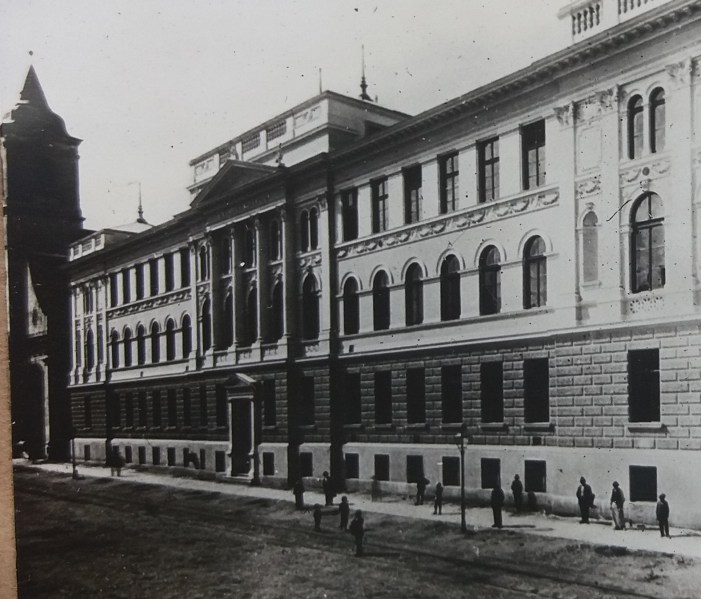
Recently I have published a couple of ‘then and now’ shots featuring Edwardian postcards and contemporary photographs on this blog. One featured a view of a street in Toxteth and one some of the churches in Banbridge. This is another ‘then and now’ view but, in this case, it is taken from a glass lantern slide of the Unitarian College building in Cluj/Kolozsvár.

I have an interesting set of magic lantern slides depicting notable sites in Hungary and Transylvania, some of them showing groups of people at what must be some sort of gathering, possibly international. The purpose of the collection, which is in a poor state and which is probably not complete, is to illustrate something about the Unitarian history and life of that region. They are not easy to date exactly but this slide helps enormously.

The Unitarian College was built in 1901, then a very modern, state of the art building which is still impressive and giving excellent service as headquarters, College as well as senior and junior schools.

It is right next door to the First Unitarian Church which can just be seen on the left of the photograph. This helps us date the slides since the College was built in 1901 and the church had the top of its tower replaced in 1908. In that year Lajos Pákey, the city architect who was educated at the Unitarian College and was also responsible for many of the prominent buildings and monuments in the town, redesigned the tower in its present baroque form. I had always assumed that this feature dated to the 1790s when the church was built and had never seen a picture of the original tower before finding this slide.

By chance I took a picture in January 2018 from the same place as the photographer of 1901-1908, not surprising since there are not so many vantage points for such a large building. But here we have the same view, separated by about 110 years.

As time and circumstance permit I will try and digitise the glass lantern slides and post them on here.


Martin Luther: Postage Stamps

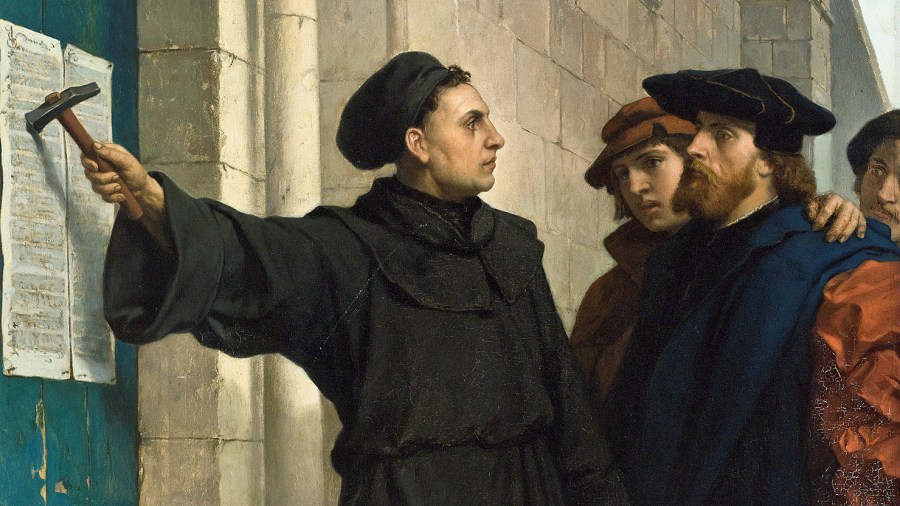
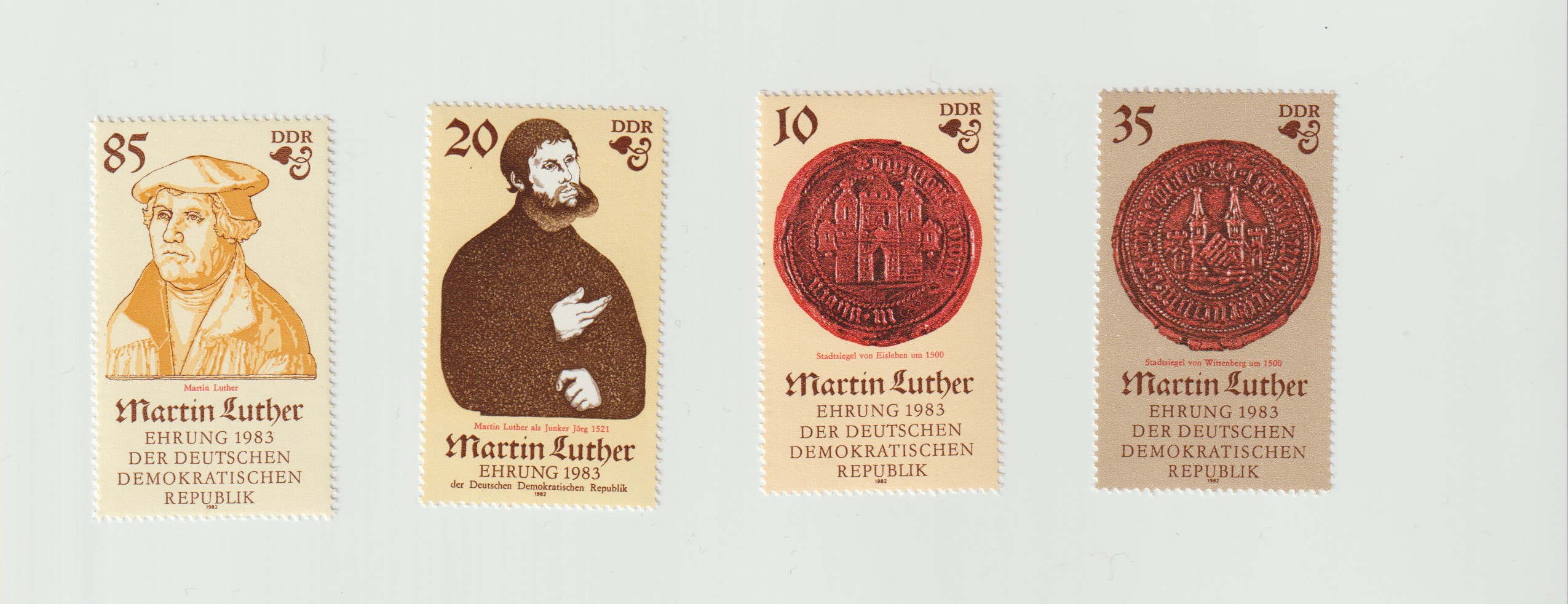
As part of the commemoration last year of the 500th anniversary of Martin Luther posting his 95 Theses, our churches in county Down put together an illustrated exhibition on the history of the Reformation from 1517. One part of this was a collection of stamps from around the world all related to Luther. It is surprising how many countries have seen Martin Luther as a suitable subject for a postage stamp. I don’t imagine this is an exhaustive collection of Martin Luther related stamps but it is interesting to compare the variety of images and styles utilised. Some are very artistic, others less so.

Stamps 01

Top row, left to right:

USA 1983 20c, 500th anniversary of Luther’s birth; French Polynesia 1983 90F, 500th anniversary of Luther’s birth; Bulgaria 1996 300 lev, 450th anniversary of Luther’s death; Germany 2017 .70 euro, 500th anniversary of reformation.

Second row, left to right:

Lithuania 2017 .39 euros, 500th anniversary of reformation; West Germany 1971 30c, 450th anniversary of the diet of Worms; Estonia 2017 .65 Euro, 500th anniversary of reformation; France 1983 3.30F, 500th anniversary of Luther’s birth.

Stamps 02

Left to right:

South Africa 1967 12.5 c, 450th anniversary of reformation; South Africa 1967 2.5 c, 450th anniversary of reformation; West Germany 1979 50 pf, 450th anniversary of Luther’s Catechism; Germany 1995 100 pf, 450th anniversary of the Worms Reichstag.

Stamps 03

Left to right:

Germany 2002 56 pf, 500th anniversary Martin Luther University Halle-Wittenberg; West Germany 1983 80 pf, 500th anniversary of Luther’s birth; West Germany 1961 15 pf, 415th anniversary of Luther’s death; Germany 1996 100pf, 450th anniversary of Luther’s death.

Stamps 04

Left to right:

East Germany 1983 85 pf, 500th anniversary of Luther’s birth; East Germany 1983 20 pf, 500th anniversary of Luther’s birth; East Germany 1983 10 pf, 500th anniversary of Luther’s birth; East Germany 1983 35 pf, 500th anniversary of Luther’s birth.


Presbyterian Church, Grosvenor Square

Like the photograph of Platt Chapel in the previous post this picture did not come cheap but it is a very rare, relatively early picture of a long vanished church. I can’t find any other picture of this church as good as this online.

The Scotch Presbyterian Church was situated on Grosvenor Square, near the top of Oxford Road in Manchester, an area that has long been colonised by academic buildings although the square still exists as a small green space. In the centre of the square stood All Saints’ Church and the Presbyterian Church was on the far side of the square, on Lower Ormond Street, the road parallel with Oxford Road. Both churches are long gone the Presbyterian Church ending its days in the 1950s as a wallpaper shop and later as a paint shop before demolition in the early 1970s. All Saints’ was damaged in the blitz.

In the foreground of the picture the graves seen there form part of the church yard of All Saints’ Church. It is an untidy looking area in the picture – there are two lifeless looking trees, denuded of leaves and branches, and the gravestones stand in the middle of a scruffy no-man’s land which is covered in either sand or bare earth amidst clumps of grass. Was it taken in the middle of some building work or renovation or did it always look a mess? Either way it is nothing to do with the Presbyterian Church other than it crops up in the foreground of the picture.

There is a very full set of records for the congregation deposited in Manchester Libraries, Information and Archives. Amongst these the Communicants’ roll books begin in 1832 which suggests a foundation of that date. The pew rents/seat lettings books begin in 1850 when the church was opened for worship, the foundation stone of the new building having been laid on 17th September 1849.

Grosvenor Presbyterian MLIA

An architectural drawing of the church at the time of its opening (Manchester Libraries, Information and Archives)


The church closed in 1940 and merged with Withington Presbyterian Church to form Withington Grosvenor Presbyterian Church further out of Manchester. This congregation closed in 1971 to form Grosvenor St Aidan’s Presbyterian (later URC) Church in Didsbury (now called simply Didsbury United Reformed Church).

The photograph is quite small, it only measures about 8 cm by 6 cm, but it is very sharp and very old. The sister photograph that shows Platt Chapel dates from before 1874 so there is no reason to date this one to any other period. But here it is, the oldest photograph of the Scotch Presbyterian Church, Grosvenor Square, Chorlton-on-Medlock. Long vanished but preserved in this little study, a very precise architectural photograph taken on a sunny day sometime in the middle of the reign of Queen Victoria.

Grosvenor Square 04

The original photograph attached to its card


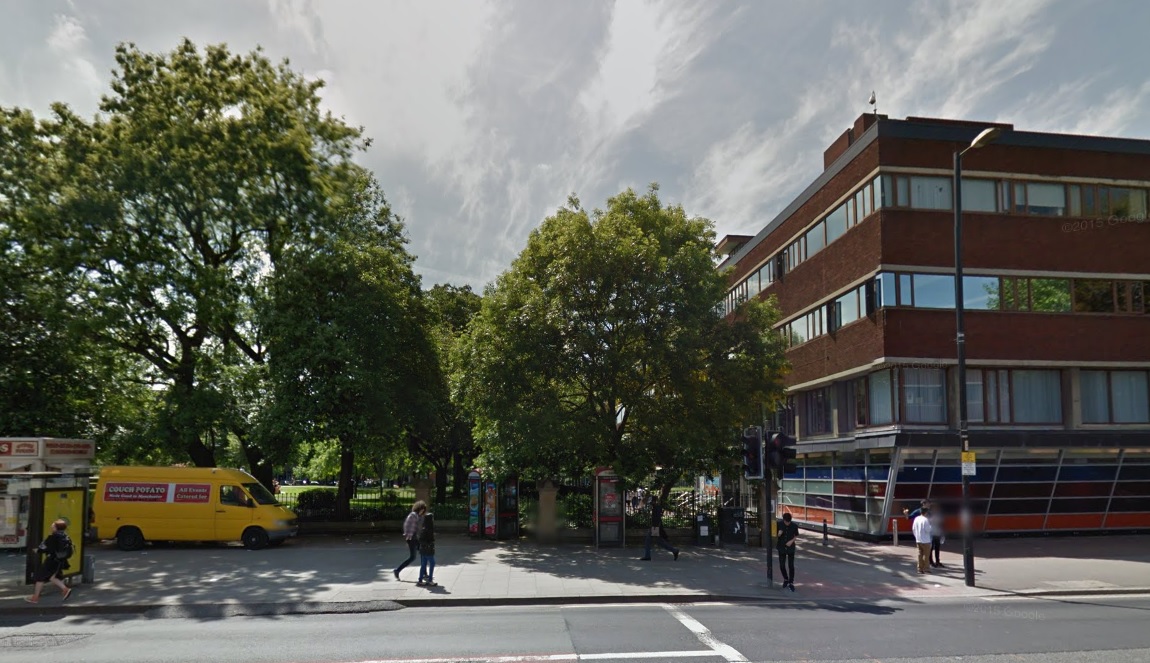
Google Street View, from a position along Oxford Road just past Manchester Metropolitan University, shows this view looking towards where the church once stood. It would have been visible beyond the trees on the other side of the square (now called ‘All Saints Park’).

Grosvenor Square Google Maps Streetview

Google Street View – Oxford Road


No pictures or text may be reproduced from this site without the express permission of the author.


Edgar Innes Fripp and William Shakespeare

The current celebrations of the 400th anniversary of the death of William Shakespeare prompt me to think about the Rev Edgar Innes Fripp. His is not a name widely remembered today but I was very aware of him when I was minister of All Souls’ Church in Belfast as a very distinguished predecessor in that pulpit, indeed the minister under whose leadership that church was built in 1896.


E.I. Fripp didn’t really get the attention he deserved in the congregation, although I wrote and spoke about him on a number of occasions. If the congregation looked to anyone as an historical exemplar it was A.L. Agnew whose own particular heroic story in the course of a 54 year ministry was partly based on an undoing of the achievements of his predecessor Fripp. He did away with the ‘Fripperies’ that remained from early in the century even to the extent – or so I was told – of having a bonfire of old service books along with assorted hassocks, communion table cloths and pulpit hangings. Fripp had introduced an edited version of the prayer book to the church, a robed choir and a much more devotional style of worship than had been the case before. More than that he had built the church, a little medieval English parish church in suburban Belfast. It was his vision in achieving this that had enabled the church to survive. Without this move it would have been unlikely to have lasted in Rosemary Street, and although there may have been a falling off in attendances between the wars it suited the narrative of the later arrival of Dr Agnew and the York Street congregation following the blitz of 1941, to write off everything that had gone before. In fact the destruction of the York Street building made an eventual union of the two congregations inevitable but without the intervention of the German Luftwaffe even that probably would not have taken place.


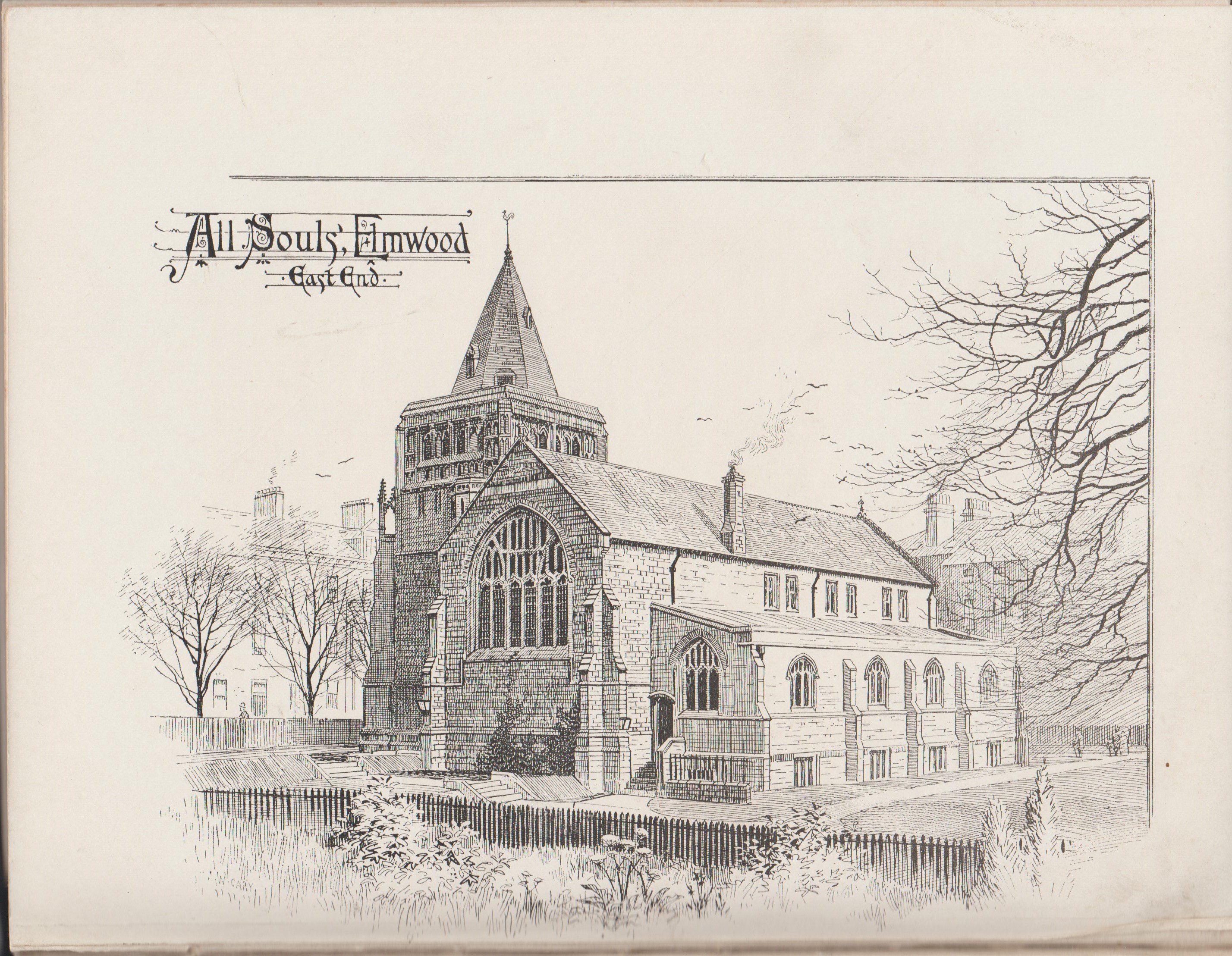
AllSoulsexterior

All Souls’ in 1900


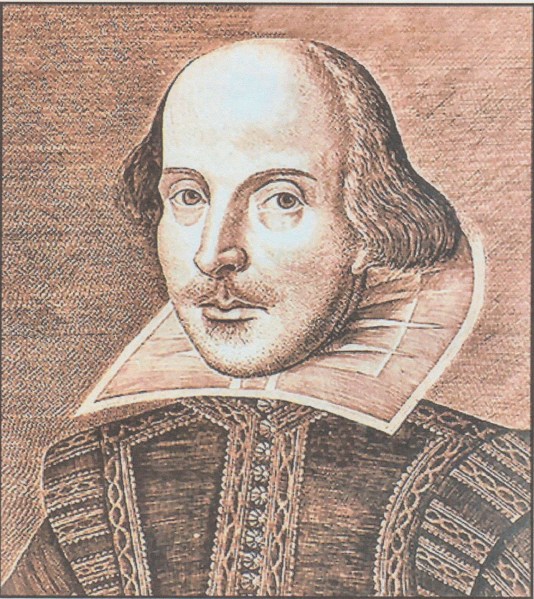
By the time I was minister at All Souls’ a large majority of the congregation had belonged to York Street or were descendants of that congregation. The Second Congregation families, the original All Souls’ people, were a minority yet there were a few who remembered Edgar Innes Fripp. This wasn’t because they were extraordinarily old, because although he had built the church in 1896 and left in 1900 he had returned at the start of the 1920s for a few years. In the 1990s there were some people who had childhood memories of Fripp and what they remembered in particular was his interest in Shakespeare. He was much given to quoting him and increasingly found inspiration in his writings for his sermons.


ShakespearesStratford

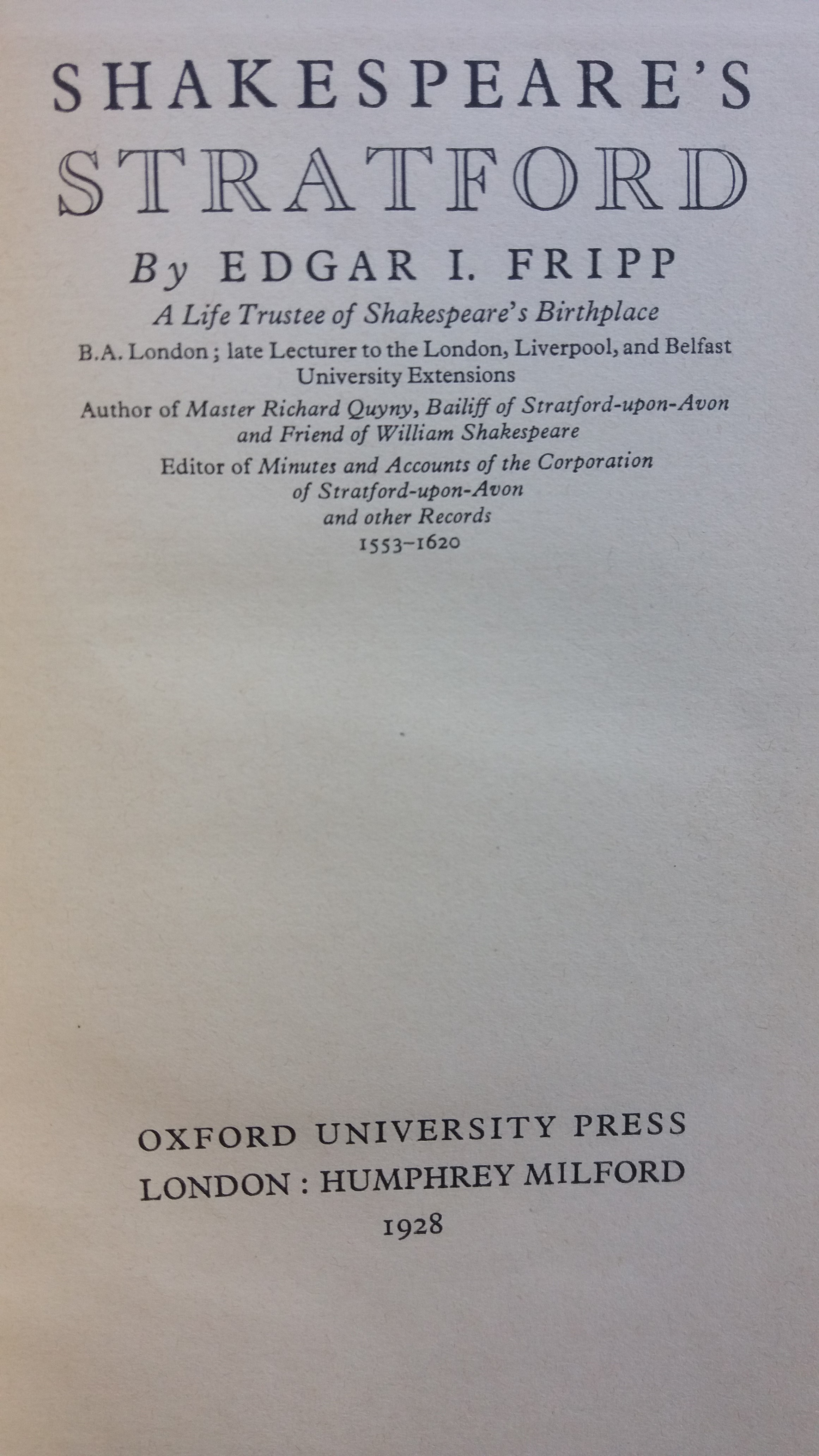
The title page of Shakespeare’s Stratford


In Belfast he had been innovative, imaginative and creative. He was a genuine scholar, he had been a Hibbert Scholar in Germany before entering the ministry, and was a caring and effective pastor. All this can be seen in his Kalendar, the first monthly magazine to be distributed within a church of the Non-Subscribing tradition in Ireland. Before he had arrived the Second Congregation had left the presbyterian structures to pursue their own course although they were rooted in the Free Christian theological traditions exemplified by James Martineau.


Early in his ministry he had produced an account of the composition of the book of Genesis, by the end of his ministry he was completely absorbed in Shakespearean studies. He published a number of works on Shakespeare, and his life and times, and became a trustee of Shakespeare’s birthplace. Indeed it is interesting to see that today the Shakespeare Birthplace Trust has a short video examining E.I. Fripp’s analysis of Iago:

http://findingshakespeare.co.uk/shakespeares-villains-iago


At the end of his life Fripp’s funeral took place in Shakespeare’s church and he was buried in Stratford on Avon. But he produced a large amount of work on Shakespeare and I have often been tempted to seek out a contemporary Shakespearean scholar to give an assessment of how these works are regarded today for Faith and Freedom. There is and has long been a vast industry around Shakespeare and each age finds a different set of interpretations that reflect its own circumstances. It would be nice to know from the point of view of an English literature specialist what endures from Fripp’s writings. But if nothing else he had an enduring impact on the topography of South Belfast, something that continues to this day.


AllSouls02

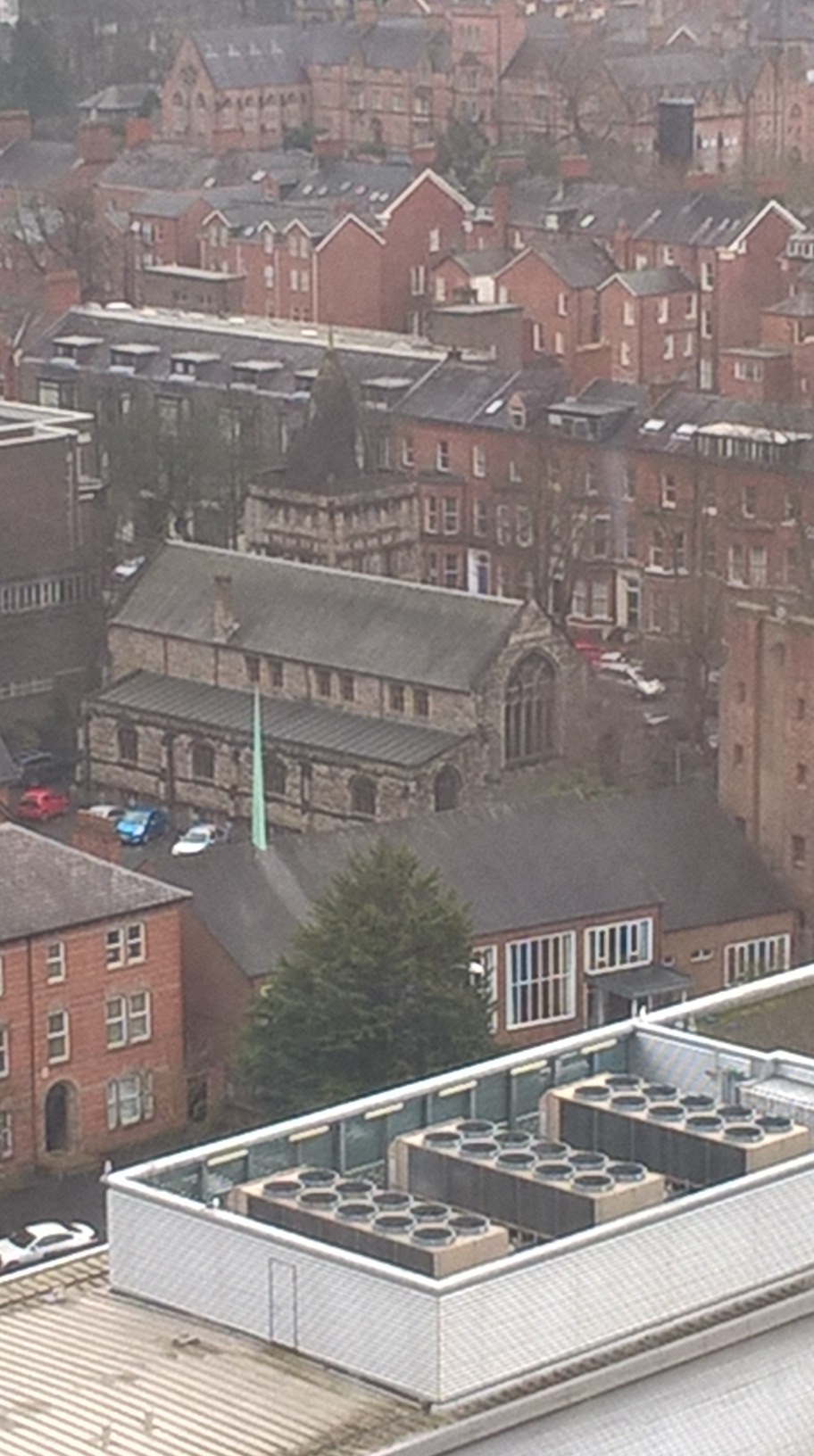
The view of All Souls’ today from the Belfast City Hospital