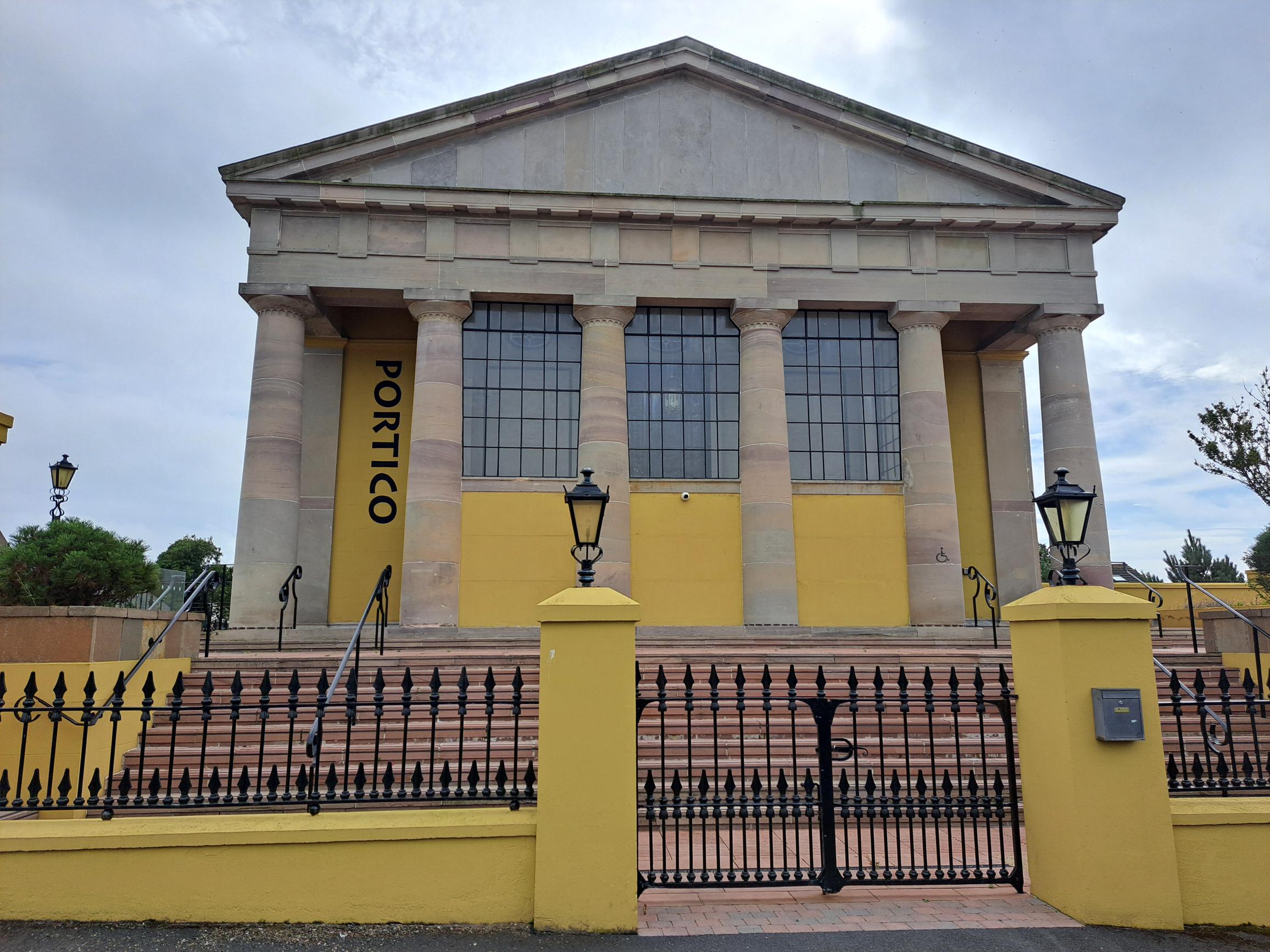
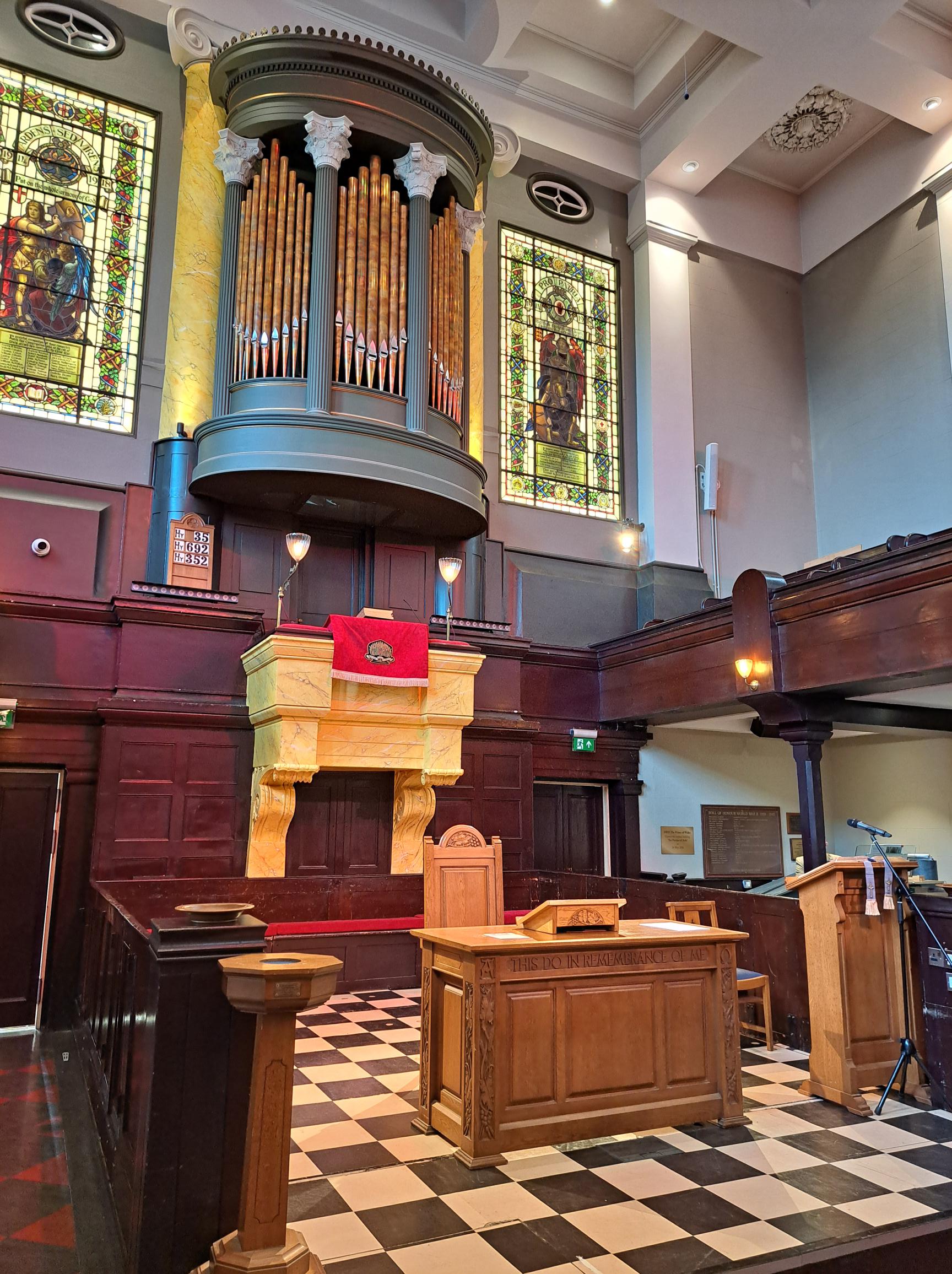
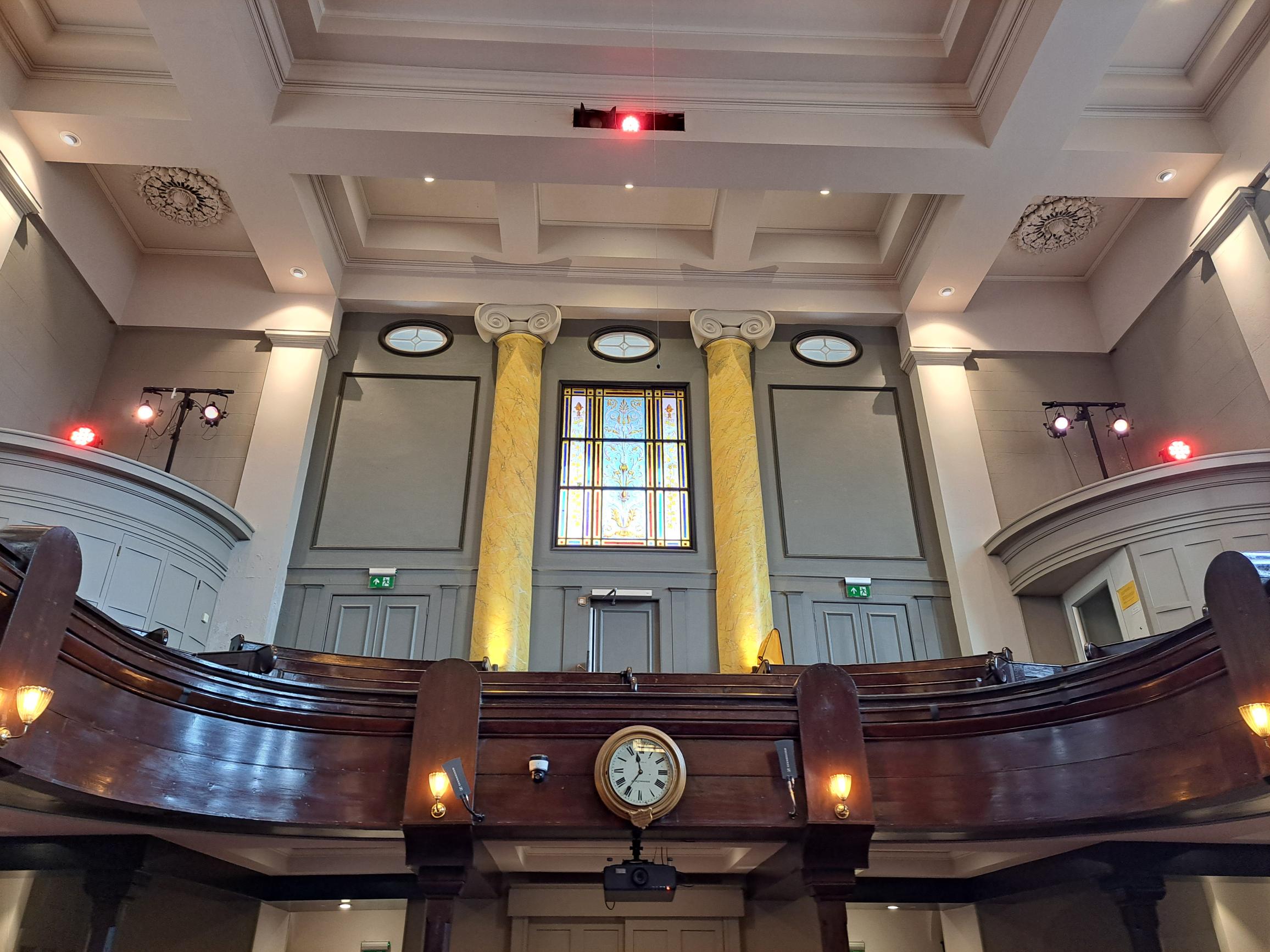
I was delighted to have visited Portaferry this morning and to get the chance to meet the wonderful congregation. The building is really impressive. Opened in 1841 by no less a person than Henry Cooke, it replaced a previous T-shaped building of 1751 which was damaged on the ‘Night of the Big Wind’ on 7th January 1839.
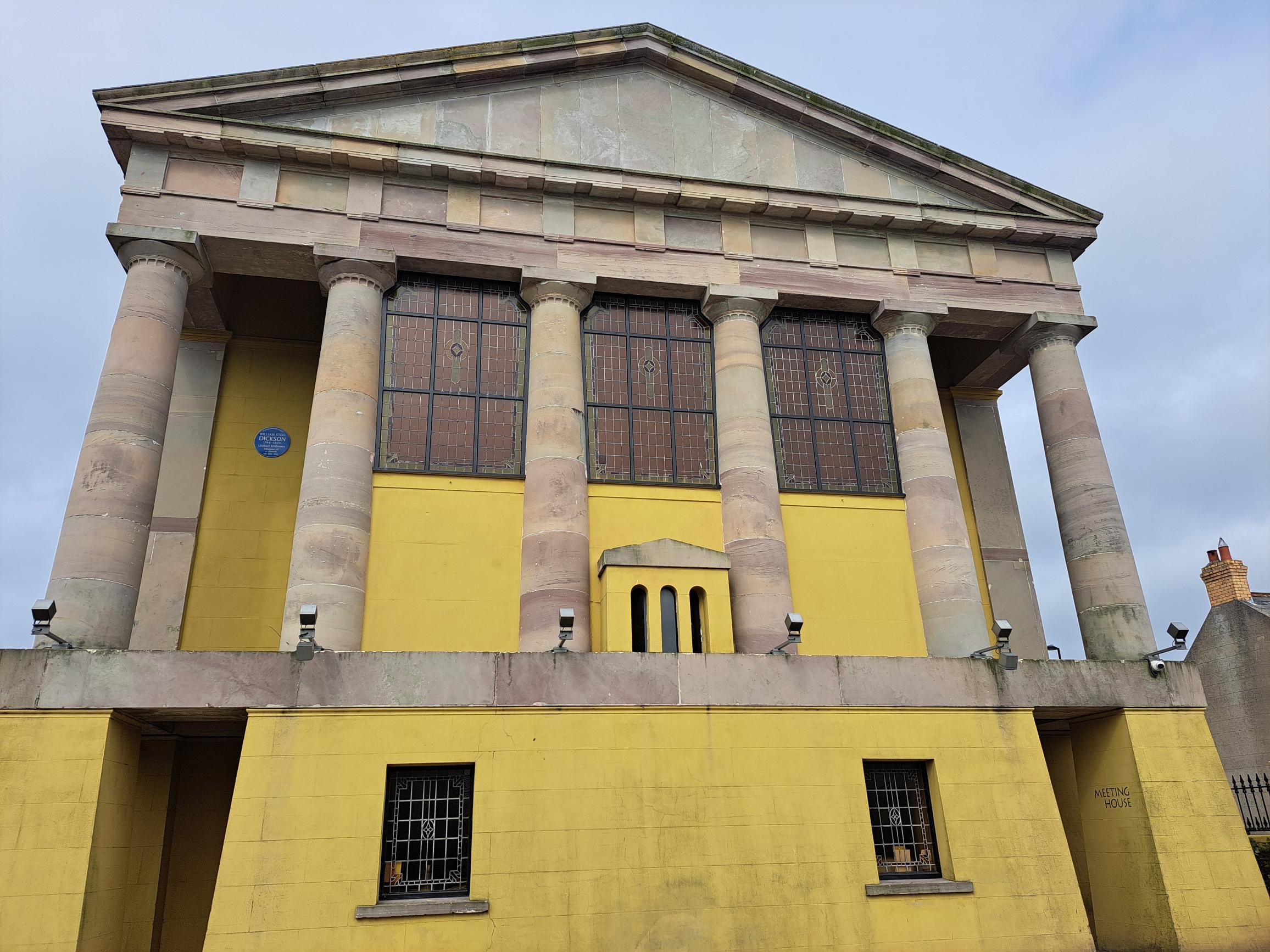
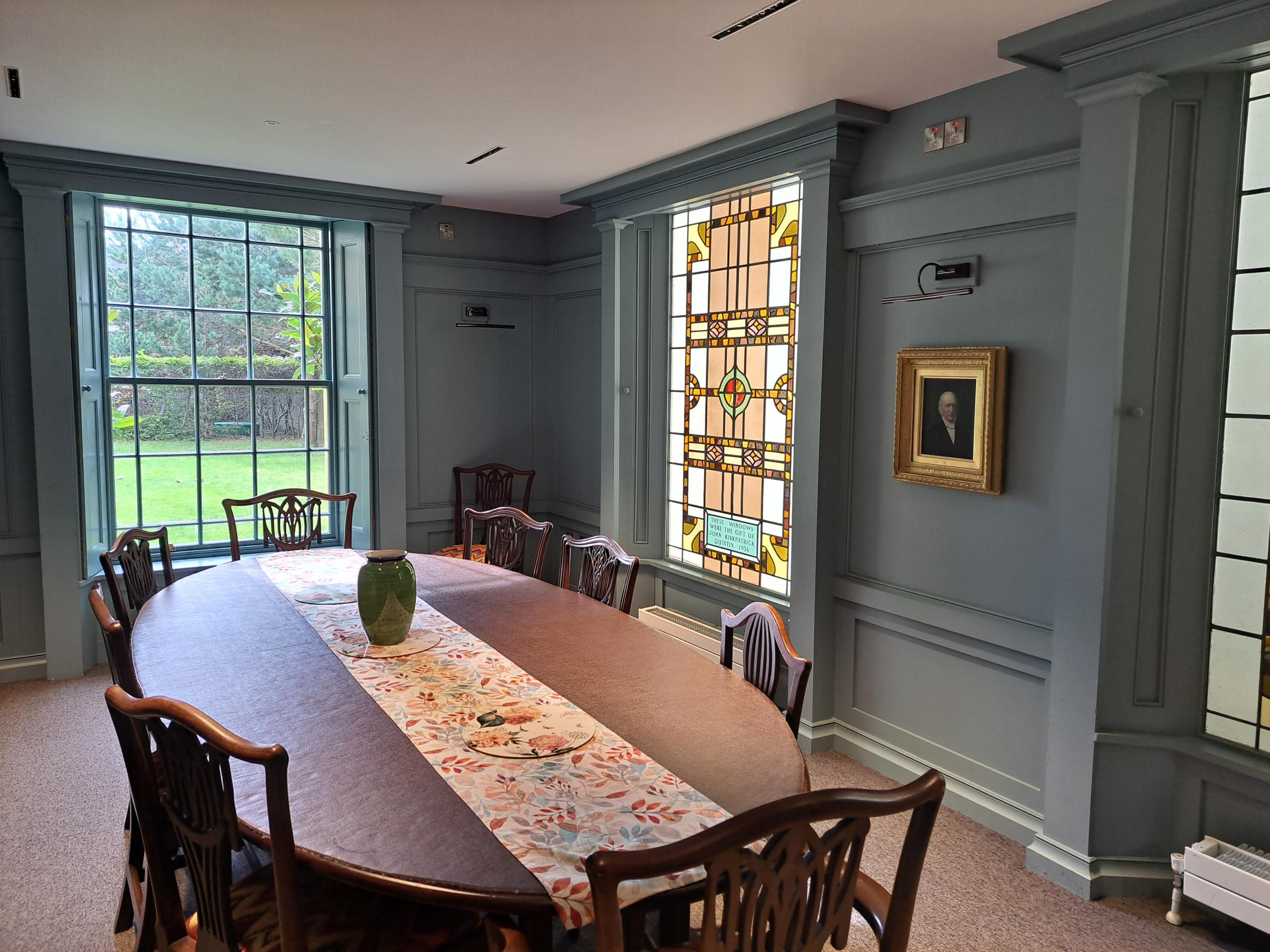
The new meeting house was built under the ministry of the Rev John Orr, who enjoyed a long and highly successful ministry from 1822 until his death in 1878. He is commemorated in a very tasteful room which was added to the building when it was restored in 2015.
Rev John Orr engaged the architect John Millar who produced a unique building. Simon Walker says of it: ‘In appearance this is an amazing neo-classical church, and is quite unlike any other of its kind. Millar used the ancient Temple of Nemesis at Rhammus as his influence and produced a very robust Greek Revival structure.’ (Historic Ulster Churches, p.85).
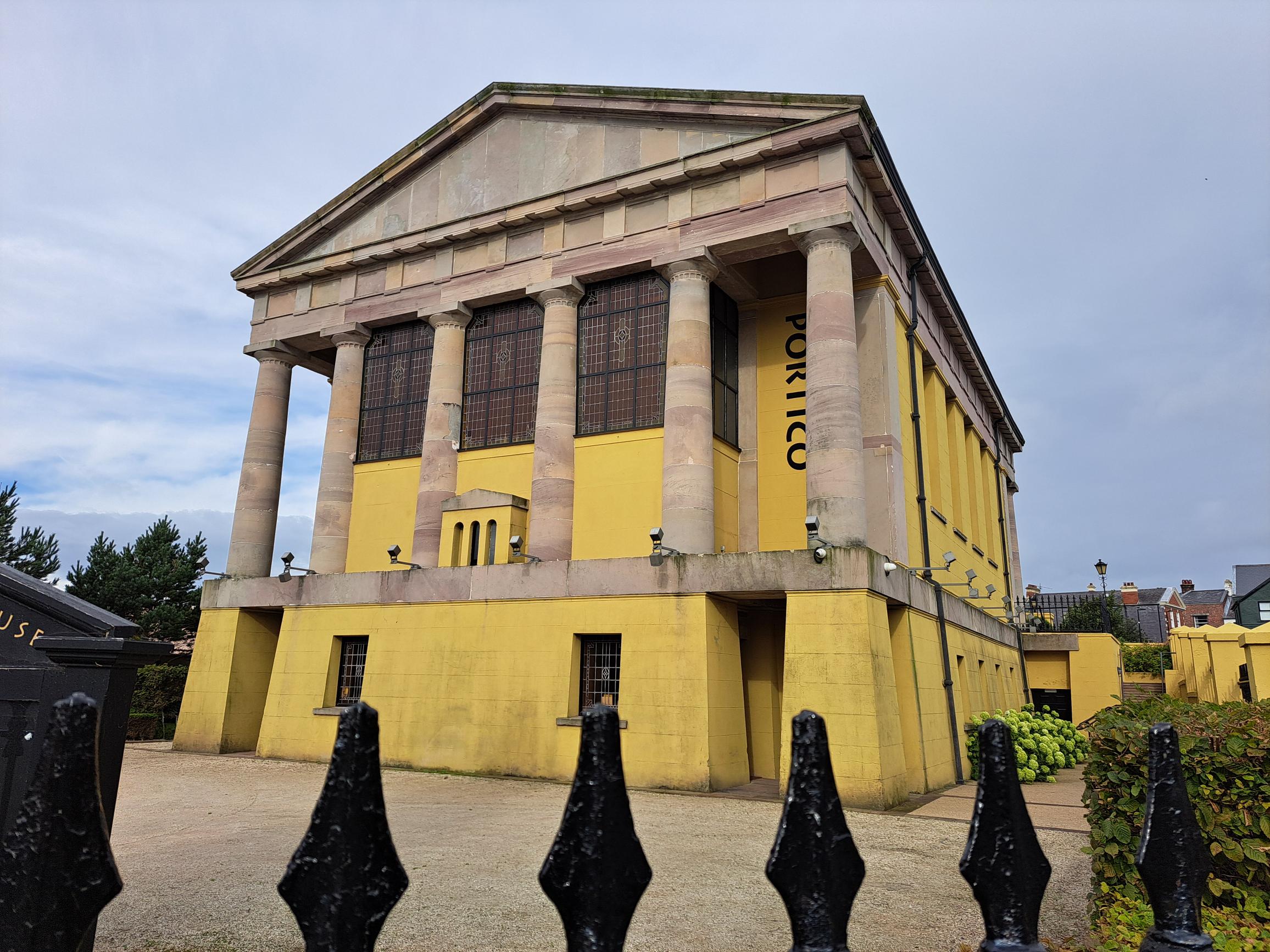
James Stevens Curl says in Classical Churches in Ulster: ‘Hexastyle Doric porticoes on a high podium distinguish John Millar’s nobly conceived Portaferry Presbyterian Church, Co. Down, of 1841, a building that would not look out of place in Helsinki or in Leningrad [St Petersburg]. Indeed, this marvellous Greek temple is one of the most distinguished Neoclassical buildings in Ulster, and is in the first rank of Neoclassical designs in the whole of the British Isles.’
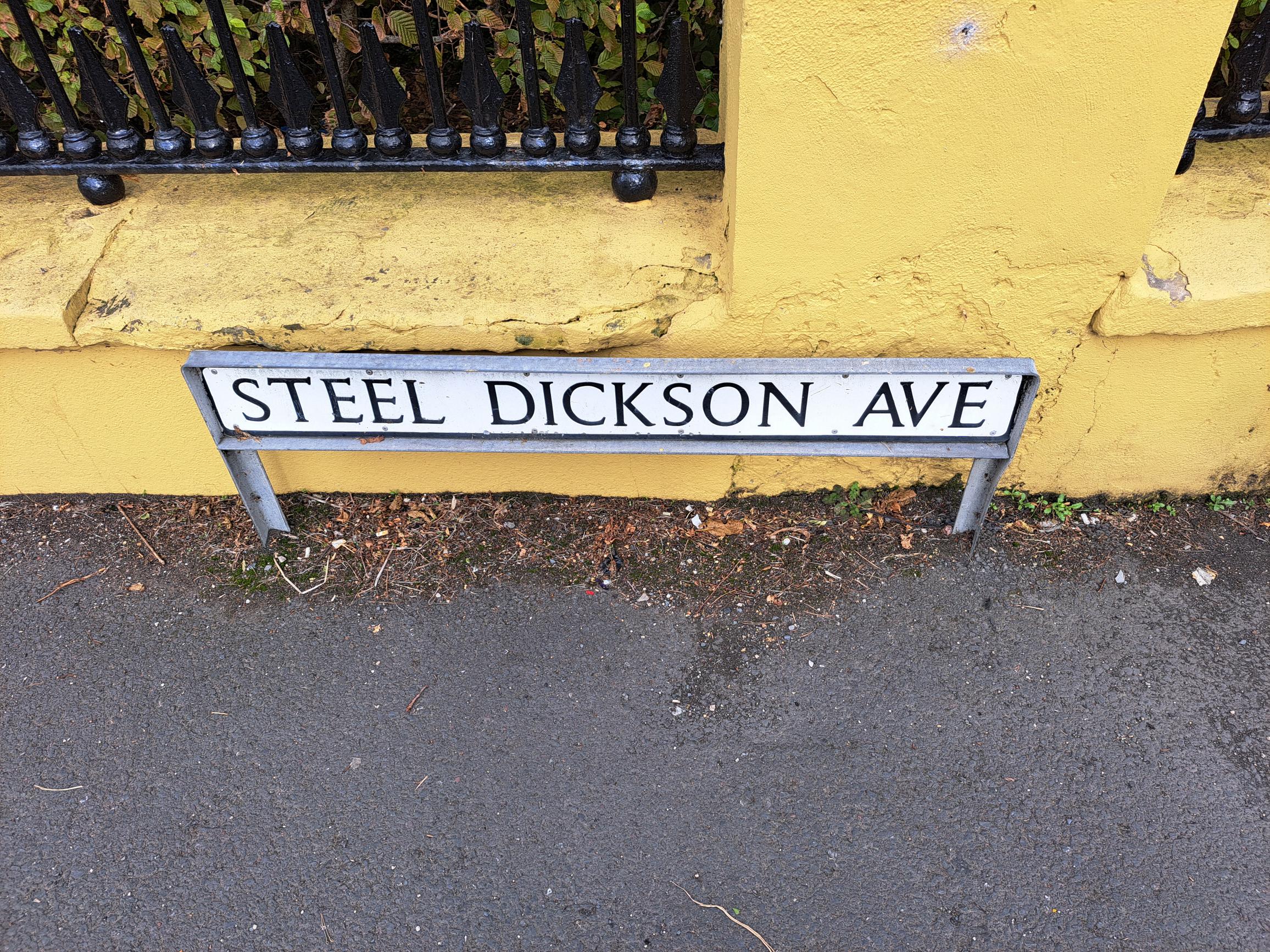
The church was opened on 2nd September 1841 at a cost of £1,999 12s 6d. The building has a blue plaque in memory of its most famous minister, the United Irishman Rev William Steel Dickson. Ordained at Ballyhalbert in 1771, he was installed at Portaferry by the Presbytery of Killyleagh on 6th March 1780 and did not subscribe to the Westminster Confession of Faith on either occasion. Moderator of the Synod of Ulster in 1793 he was awarded the degree of DD by the University of Glasgow.
During the 1798 Rebellion he was imprisoned first in Belfast then in Fort George in Scotland, although prior to that he also conducted some services at Ballee on the other side of Strangford Lough. After three years in prison he became minister of Second Keady. He died on 27th December 1824, in much reduced circumstances, and was buried in a pauper’s grave in Clifton Street Cemetery in Belfast. Only eight or nine people attended his funeral, although they included the Rev Dr Henry Montgomery of Dunmurry. ‘An impressive and eloquent address’ was given at the graveside by the Rev W.D.H. McEwen, another Non-Subscriber.
The building underwent extensive restoration in 2014-15 and is now a Grade A listed building and serves as an Arts and Heritage Centre as well as the home to the historic congregation.