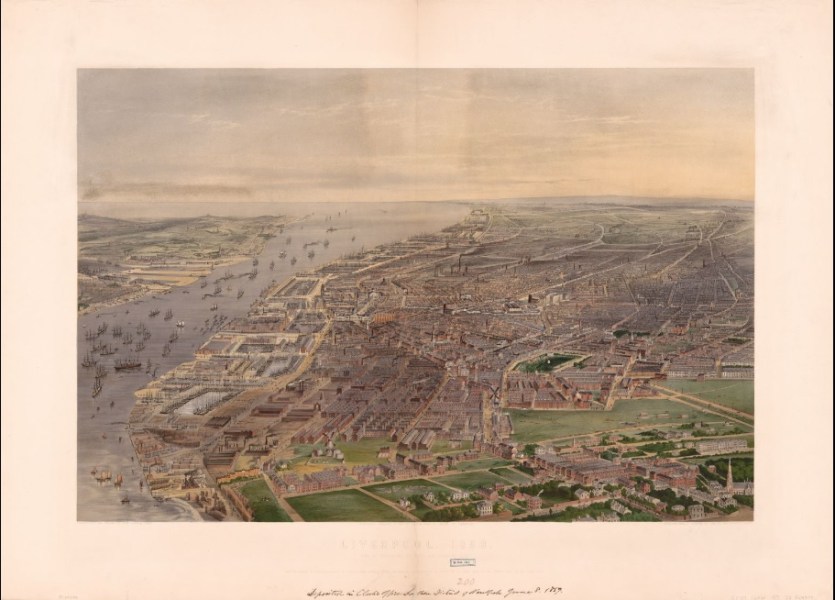
Seven Churches in Liverpool in 1859 viewed from the air

Glen Huntley has posted another fascinating and informative piece on his blog, this time about three houses which once stood close to the Ancient Chapel of Toxteth. These are Elm House, Chapelville and Cooper’s Folly. All three houses long disappeared to make way for the Victorian Tram Sheds and the later twentieth-century extension. The Tram Sheds themselves were demolished in 1993. But you can read Glen Huntley’s excellent post here:

https://theprioryandthecastironshore.wordpress.com/2018/10/04/robert-griffiths-toxteth-park-elm-house-chapelville-and-coopers-folly/

William Roscoe, the famous Unitarian and abolitionist is believed to have lived at Elm House, although his connection with this particular house doesn’t seem to have been proved conclusively. The ‘Dingle’ was the inspiration for one of his poems and he certainly did live locally at one point. He was definitely a member of the Ancient Chapel as well, I have the original ‘call’ issued to the Rev John Porter in 1827 and it includes William Roscoe’s signature.

But another thing Glen incorporates into this post is some detail from an aerial view of Liverpool by John R. Isaac in 1859 and published in New York. This is a view from a hot air balloon and can be viewed on the Library of Congress site at https://www.loc.gov/resource/g5754l.ct007678/?r=0.035,0.095,1.051,0.668,0

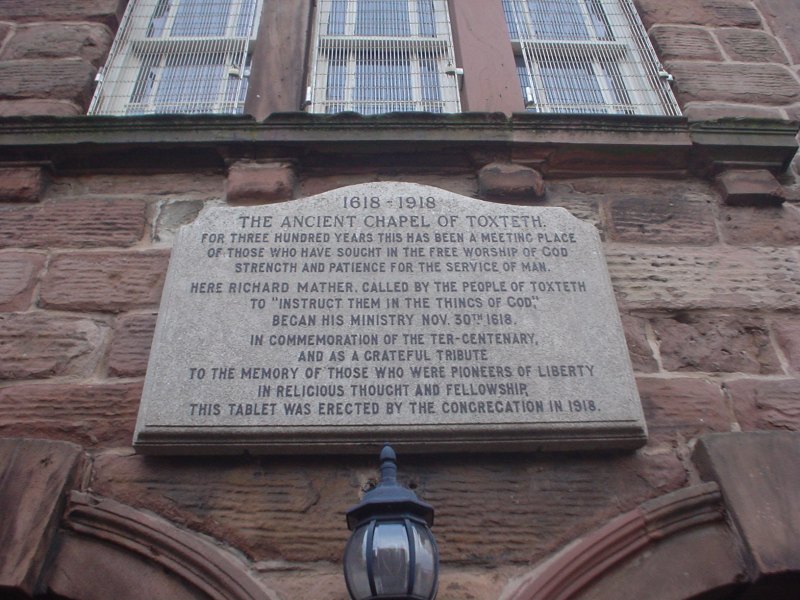
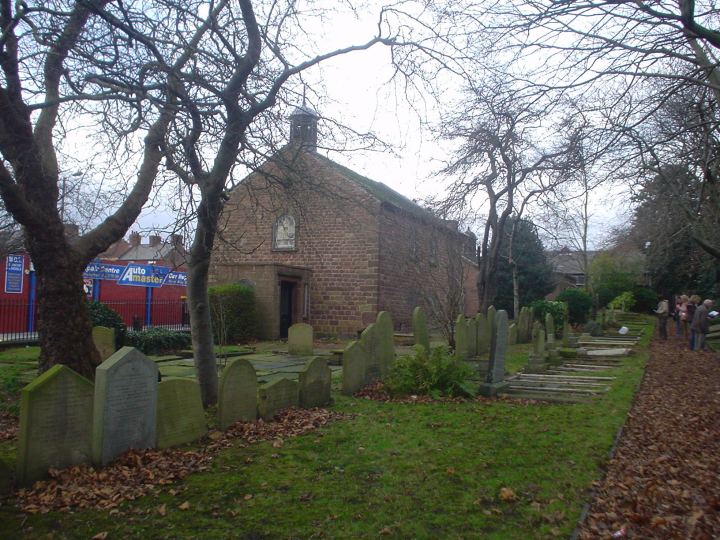
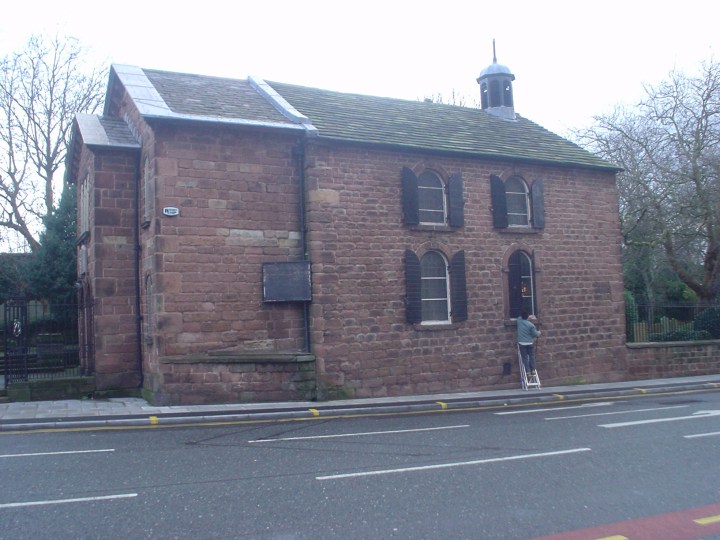
The image is fully zoomable and gives some remarkable detail of the city in the middle of the nineteenth century. The city without the cathedrals, the Liver Buildings and some other landmarks has a different look to it and it is not always easy to find your way about. However, Glen has found the Ancient Chapel and Elm House, Chapelville and Cooper’s Folly and includes an annotated close up of that part of the picture similar to this one:
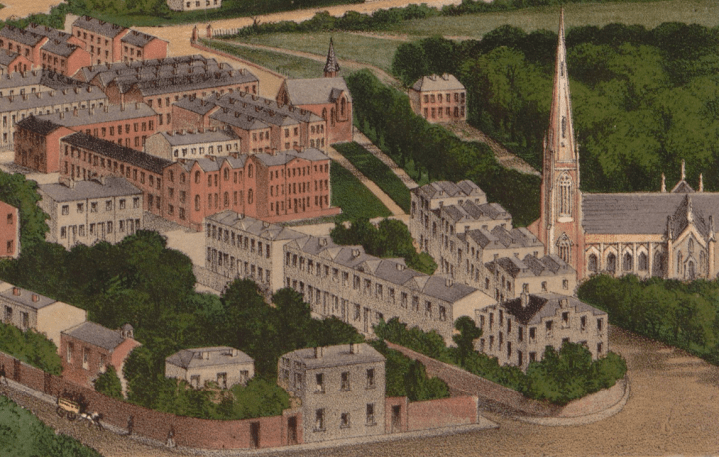
Ancient Chapel from air

The tall church on the right is St Paul’s Church which is another place I intend to return to on this blog at some point. (The Ancient Chapel can be seen in the bottom left hand corner behind the stage coach).

But looking at the map I discovered another group of churches in Liverpool which must be a unique image of some long-lost buildings.

If you zoom in to the centre of the picture (and it is amazing how much detail can be uncovered there) you get this view:

Hope Street from air

It’s interesting because it shows a collection of now almost all vanished churches still clean and complete: unstained by the smoke and pollution that would gradually turn their stone work black and still with their towers and steeples.

At the centre of this scene is Hope Street Unitarian Church. Once the church of James Martineau and demolished in the 1960s. I blogged about Hope Street on a number of occasions but primarily here:

https://velvethummingbee.wordpress.com/2015/05/17/the-church-on-hope-street/

and according to the statistics one of the most frequently read pages on this blog.

Behind Hope Street you can see Myrtle Street Baptist Church, the church of Hugh Stowell Brown (soon to be the subject of a new biography). I have written about that church here:

https://velvethummingbee.wordpress.com/2016/11/20/hugh-stowell-brown-and-myrtle-street-chapel/

and again it is interesting to see a church looking clean and bright when every photograph of it shows it as black and grimy. The same is true of Canning Street Presbyterian Church in the bottom right hand corner of the image, also demolished in the 1960s and now the site of a modern German Church. To the left of this church is the Catholic Apostolic Church, still with its tower in place, a remarkable building, burnt down in the 1980s.

The long building without a tower in the bottom left corner is St Bride’s Church of England, still there today. St Bride’s can be seen in a rare film of 1901 on the BFI Player. Although the church is not identified it clearly is St Bride’s:

https://player.bfi.org.uk/free/film/watch-liverpool-church-parade-and-inspection-1901-1901-online

In the top left hand corner you can see Rodney Street Church of Scotland, a building saved from destruction but now flats, and just in front is St Philip’s Church Hardman Street, a ‘cast iron’ church like St Michael’s in the Hamlet which disappeared inside another building in 1882 only to be partly uncovered again when that building was knocked down in 2017! You can read about that remarkable discovery on this very interesting blog:

https://liverpool1207blog.wordpress.com/2018/01/02/st-philips-church-hardman-st-liverpool-1816-2017/

But seven accurate looking representations of different churches, only two of which still exist, taken from a hot air balloon in 1859.
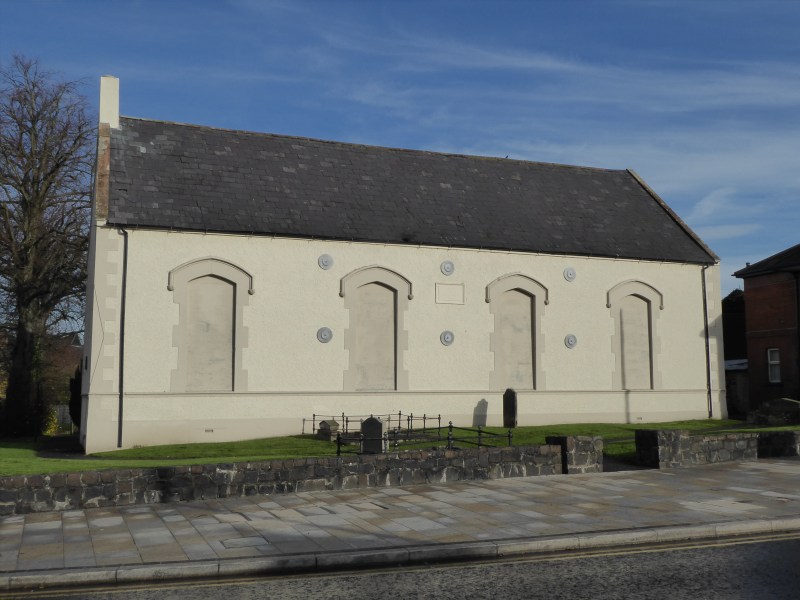
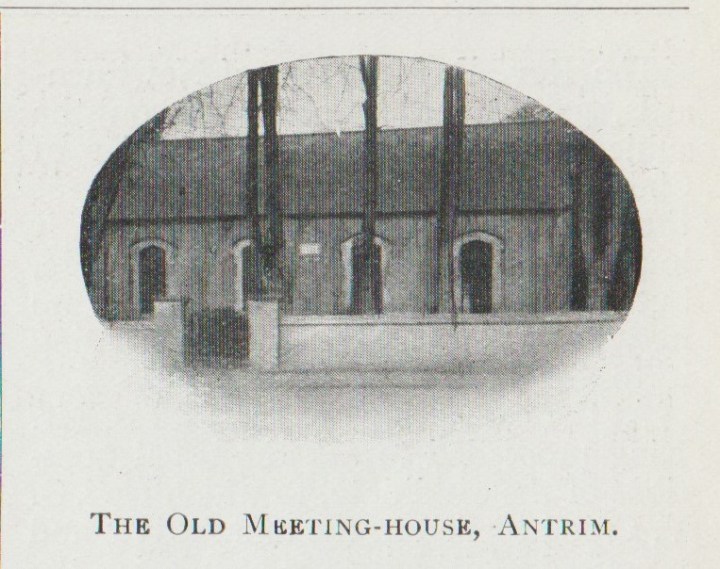
 

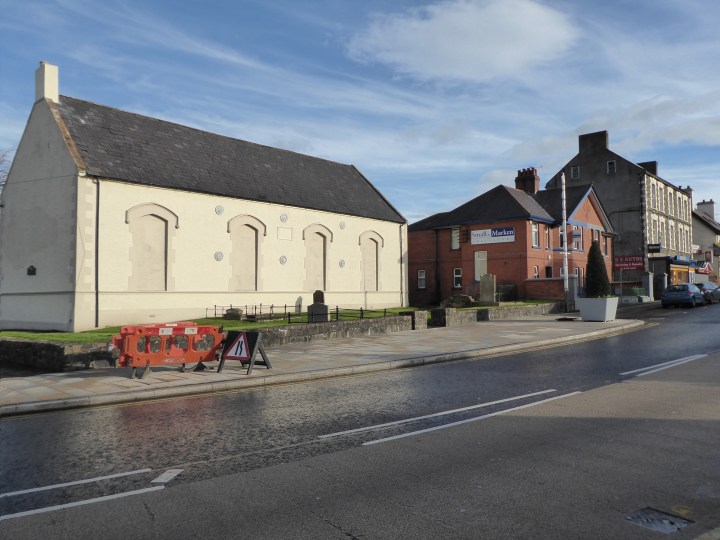
Old Meeting House Antrim

Earlier this week I was pleased to get a look inside the Old Meeting-House at Antrim in the company of Rev Dr John Nelson and architect Dara O’Malley. This is the original Presbyterian meeting-house in the town which became Non-Subscribing under the leadership of Rev John Abernethy, the ‘father of Non-Subscription’ in Ireland.

Antrim June 1913

The meeting-house in 1913

Not a very large building but the home of an active and important congregation for a long time. In the 1970s the congregation was faced with a struggle to maintain the building and it was transferred to the local Council which was then Antrim Borough Council. From 1980 it was let out as a boxing club which closed some years ago and this year the meeting-house was returned to the church. As the photos show the building has faced some years of neglect but this point marks the beginning of the restoration of the meeting-house and the renewal of the congregation’s witness in the town.

This slideshow requires JavaScript.

The interior in 2018

It is quite a prominent building as you come into the town and nearby a large three-storey building is the original manse. I wrote about the story of the manse a couple of years ago, the post can be read here:

https://velvethummingbee.wordpress.com/2015/05/07/a-vestige-of-protestant-dissent-in-antrim-town/

Antrim Exterior front including manse

View of the meeting-house, the old manse is on the extreme right of the picture

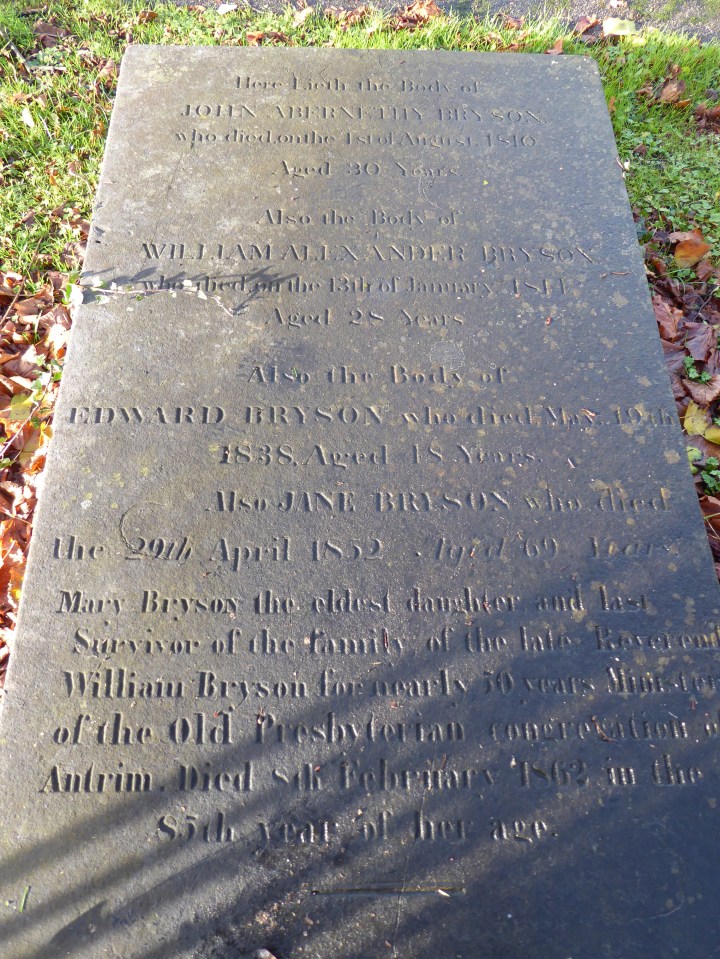
Most of the graveyard is now managed by the Council and this includes some interesting grave stones including the tombstone of the family of Rev William Bryson, minister at Antrim from 1764 to 1810. He was married to a granddaughter of John Abernethy and whilst holding a very radical theology was less radical in the political upheavals of the 1790s.

Antrim Bryson family tombstone

Bryson family tombstone

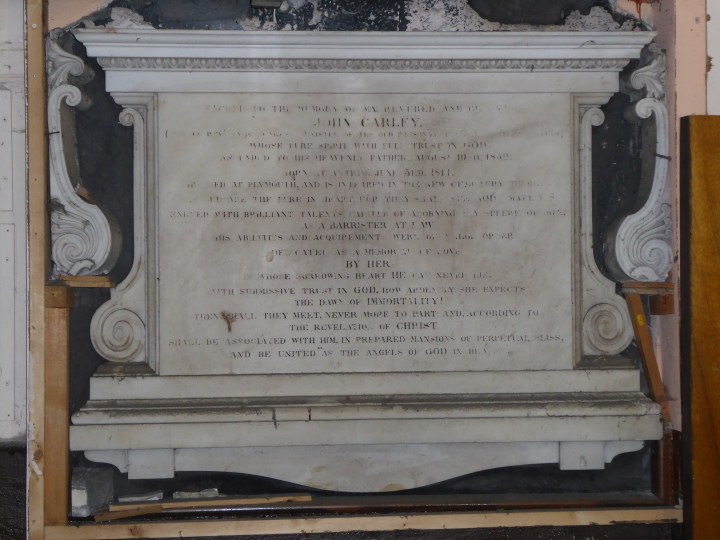
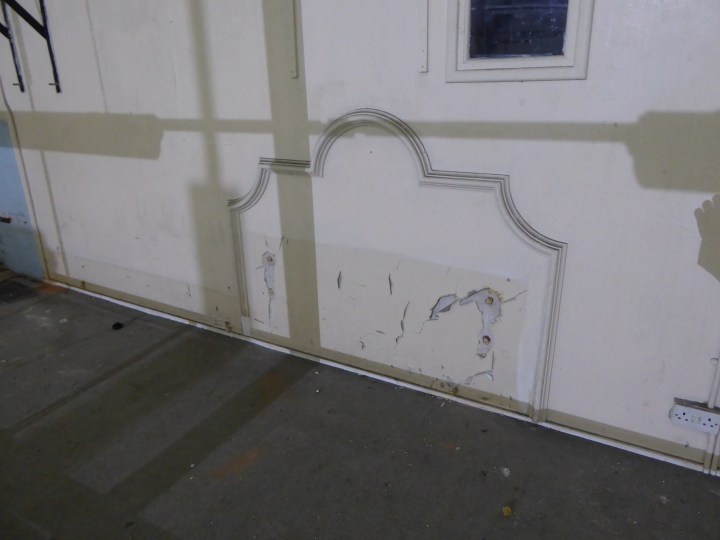
Inside there is little obvious reminder of the building’s life as a church although a memorial to John Carley, a barrister at law and the son of the Rev John Carley (minister 1811-1861) , can be found, as well as the outline of the decorative moulding around the long vanished pulpit and the place where the sounding board was once attached.

Antrim John Carley memorial

Memorial to John Carley

Antrim pulpit moulding

Moulding above the site of the pulpit of 1891

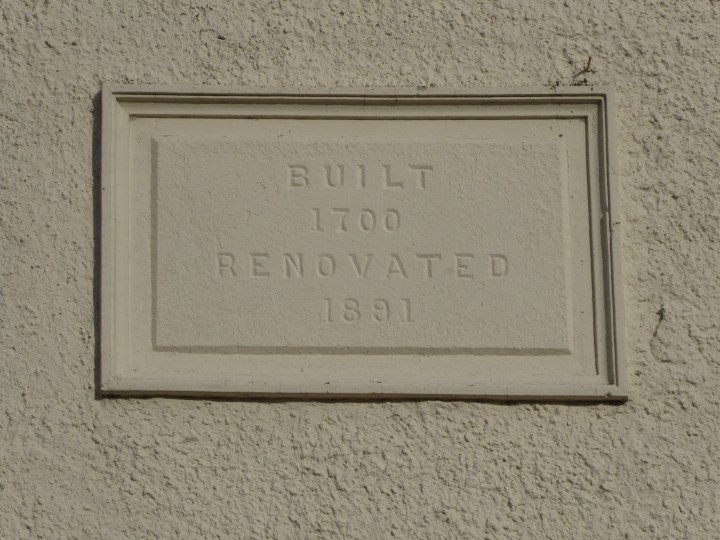
The interior was ‘turned’ in 1891, that is the location of the pulpit was moved from the centre of the long wall to the short wall at one end and the pews re-arranged accordingly. All those fittings are long gone but there is now tremendous potential for this survival from 1700.

Antrim Datestone

Datestone

No pictures or text may be reproduced from this site without the express permission of the author.

Ancient Chapel of Toxteth 400th Anniversary

Ancient Chapel of Toxteth celebrates 400 years of worship and witness

Two images of the Chapel separated by about 120 years:

ACT Victorian 02

ACT Ext 05


Service to Commemorate the

400th Anniversary

of the

Ancient Chapel of Toxteth

Sunday, 25th November 2018

2.30 pm

Please note the service to commemorate the 400th anniversary of the Ancient Chapel of Toxteth will be held on Sunday, 25th November as advertised. However, the time of the start of the service has been changed it will now commence at 2.30 pm and not at the previously stated time.

ACT Ext 07

Preparing for worship

ACoT landscape logo

Irish Non-Subscribers serving in the Canadian Expeditionary Force

Another curious detail of the First World War Roll of Honour of the Non-Subscribing Presbyterian Church of Ireland is the high proportion of servicemen who served in the Canadian Expeditionary Force. Out of the 588 names on the Roll a fair number served in overseas regiments including Australia (6), New Zealand (2), and South Africa (1). In addition there were four soldiers who served in the Indian Army and three joined up in the US Army. But by far the largest category for overseas service was the Canadian armed forces which totalled 27 personnel. Of these men 11 were killed during the war.

The congregations of All Souls’, the Domestic Mission, Mountpottinger, Belfast First Church, Clough, Downpatrick, Dromore, Glenarm, Holywood, Killinchy, Larne, Newry, Rademon and Templepatrick all number Canadian servicemen amongst those who joined up. Young men who had left their homes to begin a new life in a new country answered the call to return to Europe to fight in the war. As a Dominion Canada declared war on Germany in conjunction with Great Britain and a high proportion of the early volunteers in the Canadian army were men who had emigrated originally from Britain or Ireland.

One feature of the Canadian – and also Australian and New Zealand servicemen – is the online availability of their full military records. It is quite simple to call up their records and follow their careers from enlistment onwards in some detail. It is painfully sad to read of young men killed in France or Flanders and the Canadian authorities making arrangements to send a widows’ pension to their wife perhaps in Winnipeg or perhaps in county Down. It is frequently sad to read the records of those who survived the war. Few came through the years of conflict without a wound or some experience of disease or illness. Many must have suffered for the rest of their lives.

Hugh Hanna cropped

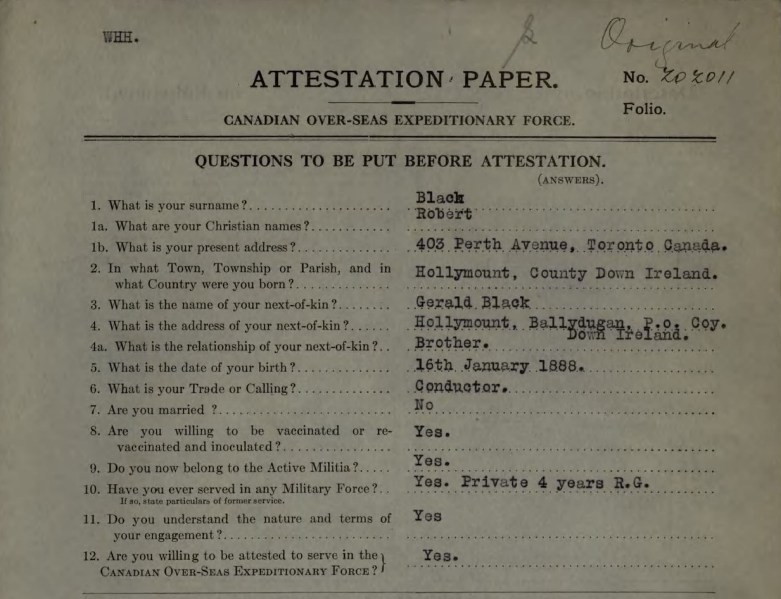
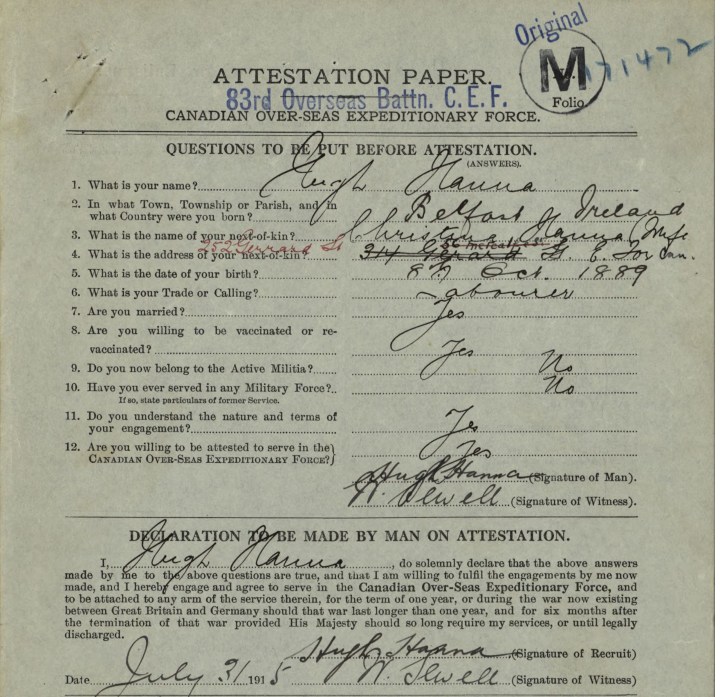
Extract from the attestation papers of Belfast born Hugh Hanna, a member of Mountpottinger congregation who was killed serving with the 3rd Battalion Canadian Infantry. (At the top of the page can be seen part of the enlistment papers of Robert Black, a member of Downpatrick, originally from Hollymount, Ballydugan who served with the 20th Battalion Canadian Infantry but who survived the war and was discharged in January 1919).

Both images are taken from:

Library and Archives Canada

Personnel Records of the First World War

https://www.bac-lac.gc.ca/eng/discover/military-heritage/first-world-war/personnel-records/Pages/personnel-records.aspx


NSP Lives of the First World War 05: killed fighting on the first day of the Somme


One of the striking features of the Roll of Honour of the Non-Subscribing Presbyterian Church of Ireland is the large proportion of those who were killed during the First World War who lost their lives on the first day of the battle of the Somme.

The Roll of Honour includes a total of 98 servicemen who died in service. Of these 17 are listed as having been killed on the first day of the battle of the Somme (1st July 1916) and two more are listed as having been killed on 2nd July. In other words 19 out of 98 or just under 20% of all the fatal casualties in the denomination occurred at the start of the battle of the Somme.

Almost all of these men were part of the Ulster Division, mostly serving with the Royal Irish Rifles, eight of them belonging to the 13th Battalion and four of them serving with the 11th Battalion. The two soldiers who were recorded as killed on 2nd July were both members of the 8th Battalion.

The statistics alone indicate the impact the battle of the Somme must have had on the Ulster Division and on those back at home. Of the 19 who were killed five were officers, two were NCOs and the others were private soldiers. Some of the men were quite well-known such as Captain James Samuel Davidson, the son of S.C. Davidson the founder of the Sirocco works in Belfast.

Captain JS Davidson 1916

Captain James Samuel Davidson, 13th Battalion Royal Irish Rifles attached 108th Coy. Machine Gun Corps

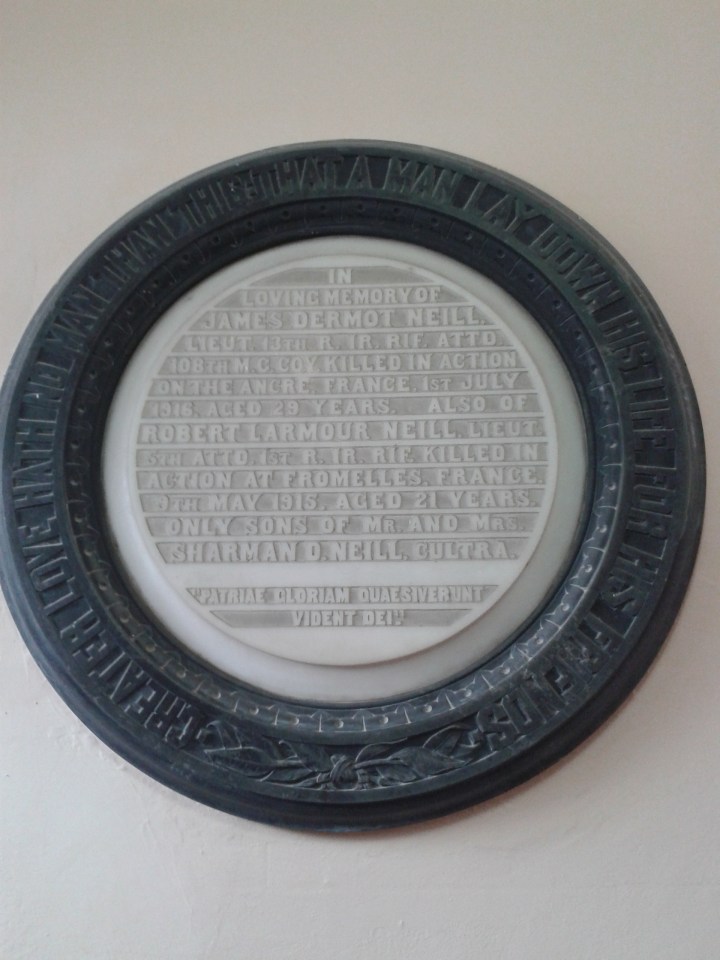
Other deaths indicate the devastating effect the battle of the Somme had on families. So at Templepatrick two brothers were killed on the first day of the Somme, James Harper of the 15th Battalion Royal Irish Rifles, aged 23, and his younger brother Joseph, aged just 19, serving with the 11th Battalion of the same regiment, both killed at the start of the battle. At Holywood congregation James Dermot Neill was killed on the first day of the Somme, his younger brother Robert Larmour Neill had been killed in action in May of the previous year. Both brothers are remembered on a family memorial in Holywood Church.

Holywood Memorial Lieut R L Neill

Holywood memorial to James Dermot Neill and Robert Larmour Neill

NSP Lives of the First World War 04: The Harrison family of Newtownards


One of the features of the new Non-Subscribing Presbyterian Roll of Honour is how often we see groups of brothers join after the outbreak of war. In many churches there are sets of brothers, sometimes two, sometimes three, sometimes four who respond to the appeal for volunteers. From contemporary newspaper reports we can imagine the effect this had on the families and friends who were left at home.

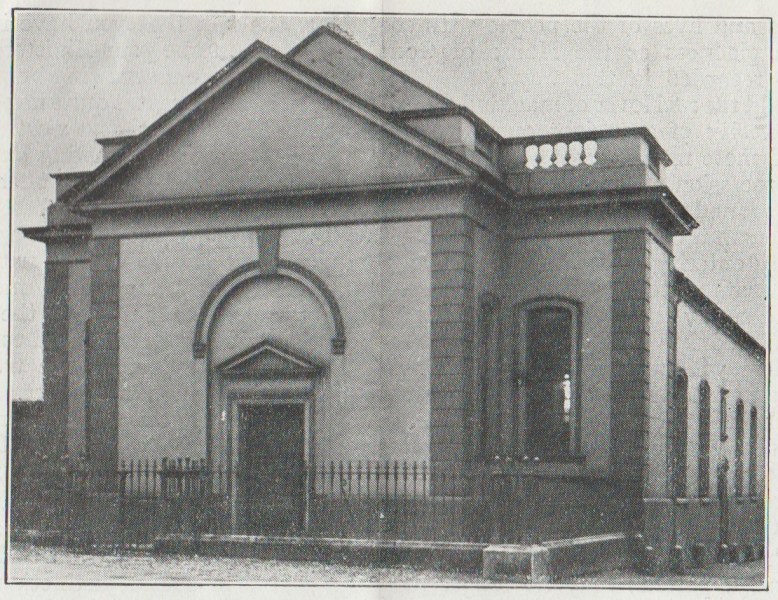
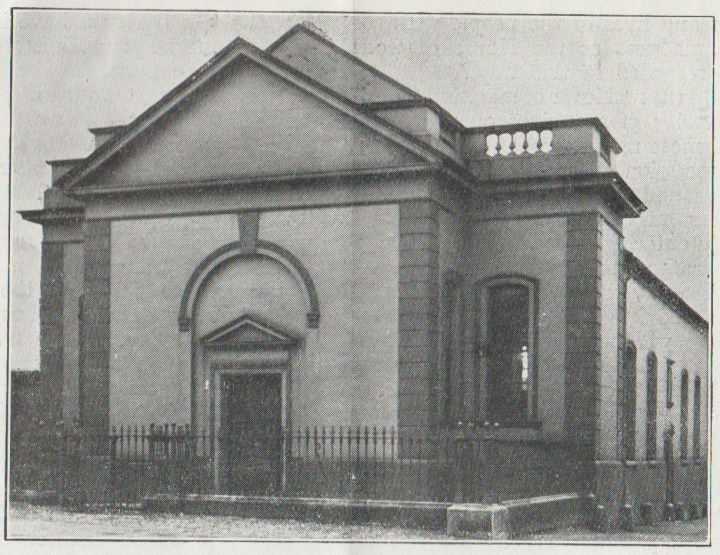
Newtownards 1909

The First Presbyterian Church, Newtownards in 1909

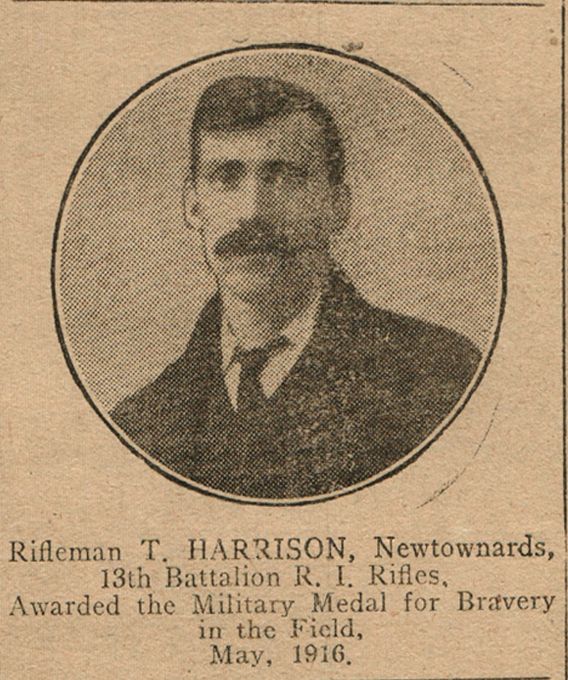
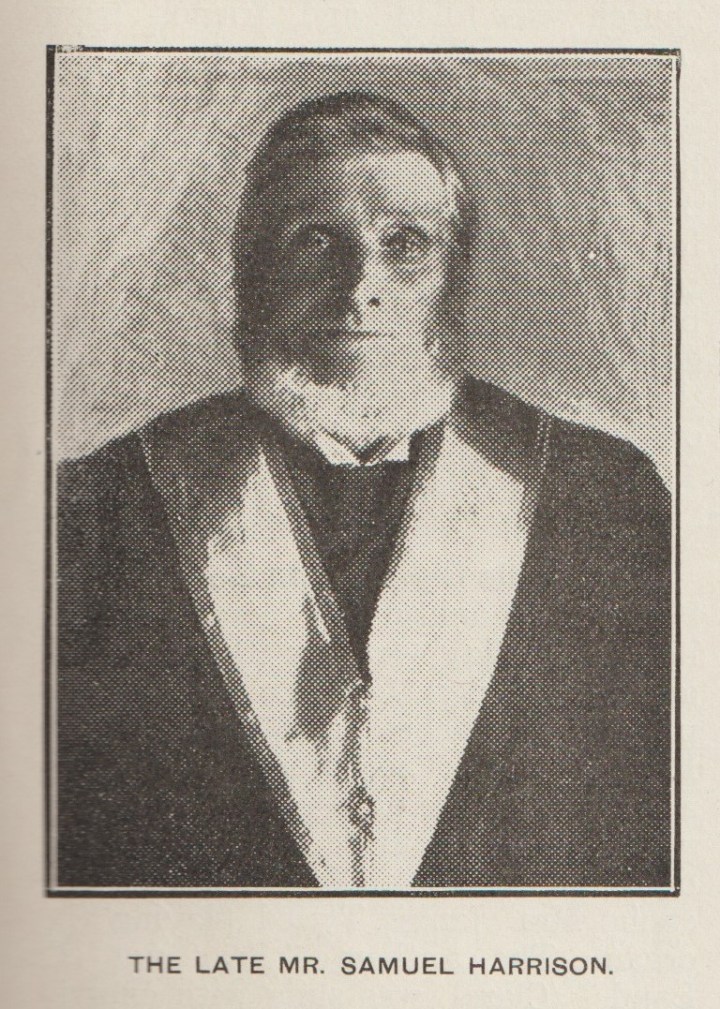
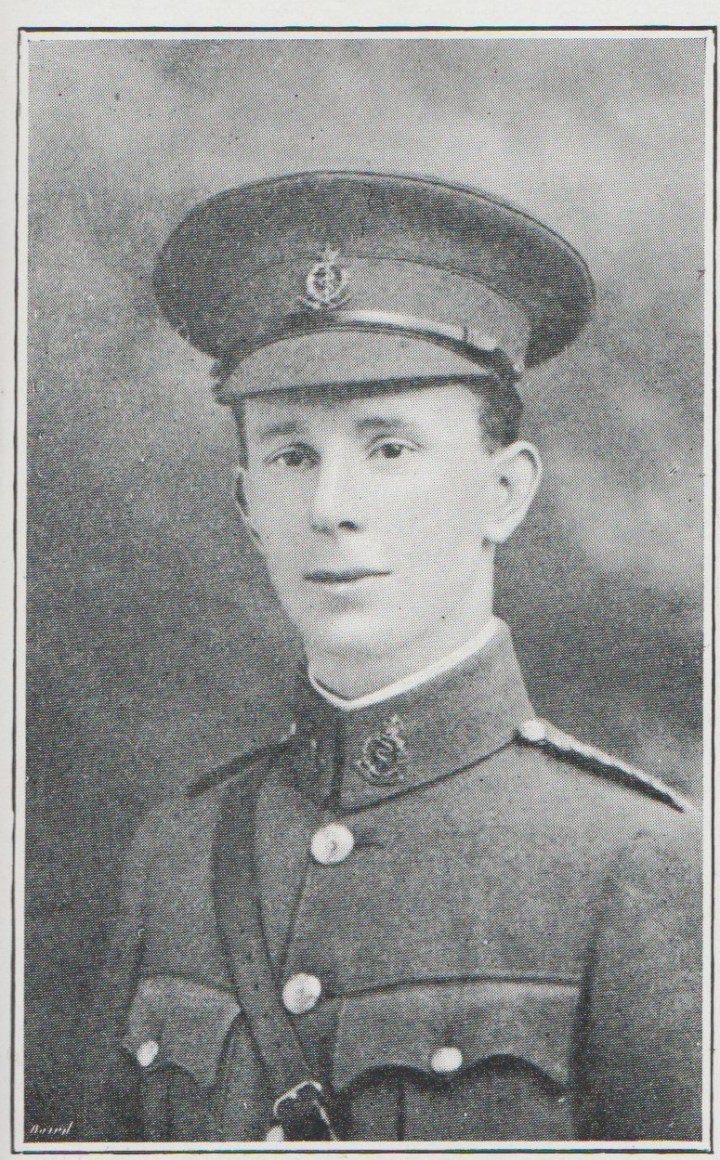
At the start of the First World War the secretary of the Newtownards congregation was Samuel Harrison, a man widely respected in the town and in the church. Three of the sons of Samuel and Grace Harrison (all members of Newtownards) joined up after war broke out, as well as two of their grandsons. In the July 1916 issue of the Non-Subscribing Presbyterian it was announced that his younger son, Thomas James Harrison, had been awarded the Military Medal for bravery. In the Newtownards news of the Non-Subscribing Presbyterian it was reported that “What the special act of bravery was that earned him this distinction has not been officially disclosed as yet, but we understand it was connected with acts of great bravery in rescuing wounded comrades. As a Church, we are proud of the fact that one of our number has earned this coveted distinction, and also that he is the first one in the town to receive this medal.”

In fact, as will be seen from the Roll of Honour, Thomas Harrison was himself killed before he could be presented with this medal. He died, along with so many others, on 1st July 1916, the first day of the battle of the Somme.

I am grateful to Jeffrey Martin and Nigel Henderson for providing me with this picture of him which appeared in the Newtownards Chronicle at the time:

Rifleman Thomas James Harrison

From the ‘Newtownards Chronicle’

Credit: Nigel Henderson (Great War Belfast Clippings)

The extent of the casualties on the first day of the Somme must have had a devastating effect back home. At the time of Thomas’ death Samuel was nearly 72 years old and himself died little over a year later. It was perhaps a measure of how highly he was thought of that quite an unusually full obituary of him appeared on the pages of the Non-Subscribing Presbyterian. It detailed his education at the National School at Ballycullen, an education cut short by the need to go out to work as a farm boy, but supplemented by a return to night class “after a hard days’ work begun at daylight”.

He was a man of fine, high principle, and greatly valued by his employer the obituary said. When promoted to the post of land steward he was the youngest man in that capacity in the county, eventually becoming the foreman of the road labourers for the local council. The obituary speaks highly of his ability to get on with all classes of people. The Newtownards Chronicle itself said “there is no individual in this county who is more highly respected by all classes and creeds than everybody’s good friend, Sam Harrison.” The Non-Subscribing Presbyterian detailed the local respect shown to him at his funeral:

Had he been one of the leading citizens or a wealthy manufacturer, the tribute would not have been so very remarkable; but as he died as he had lived – a plain working man – this tribute was the more noteworthy.

He had been a member of the church committee since 1875 and the secretary since 1898, the obituary emphasised his faith commitment:

A staunch Non-Subscriber and liberal Christian, his attachment to his Church was shown in the unselfish devotion of his mind and energies to its welfare.

Samuel Harrison 03

Picture from the ‘Non-Subscribing Presbyterian’

All this is part of the background to the experience of those who served in the trenches. In the words of his obituary Samuel Harrison left behind a fine record of faithfulness and a memory that should be an inspiration to those that follow him. For those left at home life continued as normal, at least outwardly. But it must have been hard to express in words the shared sense of loss felt by so many after 1st July 1916.


NSPCI Roll of Honour: Awards and Decorations


One of the things that people sometimes ask me is: Were any members of the Non-Subscribing Presbyterian Church of Ireland awarded the Victoria Cross during the war? The highest award for gallantry since its inception in 1856 by Queen Victoria it is synonymous with bravery. However, having compiled this new Roll of Honour it seems clear that none of the recipients in the First World War were Non-Subscribers. This is not surprising since it is quite a rare award, only 615 Victoria Crosses were awarded throughout the whole of the Great War. But it is also clear, when looking at the Roll, that a number of members of the Non-Subscribing Presbyterian churches were given various awards for bravery or conspicuous service in battle.

Distinguished Service Order (DSO)

This was instituted by Queen Victoria in 1886 as an award for officers, usually at the rank of major. In the First World War it could be awarded for “an act of meritorious or distinguished service”, usually when under fire or in the presence of the enemy. Three members of the denomination in Ireland were awarded the DSO.

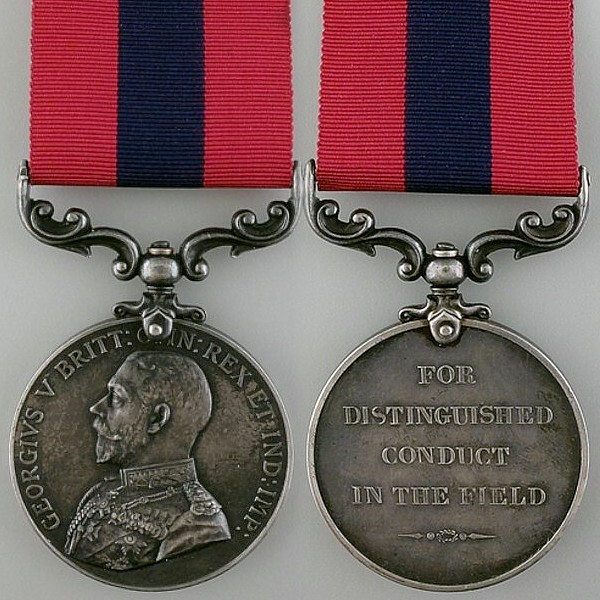
Distinguished Conduct Medal (DCM)

Like the Victoria Cross this was a medal that dated back to the time of the Crimean War, in this case it was the first medal to be awarded to a member of the armed forces who was not an officer for gallantry in the field in the face of the enemy. There are three people awarded the DCM on the Roll of Honour.

Distinguished Conduc Medal George V

Distinguished Conduct Medal (Source: Wikimedia Commons)

Military Cross (MC)

The Military Cross was instituted by Royal Warrant on 28th December 1914, after the start of the First World War. It was awarded to officers up to the rank of Captain for gallantry during active operations in the presence of the enemy. In the NSPCI Roll there are a total of 19 individuals awarded the Military Cross, including one recipient who was awarded a Bar to his MC.

Military Medal (MM)

The Military Medal was essentially the same as the Military Cross except it was awarded to ‘other ranks’. Instituted on 25th March 1916 its award was backdated to 1914. There are eight recipients of the MM on the Roll, including one person who was awarded a Bar to his first award.

Meritorious Service Medal (MSM)

This was awarded to Non-Commissioned Officers for meritorious service and was often awarded for service in the field during the First World War. Its award was extended to those NCOs below the rank of Sergeant and to private soldiers for acts of gallantry in the performance of military duties or in saving or attempting to save the life of another soldier. There are four instances of the MSM being awarded on the Roll.

Meritorious Service Medal George V

Meritorious Service Medal (Source: Wikimedia Commons)

The Roll of Honour, when published, will also include all known occasions when a soldier was mentioned in despatches, occasions when a serviceman received a foreign award, and awards and decorations given to those serving with the Red Cross.


NSP Lives of the First World War: 03 William Crymble

When the Non-Subscribing Presbyterian magazine published its second collection of names of men and women who had joined up after the start of the First World War in March 1915 the entry for Ballee congregation contained one name:

Captain Wm. Crymble, RAMC. Interned at Magdeburg since Mons.

William Crymble was a Captain in the Royal Army Medical Corps. His father was the principal of the school at Ballee and the whole family belonged to the congregation. He had trained to be a doctor in Belfast and Dublin, following his studies with positions at the Royal Victoria Hospital Belfast, Down District Asylum and Beckett Street Infirmary Leeds. Before the war he had joined the reserve of the RAMC and had been promoted to Captain on 13th July 1914. His skills were very necessary once war broke out and in August 1914 he went with the British Expeditionary Force to France.

Captain Crymble 04 NSP October 1915

Captain William Crymble RAMC

Attached to the 14th Field Ambulance he was amongst those taken prisoner at Le Cateau on 26th August 1914. The story of his initial capture makes for grim reading with accusations of brutality against the enemy. The medical officers were said to be prevented from attending to the wounds of the injured, they were transported in cattle trucks to the internment centre at Torgau in Germany, with little ventilation and frequently no water.

He was interned not just in Magdeburg but in a total of four camps. Magdeburg was the first and reportedly the worst with officers being thrown in prison for failing to salute a German officer, property being confiscated and the keeping of diaries forbidden. All this was reported in the Non-Subscribing Presbyterian and based on With French in France and Flanders by Rev O. S. Watkins, an army chaplain. Sanitation was poor, facilities for exercise limited and rigid discipline enforced. At one camp prisoners from different nations were split up and separated out of national groups in an effort to break down their resistance to camp discipline. Remarkably though, over the summer of 1915, William Crymble was able to return home in an exchange of prisoners. He was returned to Holywood Barracks where he declared he felt like a “fish out of water” until he could get back to the front.

He soon got his wish and was sent to Egypt to be part of the war effort with the Mediterranean Force. But here tragedy struck. On 12th October 1916 he died of enteric fever in Alexandria. One of his colleagues and a former fellow student at Queen’s said:

“On the day on which the sad news of his death was made known to the patients he had attended, the medical officer on duty was sharing the distress which was visible among the patients and could not always trust himself to speak. But the sorrow that could not find adequate personal expression was manifested on Sunday the 22nd.”

The Non-Subscribing Presbyterian reported that “Rev J.H. Bibby made touching reference to his death on the Sunday succeeding the receipt of the sad news in Ballee.”

He is buried at the Suez War Memorial Cemetery in Egypt.

NSP Lives of the Great War: 02 Thomas Cooke

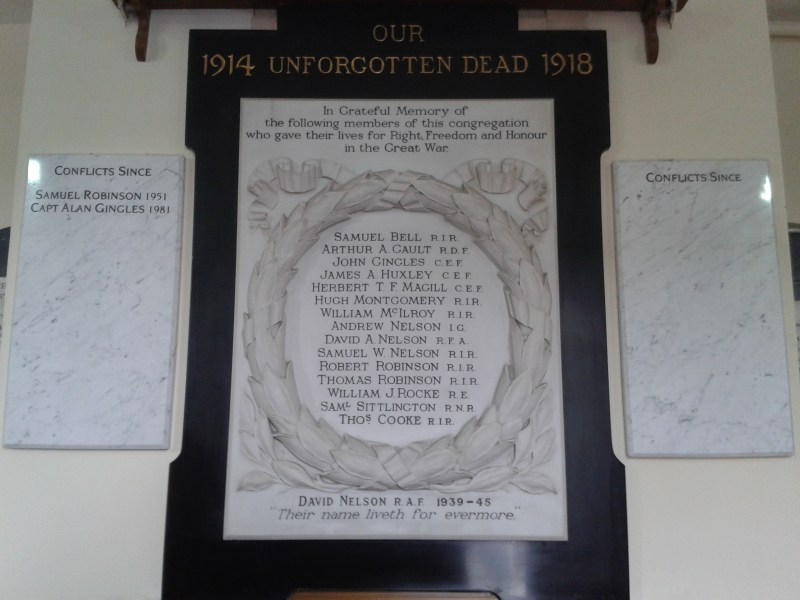
Researching the names of those who will appear on the Roll of Honour is a poignant and often melancholy experience. Many of the stories of those who served are stories of loss – loss of young life, loss of a son, a husband, a father. When I was working through the list of names on the Larne War Memorial (see above) and comparing the list of those who gave their lives with the Roll of Honour published in the Non-Subscribing Presbyterian between December 1914 and January 1916 and with the written Roll of Honour maintained by the Larne congregation I noticed a discrepancy. In the Non-Subscribing Presbyterian one name featured throughout, that of Thomas Cooke (actually spelt Cook) who was listed as ‘missing’. The Larne written Roll (which must date from 1918) also named him but included him as someone who had served rather than having lost his life.

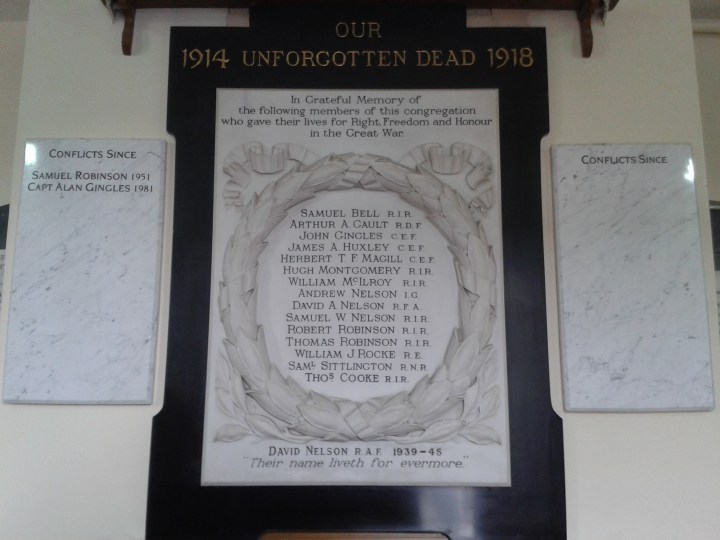
I didn’t see his name on the Larne Memorial at first, it wasn’t where I expected it to be. In fact it clearly is there but also quite clearly was added to the list at the end. The Rev Dr John Nelson tells me that the order of service for the Larne unveiling has a picture of the memorial but Thomas Cooke’s name has been added by hand. This is confirmed by the Non-Subscribing Presbyterian for November 1921 which lists the names on the memorial but does not include that of Thomas Cooke. I don’t know when Thomas Cooke’s name was added.

Thomas Cooke was born in Larne, c.1891, the son of Thomas and Martha Cooke of Browndodd, Larne. He was married to Agnes. His exact date of birth is not known. The census shows that his father was 44 in 1911 and his mother 38, they had been married for 20 years. It also reveals that they had had 14 children, of whom eight were still alive. Seven daughters were listed as living at home with them in that year.

At the outbreak of war he was on the reserve and so was called up almost immediately, consequently he arrived in France on 19th September 1914 serving with the 2nd Battalion Royal Irish Rifles, just a few weeks after the outbreak of the war. He was killed in action just over a month later on 27th October 1914. Nearly a month after that, on 21st November, he was officially listed as ‘missing’ and it is not clear when exactly he was officially declared to have been killed.

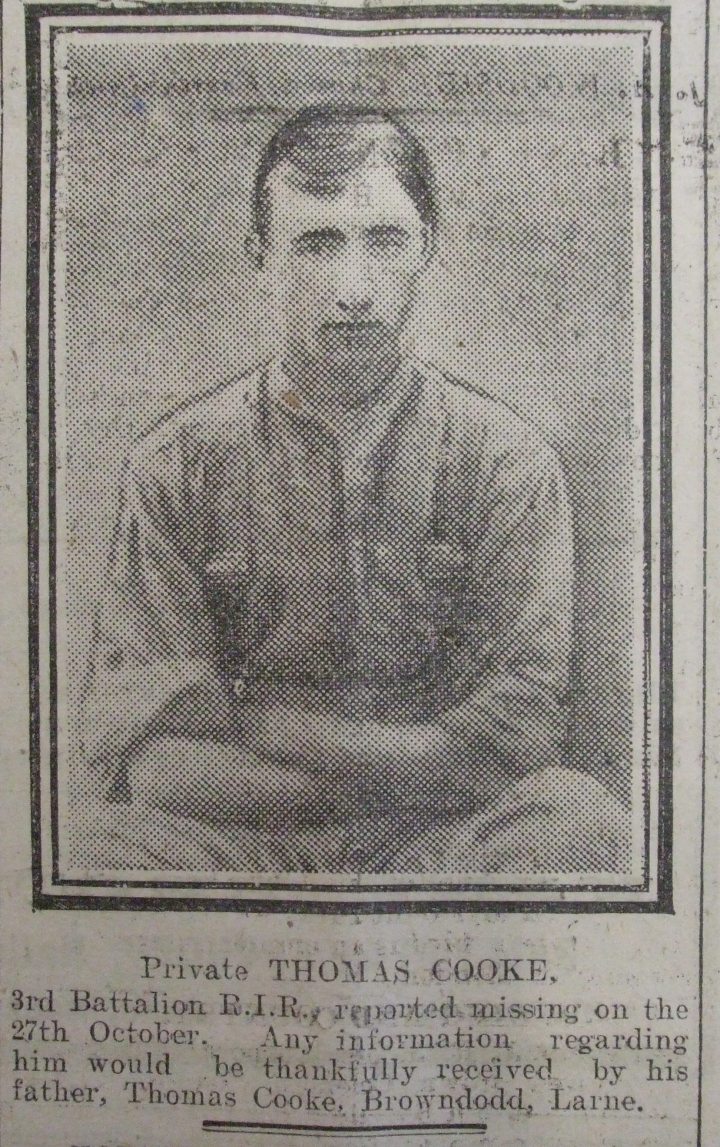
First World War researcher Jeffrey Martin of Dromore has been of considerable help to me and has helped confirm the identity of Thomas Cooke. He has also provided a photograph of Thomas Cooke from the Ballymena Weekly Times in 1915 which he was given from Nigel Henderson’s extensive archive.

Cooke, Thomas, Private, Royal Irish Rifles, Browndodd

Credit: Nigel Henderson (Great War Belfast Clippings)

We can imagine the anxiety felt by his family and it may be that this anxiety continued for some years after the war. Perhaps definite confirmation of his death did not come until after the Larne Church War Memorial had been erected? Perhaps even by 1921 they still hoped he might one day return? But he died on 27th October 1914 and has no known grave. He is commemorated on the Le Touret Memorial, Pas de Calais, France.

LarneWM02

War Memorial, Old Presbyterian Church of Larne and Kilwaughter

NSP Lives of the Great War: 01 Alfred Turner


I am currently working towards the production of a Roll of Honour for the Non-Subscribing Presbyterian Church of Ireland in the First World War. All being well we should be on course for the publication of as complete a Roll of Honour as possible of all the men and women of the denomination in Ireland who served in the Great War including all those who gave their lives. This will be published at a service in Downpatrick on Sunday, 18th November at 3.00 pm.

The Roll will comprise two parts –  a list, by congregation, of all the men and women whose name is known who served in any capacity in the war, and a list, with brief biographical details, of all those who were killed during the conflict or died as a direct result of their service.

It is a melancholy task to trawl through the records trying to identify the service of the hundreds of names (often no more than names to start with) and to place them in the context of a regiment or ship or other area of service. The first part of the book will consist – because of its nature – of a list of names, the second will contain a bit more detail. But all the names dealt with are human stories and there is in the case of everyone behind the name a detailed account of a life, a family, service, sacrifice, bravery and suffering.

Alongside the production of the book I thought I would add here some more detailed stories of some of the people who appear in the book. I begin, with this post, with the Rev Alfred Turner.

Alfred Turner 10 1916

Rev Alfred Turner in the uniform of the YMCA

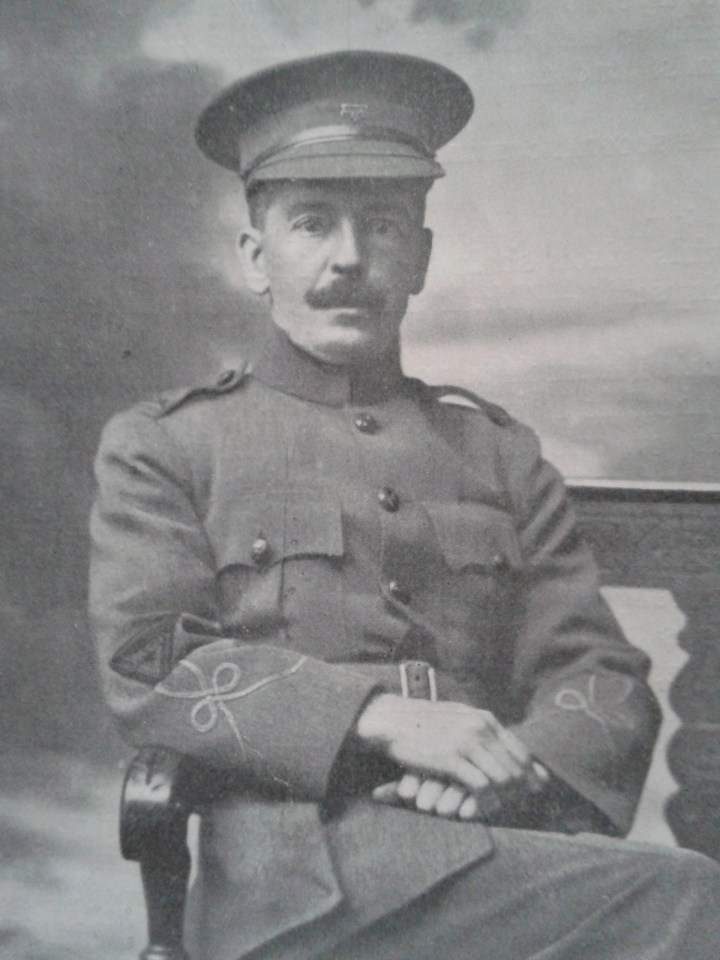
Alfred Turner was the highly respected minister of Templepatrick for a number of years and alongside his ministry held the position of the first editor of the Non-Subscribing Presbyterian magazine. Under his guidance the magazine began to maintain a Roll of Honour as the Great War commenced although this stopped at the start of 1916 and kept no record of the last two years of the war. One of the reasons for this is that Alfred Turner himself was heavily involved in war work. He served with the YMCA at the front as a uniformed non-combatant bringing support to the troops and working essentially as a chaplain. As such he was one of about five Non-Subscribing Presbyterian ministers who took on this role, although his contribution was the most extensive. As YMCA workers they conducted worship for the soldiers, distributed tea and cocoa and sold biscuits, cake, chocolate, cigarettes and candles to the troops. Alfred Turner gives full accounts of his work in the NSP and writes of feeding up to 3,000 soldiers in one go and of leading worship in packed huts where:

A great quiet pervades the place whilst the minister says prayer, and you can feel the communion of Spirit when, in the course of prayer, he commends to our Father’s guidance and keeping the loved ones in the homelands. It is a prayer in which all hearts and desires are joined, and then all unite in saying the Lord’s Prayer.

His accounts (and those of some of the others working with the YMCA) are valuable descriptions of the privations of the troops as well as their morale and attitudes which I will probably return to at some point.

The Irish Census for 1901 and 1911 record Alfred Turner’s growing family on the point of the cataclysm of the First World War. In 1901 with his wife Mary they record two sons and a daughter, his sister in law and a visiting relative plus two live-in servants. By 1911 they have two more children (a boy and a girl) another visiting relative but no live-in servants, instead there is a German governess for the growing family. In 1911 Alfred Turner misread the instructions for recording place of birth in the census and before adding ‘England’ here had written and subsequently deleted Bradford, Yorks.

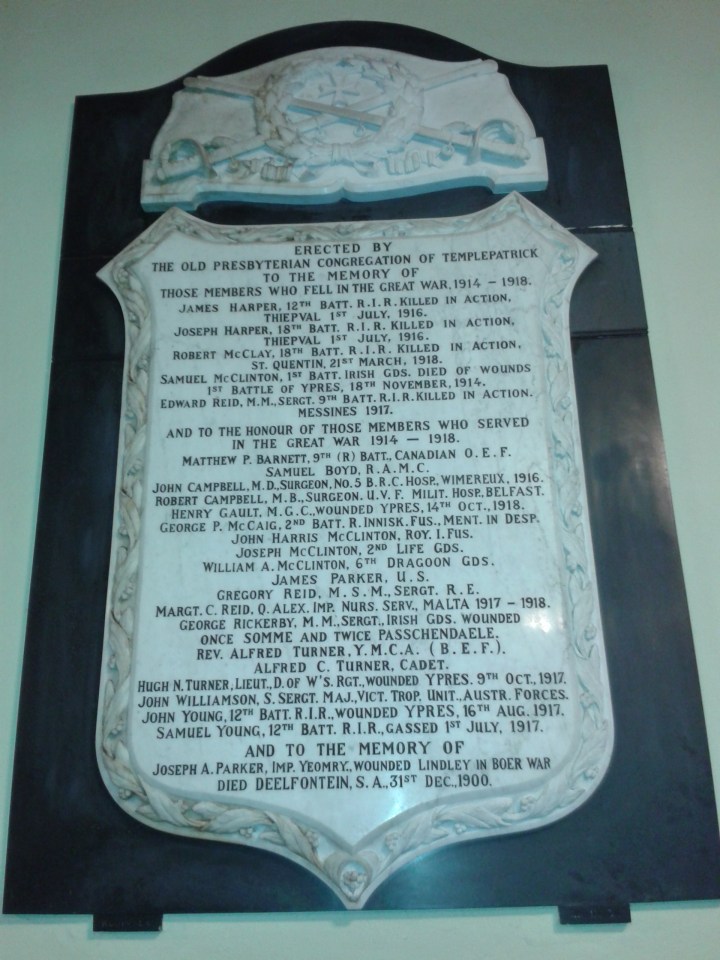
His eldest son (Hugh Nelson Turner) was 14 in 1911, his next eldest son (Alfred Clough Turner) just 10. Shortly after the outbreak of war Alfred joined the Queen’s University Veteran’s Corps and patrolled the Docks with that Corps. He later also worked as a munitions worker in Belfast. His eldest son had been studying for the ministry but joined up and is listed first of all in the NSP Roll of Honour as part of the Queen’s University Officer Training Corps. By March 1915 he is listed as being with the 14th Battalion Royal Irish Rifles, later still being commissioned into the Duke of Wellington’s (West Riding) Regiment with which regiment he was wounded at Ypres in October 1917. His younger brother Arthur Clough Nelson is recorded on the War Memorial in Templepatrick Church as himself having become a Cadet before the end of the war. He would have been about 17 by then.

Templepatrickmemorial04

Old Presbyterian Church Templepatrick War Memorial

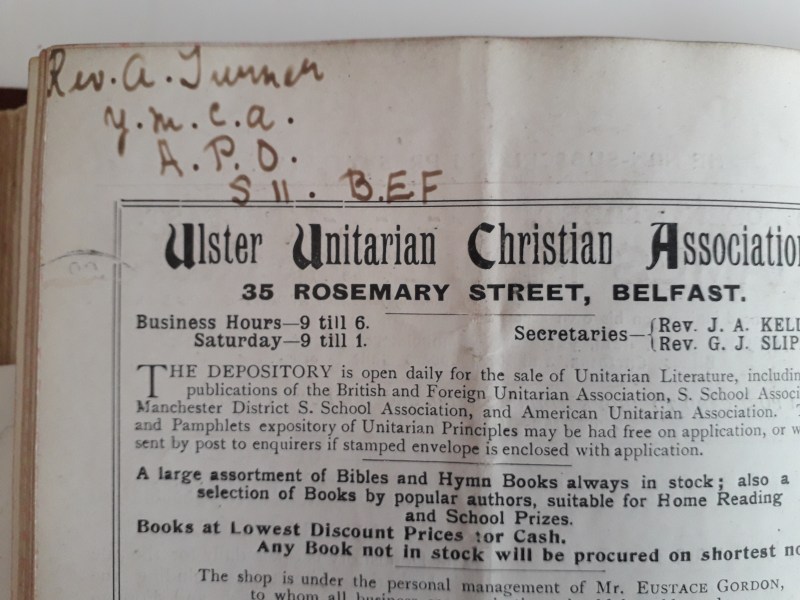
The Rev Alfred Turner was 53 in the year the Great War broke out and he managed to pack a lot into his war service as well as see his eldest son join up and face all the horrors of the Western Front, with his next son not far behind. He made a number of extended journeys to France to work with the YMCA. While he was away somebody deputised for him as editor of the NSP. I have his personal bound set of the first ten years of the magazine. It is a poignant memento and contains a copy of the October 1916 issue sent out to him at the front. That issue contains his portrait (as shown above). In my copy a line runs through the photograph where it was folded to post and on the back page is written the military postal destination where Alfred Turner was based at the time (picture above).